


LEV VIGOTSKY
  María Clara Hernández
   November 10th, 2012
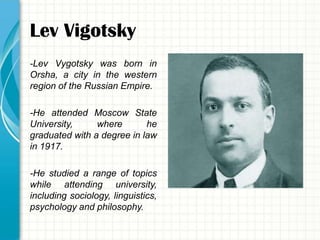
Lev Vigotsky
-Lev Vygotsky was born in
Orsha, a city in the western
region of the Russian Empire.

-He attended Moscow State
University,     where       he
graduated with a degree in law
in 1917.

-He studied a range of topics
while attending university,
including sociology, linguistics,
psychology and philosophy.
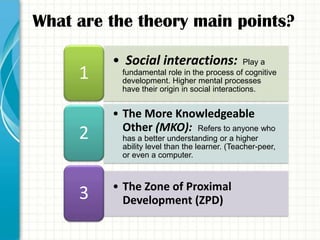
What are the theory main points?

         • Social interactions:                 Play a
     1     fundamental role in the process of cognitive
           development. Higher mental processes
           have their origin in social interactions.


         • The More Knowledgeable
           Other (MKO): Refers to anyone who
     2     has a better understanding or a higher
           ability level than the learner. (Teacher-peer,
           or even a computer.


         • The Zone of Proximal
     3     Development (ZPD)
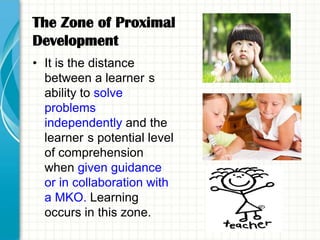
The Zone of Proximal
Development
• It is the distance
  between a learner s
  ability to solve
  problems
  independently and the
  learner s potential level
  of comprehension
  when given guidance
  or in collaboration with
  a MKO. Learning
  occurs in this zone.
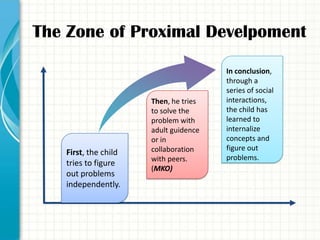
The Zone of Proximal Develpoment

                                       In conclusion,
                                       through a
                                       series of social
                      Then, he tries   interactions,
                      to solve the     the child has
                      problem with     learned to
                      adult guidence   internalize
                      or in            concepts and
                      collaboration    figure out
   First, the child
                      with peers.      problems.
   tries to figure
                      (MKO)
   out problems
   independently.
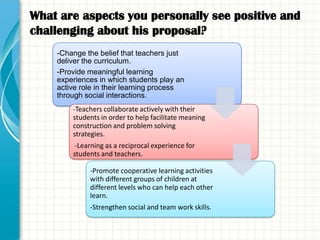
What are aspects you personally see positive and
challenging about his proposal?
    -Change the belief that teachers just
    deliver the curriculum.
    -Provide meaningful learning
    experiences in which students play an
    active role in their learning process
    through social interactions.
        -Teachers collaborate actively with their
        students in order to help facilitate meaning
        construction and problem solving
        strategies.
         -Learning as a reciprocal experience for
        students and teachers.

             -Promote cooperative learning activities
             with different groups of children at
             different levels who can help each other
             learn.
             -Strengthen social and team work skills.
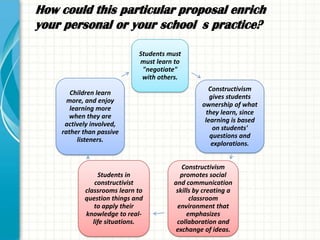
How could this particular proposal enrich
your personal or your school s practice?

                            Students must
                            must learn to
                             "negotiate"
                             with others.
                                                   Constructivism
       Children learn
                                                   gives students
      more, and enjoy
                                                ownership of what
       learning more
                                                  they learn, since
      when they are
                                                 learning is based
     actively involved,
                                                    on students'
    rather than passive
                                                   questions and
          listeners.
                                                    explorations.


                                         Constructivism
                Students in             promotes social
               constructivist         and communication
           classrooms learn to         skills by creating a
           question things and              classroom
               to apply their          environment that
           knowledge to real-              emphasizes
              life situations.         collaboration and
                                       exchange of ideas.
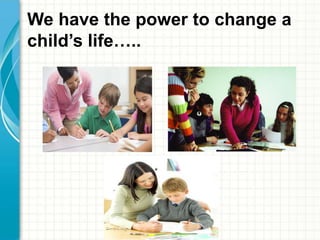
We have the power to change a
child’s life…..

Presentación vigotsky

  • 1.
    LEV VIGOTSKY María Clara Hernández November 10th, 2012
  • 2.
    Lev Vigotsky -Lev Vygotskywas born in Orsha, a city in the western region of the Russian Empire. -He attended Moscow State University, where he graduated with a degree in law in 1917. -He studied a range of topics while attending university, including sociology, linguistics, psychology and philosophy.
  • 3.
    What are thetheory main points? • Social interactions: Play a 1 fundamental role in the process of cognitive development. Higher mental processes have their origin in social interactions. • The More Knowledgeable Other (MKO): Refers to anyone who 2 has a better understanding or a higher ability level than the learner. (Teacher-peer, or even a computer. • The Zone of Proximal 3 Development (ZPD)
  • 5.
    The Zone ofProximal Development • It is the distance between a learner s ability to solve problems independently and the learner s potential level of comprehension when given guidance or in collaboration with a MKO. Learning occurs in this zone.
  • 6.
    The Zone ofProximal Develpoment In conclusion, through a series of social Then, he tries interactions, to solve the the child has problem with learned to adult guidence internalize or in concepts and collaboration figure out First, the child with peers. problems. tries to figure (MKO) out problems independently.
  • 7.
    What are aspectsyou personally see positive and challenging about his proposal? -Change the belief that teachers just deliver the curriculum. -Provide meaningful learning experiences in which students play an active role in their learning process through social interactions. -Teachers collaborate actively with their students in order to help facilitate meaning construction and problem solving strategies. -Learning as a reciprocal experience for students and teachers. -Promote cooperative learning activities with different groups of children at different levels who can help each other learn. -Strengthen social and team work skills.
  • 8.
    How could thisparticular proposal enrich your personal or your school s practice? Students must must learn to "negotiate" with others. Constructivism Children learn gives students more, and enjoy ownership of what learning more they learn, since when they are learning is based actively involved, on students' rather than passive questions and listeners. explorations. Constructivism Students in promotes social constructivist and communication classrooms learn to skills by creating a question things and classroom to apply their environment that knowledge to real- emphasizes life situations. collaboration and exchange of ideas.
  • 9.
    We have thepower to change a child’s life…..

Editor's Notes

  • #2 Esta plantilla se puede usar como archivo de inicio para presentar materiales educativos en un entorno de grupo.SeccionesLas secciones pueden ayudarle a organizar las diapositivas o a facilitar la colaboración entre varios autores. En la ficha Inicio, en Diapositivas, haga clic en Sección y, a continuación, en Agregar sección.NotasUse el panel Notas para las notas de entrega o para proporcionar detalles adicionales al público. Puede ver estas notas en la vista Moderador durante la presentación.Tenga en cuenta el tamaño de la fuente (es importante para la accesibilidad, visibilidad, grabación en vídeo y producción en línea)Colores coordinados Preste especial atención a los gráficos, diagramas y cuadros de texto.Tenga en cuenta que los asistentes imprimirán en blanco y negro o escala de grises. Ejecute una prueba de impresión para asegurarse de que los colores son los correctos cuando se imprime en blanco y negro puros y escala de grises.Gráficos y tablasEn breve: si es posible, use colores y estilos uniformes y que no distraigan.Etiquete todos los gráficos y tablas.
  • #3 Ofrezca una breve descripción general de la presentación. Describa el enfoque principal de la presentación y por qué es importante.Introduzca cada uno de los principales temas.Si desea proporcionar al público una guía, puede repetir esta diapositiva de información general a lo largo de toda la presentación, resaltando el tema particular que va a discutir a continuación.
  • #4 Ésta es otra opción para otra diapositiva de información general.
  • #6 Agregue un caso práctico o una simulación en clase para promover la discusión y aplicar lo aprendido en las lecciones.
  • #8 ¿Qué podrá hacer el público después de completar este curso? Describa brevemente cada objetivo y cómo el público obtendrá beneficios de esta presentación.
  • #9 Discutir los resultados del caso práctico o de la simulación en clase.Mencione los procedimientos recomendados.