SSIIMMPPLLEE PPRREESSEENNTT VVSS.. 
PPRREESSEENNTT 
PPRROOGGRREESSSSIIVVEE
SIMPLE PRESENT 
• Use simple present to talk about things in 
general. We use it to say that something 
happens all the time or repeatedly or that 
something is true in general. 
- I usually leave for work at 8:00AM 
- The Earth goes around the sun. 
• Use the simple present to express:
AA HHAABBIITT 
- I get up at 7:30 everyday. 
- My brother smokes too much.
A FACT WHICH IS ALWAYS TRUE 
- Vegetarians don’t eat meat. 
- Nurses take care of patients in 
hospitals.
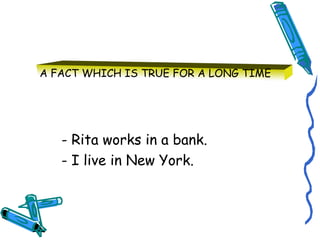
A FACT WHICH IS TRUE FOR A LONG TIME 
- Rita works in a bank. 
- I live in New York.
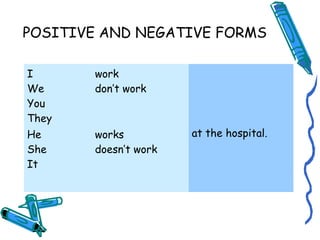
POSITIVE AND NEGATIVE FORMS 
I 
We 
You 
They 
work 
don’t work 
He works 
at the hospital. 
She 
doesn’t work 
It
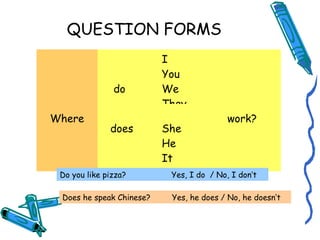
QUESTION FORMS 
Where 
do 
I 
You 
We 
They 
work? 
does She 
He 
It 
Do you like pizza? Yes, I do / No, I don’t 
Does he speak Chinese? Yes, he does / No, he doesn’t
PRESENT CONTINUOUS 
• Use the present continuous to talk 
about unfinished actions that are 
happening at the moment of speaking. 
- The teacher is explaining a grammar lesson. 
• Use the present continuous to 
express:
AAnn aaccttiivviittyy hhaappppeenniinngg nnooww 
• They are playing football in the 
garden. 
• She can’t talk now because she is 
washing her hair.
An activity happening around now, but 
perhaps not at the moment of speaking 
An activity happening around now, but 
perhaps not at the moment of speaking 
• She is studying math at university. 
• I’m reading a book by García Márquez.
A planned ffuuttuurree aarrrraannggeemmeenntt 
• I’m visiting my parents this weekend. 
• Bill is meeting Diana tomorrow night.
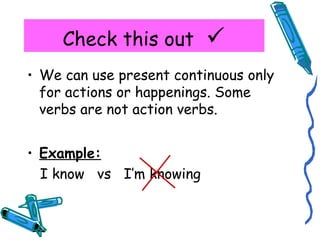
Check this out  
• We can use present continuous only 
for actions or happenings. Some 
verbs are not action verbs. 
• Example: 
I know vs I’m knowing
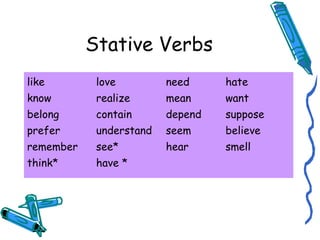
Stative Verbs 
like love need hate 
know realize mean want 
belong contain depend suppose 
prefer understand seem believe 
remember see* hear smell 
think* have *
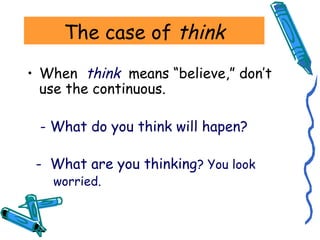
The case of think 
• When think means “believe,” don’t 
use the continuous. 
- What do you think will hapen? 
- What are you thinking? You look 
worried.
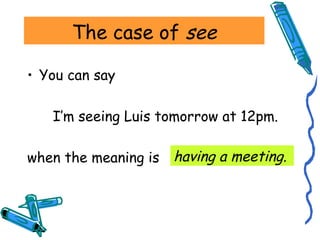
The case of see 
• You can say 
I’m seeing Luis tomorrow at 12pm. 
when the meaning is 
having a meeting.
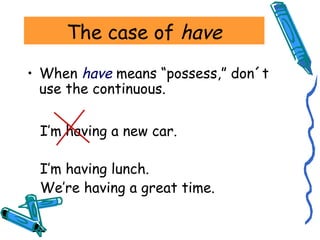
The case of have 
• When have means “possess,” don´t 
use the continuous. 
I’m having a new car. 
I’m having lunch. 
We’re having a great time.
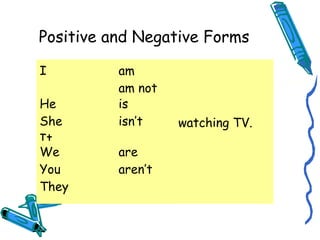
Positive and Negative Forms 
I am 
am not 
watching TV. 
He 
She 
It 
is 
isn’t 
We 
You 
They 
are 
aren’t
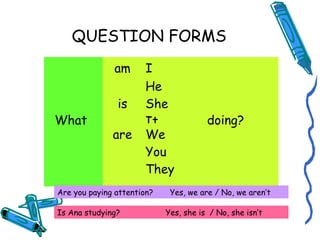
QUESTION FORMS 
What 
am I 
doing? 
is 
He 
She 
It 
are We 
You 
They 
Are you paying attention? Yes, we are / No, we aren’t 
Is Ana studying? Yes, she is / No, she isn’t
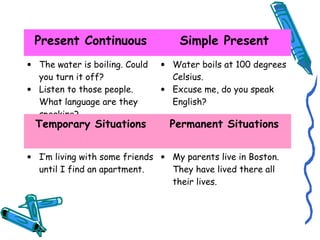
Present Continuous Simple Present 
· The water is boiling. Could 
you turn it off? 
· Listen to those people. 
What language are they 
speaking? 
· Water boils at 100 degrees 
Celsius. 
· Excuse me, do you speak 
English? 
Temporary Situations Permanent Situations 
· I’m living with some friends 
until I find an apartment. 
· My parents live in Boston. 
They have lived there all 
their lives.

Simple present vs. p resent progressiv eppt

  • 1.
    SSIIMMPPLLEE PPRREESSEENNTT VVSS.. PPRREESSEENNTT PPRROOGGRREESSSSIIVVEE
  • 2.
    SIMPLE PRESENT •Use simple present to talk about things in general. We use it to say that something happens all the time or repeatedly or that something is true in general. - I usually leave for work at 8:00AM - The Earth goes around the sun. • Use the simple present to express:
  • 3.
    AA HHAABBIITT -I get up at 7:30 everyday. - My brother smokes too much.
  • 4.
    A FACT WHICHIS ALWAYS TRUE - Vegetarians don’t eat meat. - Nurses take care of patients in hospitals.
  • 5.
    A FACT WHICHIS TRUE FOR A LONG TIME - Rita works in a bank. - I live in New York.
  • 6.
    POSITIVE AND NEGATIVEFORMS I We You They work don’t work He works at the hospital. She doesn’t work It
  • 7.
    QUESTION FORMS Where do I You We They work? does She He It Do you like pizza? Yes, I do / No, I don’t Does he speak Chinese? Yes, he does / No, he doesn’t
  • 8.
    PRESENT CONTINUOUS •Use the present continuous to talk about unfinished actions that are happening at the moment of speaking. - The teacher is explaining a grammar lesson. • Use the present continuous to express:
  • 9.
    AAnn aaccttiivviittyy hhaappppeenniinnggnnooww • They are playing football in the garden. • She can’t talk now because she is washing her hair.
  • 10.
    An activity happeningaround now, but perhaps not at the moment of speaking An activity happening around now, but perhaps not at the moment of speaking • She is studying math at university. • I’m reading a book by García Márquez.
  • 11.
    A planned ffuuttuurreeaarrrraannggeemmeenntt • I’m visiting my parents this weekend. • Bill is meeting Diana tomorrow night.
  • 12.
    Check this out • We can use present continuous only for actions or happenings. Some verbs are not action verbs. • Example: I know vs I’m knowing
  • 13.
    Stative Verbs likelove need hate know realize mean want belong contain depend suppose prefer understand seem believe remember see* hear smell think* have *
  • 14.
    The case ofthink • When think means “believe,” don’t use the continuous. - What do you think will hapen? - What are you thinking? You look worried.
  • 15.
    The case ofsee • You can say I’m seeing Luis tomorrow at 12pm. when the meaning is having a meeting.
  • 16.
    The case ofhave • When have means “possess,” don´t use the continuous. I’m having a new car. I’m having lunch. We’re having a great time.
  • 17.
    Positive and NegativeForms I am am not watching TV. He She It is isn’t We You They are aren’t
  • 18.
    QUESTION FORMS What am I doing? is He She It are We You They Are you paying attention? Yes, we are / No, we aren’t Is Ana studying? Yes, she is / No, she isn’t
  • 19.
    Present Continuous SimplePresent · The water is boiling. Could you turn it off? · Listen to those people. What language are they speaking? · Water boils at 100 degrees Celsius. · Excuse me, do you speak English? Temporary Situations Permanent Situations · I’m living with some friends until I find an apartment. · My parents live in Boston. They have lived there all their lives.