Carried out by PaquiUnir.
2015
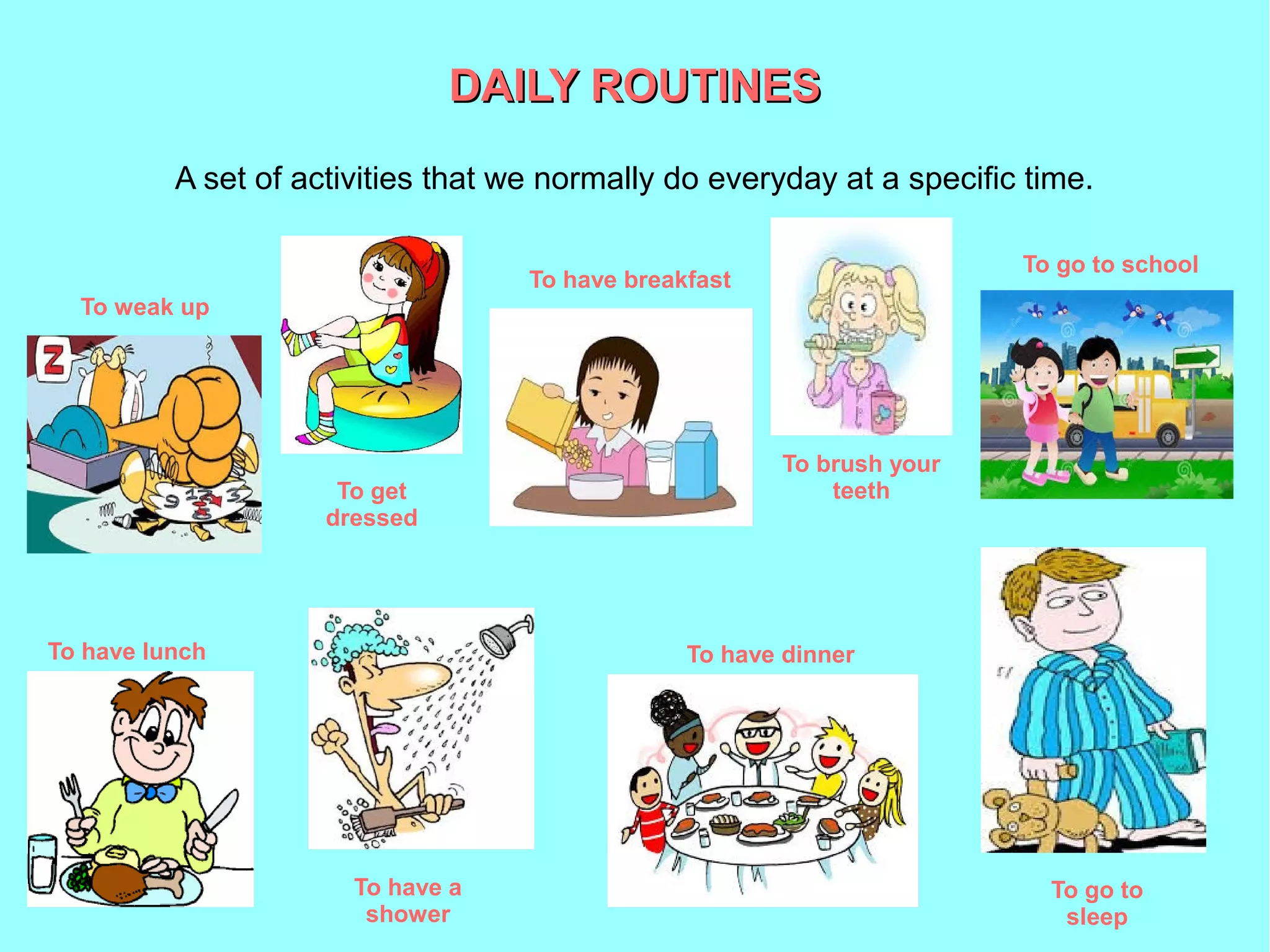
DAILY ROUTINESDAILY ROUTINES
A set of activities that we normally do everyday at a specific time.
To weak up
To go to
sleep
To go to school
To brush your
teeth
To have breakfast
To have lunch
To get
dressed
To have a
shower
To have dinner
PRESENT SIMPLE
To refer to these activities we always use the
simple present.
He gets up at half past six.
They usually have lunch at 1 o’clock.
I always go to sleep at quarter past eleven.
Do you remember how form this tense?
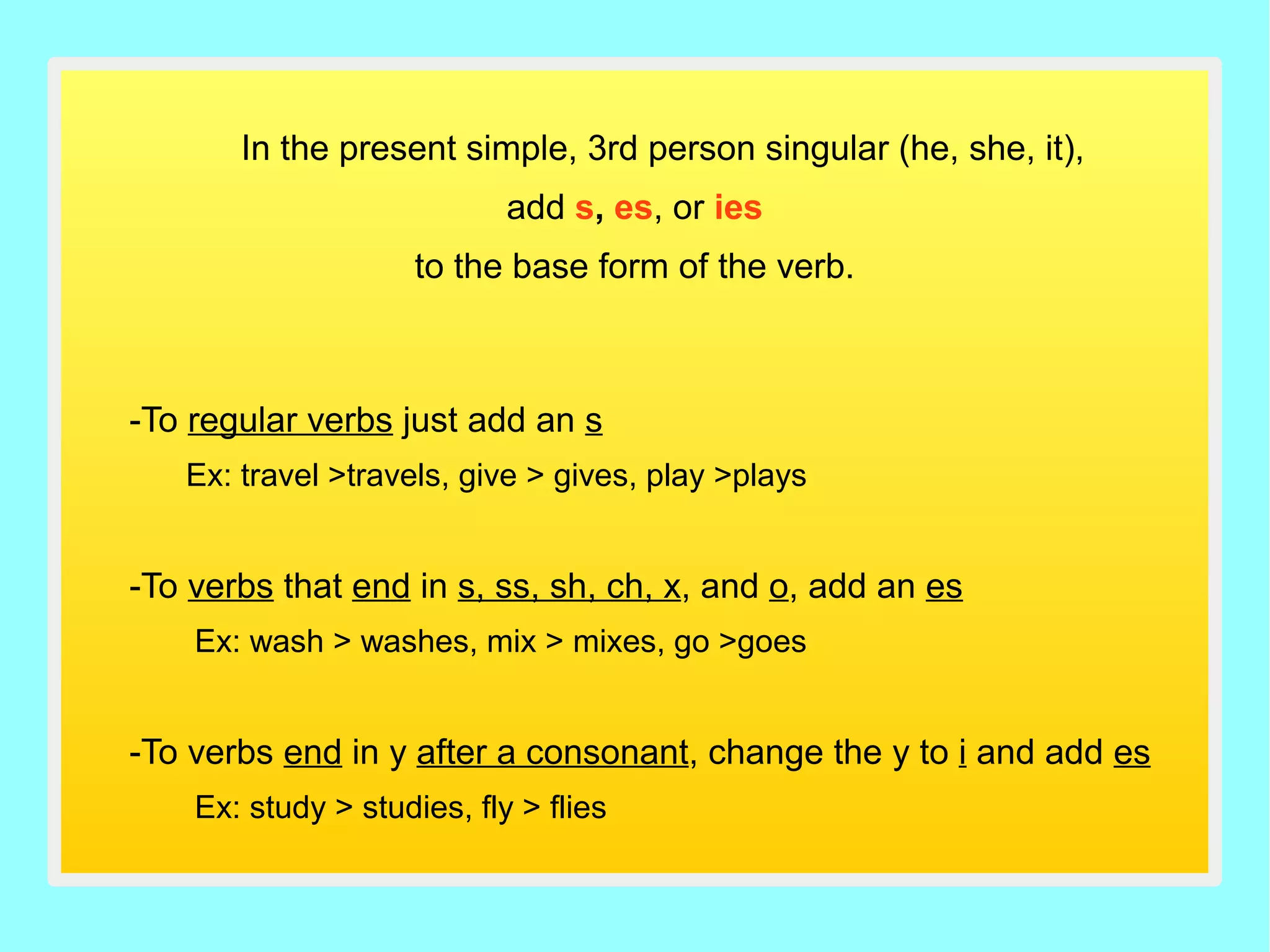
In the present simple, 3rd person singular (he, she, it),
add s, es, or ies
to the base form of the verb.
-To regular verbs just add an s
Ex: travel >travels, give > gives, play >plays
-To verbs that end in s, ss, sh, ch, x, and o, add an es
Ex: wash > washes, mix > mixes, go >goes
-To verbs end in y after a consonant, change the y to i and add es
Ex: study > studies, fly > flies
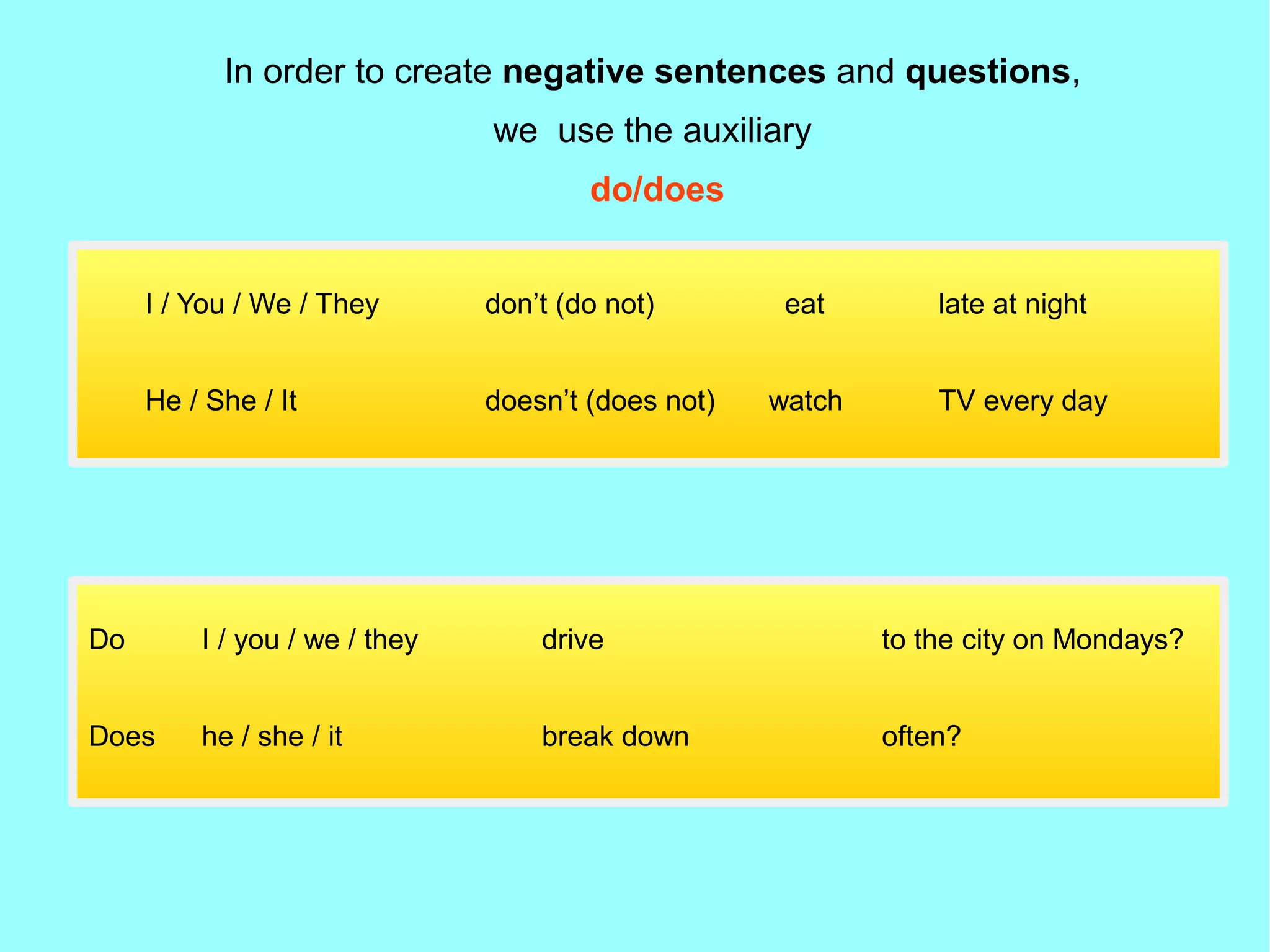
In order to create negative sentences and questions,
we use the auxiliary
do/does
I / You / We / They don’t (do not) eat late at night
He / She / It doesn’t (does not) watch TV every day
Do I / you / we / they drive to the city on Mondays?
Does he / she / it break down often?
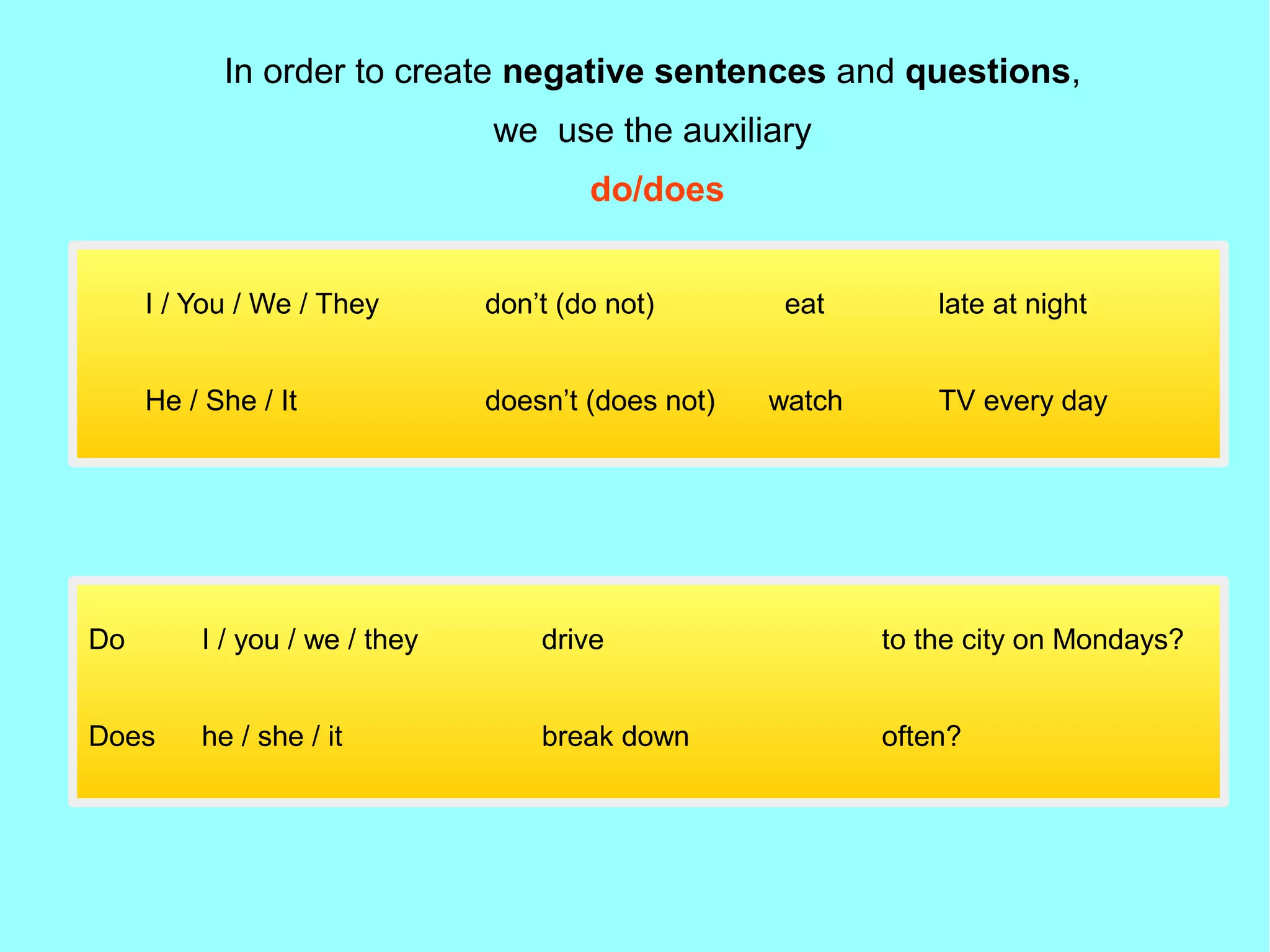
In order to create negative sentences and questions,
we use the auxiliary
do/does
I / You / We / They don’t (do not) eat late at night
He / She / It doesn’t (does not) watch TV every day
Do I / you / we / they drive to the city on Mondays?
Does he / she / it break down often?

Present simple power point paqui unir II

  • 1.
    Carried out byPaquiUnir. 2015
  • 2.
    DAILY ROUTINESDAILY ROUTINES Aset of activities that we normally do everyday at a specific time. To weak up To go to sleep To go to school To brush your teeth To have breakfast To have lunch To get dressed To have a shower To have dinner
  • 3.
    PRESENT SIMPLE To referto these activities we always use the simple present. He gets up at half past six. They usually have lunch at 1 o’clock. I always go to sleep at quarter past eleven. Do you remember how form this tense?
  • 4.
    In the presentsimple, 3rd person singular (he, she, it), add s, es, or ies to the base form of the verb. -To regular verbs just add an s Ex: travel >travels, give > gives, play >plays -To verbs that end in s, ss, sh, ch, x, and o, add an es Ex: wash > washes, mix > mixes, go >goes -To verbs end in y after a consonant, change the y to i and add es Ex: study > studies, fly > flies
  • 5.
    In order tocreate negative sentences and questions, we use the auxiliary do/does I / You / We / They don’t (do not) eat late at night He / She / It doesn’t (does not) watch TV every day Do I / you / we / they drive to the city on Mondays? Does he / she / it break down often?
  • 6.
    In order tocreate negative sentences and questions, we use the auxiliary do/does I / You / We / They don’t (do not) eat late at night He / She / It doesn’t (does not) watch TV every day Do I / you / we / they drive to the city on Mondays? Does he / she / it break down often?