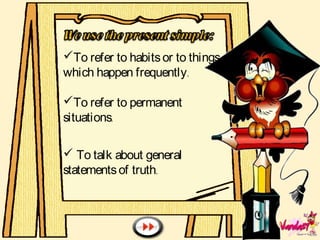
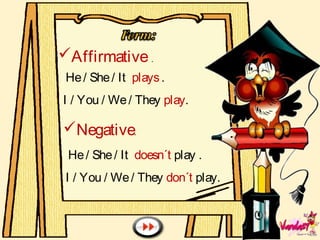
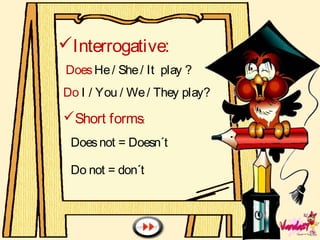
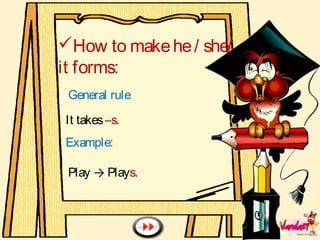
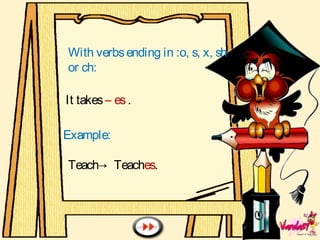
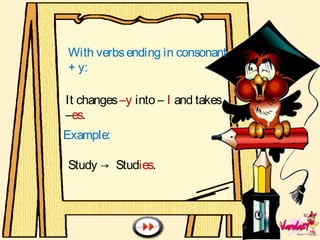
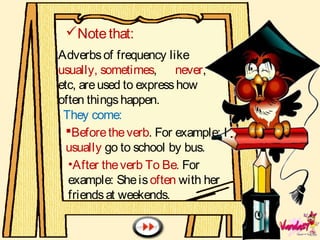
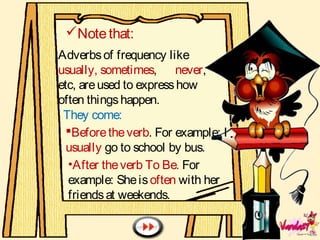
This document discusses the present simple tense in English grammar. It explains that the present simple is used to talk about habits, frequent actions, and general truths. It provides examples of affirmative, negative, and interrogative sentence structures in the present simple. It also describes rules for forming the third person singular form for different types of verbs ending in vowels, consonants, and y. Finally, it notes that adverbs of frequency are used to express how often things happen and can come before verbs or after the verb "to be".