tPerf ect
    Pre sen
The         orm
   Ten se F
                     10 r2+

              ion
            at a
          nt Vaf
   P re se va
            o
            ar o
      Q anb
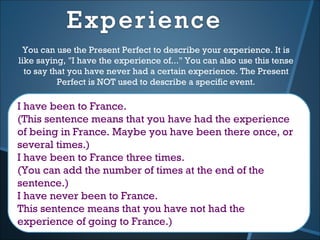
You can use the Present Perfect to describe your experience. It is
like saying, "I have the experience of..." You can also use this tense
  to say that you have never had a certain experience. The Present
           Perfect is NOT used to describe a specific event.

I have been to France.
(This sentence means that you have had the experience
of being in France. Maybe you have been there once, or
several times.)
I have been to France three times.
(You can add the number of times at the end of the
sentence.)
I have never been to France.
This sentence means that you have not had the
experience of going to France.)
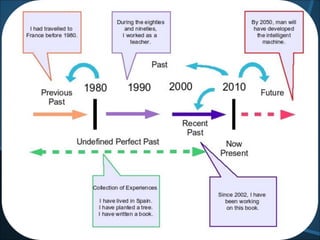
We often use the Present Perfect to talk about
 change that has happened over a period of time.

  Examples:
 You have grown since the last time I saw you.
 The government has become more interested in
 arts education.
  Japanese has become one of the most popular
courses at the university since the Asian studies
program was established.
 My English has really improved since I moved to
Australia.
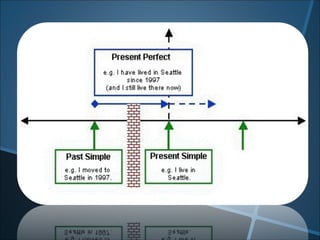
We use the Present Perfect to show that something
started in the past and has continued up until now.
  "For five minutes," "for two weeks," and "since
Tuesday" are all durations which can be used with
                the Present Perfect.

I have had a cold for two weeks.
She has been in England for six months.
Mary has loved chocolate since she was a little girl.
Tom is looking up for his key. He
 can’t find it. He has lost his key.
We often use the Present Perfect to say that an
action which we expected has not happened. Using
    the Present Perfect suggests that we are still
          waiting for the action to happen.

Examples:
James has not finished his homework yet.
Bill has still not arrived.
The rain hasn't stopped.
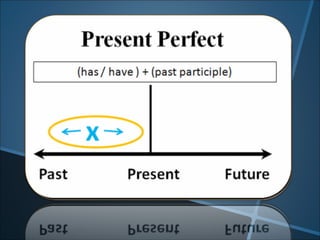
Present perfect tense

Present perfect tense

  • 1.
    tPerf ect Pre sen The orm Ten se F 10 r2+ ion at a nt Vaf P re se va o ar o Q anb
  • 5.
    You can usethe Present Perfect to describe your experience. It is like saying, "I have the experience of..." You can also use this tense to say that you have never had a certain experience. The Present Perfect is NOT used to describe a specific event. I have been to France. (This sentence means that you have had the experience of being in France. Maybe you have been there once, or several times.) I have been to France three times. (You can add the number of times at the end of the sentence.) I have never been to France. This sentence means that you have not had the experience of going to France.)
  • 9.
    We often usethe Present Perfect to talk about change that has happened over a period of time. Examples: You have grown since the last time I saw you. The government has become more interested in arts education. Japanese has become one of the most popular courses at the university since the Asian studies program was established. My English has really improved since I moved to Australia.
  • 11.
    We use thePresent Perfect to show that something started in the past and has continued up until now. "For five minutes," "for two weeks," and "since Tuesday" are all durations which can be used with the Present Perfect. I have had a cold for two weeks. She has been in England for six months. Mary has loved chocolate since she was a little girl.
  • 15.
    Tom is lookingup for his key. He can’t find it. He has lost his key.
  • 17.
    We often usethe Present Perfect to say that an action which we expected has not happened. Using the Present Perfect suggests that we are still waiting for the action to happen. Examples: James has not finished his homework yet. Bill has still not arrived. The rain hasn't stopped.