PRESCRIPTIVE
LINGUISTICS
DEFINITION
S An account of how a language should
be used instead of how it is actually
used; a prescription for the correct
phonology and morphology and syntax
and semantics.
 A set of norms or rules governing how a
language should or should not be used
rather than describing the ways in
which a language is actually used.
 Is the act of taking the official models of
a language, and treating them as sacred
perfect representations of the language,
and enforcing them on people.
 The practice of championing
one variety or manner of speaking of
a language against another. Normative
practices may prescribe on such aspects
of language use as spelling, grammar,
pronunciation and syntax.
• Linguistic prescription specify standard
language forms either generally or for
specific purposes.
IMPORTANC
E
• Standardized languages are useful for
interregional communication: speakers
of divergent dialects may understand
a standard languages used
in broadcasting more readily than they
would understand each other's dialects.
• It aims to draw workable guidelines
for language users seeking advice in
such matters.
• Writers or communicators who wish to
use words clearly, powerfully, or
effectively often use prescriptive rules.
• Its aims may be to establish a standard
language, to teach what is perceived
within a particular society to be correct
forms of language, or to advise on
effective communication.
ADVOCATES
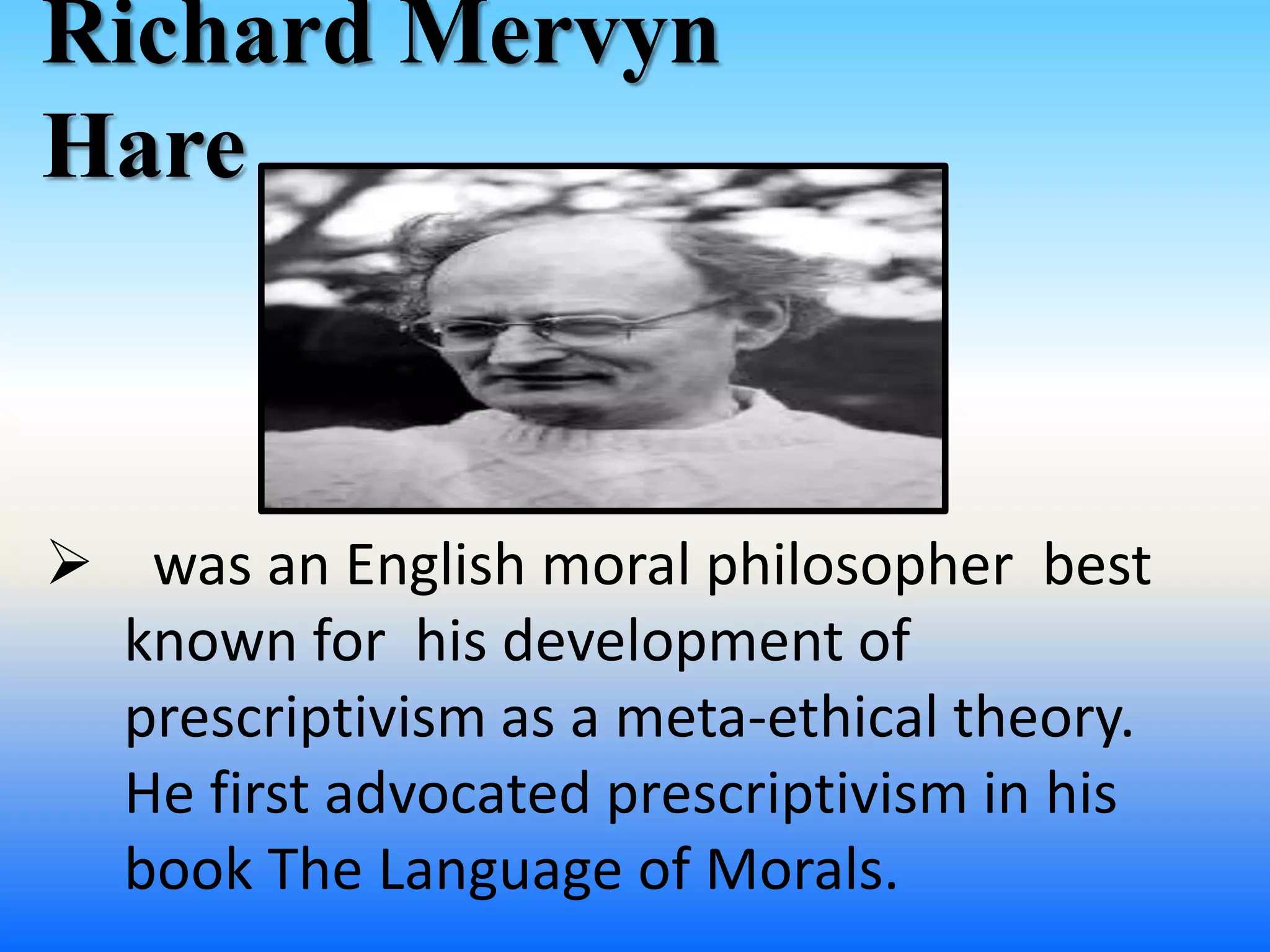
Richard Mervyn
Hare
 was an English moral philosopher best
known for his development of
prescriptivism as a meta-ethical theory.
He first advocated prescriptivism in his
book The Language of Morals.
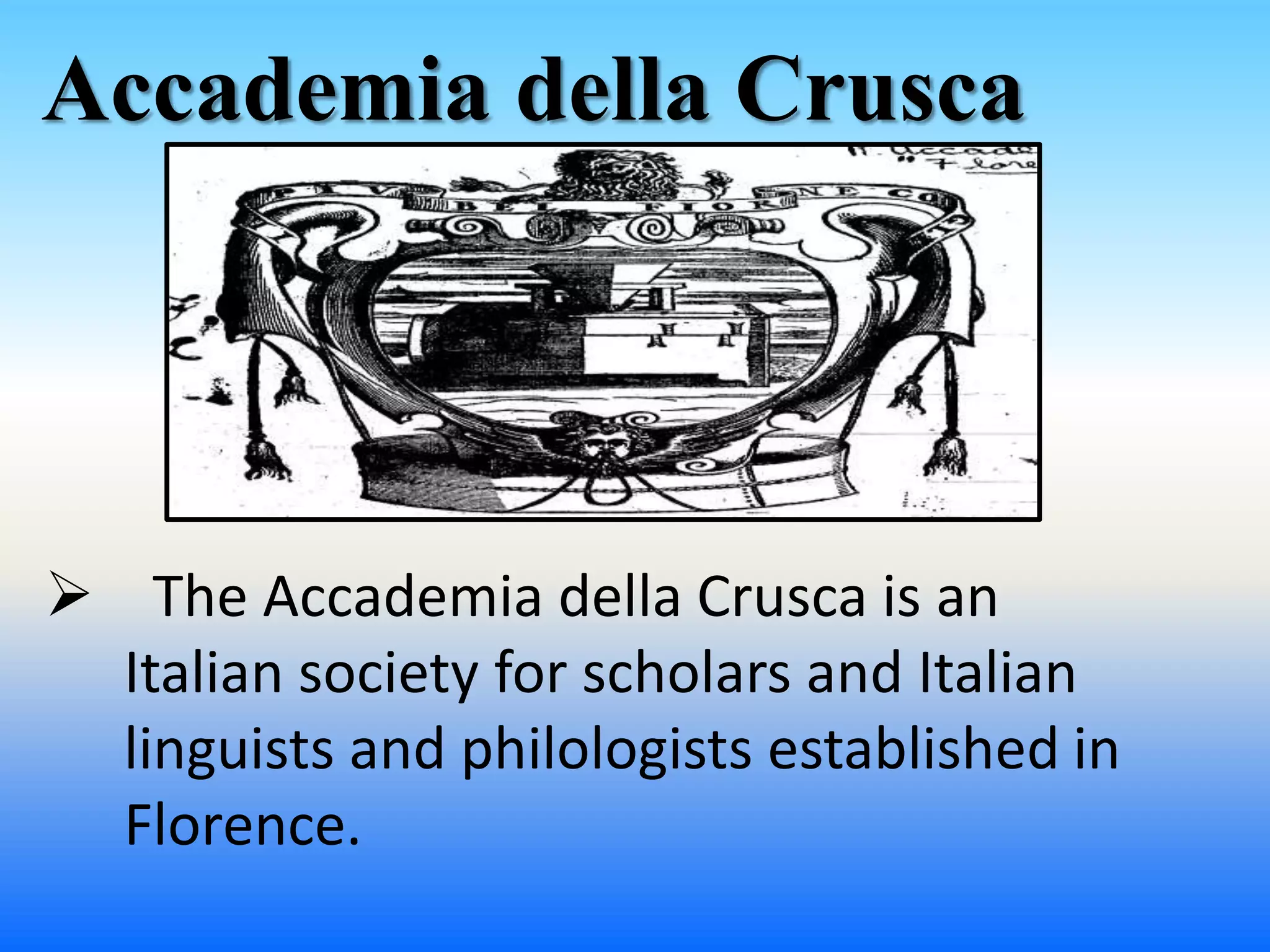
Accademia della Crusca
 The Accademia della Crusca is an
Italian society for scholars and Italian
linguists and philologists established in
Florence.
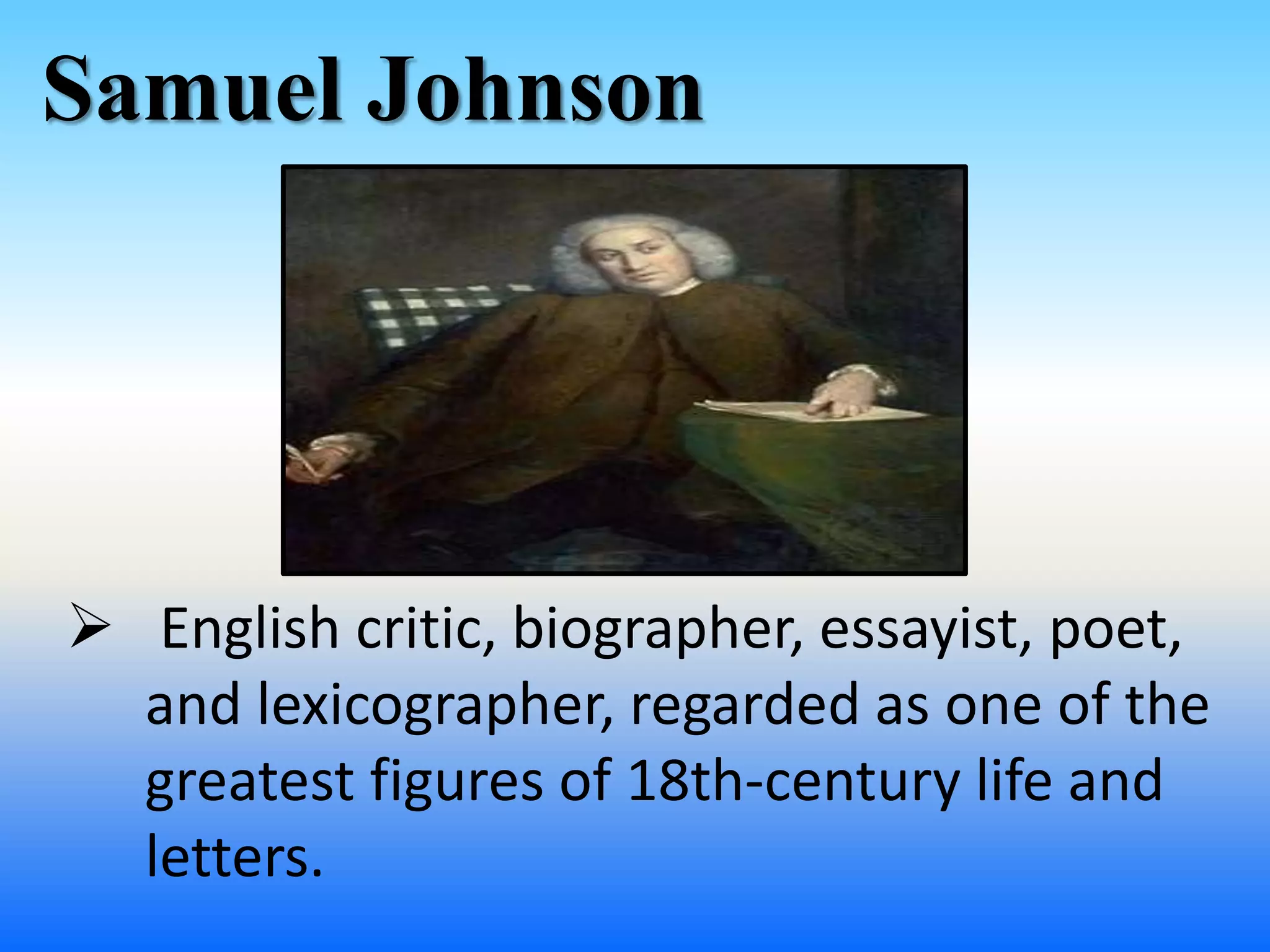
Samuel Johnson
 English critic, biographer, essayist, poet,
and lexicographer, regarded as one of the
greatest figures of 18th-century life and
letters.
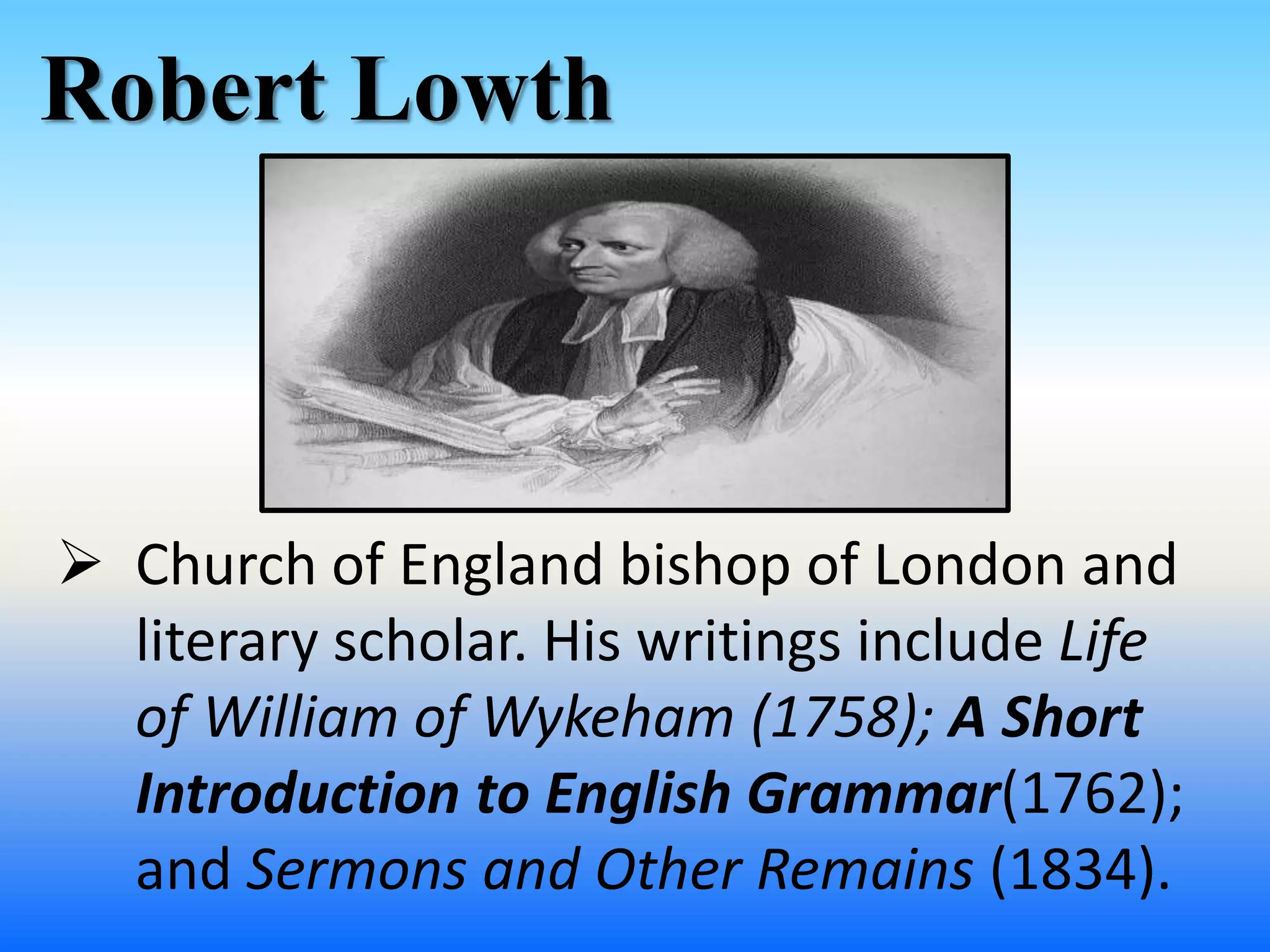
Robert Lowth
 Church of England bishop of London and
literary scholar. His writings include Life
of William of Wykeham (1758); A Short
Introduction to English Grammar(1762);
and Sermons and Other Remains (1834).
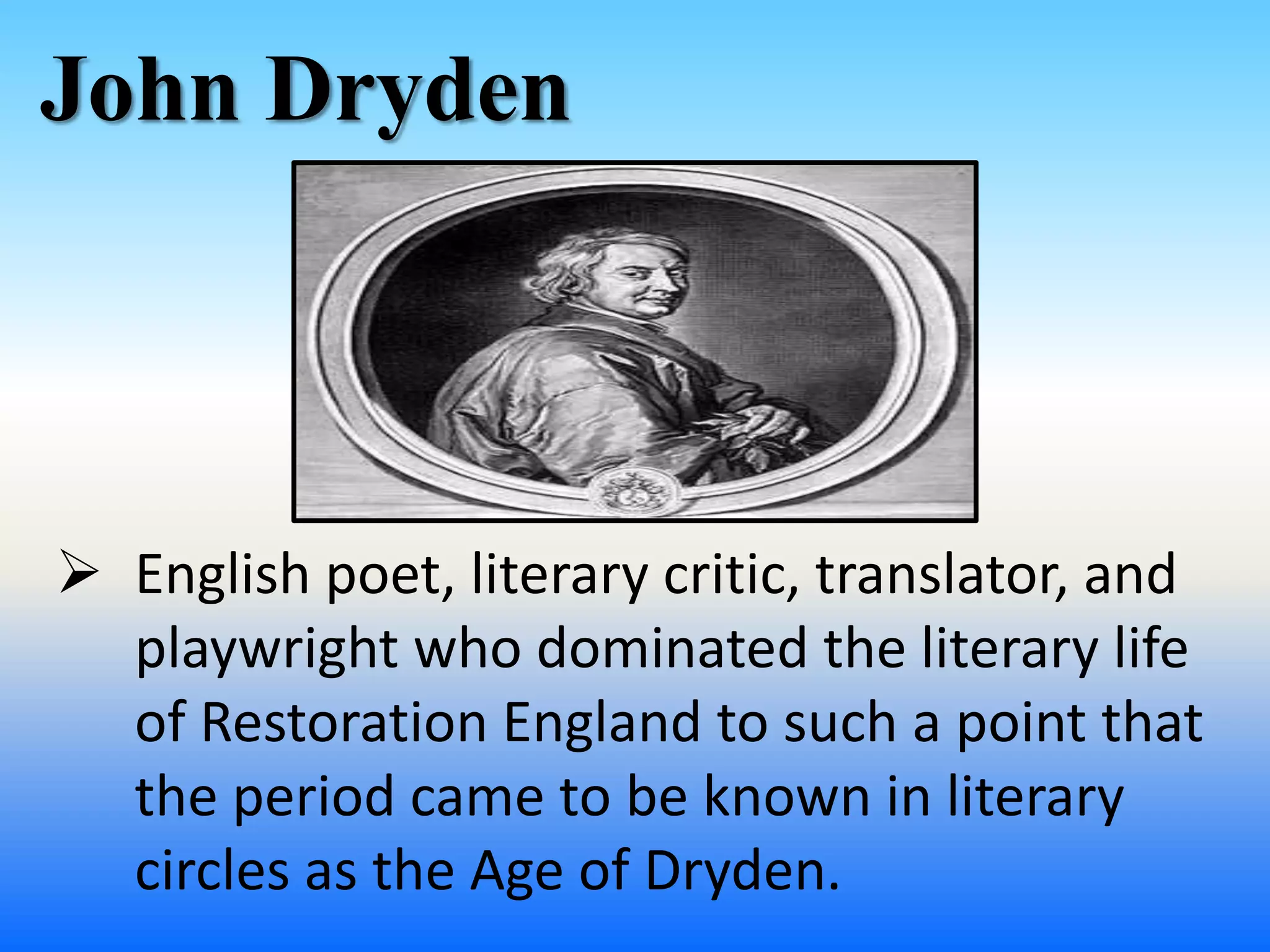
John Dryden
 English poet, literary critic, translator, and
playwright who dominated the literary life
of Restoration England to such a point that
the period came to be known in literary
circles as the Age of Dryden.
SUBFIELD
S
SEMANTICS
 Linguistic semantics is the study of
meaning that is used for understanding
human expression through language
 The study of meaning that focuses on
the relation between signifiers,
like words, phrases, signs, and symbols,
and what they stand for,
their denotata.
SYNTAX
 The study of the rules that govern the
ways in which words combine to form,
phrases, clauses, and sentences. Syntax is
one of the major components
of grammar.
 The study of the principles and processes
by which sentences are constructed in
particular languages. The syntax of a
language is described in terms of a
Taxonomy.
GRAMMAR
 Rules of a language governing the
sounds, words, sentences, and other
elements, as well as their combination
and interpretation.
 Prescriptive grammar presents
authoritative norms for a particular
language, and tends to deprecate non-
standard constructions.
CORPUS LINGUISTICS
 Corpus linguistics adherents believe that
reliable language analysis best occurs on
field-collected samples, in natural
contexts and with minimal experimental
interference.
 It refers to large collections of texts which
represent a sample of a particular variety
or use of language(s) that are presented
in machine readable form.
HYPERCORRECTION
 A non-standard usage that results from
the over-application of a perceived rule
of grammar or a usage prescription.
 It occurs when a real or imagined
grammatical rule is applied in an
inappropriate context, so that an attempt
to be "correct" leads to an incorrect
result.
LANGUAGE POLICY
 Designed to favour or discourage the use
of a particular language or set of
languages.
 It is what a government does either
officially through legislation, court
decisions or policy to determine how
languages are used, cultivate language
skills needed to meet national priorities or
to establish the rights of individuals or
groups to use and maintain languages
LANGUAGE PURISM
 The practice of defining one variety of
a language as being purer than other
varieties.
 Linguistic purism was institutionalized
through Language academies (of which
the 1572 Accademia della Crusca set a
model example in Europe), and their
decisions have often the force of law. It is
a form of prescriptive linguistic.
PLEONISM
 Pleonasm the use of
more words or word-parts than is
necessary for clear expression:
examples are black darkness,
or burning fire.
 It commonly understood to mean a
word or phrase which is useless or
repetitive.
PREPARED BY: GROUP 2
PRESCRIPTIVE
LINGUISTICS
• JOVI B. LOPEZ
• DYANNE MANGAHAS
• RAYMOND INDUCIL
• KIMBERLY PAYNADO
• CHERRILYN MENDOZA

Prescriptive linguistics presentation

  • 1.
  • 2.
    DEFINITION S An accountof how a language should be used instead of how it is actually used; a prescription for the correct phonology and morphology and syntax and semantics.  A set of norms or rules governing how a language should or should not be used rather than describing the ways in which a language is actually used.
  • 3.
     Is theact of taking the official models of a language, and treating them as sacred perfect representations of the language, and enforcing them on people.  The practice of championing one variety or manner of speaking of a language against another. Normative practices may prescribe on such aspects of language use as spelling, grammar, pronunciation and syntax.
  • 4.
    • Linguistic prescriptionspecify standard language forms either generally or for specific purposes. IMPORTANC E • Standardized languages are useful for interregional communication: speakers of divergent dialects may understand a standard languages used in broadcasting more readily than they would understand each other's dialects.
  • 5.
    • It aimsto draw workable guidelines for language users seeking advice in such matters. • Writers or communicators who wish to use words clearly, powerfully, or effectively often use prescriptive rules. • Its aims may be to establish a standard language, to teach what is perceived within a particular society to be correct forms of language, or to advise on effective communication.
  • 6.
  • 7.
    Richard Mervyn Hare  wasan English moral philosopher best known for his development of prescriptivism as a meta-ethical theory. He first advocated prescriptivism in his book The Language of Morals.
  • 8.
    Accademia della Crusca The Accademia della Crusca is an Italian society for scholars and Italian linguists and philologists established in Florence.
  • 9.
    Samuel Johnson  Englishcritic, biographer, essayist, poet, and lexicographer, regarded as one of the greatest figures of 18th-century life and letters.
  • 10.
    Robert Lowth  Churchof England bishop of London and literary scholar. His writings include Life of William of Wykeham (1758); A Short Introduction to English Grammar(1762); and Sermons and Other Remains (1834).
  • 11.
    John Dryden  Englishpoet, literary critic, translator, and playwright who dominated the literary life of Restoration England to such a point that the period came to be known in literary circles as the Age of Dryden.
  • 12.
  • 13.
    SEMANTICS  Linguistic semanticsis the study of meaning that is used for understanding human expression through language  The study of meaning that focuses on the relation between signifiers, like words, phrases, signs, and symbols, and what they stand for, their denotata.
  • 14.
    SYNTAX  The studyof the rules that govern the ways in which words combine to form, phrases, clauses, and sentences. Syntax is one of the major components of grammar.  The study of the principles and processes by which sentences are constructed in particular languages. The syntax of a language is described in terms of a Taxonomy.
  • 15.
    GRAMMAR  Rules ofa language governing the sounds, words, sentences, and other elements, as well as their combination and interpretation.  Prescriptive grammar presents authoritative norms for a particular language, and tends to deprecate non- standard constructions.
  • 16.
    CORPUS LINGUISTICS  Corpuslinguistics adherents believe that reliable language analysis best occurs on field-collected samples, in natural contexts and with minimal experimental interference.  It refers to large collections of texts which represent a sample of a particular variety or use of language(s) that are presented in machine readable form.
  • 17.
    HYPERCORRECTION  A non-standardusage that results from the over-application of a perceived rule of grammar or a usage prescription.  It occurs when a real or imagined grammatical rule is applied in an inappropriate context, so that an attempt to be "correct" leads to an incorrect result.
  • 18.
    LANGUAGE POLICY  Designedto favour or discourage the use of a particular language or set of languages.  It is what a government does either officially through legislation, court decisions or policy to determine how languages are used, cultivate language skills needed to meet national priorities or to establish the rights of individuals or groups to use and maintain languages
  • 19.
    LANGUAGE PURISM  Thepractice of defining one variety of a language as being purer than other varieties.  Linguistic purism was institutionalized through Language academies (of which the 1572 Accademia della Crusca set a model example in Europe), and their decisions have often the force of law. It is a form of prescriptive linguistic.
  • 20.
    PLEONISM  Pleonasm theuse of more words or word-parts than is necessary for clear expression: examples are black darkness, or burning fire.  It commonly understood to mean a word or phrase which is useless or repetitive.
  • 21.
    PREPARED BY: GROUP2 PRESCRIPTIVE LINGUISTICS • JOVI B. LOPEZ • DYANNE MANGAHAS • RAYMOND INDUCIL • KIMBERLY PAYNADO • CHERRILYN MENDOZA