Preparing Your Data for
Cloud


Narinder Kumar
11/11/2010
Agenda

    Relational DBMS's : Pros & Cons

    Non-Relational DBMS's : Pros & Cons

    Types of Non-Relational DBMS's

    Current Market State

    Applicability of Different Data-Bases in
    different environments
                                               2
Relational DBMS - Pros

    Data Integrity

    ACID Capabilities

    High Level Query Model

    Data Normalization

    Data Independence

                                   3
Relational DBMS - Cons

    Scaling Issues
     
       By Duplication (Master-Slave)
     
       By Sharding/Division (Not transparent)

    Fixed Schema

    Mostly disk-oriented (Performance)

    May fair poorly with large data


                                                4
Non-Relational DBMS - Pros

    Scalability

    Replication / Availability

    Performance

    Deployment Flexibility

    Modelling Flexibility

    Faster Development (?)
                                   5
Non-Relational DBMS - Cons

    Lack of Transactional Support

    Data Integrity is Application's responsibility

    Data Duplication / Application Dependent

    Eventually Consistent (mostly)

    No Standardization

    New Technology


                                                     6
RDBMS's and Cloud


                    7
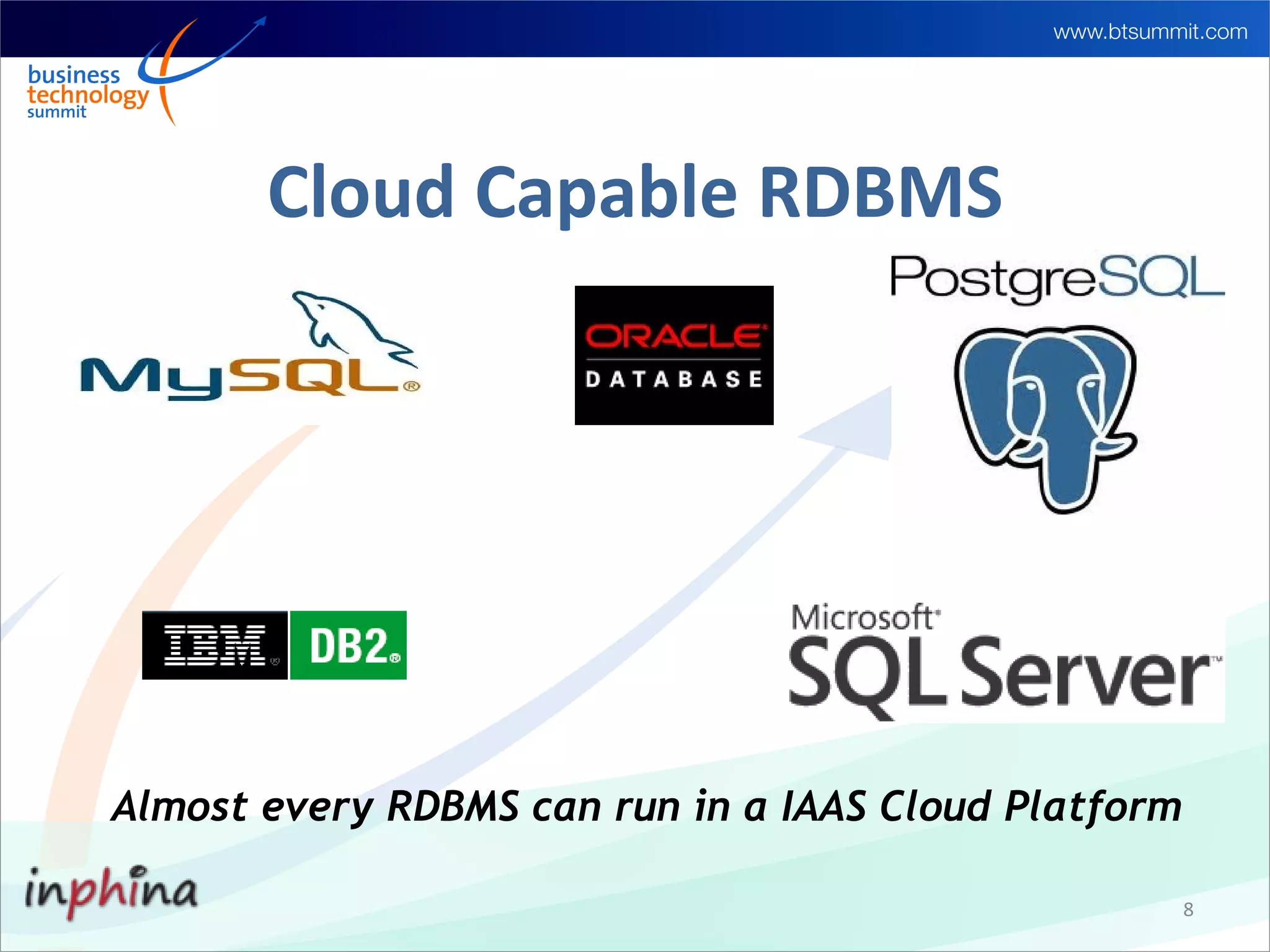
Cloud Capable RDBMS


       s


Almost every RDBMS can run in a IAAS Cloud Platform

                                                      8
Cloud Native RDBMS's


                       9
Types of Non-Relational DBMS

    Key Value Stores


    Document Stores


    Column Stores


    Graph Stores

                                   10
Key Value Data-Bases

    Object is completely Opaque to DB

    Mostly GET, PUT & DELETE operations are
    supported

    There may be limits on size of Objects

        Inspired by Amazon Dynamo Paper


                                              11
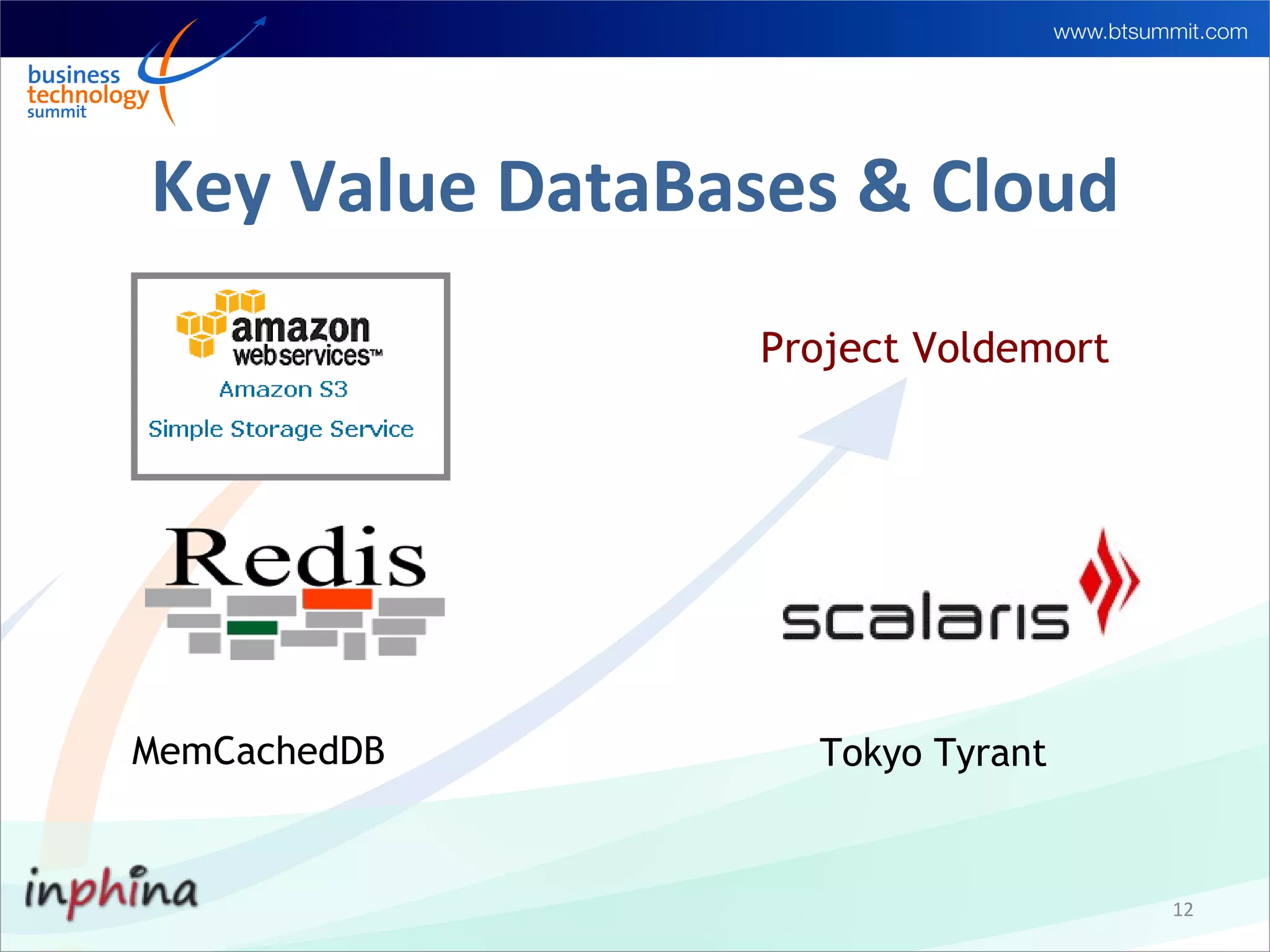
Key Value DataBases & Cloud
                Project Voldemort


MemCachedDB       Tokyo Tyrant


                                    12
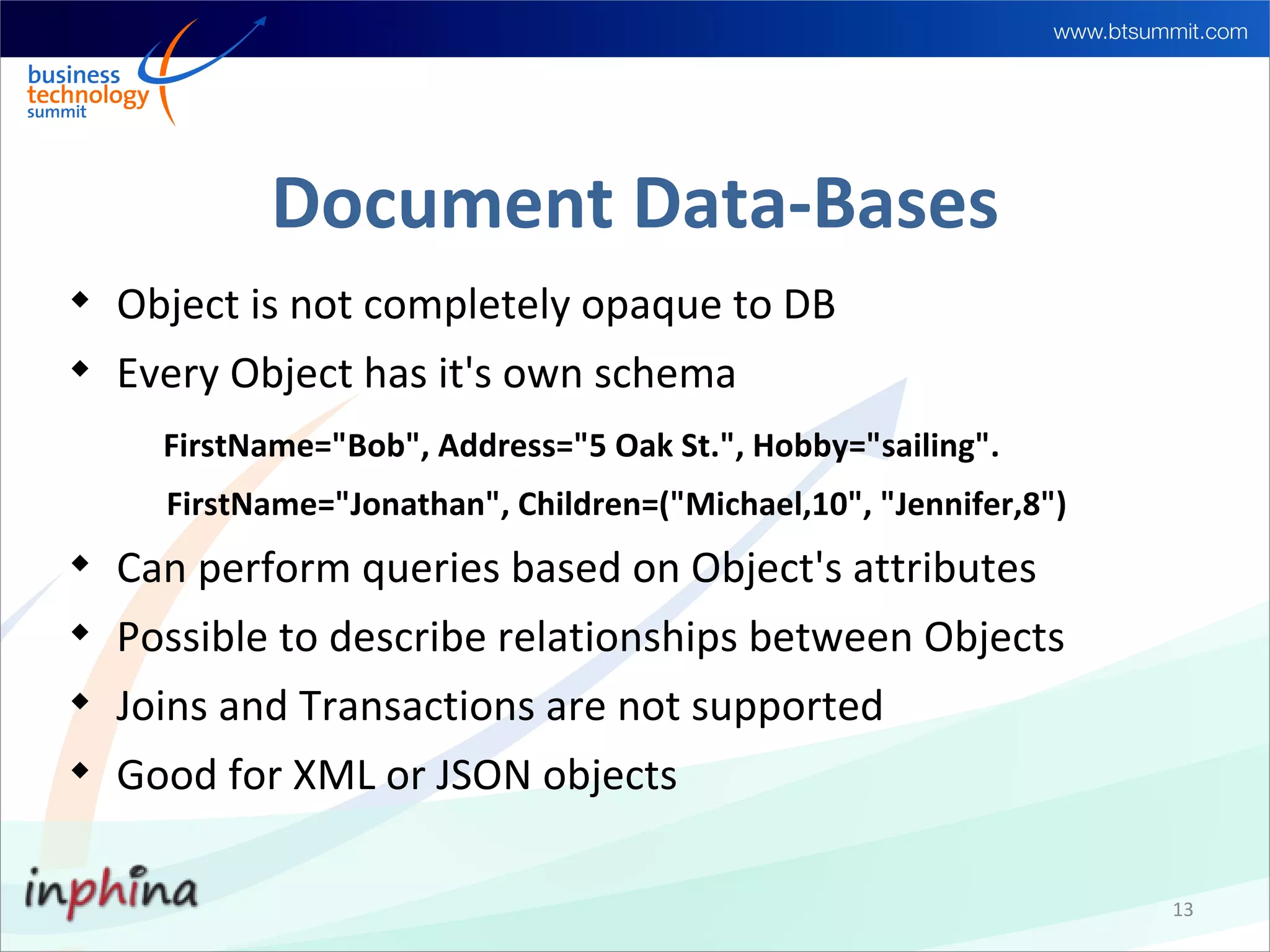
Document Data-Bases

    Object is not completely opaque to DB

    Every Object has it's own schema
      FirstName="Bob", Address="5 Oak St.", Hobby="sailing".
      FirstName="Jonathan", Children=("Michael,10", "Jennifer,8")

    Can perform queries based on Object's attributes

    Possible to describe relationships between Objects

    Joins and Transactions are not supported

    Good for XML or JSON objects

                                                                    13
Document DataBases & Cloud


                             14
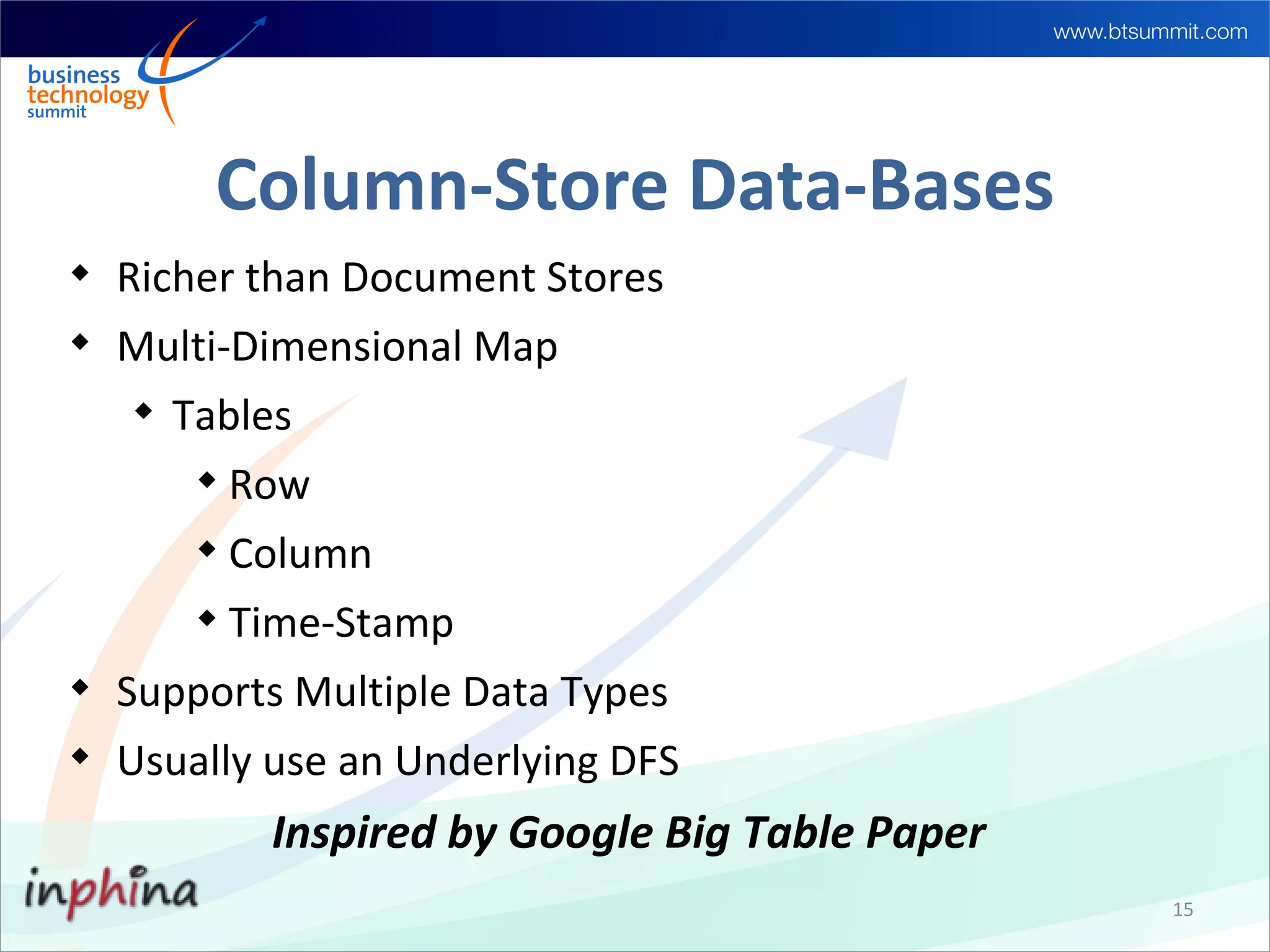
Column-Store Data-Bases

    Richer than Document Stores

    Multi-Dimensional Map
    
        Tables
         
             Row
         
             Column
         
             Time-Stamp

    Supports Multiple Data Types

    Usually use an Underlying DFS
              Inspired by Google Big Table Paper
                                                   15
Column-Store Data-Bases & Cloud


                              16
Key Factors while Making a Choice

        Application Architecture Requirements

        Platform choices

        Non-Functional Requirements
    
          Consistency
    
          Availability
    
          Partition
    
          Security
    
          Data Redemption

                                                17
Different Requirements = Different Solutions


                                           18
Scenario 1

         Feature First
     
           Corporate Data
     
           Consistency Requirements
     
           Business Intelligence
     
           Legacy Application

    RDBMS on Amazon Cloud, RackSpace (IaaS) or
       Microsoft Azure/Amazon RDS (PaaS)
                                                 19
Scenario 2

        Consumer Facing Application
    
          Big Files (Images, BLOB's, Files)
    
          Geographically Distributed
    
          Mostly writes
    
          Not heavy requirement on Rich Queries


Key-Value Data Stores (Amazon S3, Project
             Voldemort, Redis)
                                                  20
Scenario 3

        Hundreds Of Government Documents
        with different schemas
    
         Need to serve on Web
    
         Data Mining

    Document Data-Stores (Amazon SimpleDB,
          Apache Couche DB, MongoDB)

                                             21
Scenario 4

        Scale First
    
          Huge Data-Set
    
          Analytical Requirements
    
          Consumer Facing
    
          High Availability over Consistency

Column Data-Stores (Google App Engine, Hbase,
                   Cassandra)
                                               22
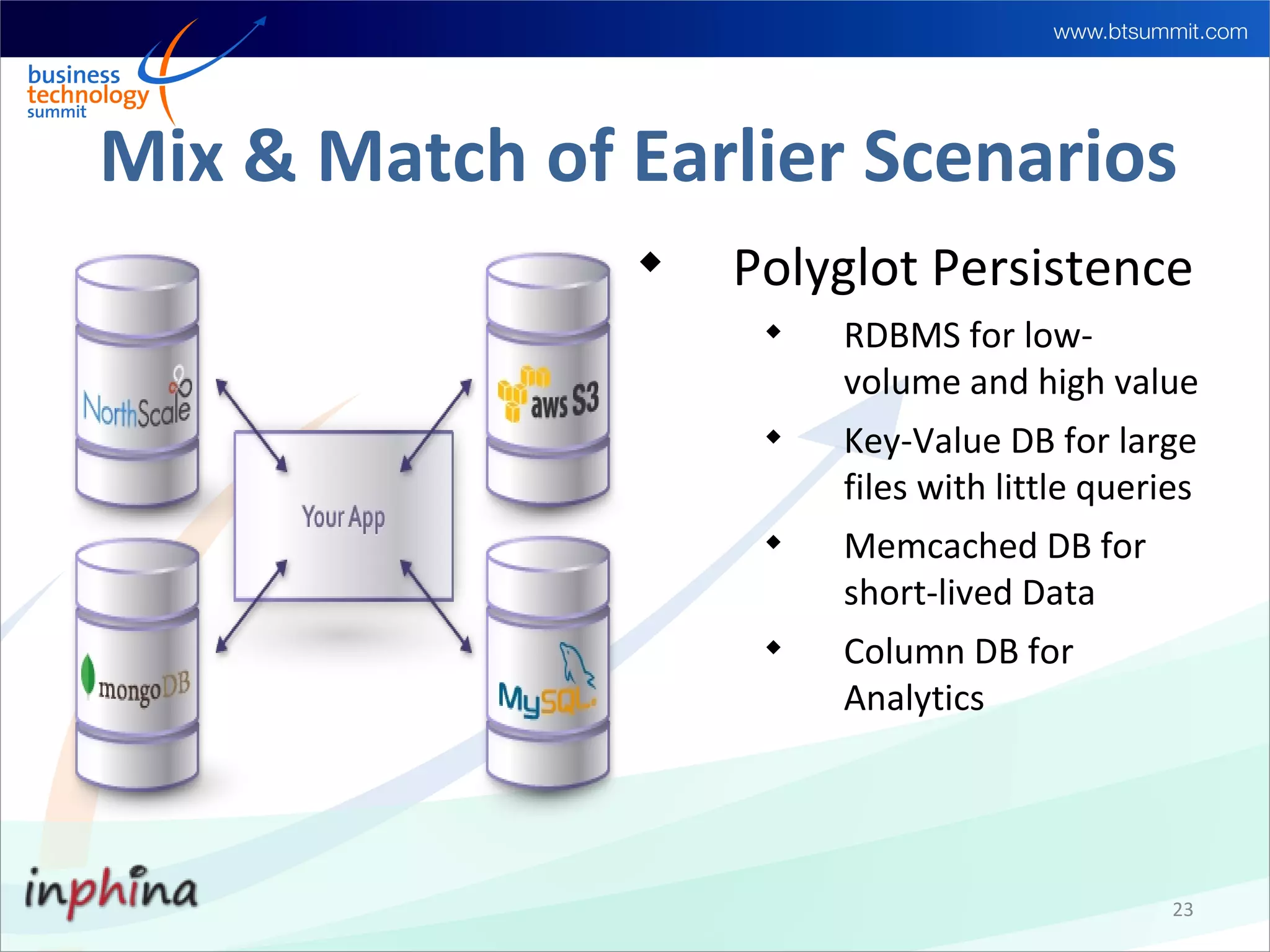
Mix & Match of Earlier Scenarios
               
                   Polyglot Persistence
                    
                        RDBMS for low-
                        volume and high value
                    
                        Key-Value DB for large
                        files with little queries
                    
                        Memcached DB for
                        short-lived Data
                    
                        Column DB for
                        Analytics


                                               23
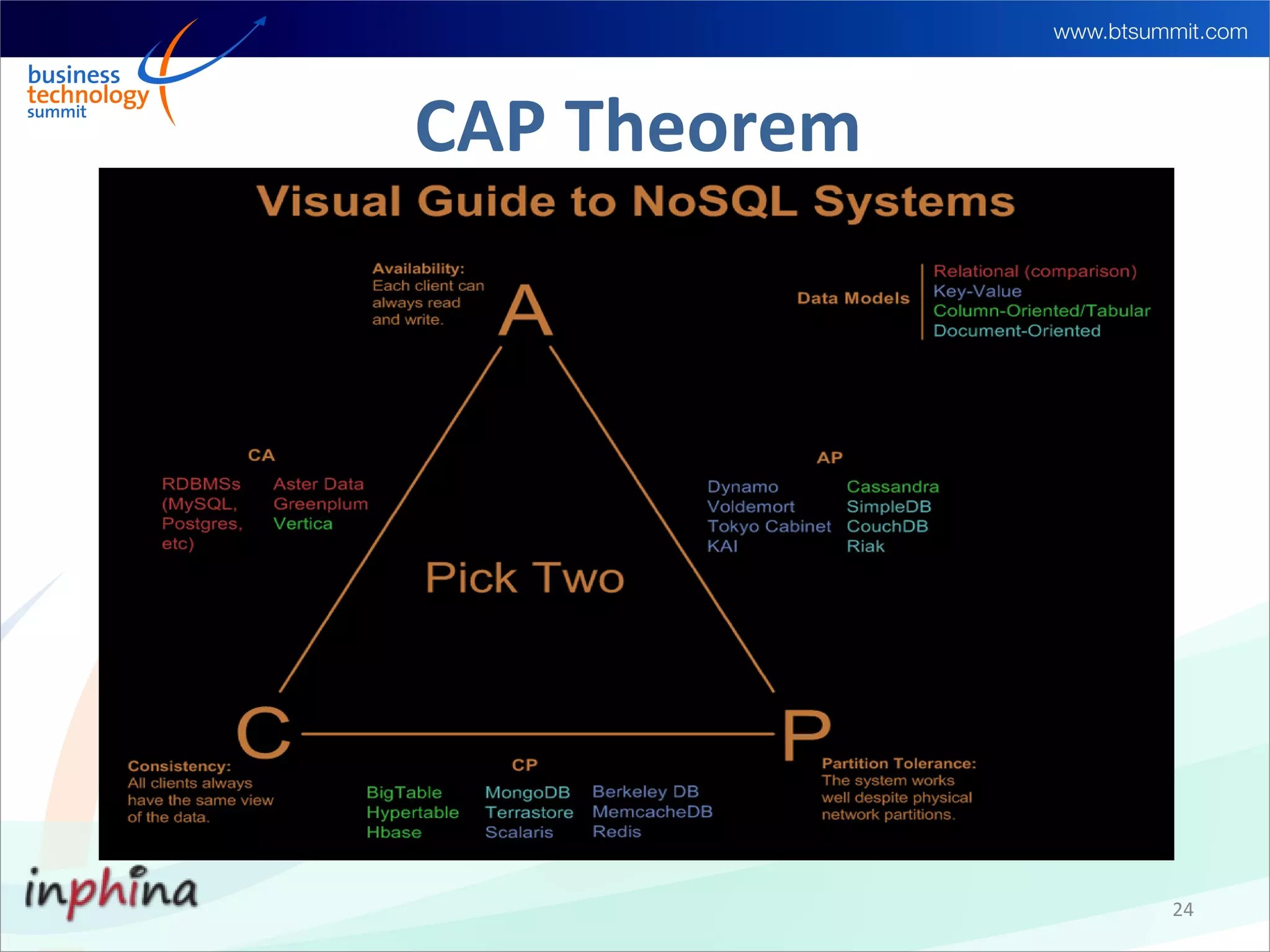
CAP Theorem


              24
Conclusions

    One Size does not Fit all


    Many choices


    No-SQL DB's providing Alternatives


    RDBMS serve useful purpose

                                         25
nkumar@inphina.com

     www.inphina.com
http://thoughts.inphina.com
References

    http://nosql-database.org/

    http://www.drdobbs.com/database/218900502

    http://perspectives.mvdirona.com/2009/11/03/OneSizeDoesNotFitAll.aspx

    http://blog.nahurst.com/visual-guide-to-nosql-systems

    http://blog.heroku.com/archives/2010/7/20/nosql/

    http://www.vineetgupta.com/2010/01/nosql-databases-part-1-landscape.html

    http://project-voldemort.com/

    http://code.google.com/p/redis/

    http://memcachedb.org/

    http://aws.amazon.com/simpledb/

    http://couchdb.apache.org/

    http://www.mongodb.org

    http://riak.basho.com

Preparing yourdataforcloud

  • 1.
    Preparing Your Datafor Cloud Narinder Kumar 11/11/2010
  • 2.
    Agenda  Relational DBMS's : Pros & Cons  Non-Relational DBMS's : Pros & Cons  Types of Non-Relational DBMS's  Current Market State  Applicability of Different Data-Bases in different environments 2
  • 3.
    Relational DBMS -Pros  Data Integrity  ACID Capabilities  High Level Query Model  Data Normalization  Data Independence 3
  • 4.
    Relational DBMS -Cons  Scaling Issues  By Duplication (Master-Slave)  By Sharding/Division (Not transparent)  Fixed Schema  Mostly disk-oriented (Performance)  May fair poorly with large data 4
  • 5.
    Non-Relational DBMS -Pros  Scalability  Replication / Availability  Performance  Deployment Flexibility  Modelling Flexibility  Faster Development (?) 5
  • 6.
    Non-Relational DBMS -Cons  Lack of Transactional Support  Data Integrity is Application's responsibility  Data Duplication / Application Dependent  Eventually Consistent (mostly)  No Standardization  New Technology 6
  • 7.
  • 8.
    Cloud Capable RDBMS s Almost every RDBMS can run in a IAAS Cloud Platform 8
  • 9.
  • 10.
    Types of Non-RelationalDBMS  Key Value Stores  Document Stores  Column Stores  Graph Stores 10
  • 11.
    Key Value Data-Bases  Object is completely Opaque to DB  Mostly GET, PUT & DELETE operations are supported  There may be limits on size of Objects Inspired by Amazon Dynamo Paper 11
  • 12.
    Key Value DataBases& Cloud Project Voldemort MemCachedDB Tokyo Tyrant 12
  • 13.
    Document Data-Bases  Object is not completely opaque to DB  Every Object has it's own schema FirstName="Bob", Address="5 Oak St.", Hobby="sailing". FirstName="Jonathan", Children=("Michael,10", "Jennifer,8")  Can perform queries based on Object's attributes  Possible to describe relationships between Objects  Joins and Transactions are not supported  Good for XML or JSON objects 13
  • 14.
  • 15.
    Column-Store Data-Bases  Richer than Document Stores  Multi-Dimensional Map  Tables  Row  Column  Time-Stamp  Supports Multiple Data Types  Usually use an Underlying DFS Inspired by Google Big Table Paper 15
  • 16.
  • 17.
    Key Factors whileMaking a Choice  Application Architecture Requirements  Platform choices  Non-Functional Requirements  Consistency  Availability  Partition  Security  Data Redemption 17
  • 18.
    Different Requirements =Different Solutions 18
  • 19.
    Scenario 1  Feature First  Corporate Data  Consistency Requirements  Business Intelligence  Legacy Application RDBMS on Amazon Cloud, RackSpace (IaaS) or Microsoft Azure/Amazon RDS (PaaS) 19
  • 20.
    Scenario 2  Consumer Facing Application  Big Files (Images, BLOB's, Files)  Geographically Distributed  Mostly writes  Not heavy requirement on Rich Queries Key-Value Data Stores (Amazon S3, Project Voldemort, Redis) 20
  • 21.
    Scenario 3  Hundreds Of Government Documents with different schemas  Need to serve on Web  Data Mining Document Data-Stores (Amazon SimpleDB, Apache Couche DB, MongoDB) 21
  • 22.
    Scenario 4  Scale First  Huge Data-Set  Analytical Requirements  Consumer Facing  High Availability over Consistency Column Data-Stores (Google App Engine, Hbase, Cassandra) 22
  • 23.
    Mix & Matchof Earlier Scenarios  Polyglot Persistence  RDBMS for low- volume and high value  Key-Value DB for large files with little queries  Memcached DB for short-lived Data  Column DB for Analytics 23
  • 24.
  • 25.
    Conclusions  One Size does not Fit all  Many choices  No-SQL DB's providing Alternatives  RDBMS serve useful purpose 25
  • 26.
    nkumar@inphina.com www.inphina.com http://thoughts.inphina.com
  • 27.
    References  http://nosql-database.org/  http://www.drdobbs.com/database/218900502  http://perspectives.mvdirona.com/2009/11/03/OneSizeDoesNotFitAll.aspx  http://blog.nahurst.com/visual-guide-to-nosql-systems  http://blog.heroku.com/archives/2010/7/20/nosql/  http://www.vineetgupta.com/2010/01/nosql-databases-part-1-landscape.html  http://project-voldemort.com/  http://code.google.com/p/redis/  http://memcachedb.org/  http://aws.amazon.com/simpledb/  http://couchdb.apache.org/  http://www.mongodb.org  http://riak.basho.com