‌‫‌ای‌بر‌ابزارهای‬‫ه‬‫مقدم‬
‫پردازش‌داده‌در‌کالن‌داده‬
VAHID AMIRI
VAHIDAMIRY.IR
VAHID.AMIRY@GMAIL.COM
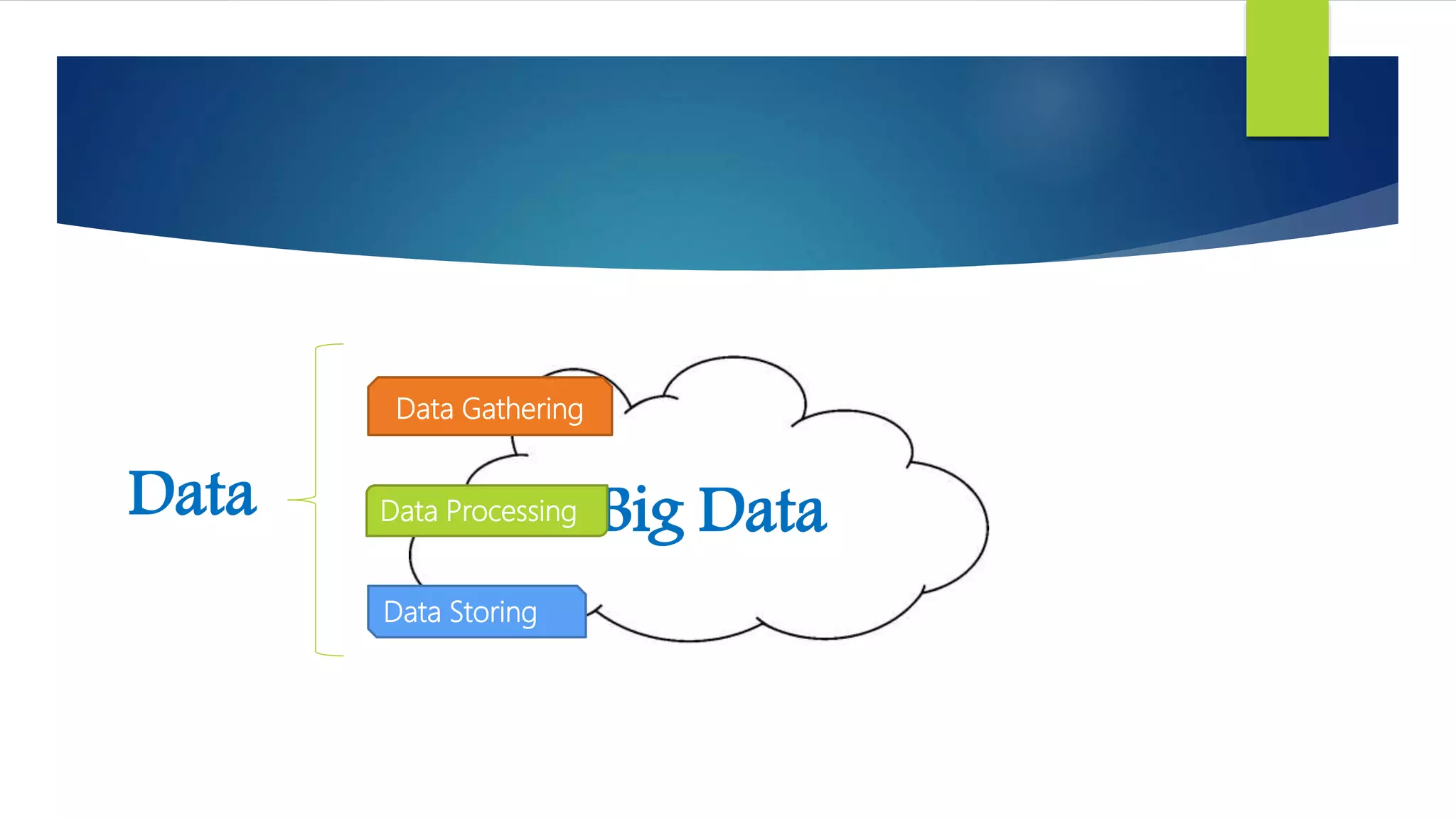
Big DataData Data Processing
Data Gathering
Data Storing
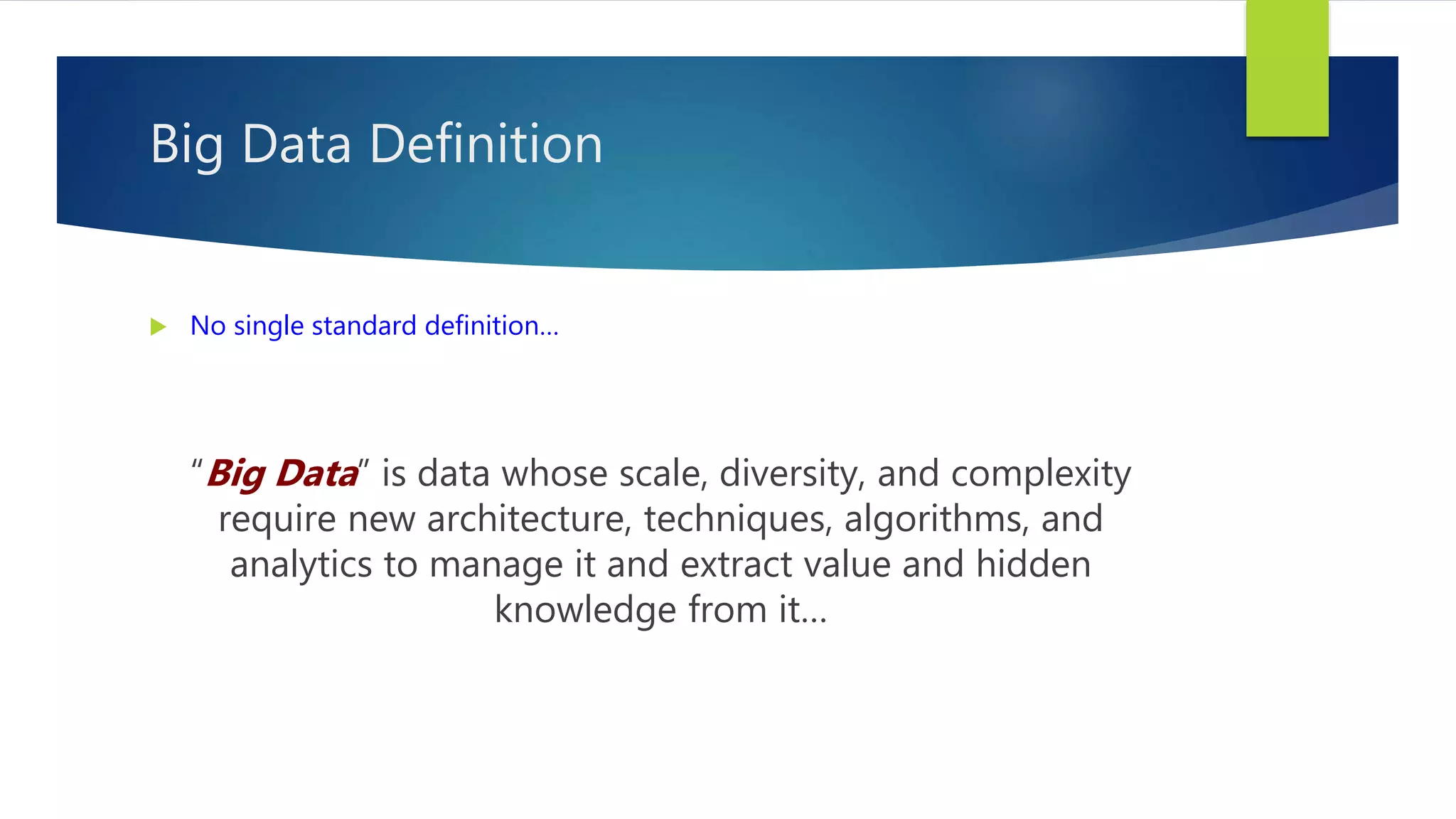
Big Data Definition
 No single standard definition…
“Big Data” is data whose scale, diversity, and complexity
require new architecture, techniques, algorithms, and
analytics to manage it and extract value and hidden
knowledge from it…
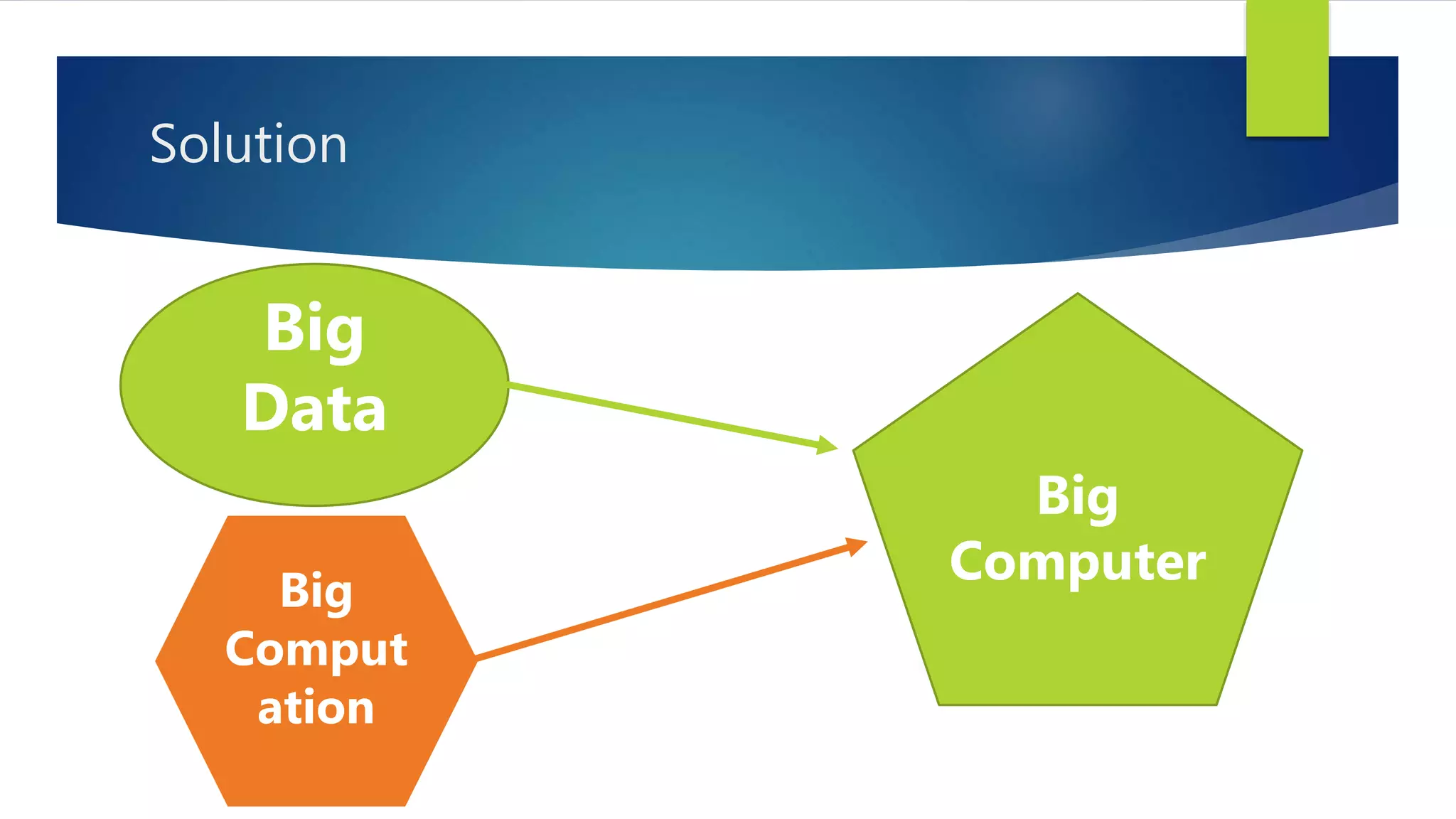
Solution
Big
Data
Big
Comput
ation
Big
Computer
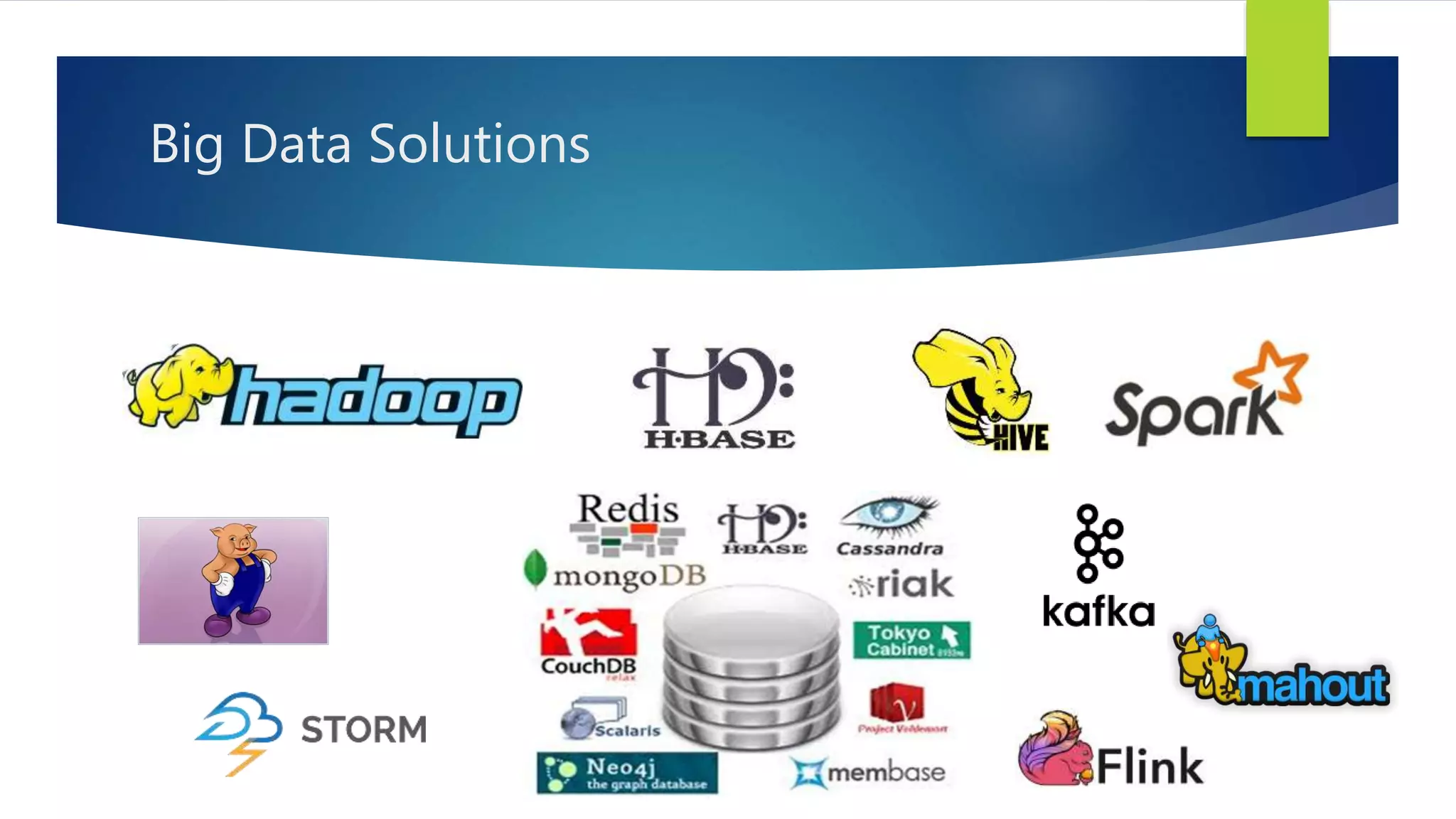
Big Data Solutions
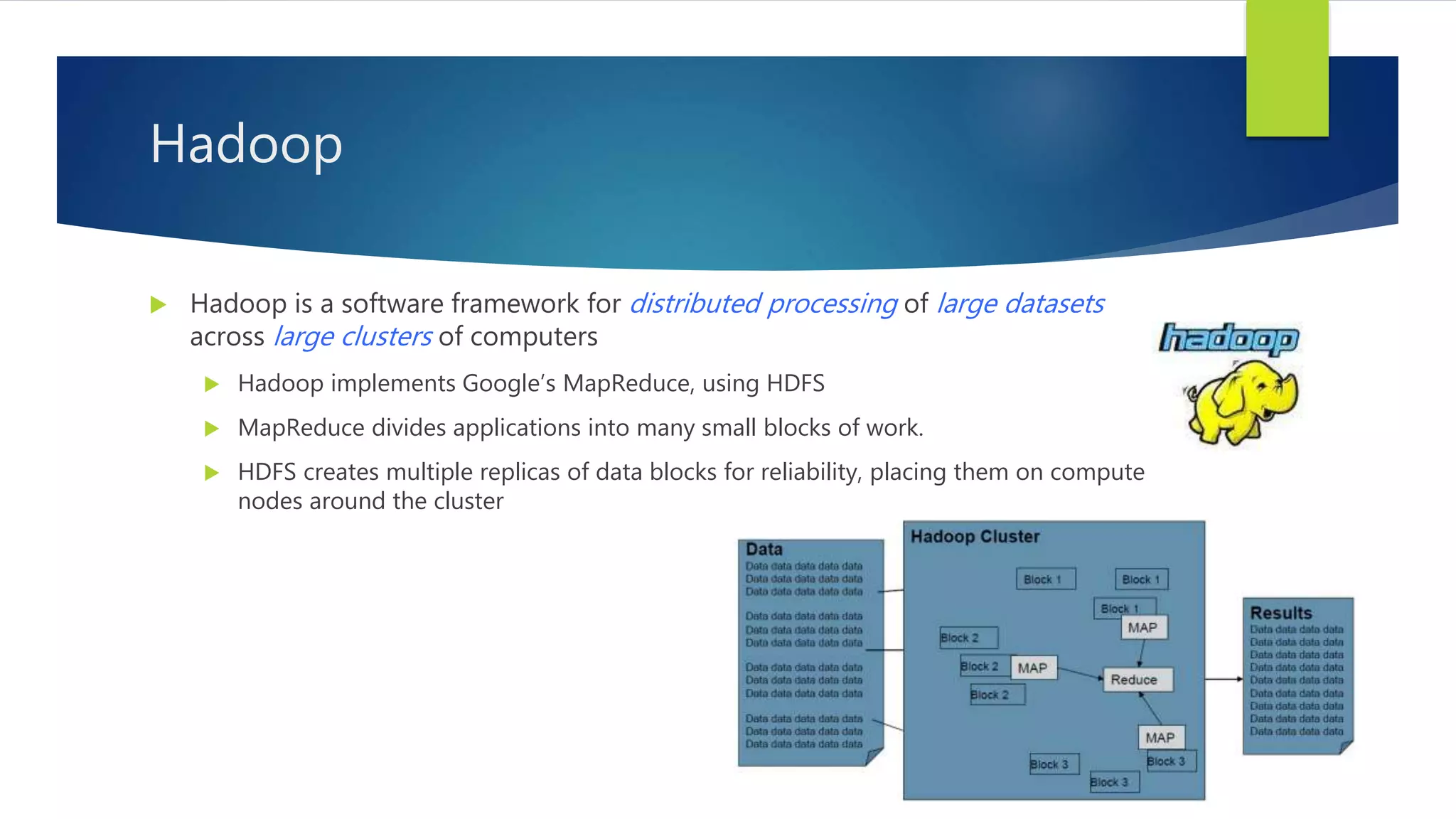
 Hadoop is a software framework for distributed processing of large datasets
across large clusters of computers
 Hadoop implements Google’s MapReduce, using HDFS
 MapReduce divides applications into many small blocks of work.
 HDFS creates multiple replicas of data blocks for reliability, placing them on compute
nodes around the cluster
Hadoop
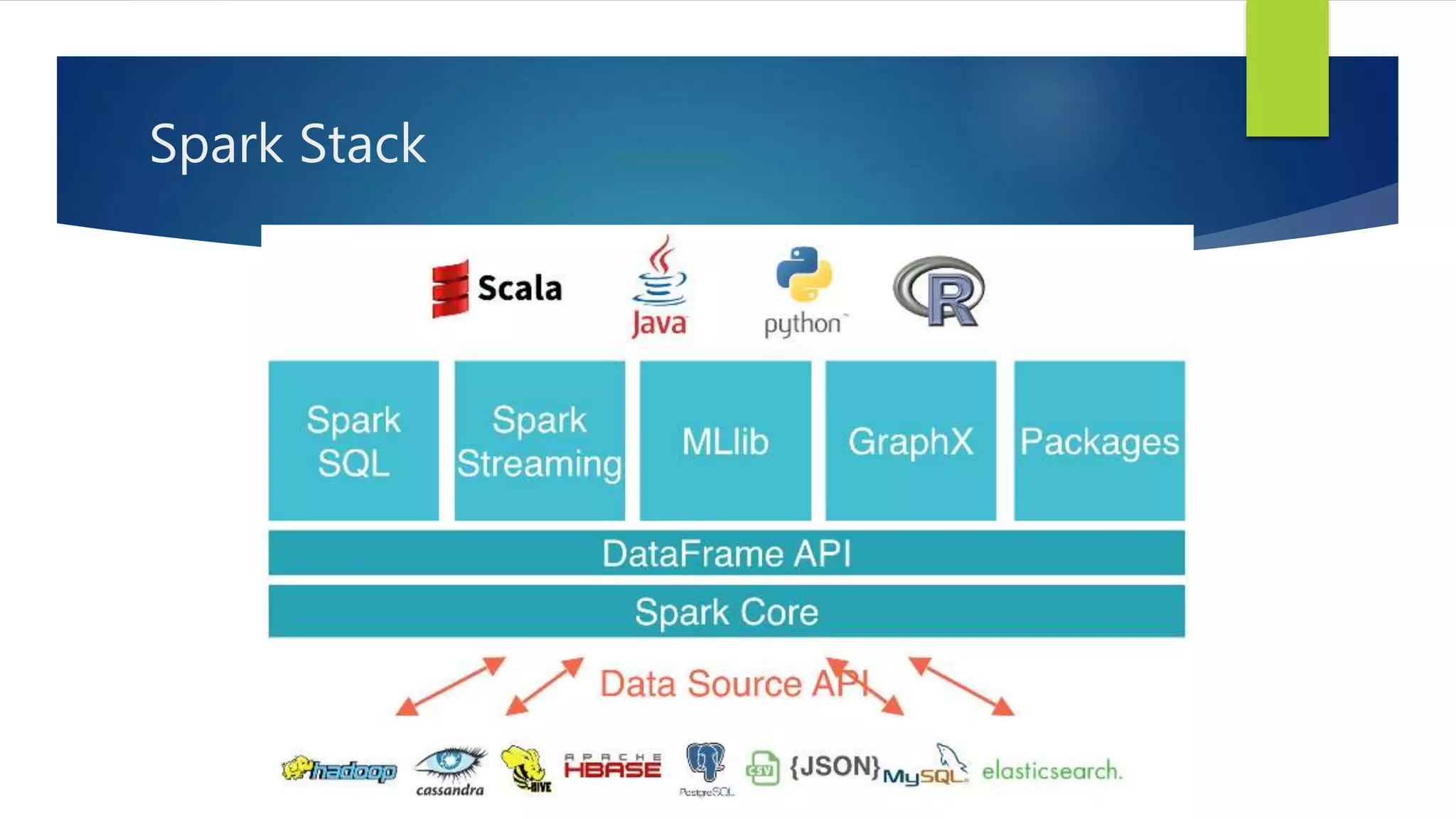
Spark Stack
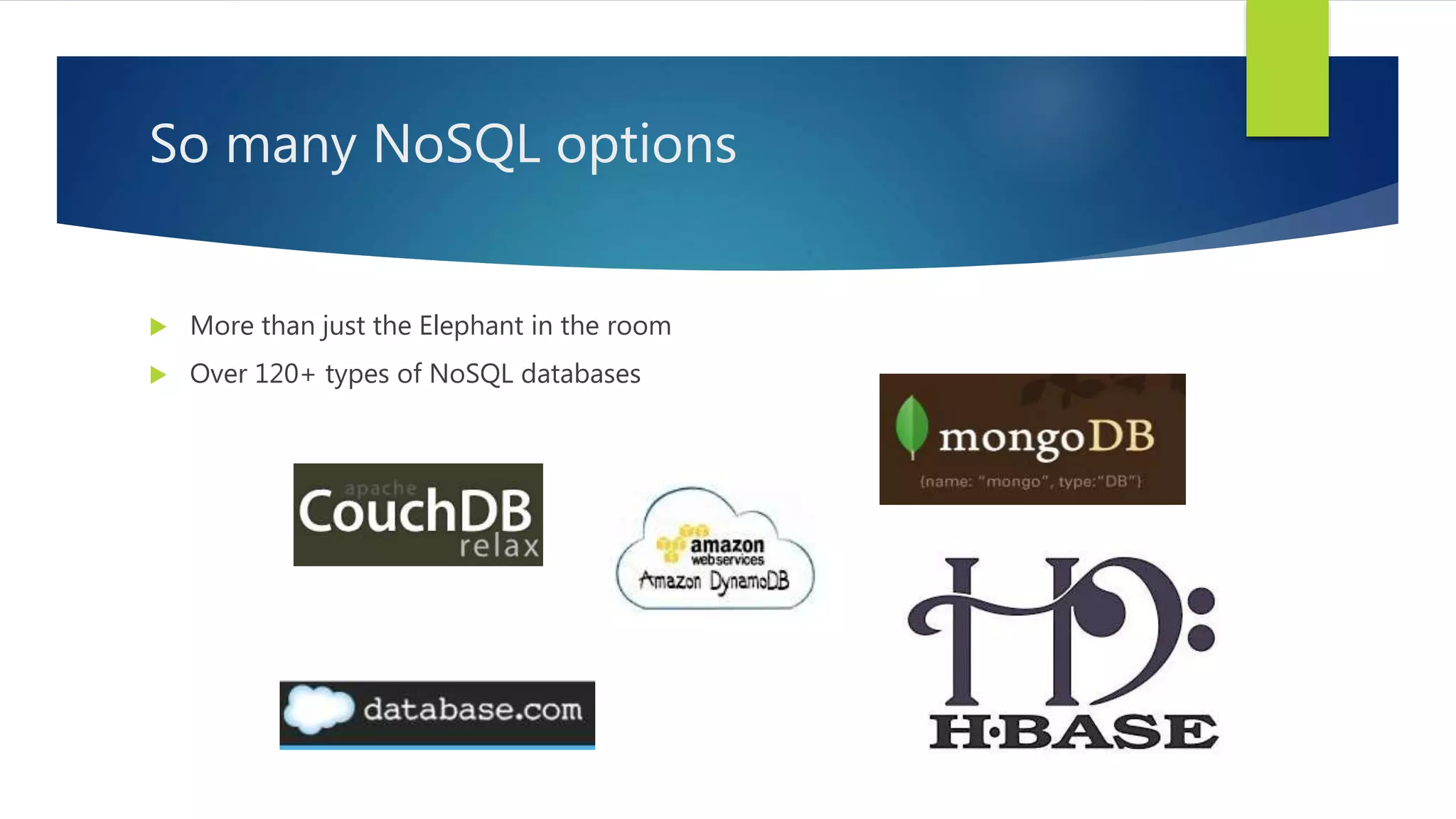
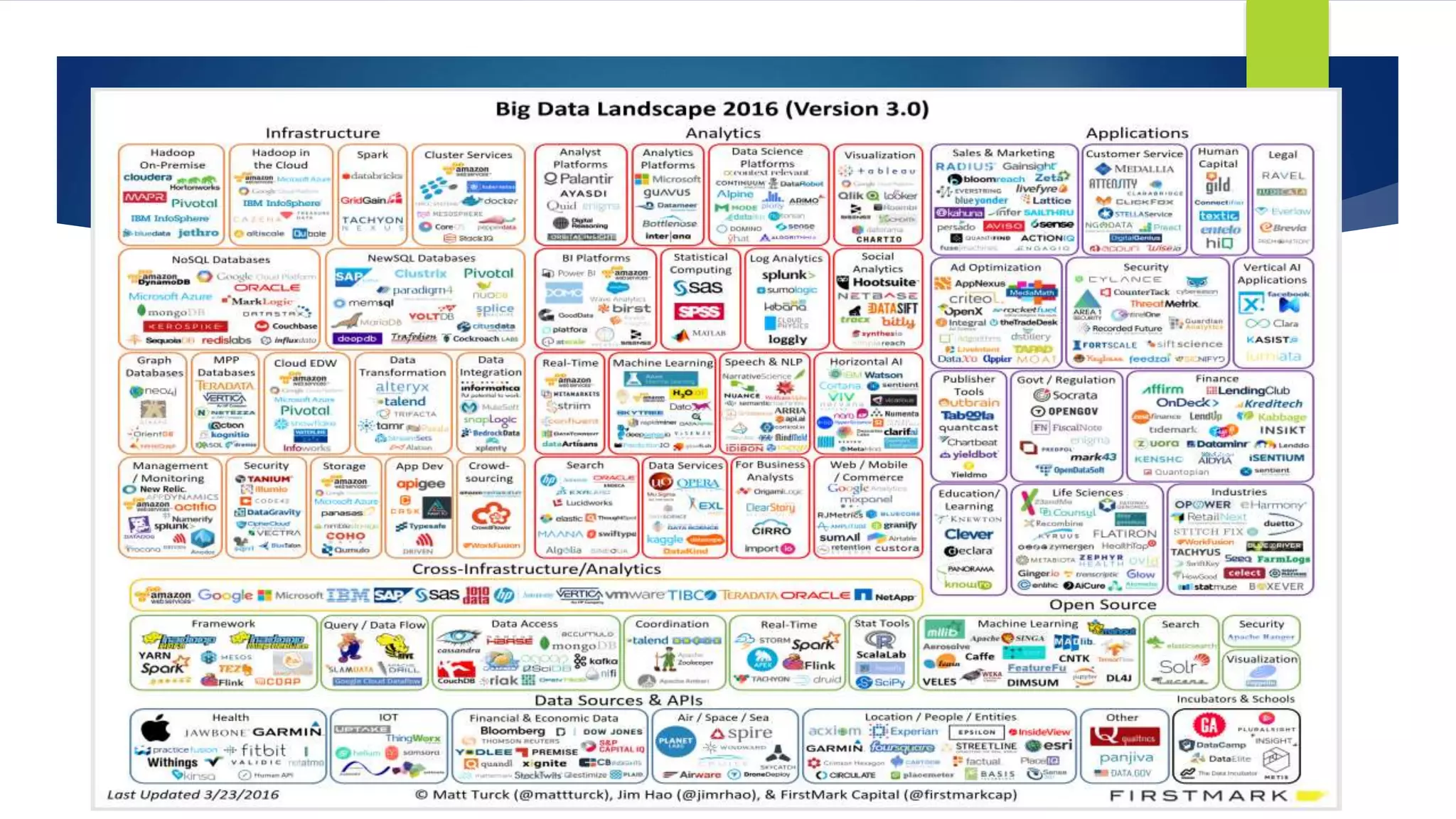
 More than just the Elephant in the room
 Over 120+ types of NoSQL databases
So many NoSQL options
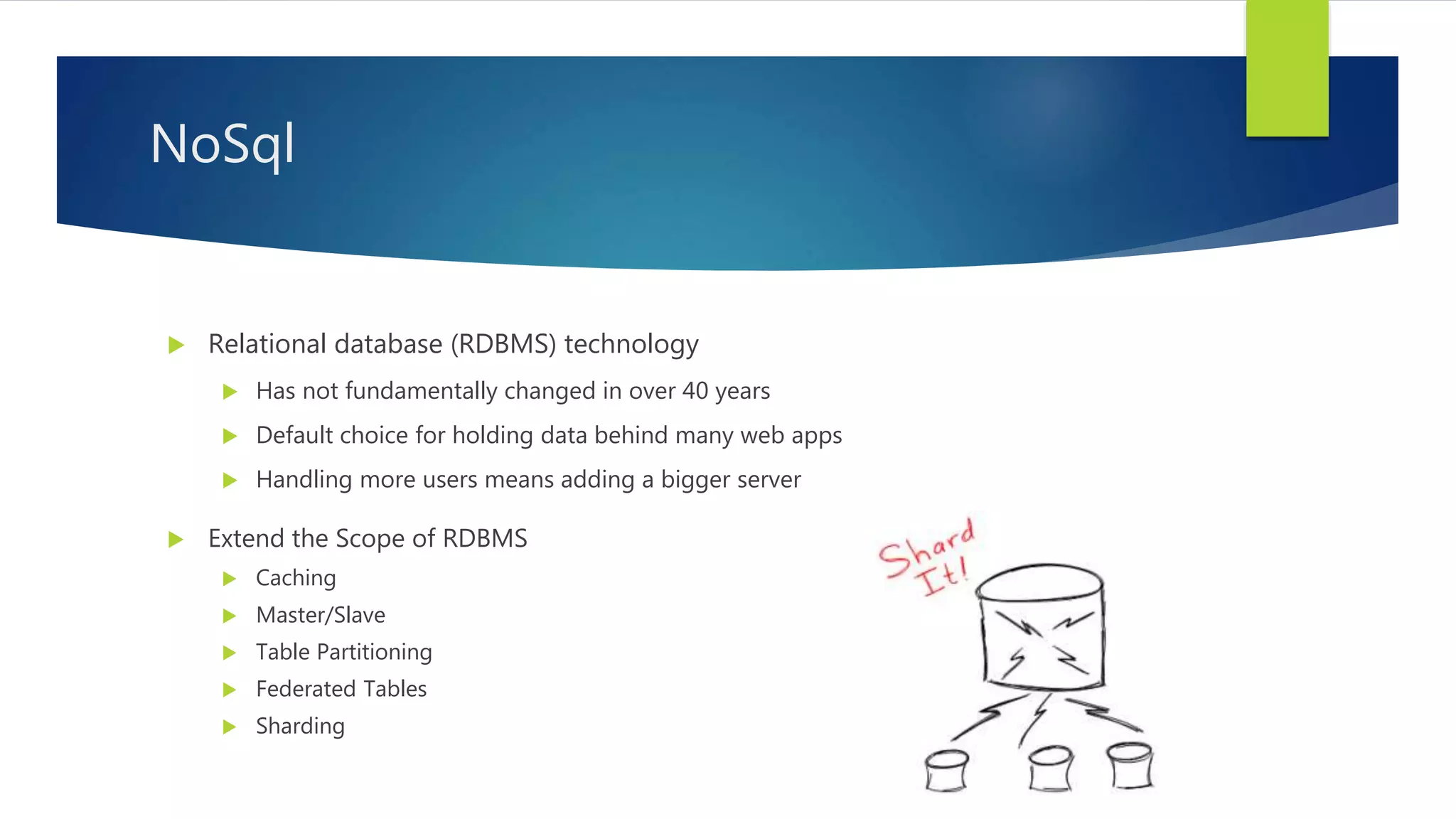
 Extend the Scope of RDBMS
 Caching
 Master/Slave
 Table Partitioning
 Federated Tables
 Sharding
NoSql
 Relational database (RDBMS) technology
 Has not fundamentally changed in over 40 years
 Default choice for holding data behind many web apps
 Handling more users means adding a bigger server
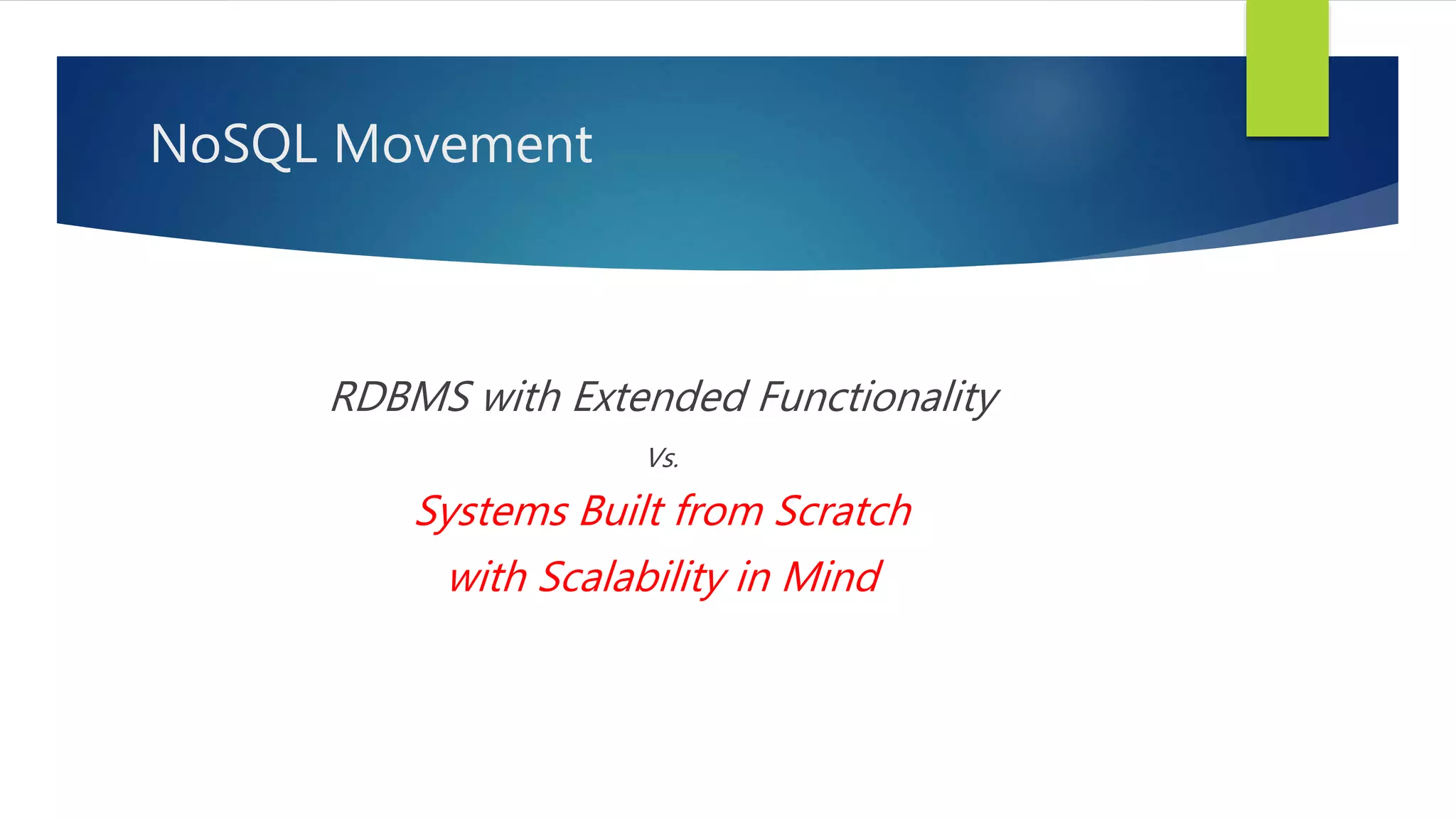
RDBMS with Extended Functionality
Vs.
Systems Built from Scratch
with Scalability in Mind
NoSQL Movement
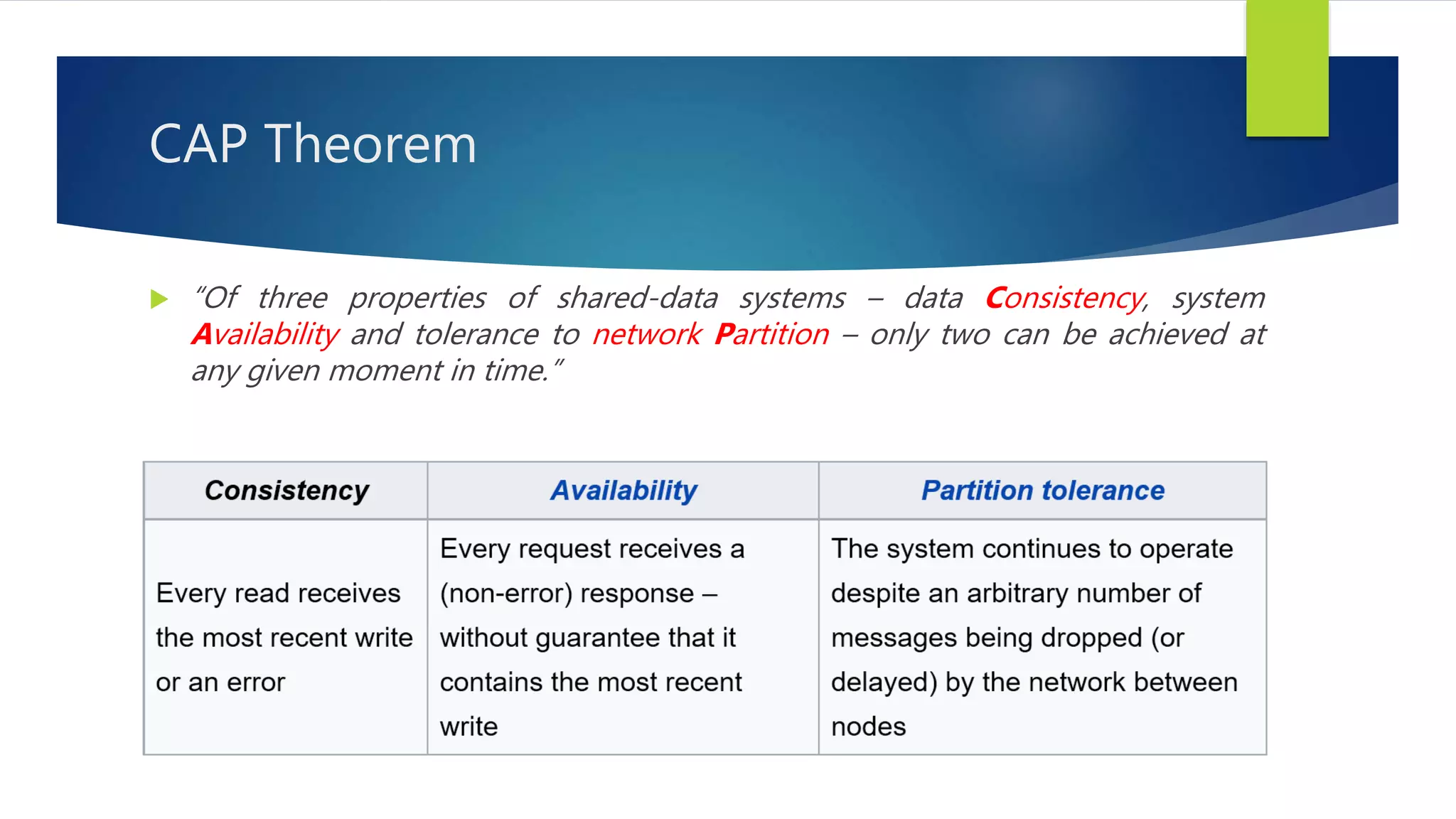
CAP Theorem
 “Of three properties of shared-data systems – data Consistency, system
Availability and tolerance to network Partition – only two can be achieved at
any given moment in time.”
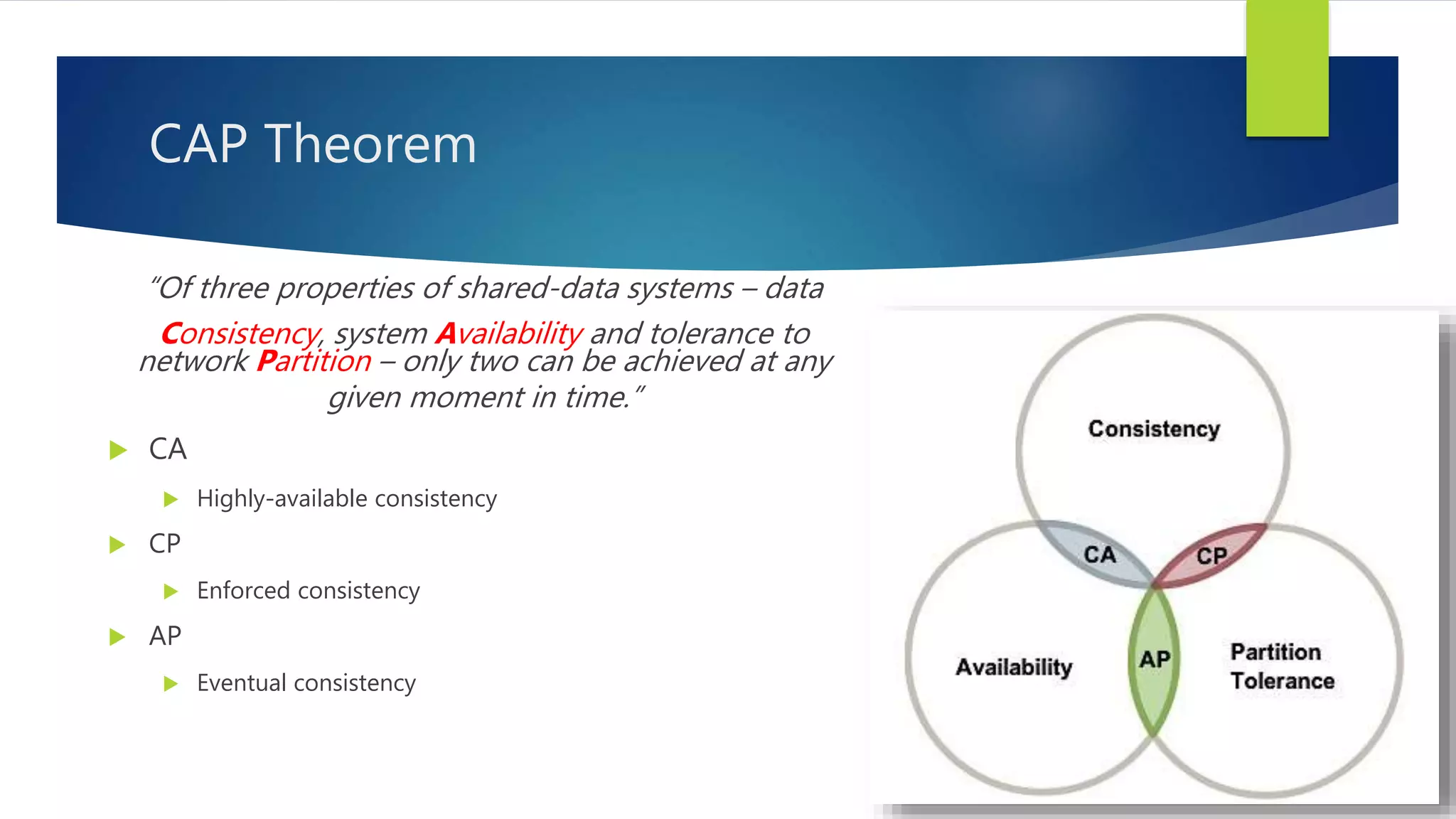
“Of three properties of shared-data systems – data
Consistency, system Availability and tolerance to
network Partition – only two can be achieved at any
given moment in time.”
 CA
 Highly-available consistency
 CP
 Enforced consistency
 AP
 Eventual consistency
CAP Theorem
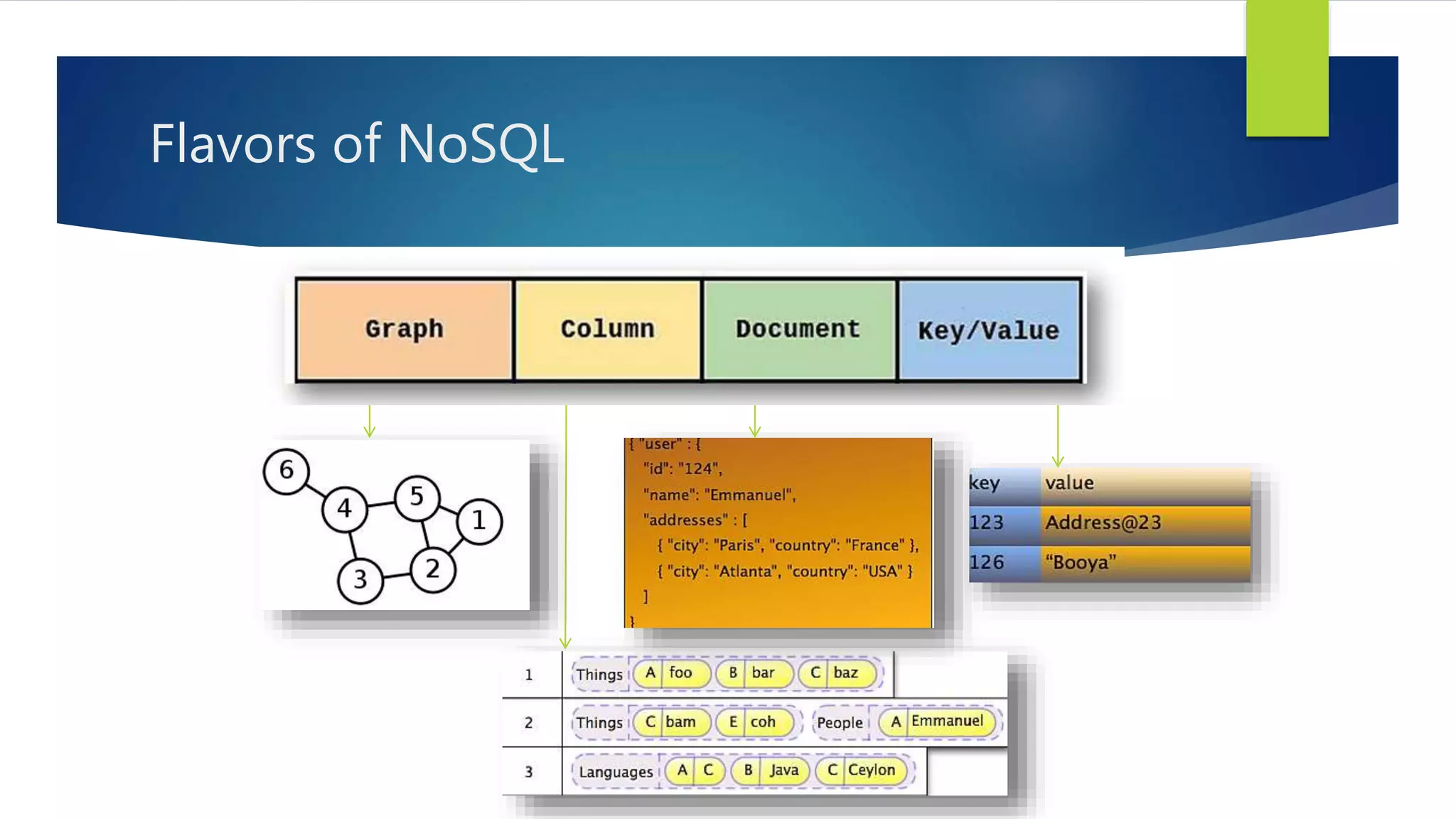
Flavors of NoSQL
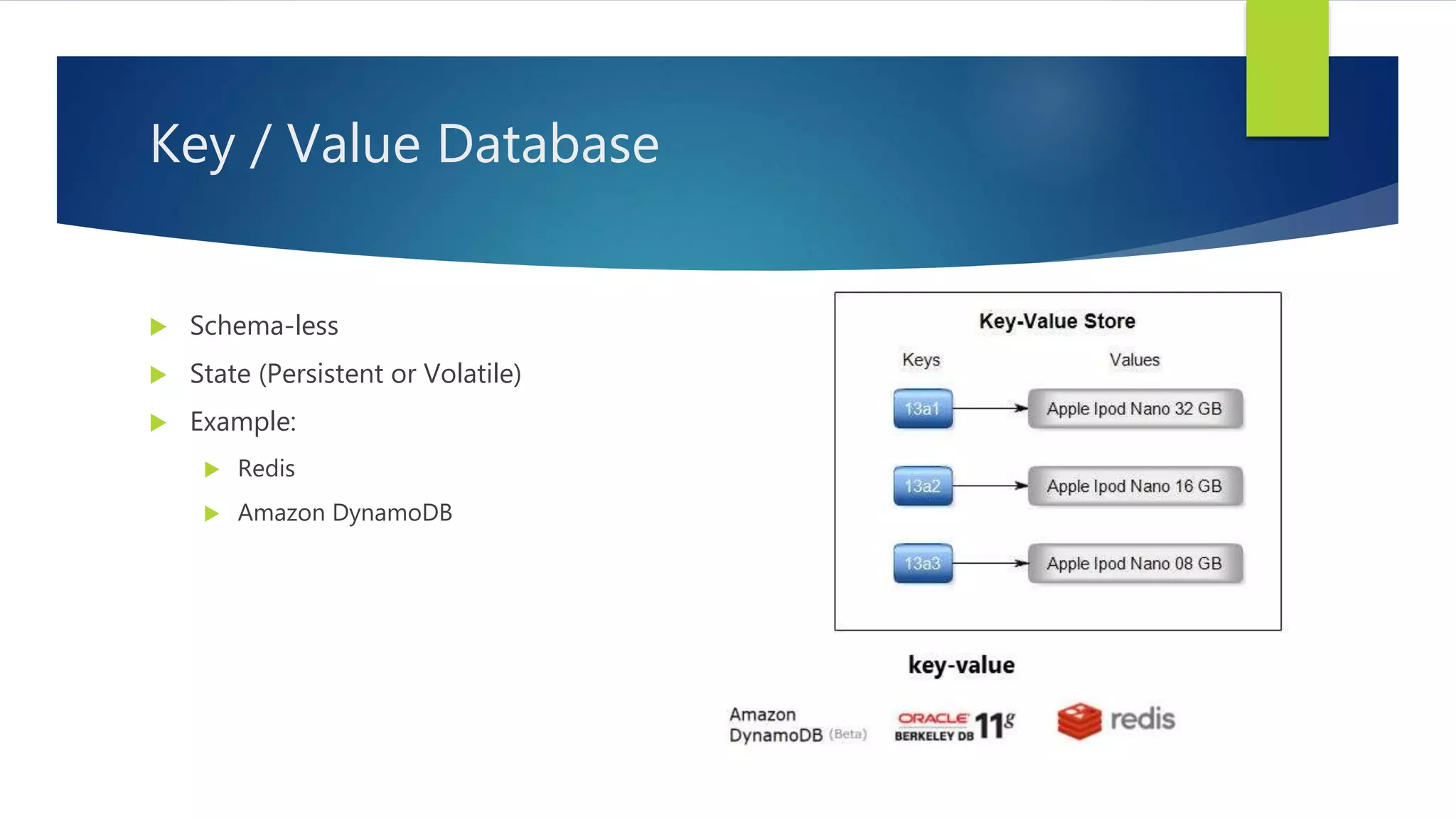
 Schema-less
 State (Persistent or Volatile)
 Example:
 Redis
 Amazon DynamoDB
Key / Value Database
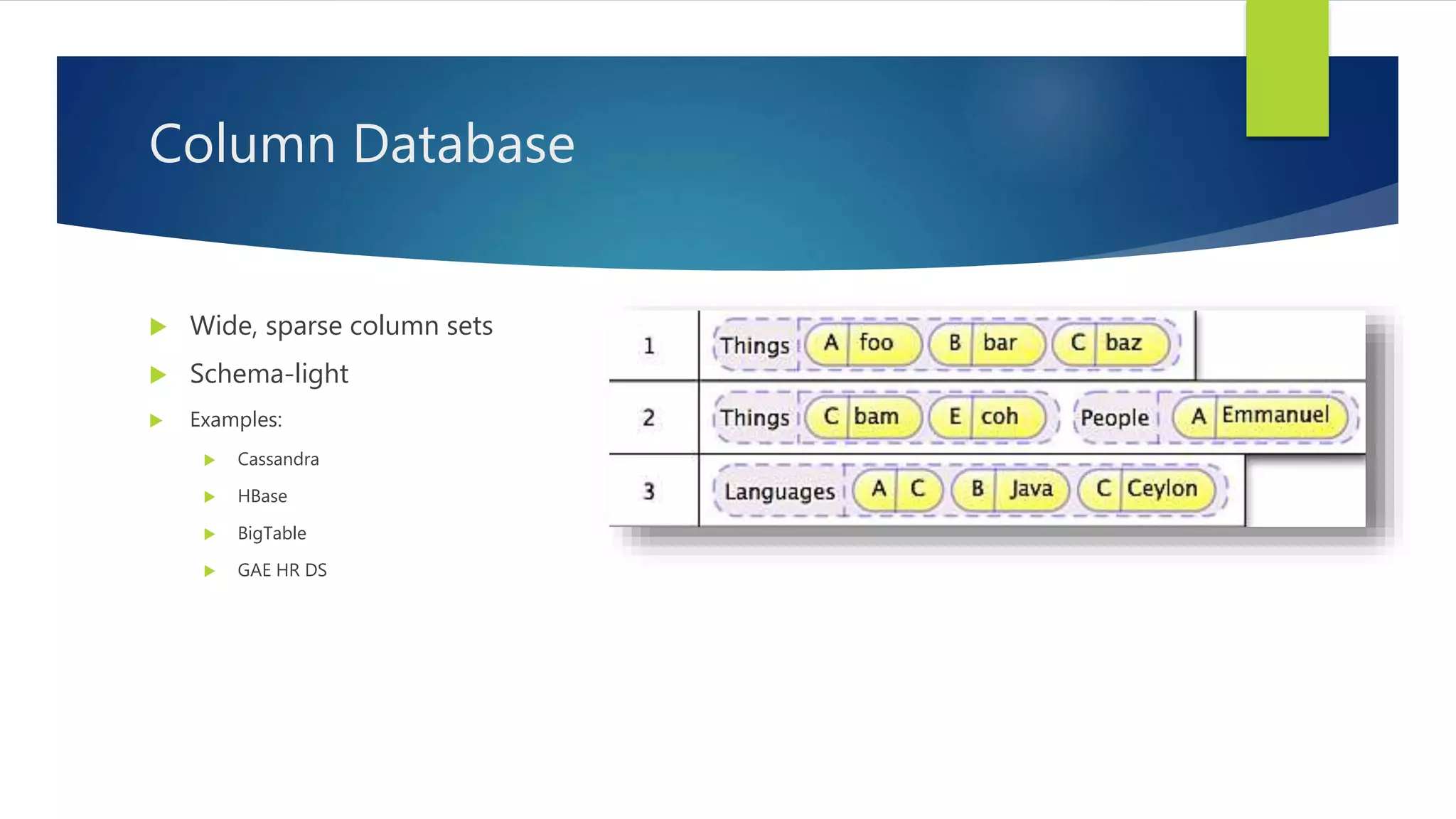
 Wide, sparse column sets
 Schema-light
 Examples:
 Cassandra
 HBase
 BigTable
 GAE HR DS
Column Database
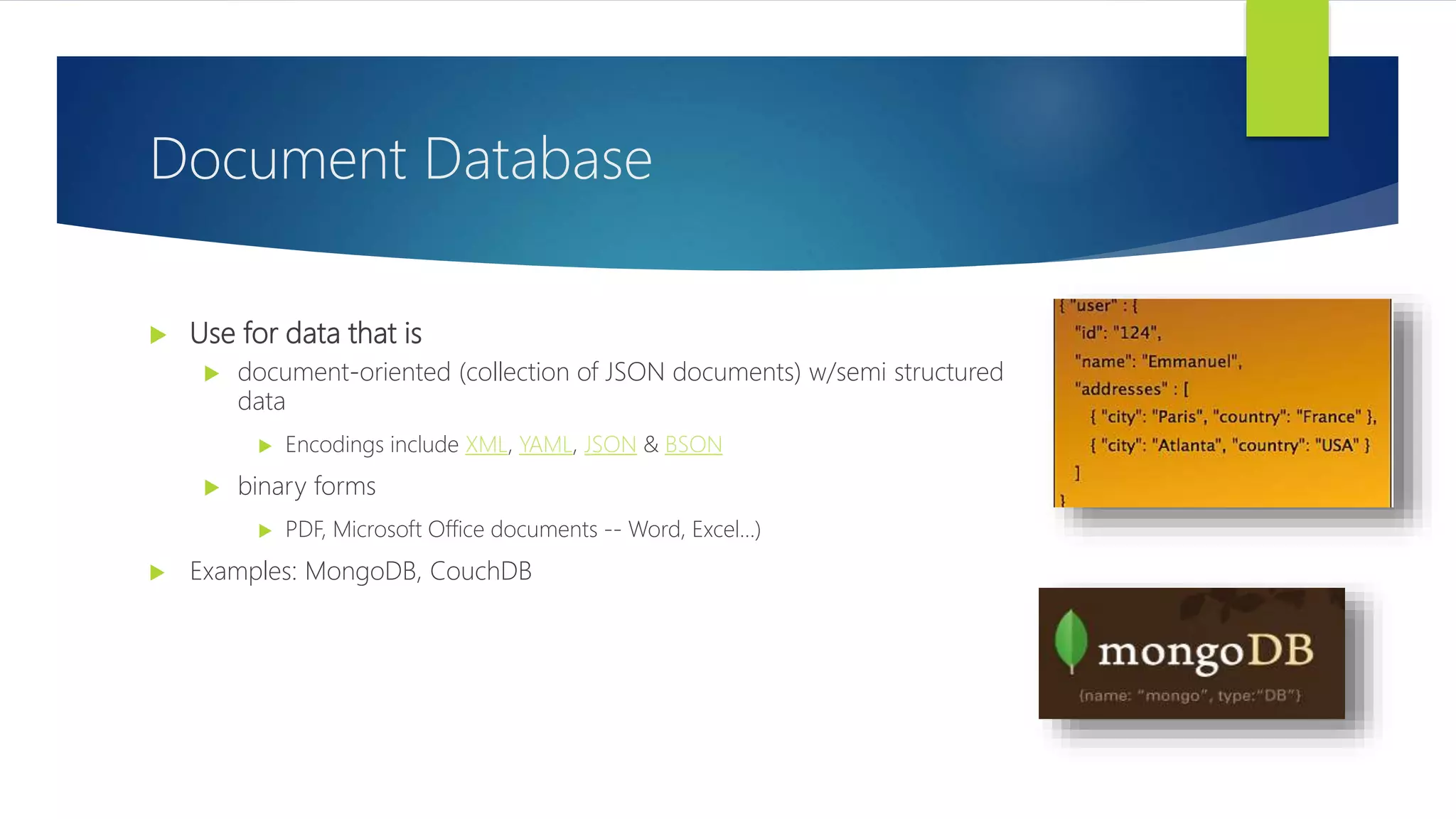
 Use for data that is
 document-oriented (collection of JSON documents) w/semi structured
data
 Encodings include XML, YAML, JSON & BSON
 binary forms
 PDF, Microsoft Office documents -- Word, Excel…)
 Examples: MongoDB, CouchDB
Document Database
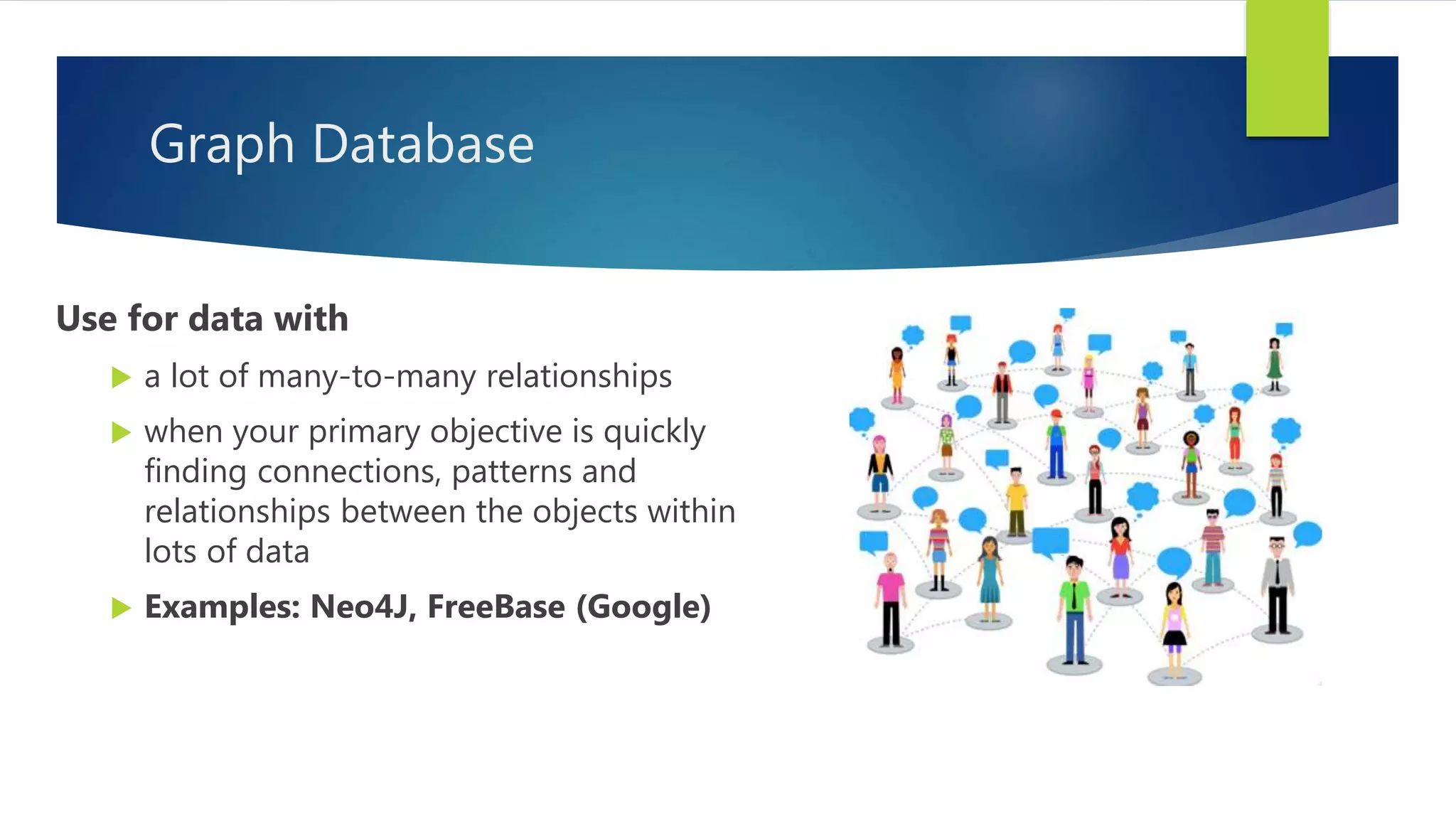
Graph Database
Use for data with
 a lot of many-to-many relationships
 when your primary objective is quickly
finding connections, patterns and
relationships between the objects within
lots of data
 Examples: Neo4J, FreeBase (Google)
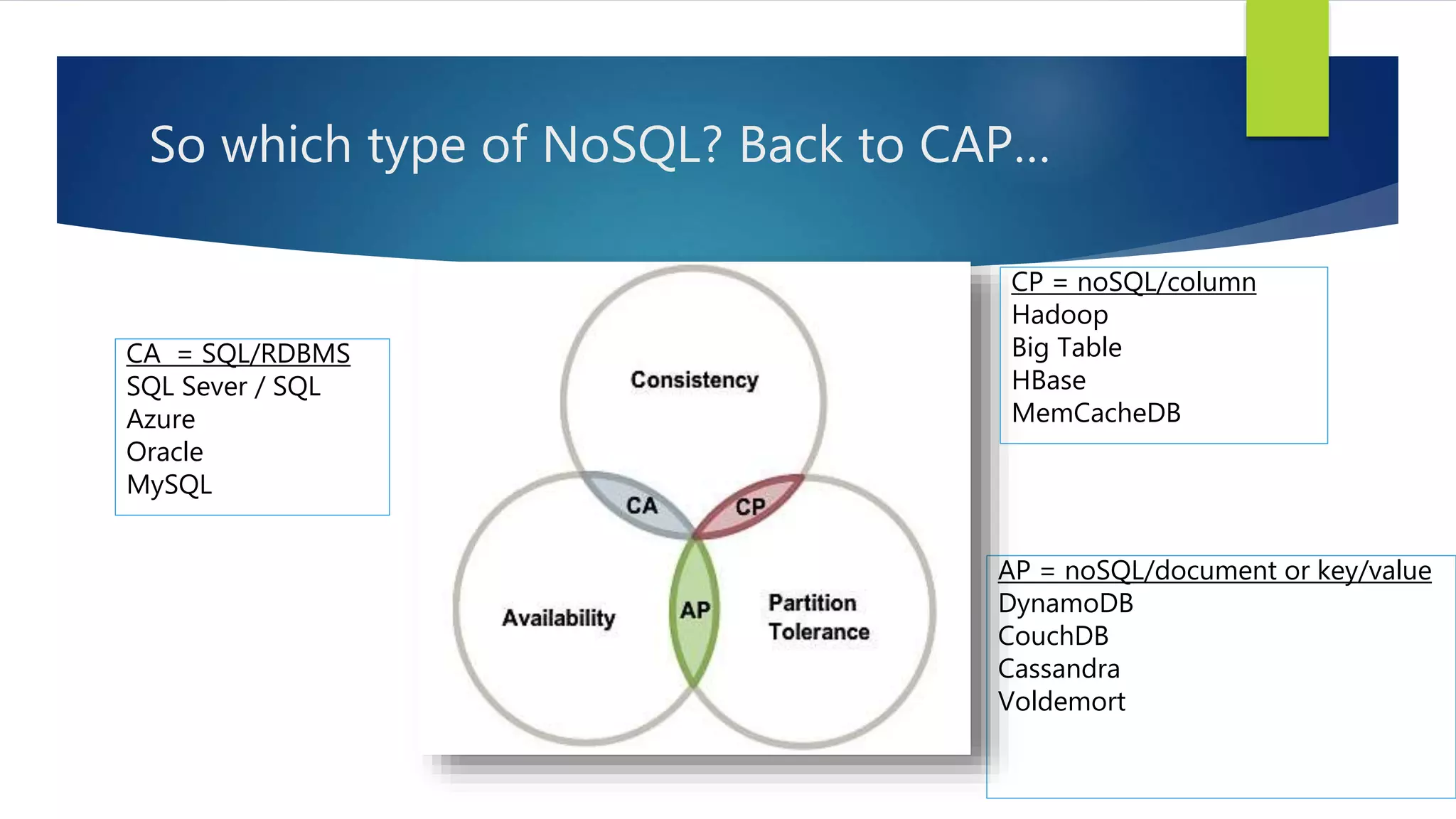
So which type of NoSQL? Back to CAP…
CP = noSQL/column
Hadoop
Big Table
HBase
MemCacheDB
AP = noSQL/document or key/value
DynamoDB
CouchDB
Cassandra
Voldemort
CA = SQL/RDBMS
SQL Sever / SQL
Azure
Oracle
MySQL
Big data vahidamiri-datastack.ir

Big data vahidamiri-datastack.ir

  • 1.
  • 2.
    Big DataData DataProcessing Data Gathering Data Storing
  • 4.
    Big Data Definition No single standard definition… “Big Data” is data whose scale, diversity, and complexity require new architecture, techniques, algorithms, and analytics to manage it and extract value and hidden knowledge from it…
  • 6.
  • 7.
  • 8.
     Hadoop isa software framework for distributed processing of large datasets across large clusters of computers  Hadoop implements Google’s MapReduce, using HDFS  MapReduce divides applications into many small blocks of work.  HDFS creates multiple replicas of data blocks for reliability, placing them on compute nodes around the cluster Hadoop
  • 10.
  • 11.
     More thanjust the Elephant in the room  Over 120+ types of NoSQL databases So many NoSQL options
  • 12.
     Extend theScope of RDBMS  Caching  Master/Slave  Table Partitioning  Federated Tables  Sharding NoSql  Relational database (RDBMS) technology  Has not fundamentally changed in over 40 years  Default choice for holding data behind many web apps  Handling more users means adding a bigger server
  • 13.
    RDBMS with ExtendedFunctionality Vs. Systems Built from Scratch with Scalability in Mind NoSQL Movement
  • 14.
    CAP Theorem  “Ofthree properties of shared-data systems – data Consistency, system Availability and tolerance to network Partition – only two can be achieved at any given moment in time.”
  • 15.
    “Of three propertiesof shared-data systems – data Consistency, system Availability and tolerance to network Partition – only two can be achieved at any given moment in time.”  CA  Highly-available consistency  CP  Enforced consistency  AP  Eventual consistency CAP Theorem
  • 16.
  • 17.
     Schema-less  State(Persistent or Volatile)  Example:  Redis  Amazon DynamoDB Key / Value Database
  • 18.
     Wide, sparsecolumn sets  Schema-light  Examples:  Cassandra  HBase  BigTable  GAE HR DS Column Database
  • 19.
     Use fordata that is  document-oriented (collection of JSON documents) w/semi structured data  Encodings include XML, YAML, JSON & BSON  binary forms  PDF, Microsoft Office documents -- Word, Excel…)  Examples: MongoDB, CouchDB Document Database
  • 20.
    Graph Database Use fordata with  a lot of many-to-many relationships  when your primary objective is quickly finding connections, patterns and relationships between the objects within lots of data  Examples: Neo4J, FreeBase (Google)
  • 21.
    So which typeof NoSQL? Back to CAP… CP = noSQL/column Hadoop Big Table HBase MemCacheDB AP = noSQL/document or key/value DynamoDB CouchDB Cassandra Voldemort CA = SQL/RDBMS SQL Sever / SQL Azure Oracle MySQL