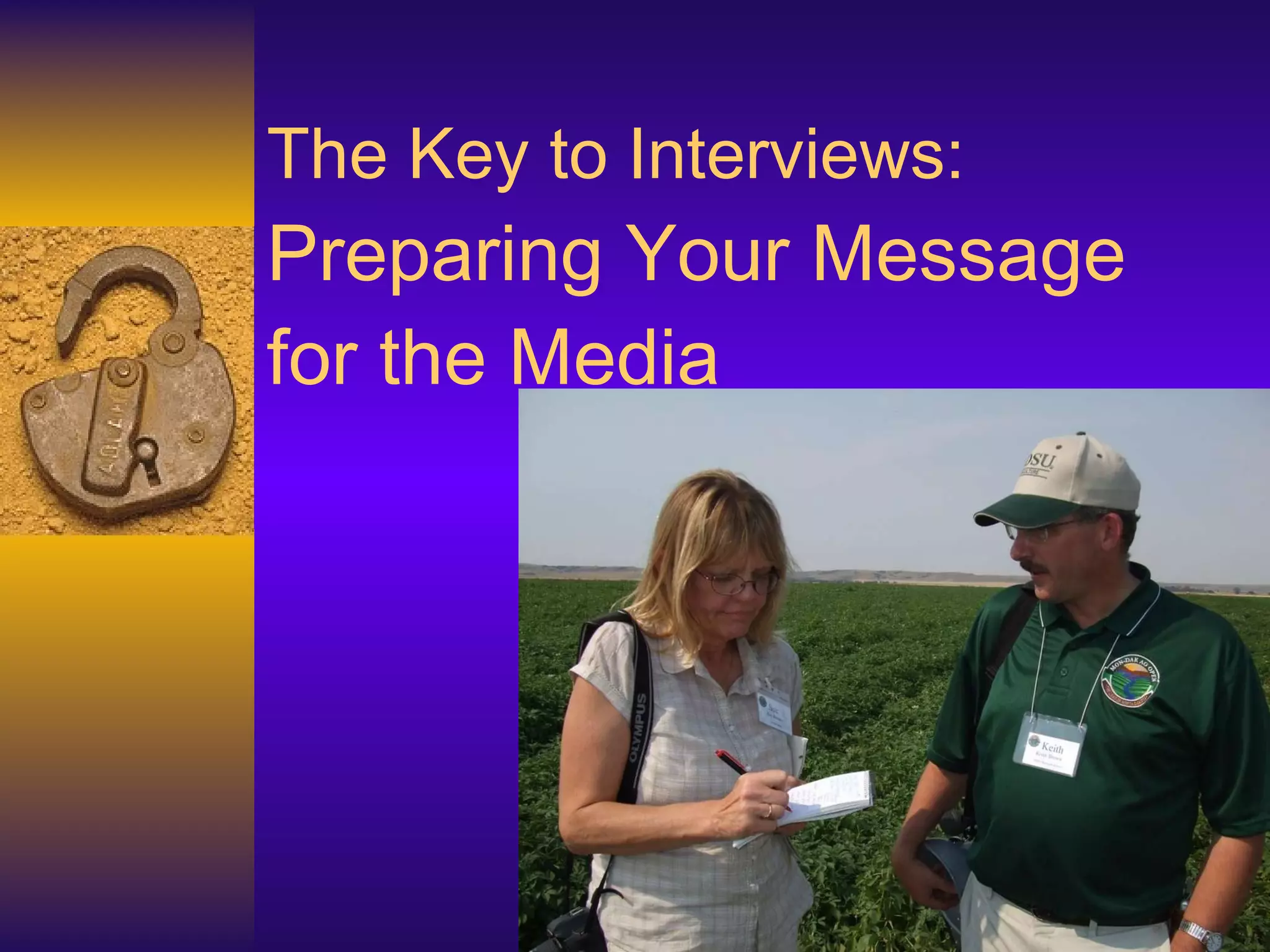
The Key to Interviews: Preparing Your Message for the Media
Agenda Setting What the public thinks depends on what the public hears first
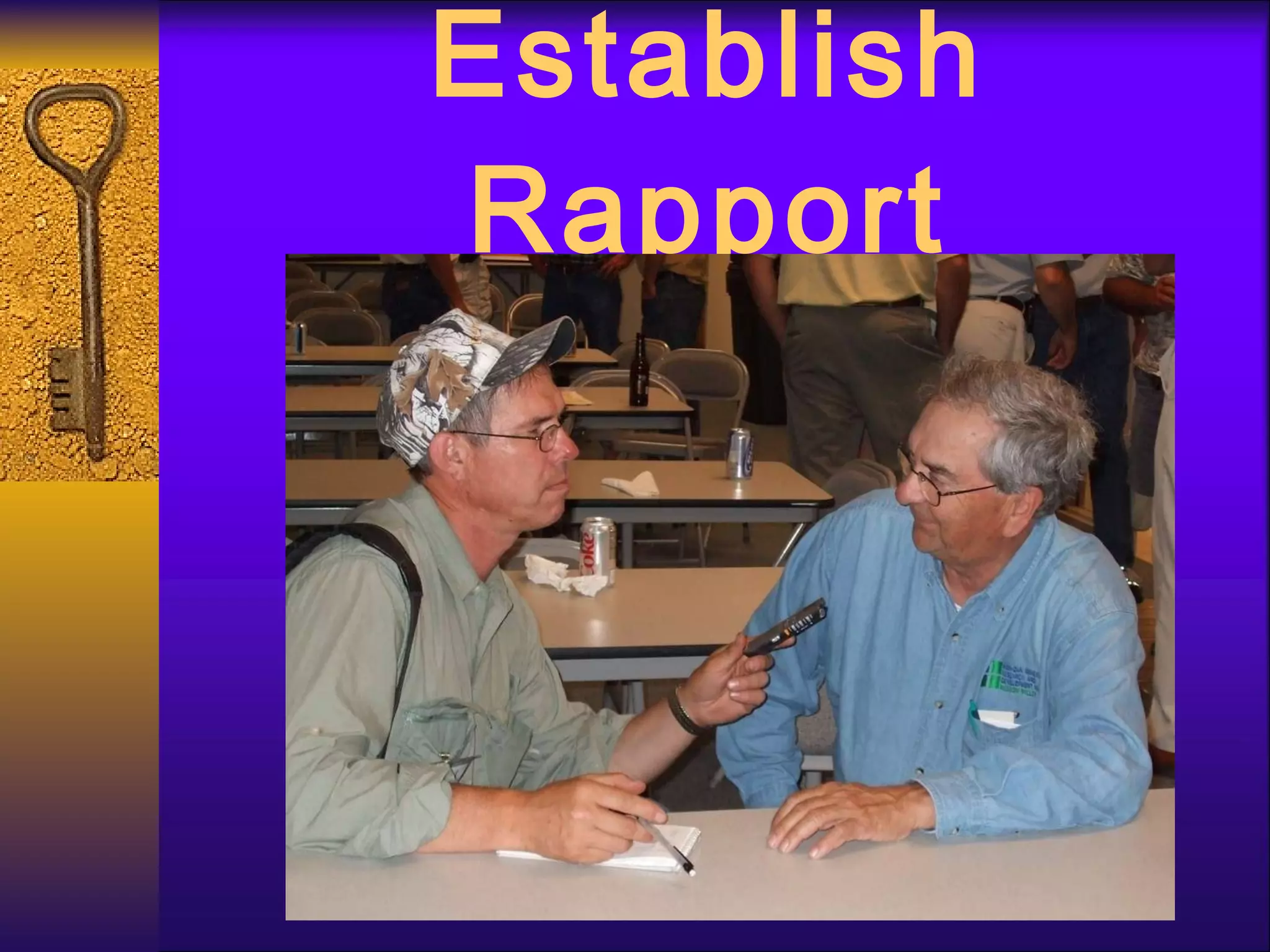
Establish Rapport
Understanding the Media Short deadlines Time/space limitations Competition Reporters cover all topics Editors don’t check
Critical News Consumption National and international news Local impact Both sides of the story
Types of Media Work Interviews Contact lists Fact sheets Background information
Before Accepting the Interview What issues will be discussed? Who is the audience? Who will do the interview? What are possible sidebar issues?
Preparing for the Interview Write out 3 brief positive points -- mental 3x5 cards, “commercials”  Have them ready for each possible issue Put your “commercials” up front
Anticipate Likely Questions Plan answers Bridge to 3x5s Return to message Rehearse if possible
For Surprise Interviews Take a few minutes to plan message Get resources in front of you You can refuse the interview
Background Information is Usually Welcome Fact sheets Other people Concise information
The Interview Be positive; don’t repeat negatives Bridge answers to your “commercials”
Be Confident; You’re the Expert The situation is under control Be comfortable with what you say Eye contact Body language
Avoid Speculation, Hypotheticals You can’t predict the future Don’t respond with personal opinions Respond to the current situation
Avoid Technical Terms,  Jargon, Acronyms Use words and descriptions the audience will understand Don’t let the reporter’s knowledge cloud the level of your answer
Don’t Say, “No comment” If you can’t answer, explain why Nothing is off the record
Don’t be Afraid to Say, “I don’t know, but I’ll find out for you.”
On-Camera Appearance Clothing Glasses Hats Jewelry Distractions Body movement and gestures
Keep Answers to 20 Seconds or So Be concise Speak conversationally Include the question in your answer Answer in a complete sentence Don’t feed the mike
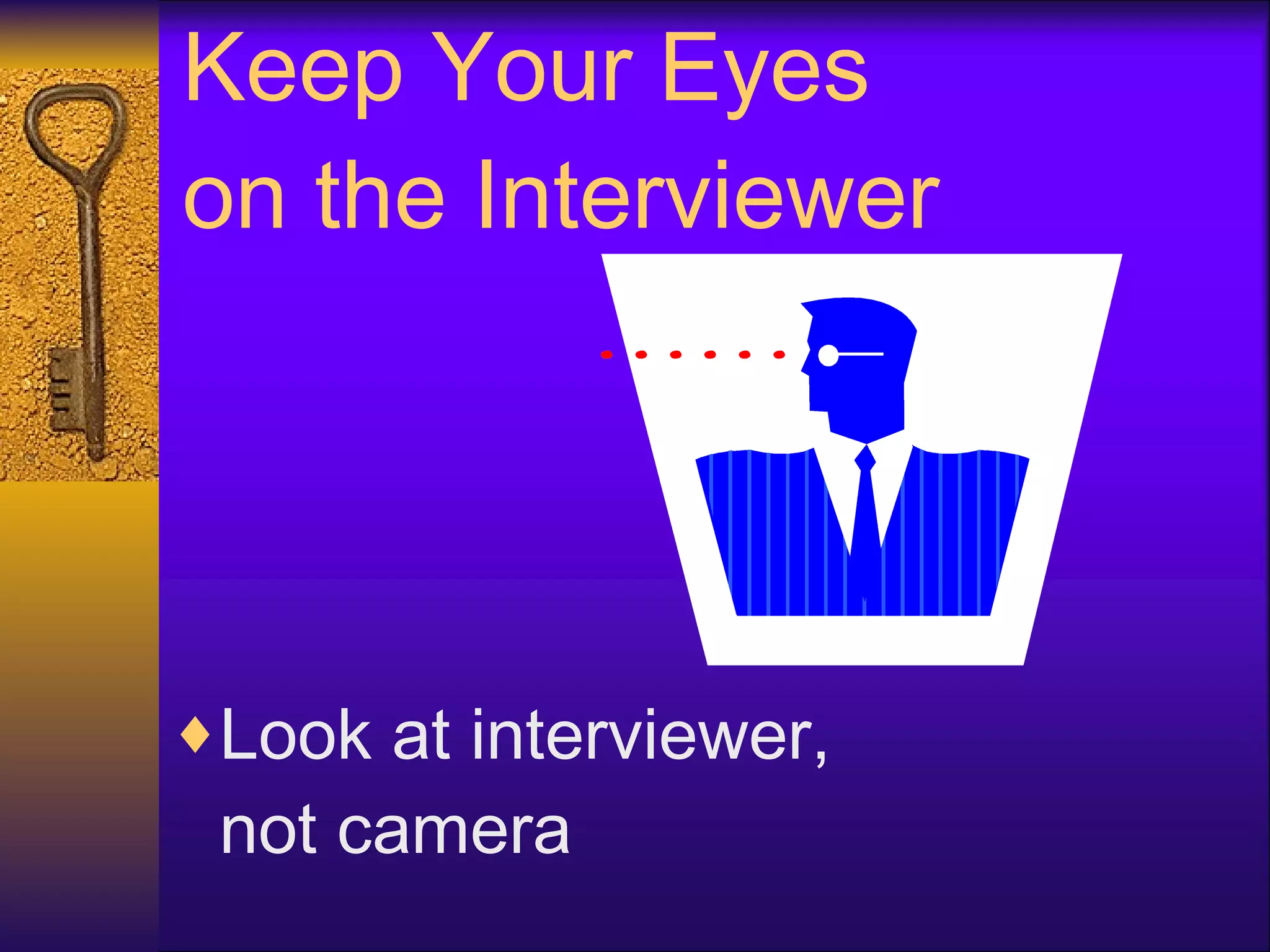
Keep Your Eyes on the Interviewer Look at interviewer, not camera
Don’t Fill Dead Air Take a few seconds to form your answer Start over or rephrase if you want
Be Honest, and Assert Yourself Trust and credibility are difficult to rebuild once lost You can control the interview
Practice Select a topic Write 3-5 bullet messages PS Send Ag Com photos

Preparing Your Message for the Media

  • 1.
    The Key toInterviews: Preparing Your Message for the Media
  • 2.
    Agenda Setting Whatthe public thinks depends on what the public hears first
  • 3.
  • 4.
    Understanding the MediaShort deadlines Time/space limitations Competition Reporters cover all topics Editors don’t check
  • 5.
    Critical News ConsumptionNational and international news Local impact Both sides of the story
  • 6.
    Types of MediaWork Interviews Contact lists Fact sheets Background information
  • 7.
    Before Accepting theInterview What issues will be discussed? Who is the audience? Who will do the interview? What are possible sidebar issues?
  • 8.
    Preparing for theInterview Write out 3 brief positive points -- mental 3x5 cards, “commercials” Have them ready for each possible issue Put your “commercials” up front
  • 9.
    Anticipate Likely QuestionsPlan answers Bridge to 3x5s Return to message Rehearse if possible
  • 10.
    For Surprise InterviewsTake a few minutes to plan message Get resources in front of you You can refuse the interview
  • 11.
    Background Information isUsually Welcome Fact sheets Other people Concise information
  • 12.
    The Interview Bepositive; don’t repeat negatives Bridge answers to your “commercials”
  • 13.
    Be Confident; You’rethe Expert The situation is under control Be comfortable with what you say Eye contact Body language
  • 14.
    Avoid Speculation, HypotheticalsYou can’t predict the future Don’t respond with personal opinions Respond to the current situation
  • 15.
    Avoid Technical Terms, Jargon, Acronyms Use words and descriptions the audience will understand Don’t let the reporter’s knowledge cloud the level of your answer
  • 16.
    Don’t Say, “Nocomment” If you can’t answer, explain why Nothing is off the record
  • 17.
    Don’t be Afraidto Say, “I don’t know, but I’ll find out for you.”
  • 18.
    On-Camera Appearance ClothingGlasses Hats Jewelry Distractions Body movement and gestures
  • 19.
    Keep Answers to20 Seconds or So Be concise Speak conversationally Include the question in your answer Answer in a complete sentence Don’t feed the mike
  • 20.
    Keep Your Eyeson the Interviewer Look at interviewer, not camera
  • 21.
    Don’t Fill DeadAir Take a few seconds to form your answer Start over or rephrase if you want
  • 22.
    Be Honest, andAssert Yourself Trust and credibility are difficult to rebuild once lost You can control the interview
  • 23.
    Practice Select atopic Write 3-5 bullet messages PS Send Ag Com photos