RESTAURANT LAYOUT
is a map of your restaurant's physical space, encompassing all
of the elements of your establishment.
in Research term Restaurant layout means Achieving effective
service time in restaurants hinges on implementing and
integrating innovation in design and technology.
W J Chin1, M Lim1, J C E Yong1, AAM Al-Talib1 and K H Chaw2
LAYOUTS OF THE RESTAURANT
DINING AREA
An area containing tables or
counters open to the public
and designed, established, or
regularly used for consuming
food or drink
Food preparation area
-a room or portion of a room
designed, arranged, intended or
used for cooking or otherwise
making food ready for
consumption.
-food area must be located at the
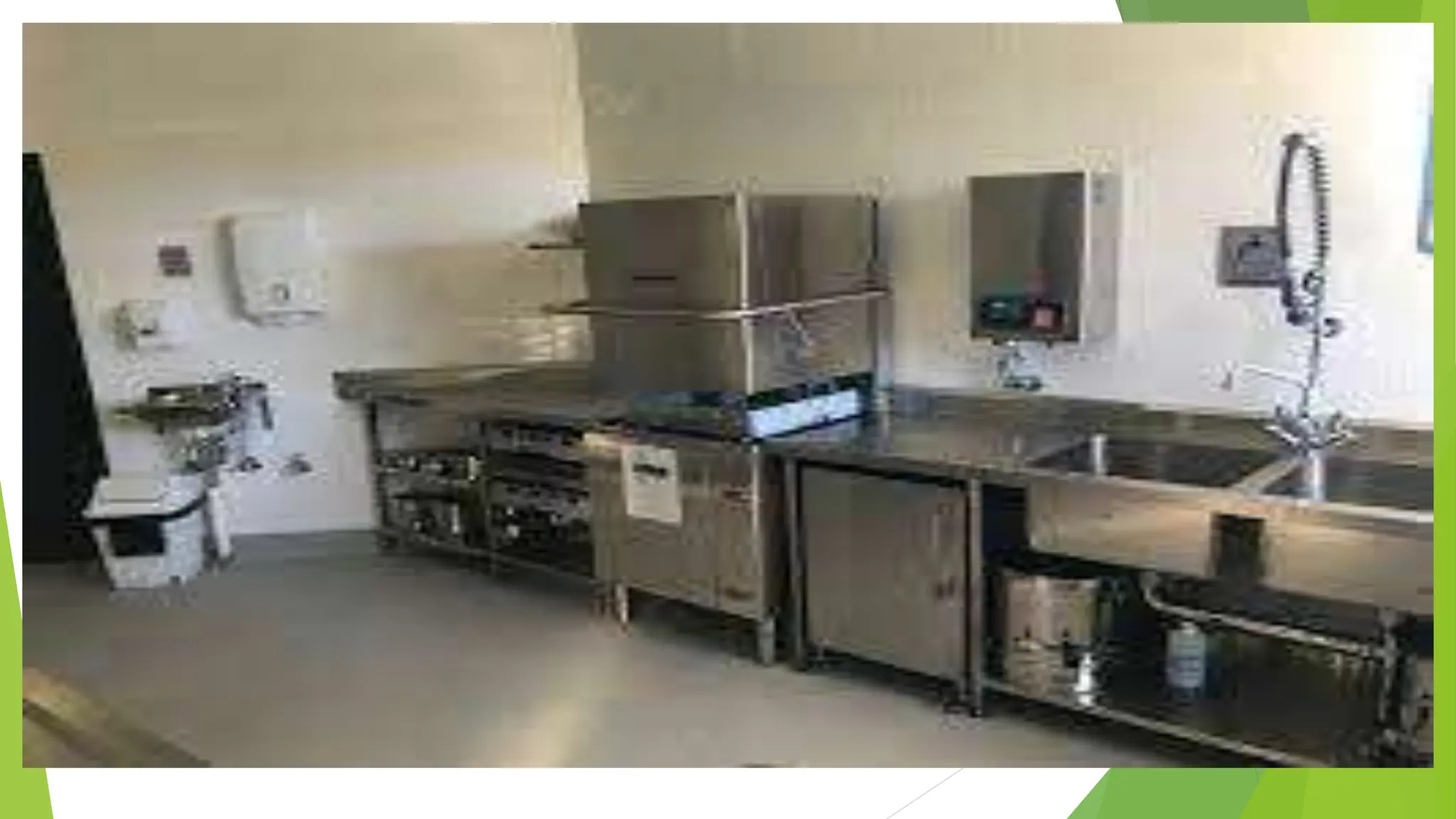
Service station or side stand
- place where all preparations
for service are undertaken. It
is equipped of all the needed
supplies for service.
Dishwashing counter
- area where soiled
dishes are placed.
Food display counter
- where food is
displayed
Cashiers counter
- area where bill is
settled
Bar counter
- the place where
drinks are placed and
ordered
Dispatching counter
- where food ordered
are placed and
received by the
kitchen
Table Reservation
is an arrangement made
in advance to have a table
available at a restaurant.
Types of Restaurant
Reservations
The Manual Reservation System
depend on the person designated,
usually a host or hostess, to answer the
phone ,record the details of the said
reservation and taking their credit card
information as guarantee. They may also
answer guest questions, give accurate
directions to the restaurant, and provide
clear information about parking .
Online Reservation System
makes use of the internet through a
website, where all the necessary
information needed for reservation is
keyed in by the guest. Other information
about the restaurant, such 13as directions
to the place , parking, active promotions
and discounts are also available online,
instead of depending on the host or
hostess for details
Types of Bookings
A. Accommodation Suppliers
– Guests will need to have room bookings
processed in order to stay at particular
establishments that provide
accommodation such as hotels,
apartments, resorts, guest houses, caravan
parks.
B. Aircraft
– Passengers need to have "Seats" booked
for all types of air travel they undertake.
These bookings will vary according to the
airline chosen, class of travel such as first
class or economy, date of flying e.g. high
season or low season or facilities that are
included such as food or movies.
C. Cruise ships –
Passengers on cruise ships need to make
bookings for the dates of their cruise. This
sort of reservation may include meals
while on board.
D. Coaches or buses
– To travel from one place to another or to
visit a particular tourist destination
E. Limousines (rental cars/vans)
– Customers can book transport to either
drive themselves around or have a
chauffeur included with the vehicle.
F. Day/extended tours
– includes meals and maybe
accommodation and entrance fees to
tourist parks.
G. Dining and meal reservations
– for restaurants or eating
houses.
H. Entertainment
- such as the theatre or music
concerts
I. Tourist attractions
-Events such as the different ethnic festivals of the
Philippines as directions to the place , parking, active
promotions and discounts are also available online.
Other venues
– some Airlines will book accommodation for guests. If
one hotel is fully booked they might make a reservation
at another hotel. Travel agent’s book theatre or concert
tickets.
Reservations can be received by an
establishment in many ways depending on where
they are, what they are offering and what
technologies they have available.
● Over the telephone – customers dial the
establishment directly In person and the
customer comes into the establishment and
communicates directly with the staff
● Mail – in some countries today this is
almost an extinct form for making a
reservation
● Email – through an email address
● Facsimile (fax) – this is another form of
communication that is being replaced by
technology
● Internet –
on-line bookings via a website
● Third party reservations
– using a reservation company to make
a booking for you e.g. Wotif, Asia
Rooms, travel, Showbiz asia
● Central reservation service
– a central reservation service that
controls reservations for several venues
Same chain referral – a reservation that
has been referred from another
establishment belonging to the same
group, for example: Asian Car Rental,
Hyatt Hotels, Hilton Spas
Tips in Taking Table Reservations
• Answer the phone in 3 rings so that the caller will feel that
they are important
• Answer inquiries promptly
• Clearly and as accurately as possible
• Ask pertinent questions to complete the details of the
reservation.
• Take note of specials, and changes in the menu and make
sure to inform guest about it.
• Gather all pertinent information on the reservation from the guest
politely and efficiently.
• Accurately record reservation data on forms and based on
establishment standards.
• Confirm customer reservations prior to their arrival
• impart additional information to the guest such as food
establishment ,parking conditions and directions to the establishmen
• Always be calm and polite when speaking to the guests
• Avoid double booking
Let us look at the tips that will help you communicate
better over the phone:
1.Greeting-Telephone conversation expects you to open
the conversation with a nice greeting.
2. Take permission and be polite-A polite word or two
always helps in bringing warmth into the conversation.
3. Identify self and the organization-Always introduce
yourself before getting into any conversation
4. Clarity-Do not use broken phrases. Always use
a clear, &simple language.
5. Purpose of the call-Think through exactly
what you plan to say and practice before you
place the call. Jotting down the items you want
to discuss.
6. Know your timeline and keep it short.
.
7. Avoid fillers and keep it interesting-Filler
words -- like um and uh
8. Smile through the phone-Keep a 'smile in your
voice.’
9. Find some quiet place-clearly without
background noise .
10. Summarize, paraphrase and close- Always
end the call with a pleasantry

Prepare Service Station Tools and Equipment’s new.pptx

  • 1.
    RESTAURANT LAYOUT is amap of your restaurant's physical space, encompassing all of the elements of your establishment. in Research term Restaurant layout means Achieving effective service time in restaurants hinges on implementing and integrating innovation in design and technology. W J Chin1, M Lim1, J C E Yong1, AAM Al-Talib1 and K H Chaw2
  • 2.
    LAYOUTS OF THERESTAURANT
  • 4.
    DINING AREA An areacontaining tables or counters open to the public and designed, established, or regularly used for consuming food or drink
  • 6.
    Food preparation area -aroom or portion of a room designed, arranged, intended or used for cooking or otherwise making food ready for consumption. -food area must be located at the
  • 8.
    Service station orside stand - place where all preparations for service are undertaken. It is equipped of all the needed supplies for service.
  • 10.
    Dishwashing counter - areawhere soiled dishes are placed.
  • 12.
    Food display counter -where food is displayed
  • 14.
    Cashiers counter - areawhere bill is settled
  • 16.
    Bar counter - theplace where drinks are placed and ordered
  • 18.
    Dispatching counter - wherefood ordered are placed and received by the kitchen
  • 19.
    Table Reservation is anarrangement made in advance to have a table available at a restaurant.
  • 20.
  • 21.
    The Manual ReservationSystem depend on the person designated, usually a host or hostess, to answer the phone ,record the details of the said reservation and taking their credit card information as guarantee. They may also answer guest questions, give accurate directions to the restaurant, and provide clear information about parking .
  • 22.
    Online Reservation System makesuse of the internet through a website, where all the necessary information needed for reservation is keyed in by the guest. Other information about the restaurant, such 13as directions to the place , parking, active promotions and discounts are also available online, instead of depending on the host or hostess for details
  • 23.
  • 24.
    A. Accommodation Suppliers –Guests will need to have room bookings processed in order to stay at particular establishments that provide accommodation such as hotels, apartments, resorts, guest houses, caravan parks.
  • 25.
    B. Aircraft – Passengersneed to have "Seats" booked for all types of air travel they undertake. These bookings will vary according to the airline chosen, class of travel such as first class or economy, date of flying e.g. high season or low season or facilities that are included such as food or movies.
  • 26.
    C. Cruise ships– Passengers on cruise ships need to make bookings for the dates of their cruise. This sort of reservation may include meals while on board. D. Coaches or buses – To travel from one place to another or to visit a particular tourist destination
  • 27.
    E. Limousines (rentalcars/vans) – Customers can book transport to either drive themselves around or have a chauffeur included with the vehicle. F. Day/extended tours – includes meals and maybe accommodation and entrance fees to tourist parks.
  • 28.
    G. Dining andmeal reservations – for restaurants or eating houses. H. Entertainment - such as the theatre or music concerts
  • 29.
    I. Tourist attractions -Eventssuch as the different ethnic festivals of the Philippines as directions to the place , parking, active promotions and discounts are also available online. Other venues – some Airlines will book accommodation for guests. If one hotel is fully booked they might make a reservation at another hotel. Travel agent’s book theatre or concert tickets.
  • 30.
    Reservations can bereceived by an establishment in many ways depending on where they are, what they are offering and what technologies they have available. ● Over the telephone – customers dial the establishment directly In person and the customer comes into the establishment and communicates directly with the staff
  • 31.
    ● Mail –in some countries today this is almost an extinct form for making a reservation ● Email – through an email address ● Facsimile (fax) – this is another form of communication that is being replaced by technology
  • 32.
    ● Internet – on-linebookings via a website ● Third party reservations – using a reservation company to make a booking for you e.g. Wotif, Asia Rooms, travel, Showbiz asia
  • 33.
    ● Central reservationservice – a central reservation service that controls reservations for several venues Same chain referral – a reservation that has been referred from another establishment belonging to the same group, for example: Asian Car Rental, Hyatt Hotels, Hilton Spas
  • 34.
    Tips in TakingTable Reservations • Answer the phone in 3 rings so that the caller will feel that they are important • Answer inquiries promptly • Clearly and as accurately as possible • Ask pertinent questions to complete the details of the reservation. • Take note of specials, and changes in the menu and make sure to inform guest about it.
  • 35.
    • Gather allpertinent information on the reservation from the guest politely and efficiently. • Accurately record reservation data on forms and based on establishment standards. • Confirm customer reservations prior to their arrival • impart additional information to the guest such as food establishment ,parking conditions and directions to the establishmen • Always be calm and polite when speaking to the guests • Avoid double booking
  • 36.
    Let us lookat the tips that will help you communicate better over the phone: 1.Greeting-Telephone conversation expects you to open the conversation with a nice greeting. 2. Take permission and be polite-A polite word or two always helps in bringing warmth into the conversation. 3. Identify self and the organization-Always introduce yourself before getting into any conversation
  • 37.
    4. Clarity-Do notuse broken phrases. Always use a clear, &simple language. 5. Purpose of the call-Think through exactly what you plan to say and practice before you place the call. Jotting down the items you want to discuss. 6. Know your timeline and keep it short. .
  • 38.
    7. Avoid fillersand keep it interesting-Filler words -- like um and uh 8. Smile through the phone-Keep a 'smile in your voice.’ 9. Find some quiet place-clearly without background noise . 10. Summarize, paraphrase and close- Always end the call with a pleasantry