Four Phases of an Exercise Program
• Warm-up
• Flexibility
• Strength and Endurance
• Cool Down
WARM UP
It is to elevate the body’s temperature to
prepare the muscles to any succeeding strenuous
activity.
By warming up, the muscles are provided with
sufficient amount of blood and oxygen supply so that
they will contract more efficiently.
Without warming up, you may have greater risk
of physical injuries as you proceed immediately with
vigorous activities.
General Warm-Up
1. Jog for 1 minute.
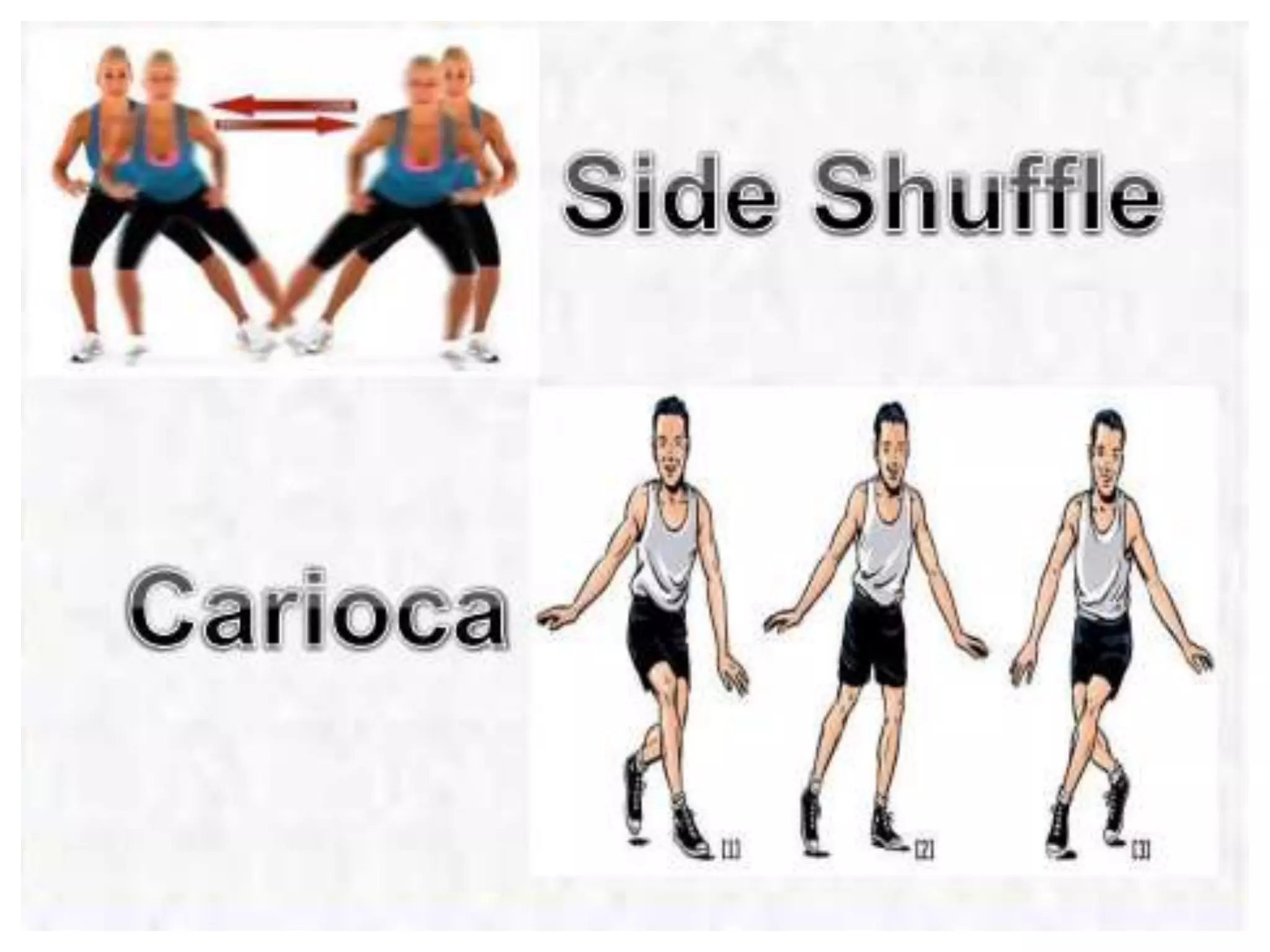
2. Side shuffle (left foot leading) for 20 seconds.
3. Side shuffle (right food leading) for 20 seconds.
4. Carioca (left food leading) for 10 seconds.
5. Carioca (right foot leading) for 10 seconds.
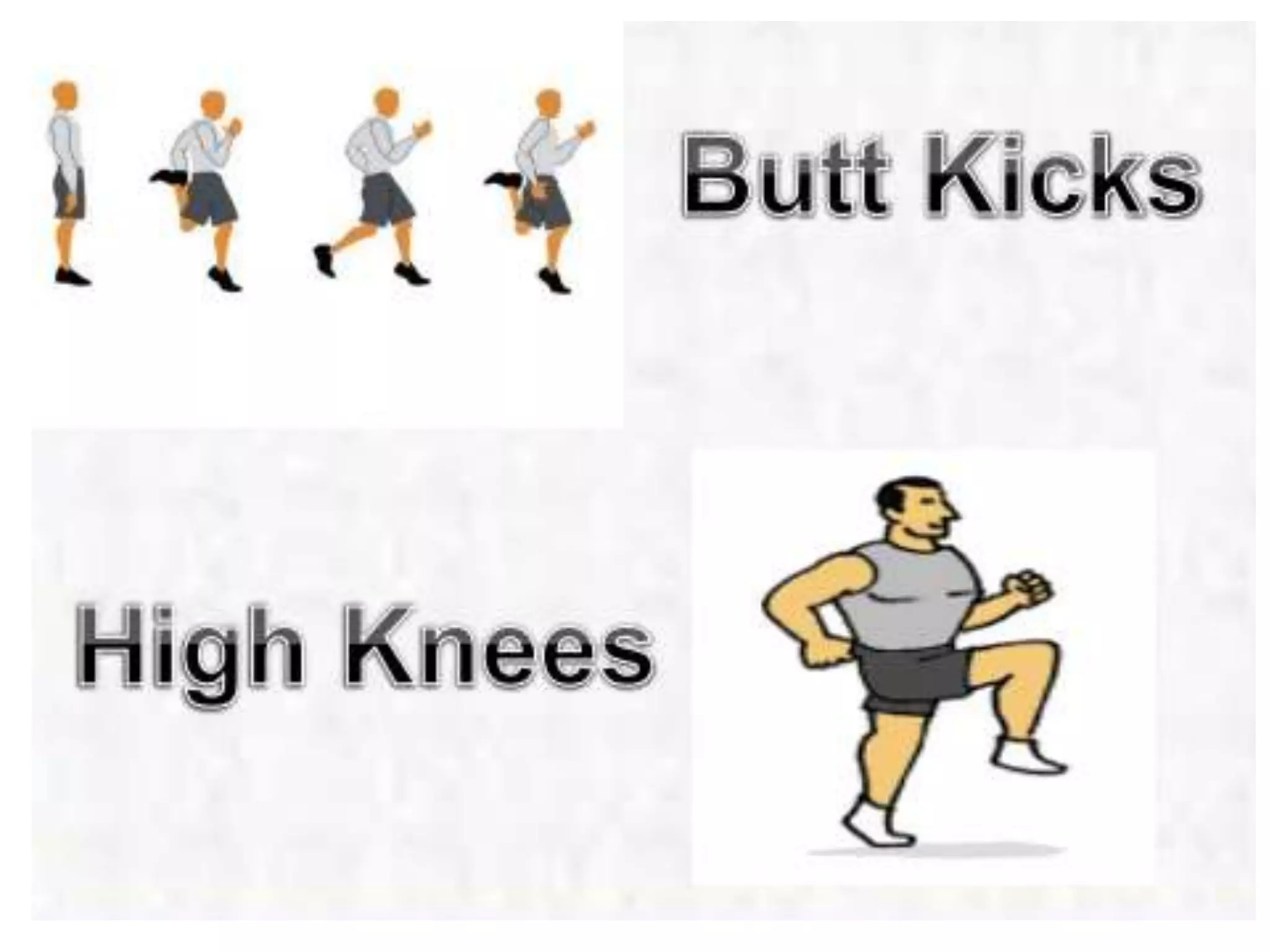
6. Butt kicks for 10 seconds.
7. High knees for 10 seconds. These warm-up exercises are
important to prepare yourselves for more intense
activities and exercises.
Flexibility Exercise
This phase of exercise follows
immediately after warm up. It is done
by doing gradual stretching activities
from upper to lower extremities.
Different ways to stretch your
muscles: BALLISTIC, PASSIVE, and
STATIC
BALLISTIC
During ballistic stretching you force the body
parts into positions beyond the normal range of
motion by the momentum of a swinging
movement. It is a quite controversial way of
stretching because it may cause injuries. Also the
stretching effect itself is questionable since the
stressed muscle may tend to contract during the
exercise.
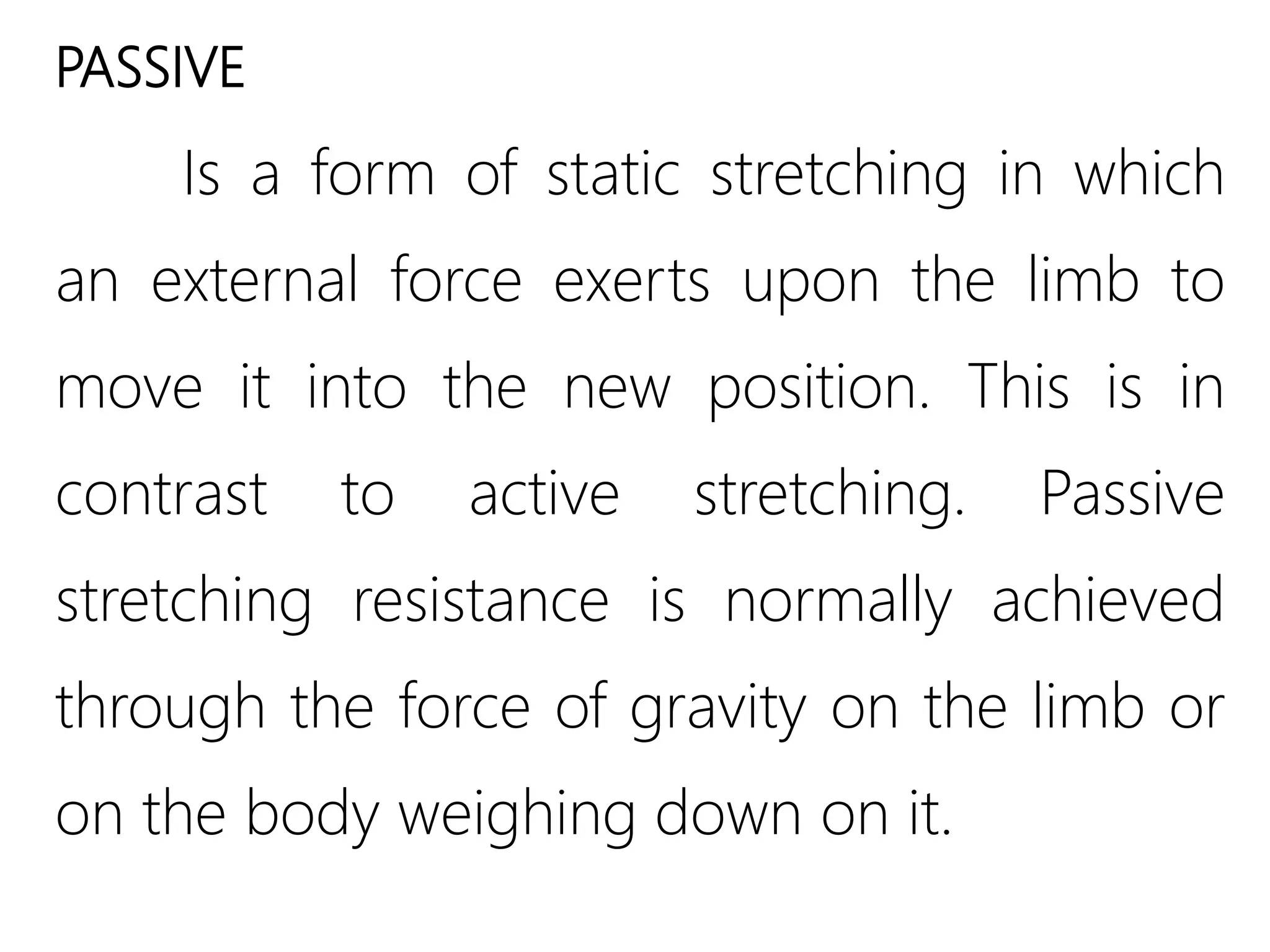
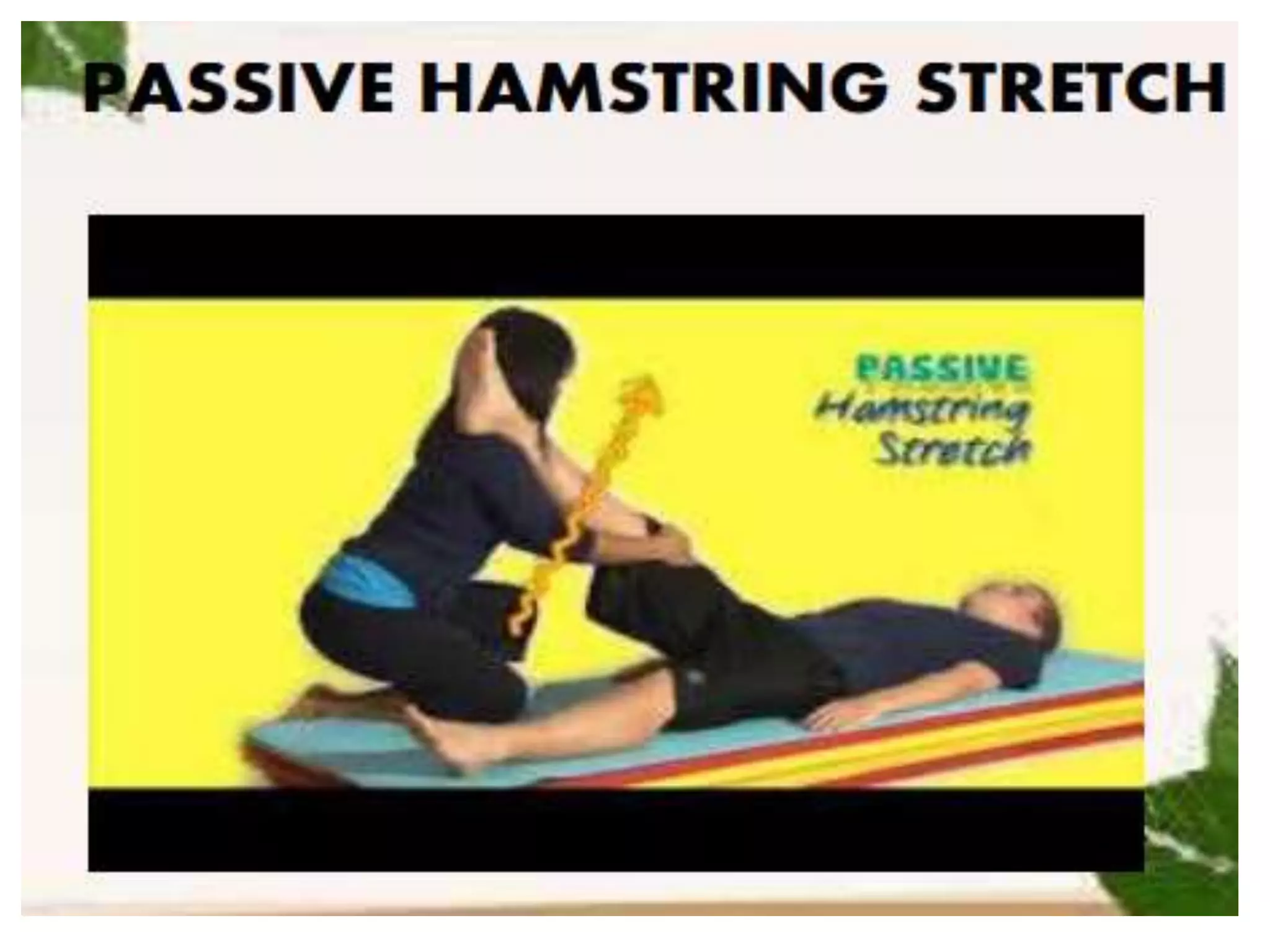
PASSIVE
Is a form of static stretching in which
an external force exerts upon the limb to
move it into the new position. This is in
contrast to active stretching. Passive
stretching resistance is normally achieved
through the force of gravity on the limb or
on the body weighing down on it.
STATIC
It allows muscles and connective
tissues surrounding the joint to stretch far
enough to its full range.
STRENGTH AND ENDURANCE
EXERCISES
A.CALISTHENIC EXERCISES
B.WEIGHT TRAINING
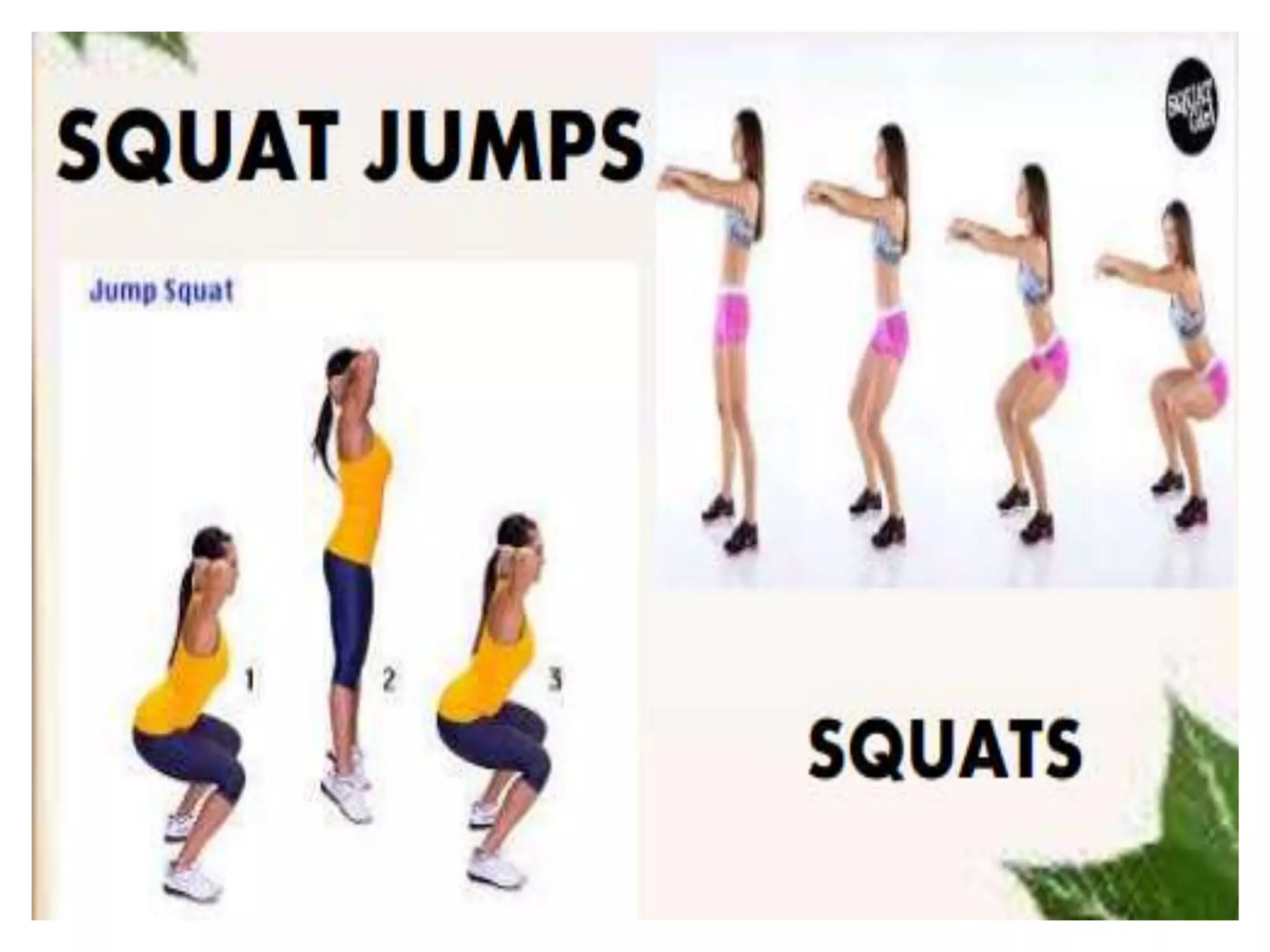
A. CALISTHENIC EXERCISES
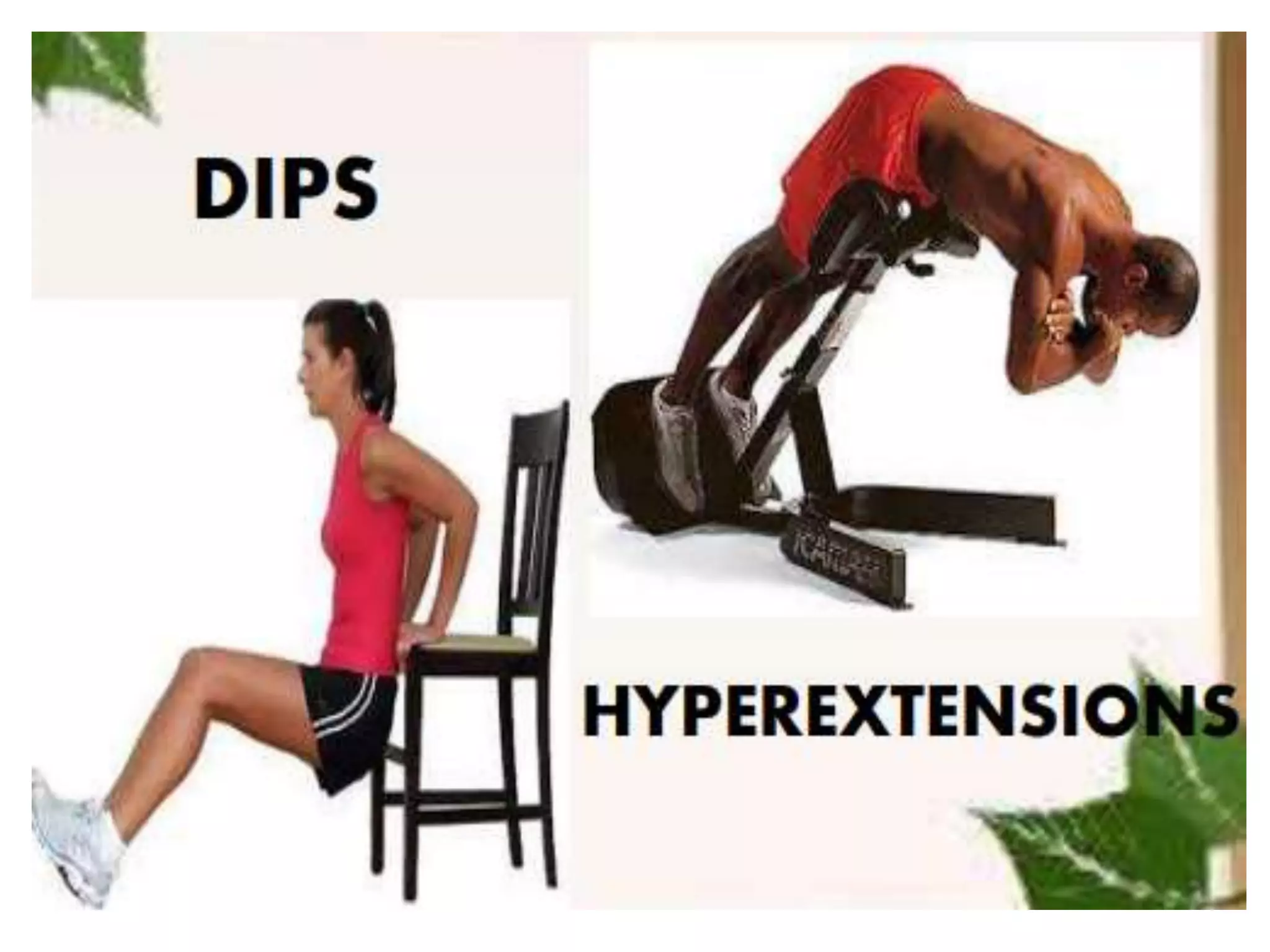
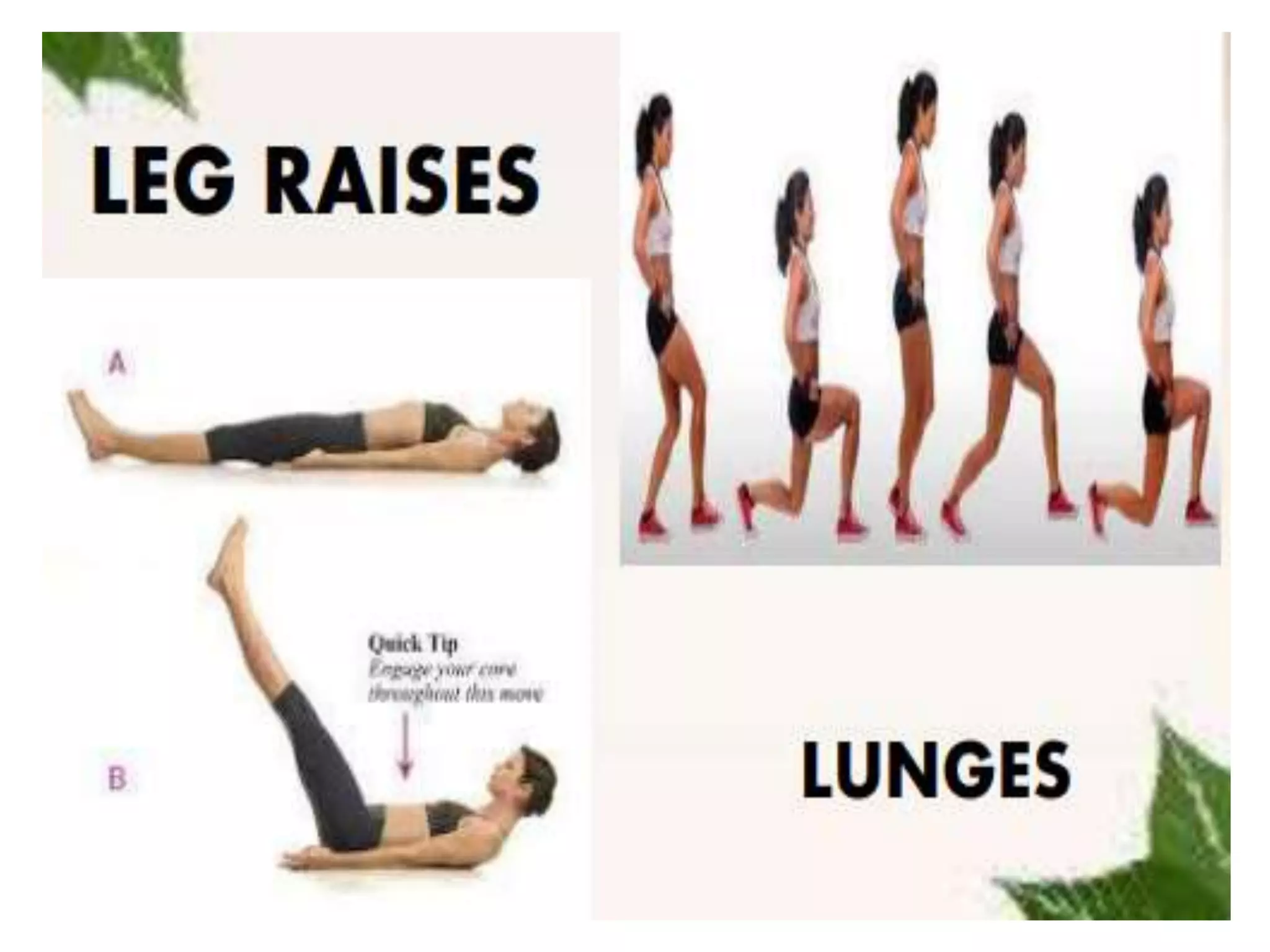
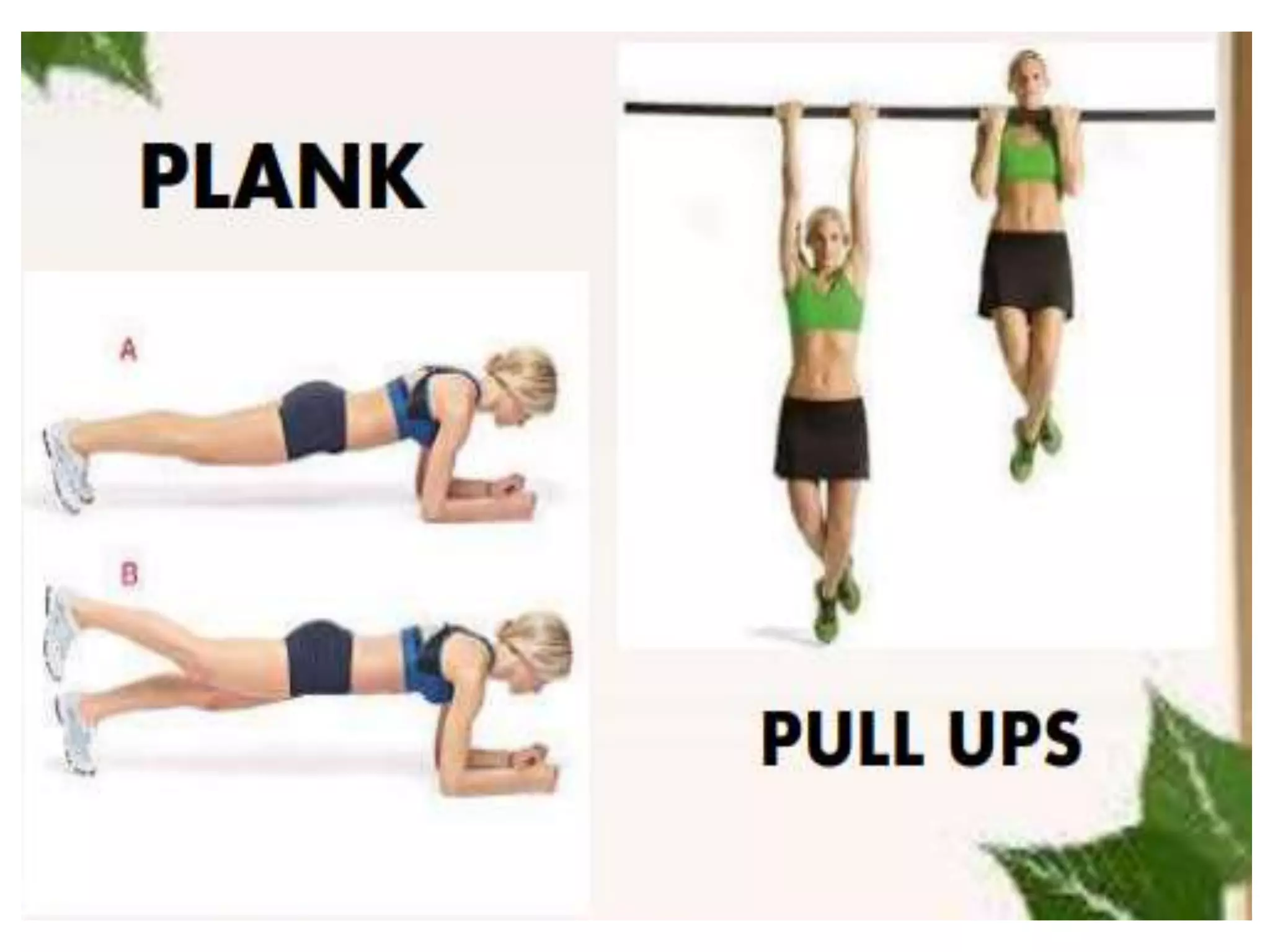
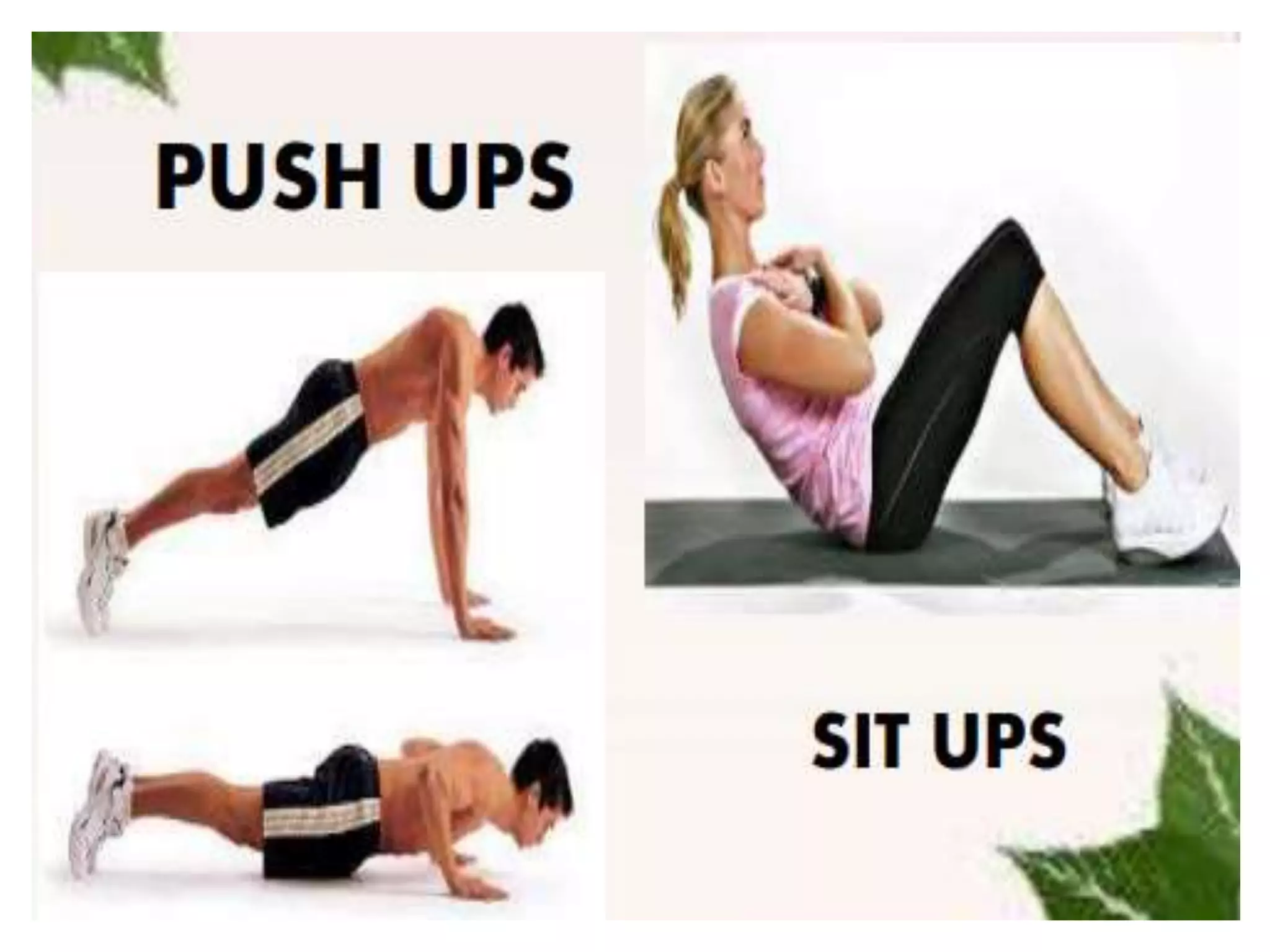
Using the body weight are practical and
inexpensive to perform esp. if there are no
weight training equipment in the school or if
there are no fitness gym near you. In
addition, only minimal space is needed to
perform the activity.
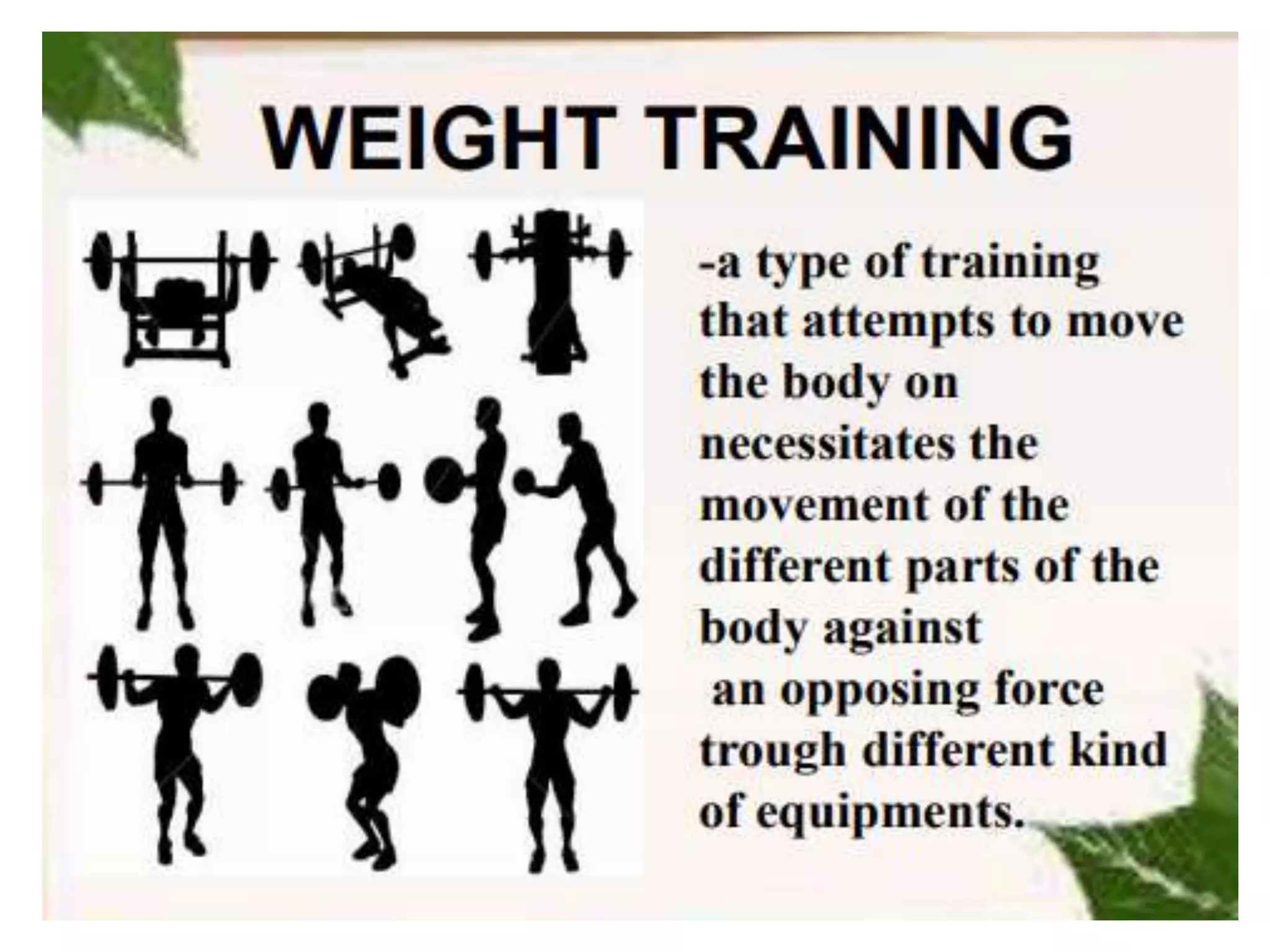
B. WEIGHT TRAINING
Is another effective way in
developing your muscles strength and
endurance. This training program uses
fixed machines of varying degrees of
weight as resistance.
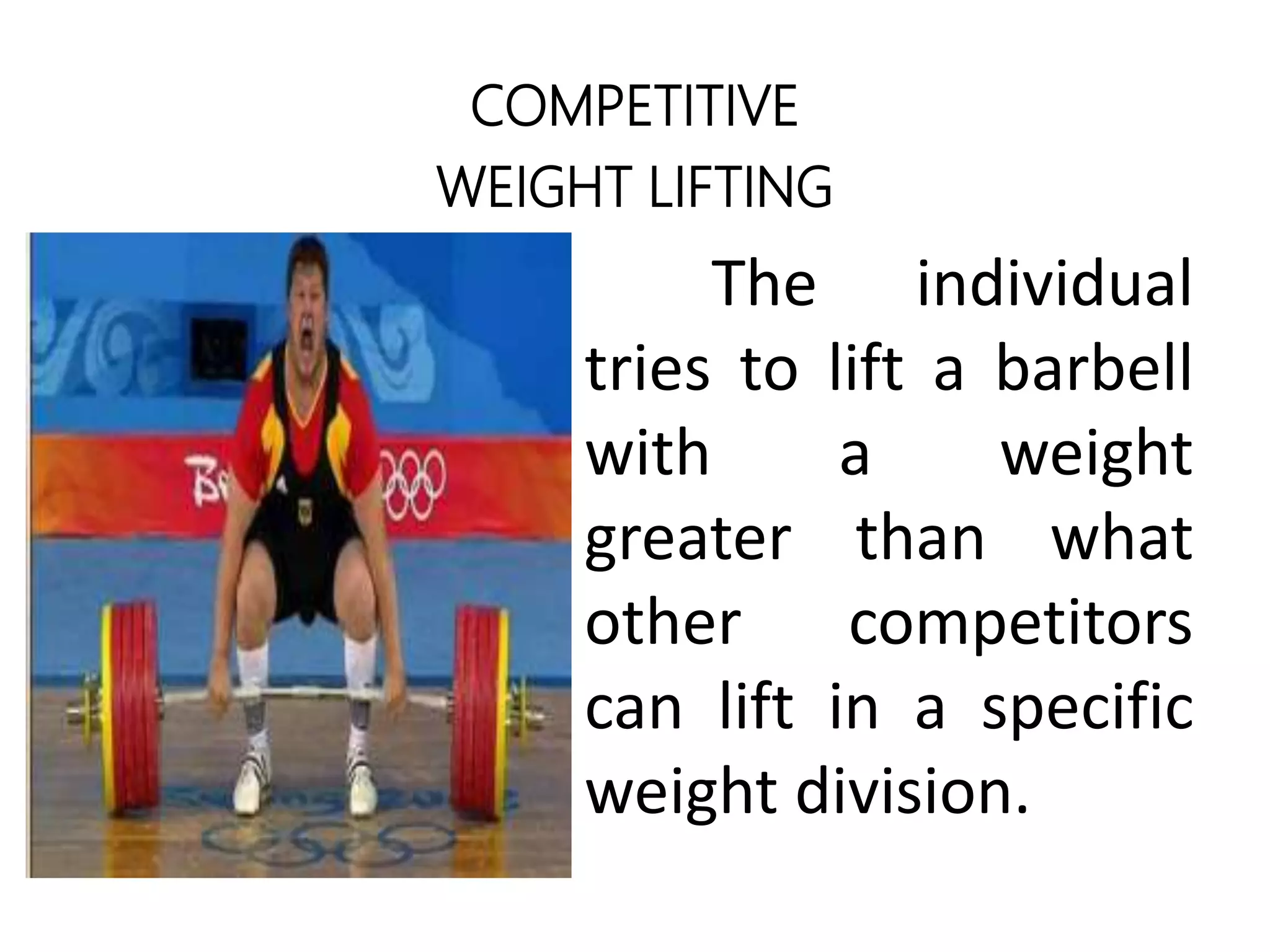
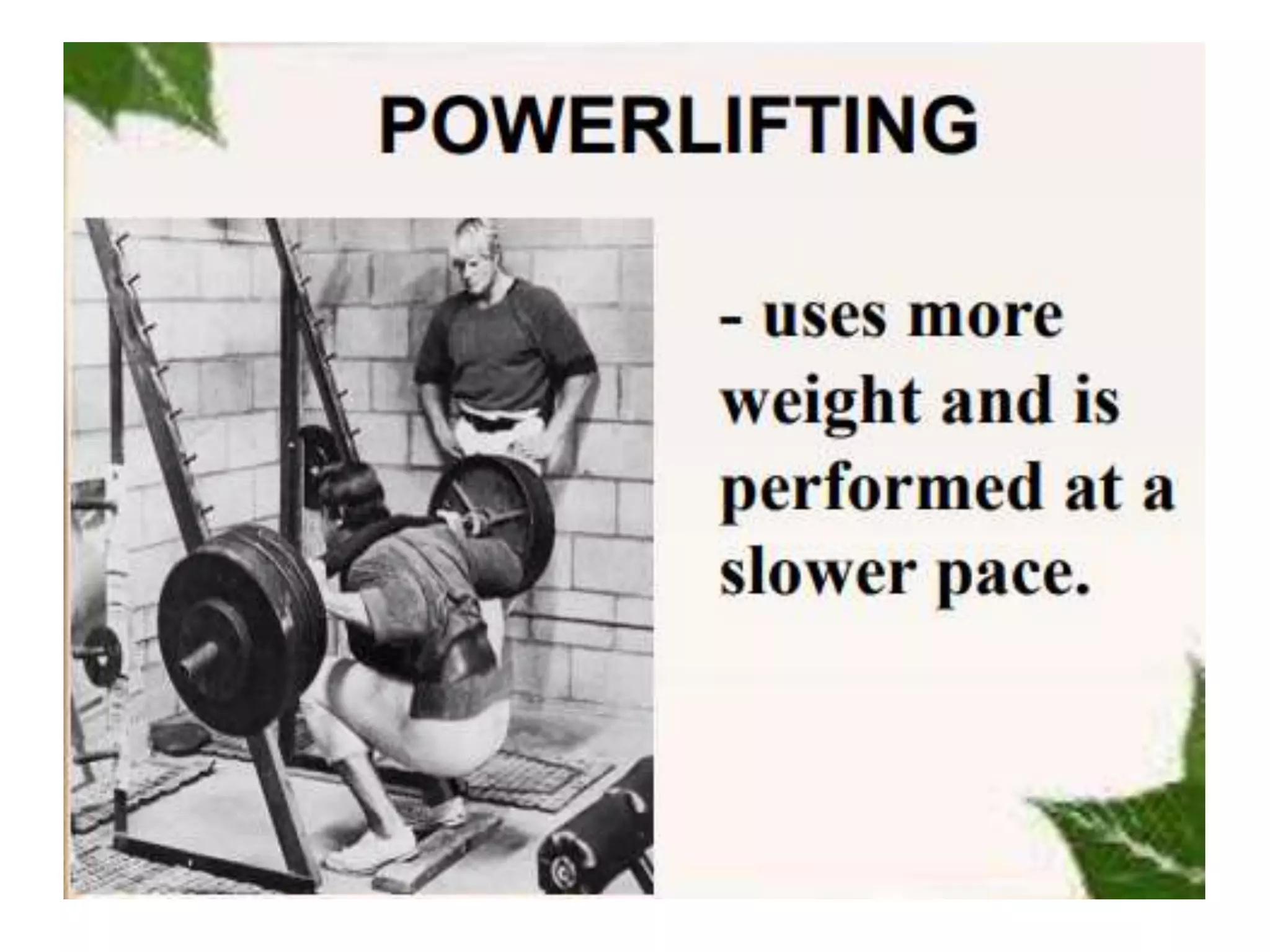
COMPETITIVE
WEIGHT LIFTING
The individual
tries to lift a barbell
with a weight
greater than what
other competitors
can lift in a specific
weight division.
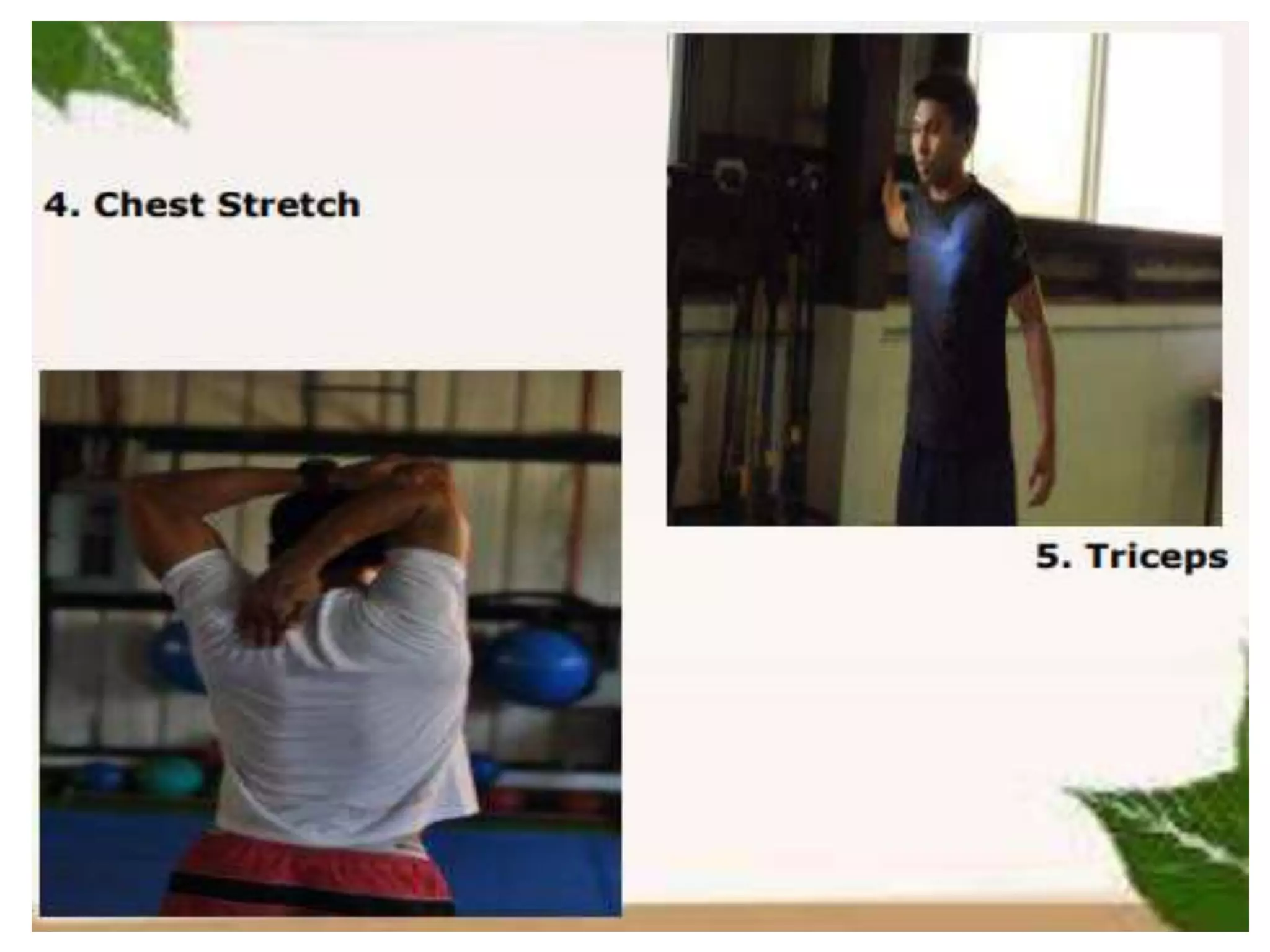
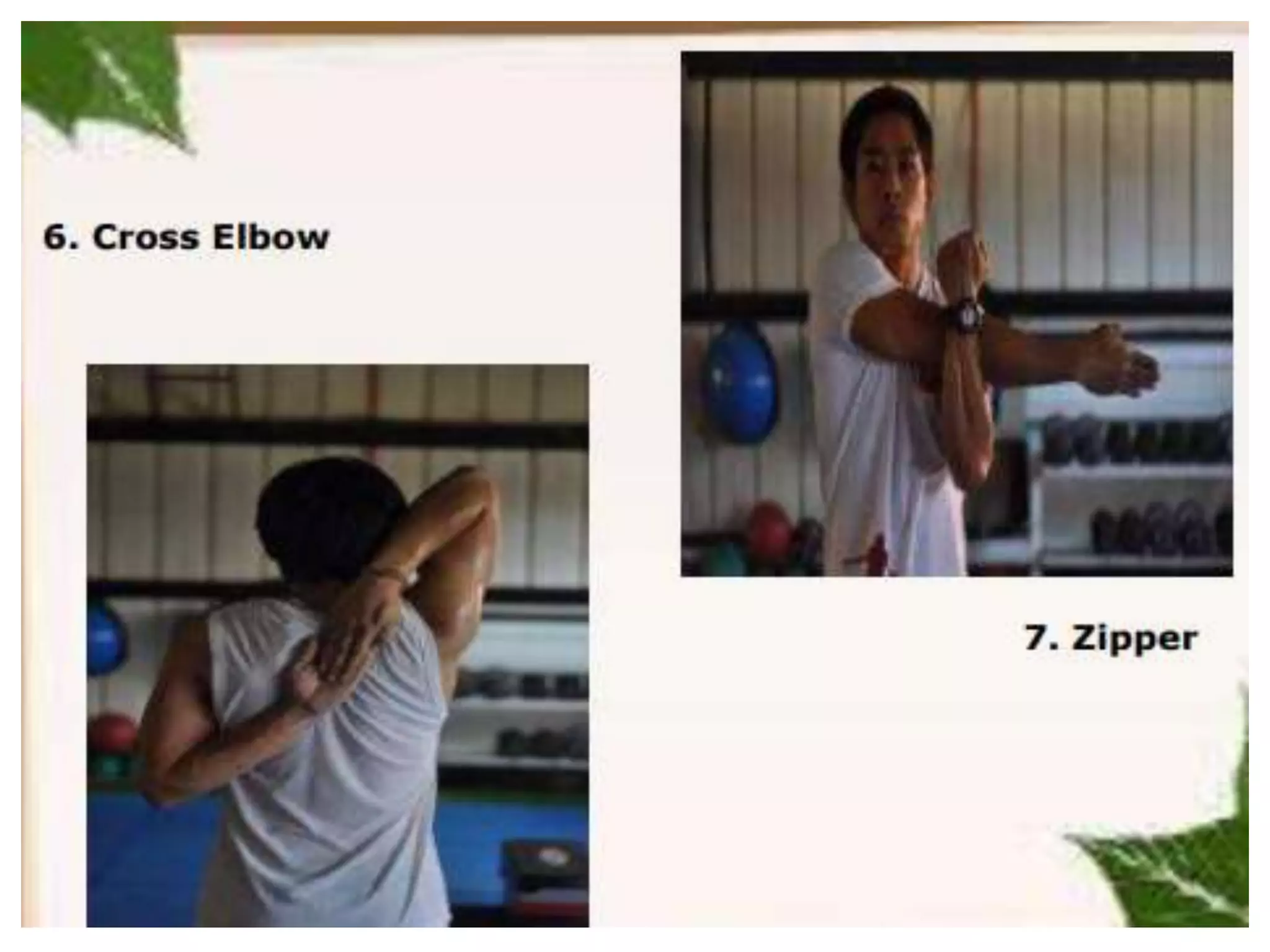
COOL-DOWN
Static Stretching Exercises -These exercises
serve to gradually lower blood pressure and
muscle stress caused by the strenuous strength
and endurance training. Cooling down relaxes
your muscles and smoothens the flow of blood
around the body to prevent you from
experiencing some form of dizziness caused by
inadequate blood and oxygen supply to the brain.
Types and phases of exercise

Types and phases of exercise

  • 2.
    Four Phases ofan Exercise Program • Warm-up • Flexibility • Strength and Endurance • Cool Down
  • 3.
    WARM UP It isto elevate the body’s temperature to prepare the muscles to any succeeding strenuous activity. By warming up, the muscles are provided with sufficient amount of blood and oxygen supply so that they will contract more efficiently. Without warming up, you may have greater risk of physical injuries as you proceed immediately with vigorous activities.
  • 4.
    General Warm-Up 1. Jogfor 1 minute. 2. Side shuffle (left foot leading) for 20 seconds. 3. Side shuffle (right food leading) for 20 seconds. 4. Carioca (left food leading) for 10 seconds. 5. Carioca (right foot leading) for 10 seconds. 6. Butt kicks for 10 seconds. 7. High knees for 10 seconds. These warm-up exercises are important to prepare yourselves for more intense activities and exercises.
  • 7.
    Flexibility Exercise This phaseof exercise follows immediately after warm up. It is done by doing gradual stretching activities from upper to lower extremities. Different ways to stretch your muscles: BALLISTIC, PASSIVE, and STATIC
  • 8.
    BALLISTIC During ballistic stretchingyou force the body parts into positions beyond the normal range of motion by the momentum of a swinging movement. It is a quite controversial way of stretching because it may cause injuries. Also the stretching effect itself is questionable since the stressed muscle may tend to contract during the exercise.
  • 11.
    PASSIVE Is a formof static stretching in which an external force exerts upon the limb to move it into the new position. This is in contrast to active stretching. Passive stretching resistance is normally achieved through the force of gravity on the limb or on the body weighing down on it.
  • 13.
    STATIC It allows musclesand connective tissues surrounding the joint to stretch far enough to its full range.
  • 24.
  • 25.
    A. CALISTHENIC EXERCISES Usingthe body weight are practical and inexpensive to perform esp. if there are no weight training equipment in the school or if there are no fitness gym near you. In addition, only minimal space is needed to perform the activity.
  • 32.
    B. WEIGHT TRAINING Isanother effective way in developing your muscles strength and endurance. This training program uses fixed machines of varying degrees of weight as resistance.
  • 34.
    COMPETITIVE WEIGHT LIFTING The individual triesto lift a barbell with a weight greater than what other competitors can lift in a specific weight division.
  • 37.
    COOL-DOWN Static Stretching Exercises-These exercises serve to gradually lower blood pressure and muscle stress caused by the strenuous strength and endurance training. Cooling down relaxes your muscles and smoothens the flow of blood around the body to prevent you from experiencing some form of dizziness caused by inadequate blood and oxygen supply to the brain.