1
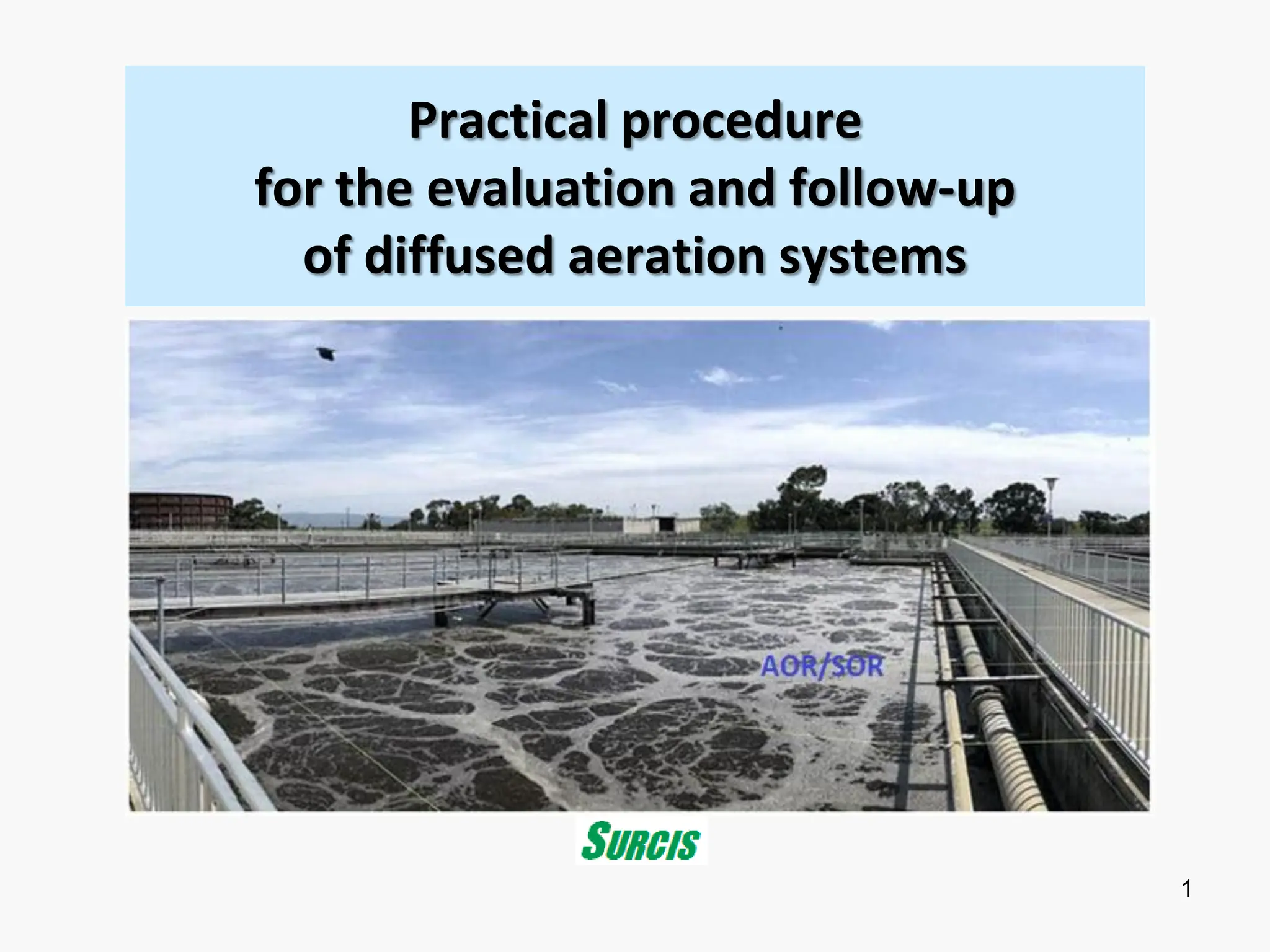
Practical procedure
for the evaluation and follow-up
of diffused aeration systems
2
1
8
9
10
11
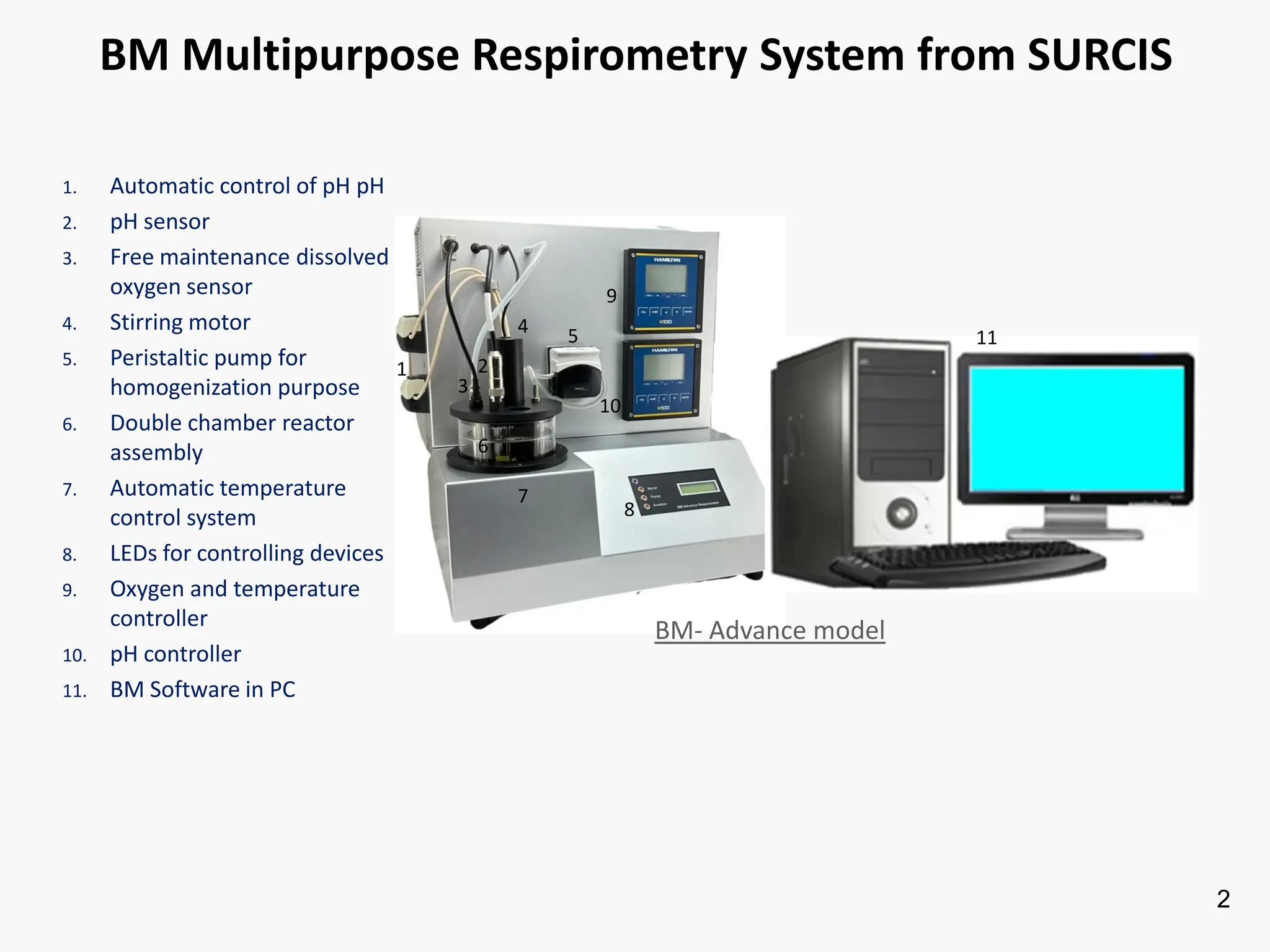
1. Automatic control of pH pH
2. pH sensor
3. Free maintenance dissolved
oxygen sensor
4. Stirring motor
5. Peristaltic pump for
homogenization purpose
6. Double chamber reactor
assembly
7. Automatic temperature
control system
8. LEDs for controlling devices
9. Oxygen and temperature
controller
10. pH controller
11. BM Software in PC
BM- Advance model
BM Multipurpose Respirometry System from SURCIS
2
3
4 5
6
7
3
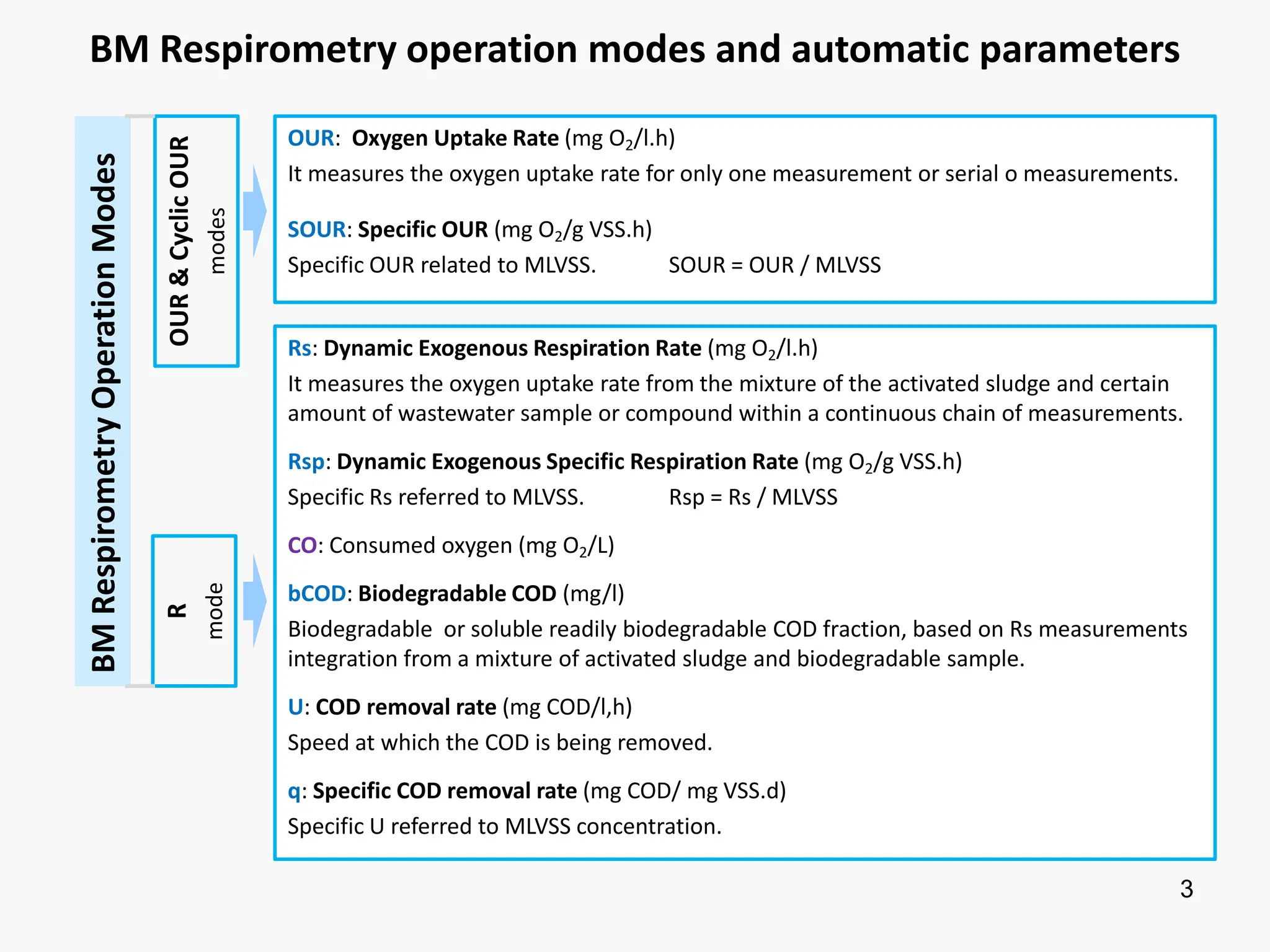
BM Respirometry operation modes and automatic parameters
OUR: Oxygen Uptake Rate (mg O2/l.h)
It measures the oxygen uptake rate for only one measurement or serial o measurements.
SOUR: Specific OUR (mg O2/g VSS.h)
Specific OUR related to MLVSS. SOUR = OUR / MLVSS
Rs: Dynamic Exogenous Respiration Rate (mg O2/l.h)
It measures the oxygen uptake rate from the mixture of the activated sludge and certain
amount of wastewater sample or compound within a continuous chain of measurements.
Rsp: Dynamic Exogenous Specific Respiration Rate (mg O2/g VSS.h)
Specific Rs referred to MLVSS. Rsp = Rs / MLVSS
CO: Consumed oxygen (mg O2/L)
bCOD: Biodegradable COD (mg/l)
Biodegradable or soluble readily biodegradable COD fraction, based on Rs measurements
integration from a mixture of activated sludge and biodegradable sample.
U: COD removal rate (mg COD/l,h)
Speed at which the COD is being removed.
q: Specific COD removal rate (mg COD/ mg VSS.d)
Specific U referred to MLVSS concentration.
OUR
&
Cyclic
OUR
modes
R
mode
BM
Respirometry
Operation
Modes
4
Principle of a practical procedure for the evaluation and follow up
of a diffused aeration system
The principle of this practical procedure is based on the relationship between the actual oxygen requirement
(AOR) and the oxygen flow rate (QO2) required to maintain a given level of dissolved oxygen (DO) in the biological
reactor. The relationship between both parameters generates the oxygen transfer efficiency in process (OTEf) to
monitor the aeration system.
On the other hand, with the participation of the specific standard oxygen transfer efficiency of the diffused
system (SOTE), the oxygen flow is converted to standard oxygen requirement (SOR). Then the actual AOR/SOR
ratio, when compared to a reference value, becomes the effective tool for system evaluation by generating the
estimated value of the fouling factor parameter (F)
Where;
AOR (kg O2/d): Actual Oxygen Requirement from influent loading
QO2 (kg O2/d): Oxygen flow supplied by the aeration sytem
SOR (Kg O2/d): Standard Oxygen Requirement = QO2 . SOTE
SOTE (%): Oxygen Transfer Efficiency in clean water on stantadard conditions (specific of the aeration system)
OTEf (%): Oxygen Tranfer Efficiency in process
F (%): Fouling factor
F = [AOR / SOR] / [AOR / SOR]reference
AOR
QO2
DO = 2 mg/L
OTEf = 100 . AOR / QO2
• Insufficient aeration.
• Over-aeration.
• Lack of maintenance (cleaning).
• Membranes replacement.
• Possible energy optimization.
5
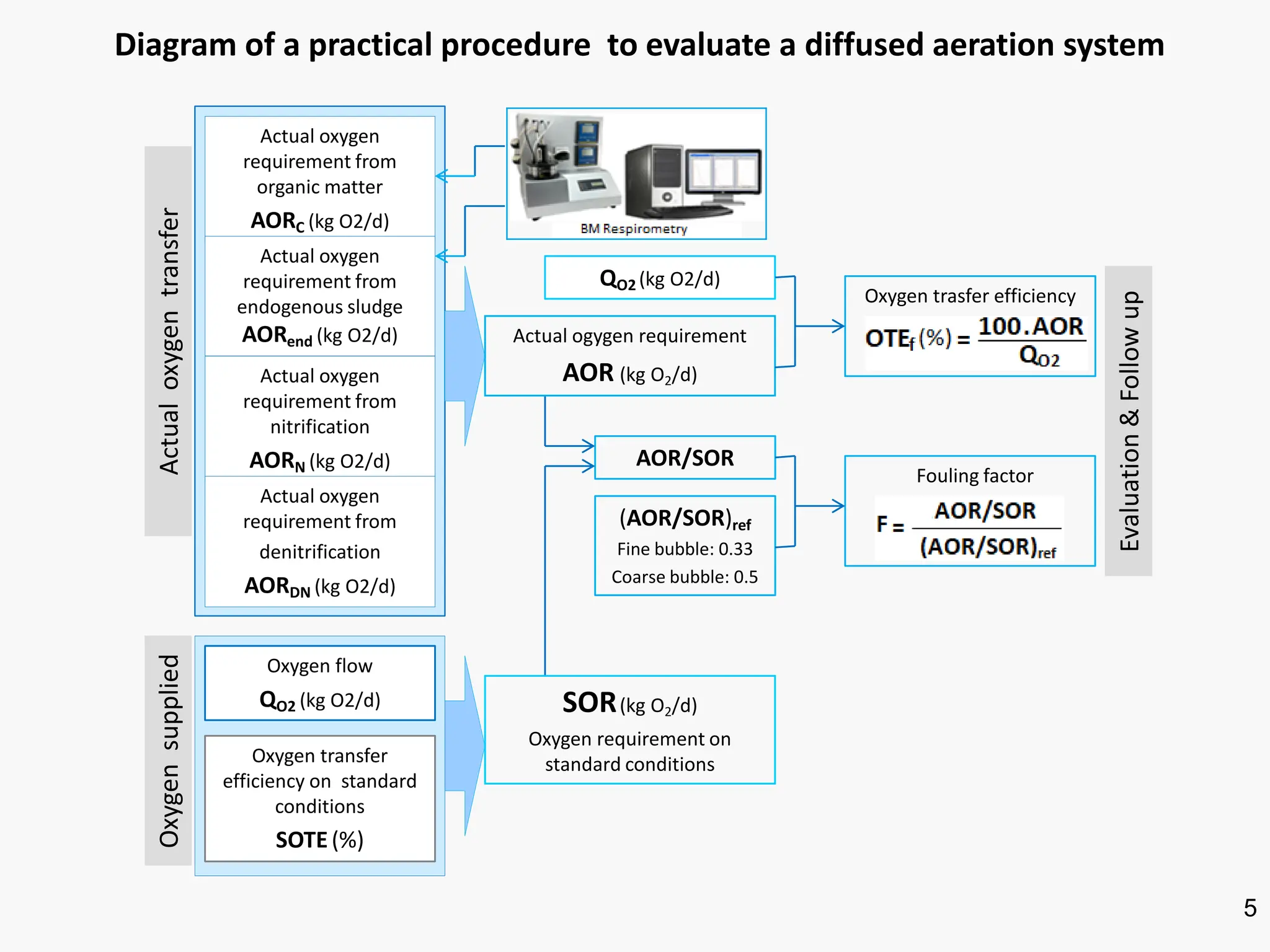
Actual oxygen
requirement from
organic matter
AORC (kg O2/d)
Actual oxygen
requirement from
endogenous sludge
AORend (kg O2/d)
Actual oxygen
requirement from
nitrification
AORN (kg O2/d)
Actual oxygen
requirement from
denitrification
AORDN (kg O2/d)
Oxygen flow
QO2 (kg O2/d)
Oxygen transfer
efficiency on standard
conditions
SOTE(%)
AOR/SOR
(AOR/SOR)ref
Fine bubble: 0.33
Coarse bubble: 0.5
Fouling factor
Actual ogygen requirement
AOR (kg O2/d)
SOR(kg O2/d)
Oxygen requirement on
standard conditions
Oxygen trasfer efficiency
Actual
oxygen
transfer
Oxygen
supplied
Diagram of a practical procedure to evaluate a diffused aeration system
QO2 (kg O2/d)
Evaluation
&
Follow
up
6
[AOR/SOR]ref Reference value of the ratio between the actual oxygen requirement (AOR)and standard
oxygen requirement (SOR), corresponding to normal / optimal condition.
AOR (kg O2/d) Actual Oxygen Requirement = AORC + AORend + AORN – AORDN
AORC Actual oxygen requirement of carbonaceous organic matter
AORend Actual Oxygen Requirement from the endogenous oxygen uptake rate of the sludge
AORN Actual Oxygen Requirement for nitrification
AORDN Actual Oxygen Requirement for denitrification
QO2 (kg O2/d) Oxygen flow of the aeration system (average)
QO2.ref (kg O2/d) Oxygen flow reference , corresponding to normal / optimal condition.
SOTE (%) Oxygen Transfer Efficiency in clean water on stantadard conditions
SOR (kg O2/d) Oxygen Requirement on Standard conditions
AOR/SOR Acual relationship between AOR and SOR
F Fouling factor
OTEf (%) Oxygen transfer efficiency in process (field)
Parameters
7
AOR (kg O2/d)
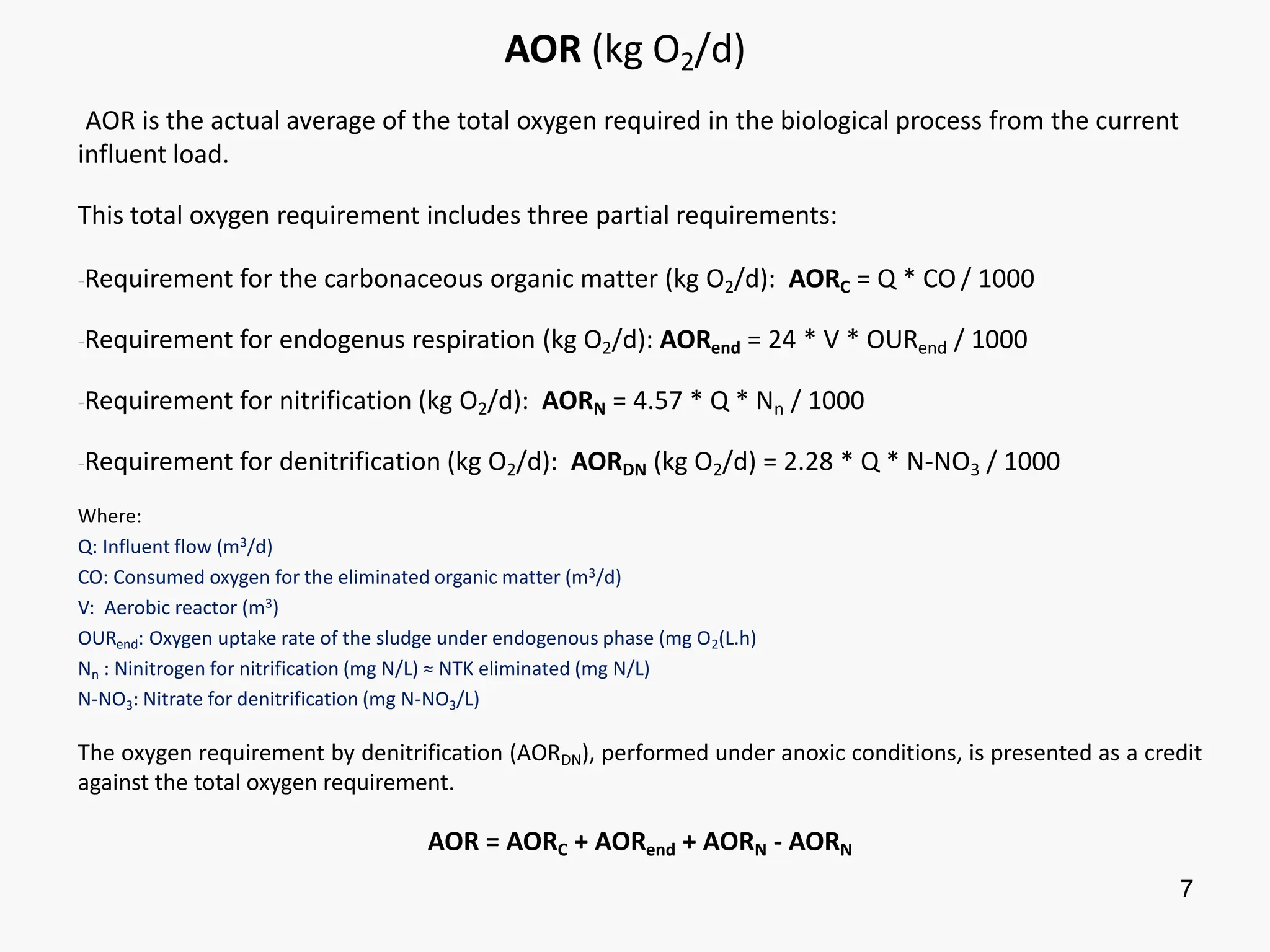
AOR is the actual average of the total oxygen required in the biological process from the current
influent load.
This total oxygen requirement includes three partial requirements:
-Requirement for the carbonaceous organic matter (kg O2/d): AORC = Q * CO / 1000
-Requirement for endogenus respiration (kg O2/d): AORend = 24 * V * OURend / 1000
-Requirement for nitrification (kg O2/d): AORN = 4.57 * Q * Nn / 1000
-Requirement for denitrification (kg O2/d): AORDN (kg O2/d) = 2.28 * Q * N-NO3 / 1000
Where:
Q: Influent flow (m3/d)
CO: Consumed oxygen for the eliminated organic matter (m3/d)
V: Aerobic reactor (m3)
OURend: Oxygen uptake rate of the sludge under endogenous phase (mg O2(L.h)
Nn : Ninitrogen for nitrification (mg N/L) ≈ NTK eliminated (mg N/L)
N-NO3: Nitrate for denitrification (mg N-NO3/L)
The oxygen requirement by denitrification (AORDN), performed under anoxic conditions, is presented as a credit
against the total oxygen requirement.
AOR = AORC + AORend + AORN - AORN
8
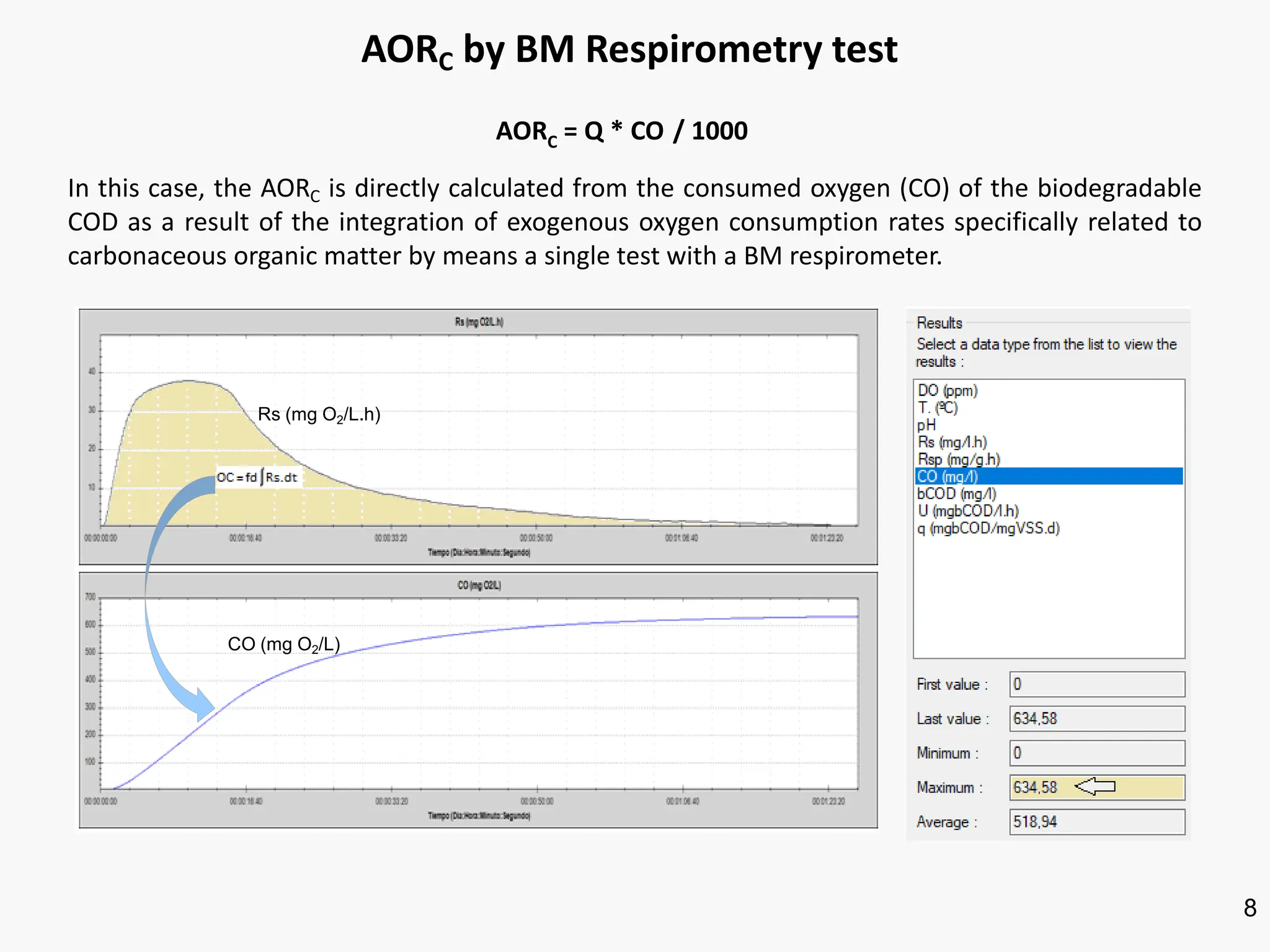
In this case, the AORC is directly calculated from the consumed oxygen (CO) of the biodegradable
COD as a result of the integration of exogenous oxygen consumption rates specifically related to
carbonaceous organic matter by means a single test with a BM respirometer.
AORC by BM Respirometry test
AORC = Q * CO / 1000
Rs (mg O2/L.h)
CO (mg O2/L)
9
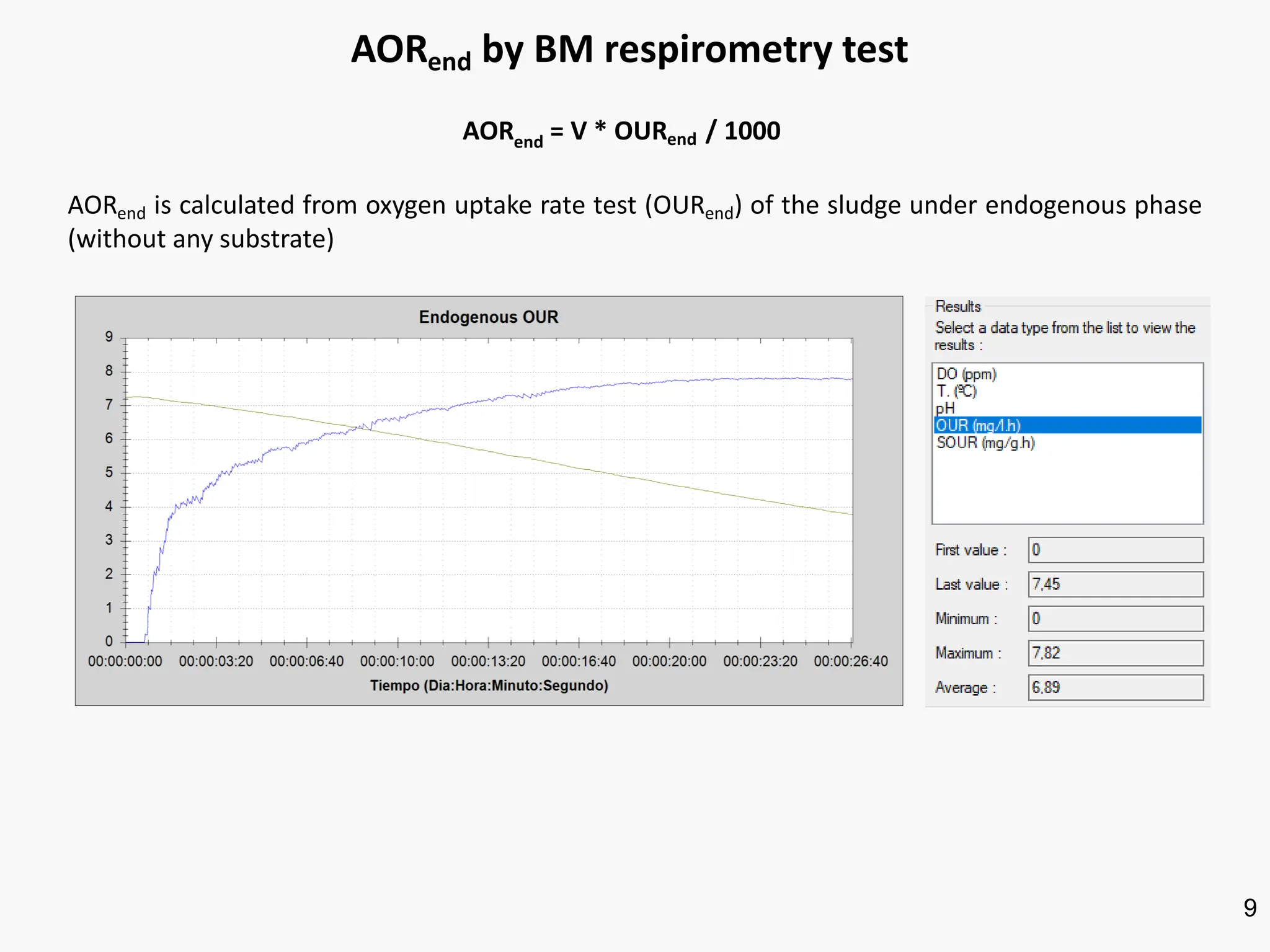
AORend is calculated from oxygen uptake rate test (OURend) of the sludge under endogenous phase
(without any substrate)
AORend by BM respirometry test
AORend = V * OURend / 1000
10
SOTE(%)
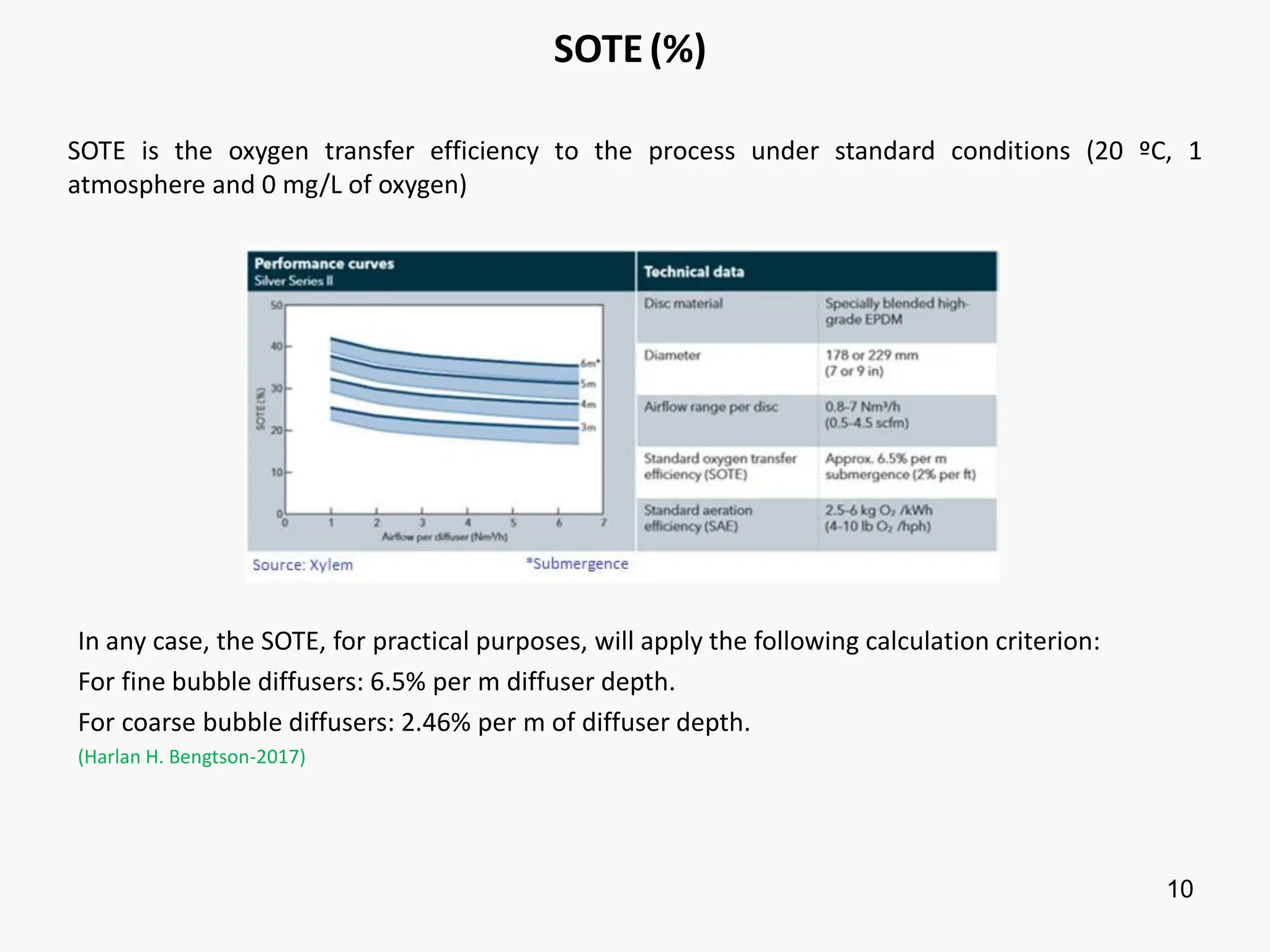
SOTE is the oxygen transfer efficiency to the process under standard conditions (20 ºC, 1
atmosphere and 0 mg/L of oxygen)
In any case, the SOTE, for practical purposes, will apply the following calculation criterion:
For fine bubble diffusers: 6.5% per m diffuser depth.
For coarse bubble diffusers: 2.46% per m of diffuser depth.
(Harlan H. Bengtson-2017)
11
SOR(kg O2/d)
Oxygen requirement on standar conditions
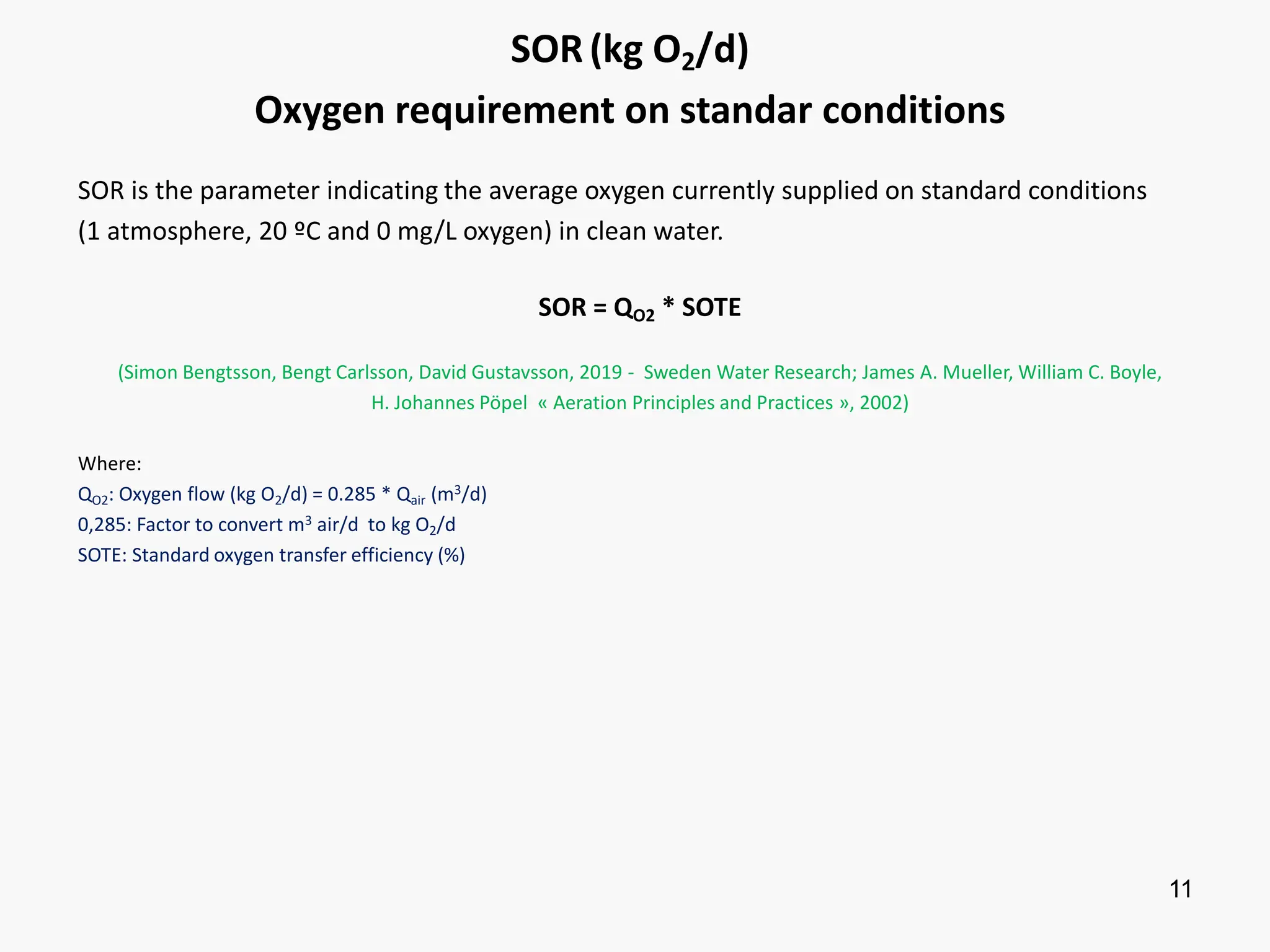
SOR is the parameter indicating the average oxygen currently supplied on standard conditions
(1 atmosphere, 20 ºC and 0 mg/L oxygen) in clean water.
SOR = QO2 * SOTE
(Simon Bengtsson, Bengt Carlsson, David Gustavsson, 2019 - Sweden Water Research; James A. Mueller, William C. Boyle,
H. Johannes Pöpel « Aeration Principles and Practices », 2002)
Where:
QO2: Oxygen flow (kg O2/d) = 0.285 * Qair (m3/d)
0,285: Factor to convert m3 air/d to kg O2/d
SOTE: Standard oxygen transfer efficiency (%)
12
[AOR/SOR]ref
The [AOR/SOR]ref is the reference value against which we will compare the actual value of the
AOR/SOR in the process.
Typical values [AOR/SOR]ref
FINE BUBBLE
COARSE
BUBBLE
0.33
0.5
“Sanitaire - Diffused aeration design guide”, University of Idaho, Civil Engineering, 2003
Bengtson, Harlan H – 2017
Phil Korth - 2013
range: 0.3 to 0.4
range: 0.4 to 0.6
13
AOR/SOR
The AOR/SOR ratio is the key parameter of the procedure to carry out the aeration system
evaluation and follow up.
AOR / SOR = AOR / (QO2 * SOTE)
Once the AOR/SOR is calculated, then it wll be compared with the the [AOR/SOR]ref
14
Evaluation and follow-up
F
(fouling factor)
This is the factor that assesses the current condition of the diffusers in terms of fouling /dirtiness
or ageing.
Since the SOR is directly depending of the oxygen flow, the fouling factor is actually the deviation
of the current oxygen flow rate from the optimal reference flow rate.
F = (AOR/SOR) / [AOR/SOR]ref
The normal range of F factor is in between 0.7 and 0.9
The F-factor, specially in fine-pore diffusers, decreases over time due to ageing, fouling, inorganic fouling or
changes due to wastewater quality, sludge characteristics and operating conditions.
15
OTEf (%)
Oxygen transfer efficiency in process
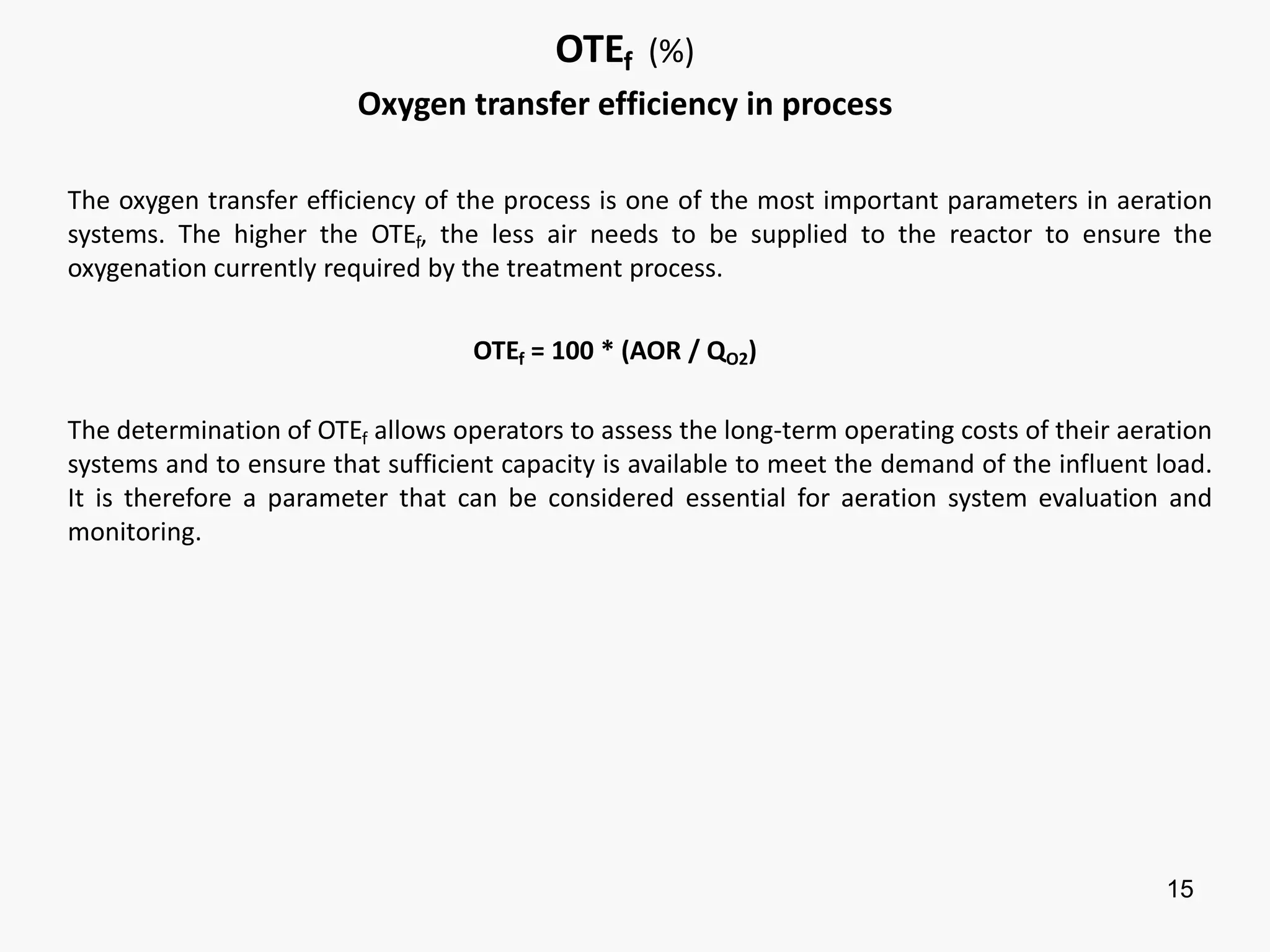
The oxygen transfer efficiency of the process is one of the most important parameters in aeration
systems. The higher the OTEf, the less air needs to be supplied to the reactor to ensure the
oxygenation currently required by the treatment process.
OTEf = 100 * (AOR / QO2)
The determination of OTEf allows operators to assess the long-term operating costs of their aeration
systems and to ensure that sufficient capacity is available to meet the demand of the influent load.
It is therefore a parameter that can be considered essential for aeration system evaluation and
monitoring.
16
Emilio Serrano
SURCIS, S.L.
Phone: +34 932 194 595 / +34 652 803 255
E-mail: surcis@surcis.com / eserrano@surcis.com
Internet: www.surcis.com

Practical procedure for the evaluation of diffused aeration system.pdf

  • 1.
    1 Practical procedure for theevaluation and follow-up of diffused aeration systems
  • 2.
    2 1 8 9 10 11 1. Automatic controlof pH pH 2. pH sensor 3. Free maintenance dissolved oxygen sensor 4. Stirring motor 5. Peristaltic pump for homogenization purpose 6. Double chamber reactor assembly 7. Automatic temperature control system 8. LEDs for controlling devices 9. Oxygen and temperature controller 10. pH controller 11. BM Software in PC BM- Advance model BM Multipurpose Respirometry System from SURCIS 2 3 4 5 6 7
  • 3.
    3 BM Respirometry operationmodes and automatic parameters OUR: Oxygen Uptake Rate (mg O2/l.h) It measures the oxygen uptake rate for only one measurement or serial o measurements. SOUR: Specific OUR (mg O2/g VSS.h) Specific OUR related to MLVSS. SOUR = OUR / MLVSS Rs: Dynamic Exogenous Respiration Rate (mg O2/l.h) It measures the oxygen uptake rate from the mixture of the activated sludge and certain amount of wastewater sample or compound within a continuous chain of measurements. Rsp: Dynamic Exogenous Specific Respiration Rate (mg O2/g VSS.h) Specific Rs referred to MLVSS. Rsp = Rs / MLVSS CO: Consumed oxygen (mg O2/L) bCOD: Biodegradable COD (mg/l) Biodegradable or soluble readily biodegradable COD fraction, based on Rs measurements integration from a mixture of activated sludge and biodegradable sample. U: COD removal rate (mg COD/l,h) Speed at which the COD is being removed. q: Specific COD removal rate (mg COD/ mg VSS.d) Specific U referred to MLVSS concentration. OUR & Cyclic OUR modes R mode BM Respirometry Operation Modes
  • 4.
    4 Principle of apractical procedure for the evaluation and follow up of a diffused aeration system The principle of this practical procedure is based on the relationship between the actual oxygen requirement (AOR) and the oxygen flow rate (QO2) required to maintain a given level of dissolved oxygen (DO) in the biological reactor. The relationship between both parameters generates the oxygen transfer efficiency in process (OTEf) to monitor the aeration system. On the other hand, with the participation of the specific standard oxygen transfer efficiency of the diffused system (SOTE), the oxygen flow is converted to standard oxygen requirement (SOR). Then the actual AOR/SOR ratio, when compared to a reference value, becomes the effective tool for system evaluation by generating the estimated value of the fouling factor parameter (F) Where; AOR (kg O2/d): Actual Oxygen Requirement from influent loading QO2 (kg O2/d): Oxygen flow supplied by the aeration sytem SOR (Kg O2/d): Standard Oxygen Requirement = QO2 . SOTE SOTE (%): Oxygen Transfer Efficiency in clean water on stantadard conditions (specific of the aeration system) OTEf (%): Oxygen Tranfer Efficiency in process F (%): Fouling factor F = [AOR / SOR] / [AOR / SOR]reference AOR QO2 DO = 2 mg/L OTEf = 100 . AOR / QO2 • Insufficient aeration. • Over-aeration. • Lack of maintenance (cleaning). • Membranes replacement. • Possible energy optimization.
  • 5.
    5 Actual oxygen requirement from organicmatter AORC (kg O2/d) Actual oxygen requirement from endogenous sludge AORend (kg O2/d) Actual oxygen requirement from nitrification AORN (kg O2/d) Actual oxygen requirement from denitrification AORDN (kg O2/d) Oxygen flow QO2 (kg O2/d) Oxygen transfer efficiency on standard conditions SOTE(%) AOR/SOR (AOR/SOR)ref Fine bubble: 0.33 Coarse bubble: 0.5 Fouling factor Actual ogygen requirement AOR (kg O2/d) SOR(kg O2/d) Oxygen requirement on standard conditions Oxygen trasfer efficiency Actual oxygen transfer Oxygen supplied Diagram of a practical procedure to evaluate a diffused aeration system QO2 (kg O2/d) Evaluation & Follow up
  • 6.
    6 [AOR/SOR]ref Reference valueof the ratio between the actual oxygen requirement (AOR)and standard oxygen requirement (SOR), corresponding to normal / optimal condition. AOR (kg O2/d) Actual Oxygen Requirement = AORC + AORend + AORN – AORDN AORC Actual oxygen requirement of carbonaceous organic matter AORend Actual Oxygen Requirement from the endogenous oxygen uptake rate of the sludge AORN Actual Oxygen Requirement for nitrification AORDN Actual Oxygen Requirement for denitrification QO2 (kg O2/d) Oxygen flow of the aeration system (average) QO2.ref (kg O2/d) Oxygen flow reference , corresponding to normal / optimal condition. SOTE (%) Oxygen Transfer Efficiency in clean water on stantadard conditions SOR (kg O2/d) Oxygen Requirement on Standard conditions AOR/SOR Acual relationship between AOR and SOR F Fouling factor OTEf (%) Oxygen transfer efficiency in process (field) Parameters
  • 7.
    7 AOR (kg O2/d) AORis the actual average of the total oxygen required in the biological process from the current influent load. This total oxygen requirement includes three partial requirements: -Requirement for the carbonaceous organic matter (kg O2/d): AORC = Q * CO / 1000 -Requirement for endogenus respiration (kg O2/d): AORend = 24 * V * OURend / 1000 -Requirement for nitrification (kg O2/d): AORN = 4.57 * Q * Nn / 1000 -Requirement for denitrification (kg O2/d): AORDN (kg O2/d) = 2.28 * Q * N-NO3 / 1000 Where: Q: Influent flow (m3/d) CO: Consumed oxygen for the eliminated organic matter (m3/d) V: Aerobic reactor (m3) OURend: Oxygen uptake rate of the sludge under endogenous phase (mg O2(L.h) Nn : Ninitrogen for nitrification (mg N/L) ≈ NTK eliminated (mg N/L) N-NO3: Nitrate for denitrification (mg N-NO3/L) The oxygen requirement by denitrification (AORDN), performed under anoxic conditions, is presented as a credit against the total oxygen requirement. AOR = AORC + AORend + AORN - AORN
  • 8.
    8 In this case,the AORC is directly calculated from the consumed oxygen (CO) of the biodegradable COD as a result of the integration of exogenous oxygen consumption rates specifically related to carbonaceous organic matter by means a single test with a BM respirometer. AORC by BM Respirometry test AORC = Q * CO / 1000 Rs (mg O2/L.h) CO (mg O2/L)
  • 9.
    9 AORend is calculatedfrom oxygen uptake rate test (OURend) of the sludge under endogenous phase (without any substrate) AORend by BM respirometry test AORend = V * OURend / 1000
  • 10.
    10 SOTE(%) SOTE is theoxygen transfer efficiency to the process under standard conditions (20 ºC, 1 atmosphere and 0 mg/L of oxygen) In any case, the SOTE, for practical purposes, will apply the following calculation criterion: For fine bubble diffusers: 6.5% per m diffuser depth. For coarse bubble diffusers: 2.46% per m of diffuser depth. (Harlan H. Bengtson-2017)
  • 11.
    11 SOR(kg O2/d) Oxygen requirementon standar conditions SOR is the parameter indicating the average oxygen currently supplied on standard conditions (1 atmosphere, 20 ºC and 0 mg/L oxygen) in clean water. SOR = QO2 * SOTE (Simon Bengtsson, Bengt Carlsson, David Gustavsson, 2019 - Sweden Water Research; James A. Mueller, William C. Boyle, H. Johannes Pöpel « Aeration Principles and Practices », 2002) Where: QO2: Oxygen flow (kg O2/d) = 0.285 * Qair (m3/d) 0,285: Factor to convert m3 air/d to kg O2/d SOTE: Standard oxygen transfer efficiency (%)
  • 12.
    12 [AOR/SOR]ref The [AOR/SOR]ref isthe reference value against which we will compare the actual value of the AOR/SOR in the process. Typical values [AOR/SOR]ref FINE BUBBLE COARSE BUBBLE 0.33 0.5 “Sanitaire - Diffused aeration design guide”, University of Idaho, Civil Engineering, 2003 Bengtson, Harlan H – 2017 Phil Korth - 2013 range: 0.3 to 0.4 range: 0.4 to 0.6
  • 13.
    13 AOR/SOR The AOR/SOR ratiois the key parameter of the procedure to carry out the aeration system evaluation and follow up. AOR / SOR = AOR / (QO2 * SOTE) Once the AOR/SOR is calculated, then it wll be compared with the the [AOR/SOR]ref
  • 14.
    14 Evaluation and follow-up F (foulingfactor) This is the factor that assesses the current condition of the diffusers in terms of fouling /dirtiness or ageing. Since the SOR is directly depending of the oxygen flow, the fouling factor is actually the deviation of the current oxygen flow rate from the optimal reference flow rate. F = (AOR/SOR) / [AOR/SOR]ref The normal range of F factor is in between 0.7 and 0.9 The F-factor, specially in fine-pore diffusers, decreases over time due to ageing, fouling, inorganic fouling or changes due to wastewater quality, sludge characteristics and operating conditions.
  • 15.
    15 OTEf (%) Oxygen transferefficiency in process The oxygen transfer efficiency of the process is one of the most important parameters in aeration systems. The higher the OTEf, the less air needs to be supplied to the reactor to ensure the oxygenation currently required by the treatment process. OTEf = 100 * (AOR / QO2) The determination of OTEf allows operators to assess the long-term operating costs of their aeration systems and to ensure that sufficient capacity is available to meet the demand of the influent load. It is therefore a parameter that can be considered essential for aeration system evaluation and monitoring.
  • 16.
    16 Emilio Serrano SURCIS, S.L. Phone:+34 932 194 595 / +34 652 803 255 E-mail: surcis@surcis.com / eserrano@surcis.com Internet: www.surcis.com