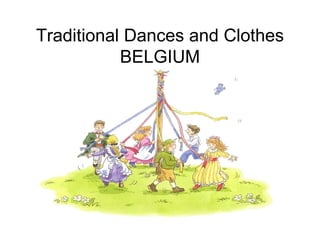
Traditional Dances and Clothes
           BELGIUM
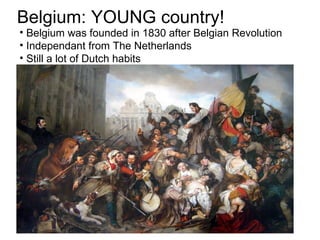
Belgium: YOUNG country!
• Belgium was founded in 1830 after Belgian Revolution
• Independant from The Netherlands
• Still a lot of Dutch habits
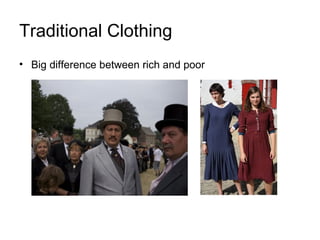
Traditional Clothing
• Big difference between rich and poor
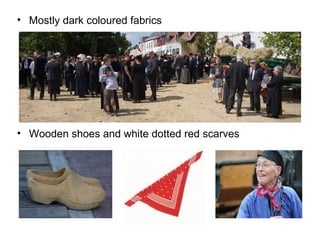
• Mostly dark coloured fabrics


• Wooden shoes and white dotted red scarves
• Many professions had their own uniforms:

                   ‘de Champetter’: a policeman


                                           ‘de Pastoor’: a priest
Folkdance?
• Traditional dance on typical music linked to a place.

• Passed from generation to generation.

• No permanent partner.

• Purpose: to meet each other.

• Following rhythm of seasons.

• Around important events or religious celebrations.
Some history.
• Our region: 12 folkdances with European influences:

• Couple Dances: Jan Smet, Kletskesdans, Walking
  Dance, Jan Pirrewit, Polka Step and Stripe
• Column Dance
• Kissing Dance (Kuskesdans)
• Seven Leaps (Zevensprong)
• Luksie
• Mieke Stout
• Klepperwals
• Some dances expressed games:

•   The Garde Sus
•   Broom dances
•   Koterhaken-dance
•   Stick dances
•   Egg dance
•   Rozenhoed-dances

• Dances with unclear origin:

• The Horlepiep
• Vendel Waving
Advantages:
• Folk dance stimulates:

•   Social development
•   Coordination
•   Orientation in space and time
•   Body control
•   Rhythm and musical sense
• Let there be
some good influence
   from our Eastern and
   Soutern neighbours!!

Ppt traditional dances and clothes

  • 1.
    Traditional Dances andClothes BELGIUM
  • 2.
    Belgium: YOUNG country! •Belgium was founded in 1830 after Belgian Revolution • Independant from The Netherlands • Still a lot of Dutch habits
  • 3.
    Traditional Clothing • Bigdifference between rich and poor
  • 4.
    • Mostly darkcoloured fabrics • Wooden shoes and white dotted red scarves
  • 5.
    • Many professionshad their own uniforms: ‘de Champetter’: a policeman ‘de Pastoor’: a priest
  • 6.
    Folkdance? • Traditional danceon typical music linked to a place. • Passed from generation to generation. • No permanent partner. • Purpose: to meet each other. • Following rhythm of seasons. • Around important events or religious celebrations.
  • 7.
    Some history. • Ourregion: 12 folkdances with European influences: • Couple Dances: Jan Smet, Kletskesdans, Walking Dance, Jan Pirrewit, Polka Step and Stripe • Column Dance • Kissing Dance (Kuskesdans) • Seven Leaps (Zevensprong) • Luksie • Mieke Stout • Klepperwals
  • 8.
    • Some dancesexpressed games: • The Garde Sus • Broom dances • Koterhaken-dance • Stick dances • Egg dance • Rozenhoed-dances • Dances with unclear origin: • The Horlepiep • Vendel Waving
  • 9.
    Advantages: • Folk dancestimulates: • Social development • Coordination • Orientation in space and time • Body control • Rhythm and musical sense
  • 10.
    • Let therebe some good influence from our Eastern and Soutern neighbours!!