SIX SIGMA
OBJECTIVES OF PRESENTATION
WHAT IS SIX SIGMA
HISTORY OF SIX SIGMA
SIX SIGMA METHODOLOGIES
DMAIC
DMADV
APPLICATION OF 6 SIGMA
WHAT IS SIX SIGMA
• Six Sigma is a method that provides organizations tools toimprove
the capability of their business processes.
•
• This increase in performance and decrease in process variation lead
to defect reduction and improvement inprofits, employee morale,
and quality of products orservices.
•
• Six Sigma quality is a term generally used to indicate aprocess is well
controlled (within process limits ±3s fromthe centre line in acontrol
chart, andrequirements/tolerance limits ±6s from the centre line).
HISTORY OF SIX SIGMA
• TheSix Sigma methodologieswere formulated by Bill Smith
atMotorola in order to arrest the quality downslide of the
company in1986.
•
• Six Sigma tools are developed by taking inspiration from
traditionalQuality Control,TQM, and TPM etc.
•
• Six Sigma was initially targeted to quantify the defects
occurred duringmanufacturing processes, and to reduce
those defects to a very smalllevel.
• Another very popular successful user was GE.
• Today Six Sigma is delivering business excellence,
higher customersatisfaction, and superior profits by
dramatically improving everyprocess in an enterprise,
whether financial, operational or production.
•
• Six Sigma has become a darling of a wide spectrum of
industries, from health care to insurance to
telecommunications tosoftware.
STEPS TO 6 SIGMA IMPLIMENTATION
• Create a Burning Platform
• Put Resources in Place
• Teach the Methodology
• Prioritize Activities
• Establish Ownership
• Take the Right Measurements
• Govern the Program
• Recognize Contributions
6 SIGMA METHODOLOGIES
• Six Sigma projects follow two project
methodologies inspired by Deming's Plan–Do–
Study–Act Cycle. These methodologies, composed
of five phases each, bear the acronyms DMAIC and
DMADV.
• DMAIC is used for projects aimed at improving an
existing business process.
• DMADV is used for projects aimed at creating new
product or process designs.
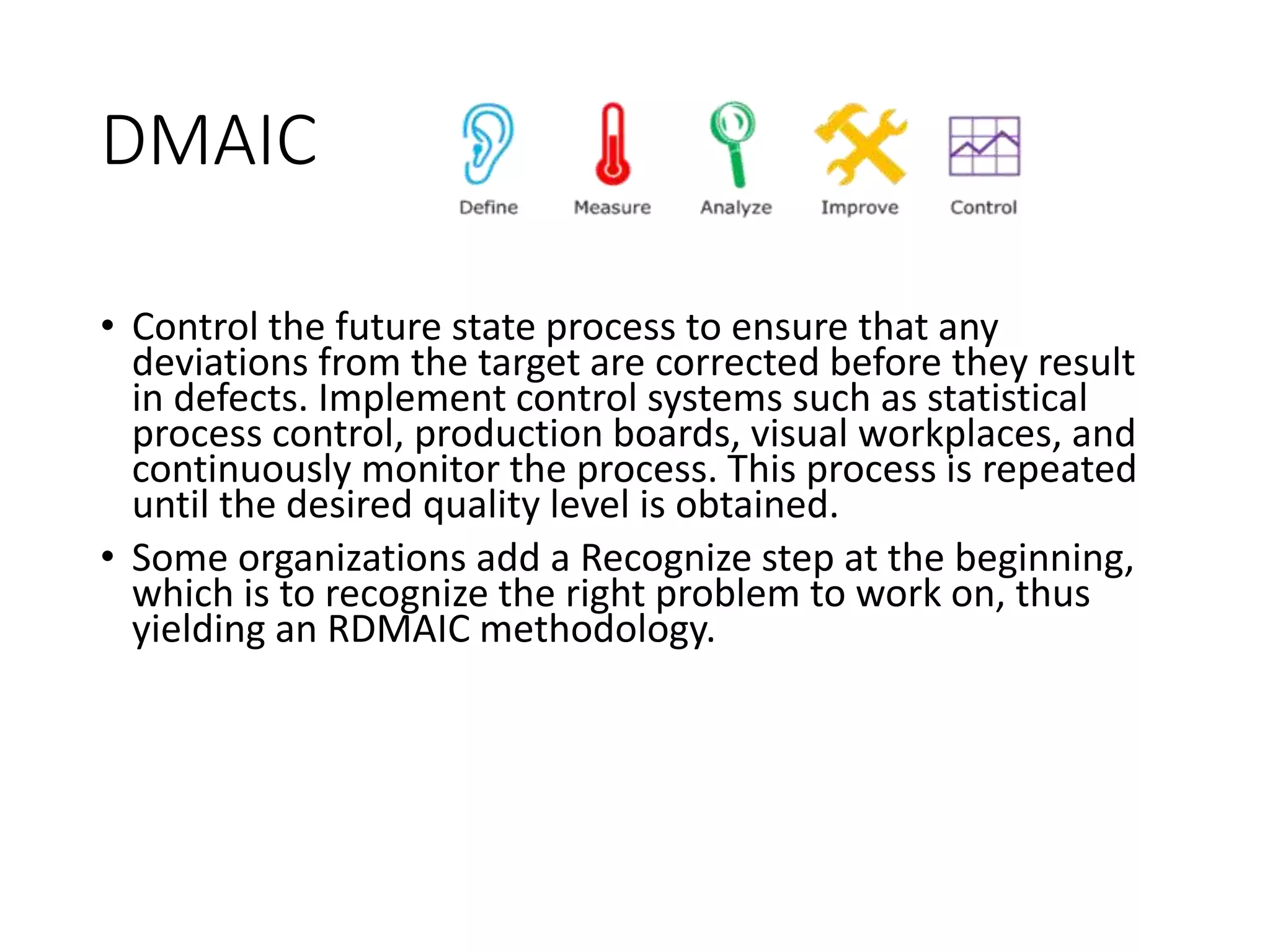
DMAIC
• Define the system, the voice of the customer and their
requirements, and the project goals, specifically.
• Measure key aspects of the current process and collect relevant
data; calculate the 'as-is' Process Capability.
• Analyze the data to investigate and verify cause-and-effect
relationships. Determine what the relationships are, and attempt to
ensure that all factors have been considered. Seek out root cause of
the defect under investigation.
• Improve or optimize the current process based upon data analysis
using techniques such as design of experiments, poka yoke or
mistake proofing, and standard work to create a new, future state
process. Set up pilot runs to establish process capability.
DMAIC
• Control the future state process to ensure that any
deviations from the target are corrected before they result
in defects. Implement control systems such as statistical
process control, production boards, visual workplaces, and
continuously monitor the process. This process is repeated
until the desired quality level is obtained.
• Some organizations add a Recognize step at the beginning,
which is to recognize the right problem to work on, thus
yielding an RDMAIC methodology.
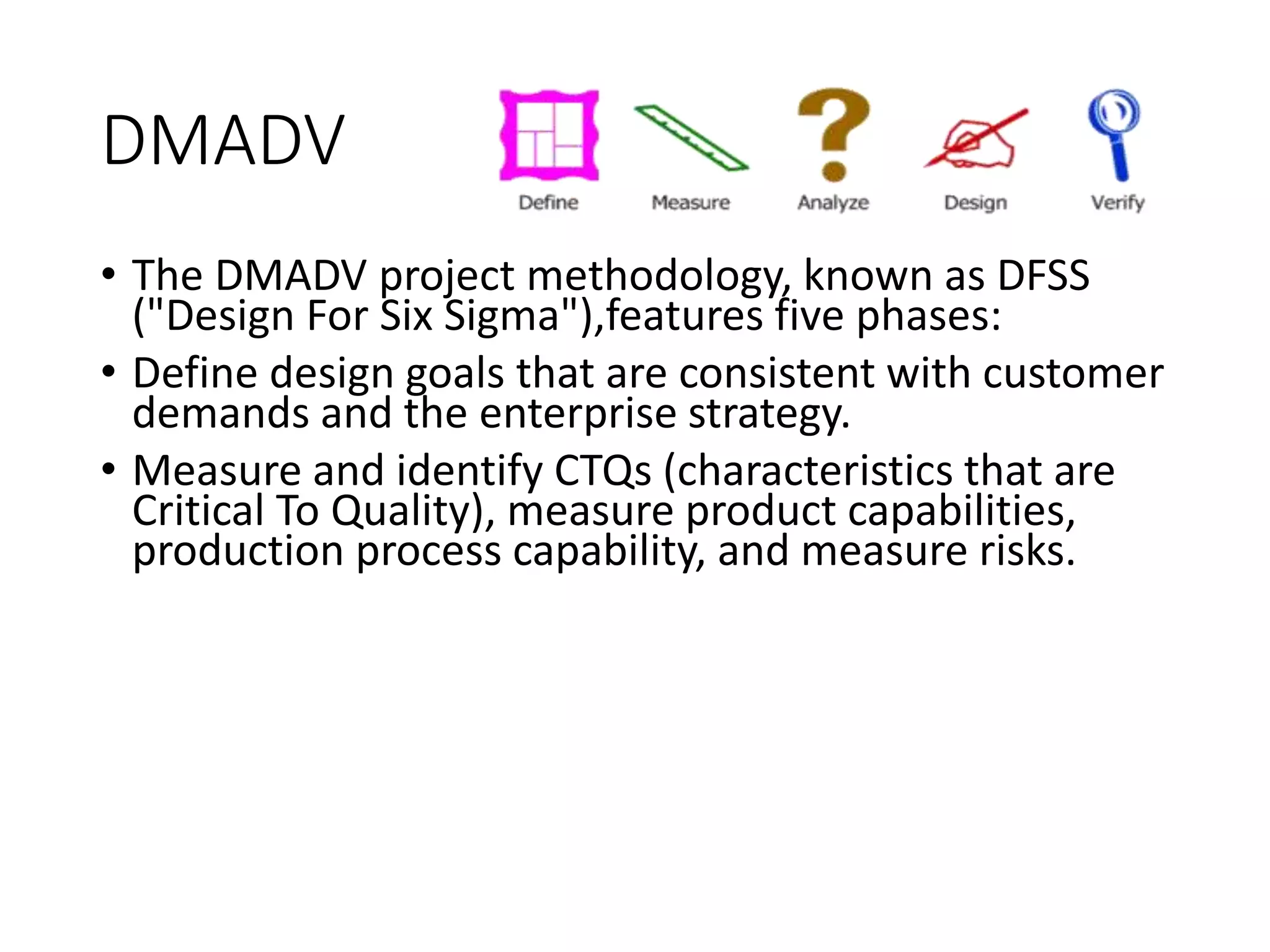
DMADV
• The DMADV project methodology, known as DFSS
("Design For Six Sigma"),features five phases:
• Define design goals that are consistent with customer
demands and the enterprise strategy.
• Measure and identify CTQs (characteristics that are
Critical To Quality), measure product capabilities,
production process capability, and measure risks.
DMADV
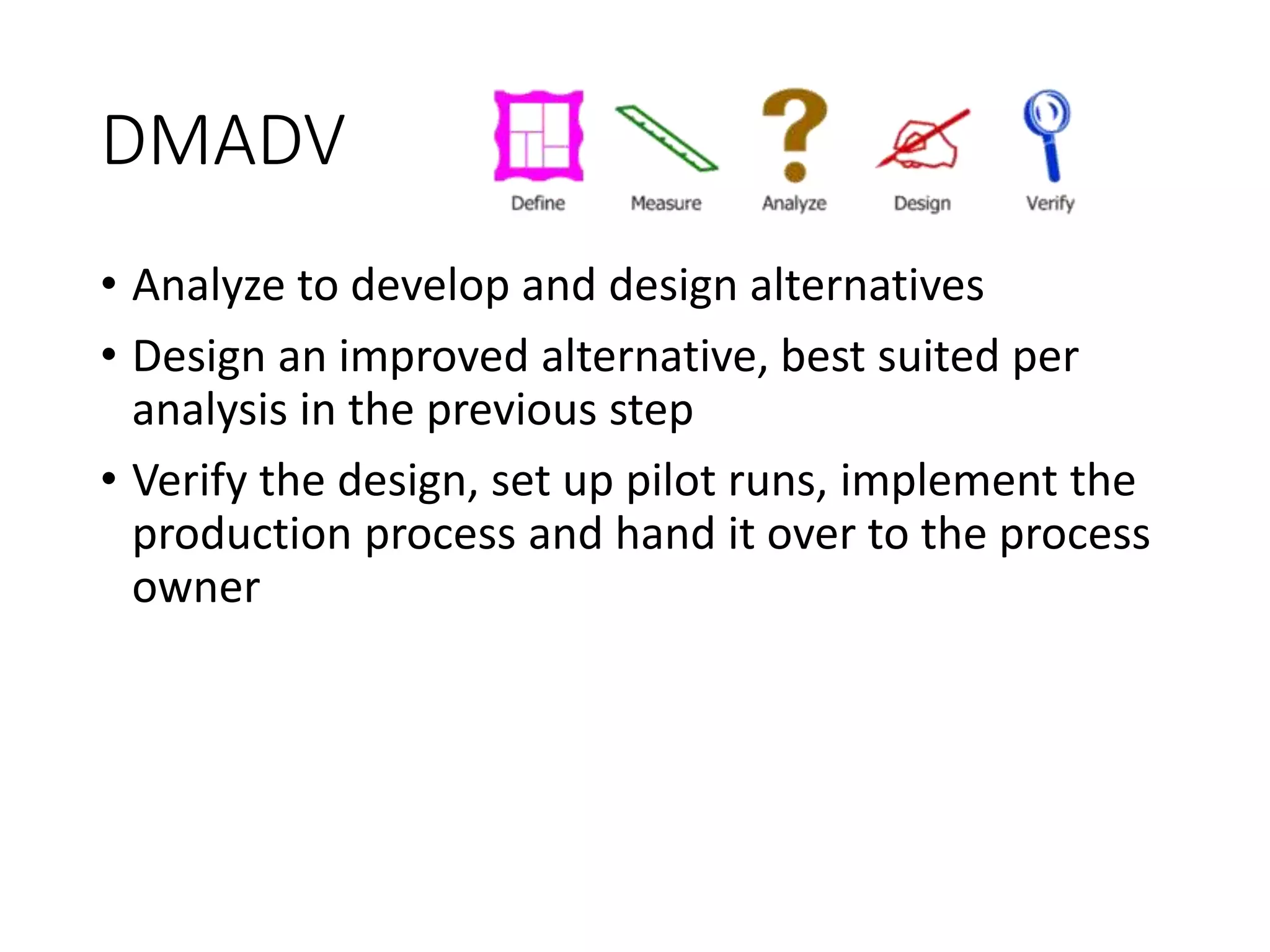
• Analyze to develop and design alternatives
• Design an improved alternative, best suited per
analysis in the previous step
• Verify the design, set up pilot runs, implement the
production process and hand it over to the process
owner
APPLICATION OF 6 SIGMA
• Manufacturing
• Engineering and Construction
• Finance
• Supply Chain
• Health Care

PPT on six sigma

  • 1.
  • 2.
    OBJECTIVES OF PRESENTATION WHATIS SIX SIGMA HISTORY OF SIX SIGMA SIX SIGMA METHODOLOGIES DMAIC DMADV APPLICATION OF 6 SIGMA
  • 3.
    WHAT IS SIXSIGMA • Six Sigma is a method that provides organizations tools toimprove the capability of their business processes. • • This increase in performance and decrease in process variation lead to defect reduction and improvement inprofits, employee morale, and quality of products orservices. • • Six Sigma quality is a term generally used to indicate aprocess is well controlled (within process limits ±3s fromthe centre line in acontrol chart, andrequirements/tolerance limits ±6s from the centre line).
  • 4.
    HISTORY OF SIXSIGMA • TheSix Sigma methodologieswere formulated by Bill Smith atMotorola in order to arrest the quality downslide of the company in1986. • • Six Sigma tools are developed by taking inspiration from traditionalQuality Control,TQM, and TPM etc. • • Six Sigma was initially targeted to quantify the defects occurred duringmanufacturing processes, and to reduce those defects to a very smalllevel.
  • 5.
    • Another verypopular successful user was GE. • Today Six Sigma is delivering business excellence, higher customersatisfaction, and superior profits by dramatically improving everyprocess in an enterprise, whether financial, operational or production. • • Six Sigma has become a darling of a wide spectrum of industries, from health care to insurance to telecommunications tosoftware.
  • 6.
    STEPS TO 6SIGMA IMPLIMENTATION • Create a Burning Platform • Put Resources in Place • Teach the Methodology • Prioritize Activities • Establish Ownership • Take the Right Measurements • Govern the Program • Recognize Contributions
  • 7.
    6 SIGMA METHODOLOGIES •Six Sigma projects follow two project methodologies inspired by Deming's Plan–Do– Study–Act Cycle. These methodologies, composed of five phases each, bear the acronyms DMAIC and DMADV. • DMAIC is used for projects aimed at improving an existing business process. • DMADV is used for projects aimed at creating new product or process designs.
  • 8.
    DMAIC • Define thesystem, the voice of the customer and their requirements, and the project goals, specifically. • Measure key aspects of the current process and collect relevant data; calculate the 'as-is' Process Capability. • Analyze the data to investigate and verify cause-and-effect relationships. Determine what the relationships are, and attempt to ensure that all factors have been considered. Seek out root cause of the defect under investigation. • Improve or optimize the current process based upon data analysis using techniques such as design of experiments, poka yoke or mistake proofing, and standard work to create a new, future state process. Set up pilot runs to establish process capability.
  • 9.
    DMAIC • Control thefuture state process to ensure that any deviations from the target are corrected before they result in defects. Implement control systems such as statistical process control, production boards, visual workplaces, and continuously monitor the process. This process is repeated until the desired quality level is obtained. • Some organizations add a Recognize step at the beginning, which is to recognize the right problem to work on, thus yielding an RDMAIC methodology.
  • 10.
    DMADV • The DMADVproject methodology, known as DFSS ("Design For Six Sigma"),features five phases: • Define design goals that are consistent with customer demands and the enterprise strategy. • Measure and identify CTQs (characteristics that are Critical To Quality), measure product capabilities, production process capability, and measure risks.
  • 11.
    DMADV • Analyze todevelop and design alternatives • Design an improved alternative, best suited per analysis in the previous step • Verify the design, set up pilot runs, implement the production process and hand it over to the process owner
  • 12.
    APPLICATION OF 6SIGMA • Manufacturing • Engineering and Construction • Finance • Supply Chain • Health Care