HEPATITIS AND ITS PROPHYLAXIS
DR.NITI SARAWGI (pg)
DEPARTMENT OF OMFS
CONTENTS
• INTRODUCTION
• HISTORY
• CLASSIFICATION
 Hepatitis A
Features , Symptoms , Investigation , Management
 Hepatitis B
Features , Pathogenesis , Symptoms , causes ,
Investigation ,Prevention , Management .
 Hepatitis C
Features , Symptoms , Investigation , Management
 Hepatitis D
Features , Symptoms , Investigation , Management
 Hepatitis E
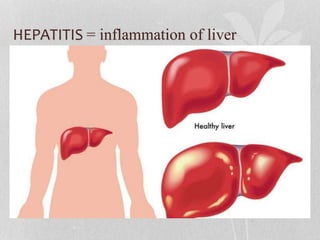
HEPATITIS = inflammation of liver
History
The manifestations of liver diseases found to be infectious in 8th century. By
1885, hepatitis was found to be transmittable through blood transfusions and
syringes during the wars of the 17th-19th centuries.
In 1947, Mac Callum classified viral hepatitis into two types: Viral Hepatitis A
and Viral Hepatitis B. In 1965,Baruch Blumberg, discovered the Australia
antigen(later known to be Hepatitis B surface antigen, or HBsAg) in the
blood.
Later in 1968, Prince and Okochi isolated the Australia antigen in hepatitis B
patients, and from this information, the first vaccine for hepatitis B was
produced in 1981 and licensed as “Heptavax”
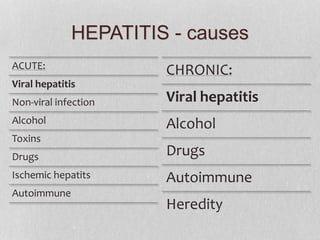
HEPATITIS - causes
ACUTE:
Viral hepatitis
Non-viral infection
Alcohol
Toxins
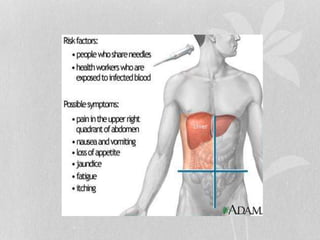
Drugs
Ischemic hepatits
Autoimmune
CHRONIC:
Viral hepatitis
Alcohol
Drugs
Autoimmune
Heredity
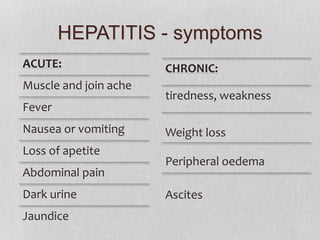
HEPATITIS - symptoms
ACUTE:
Muscle and join ache
Fever
Nausea or vomiting
Loss of apetite
Abdominal pain
Dark urine
Jaundice
CHRONIC:
tiredness, weakness
Weight loss
Peripheral oedema
Ascites
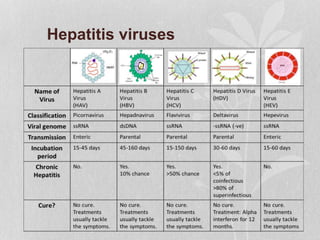
Hepatitis viruses
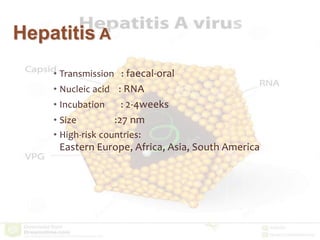
Hepatitis A
• Transmission : faecal-oral
• Nucleic acid : RNA
• Incubation : 2-4weeks
• Size :27 nm
• High-risk countries:
Eastern Europe, Africa, Asia, South America
Hepatitis A
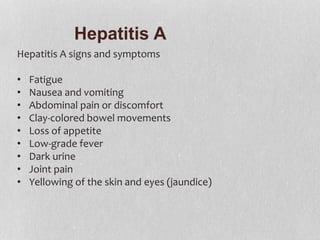
Hepatitis A signs and symptoms
• Fatigue
• Nausea and vomiting
• Abdominal pain or discomfort
• Clay-colored bowel movements
• Loss of appetite
• Low-grade fever
• Dark urine
• Joint pain
• Yellowing of the skin and eyes (jaundice)
TRANSMISSION
The hepatitis A virus is transmitted primarily by the
faecal-oral route
Waterborne outbreaks
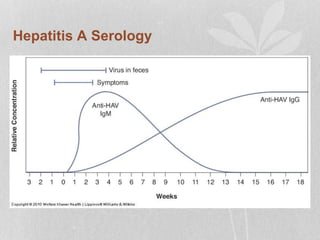
Anti-HAV is important for diagnosis.
IgM type indicating a primary
immune response.
IgG type used as a marker of previous
infection.
INVESTIGATION
Hepatitis A Serology
LIVER FUNCTION TEST
• Information about the state of a patient's
liver
• These tests include:
• albumin
• bilirubin (direct and indirect)
• Liver transaminases (AST or SGOT and
ALT or SGPT)
•ALBUMIN:
• It is the main constituent of total protein.
• Normal range: 3.5-5 g/dl
• Increased: dehydration
• Decreased: chronic liver disease, cirrhosis
•ALKALINE PHOSPHATASE:
• Normal range: 30-115 U/L
• Enzyme in the cells lining the biliary ducts of the liver.
• ALP levels increased in: large bile duct obstruction,
intrahepatic cholestasis, or infiltrative diseases of the liver.
• In the third trimester of pregnancy, ALP is about two to
three times higher
• ↓- hypothyroidism, malnutrition.
• BILIRUBIN:
• asses liver function
• Evaluates diseases concerning with production,
uptake, storage, metabolism, excretion of bilirubin
• Total bilirubin: 0.1 – 1 mg/dl
• Direct bilirubin: 0.1-0.4 mg/ dl
• ↑ total bilirubin-: acute and chronic hepatitis,
cirrhosis, biliary tract obstruction, hemolysis
• ↑ direct (conjugated)-: obstructive liver disease,
hepatitis
• ↑ indirect ( unconjugated) -: hemolytic anemia,
hepatocellular liver disease
• ASPARTATE AMINOTRANSFERASE (AST/SGOT):
• Enzyme associated with liver parenchymal cells.
• Normal range: 5- 25 U/L
• ↑- liver disease
• ALANINE AMINOTRANSFERASE (ALT/SGPT):
• normal range: 5-30 U/L
• ↑- liver disease (more specific than AST), pancreatitis,
biliary obstruction
Prevention
• Hygienic Measures
• Passive Immunization
( gives <3 months immunity to those at risk)
• Active Immunization
• Hepatitis A Vaccine
Four hepatitis A monovalent vaccines are currently available
(Haverix, Vaqta, Avaxim and Epaxal), prepared from different
strains of the hepatitis A virus; all are grown on human diploid cells .
Management
Immediate protection can be provided by immune
serum globulin. If this is given soon after exposure to the
virus.
The protective effect of immune serum globulin is
attributed to its anti HAV content.
CHRONIC LIVER DISEASE DOES NOT OCCUR!
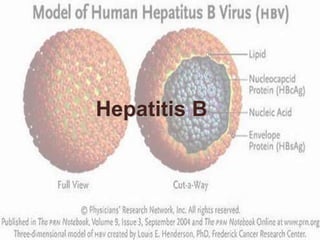
Hepatitis B
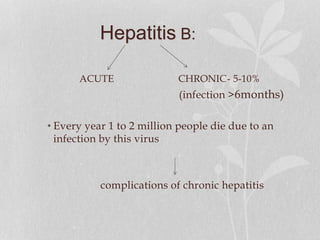
Hepatitis B:
ACUTE CHRONIC- 5-10%
(infection >6months)
• Every year 1 to 2 million people die due to an
infection by this virus
complications of chronic hepatitis
• Transmission: blood and body fluids.
• Incubation: 1-6 months
• Hepatitis B virus primarily interferes with functions of the
liver by replicating in liver cells
• During HBV infection, the host immune response causes
both hepatocellular damage and viral clearance
• HBV not only transmitted through percutaneous
exposure , but also can be transmitted through surface
contact with dried blood or other potentially
infectious materials.
• HBV infections that occur in workers with no
history of exposure or occupational percutaneous
injury might have resulted from direct or indirect
blood or body fluid exposures that inoculated HBV
into cutaneous scratches, abrasions, burns, or other
lesions, or on mucosal surfaces
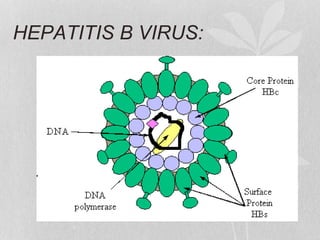
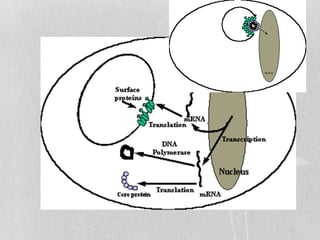
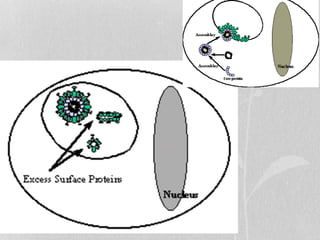
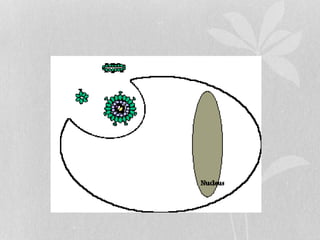
HEPATITIS B VIRUS:
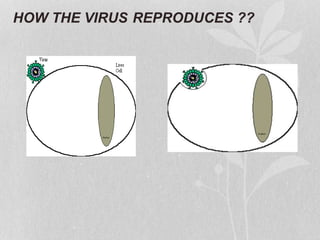
HOW THE VIRUS REPRODUCES ??
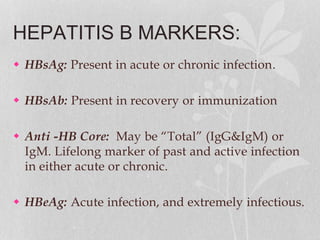
HEPATITIS B MARKERS:
 HBsAg: Present in acute or chronic infection.
 HBsAb: Present in recovery or immunization
 Anti -HB Core: May be “Total” (IgG&IgM) or
IgM. Lifelong marker of past and active infection
in either acute or chronic.
 HBeAg: Acute infection, and extremely infectious.
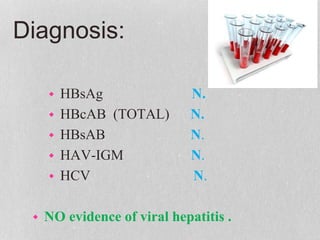
Diagnosis:
 HBsAg N.
 HBcAB (TOTAL) N.
 HBsAB N.
 HAV-IGM N.
 HCV N.
 NO evidence of viral hepatitis .
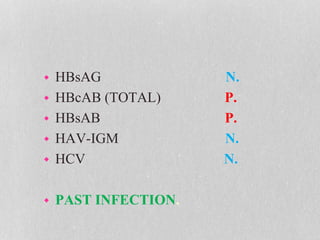
 HBsAG N.
 HBcAB (TOTAL) P.
 HBsAB P.
 HAV-IGM N.
 HCV N.
 PAST INFECTION.
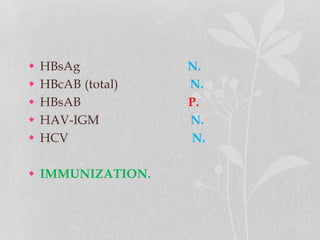
 HBsAg N.
 HBcAB (total) N.
 HBsAB P.
 HAV-IGM N.
 HCV N.
 IMMUNIZATION.
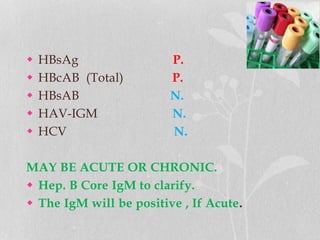
 HBsAg P.
 HBcAB (Total) P.
 HBsAB N.
 HAV-IGM N.
 HCV N.
MAY BE ACUTE OR CHRONIC.
 Hep. B Core IgM to clarify.
 The IgM will be positive , If Acute.
 HBsAG P.
 HBcAB (total) P.
 HBsAB P.
 HAV-IGM N.
 HCV N.
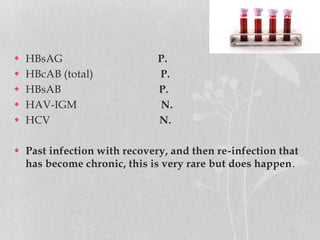
 Past infection with recovery, and then re-infection that
has become chronic, this is very rare but does happen.
 HBsAg P.
 HBcAB (TOTAL) P.
 HBsAB N.
 HAV-IGM P.
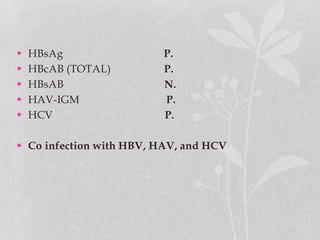
 HCV P.
 Co infection with HBV, HAV, and HCV
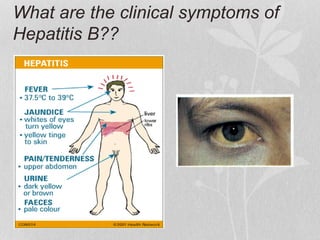
What are the clinical symptoms of
Hepatitis B??
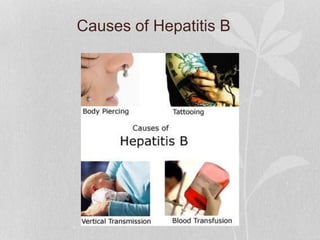
Causes of Hepatitis B
How will I keep from becoming infected
with HBV at work??
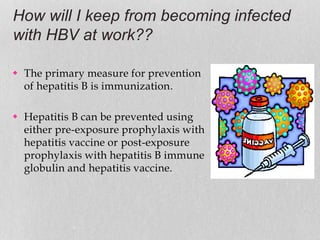
 The primary measure for prevention
of hepatitis B is immunization.
 Hepatitis B can be prevented using
either pre-exposure prophylaxis with
hepatitis vaccine or post-exposure
prophylaxis with hepatitis B immune
globulin and hepatitis vaccine.
What is hepatitis B vaccine?
 Hepatitis B vaccine has been available since 1982.
 Made with recombinant DNA technology, and contain
protein portions of HBV.
 The vaccine administrated IM
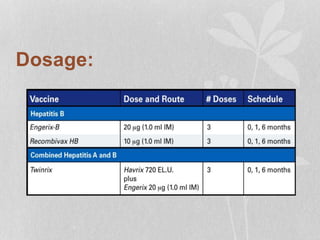
 usually given on schedule of 0,1,6 months
Dosage:
Who should be vaccinated?
 Everyone 18 years of age and younger
 over 18 years of age who are at risk for HBV
infection, which include :
 drug users
 person at occupational risk of infection
 hemodialysis patients
 household and sex contacts of persons with chronic HBV
infection
Post exposure Prophylaxis for
Hepatitis B
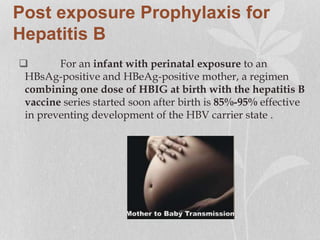
 For an infant with perinatal exposure to an
HBsAg-positive and HBeAg-positive mother, a regimen
combining one dose of HBIG at birth with the hepatitis B
vaccine series started soon after birth is 85%-95% effective
in preventing development of the HBV carrier state .
• For percutaneous (needlestick, laceration, or bite)
or permucosal (ocular or mucous-membrane) exposure to blood,
the decision to provide prophylaxis must include consideration of
several factors,
• a) whether the source of the blood is available.
• b) the HBsAg status of the source.
• c) the hepatitis B vaccination and vaccine-response status of
the exposed person
• For perrcutaneous exposure,. A regimen of two doses
of HBIG, one given after exposure and one a month later, is
about 75% effective in preventing hepatitis B in this setting . For
sexual exposure to a person with acute hepatitis B, a single dose of
HBIG is 75% effective if administered within 2 weeks of last
sexual exposure .
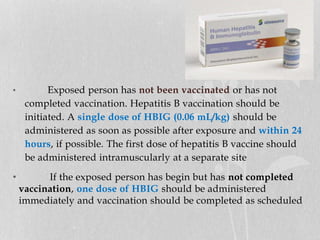
• Exposed person has not been vaccinated or has not
completed vaccination. Hepatitis B vaccination should be
initiated. A single dose of HBIG (0.06 mL/kg) should be
administered as soon as possible after exposure and within 24
hours, if possible. The first dose of hepatitis B vaccine should
be administered intramuscularly at a separate site
• If the exposed person has begin but has not completed
vaccination, one dose of HBIG should be administered
immediately and vaccination should be completed as scheduled
Exposed person has already been vaccinated against
hepatitis B, and anti-HBs response status is known.
(a) If the anti-HBs level is adequate, no treatment is
necessary.
(b) If the anti-HBs level is inadequate, a booster dose of
hepatitis B vaccine should be administered.
Specific Practices To Be
Utilized in workplace!!!!!!!!!!!!
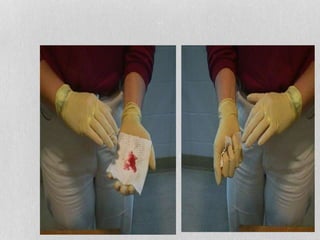
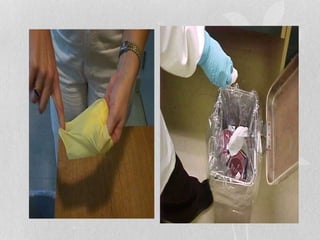
 How to dispose of small amount of regulated
waste and remove gloves:
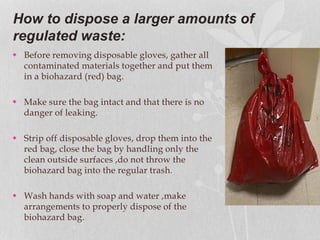
How to dispose a larger amounts of
regulated waste:
 Before removing disposable gloves, gather all
contaminated materials together and put them
in a biohazard (red) bag.
 Make sure the bag intact and that there is no
danger of leaking.
 Strip off disposable gloves, drop them into the
red bag, close the bag by handling only the
clean outside surfaces ,do not throw the
biohazard bag into the regular trash.
 Wash hands with soap and water ,make
arrangements to properly dispose of the
biohazard bag.
MANAGEMENT
Management Guidelines
- Simple non –invasive tests to assess which stage of liver
disease is the patient in
- -prioritizing those with liver cirrhosis – advanced liver disease
- -the use of two safe and highly effective medicines –tenofovir
or entecavir for treatment of chronic hepatitis
- -regular monitoring to assess the presence of liver cancer of if
the treatment is working and whether it can be stopped.
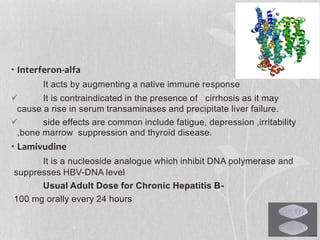
• Interferon-alfa
It acts by augmenting a native immune response
 It is contraindicated in the presence of cirrhosis as it may
cause a rise in serum transaminases and precipitate liver failure.
 side effects are common include fatigue, depression ,irritability
,bone marrow suppression and thyroid disease.
• Lamivudine
It is a nucleoside analogue which inhibit DNA polymerase and
suppresses HBV-DNA level
Usual Adult Dose for Chronic Hepatitis B-
100 mg orally every 24 hours
• Adefovir
• It reduces HBV-DNA level, enhances the frequency of HBeAg
seroconvertion and leads to histological improvement ,but is
contraindicated in renal failure.
• Relapse occurs on stopping treatment.
•Entecavior
These drugs are more effective than lamivudine and
adefovir in reducing viral load in HBeAg – positive and HBeAg negative
chronic hepatitis
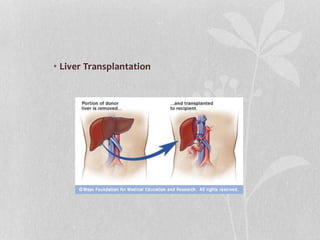
• Liver Transplantation
FACTS:
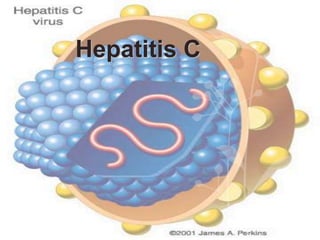
Hepatitis C
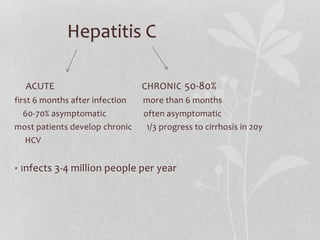
Hepatitis C
ACUTE CHRONIC 50-80%
first 6 months after infection more than 6 months
60-70% asymptomatic often asymptomatic
most patients develop chronic 1/3 progress to cirrhosis in 20y
HCV
• Infects 3-4 million people per year
• Transmission: blood esp blood transfusion
• Incubation: 2weeks - 6months
• No vaccine!
• 35% of patients infected with HIV are also infected with
hepatitis C virus
Investigation
Serology:
 The HCV protein contains several antigens that give rise to
antibodies in an infected person and these are used in diagnosis
 It may take 6-12 weeks for antibodies to appear in the blood.
Liver Histology:
 Serum transaminase levels in hepatitis c are a poor predictor of
degree of liver fibrosis and so a liver biopsy is often required to stage
the degree of liver damage
LFT
 LFT may be normal or slow fluctuating serum transaminase
between 50 and 200 V/L. Jaundice is rare and only usually appears in
end-stage cirrhosis.
Management
• The treatment of choice is pegylated alpha interferon given
weekly subcutaneously , together with oral ribavirin, a synthetic
nucleotide analogue.
• The main side effect of ribavirin is hemolytic anemia.
• Side effect of interferon are insignificant.
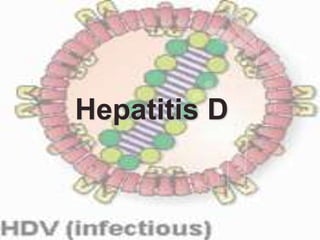
Hepatitis D
Hepatitis D
• Subviral satellite because it can propagate only in the
presence of hepatitis B
coinfection superinfection
• Transmission: parenteral (intravenous drug use mostly)
• Nucleic acid : RNA
• Incubation : 30-60 days
• > 60% develop cirrhosis
Investigation
HDV contains a single antigen to which infected individuals
make an antibody(anti-HDV).Delta antigen appears in the
blood only transistently and in practice diagnosis depends on
detecting anti-HDV
Management
Effective management of hepatitis B virus effectively
prevents hepatitis D
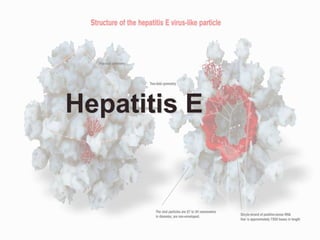
Hepatitis E
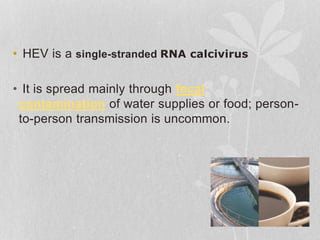
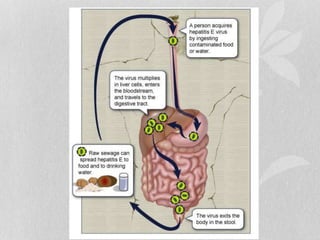
• HEV is a single-stranded RNA calcivirus
• It is spread mainly through fecal
contamination of water supplies or food; person-
to-person transmission is uncommon.
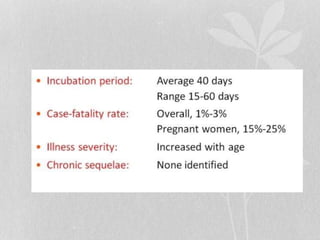
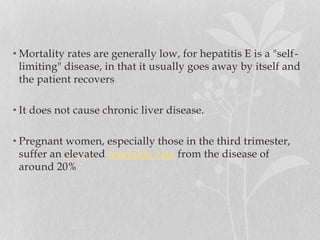
• Mortality rates are generally low, for hepatitis E is a "self-
limiting" disease, in that it usually goes away by itself and
the patient recovers
• It does not cause chronic liver disease.
• Pregnant women, especially those in the third trimester,
suffer an elevated mortality rate from the disease of
around 20%
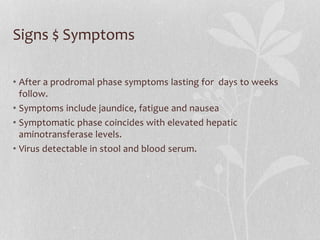
Signs $ Symptoms
• After a prodromal phase symptoms lasting for days to weeks
follow.
• Symptoms include jaundice, fatigue and nausea
• Symptomatic phase coincides with elevated hepatic
aminotransferase levels.
• Virus detectable in stool and blood serum.
Prevention and Management
•vaccine HEV 239,
Treatment of acute HEV infection
Hepatitis E treated with ribavirin for 21days. Although ribavirin
therapy is contraindicated in pregnancy owing to teratogenicity.
The risks of untreated HEV to the mother and fetus are high.
Treatment of chronic HEV infection
• Ribavirin monotherapy (600–1000 mg/day) for at
least 3 months seems to be the first treatment option for
patients with chronic hepatitis E who are not able to clear
HEV after immunosuppression is reduced
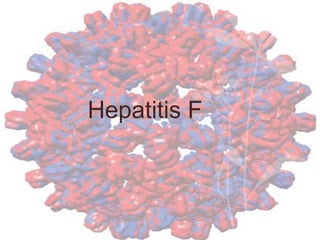
Hepatitis F
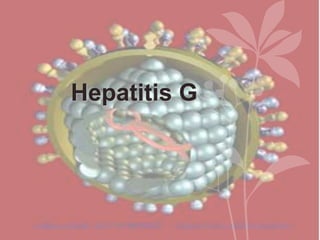
Hepatitis G
Hepatitis TT
• In 1997, a novel DNA virus was isolated from the serum of
a patient with post-transfusion hepatitis of unknown
etiology in Japan
• TTV is a nonenveloped, single-stranded and circular DNA
virus, and its entire sequence of ~3.9 kb has been
determined.
TRANSMISSION
• Recent reports indicate that TTV can be transmitted via
blood/blood products
• In another study, a high rate of cervical carriage (66%) of TTV
DNA was found by PCR, which suggests that perinatal and
sexual transmission is possible.
CONCLUSION
References
Harrison's Principles of Internal Medicine
Davidson's Principles and Practice of Medicine, 21st Edition
Ananthanarayan .Text book of Microbiology
Internet source
Hepat seminar

Hepat seminar

  • 1.
    HEPATITIS AND ITSPROPHYLAXIS DR.NITI SARAWGI (pg) DEPARTMENT OF OMFS
  • 2.
    CONTENTS • INTRODUCTION • HISTORY •CLASSIFICATION  Hepatitis A Features , Symptoms , Investigation , Management  Hepatitis B Features , Pathogenesis , Symptoms , causes , Investigation ,Prevention , Management .  Hepatitis C Features , Symptoms , Investigation , Management  Hepatitis D Features , Symptoms , Investigation , Management  Hepatitis E
  • 3.
  • 4.
    History The manifestations ofliver diseases found to be infectious in 8th century. By 1885, hepatitis was found to be transmittable through blood transfusions and syringes during the wars of the 17th-19th centuries. In 1947, Mac Callum classified viral hepatitis into two types: Viral Hepatitis A and Viral Hepatitis B. In 1965,Baruch Blumberg, discovered the Australia antigen(later known to be Hepatitis B surface antigen, or HBsAg) in the blood. Later in 1968, Prince and Okochi isolated the Australia antigen in hepatitis B patients, and from this information, the first vaccine for hepatitis B was produced in 1981 and licensed as “Heptavax”
  • 5.
    HEPATITIS - causes ACUTE: Viralhepatitis Non-viral infection Alcohol Toxins Drugs Ischemic hepatits Autoimmune CHRONIC: Viral hepatitis Alcohol Drugs Autoimmune Heredity
  • 6.
    HEPATITIS - symptoms ACUTE: Muscleand join ache Fever Nausea or vomiting Loss of apetite Abdominal pain Dark urine Jaundice CHRONIC: tiredness, weakness Weight loss Peripheral oedema Ascites
  • 7.
  • 8.
    Hepatitis A • Transmission: faecal-oral • Nucleic acid : RNA • Incubation : 2-4weeks • Size :27 nm • High-risk countries: Eastern Europe, Africa, Asia, South America
  • 9.
    Hepatitis A Hepatitis Asigns and symptoms • Fatigue • Nausea and vomiting • Abdominal pain or discomfort • Clay-colored bowel movements • Loss of appetite • Low-grade fever • Dark urine • Joint pain • Yellowing of the skin and eyes (jaundice)
  • 10.
    TRANSMISSION The hepatitis Avirus is transmitted primarily by the faecal-oral route Waterborne outbreaks
  • 11.
    Anti-HAV is importantfor diagnosis. IgM type indicating a primary immune response. IgG type used as a marker of previous infection. INVESTIGATION
  • 12.
  • 13.
    LIVER FUNCTION TEST •Information about the state of a patient's liver • These tests include: • albumin • bilirubin (direct and indirect) • Liver transaminases (AST or SGOT and ALT or SGPT)
  • 14.
    •ALBUMIN: • It isthe main constituent of total protein. • Normal range: 3.5-5 g/dl • Increased: dehydration • Decreased: chronic liver disease, cirrhosis •ALKALINE PHOSPHATASE: • Normal range: 30-115 U/L • Enzyme in the cells lining the biliary ducts of the liver. • ALP levels increased in: large bile duct obstruction, intrahepatic cholestasis, or infiltrative diseases of the liver. • In the third trimester of pregnancy, ALP is about two to three times higher • ↓- hypothyroidism, malnutrition.
  • 15.
    • BILIRUBIN: • assesliver function • Evaluates diseases concerning with production, uptake, storage, metabolism, excretion of bilirubin • Total bilirubin: 0.1 – 1 mg/dl • Direct bilirubin: 0.1-0.4 mg/ dl • ↑ total bilirubin-: acute and chronic hepatitis, cirrhosis, biliary tract obstruction, hemolysis • ↑ direct (conjugated)-: obstructive liver disease, hepatitis • ↑ indirect ( unconjugated) -: hemolytic anemia, hepatocellular liver disease
  • 16.
    • ASPARTATE AMINOTRANSFERASE(AST/SGOT): • Enzyme associated with liver parenchymal cells. • Normal range: 5- 25 U/L • ↑- liver disease • ALANINE AMINOTRANSFERASE (ALT/SGPT): • normal range: 5-30 U/L • ↑- liver disease (more specific than AST), pancreatitis, biliary obstruction
  • 17.
    Prevention • Hygienic Measures •Passive Immunization ( gives <3 months immunity to those at risk) • Active Immunization • Hepatitis A Vaccine Four hepatitis A monovalent vaccines are currently available (Haverix, Vaqta, Avaxim and Epaxal), prepared from different strains of the hepatitis A virus; all are grown on human diploid cells .
  • 18.
    Management Immediate protection canbe provided by immune serum globulin. If this is given soon after exposure to the virus. The protective effect of immune serum globulin is attributed to its anti HAV content. CHRONIC LIVER DISEASE DOES NOT OCCUR!
  • 19.
  • 20.
    Hepatitis B: ACUTE CHRONIC-5-10% (infection >6months) • Every year 1 to 2 million people die due to an infection by this virus complications of chronic hepatitis
  • 21.
    • Transmission: bloodand body fluids. • Incubation: 1-6 months • Hepatitis B virus primarily interferes with functions of the liver by replicating in liver cells • During HBV infection, the host immune response causes both hepatocellular damage and viral clearance
  • 22.
    • HBV notonly transmitted through percutaneous exposure , but also can be transmitted through surface contact with dried blood or other potentially infectious materials. • HBV infections that occur in workers with no history of exposure or occupational percutaneous injury might have resulted from direct or indirect blood or body fluid exposures that inoculated HBV into cutaneous scratches, abrasions, burns, or other lesions, or on mucosal surfaces
  • 23.
  • 24.
    HOW THE VIRUSREPRODUCES ??
  • 28.
    HEPATITIS B MARKERS: HBsAg: Present in acute or chronic infection.  HBsAb: Present in recovery or immunization  Anti -HB Core: May be “Total” (IgG&IgM) or IgM. Lifelong marker of past and active infection in either acute or chronic.  HBeAg: Acute infection, and extremely infectious.
  • 29.
    Diagnosis:  HBsAg N. HBcAB (TOTAL) N.  HBsAB N.  HAV-IGM N.  HCV N.  NO evidence of viral hepatitis .
  • 30.
     HBsAG N. HBcAB (TOTAL) P.  HBsAB P.  HAV-IGM N.  HCV N.  PAST INFECTION.
  • 31.
     HBsAg N. HBcAB (total) N.  HBsAB P.  HAV-IGM N.  HCV N.  IMMUNIZATION.
  • 32.
     HBsAg P. HBcAB (Total) P.  HBsAB N.  HAV-IGM N.  HCV N. MAY BE ACUTE OR CHRONIC.  Hep. B Core IgM to clarify.  The IgM will be positive , If Acute.
  • 33.
     HBsAG P. HBcAB (total) P.  HBsAB P.  HAV-IGM N.  HCV N.  Past infection with recovery, and then re-infection that has become chronic, this is very rare but does happen.
  • 34.
     HBsAg P. HBcAB (TOTAL) P.  HBsAB N.  HAV-IGM P.  HCV P.  Co infection with HBV, HAV, and HCV
  • 35.
    What are theclinical symptoms of Hepatitis B??
  • 36.
  • 37.
    How will Ikeep from becoming infected with HBV at work??  The primary measure for prevention of hepatitis B is immunization.  Hepatitis B can be prevented using either pre-exposure prophylaxis with hepatitis vaccine or post-exposure prophylaxis with hepatitis B immune globulin and hepatitis vaccine.
  • 38.
    What is hepatitisB vaccine?  Hepatitis B vaccine has been available since 1982.  Made with recombinant DNA technology, and contain protein portions of HBV.  The vaccine administrated IM  usually given on schedule of 0,1,6 months
  • 39.
  • 40.
    Who should bevaccinated?  Everyone 18 years of age and younger  over 18 years of age who are at risk for HBV infection, which include :  drug users  person at occupational risk of infection  hemodialysis patients  household and sex contacts of persons with chronic HBV infection
  • 41.
    Post exposure Prophylaxisfor Hepatitis B  For an infant with perinatal exposure to an HBsAg-positive and HBeAg-positive mother, a regimen combining one dose of HBIG at birth with the hepatitis B vaccine series started soon after birth is 85%-95% effective in preventing development of the HBV carrier state .
  • 42.
    • For percutaneous(needlestick, laceration, or bite) or permucosal (ocular or mucous-membrane) exposure to blood, the decision to provide prophylaxis must include consideration of several factors, • a) whether the source of the blood is available. • b) the HBsAg status of the source. • c) the hepatitis B vaccination and vaccine-response status of the exposed person
  • 43.
    • For perrcutaneousexposure,. A regimen of two doses of HBIG, one given after exposure and one a month later, is about 75% effective in preventing hepatitis B in this setting . For sexual exposure to a person with acute hepatitis B, a single dose of HBIG is 75% effective if administered within 2 weeks of last sexual exposure .
  • 44.
    • Exposed personhas not been vaccinated or has not completed vaccination. Hepatitis B vaccination should be initiated. A single dose of HBIG (0.06 mL/kg) should be administered as soon as possible after exposure and within 24 hours, if possible. The first dose of hepatitis B vaccine should be administered intramuscularly at a separate site • If the exposed person has begin but has not completed vaccination, one dose of HBIG should be administered immediately and vaccination should be completed as scheduled
  • 45.
    Exposed person hasalready been vaccinated against hepatitis B, and anti-HBs response status is known. (a) If the anti-HBs level is adequate, no treatment is necessary. (b) If the anti-HBs level is inadequate, a booster dose of hepatitis B vaccine should be administered.
  • 46.
    Specific Practices ToBe Utilized in workplace!!!!!!!!!!!!  How to dispose of small amount of regulated waste and remove gloves:
  • 49.
    How to disposea larger amounts of regulated waste:  Before removing disposable gloves, gather all contaminated materials together and put them in a biohazard (red) bag.  Make sure the bag intact and that there is no danger of leaking.  Strip off disposable gloves, drop them into the red bag, close the bag by handling only the clean outside surfaces ,do not throw the biohazard bag into the regular trash.  Wash hands with soap and water ,make arrangements to properly dispose of the biohazard bag.
  • 50.
  • 51.
    Management Guidelines - Simplenon –invasive tests to assess which stage of liver disease is the patient in - -prioritizing those with liver cirrhosis – advanced liver disease - -the use of two safe and highly effective medicines –tenofovir or entecavir for treatment of chronic hepatitis - -regular monitoring to assess the presence of liver cancer of if the treatment is working and whether it can be stopped.
  • 52.
    • Interferon-alfa It actsby augmenting a native immune response  It is contraindicated in the presence of cirrhosis as it may cause a rise in serum transaminases and precipitate liver failure.  side effects are common include fatigue, depression ,irritability ,bone marrow suppression and thyroid disease. • Lamivudine It is a nucleoside analogue which inhibit DNA polymerase and suppresses HBV-DNA level Usual Adult Dose for Chronic Hepatitis B- 100 mg orally every 24 hours
  • 53.
    • Adefovir • Itreduces HBV-DNA level, enhances the frequency of HBeAg seroconvertion and leads to histological improvement ,but is contraindicated in renal failure. • Relapse occurs on stopping treatment. •Entecavior These drugs are more effective than lamivudine and adefovir in reducing viral load in HBeAg – positive and HBeAg negative chronic hepatitis
  • 54.
  • 55.
  • 56.
  • 57.
    Hepatitis C ACUTE CHRONIC50-80% first 6 months after infection more than 6 months 60-70% asymptomatic often asymptomatic most patients develop chronic 1/3 progress to cirrhosis in 20y HCV • Infects 3-4 million people per year
  • 58.
    • Transmission: bloodesp blood transfusion • Incubation: 2weeks - 6months • No vaccine! • 35% of patients infected with HIV are also infected with hepatitis C virus
  • 60.
    Investigation Serology:  The HCVprotein contains several antigens that give rise to antibodies in an infected person and these are used in diagnosis  It may take 6-12 weeks for antibodies to appear in the blood. Liver Histology:  Serum transaminase levels in hepatitis c are a poor predictor of degree of liver fibrosis and so a liver biopsy is often required to stage the degree of liver damage LFT  LFT may be normal or slow fluctuating serum transaminase between 50 and 200 V/L. Jaundice is rare and only usually appears in end-stage cirrhosis.
  • 61.
    Management • The treatmentof choice is pegylated alpha interferon given weekly subcutaneously , together with oral ribavirin, a synthetic nucleotide analogue. • The main side effect of ribavirin is hemolytic anemia. • Side effect of interferon are insignificant.
  • 62.
  • 63.
    Hepatitis D • Subviralsatellite because it can propagate only in the presence of hepatitis B coinfection superinfection • Transmission: parenteral (intravenous drug use mostly) • Nucleic acid : RNA • Incubation : 30-60 days • > 60% develop cirrhosis
  • 64.
    Investigation HDV contains asingle antigen to which infected individuals make an antibody(anti-HDV).Delta antigen appears in the blood only transistently and in practice diagnosis depends on detecting anti-HDV Management Effective management of hepatitis B virus effectively prevents hepatitis D
  • 65.
  • 66.
    • HEV isa single-stranded RNA calcivirus • It is spread mainly through fecal contamination of water supplies or food; person- to-person transmission is uncommon.
  • 69.
    • Mortality ratesare generally low, for hepatitis E is a "self- limiting" disease, in that it usually goes away by itself and the patient recovers • It does not cause chronic liver disease. • Pregnant women, especially those in the third trimester, suffer an elevated mortality rate from the disease of around 20%
  • 70.
    Signs $ Symptoms •After a prodromal phase symptoms lasting for days to weeks follow. • Symptoms include jaundice, fatigue and nausea • Symptomatic phase coincides with elevated hepatic aminotransferase levels. • Virus detectable in stool and blood serum.
  • 71.
    Prevention and Management •vaccineHEV 239, Treatment of acute HEV infection Hepatitis E treated with ribavirin for 21days. Although ribavirin therapy is contraindicated in pregnancy owing to teratogenicity. The risks of untreated HEV to the mother and fetus are high.
  • 72.
    Treatment of chronicHEV infection • Ribavirin monotherapy (600–1000 mg/day) for at least 3 months seems to be the first treatment option for patients with chronic hepatitis E who are not able to clear HEV after immunosuppression is reduced
  • 73.
  • 74.
  • 76.
  • 77.
    • In 1997,a novel DNA virus was isolated from the serum of a patient with post-transfusion hepatitis of unknown etiology in Japan • TTV is a nonenveloped, single-stranded and circular DNA virus, and its entire sequence of ~3.9 kb has been determined.
  • 78.
    TRANSMISSION • Recent reportsindicate that TTV can be transmitted via blood/blood products • In another study, a high rate of cervical carriage (66%) of TTV DNA was found by PCR, which suggests that perinatal and sexual transmission is possible.
  • 79.
  • 80.
    References Harrison's Principles ofInternal Medicine Davidson's Principles and Practice of Medicine, 21st Edition Ananthanarayan .Text book of Microbiology Internet source

Editor's Notes

  • #4 Hepatitis means inflammation of the liver Hepat (liver) + itis (inflammation)= Hepatitis
  • #6 Viral hepatitis means there is a specific virus that is causing your liver to inflame (swell or become larger than normal)
  • #7 Others – hepato sleenomegaly , enlarged Ln, rashes
  • #9  a virus belong to the picornavirus group. excrete the virus in faeces for about 2-3 weeks before the onset of symptoms. Hepatitis A (infectious hepatitis ) acute infection of liver caused by hep A virus . Incubation : 2-6 weeks. 10-15 % people recurrence after 6 months In these regions almost every child comes into contact with the hepatitis A virus before the age of 10
  • #10 , especially in the area of your liver on your right side beneath your lower ribs , which typically don't appear until you've had the virus for a few weeks, may include:
  • #11 ; that is when an uninfected person ingests food or water that has been contaminated with the faeces of an infected person. , though infrequent, are usually associated with sewage-contaminated or inadequately treated water.
  • #13 IgM is already present in blood at the onset of the clinical illness and is a diagnostic of an acute HAV infection. IgG antibody persists for many years after infection. its presence indicates immunity to HAV
  • #15 Albumin is a protein made specifically by the liver, and can be measured easily. Avg adult liver forms about 15g / day. Half lifw is 20 days…the serum level reflects rate of synthesis, degradation, distribution etc. it assess the nutritional status, evaluate chronic illness and liver function.The consequence of low albumin can be edema since the intravascular oncotic pressure becomes lower than the extravascular space. An alternative to albumin measurement is prealbumin, which is better at detecting acute changes (half-life of albumin and prealbumin is about 2 weeks and about 2 days, respectively) Nephrotic syndrome results in a reduction in the concentration of albumin in the blood (hypoalbuminemia). Since albumin helps to maintain blood volume in the blood vessels, a reduction of fluid in the blood vessels occurs. The kidneys then register that there is depletion of blood volume and, therefore, attempt to retain salt. Consequently, fluid moves into the interstitial spaces, thereby causing pitting edema Alkaline phosphatase family of enzymes that catalyze hydrolysis of phosphatase esters at a alkaline ph.
  • #16 Breakdown product of normal heme metabolism.(which, in turn is part of the hemoglobin molecule that is in red blood cells). It is a yellow pigment. When old red cells pass through the spleen, macrophages eat them up and break down the heme into unconjugated bilirubin (which is not water soluble). The unconjugated bilirubin is then sent to the liver, which conjugates the bilirubin with glucuronic acid, making it soluble in water. Most of this conjugated bilirubin goes into the bile and out into the small intestine. (An interesting aside: some of the conjugated bilirubin remains in the large intestine and is metabolized into urobilinogen, then sterobilinogen, which gives the feces its brown color!
  • #17 AST or aspartate aminotransferase…serum glumatic oxaloacetic transaminase.. It is raised in acute liver damage, but is also present in red blood cells, and cardiac and skeletal muscle, so is not specific to the liver. The ratio of AST to ALT is sometimes useful in differentiating between causes of liver damage. Serum glutamic pyruvic transaminase. Increase in SGOT &SGPT – poor prognosis
  • #18 The one study which measured antibody levels earlier than this found that all 8 healthy volunteers tested had seroprotective antibody levels (>15 mIU/ml) within 12-15 days post vaccination
  • #19 The liver manages the disease on its own in 6 months . Symptomatic treatemnt. No alcohol or oily food while the patient is recovering
  • #20  hepatitis B is the only sexually transmitted disease for which there is a vaccine that offers protection.
  • #25 First the virus attached to a liver cell membrane The core particle then releases it’s contents of DNA and DNA polymerase into the liver cell nucleus.
  • #26 The virus is then transported into the liver cell Once within the cell nucleus the hepatitis B DNA causes the liver cell to produce, HBs protein , HBc protein , DNA polymerase, the HBe protein , and other undetected protein and enzymes. DNA polymerase causes the liver cell to make copies of hepatitis B DNA from messenger RNA
  • #27 The cell then assembles ’live’ copies of virus However because of the excess numbers of surface proteins produced, many of these stick together to form small spheres and chains. These can give a characteristic “ ground glass” appearance to blood samples seen under a microscope
  • #28 The copies of the virus and excess surface antigen are released from the liver cell membrane into blood stream and from there can infect other liver cells
  • #29 HBsAg –reliable marker of infection appears first b4 symptoms disappears in 3-6 months Anti HbS – after HbsAg . Remains life long as a marker of previous infectionm Hb cag- no found in blood
  • #33 Because IgM will present at the onset of illness
  • #35 Note : Serum HbsAg is positive in 30% of cases suffering from downs syndrome , lepromatous leprosy , leukamia , chronic hemodialysis
  • #36 Right side blw rib cage Tan colour
  • #37 Direct blood to blood contact, unprotected sex , from woman to child during delivery , infected needles, using toothbrush , razors etc . Not transmitted by casual contact .
  • #39 Below 10 -10microgram . Above 10 yrs – 20 microgram
  • #42 Various studies have established the relative efficacies of HBIG and/or hepatitis B vaccine in different exposure situations A single dose of 0.5 ml of hyperimmune globulin in thigh followed by doses of vaccine starting within 12 hrs
  • #43 After any such exposure, a blood sample should be obtained from the person who was the source of the exposure and should be tested for HBsAg. The hepatitis B vaccination status and anti-HBs response status (if known) of the exposed person should be reviewed
  • #44 The efficacy of IG for postexposure prophylaxis is uncertain; IG no longer has a role in postexposure prophylaxis of hepatitis B because of the avail- ability of HBIG and the wider use of hepatitis B vaccine.
  • #46  unless an adequate level has been demonstrated within the last 24 months. Although current data show that vaccine-induced protection does not decrease as antibody level
  • #53 Lamivudine can inhibit the reverse transcriptase of hepatitis B and also HIV.
  • #55 Liver transplantation was contraindicated in the presence of hepatitis B because infection often recurrent in the graft. But the use of post- liver transplant prophylaxis with lamivudine and HBIG has increased 5 year survival to 80%
  • #56 Hepatitis B can be prevented with a safe and effective vaccine. even if a person infected with Hepatitis B virus does not feel sick , he or she can still infect others HBV is found in blood and other body fluids such as semen and vaginal secretions, it is 100 times more infectious than HIV Infant born to women with HBV infection have a very high chance of getting hepatitis B from their mothers the hepatitis B vaccine is recognized as the first anti-cancer vaccine, because it can prevent primary liver cancer caused by hepatitis B infection.
  • #57 This is caused by an RNA flavivirus
  • #59 Small fraction – sexual contact , iv drugs
  • #60 Small population gets acute infection- recover in 4-8 weeks Chronic carroers – 75 % unaware of infection After years manifests as mild fatigue , intolerance to alcohol , joint pains – cirrhosis or liver cancer
  • #61 Serology Anti – HCV antibodies persist in serum even offer viral clearance or post treatment Active infection is confirmed by the presence of serum hepatitis CRNA in anyone who is antibody-positive
  • #62 Prevents hepC from replicating itself in chronic acrriers 6-12 months course Peg- synthetic form of bodys natural immune protein , ribavarin- prevents reproduction of hep c cells . Anti viral
  • #63 It is also a RNA defective virus. which has no independent existance. It requires HBV for replication and has the same source and mode of spread.
  • #64 Superinfection or co-infection
  • #66 It is also a RNA defective virus.
  • #67  Infection with this virus was first documented in 1955
  • #70 .The clinical presentation and management of Hep E are similar to that of hep A Management should be predominantly preventive, relying on clean drinking water, good sanitation, and proper personal hygiene.
  • #71 Serum igm and igg antibodies against hev Usually acute can be chronic in organ transplanted pts – fibrosis n cirrhosis
  • #72  1990 – us made tested on military official of nepal stopped due to economic reasons .2012 by the Chinese Ministry of Science and Technology, following a phase 3 trial on two groups of 50,000 people none of the vaccinated became infected during a 12-month period hecolin
  • #74 Hepatitis F is a hypothetical virus linked to hepatitis. Several hepatitis F candidates emerged in the 1990s; none of these reports have been substantiated 1994 – Deka et al reported to have discovered in the stool of post transfusion non hepatitis A,B>C>E . Inj of these particles causes hep in indian rhesus monkey – Toga virus or hep F.
  • #75 Again, this virus like Hepatitis G is commonly found in the blood of patients at high risk for other parenteral related viral infections, such as HIV and Hepatitis C. This virus however, has been detected in some stool samples and may also be passed by the oral-fecal route. In addition, like HGV, it is not certain that this virus is actually pathologic. It appears to be found in patients with liver disorders but may not actually be the cause of the problem.
  • #78 It was named TT virus (TTV) after the initials of the index patient.
  • #79 It is important to note, that for both HGV and HTTV, none of the studies have actually tested the blood of patients (adults or children with a documented transmission) on a daily basis to see if there is a short lived transient elevation of liver enzymes. It is possible that these viral infections in most instances are very mild and short lived. In addition, the long-term effects are still unknown and again, maybe they are only pathologic when combinations of factors, substances, or other viral infections are present. Hepatitis Non-A, Non-B, Non-C, Non-D, Non-E, Non-G, Non-TT etc. etc.: There still are numerous reported cases of acute fulminant hepatitis, unexplained hepatic failure, and cryptogenic cirrhosis (cirrhosis from unknown causes) that occur in patients who are negative for Hepatitis A, Hepatitis B, Hepatitis C, Hepatitis D, Hepatitis E, Hepatitis G, and Hepatitis TT. Therefore, other viruses probably exist that have yet to be discovered. It is also possible that many of these cases of acute hepatitis for unexplained reasons occur in individuals with exposure to hepatotoxins unrelated to viruses or some combination of all of the above.
  • #80 Hepatitis is an extremely infectious liver disease nd as an omfs surgeon we are constantly exposed to blood and other secretions and most of the time we don’t have an idea if the patient is infected so it is important to know how to detect it , prevent it or in case of exposure deal with it