HEPATITIS B(SURFACE
ANTIGEN) STRIP METHOD
A rapid one step test for qualitative detection of
hepatitis B surface Antigen in serum or plasma
MASSAB BASHIR
WHAT IS HBV.
 Hepatitis B is a serious liver infection caused by the hepatitis B virus
(HBV). For some people, hepatitis B infection becomes chronic,
meaning it lasts more than six months. Having chronic hepatitis B
increases your risk of developing liver failure, liver cancer or cirrhosis —
a condition that causes permanent scarring of the liver.
CAUSES
 Hepatitis B infection is caused by the hepatitis B virus (HBV). The virus is
passed from person to person through blood, semen or other body
fluids.
SUMMARY OF HEPATITIS B VIRUS
 Hepatitis B virus is most common cause of persistent viremia and most
important cause of chronic liver disease and hepatocellular carcinoma.
Clinically apparent HBV infection may have extant several millennia.it is
estimated that there are 300mollion chronic carriers of HBV in world.
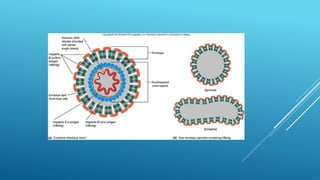
 HBV is a hepatotropic DNA virus. The core of virus contains a DNA
polymerase, th
 e core antigen (HBcAg),and e antigen (HBeAg).the core of HBV is coat
that contain lipid, protein and carbohydrate and expressed an antigen
terms hepatitis B surface antigen (HBsAg)…..
 HBsAg is first marker to appear in blood in acute hepatitis, Being
detected 1 week to 2 month after exposure and 2 week to 2 month
before onset of symptoms.
 Three weeks after onset of acute hepatitis about half oh the patient still
b positive for HBsAg. In chronic carrier state ,the HBsAg persists for
long time (2 to 6 month).with no seroconversion to the corresponding
antibodies .therefore screening for HBsAg is highly desirable for all
donors pregnant women and people in high risk groups.
TEST PRINCIPLE
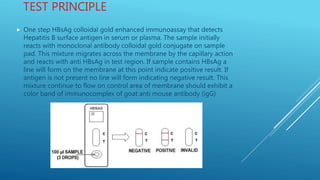
 One step HBsAg colloidal gold enhanced immunoassay that detects
Hepatitis B surface antigen in serum or plasma. The sample initially
reacts with monoclonal antibody colloidal gold conjugate on sample
pad. This mixture migrates across the membrane by the capillary action
and reacts with anti HBsAg in test region. If sample contains HBsAg a
line will form on the membrane at this point indicate positive result. If
antigen is not present no line will form indicating negative result. This
mixture continue to flow on control area of membrane should exhibit a
color band of immunocomplex of goat anti mouse antibody (igG)
REAGENT
 The test device contains anti_HBsAg particles and anti-HBsAg coated
on membrane
STORAGE &STABILITY
 The kit can be stored at room temperature or refrigerator (2 to 30c)
MATERIALS
 Test strip
 Instruction
 60ul transfer pipette
 One desiccant.
TEST PROCEDURE
 Bring sealed pouch to room temperature.
 Open the pouch .remove the device
 Dispense two drops of serum on device
 Waite for 15 mint
INTERPRETATION AND RESULT
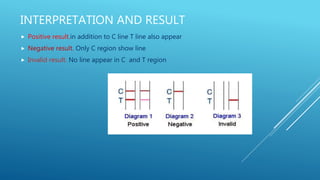
 Positive result.in addition to C line T line also appear
 Negative result. Only C region show line
 Invalid result. No line appear in C and T region
LIMITATION OF RESULT
 HBsAg rapid testis limited to qualitative detection
 Negative result also show when HBsAg present in specimen is below
the detection limits of assay (lower than 2ng/mL)
 HBsAg that are detected are not present during the stage of disease
 Some specimen contain usually high titer of heterophile antibody or
rheumatoid factor may affect the result
Hepatitis b(surface antigen) strip method

Hepatitis b(surface antigen) strip method

  • 1.
    HEPATITIS B(SURFACE ANTIGEN) STRIPMETHOD A rapid one step test for qualitative detection of hepatitis B surface Antigen in serum or plasma MASSAB BASHIR
  • 2.
    WHAT IS HBV. Hepatitis B is a serious liver infection caused by the hepatitis B virus (HBV). For some people, hepatitis B infection becomes chronic, meaning it lasts more than six months. Having chronic hepatitis B increases your risk of developing liver failure, liver cancer or cirrhosis — a condition that causes permanent scarring of the liver. CAUSES  Hepatitis B infection is caused by the hepatitis B virus (HBV). The virus is passed from person to person through blood, semen or other body fluids.
  • 3.
    SUMMARY OF HEPATITISB VIRUS  Hepatitis B virus is most common cause of persistent viremia and most important cause of chronic liver disease and hepatocellular carcinoma. Clinically apparent HBV infection may have extant several millennia.it is estimated that there are 300mollion chronic carriers of HBV in world.
  • 4.
     HBV isa hepatotropic DNA virus. The core of virus contains a DNA polymerase, th  e core antigen (HBcAg),and e antigen (HBeAg).the core of HBV is coat that contain lipid, protein and carbohydrate and expressed an antigen terms hepatitis B surface antigen (HBsAg)…..  HBsAg is first marker to appear in blood in acute hepatitis, Being detected 1 week to 2 month after exposure and 2 week to 2 month before onset of symptoms.
  • 5.
     Three weeksafter onset of acute hepatitis about half oh the patient still b positive for HBsAg. In chronic carrier state ,the HBsAg persists for long time (2 to 6 month).with no seroconversion to the corresponding antibodies .therefore screening for HBsAg is highly desirable for all donors pregnant women and people in high risk groups.
  • 7.
    TEST PRINCIPLE  Onestep HBsAg colloidal gold enhanced immunoassay that detects Hepatitis B surface antigen in serum or plasma. The sample initially reacts with monoclonal antibody colloidal gold conjugate on sample pad. This mixture migrates across the membrane by the capillary action and reacts with anti HBsAg in test region. If sample contains HBsAg a line will form on the membrane at this point indicate positive result. If antigen is not present no line will form indicating negative result. This mixture continue to flow on control area of membrane should exhibit a color band of immunocomplex of goat anti mouse antibody (igG)
  • 8.
    REAGENT  The testdevice contains anti_HBsAg particles and anti-HBsAg coated on membrane
  • 9.
    STORAGE &STABILITY  Thekit can be stored at room temperature or refrigerator (2 to 30c)
  • 10.
    MATERIALS  Test strip Instruction  60ul transfer pipette  One desiccant.
  • 11.
    TEST PROCEDURE  Bringsealed pouch to room temperature.  Open the pouch .remove the device  Dispense two drops of serum on device  Waite for 15 mint
  • 12.
    INTERPRETATION AND RESULT Positive result.in addition to C line T line also appear  Negative result. Only C region show line  Invalid result. No line appear in C and T region
  • 13.
    LIMITATION OF RESULT HBsAg rapid testis limited to qualitative detection  Negative result also show when HBsAg present in specimen is below the detection limits of assay (lower than 2ng/mL)  HBsAg that are detected are not present during the stage of disease  Some specimen contain usually high titer of heterophile antibody or rheumatoid factor may affect the result