Gears


 Mechanical Engineering Dept.   1
Applications of Gears
• Toys and Small Mechanisms – small, low load, low cost

• Appliance gears – long life, low noise & cost, low to
                        moderate load


• Power transmission – long life, high load and speed

• Aerospace gears – light weight, moderate to high load

• Control gears – long life, low noise, precision gears

                           Mechanical Engineering Dept.   2
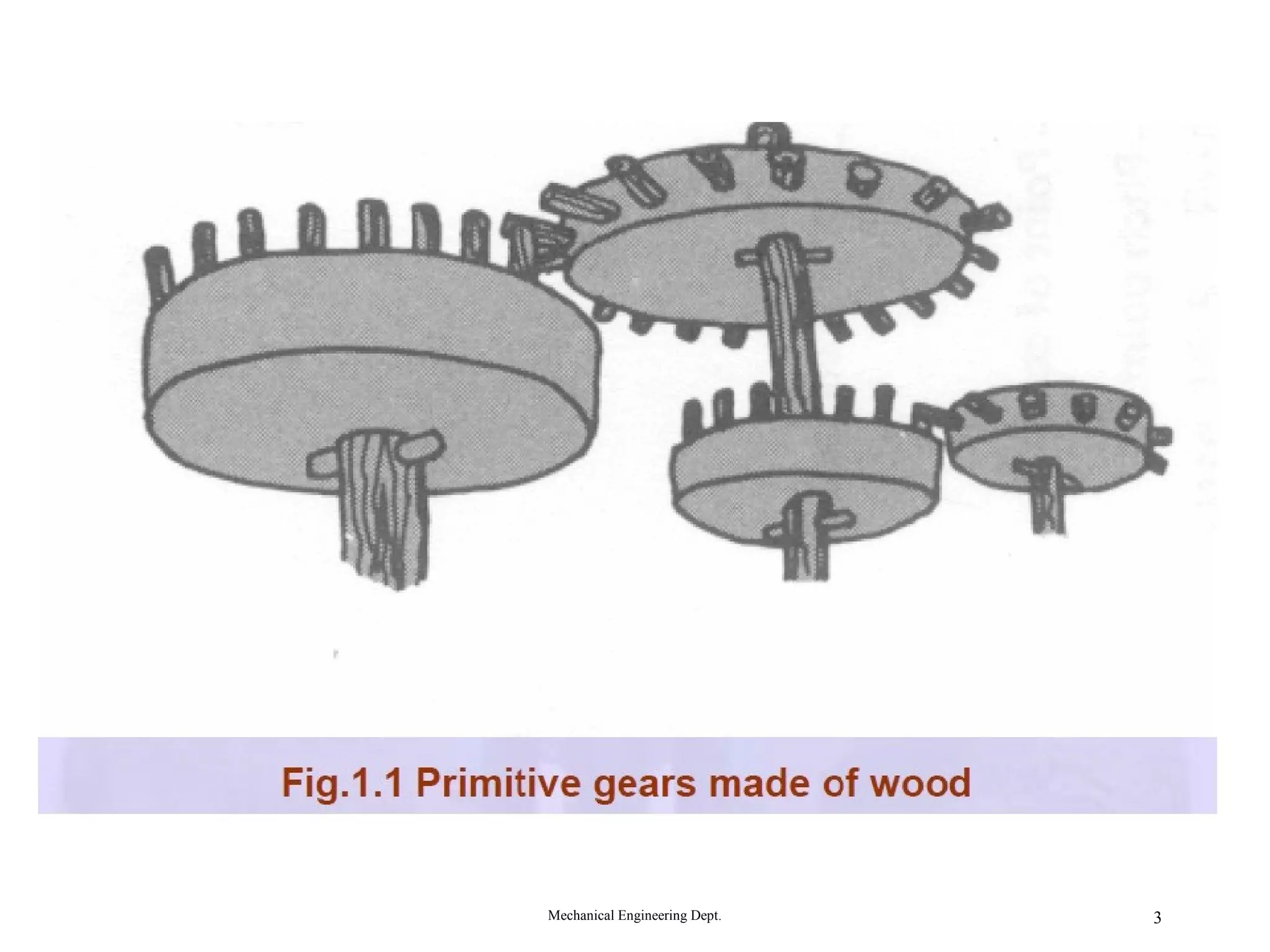
Mechanical Engineering Dept.   3
Types of Gears
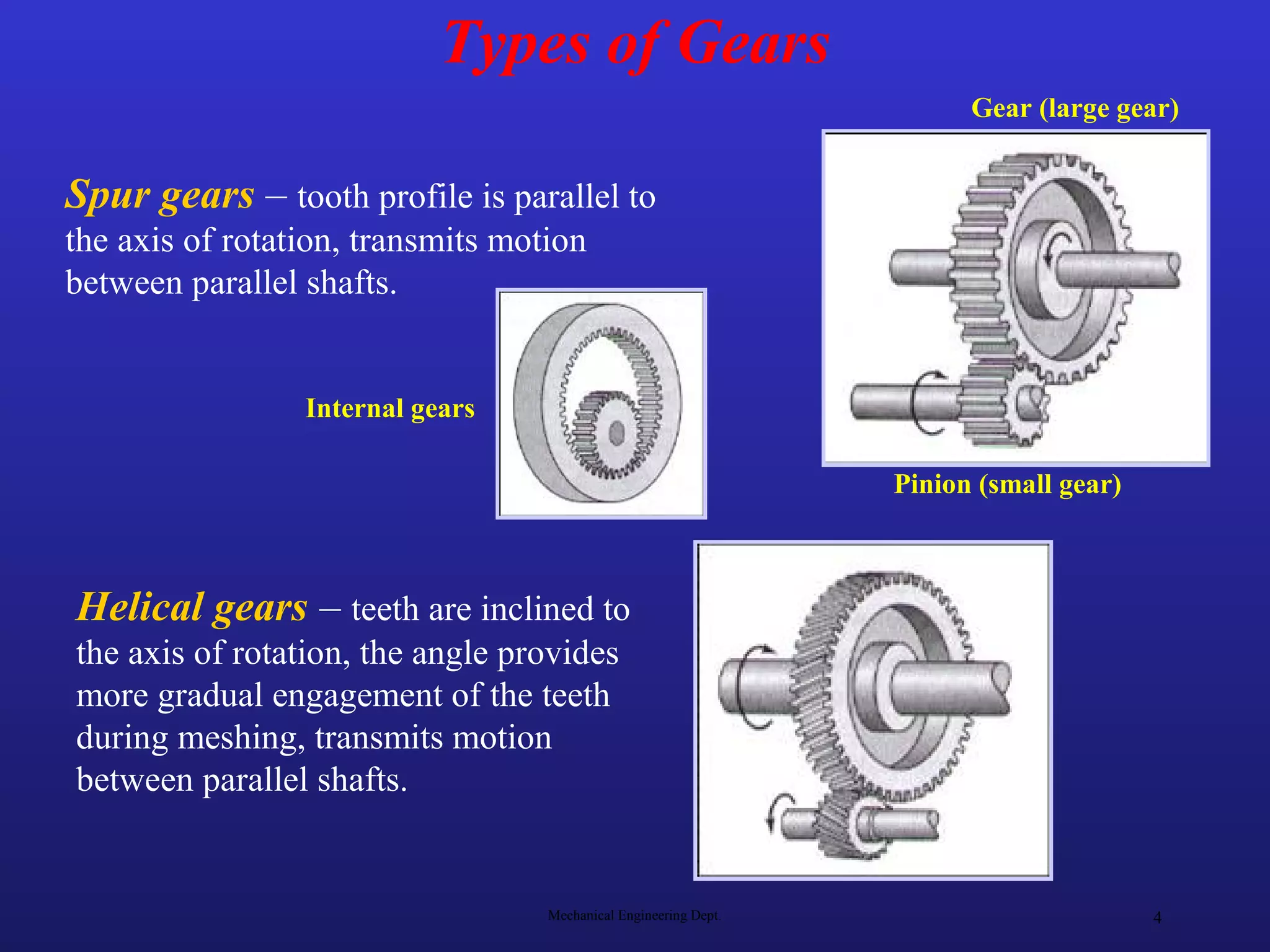
                                                                        Gear (large gear)


Spur gears – tooth profile is parallel to
the axis of rotation, transmits motion
between parallel shafts.


                 Internal gears

                                                                  Pinion (small gear)


Helical gears – teeth are inclined to
the axis of rotation, the angle provides
more gradual engagement of the teeth
during meshing, transmits motion
between parallel shafts.


                                   Mechanical Engineering Dept.                         4
Types of Gears

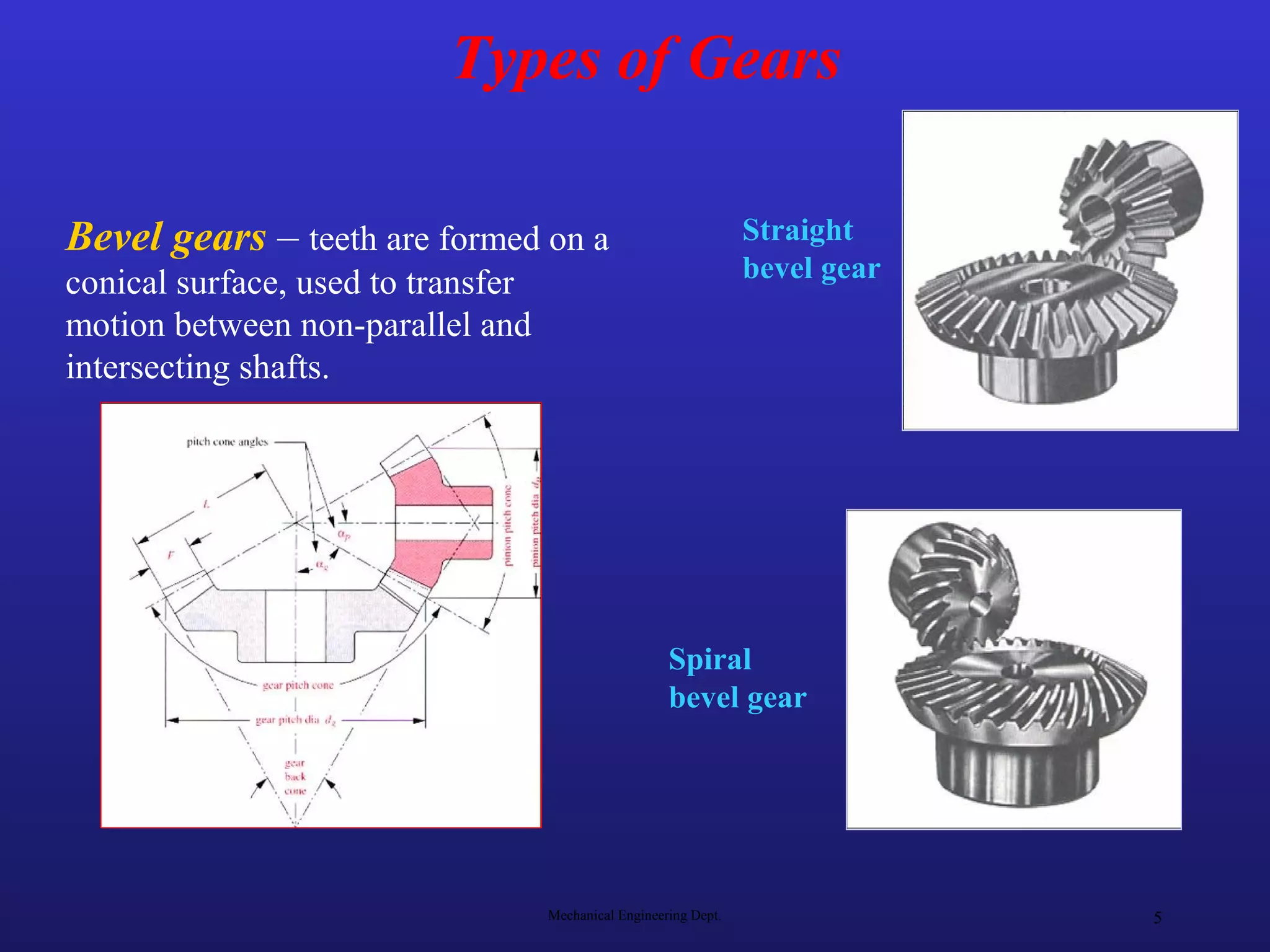
Bevel gears – teeth are formed on a                                Straight
conical surface, used to transfer                                  bevel gear
motion between non-parallel and
intersecting shafts.


                                                       Spiral
                                                       bevel gear


                                    Mechanical Engineering Dept.                5
Types of Gears

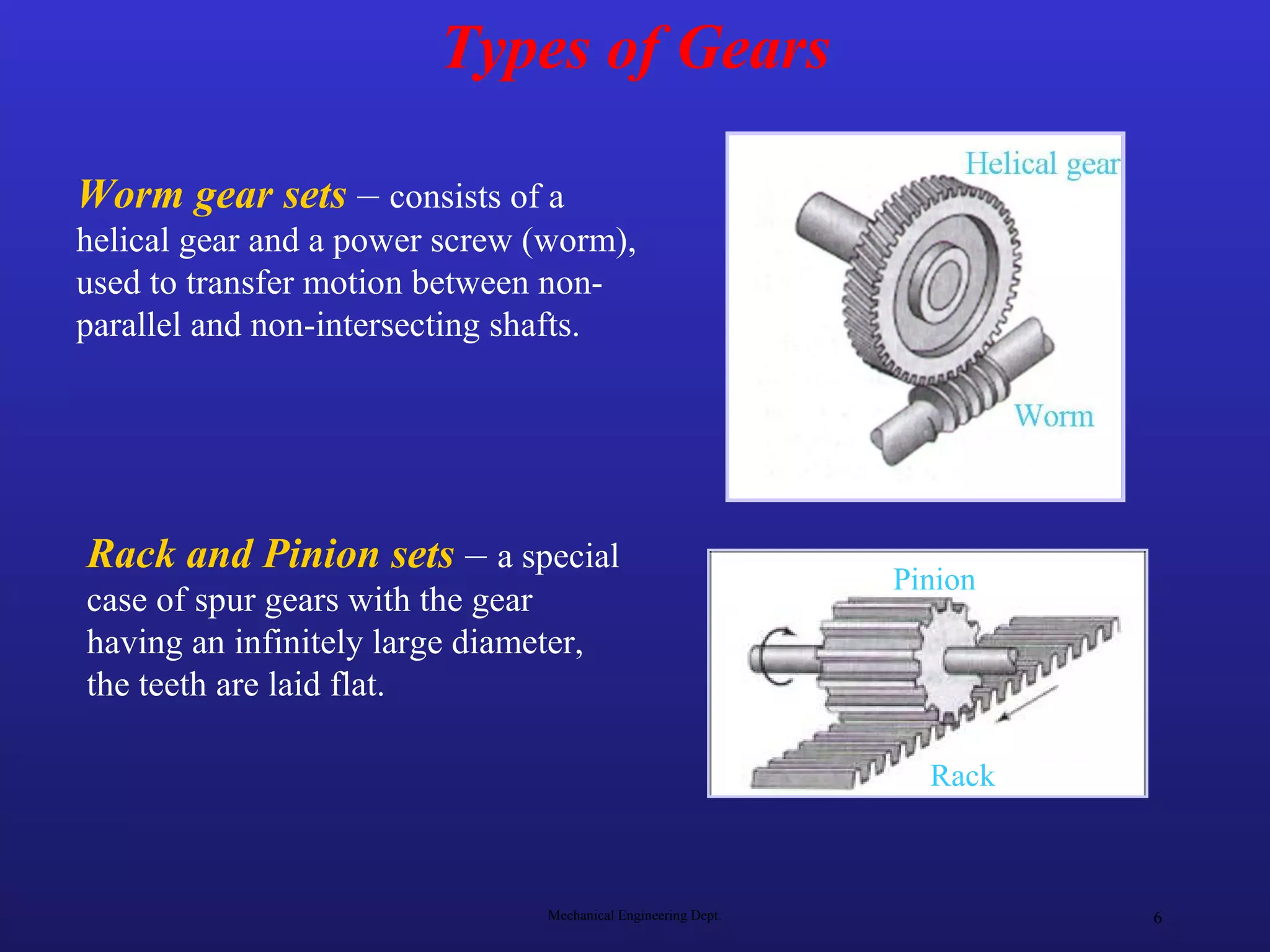
Worm gear sets – consists of a
helical gear and a power screw (worm),
used to transfer motion between non-
parallel and non-intersecting shafts.


Rack and Pinion sets – a special
                                                                Pinion
case of spur gears with the gear
having an infinitely large diameter,
the teeth are laid flat.

                                                                  Rack


                                 Mechanical Engineering Dept.            6
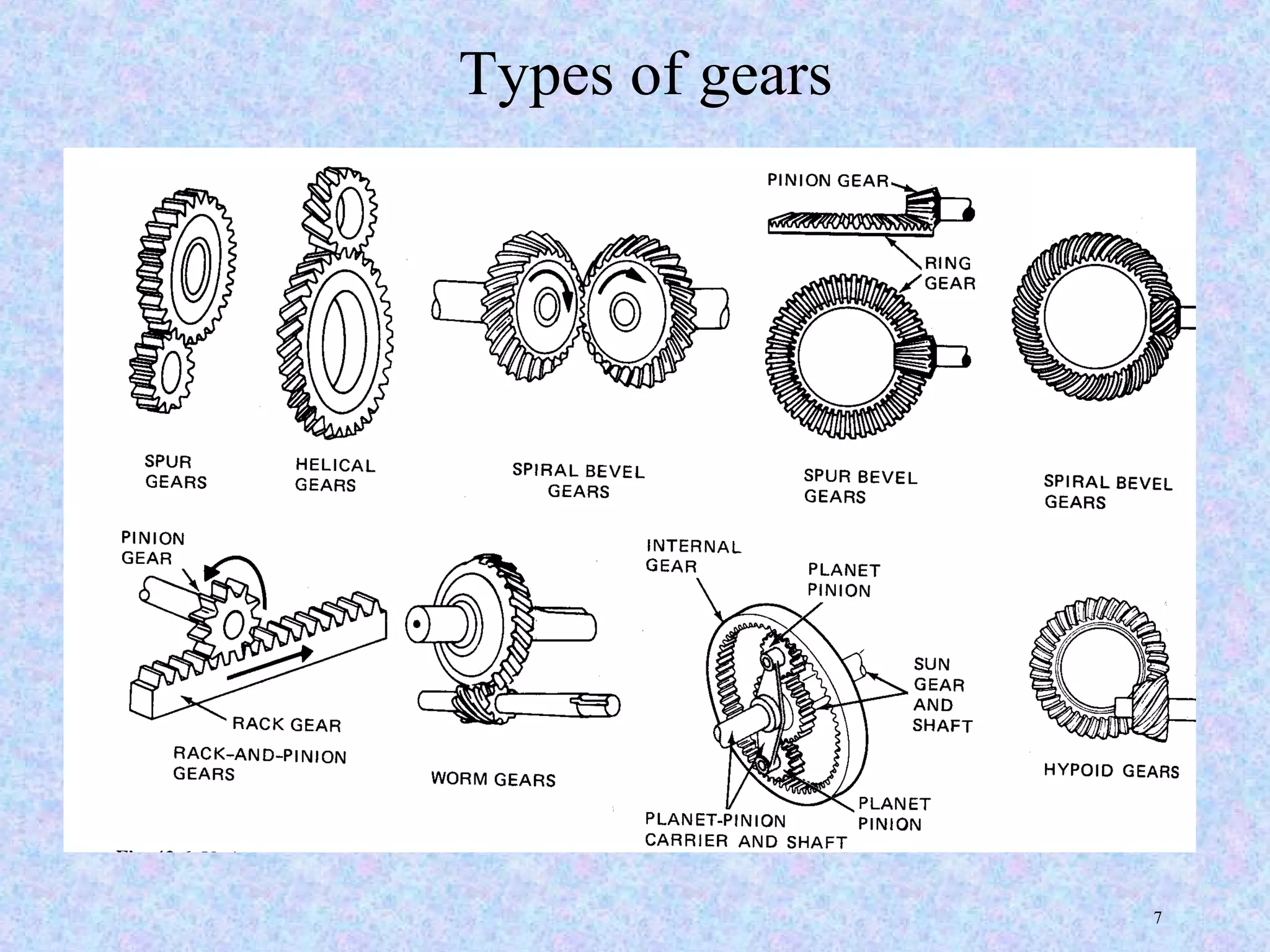
Types of gears


                 7
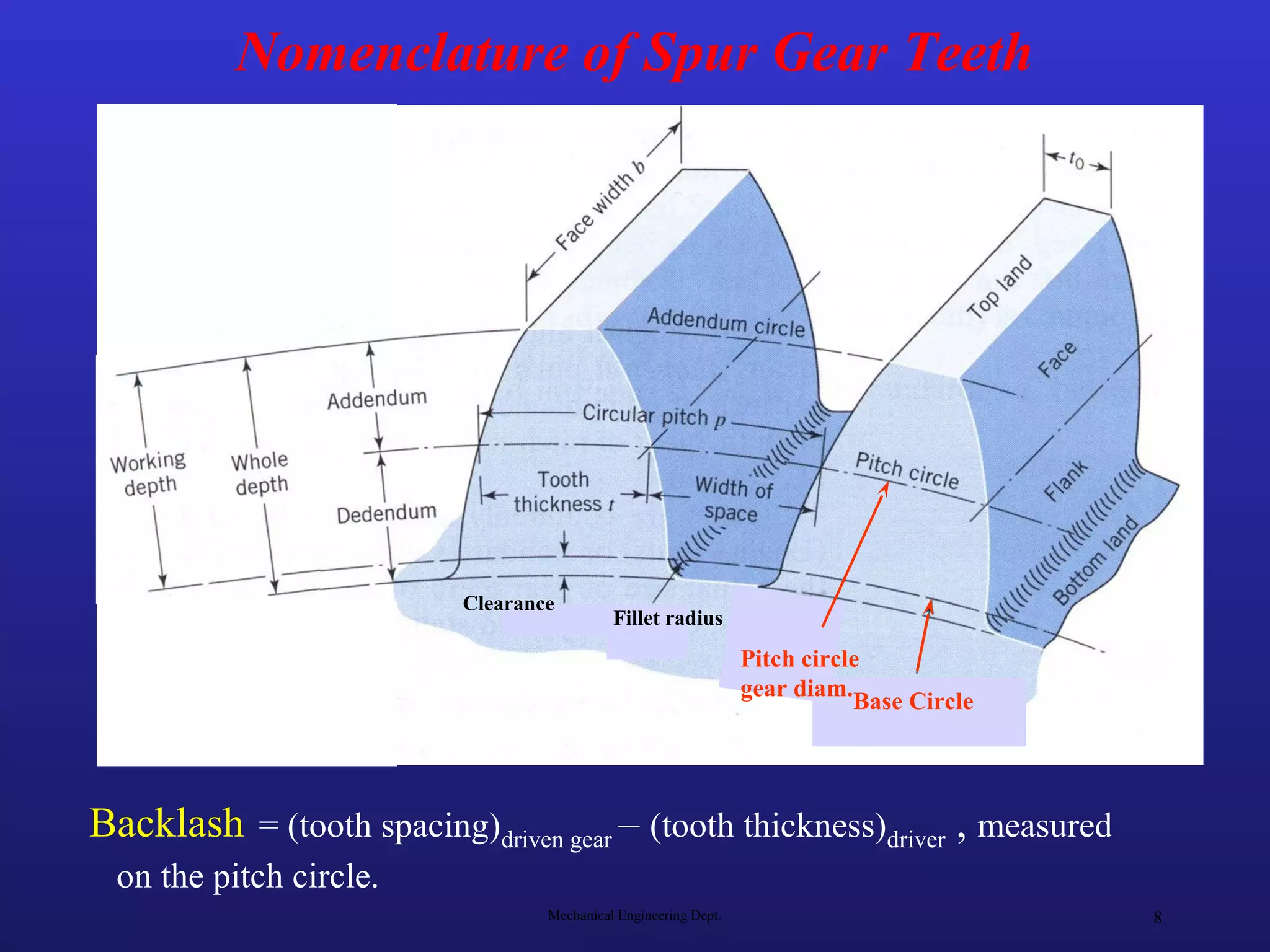
Nomenclature of Spur Gear Teeth


                           Clearance
                                             Fillet radius
                                                                  Pitch circle
                                                                  gear diam.
                                                                             Base Circle


Backlash = (tooth spacing)driven gear – (tooth thickness)driver , measured
 on the pitch circle.
                                   Mechanical Engineering Dept.                            8
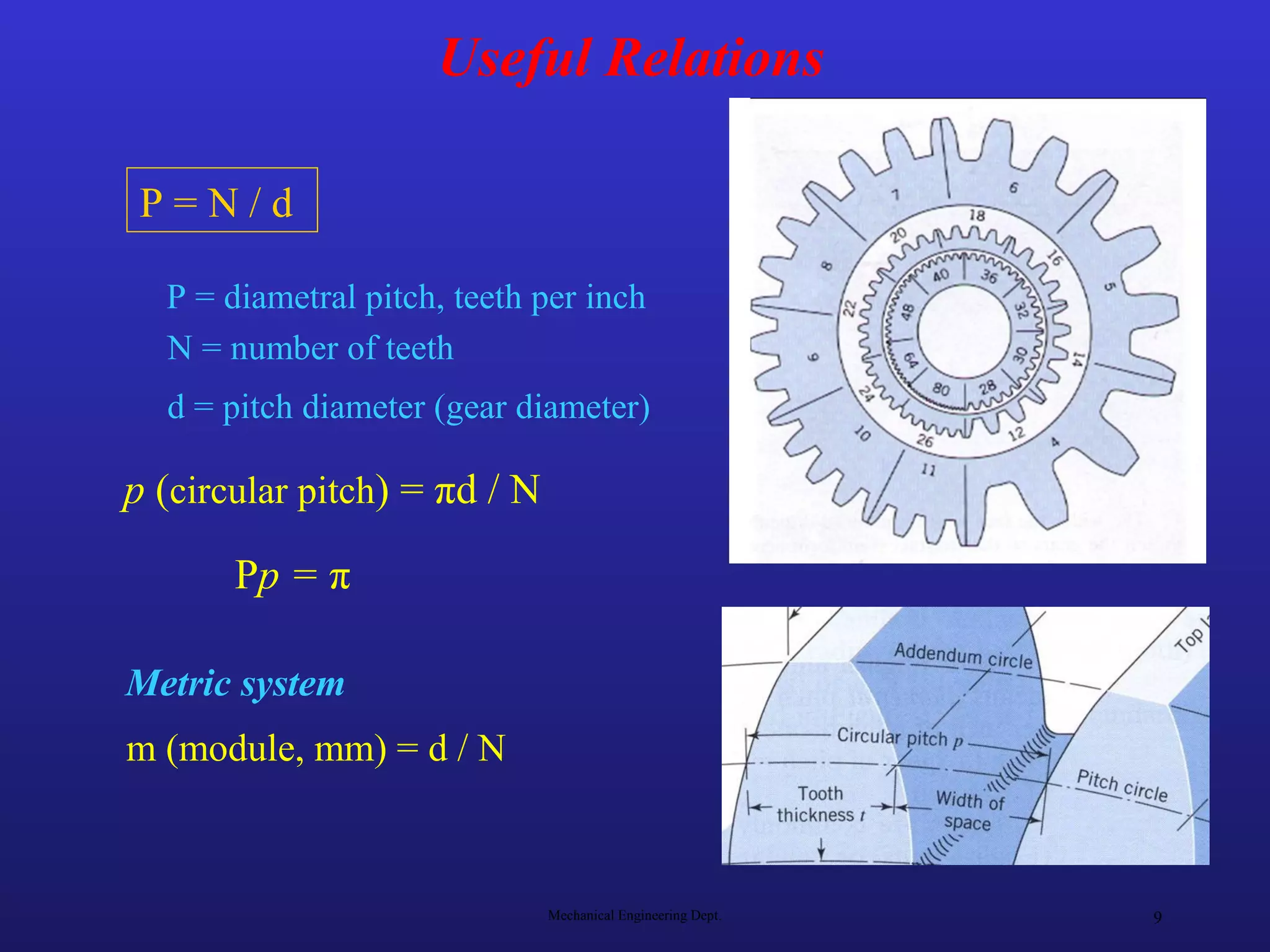
Useful Relations

 P=N/d

  P = diametral pitch, teeth per inch
  N = number of teeth
  d = pitch diameter (gear diameter)

p (circular pitch) = πd / N

       Pp = π

Metric system
m (module, mm) = d / N


                              Mechanical Engineering Dept.   9
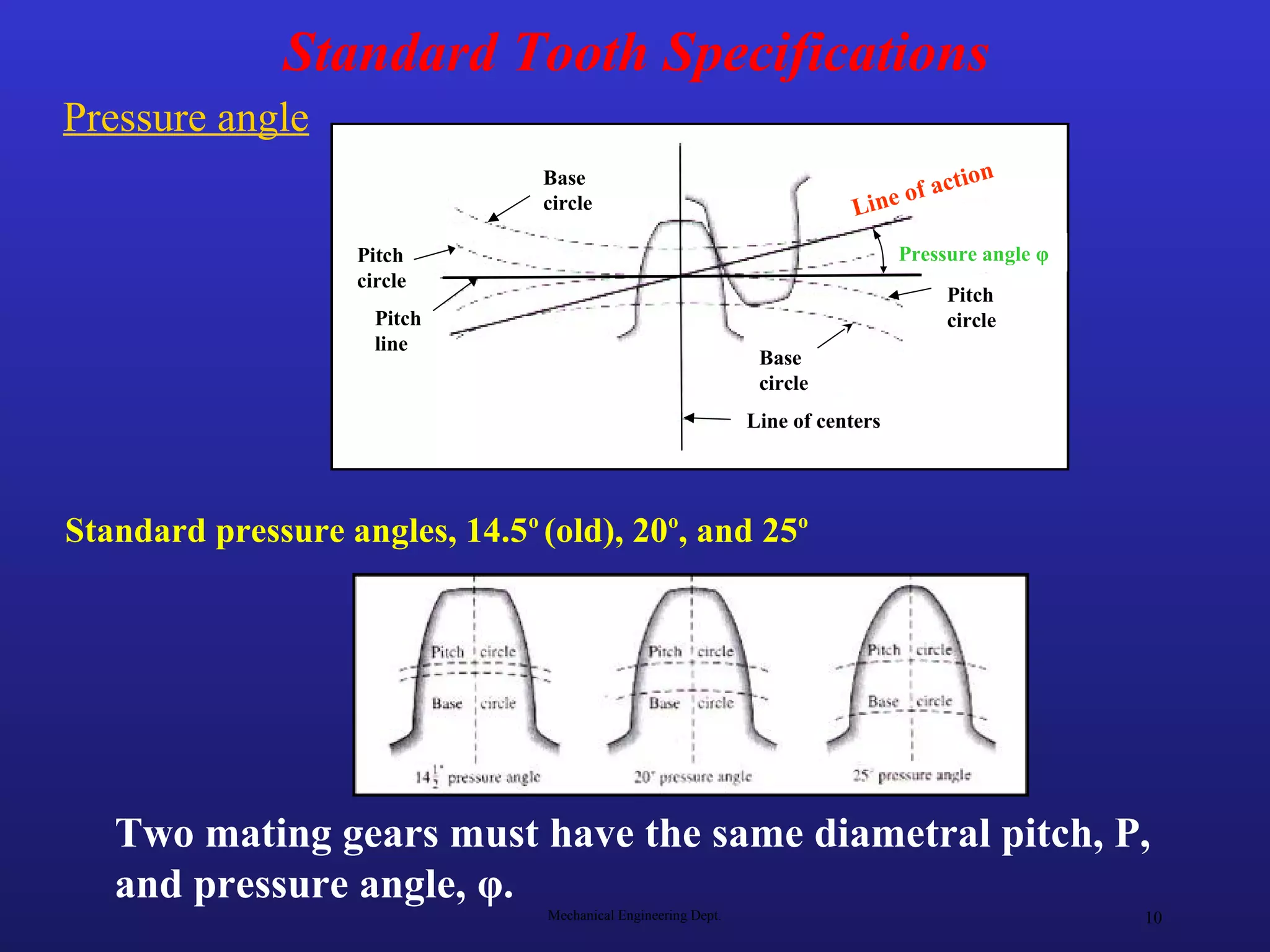
Standard Tooth Specifications
Pressure angle
                                Base                                                     tion
                                                                                 of ac
                                circle                                      Line
                    Pitch                                                         Pressure angle φ
                    circle
                                                                                       Pitch
                      Pitch                                                            circle
                      line
                                                                 Base
                                                                 circle
                                                                Line of centers


Standard pressure angles, 14.5o (old), 20o, and 25o


   Two mating gears must have the same diametral pitch, P,
   and pressure angle, φ.
                                 Mechanical Engineering Dept.                                        10
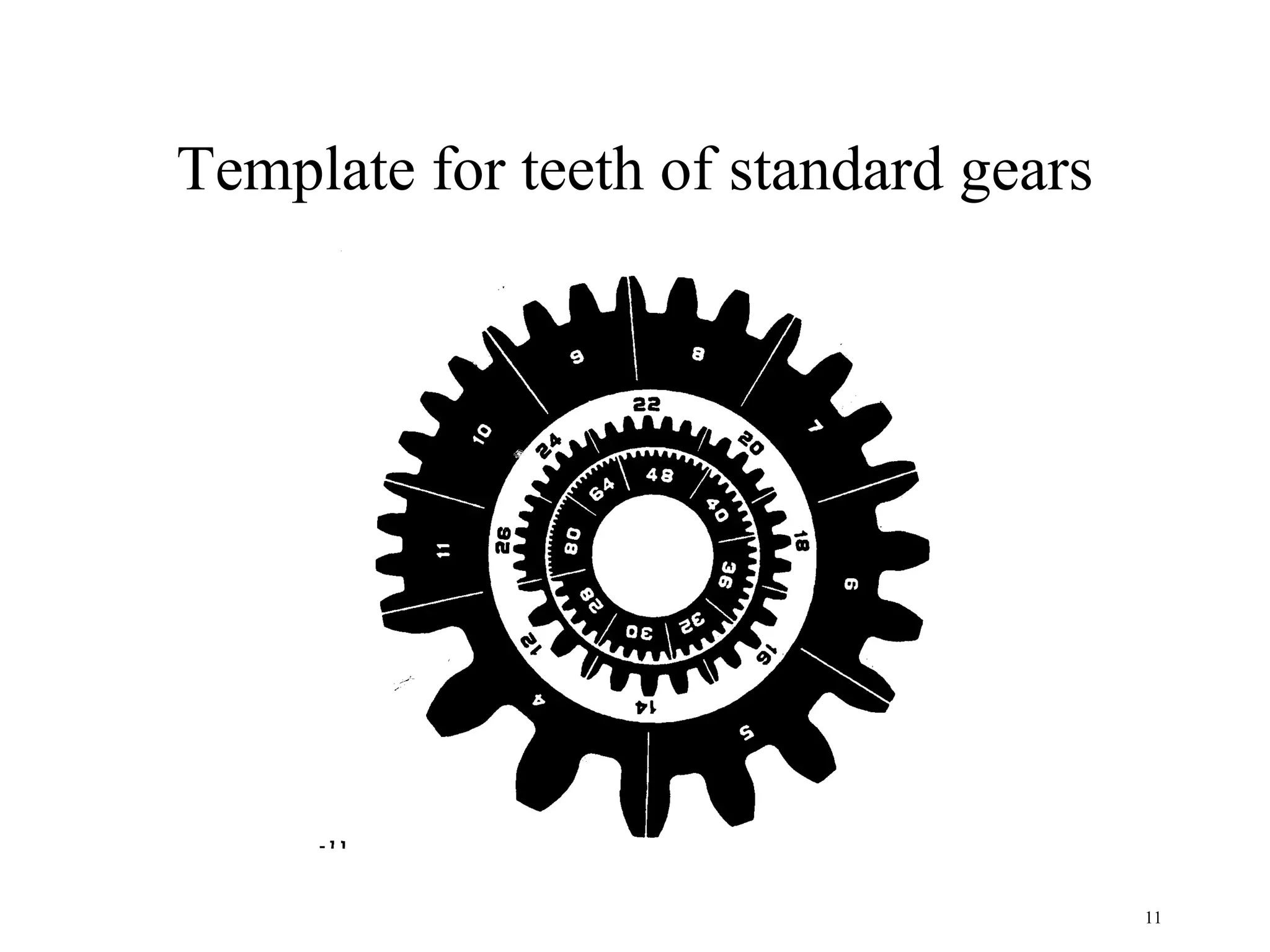
Template for teeth of standard gears


                                       11
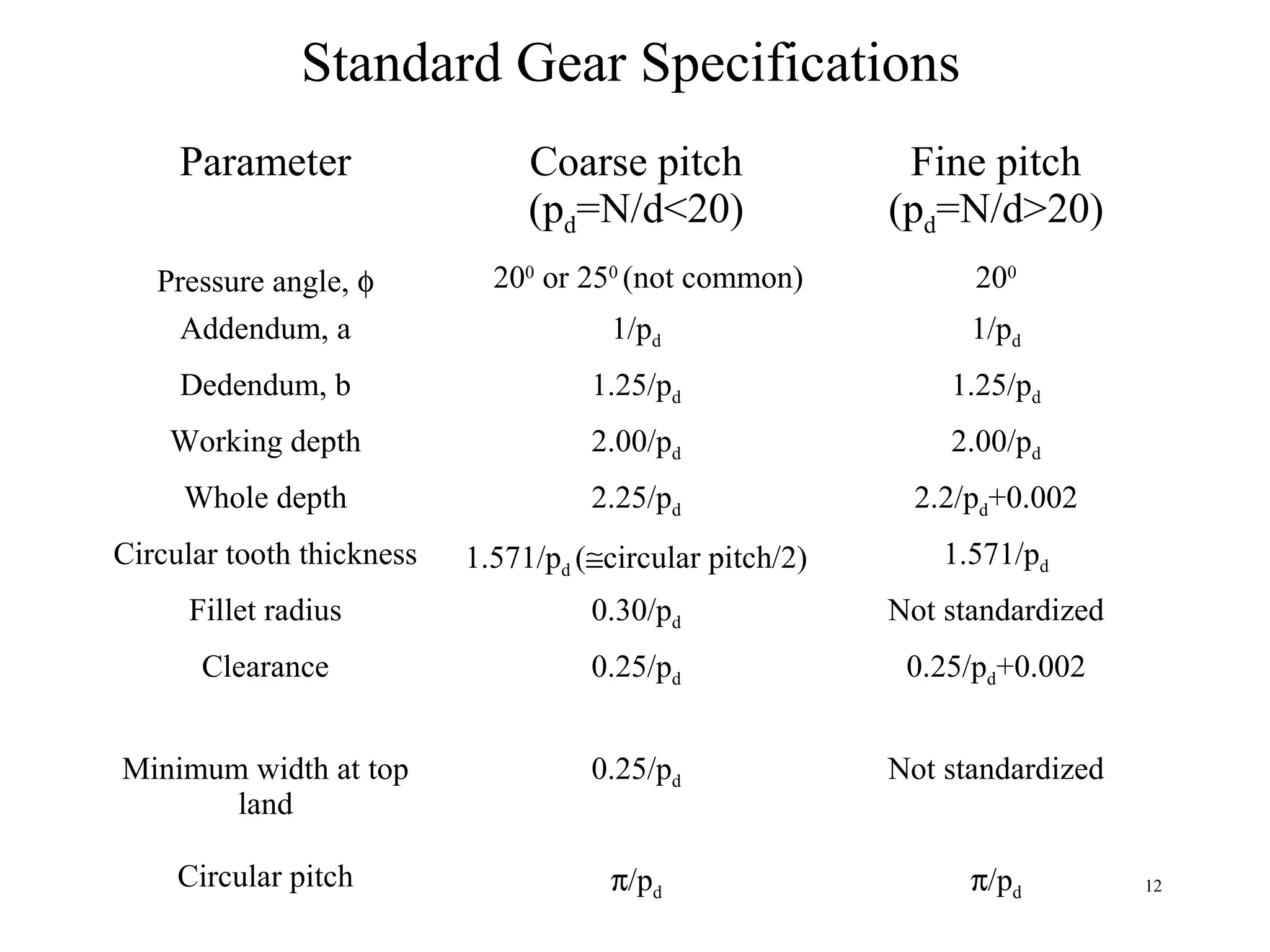
Standard Gear Specifications
     Parameter                  Coarse pitch               Fine pitch
                                (pd=N/d<20)               (pd=N/d>20)
   Pressure angle, φ         200 or 250 (not common)            200
     Addendum, a                      1/pd                      1/pd
     Dedendum, b                     1.25/pd                  1.25/pd
    Working depth                    2.00/pd                  2.00/pd
     Whole depth                     2.25/pd               2.2/pd+0.002
Circular tooth thickness   1.571/pd (≅circular pitch/2)       1.571/pd
     Fillet radius                   0.30/pd              Not standardized
      Clearance                      0.25/pd               0.25/pd+0.002


Minimum width at top                 0.25/pd              Not standardized
       land

     Circular pitch                   π/pd                      π/pd         12
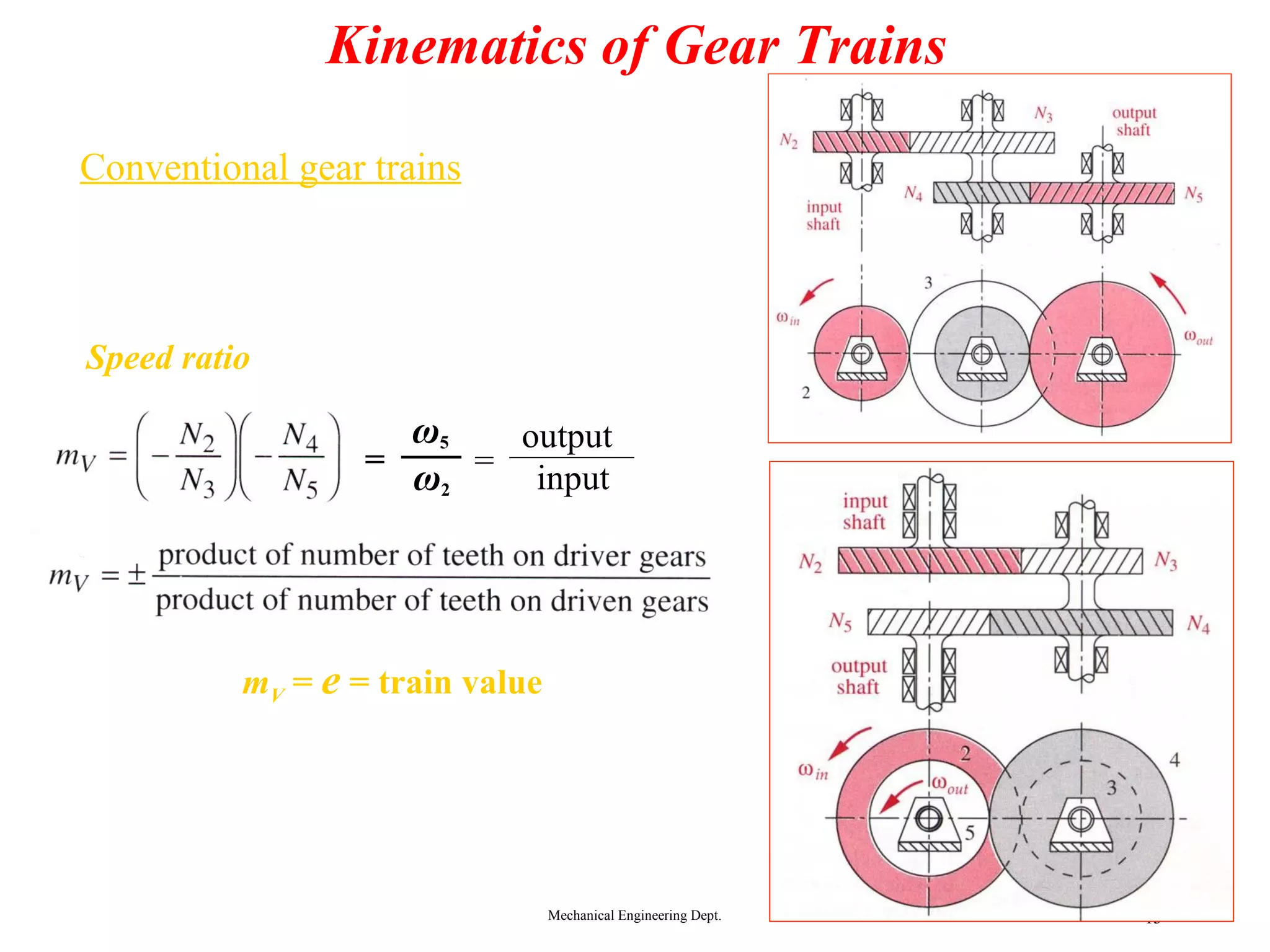
Kinematics of Gear Trains

 Conventional gear trains
  ω3   N2                      ω5   N4
          , ω3 = ω4 ,
  ω2 = N3                      ω4 = N5
  Speed ratio

                        ω5   output
                      =    = input
                        ω2


             mV = e = train value
Reverted gear train – output shaft is concentric
with the input shaft. Center distances of the
stages must be equal.

                                    Mechanical Engineering Dept.   13
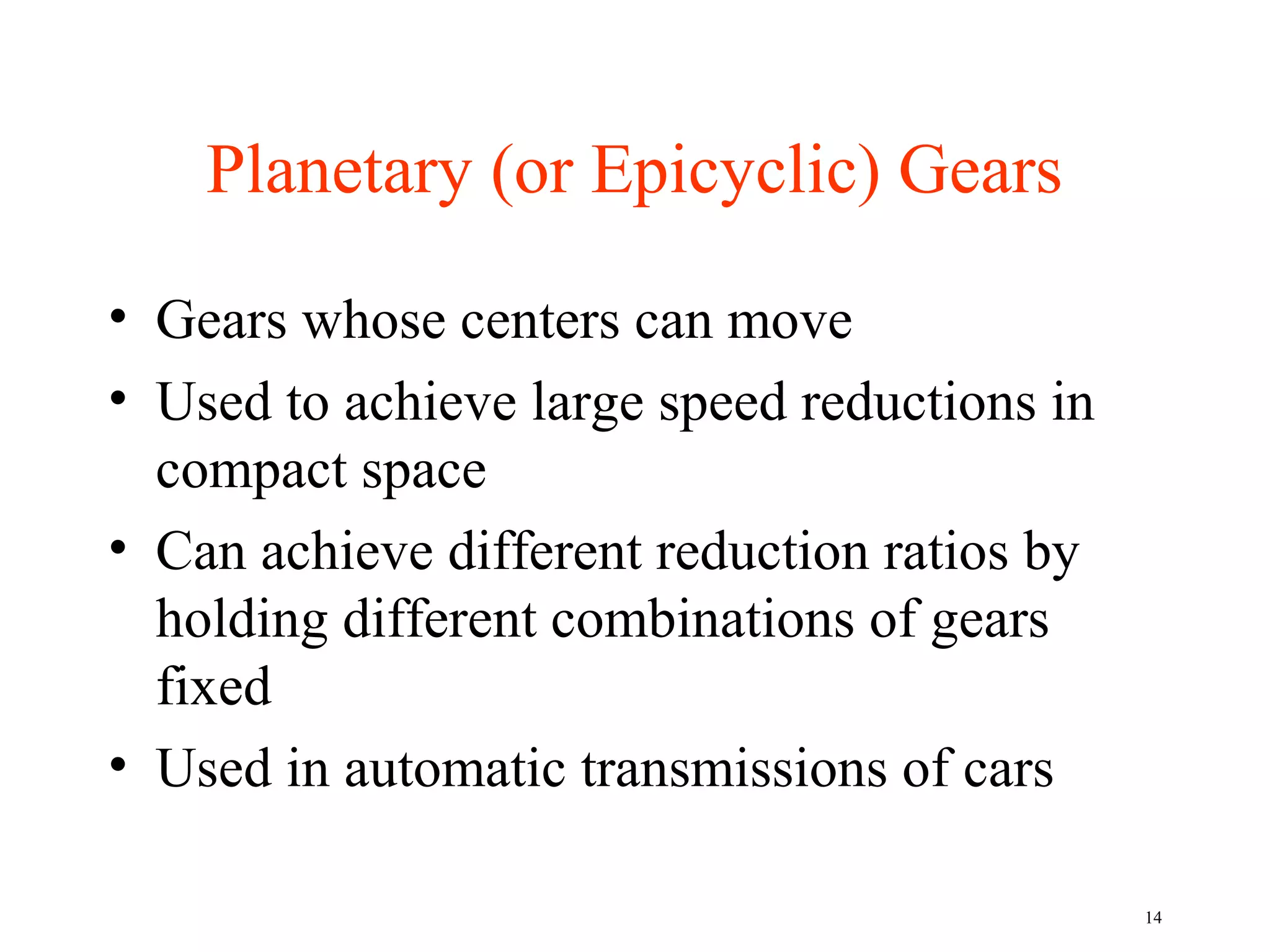
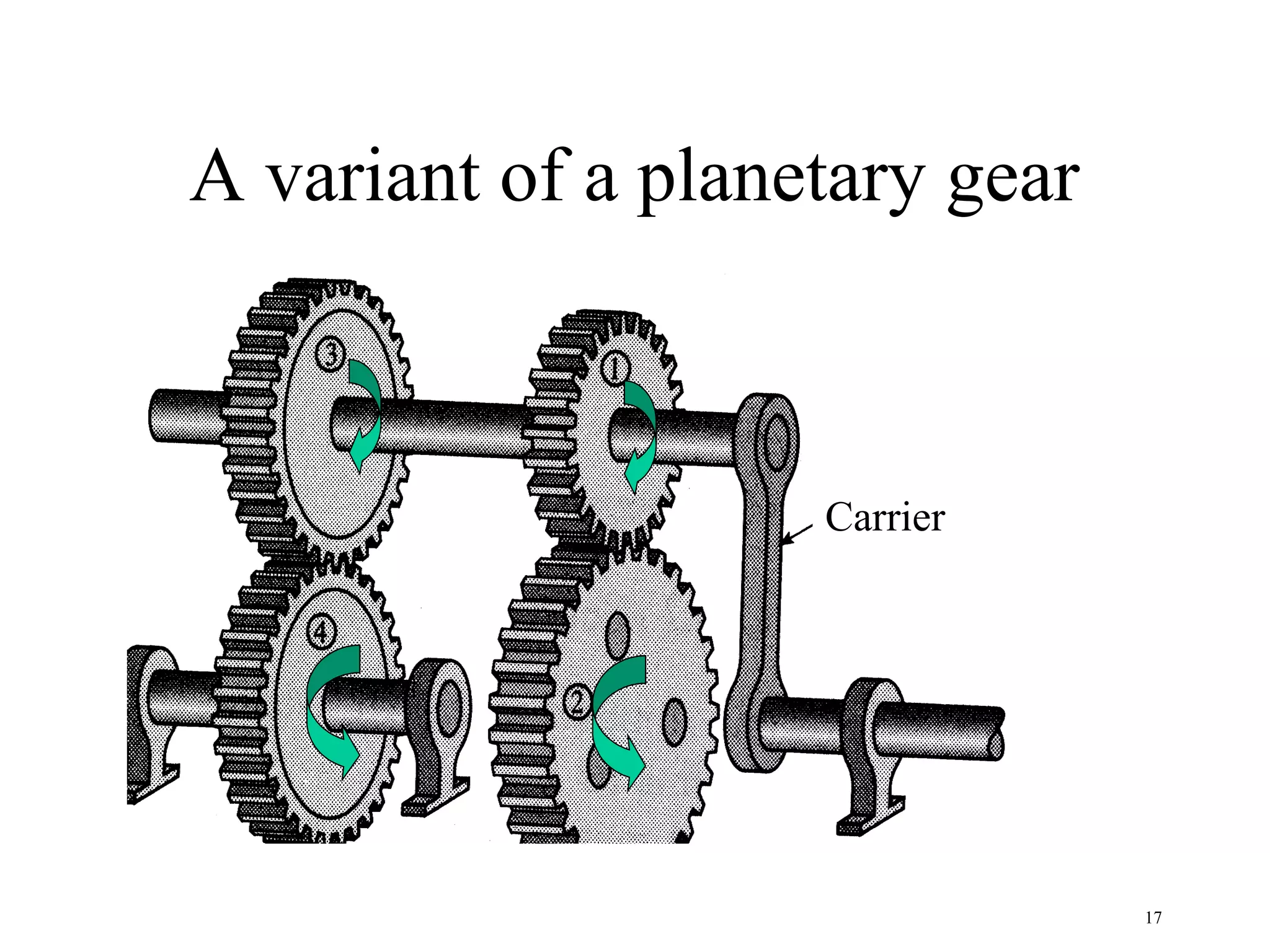
Planetary (or Epicyclic) Gears

• Gears whose centers can move
• Used to achieve large speed reductions in
  compact space
• Can achieve different reduction ratios by
  holding different combinations of gears
  fixed
• Used in automatic transmissions of cars

                                              14
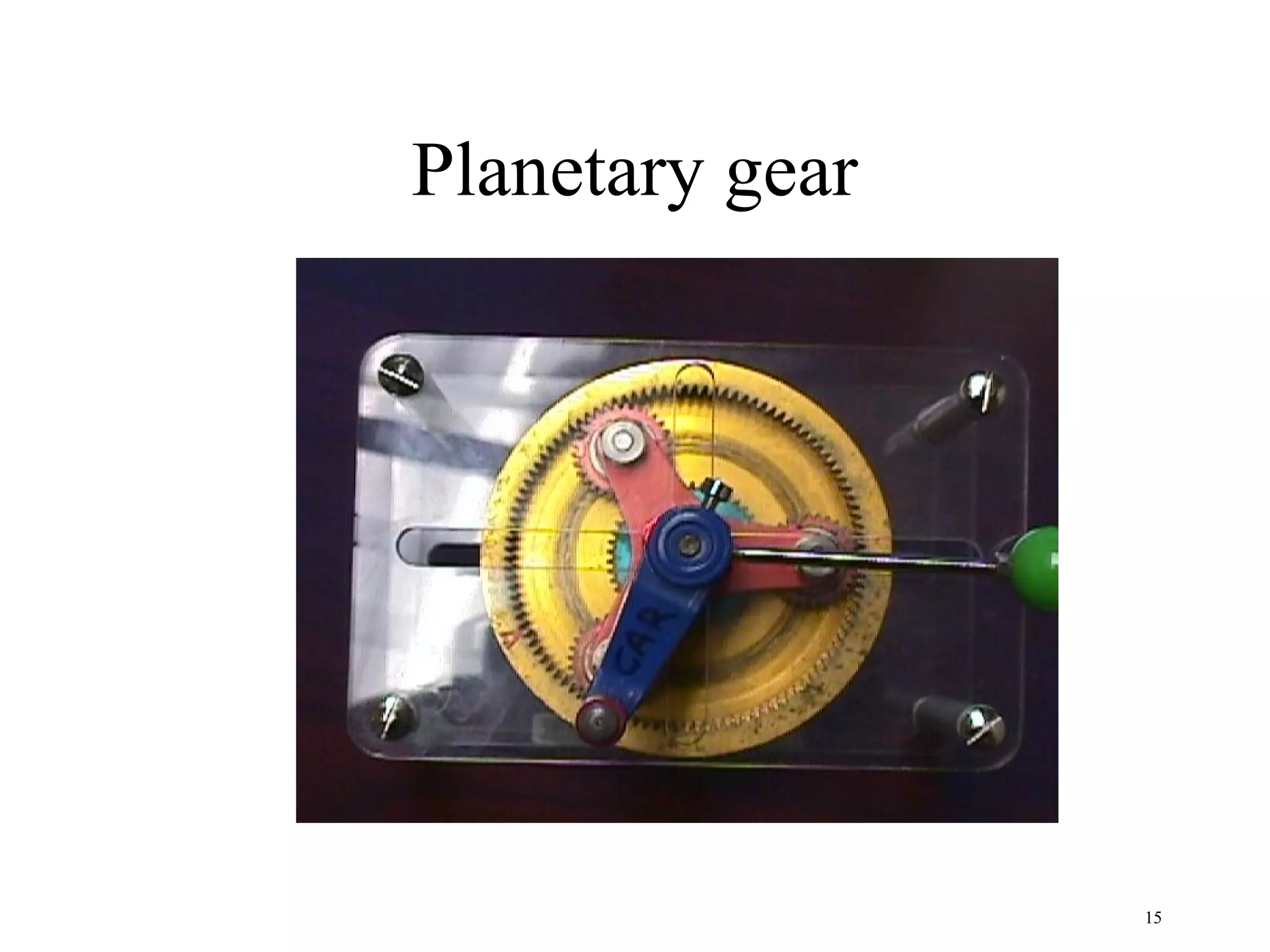
Planetary gear


                 15
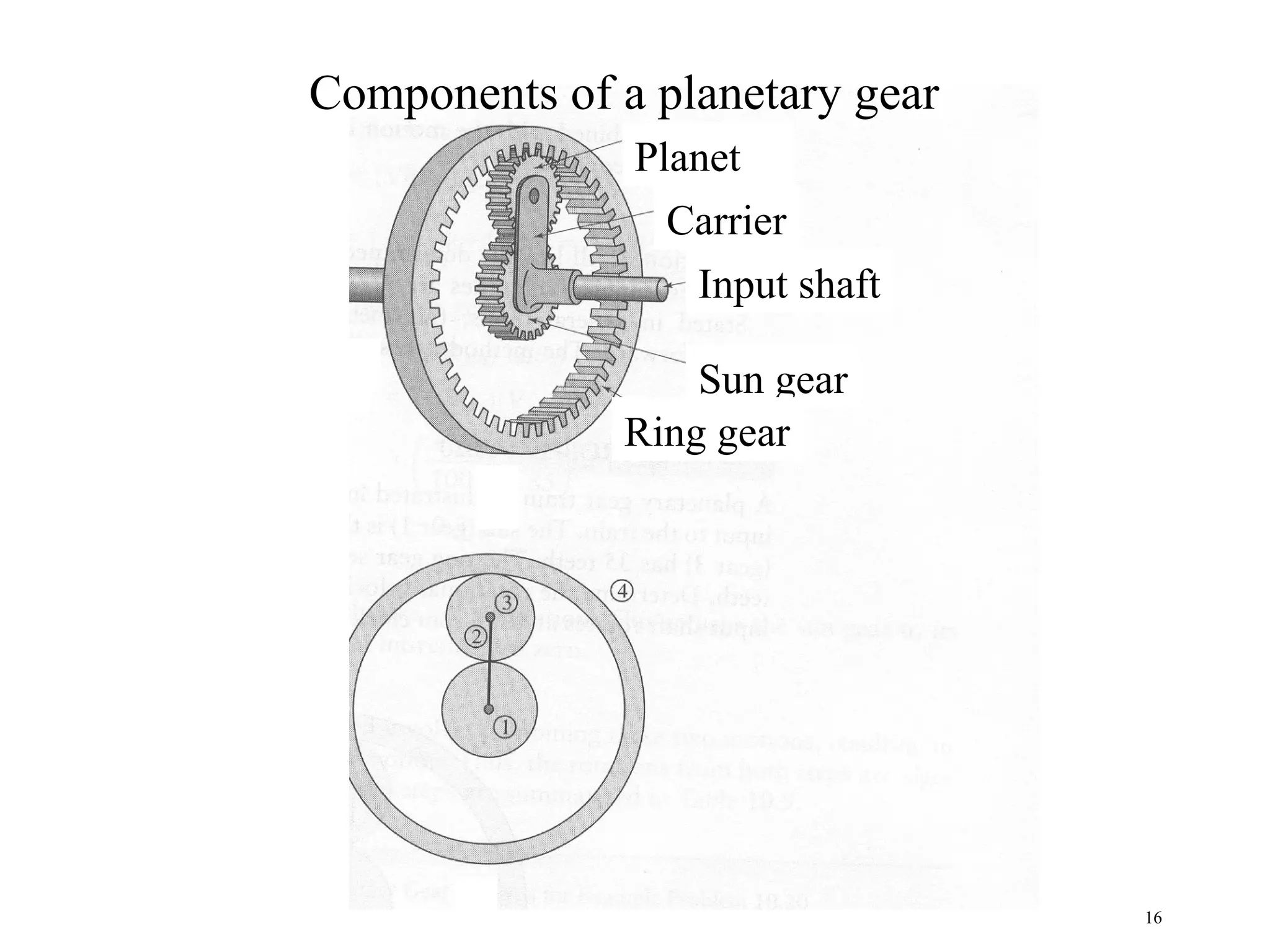
Components of a planetary gear
               Planet
                 Carrier
                  Input shaft

                   Sun gear
               Ring gear


                                 16
A variant of a planetary gear


                    Carrier


                                17
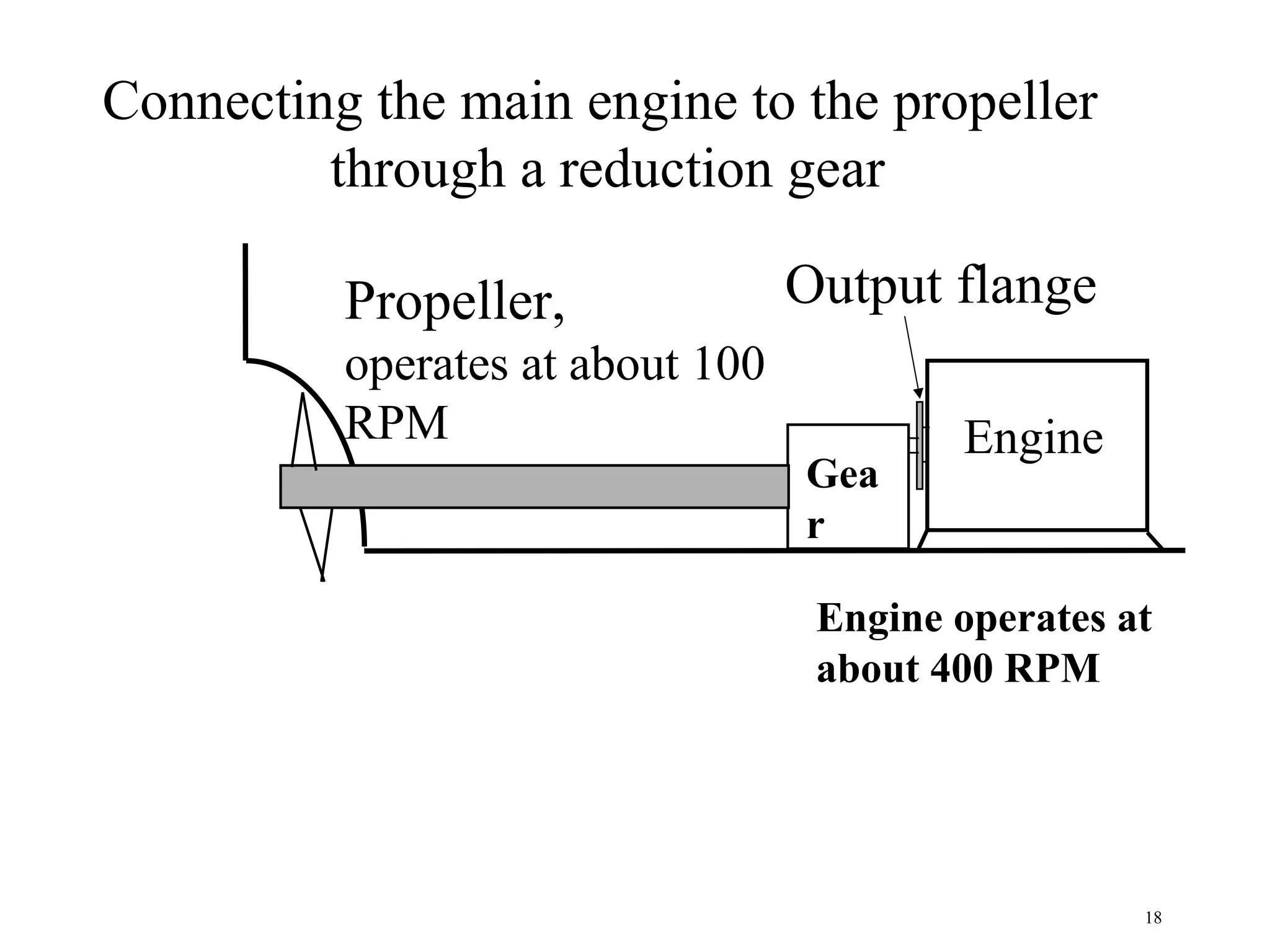
Connecting the main engine to the propeller
         through a reduction gear

          Propeller,              Output flange
          operates at about 100
          RPM                             Engine
                                  Gea
                                  r

                                   Engine operates at
                                   about 400 RPM


                                                    18
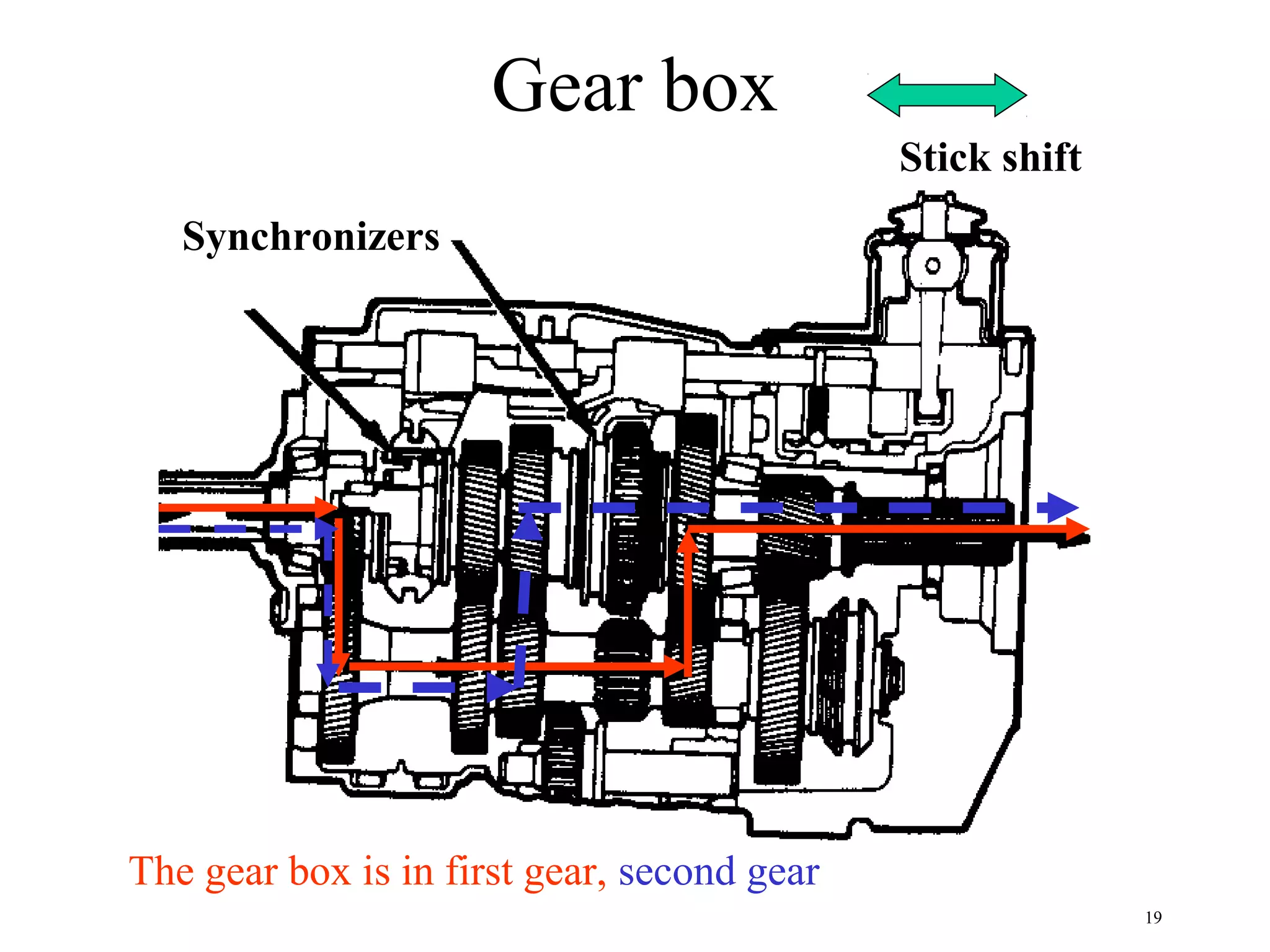
Gear box
                                             Stick shift
   Synchronizers


The gear box is in first gear, second gear
                                                           19
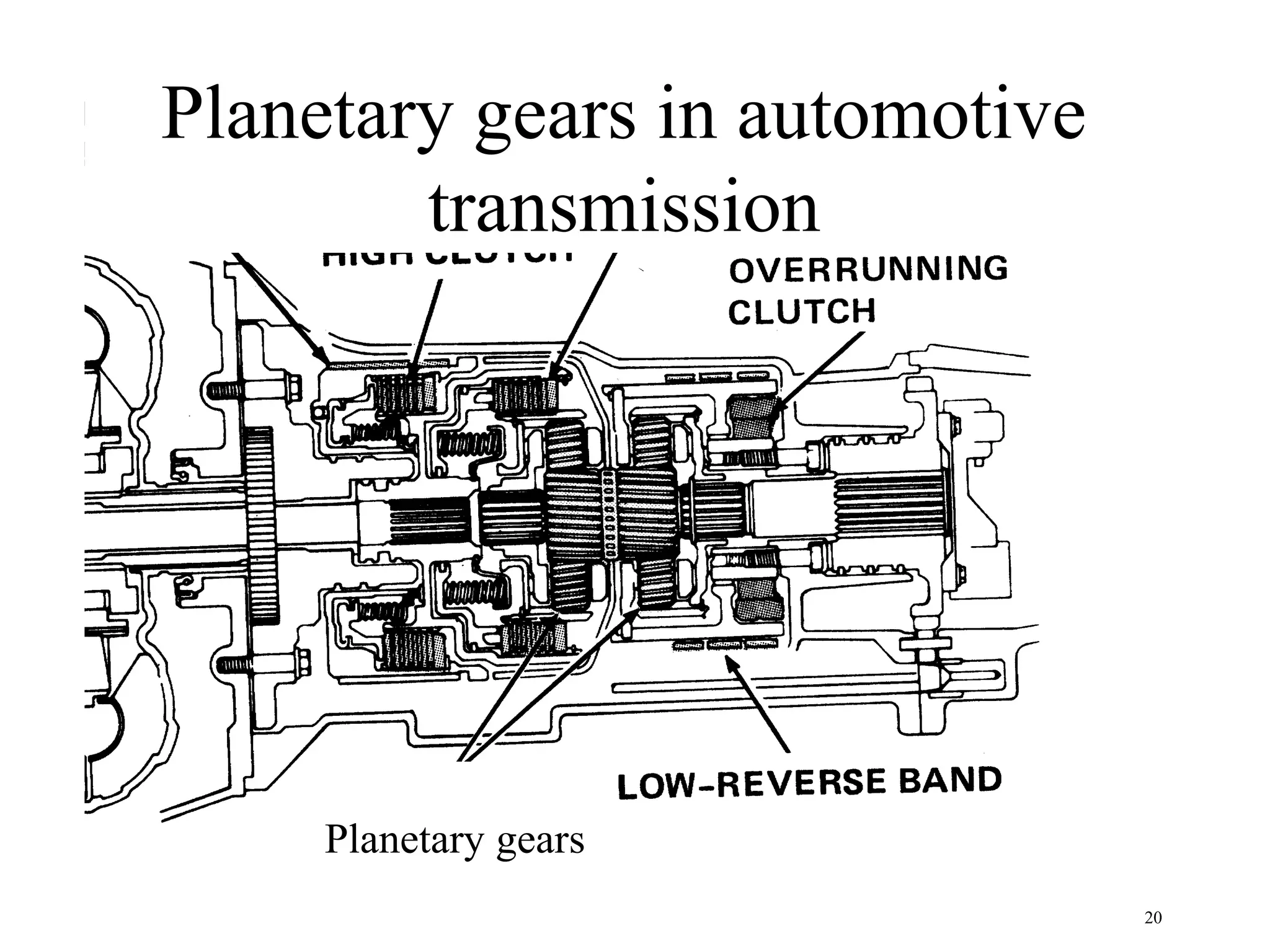
Planetary gears in automotive
        transmission


     Planetary gears
                                20

Types of gears

  • 1.
  • 2.
    Applications of Gears •Toys and Small Mechanisms – small, low load, low cost • Appliance gears – long life, low noise & cost, low to moderate load • Power transmission – long life, high load and speed • Aerospace gears – light weight, moderate to high load • Control gears – long life, low noise, precision gears Mechanical Engineering Dept. 2
  • 3.
  • 4.
    Types of Gears Gear (large gear) Spur gears – tooth profile is parallel to the axis of rotation, transmits motion between parallel shafts. Internal gears Pinion (small gear) Helical gears – teeth are inclined to the axis of rotation, the angle provides more gradual engagement of the teeth during meshing, transmits motion between parallel shafts. Mechanical Engineering Dept. 4
  • 5.
    Types of Gears Bevelgears – teeth are formed on a Straight conical surface, used to transfer bevel gear motion between non-parallel and intersecting shafts. Spiral bevel gear Mechanical Engineering Dept. 5
  • 6.
    Types of Gears Wormgear sets – consists of a helical gear and a power screw (worm), used to transfer motion between non- parallel and non-intersecting shafts. Rack and Pinion sets – a special Pinion case of spur gears with the gear having an infinitely large diameter, the teeth are laid flat. Rack Mechanical Engineering Dept. 6
  • 7.
  • 8.
    Nomenclature of SpurGear Teeth Clearance Fillet radius Pitch circle gear diam. Base Circle Backlash = (tooth spacing)driven gear – (tooth thickness)driver , measured on the pitch circle. Mechanical Engineering Dept. 8
  • 9.
    Useful Relations P=N/d P = diametral pitch, teeth per inch N = number of teeth d = pitch diameter (gear diameter) p (circular pitch) = πd / N Pp = π Metric system m (module, mm) = d / N Mechanical Engineering Dept. 9
  • 10.
    Standard Tooth Specifications Pressureangle Base tion of ac circle Line Pitch Pressure angle φ circle Pitch Pitch circle line Base circle Line of centers Standard pressure angles, 14.5o (old), 20o, and 25o Two mating gears must have the same diametral pitch, P, and pressure angle, φ. Mechanical Engineering Dept. 10
  • 11.
    Template for teethof standard gears 11
  • 12.
    Standard Gear Specifications Parameter Coarse pitch Fine pitch (pd=N/d<20) (pd=N/d>20) Pressure angle, φ 200 or 250 (not common) 200 Addendum, a 1/pd 1/pd Dedendum, b 1.25/pd 1.25/pd Working depth 2.00/pd 2.00/pd Whole depth 2.25/pd 2.2/pd+0.002 Circular tooth thickness 1.571/pd (≅circular pitch/2) 1.571/pd Fillet radius 0.30/pd Not standardized Clearance 0.25/pd 0.25/pd+0.002 Minimum width at top 0.25/pd Not standardized land Circular pitch π/pd π/pd 12
  • 13.
    Kinematics of GearTrains Conventional gear trains ω3 N2 ω5 N4 , ω3 = ω4 , ω2 = N3 ω4 = N5 Speed ratio ω5 output = = input ω2 mV = e = train value Reverted gear train – output shaft is concentric with the input shaft. Center distances of the stages must be equal. Mechanical Engineering Dept. 13
  • 14.
    Planetary (or Epicyclic)Gears • Gears whose centers can move • Used to achieve large speed reductions in compact space • Can achieve different reduction ratios by holding different combinations of gears fixed • Used in automatic transmissions of cars 14
  • 15.
  • 16.
    Components of aplanetary gear Planet Carrier Input shaft Sun gear Ring gear 16
  • 17.
    A variant ofa planetary gear Carrier 17
  • 18.
    Connecting the mainengine to the propeller through a reduction gear Propeller, Output flange operates at about 100 RPM Engine Gea r Engine operates at about 400 RPM 18
  • 19.
    Gear box Stick shift Synchronizers The gear box is in first gear, second gear 19
  • 20.
    Planetary gears inautomotive transmission Planetary gears 20