.
Science Project on Nucleus
made by-Aaron,Kavish
https://youtu.be/8yLNC2BPnyM
CONTENTS:
-History
- Prokaryotic And Eukaryotic cells
- Occurrence and position
- Size
- Structure of the nucleus
- Functions
- Conclusion
- Questionnaire Session
- What have you learnt
- Mind Map
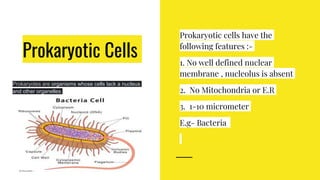
Prokaryotic Cells
Prokaryotes are organisms whose cells lack a nucleus
and other organelles
Prokaryotic cells have the
following features :-
1. No well defined nuclear
membrane , nucleolus is absent
2. No Mitochondria or E.R
3. 1-10 micrometer
E.g- Bacteria
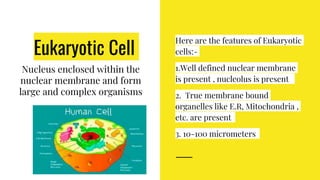
Eukaryotic Cell
Nucleus enclosed within the
nuclear membrane and form
large and complex organisms
Here are the features of Eukaryotic
cells:-
1.Well defined nuclear membrane
is present , nucleolus is present
2. True membrane bound
organelles like E.R, Mitochondria ,
etc. are present
3. 10-100 micrometers
HISTORY:
First discovered & named by
Robert Brown (1833).
• Term Nucleolus -Bowman(1840).
• Term Chromatin – W.
Flemming(1879).
• Term Cytoplasm &
Nucleoplasm- Strasburger (1882)
OCCURRENCE
AND POSITION
Occurrence:
1. Found in all eukaryotic cells of plants & animals.
2. Prokaryotes(Bacteria) lack true nucleus.
3. Position: Usually at Centre but change time to time acc. to
metabolic state.
SIZE
Generally occupies 10% of cell volume. -
- Size varies from 3μm to 25 μm depending on cell
type.
- Size of nucleus is directly proportional to cytoplasm.
- Thus size depends on Cell Volume, Amount of DNA
and protein
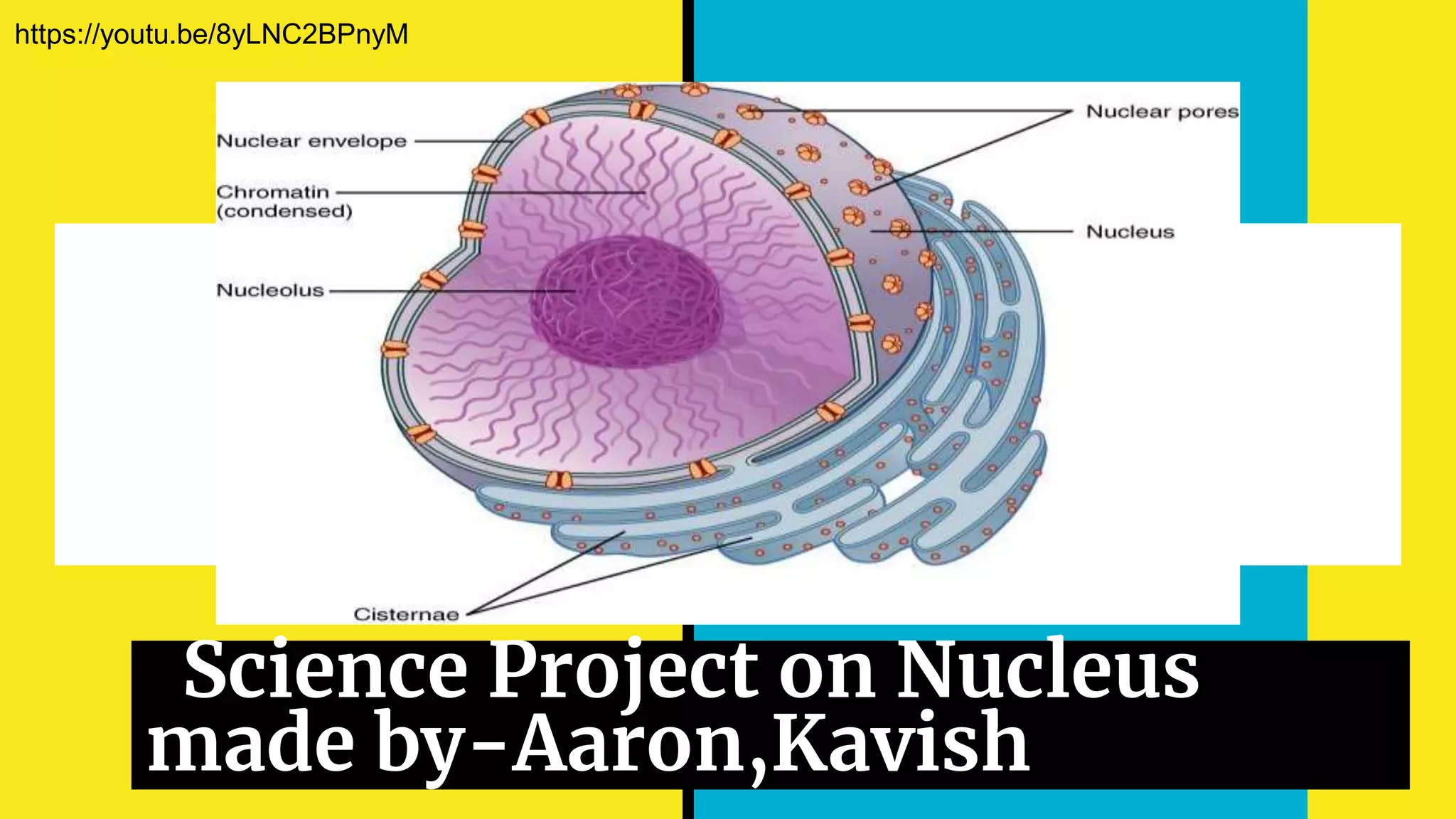
Structure of the
Nucleus
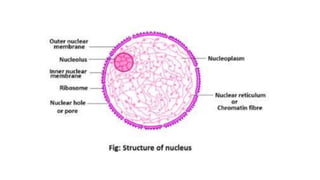
The nucleus has a spherical shape in which it contains
chromatin,
Which is made up of DNA,RNA and Proteins and it is
organised into structures we know as chromosomes
Functions of
Nucleus
The nucleus has several
important functions in the
cell including:
1)Regulating gene expression - the
process by which the information of
the genes is transcribed by
transcribing DNA into Rna which is
then translated into proteins .
2) Cell division- The nucleus plays a
crucial role in cell division, ensuring
that each daughter cell receives the
correct number of
chromosomes(46,46 in mitosis and
23,23 in meiosis (IN HUMANS))
3) It also controls and regulates the
activities of the cell.- example- growth
and metabolism
Conclusion:
In Conclusion, the nucleus is a vital organelle that plays a
crucial role in in maintaining the function and integrity of the
cell. It is responsible for regulating gene expression,
controlling cell division and ensuring the proper replication
and repair of DNA. Without the nucleus , the cell would be
able to carry out these essential processes and the survival of
the organism would be compromised.
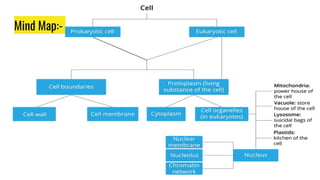
Mind Map:-
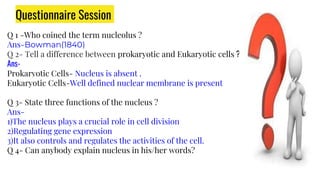
Questionnaire Session
Q 1 -Who coined the term nucleolus ?
Ans-Bowman(1840)
Q 2- Tell a difference between prokaryotic and Eukaryotic cells ?
Ans-
Prokaryotic Cells- Nucleus is absent .
Eukaryotic Cells-Well defined nuclear membrane is present
Q 3- State three functions of the nucleus ?
Ans-
1)The nucleus plays a crucial role in cell division
2)Regulating gene expression
3)It also controls and regulates the activities of the cell.
Q 4- Can anybody explain nucleus in his/her words?
What You Have Learnt
-History
-Prokaryotic And Eukaryotic
Cells
-Occurrence and Position
-Size
-Structure of The Nucleus
-Functions Of the nucleus
Thank you !
Made by- Aaron Manral and
Kavish Goyal, Class IX-C

_ppt nucleus .pptx

  • 1.
    . Science Project onNucleus made by-Aaron,Kavish https://youtu.be/8yLNC2BPnyM
  • 2.
    CONTENTS: -History - Prokaryotic AndEukaryotic cells - Occurrence and position - Size - Structure of the nucleus - Functions - Conclusion - Questionnaire Session - What have you learnt - Mind Map
  • 3.
    Prokaryotic Cells Prokaryotes areorganisms whose cells lack a nucleus and other organelles Prokaryotic cells have the following features :- 1. No well defined nuclear membrane , nucleolus is absent 2. No Mitochondria or E.R 3. 1-10 micrometer E.g- Bacteria
  • 4.
    Eukaryotic Cell Nucleus enclosedwithin the nuclear membrane and form large and complex organisms Here are the features of Eukaryotic cells:- 1.Well defined nuclear membrane is present , nucleolus is present 2. True membrane bound organelles like E.R, Mitochondria , etc. are present 3. 10-100 micrometers
  • 5.
    HISTORY: First discovered &named by Robert Brown (1833). • Term Nucleolus -Bowman(1840). • Term Chromatin – W. Flemming(1879). • Term Cytoplasm & Nucleoplasm- Strasburger (1882)
  • 6.
    OCCURRENCE AND POSITION Occurrence: 1. Foundin all eukaryotic cells of plants & animals. 2. Prokaryotes(Bacteria) lack true nucleus. 3. Position: Usually at Centre but change time to time acc. to metabolic state.
  • 7.
    SIZE Generally occupies 10%of cell volume. - - Size varies from 3μm to 25 μm depending on cell type. - Size of nucleus is directly proportional to cytoplasm. - Thus size depends on Cell Volume, Amount of DNA and protein
  • 8.
    Structure of the Nucleus Thenucleus has a spherical shape in which it contains chromatin, Which is made up of DNA,RNA and Proteins and it is organised into structures we know as chromosomes
  • 10.
    Functions of Nucleus The nucleushas several important functions in the cell including: 1)Regulating gene expression - the process by which the information of the genes is transcribed by transcribing DNA into Rna which is then translated into proteins . 2) Cell division- The nucleus plays a crucial role in cell division, ensuring that each daughter cell receives the correct number of chromosomes(46,46 in mitosis and 23,23 in meiosis (IN HUMANS)) 3) It also controls and regulates the activities of the cell.- example- growth and metabolism
  • 11.
    Conclusion: In Conclusion, thenucleus is a vital organelle that plays a crucial role in in maintaining the function and integrity of the cell. It is responsible for regulating gene expression, controlling cell division and ensuring the proper replication and repair of DNA. Without the nucleus , the cell would be able to carry out these essential processes and the survival of the organism would be compromised.
  • 12.
  • 13.
    Questionnaire Session Q 1-Who coined the term nucleolus ? Ans-Bowman(1840) Q 2- Tell a difference between prokaryotic and Eukaryotic cells ? Ans- Prokaryotic Cells- Nucleus is absent . Eukaryotic Cells-Well defined nuclear membrane is present Q 3- State three functions of the nucleus ? Ans- 1)The nucleus plays a crucial role in cell division 2)Regulating gene expression 3)It also controls and regulates the activities of the cell. Q 4- Can anybody explain nucleus in his/her words?
  • 14.
    What You HaveLearnt -History -Prokaryotic And Eukaryotic Cells -Occurrence and Position -Size -Structure of The Nucleus -Functions Of the nucleus
  • 15.
    Thank you ! Madeby- Aaron Manral and Kavish Goyal, Class IX-C