Chapter 17 
Drugs Treating Psychotic 
Disorders and Dementia 
Copyright © 2012 Wolters Kluwer Health | Lippincott Williams & Wilkins
Physiology 
• The cerebrum, the highest functional area of the brain, is 
concerned with activities such as creative thought, 
judgment, memory, and reason, and it is divided into two 
hemispheres. 
• The primary neurotransmitter related to thought processing 
is believed to be dopamine. 
• Dopamine is secreted by neurons originating in the midbrain 
that function in coordination, emotion, and voluntary 
decision making. 
• Many areas of the brain secrete ACh; reductions in the 
amount of this neurotransmitter cause cognitive changes. 
• ACh has a number of functions, including arousal, 
coordination of movement, memory acquisition, and 
memory retention. 
Copyright © 2012 Wolters Kluwer Health | Lippincott Williams & Wilkins
Schizophrenia 
• Schizophrenia is a particular kind of psychosis that is 
characterized mainly by a clear sensorium but a marked 
disturbance in thinking. 
• It is a complex illness with uncertain etiology. 
• Schizophrenia interferes with a person’s ability to think 
clearly, manage emotions, make decisions, and relate to 
others. 
• Schizophrenia is considered to have multiple causes. 
Copyright © 2012 Wolters Kluwer Health | Lippincott Williams & Wilkins
Dementia 
• Dementia is a clinical syndrome of progressive, degenerative 
loss of memory and of one or more of these abilities: 
– Language skills 
– Higher level skills, such as judgment, comprehension, and 
problem solving 
– Ability to recognize or identify objects despite intact 
sensory function 
– Ability to perform motor skills (American Psychiatric 
Association, 2000) 
• Mood and behavior may also be affected in dementia. 
• Agitation or withdrawal, hallucinations, delusions, insomnia, 
emotional apathy, and loss of inhibitions are also common. 
Copyright © 2012 Wolters Kluwer Health | Lippincott Williams & Wilkins
Alzheimer Disease 
• Alzheimer disease is one form of progressive dementia. 
• Alzheimer disease is the most common cause of 
dementia among people 65 years of age and older. 
• At this time, there is no cure or way to prevent Alzheimer 
disease. 
• Alzheimer disease causes a gross, diffuse atrophy of the 
cerebral cortex. 
• It is associated with extracellular plaques with beta-amyloid 
protein deposits and neurofibrillary tangles in the 
cortical neurons. 
• Typically, Alzheimer disease begins insidiously with 
short-term memory loss. 
Copyright © 2012 Wolters Kluwer Health | Lippincott Williams & Wilkins
Vascular Dementia 
• Vascular dementia results from damage to brain tissue, 
caused by cerebrovascular events, such as transient 
ischemic attacks. 
• The areas that experience infarcts are associated with 
specific neurologic functions. 
• Although vascular dementia and Alzheimer dementia 
differ in cause, many of the symptoms are similar. 
Copyright © 2012 Wolters Kluwer Health | Lippincott Williams & Wilkins
Other Dementia 
• Dementia can also be caused by a variety of medical 
conditions. 
• The primary mechanism of this diagnosis is the presence 
of or a noted history of other diseases, such as AIDS, 
Parkinson disease, Huntington chorea, and others. 
• The symptoms caused by these conditions are also 
similar to those for Alzheimer disease. 
Copyright © 2012 Wolters Kluwer Health | Lippincott Williams & Wilkins
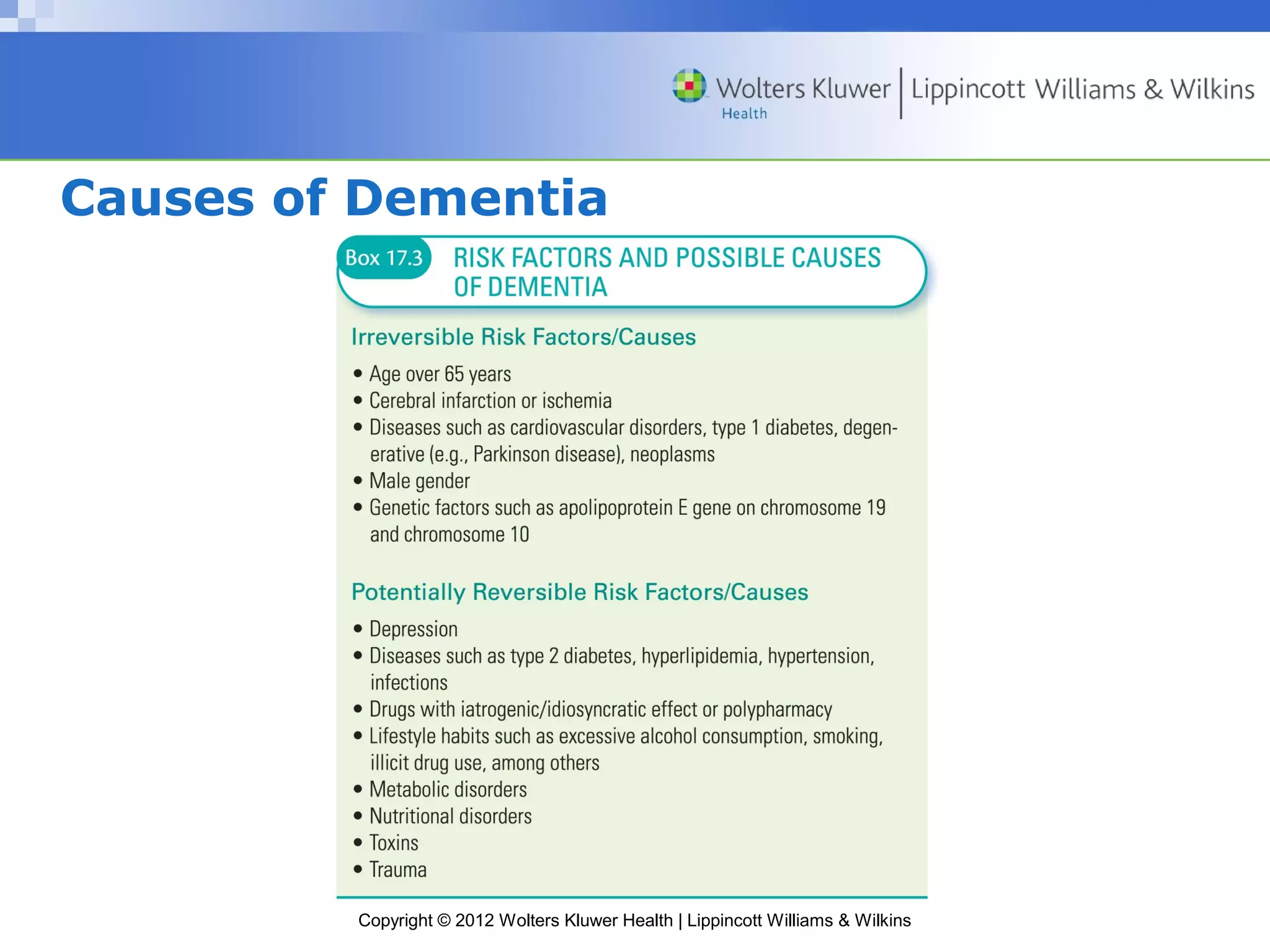
Causes of Dementia 
Copyright © 2012 Wolters Kluwer Health | Lippincott Williams & Wilkins
Copyright © 2012 Wolters Kluwer Health | Lippincott Williams & Wilkins 
Delirium 
• Delirium is a sudden disruption in cognitive functioning, 
most often caused by a physical change in the body. 
• This physical change prevents the brain from receiving 
some critical element that it needs to function effectively. 
• There is a disturbance in the level of consciousness that 
comes and goes throughout the day or days when 
delirium is present. 
• To treat delirium effectively, the underlying cause must 
first be identified.
Typical Antipsychotics 
• The typical antipsychotics were the first antipsychotic 
drugs created. 
• They are sometimes referred to as the conventional 
antipsychotics. 
• Prototype drug: haloperidol (Haldol) 
Copyright © 2012 Wolters Kluwer Health | Lippincott Williams & Wilkins
Haloperidol: Core Drug Knowledge 
• Pharmacotherapeutics 
– Used to treat psychotic disorders 
• Pharmacokinetics 
– Protein bound, delayed onset of action 
• Pharmacodynamics 
– Blocks the dopamine (specifically D2), alpha, and 
serotonin receptors 
– Effective: decrease in movement disorders, relief of 
hallucinations, delusions, and psychosis 
Copyright © 2012 Wolters Kluwer Health | Lippincott Williams & Wilkins
Haloperidol: Core Drug Knowledge (cont.) 
• Contraindications and precautions 
– Hypersensitivity and Parkinson disease 
• Adverse effects 
– Extrapyramidal symptoms (EPS), drowsiness, 
sedation, somnolence, lethargy, and dysphoria 
• Drug interactions 
– Few drug interactions, smoking decreases serum 
Copyright © 2012 Wolters Kluwer Health | Lippincott Williams & Wilkins 
levels
Haloperidol: Core Patient Variables 
• Health status 
– Assess past medical: any contraindications to the drug 
• Life span and gender 
– Pregnancy Category C drug, safety not assessed in 
Copyright © 2012 Wolters Kluwer Health | Lippincott Williams & Wilkins 
children 
• Lifestyle, diet, and habits 
– Document occupation and daily activities. 
• Environment 
– Assess environment where the drug will be given. 
• Culture and inherited traits 
– Asians have a 50% higher serum level than whites.
Haloperidol: Nursing Diagnoses and 
Outcomes 
• Risk for Injury related to EPS from haloperidol 
– Desired outcome: The patient will remain injury-free 
from haloperidol as EPS are prevented or minimized. 
• Altered Thought Processes related to hallucinations and 
delusion 
– Desired outcome: The patient’s hallucinations and 
delusions will be controlled by haloperidol therapy. 
• Risk for Ineffective Management of Therapeutic Regimen, 
Individual, related to adverse effects of drug therapy or poor 
understanding of the need for drug therapy 
– Desired outcome: The patient will take haloperidol 
therapy as directed. 
Copyright © 2012 Wolters Kluwer Health | Lippincott Williams & Wilkins
Haloperidol: Planning and Interventions 
• Maximizing therapeutic effects 
– Encourage to take the drug routinely. 
• Minimizing adverse effects 
– The goal of therapy is to find a dose that effectively 
controls the psychotic symptoms but produces 
minimal adverse effects. 
– EPS are more likely to occur if the patient repeatedly 
stops and restarts therapy. 
Copyright © 2012 Wolters Kluwer Health | Lippincott Williams & Wilkins
Haloperidol: Teaching, Assessment, and 
Evaluations 
• Patient and family education 
– Provide realistic expectations of antipsychotic 
Copyright © 2012 Wolters Kluwer Health | Lippincott Williams & Wilkins 
therapy. 
– Discuss adverse effects of therapy. 
– Advise the patient to avoid alcohol while on drug. 
• Ongoing assessment and evaluation 
– Treatment is considered effective if the psychotic 
symptoms are controlled and the patient does not 
develop serious adverse effects.
Copyright © 2012 Wolters Kluwer Health | Lippincott Williams & Wilkins 
Question 
• One of the side effects of haloperidol is extrapyramidal 
symptoms. 
– A. True 
– B. False
Copyright © 2012 Wolters Kluwer Health | Lippincott Williams & Wilkins 
Answer 
• A. True 
• Rationale: Haloperidol causes extrapyramidal 
symptoms (EPS). The cause of these symptoms is 
the relative lack of dopamine stimulation and the 
relative excess of cholinergic stimulation.
Atypical Antipsychotics 
• Atypical antipsychotics differ from the typical 
antipsychotics in that they target only specific dopamine 
receptors. 
• This specificity creates a much lower adverse effect 
profile. 
• Another major advantage of the atypical antipsychotics is 
that they treat both the negative and the positive 
symptoms of schizophrenia. 
• Prototype drug: olanzapine (Zyprexa) 
Copyright © 2012 Wolters Kluwer Health | Lippincott Williams & Wilkins
Olanzapine: Core Drug Knowledge 
• Pharmacotherapeutics 
– Used to treat psychotic symptoms in schizophrenia 
and for short-term treatment of acute bipolar 
disorder. 
• Pharmacokinetics 
– Highly protein bound, T½: 21 to 54 hours 
• Pharmacodynamics 
– Olanzapine works by blocking several neuroreceptor 
sites, including serotonin, dopamine, muscarinic, 
histamine-1 (H1), and alpha-1. 
Copyright © 2012 Wolters Kluwer Health | Lippincott Williams & Wilkins
Olanzapine: Core Drug Knowledge (cont.) 
• Contraindications and precautions 
– Hypersensitivity 
• Adverse effects 
– Drowsiness, insomnia, agitation, nervousness, 
hostility, tardive dyskinesia, and neuroleptic 
malignant syndrome 
• Drug interactions 
– Centrally acting drugs, alcohol, omeprazole, rifampin, 
and carbamazepine 
Copyright © 2012 Wolters Kluwer Health | Lippincott Williams & Wilkins
Olanzapine: Core Patient Variables 
• Health status 
– Baseline assessment including laboratory studies 
• Life span and gender 
– Pregnancy Category C drug 
• Lifestyle, diet, and habits 
– Evaluate caffeine intake and diet. 
• Environment 
– Assess climate where the drug is given. 
Copyright © 2012 Wolters Kluwer Health | Lippincott Williams & Wilkins
Olanzapine: Nursing Diagnoses and 
Outcomes 
• Imbalanced nutrition: More than Body Requirements 
related to increased appetite and secondary to 
olanzapine use 
– Desired outcome: The patient will state that there 
is a risk for weight gain and will identify the effects 
of a low-fat diet and exercise on weight control. 
• Risk for Injury related to drug-induced dizziness, blurred 
vision, and orthostatic hypotension 
– Desired outcome: The patient will identify factors 
that increase the risk for injury and will relate intent 
to use safety measures and practices to prevent 
injury. 
Copyright © 2012 Wolters Kluwer Health | Lippincott Williams & Wilkins
Olanzapine: Nursing Diagnoses and 
Outcomes (cont.) 
• Risk for Fluid and Electrolyte Imbalance and 
Hyperglycemia related to adverse effects of medication 
– Desired outcome: The patient will maintain 
appropriate fluid and electrolyte balance while 
receiving medication. 
• Risk for Sedation related to adverse effects of the 
medication 
– Desired outcome: The patient will maintain 
appropriate level of wakefulness while receiving 
medication. 
Copyright © 2012 Wolters Kluwer Health | Lippincott Williams & Wilkins
Olanzapine: Planning and Interventions 
• Maximizing therapeutic effects 
– Maintain adherence to any medication regimen once 
a patient experiences relief of symptoms. 
• Minimizing adverse effects 
– Assess fasting blood sugar before drug therapy is 
initiated and during therapy. 
– To minimize daytime drowsiness, you can give the 
entire daily dose at night. 
Copyright © 2012 Wolters Kluwer Health | Lippincott Williams & Wilkins
Olanzapine: Teaching, Assessment, and 
Evaluations 
• Patient and family education 
– Teach signs of hyperglycemia. 
– Therapeutic response will not be immediate. 
– Stress the importance of continuing drug therapy. 
• Ongoing assessment and evaluation 
– Ongoing assessment and evaluation. 
– Monitor for adverse response and effectiveness of 
Copyright © 2012 Wolters Kluwer Health | Lippincott Williams & Wilkins 
therapy.
Copyright © 2012 Wolters Kluwer Health | Lippincott Williams & Wilkins 
Question 
• What is the advantage of olanzapine over other atypical 
antipsychotic drugs? 
– A. No risk of dependency 
– B. No adverse side effects 
– C. Increased effectiveness 
– D. No risk for agranulocytosis
Copyright © 2012 Wolters Kluwer Health | Lippincott Williams & Wilkins 
Answer 
• D. No risk for agranulocytosis 
• Rationale: Olanzapine does not cause 
agranulocytosis, which is a common side effect with 
other atypical antipsychotic drugs.
Acetylcholinesterase Enzyme Inhibitors 
• Acetylcholine is a neurotransmitter for several CNS 
circuits in the brain. 
• By inhibiting the action of AChE, acetylcholinesterase 
inhibitors (AChEIs) prolong the activity of acetylcholine 
on cortical cholinergic receptors and in the synapse. 
• These agents increase concentrations of the memory-regulating 
and cognition-regulating neurotransmitter 
acetylcholine by reversibly inhibiting the enzyme 
cholinesterase. 
• Prototype drug: rivastigmine (Exelon) 
Copyright © 2012 Wolters Kluwer Health | Lippincott Williams & Wilkins
Rivastigmine: Core Drug Knowledge 
• Pharmacotherapeutics 
– Treating mild-to-moderate dementia 
• Pharmacokinetics 
– Administered: oral. Distribution: throughout the 
body. Metabolism: liver. Excreted: urine. Peak: 1 
hour. 
• Pharmacodynamics 
– Carbamate derivative that enhances cholinergic 
Copyright © 2012 Wolters Kluwer Health | Lippincott Williams & Wilkins 
function.
Rivastigmine: Core Drug Knowledge 
(cont.) 
• Contraindications and precautions 
– Hypersensitivity 
• Adverse effects 
– GI effects, dizziness, headache, chest pain, 
peripheral edema, vertigo, joint pain, agitation, and 
coughing 
• Drug interactions 
– Succinylcholine, similar neuromuscular blocking 
agents, or cholinergic agonists 
Copyright © 2012 Wolters Kluwer Health | Lippincott Williams & Wilkins
Rivastigmine: Core Patient Variables 
• Health status 
– Assess body systems; assess for cardiac dysfunction. 
• Life span and gender 
– Assess age of the patient. 
• Lifestyle, diet, and habits 
– Assess for tobacco use. 
• Environment 
– Assess environment where the drug will be given. 
Copyright © 2012 Wolters Kluwer Health | Lippincott Williams & Wilkins
Rivastigmine: Nursing Diagnoses and 
Outcomes 
• Imbalanced nutrition: Less than Body Requirements 
related to decreased desire to eat secondary to nausea 
and vomiting from drug therapy 
– Desired outcome: The patient will ingest daily 
nutritional requirements in relation to activity level 
and metabolic needs. 
• Risk for Injury related to adverse effect of sedation 
– Desired outcome: The patient will establish 
appropriate sleep and rest patterns, participate in 
activities, and establish priorities for daily and weekly 
activities. 
Copyright © 2012 Wolters Kluwer Health | Lippincott Williams & Wilkins
Rivastigmine: Planning and Interventions 
• Maximizing therapeutic effects 
– Detect and correct any treatable factors that can 
cause or contribute to cognitive impairment. 
• Minimizing adverse effects 
– Offer small, frequent meals or give the drug with 
food to offset GI effects. 
– Monitor weight throughout therapy. 
Copyright © 2012 Wolters Kluwer Health | Lippincott Williams & Wilkins
Rivastigmine: Teaching, Assessment, and 
Evaluations 
• Patient and family education 
– Discuss disease process and its progressive nature as 
well as the burdens facing the caregiver. 
– Discuss side effects of medication. 
• Ongoing assessment and evaluation 
– Continually assess cognitive function. 
Copyright © 2012 Wolters Kluwer Health | Lippincott Williams & Wilkins
Copyright © 2012 Wolters Kluwer Health | Lippincott Williams & Wilkins 
Question 
• Rivastigmine has been shown to alter the course of 
Alzheimer disease? 
– A. True 
– B. False
Copyright © 2012 Wolters Kluwer Health | Lippincott Williams & Wilkins 
Answer 
• B. False 
• Rationale: Rivastigmine has not been shown to alter 
the course of the dementing process; however, it is 
anticipated that disease effects will lessen as the 
disease process advances and fewer cholinergic 
neurons remain intact.

Ppt chapter 17

  • 1.
    Chapter 17 DrugsTreating Psychotic Disorders and Dementia Copyright © 2012 Wolters Kluwer Health | Lippincott Williams & Wilkins
  • 2.
    Physiology • Thecerebrum, the highest functional area of the brain, is concerned with activities such as creative thought, judgment, memory, and reason, and it is divided into two hemispheres. • The primary neurotransmitter related to thought processing is believed to be dopamine. • Dopamine is secreted by neurons originating in the midbrain that function in coordination, emotion, and voluntary decision making. • Many areas of the brain secrete ACh; reductions in the amount of this neurotransmitter cause cognitive changes. • ACh has a number of functions, including arousal, coordination of movement, memory acquisition, and memory retention. Copyright © 2012 Wolters Kluwer Health | Lippincott Williams & Wilkins
  • 3.
    Schizophrenia • Schizophreniais a particular kind of psychosis that is characterized mainly by a clear sensorium but a marked disturbance in thinking. • It is a complex illness with uncertain etiology. • Schizophrenia interferes with a person’s ability to think clearly, manage emotions, make decisions, and relate to others. • Schizophrenia is considered to have multiple causes. Copyright © 2012 Wolters Kluwer Health | Lippincott Williams & Wilkins
  • 4.
    Dementia • Dementiais a clinical syndrome of progressive, degenerative loss of memory and of one or more of these abilities: – Language skills – Higher level skills, such as judgment, comprehension, and problem solving – Ability to recognize or identify objects despite intact sensory function – Ability to perform motor skills (American Psychiatric Association, 2000) • Mood and behavior may also be affected in dementia. • Agitation or withdrawal, hallucinations, delusions, insomnia, emotional apathy, and loss of inhibitions are also common. Copyright © 2012 Wolters Kluwer Health | Lippincott Williams & Wilkins
  • 5.
    Alzheimer Disease •Alzheimer disease is one form of progressive dementia. • Alzheimer disease is the most common cause of dementia among people 65 years of age and older. • At this time, there is no cure or way to prevent Alzheimer disease. • Alzheimer disease causes a gross, diffuse atrophy of the cerebral cortex. • It is associated with extracellular plaques with beta-amyloid protein deposits and neurofibrillary tangles in the cortical neurons. • Typically, Alzheimer disease begins insidiously with short-term memory loss. Copyright © 2012 Wolters Kluwer Health | Lippincott Williams & Wilkins
  • 6.
    Vascular Dementia •Vascular dementia results from damage to brain tissue, caused by cerebrovascular events, such as transient ischemic attacks. • The areas that experience infarcts are associated with specific neurologic functions. • Although vascular dementia and Alzheimer dementia differ in cause, many of the symptoms are similar. Copyright © 2012 Wolters Kluwer Health | Lippincott Williams & Wilkins
  • 7.
    Other Dementia •Dementia can also be caused by a variety of medical conditions. • The primary mechanism of this diagnosis is the presence of or a noted history of other diseases, such as AIDS, Parkinson disease, Huntington chorea, and others. • The symptoms caused by these conditions are also similar to those for Alzheimer disease. Copyright © 2012 Wolters Kluwer Health | Lippincott Williams & Wilkins
  • 8.
    Causes of Dementia Copyright © 2012 Wolters Kluwer Health | Lippincott Williams & Wilkins
  • 9.
    Copyright © 2012Wolters Kluwer Health | Lippincott Williams & Wilkins Delirium • Delirium is a sudden disruption in cognitive functioning, most often caused by a physical change in the body. • This physical change prevents the brain from receiving some critical element that it needs to function effectively. • There is a disturbance in the level of consciousness that comes and goes throughout the day or days when delirium is present. • To treat delirium effectively, the underlying cause must first be identified.
  • 10.
    Typical Antipsychotics •The typical antipsychotics were the first antipsychotic drugs created. • They are sometimes referred to as the conventional antipsychotics. • Prototype drug: haloperidol (Haldol) Copyright © 2012 Wolters Kluwer Health | Lippincott Williams & Wilkins
  • 11.
    Haloperidol: Core DrugKnowledge • Pharmacotherapeutics – Used to treat psychotic disorders • Pharmacokinetics – Protein bound, delayed onset of action • Pharmacodynamics – Blocks the dopamine (specifically D2), alpha, and serotonin receptors – Effective: decrease in movement disorders, relief of hallucinations, delusions, and psychosis Copyright © 2012 Wolters Kluwer Health | Lippincott Williams & Wilkins
  • 12.
    Haloperidol: Core DrugKnowledge (cont.) • Contraindications and precautions – Hypersensitivity and Parkinson disease • Adverse effects – Extrapyramidal symptoms (EPS), drowsiness, sedation, somnolence, lethargy, and dysphoria • Drug interactions – Few drug interactions, smoking decreases serum Copyright © 2012 Wolters Kluwer Health | Lippincott Williams & Wilkins levels
  • 13.
    Haloperidol: Core PatientVariables • Health status – Assess past medical: any contraindications to the drug • Life span and gender – Pregnancy Category C drug, safety not assessed in Copyright © 2012 Wolters Kluwer Health | Lippincott Williams & Wilkins children • Lifestyle, diet, and habits – Document occupation and daily activities. • Environment – Assess environment where the drug will be given. • Culture and inherited traits – Asians have a 50% higher serum level than whites.
  • 14.
    Haloperidol: Nursing Diagnosesand Outcomes • Risk for Injury related to EPS from haloperidol – Desired outcome: The patient will remain injury-free from haloperidol as EPS are prevented or minimized. • Altered Thought Processes related to hallucinations and delusion – Desired outcome: The patient’s hallucinations and delusions will be controlled by haloperidol therapy. • Risk for Ineffective Management of Therapeutic Regimen, Individual, related to adverse effects of drug therapy or poor understanding of the need for drug therapy – Desired outcome: The patient will take haloperidol therapy as directed. Copyright © 2012 Wolters Kluwer Health | Lippincott Williams & Wilkins
  • 15.
    Haloperidol: Planning andInterventions • Maximizing therapeutic effects – Encourage to take the drug routinely. • Minimizing adverse effects – The goal of therapy is to find a dose that effectively controls the psychotic symptoms but produces minimal adverse effects. – EPS are more likely to occur if the patient repeatedly stops and restarts therapy. Copyright © 2012 Wolters Kluwer Health | Lippincott Williams & Wilkins
  • 16.
    Haloperidol: Teaching, Assessment,and Evaluations • Patient and family education – Provide realistic expectations of antipsychotic Copyright © 2012 Wolters Kluwer Health | Lippincott Williams & Wilkins therapy. – Discuss adverse effects of therapy. – Advise the patient to avoid alcohol while on drug. • Ongoing assessment and evaluation – Treatment is considered effective if the psychotic symptoms are controlled and the patient does not develop serious adverse effects.
  • 17.
    Copyright © 2012Wolters Kluwer Health | Lippincott Williams & Wilkins Question • One of the side effects of haloperidol is extrapyramidal symptoms. – A. True – B. False
  • 18.
    Copyright © 2012Wolters Kluwer Health | Lippincott Williams & Wilkins Answer • A. True • Rationale: Haloperidol causes extrapyramidal symptoms (EPS). The cause of these symptoms is the relative lack of dopamine stimulation and the relative excess of cholinergic stimulation.
  • 19.
    Atypical Antipsychotics •Atypical antipsychotics differ from the typical antipsychotics in that they target only specific dopamine receptors. • This specificity creates a much lower adverse effect profile. • Another major advantage of the atypical antipsychotics is that they treat both the negative and the positive symptoms of schizophrenia. • Prototype drug: olanzapine (Zyprexa) Copyright © 2012 Wolters Kluwer Health | Lippincott Williams & Wilkins
  • 20.
    Olanzapine: Core DrugKnowledge • Pharmacotherapeutics – Used to treat psychotic symptoms in schizophrenia and for short-term treatment of acute bipolar disorder. • Pharmacokinetics – Highly protein bound, T½: 21 to 54 hours • Pharmacodynamics – Olanzapine works by blocking several neuroreceptor sites, including serotonin, dopamine, muscarinic, histamine-1 (H1), and alpha-1. Copyright © 2012 Wolters Kluwer Health | Lippincott Williams & Wilkins
  • 21.
    Olanzapine: Core DrugKnowledge (cont.) • Contraindications and precautions – Hypersensitivity • Adverse effects – Drowsiness, insomnia, agitation, nervousness, hostility, tardive dyskinesia, and neuroleptic malignant syndrome • Drug interactions – Centrally acting drugs, alcohol, omeprazole, rifampin, and carbamazepine Copyright © 2012 Wolters Kluwer Health | Lippincott Williams & Wilkins
  • 22.
    Olanzapine: Core PatientVariables • Health status – Baseline assessment including laboratory studies • Life span and gender – Pregnancy Category C drug • Lifestyle, diet, and habits – Evaluate caffeine intake and diet. • Environment – Assess climate where the drug is given. Copyright © 2012 Wolters Kluwer Health | Lippincott Williams & Wilkins
  • 23.
    Olanzapine: Nursing Diagnosesand Outcomes • Imbalanced nutrition: More than Body Requirements related to increased appetite and secondary to olanzapine use – Desired outcome: The patient will state that there is a risk for weight gain and will identify the effects of a low-fat diet and exercise on weight control. • Risk for Injury related to drug-induced dizziness, blurred vision, and orthostatic hypotension – Desired outcome: The patient will identify factors that increase the risk for injury and will relate intent to use safety measures and practices to prevent injury. Copyright © 2012 Wolters Kluwer Health | Lippincott Williams & Wilkins
  • 24.
    Olanzapine: Nursing Diagnosesand Outcomes (cont.) • Risk for Fluid and Electrolyte Imbalance and Hyperglycemia related to adverse effects of medication – Desired outcome: The patient will maintain appropriate fluid and electrolyte balance while receiving medication. • Risk for Sedation related to adverse effects of the medication – Desired outcome: The patient will maintain appropriate level of wakefulness while receiving medication. Copyright © 2012 Wolters Kluwer Health | Lippincott Williams & Wilkins
  • 25.
    Olanzapine: Planning andInterventions • Maximizing therapeutic effects – Maintain adherence to any medication regimen once a patient experiences relief of symptoms. • Minimizing adverse effects – Assess fasting blood sugar before drug therapy is initiated and during therapy. – To minimize daytime drowsiness, you can give the entire daily dose at night. Copyright © 2012 Wolters Kluwer Health | Lippincott Williams & Wilkins
  • 26.
    Olanzapine: Teaching, Assessment,and Evaluations • Patient and family education – Teach signs of hyperglycemia. – Therapeutic response will not be immediate. – Stress the importance of continuing drug therapy. • Ongoing assessment and evaluation – Ongoing assessment and evaluation. – Monitor for adverse response and effectiveness of Copyright © 2012 Wolters Kluwer Health | Lippincott Williams & Wilkins therapy.
  • 27.
    Copyright © 2012Wolters Kluwer Health | Lippincott Williams & Wilkins Question • What is the advantage of olanzapine over other atypical antipsychotic drugs? – A. No risk of dependency – B. No adverse side effects – C. Increased effectiveness – D. No risk for agranulocytosis
  • 28.
    Copyright © 2012Wolters Kluwer Health | Lippincott Williams & Wilkins Answer • D. No risk for agranulocytosis • Rationale: Olanzapine does not cause agranulocytosis, which is a common side effect with other atypical antipsychotic drugs.
  • 29.
    Acetylcholinesterase Enzyme Inhibitors • Acetylcholine is a neurotransmitter for several CNS circuits in the brain. • By inhibiting the action of AChE, acetylcholinesterase inhibitors (AChEIs) prolong the activity of acetylcholine on cortical cholinergic receptors and in the synapse. • These agents increase concentrations of the memory-regulating and cognition-regulating neurotransmitter acetylcholine by reversibly inhibiting the enzyme cholinesterase. • Prototype drug: rivastigmine (Exelon) Copyright © 2012 Wolters Kluwer Health | Lippincott Williams & Wilkins
  • 30.
    Rivastigmine: Core DrugKnowledge • Pharmacotherapeutics – Treating mild-to-moderate dementia • Pharmacokinetics – Administered: oral. Distribution: throughout the body. Metabolism: liver. Excreted: urine. Peak: 1 hour. • Pharmacodynamics – Carbamate derivative that enhances cholinergic Copyright © 2012 Wolters Kluwer Health | Lippincott Williams & Wilkins function.
  • 31.
    Rivastigmine: Core DrugKnowledge (cont.) • Contraindications and precautions – Hypersensitivity • Adverse effects – GI effects, dizziness, headache, chest pain, peripheral edema, vertigo, joint pain, agitation, and coughing • Drug interactions – Succinylcholine, similar neuromuscular blocking agents, or cholinergic agonists Copyright © 2012 Wolters Kluwer Health | Lippincott Williams & Wilkins
  • 32.
    Rivastigmine: Core PatientVariables • Health status – Assess body systems; assess for cardiac dysfunction. • Life span and gender – Assess age of the patient. • Lifestyle, diet, and habits – Assess for tobacco use. • Environment – Assess environment where the drug will be given. Copyright © 2012 Wolters Kluwer Health | Lippincott Williams & Wilkins
  • 33.
    Rivastigmine: Nursing Diagnosesand Outcomes • Imbalanced nutrition: Less than Body Requirements related to decreased desire to eat secondary to nausea and vomiting from drug therapy – Desired outcome: The patient will ingest daily nutritional requirements in relation to activity level and metabolic needs. • Risk for Injury related to adverse effect of sedation – Desired outcome: The patient will establish appropriate sleep and rest patterns, participate in activities, and establish priorities for daily and weekly activities. Copyright © 2012 Wolters Kluwer Health | Lippincott Williams & Wilkins
  • 34.
    Rivastigmine: Planning andInterventions • Maximizing therapeutic effects – Detect and correct any treatable factors that can cause or contribute to cognitive impairment. • Minimizing adverse effects – Offer small, frequent meals or give the drug with food to offset GI effects. – Monitor weight throughout therapy. Copyright © 2012 Wolters Kluwer Health | Lippincott Williams & Wilkins
  • 35.
    Rivastigmine: Teaching, Assessment,and Evaluations • Patient and family education – Discuss disease process and its progressive nature as well as the burdens facing the caregiver. – Discuss side effects of medication. • Ongoing assessment and evaluation – Continually assess cognitive function. Copyright © 2012 Wolters Kluwer Health | Lippincott Williams & Wilkins
  • 36.
    Copyright © 2012Wolters Kluwer Health | Lippincott Williams & Wilkins Question • Rivastigmine has been shown to alter the course of Alzheimer disease? – A. True – B. False
  • 37.
    Copyright © 2012Wolters Kluwer Health | Lippincott Williams & Wilkins Answer • B. False • Rationale: Rivastigmine has not been shown to alter the course of the dementing process; however, it is anticipated that disease effects will lessen as the disease process advances and fewer cholinergic neurons remain intact.