@JHospMedicine | #TWDFNR
Choosing Wisely®
:
Things We Do
for No Reason™
Use of Antipsychotic Medications in Patients with
Delirium
Based on Pahwa AK, Qureshi, I, Cumbler, E. Use of Antipsychotic Medications
in Patients with Delirium. J Hosp Med. 2019;14(9):565-567.
@JHospMedicine | #TWDFNR
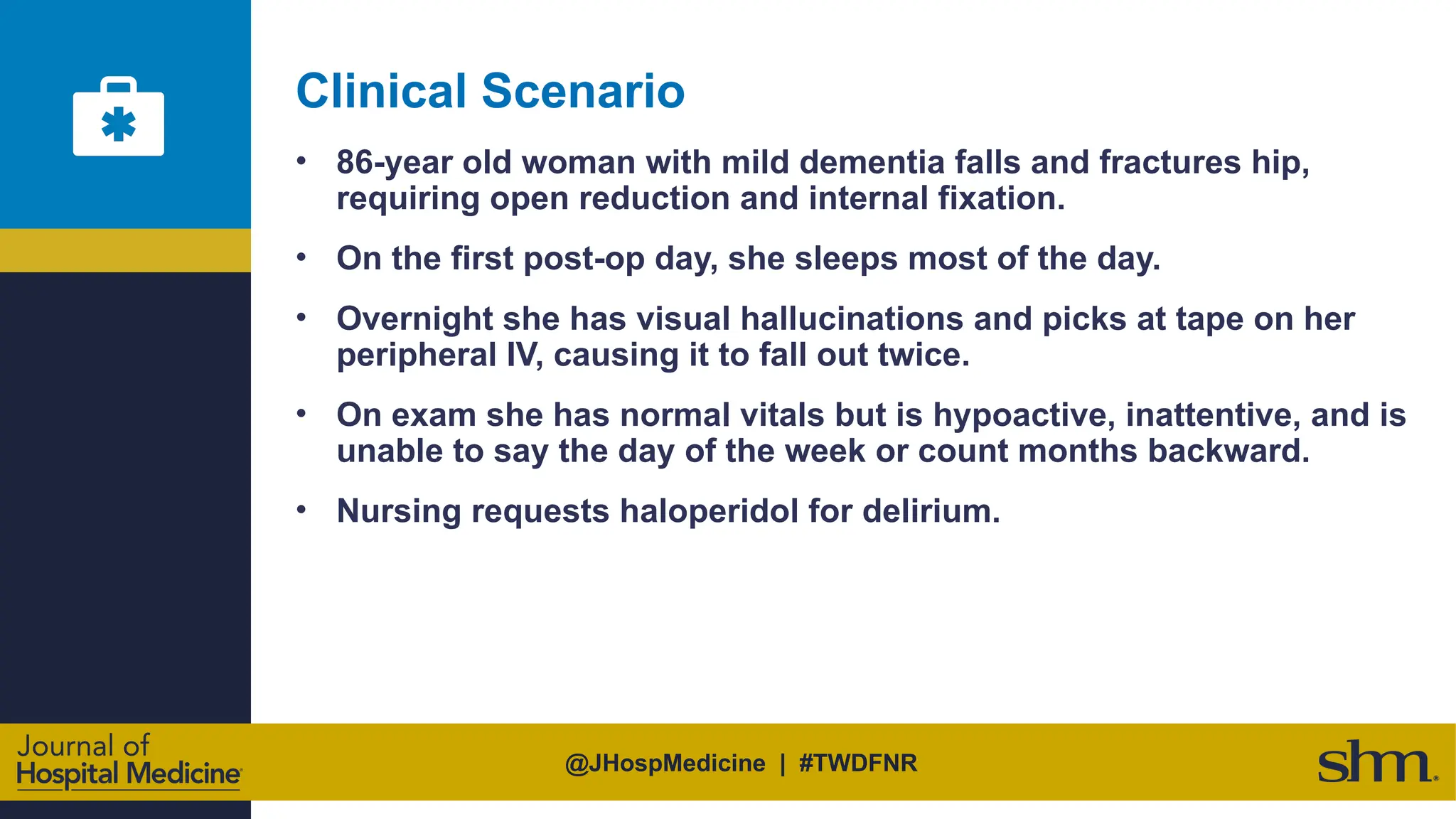
Clinical Scenario
• 86-year old woman with mild dementia falls and fractures hip,
requiring open reduction and internal fixation.
• On the first post-op day, she sleeps most of the day.
• Overnight she has visual hallucinations and picks at tape on her
peripheral IV, causing it to fall out twice.
• On exam she has normal vitals but is hypoactive, inattentive, and is
unable to say the day of the week or count months backward.
• Nursing requests haloperidol for delirium.
@JHospMedicine | #TWDFNR
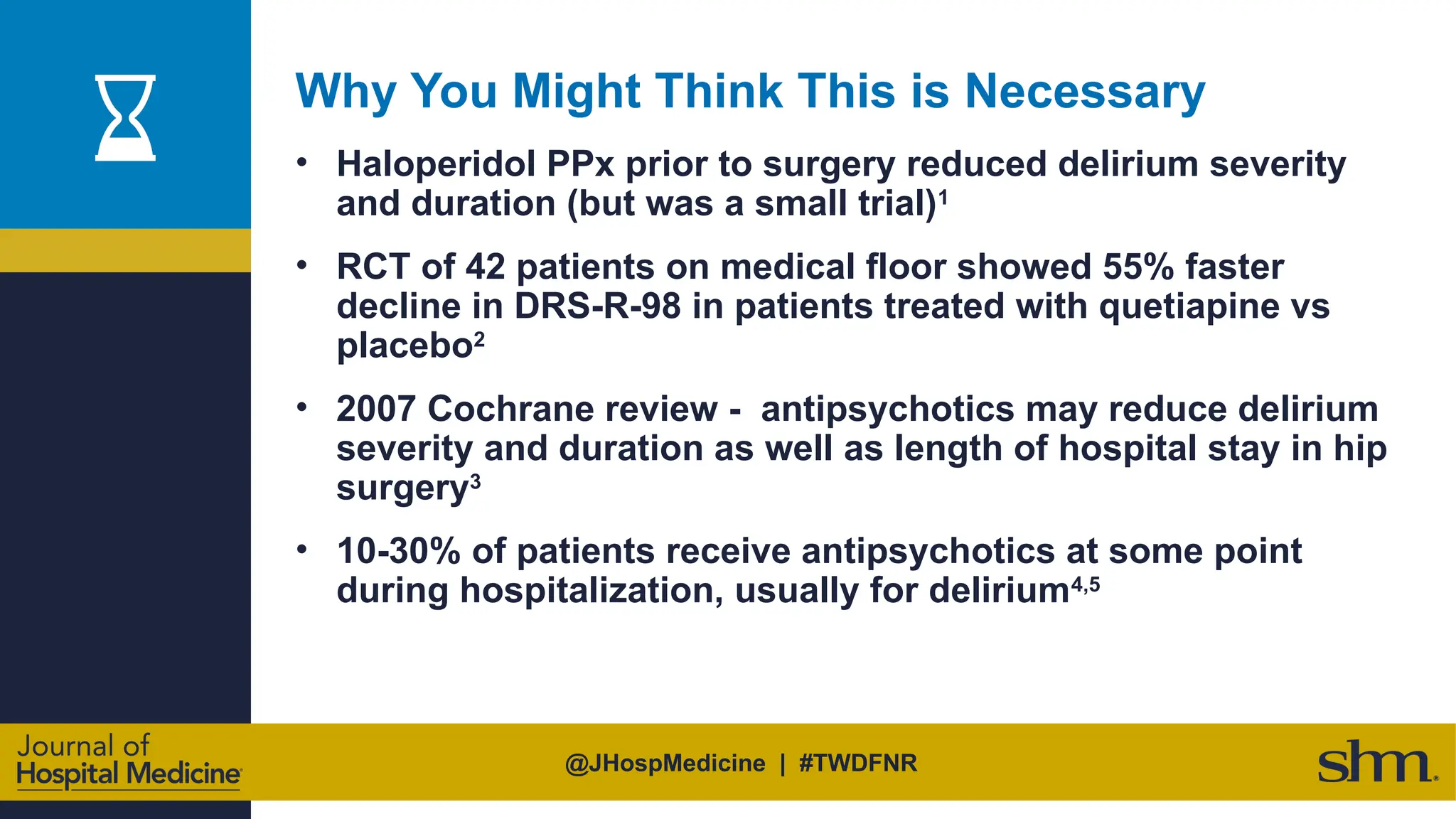
Why You Might Think This is Necessary
• Haloperidol PPx prior to surgery reduced delirium severity
and duration (but was a small trial)1
• RCT of 42 patients on medical floor showed 55% faster
decline in DRS-R-98 in patients treated with quetiapine vs
placebo2
• 2007 Cochrane review - antipsychotics may reduce delirium
severity and duration as well as length of hospital stay in hip
surgery3
• 10-30% of patients receive antipsychotics at some point
during hospitalization, usually for delirium4,5
@JHospMedicine | #TWDFNR
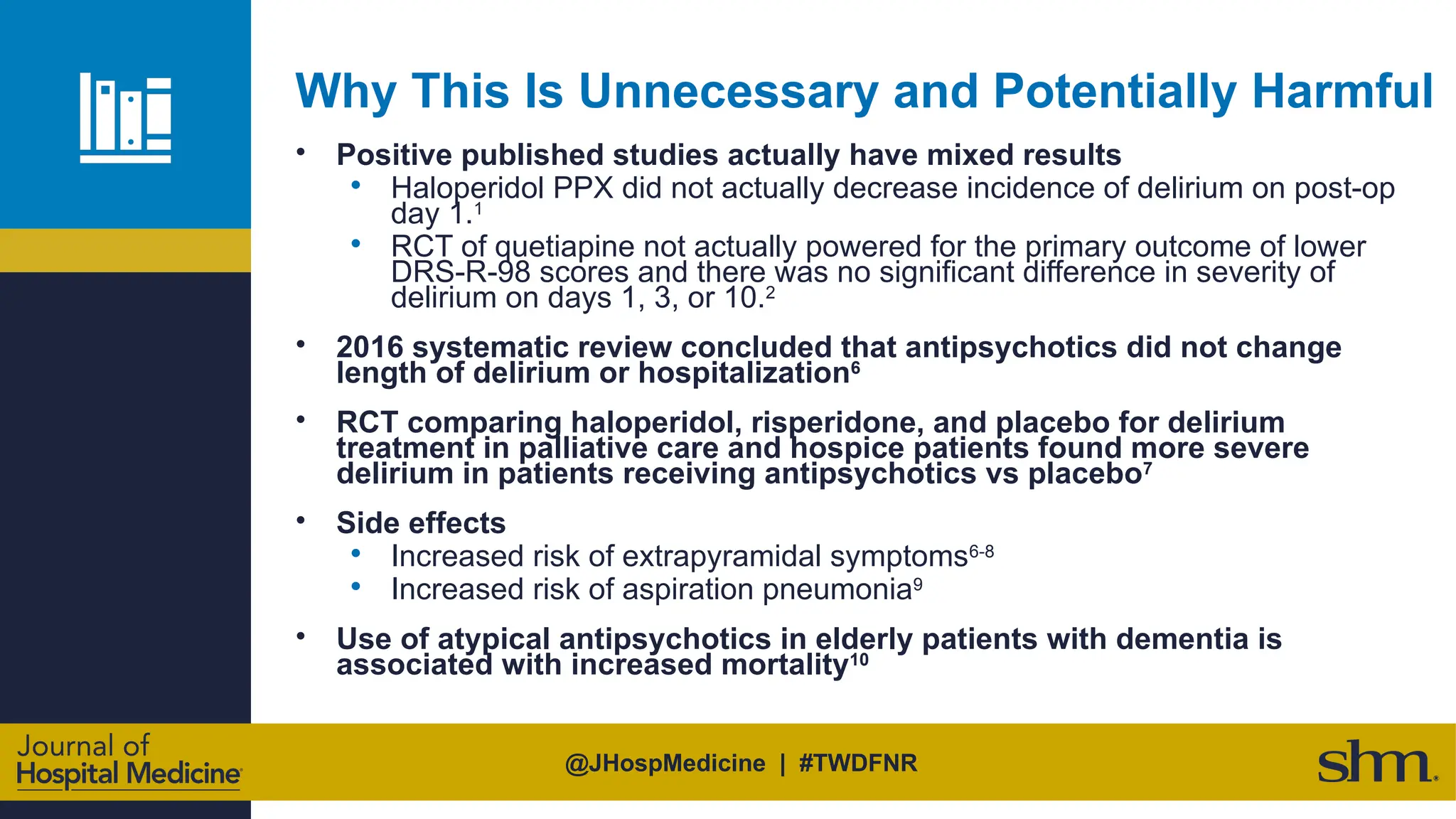
Why This Is Unnecessary and Potentially Harmful
• Positive published studies actually have mixed results
• Haloperidol PPX did not actually decrease incidence of delirium on post-op
day 1.1
• RCT of quetiapine not actually powered for the primary outcome of lower
DRS-R-98 scores and there was no significant difference in severity of
delirium on days 1, 3, or 10.2
• 2016 systematic review concluded that antipsychotics did not change
length of delirium or hospitalization6
• RCT comparing haloperidol, risperidone, and placebo for delirium
treatment in palliative care and hospice patients found more severe
delirium in patients receiving antipsychotics vs placebo7
• Side effects
• Increased risk of extrapyramidal symptoms6-8
• Increased risk of aspiration pneumonia9
• Use of atypical antipsychotics in elderly patients with dementia is
associated with increased mortality10
@JHospMedicine | #TWDFNR
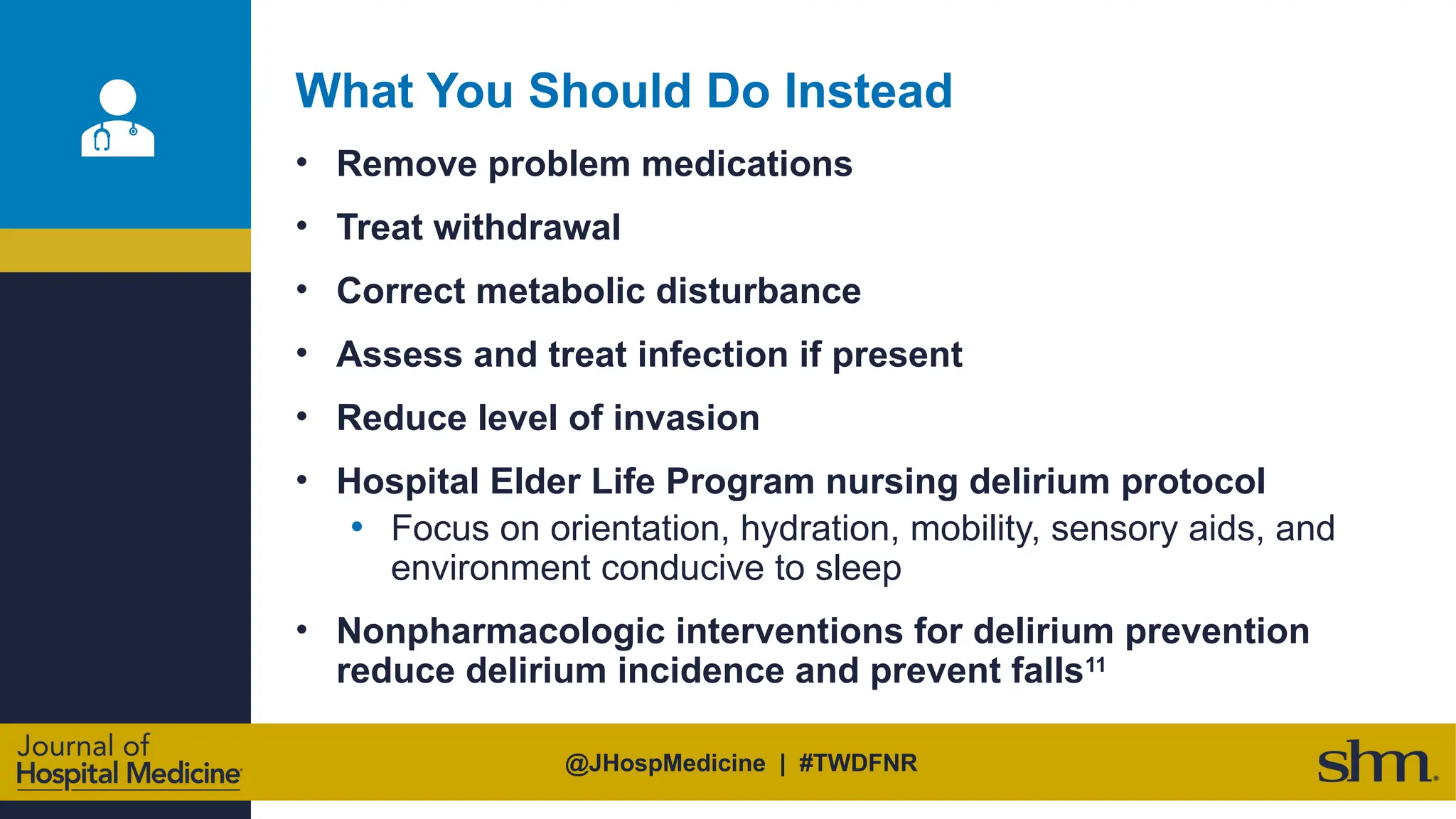
What You Should Do Instead
• Remove problem medications
• Treat withdrawal
• Correct metabolic disturbance
• Assess and treat infection if present
• Reduce level of invasion
• Hospital Elder Life Program nursing delirium protocol
• Focus on orientation, hydration, mobility, sensory aids, and
environment conducive to sleep
• Nonpharmacologic interventions for delirium prevention
reduce delirium incidence and prevent falls11
@JHospMedicine | #TWDFNR
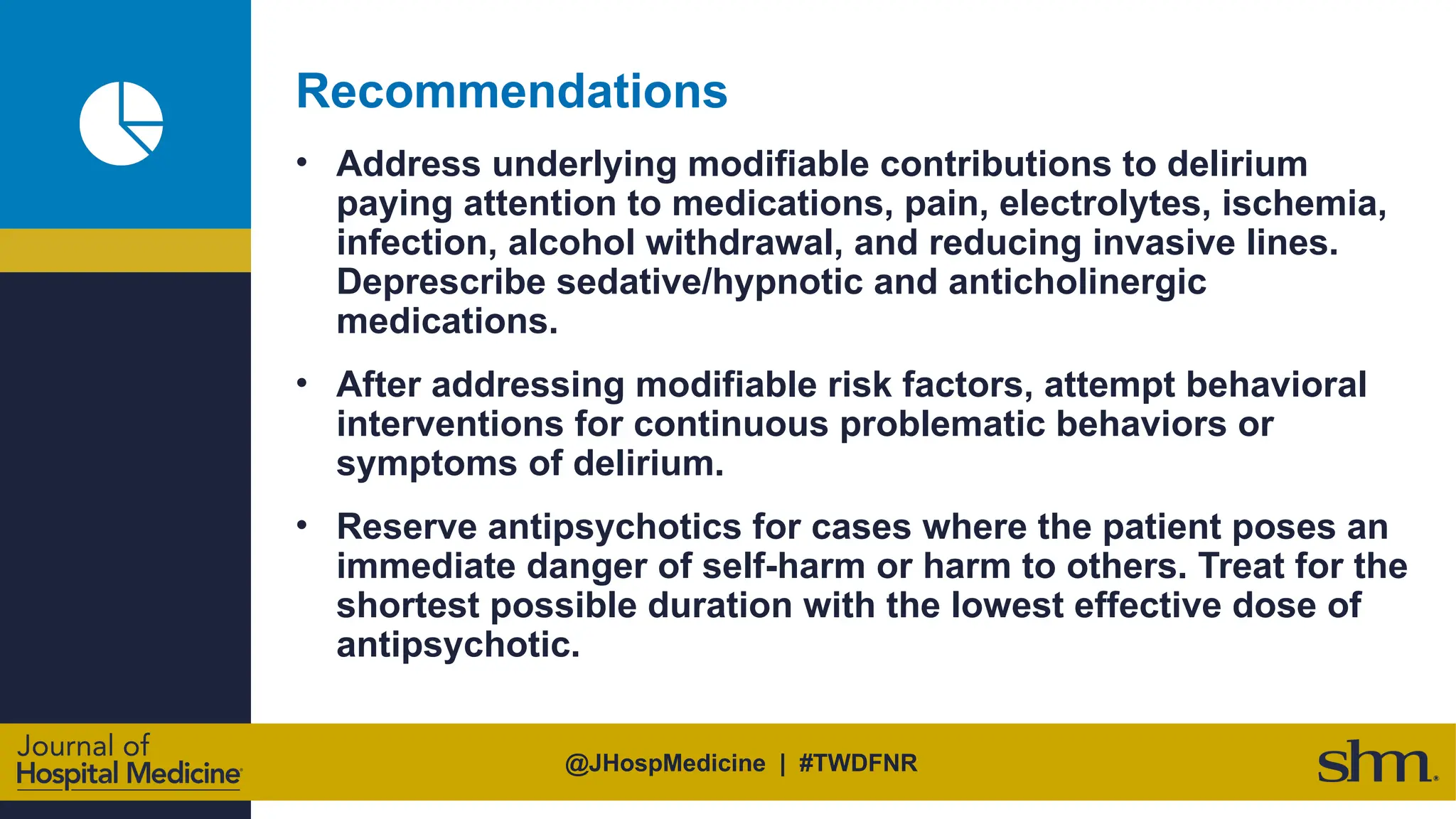
Recommendations
• Address underlying modifiable contributions to delirium
paying attention to medications, pain, electrolytes, ischemia,
infection, alcohol withdrawal, and reducing invasive lines.
Deprescribe sedative/hypnotic and anticholinergic
medications.
• After addressing modifiable risk factors, attempt behavioral
interventions for continuous problematic behaviors or
symptoms of delirium.
• Reserve antipsychotics for cases where the patient poses an
immediate danger of self-harm or harm to others. Treat for the
shortest possible duration with the lowest effective dose of
antipsychotic.
@JHospMedicine | #TWDFNR
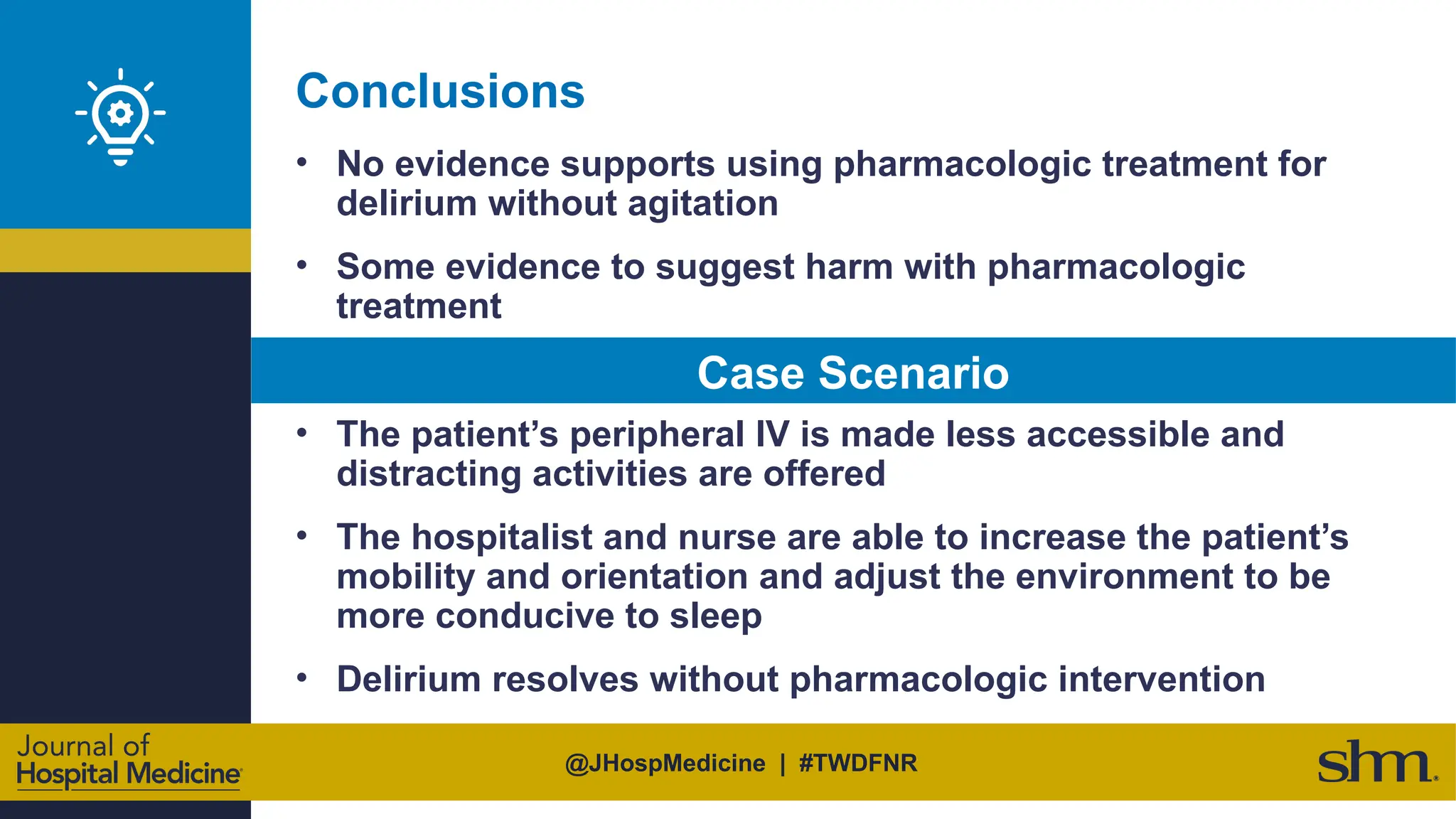
Conclusions
• No evidence supports using pharmacologic treatment for
delirium without agitation
• Some evidence to suggest harm with pharmacologic
treatment
• The patient’s peripheral IV is made less accessible and
distracting activities are offered
• The hospitalist and nurse are able to increase the patient’s
mobility and orientation and adjust the environment to be
more conducive to sleep
• Delirium resolves without pharmacologic intervention
Case Scenario
@JHospMedicine | #TWDFNR
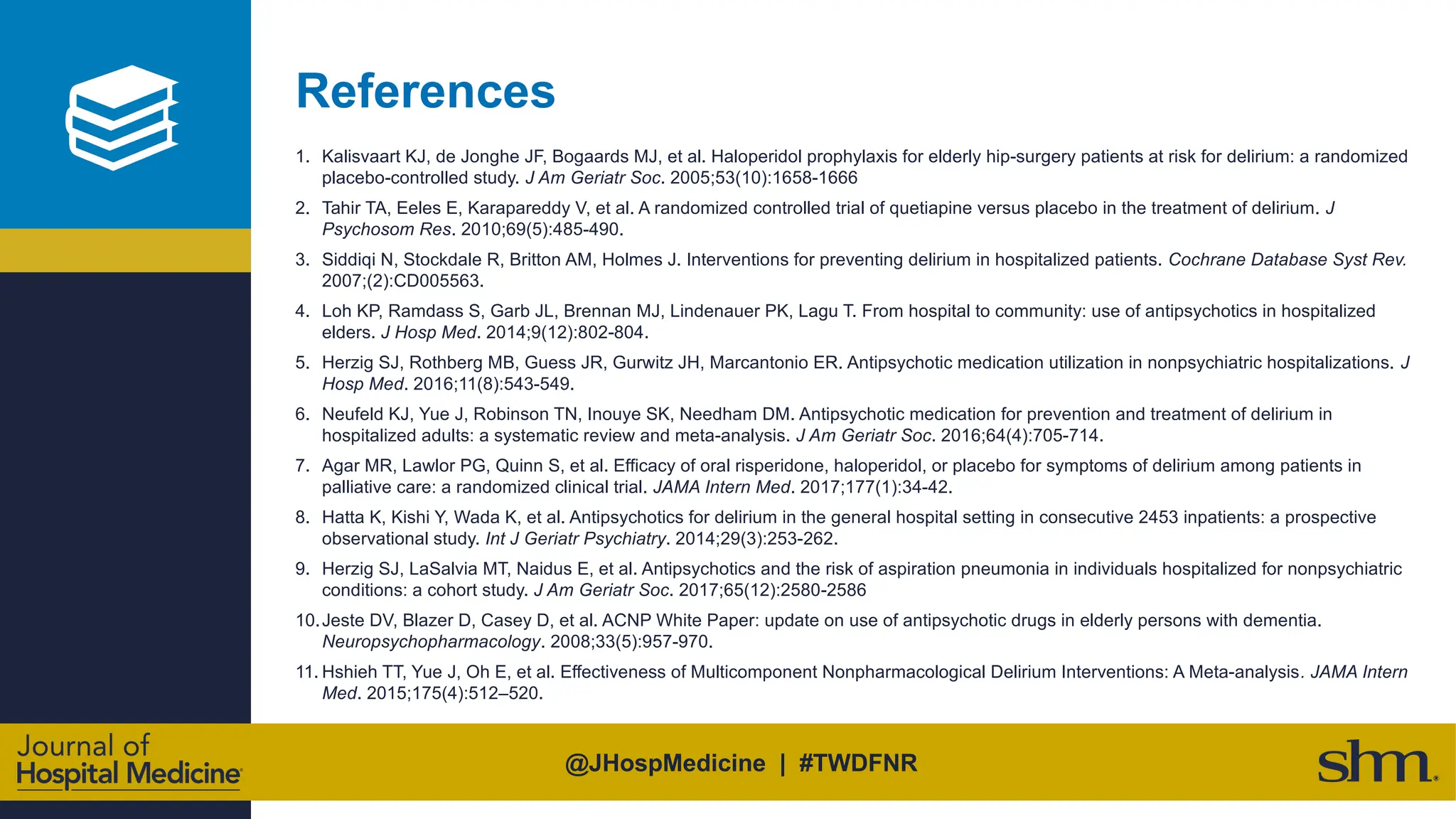
References
1. Kalisvaart KJ, de Jonghe JF, Bogaards MJ, et al. Haloperidol prophylaxis for elderly hip-surgery patients at risk for delirium: a randomized
placebo-controlled study. J Am Geriatr Soc. 2005;53(10):1658-1666
2. Tahir TA, Eeles E, Karapareddy V, et al. A randomized controlled trial of quetiapine versus placebo in the treatment of delirium. J
Psychosom Res. 2010;69(5):485-490.
3. Siddiqi N, Stockdale R, Britton AM, Holmes J. Interventions for preventing delirium in hospitalized patients. Cochrane Database Syst Rev.
2007;(2):CD005563.
4. Loh KP, Ramdass S, Garb JL, Brennan MJ, Lindenauer PK, Lagu T. From hospital to community: use of antipsychotics in hospitalized
elders. J Hosp Med. 2014;9(12):802-804.
5. Herzig SJ, Rothberg MB, Guess JR, Gurwitz JH, Marcantonio ER. Antipsychotic medication utilization in nonpsychiatric hospitalizations. J
Hosp Med. 2016;11(8):543-549.
6. Neufeld KJ, Yue J, Robinson TN, Inouye SK, Needham DM. Antipsychotic medication for prevention and treatment of delirium in
hospitalized adults: a systematic review and meta-analysis. J Am Geriatr Soc. 2016;64(4):705-714.
7. Agar MR, Lawlor PG, Quinn S, et al. Efficacy of oral risperidone, haloperidol, or placebo for symptoms of delirium among patients in
palliative care: a randomized clinical trial. JAMA Intern Med. 2017;177(1):34-42.
8. Hatta K, Kishi Y, Wada K, et al. Antipsychotics for delirium in the general hospital setting in consecutive 2453 inpatients: a prospective
observational study. Int J Geriatr Psychiatry. 2014;29(3):253-262.
9. Herzig SJ, LaSalvia MT, Naidus E, et al. Antipsychotics and the risk of aspiration pneumonia in individuals hospitalized for nonpsychiatric
conditions: a cohort study. J Am Geriatr Soc. 2017;65(12):2580-2586
10.Jeste DV, Blazer D, Casey D, et al. ACNP White Paper: update on use of antipsychotic drugs in elderly persons with dementia.
Neuropsychopharmacology. 2008;33(5):957-970.
11. Hshieh TT, Yue J, Oh E, et al. Effectiveness of Multicomponent Nonpharmacological Delirium Interventions: A Meta-analysis. JAMA Intern
Med. 2015;175(4):512–520.
@JHospMedicine | #TWDFNR
Citation
To cite this teaching tool:
@JHospMedicine | #TWDFNR

Use of Antipsychotic Medications in Patients with Delirium.ppt

  • 1.
    @JHospMedicine | #TWDFNR ChoosingWisely® : Things We Do for No Reason™ Use of Antipsychotic Medications in Patients with Delirium Based on Pahwa AK, Qureshi, I, Cumbler, E. Use of Antipsychotic Medications in Patients with Delirium. J Hosp Med. 2019;14(9):565-567.
  • 2.
    @JHospMedicine | #TWDFNR ClinicalScenario • 86-year old woman with mild dementia falls and fractures hip, requiring open reduction and internal fixation. • On the first post-op day, she sleeps most of the day. • Overnight she has visual hallucinations and picks at tape on her peripheral IV, causing it to fall out twice. • On exam she has normal vitals but is hypoactive, inattentive, and is unable to say the day of the week or count months backward. • Nursing requests haloperidol for delirium.
  • 3.
    @JHospMedicine | #TWDFNR WhyYou Might Think This is Necessary • Haloperidol PPx prior to surgery reduced delirium severity and duration (but was a small trial)1 • RCT of 42 patients on medical floor showed 55% faster decline in DRS-R-98 in patients treated with quetiapine vs placebo2 • 2007 Cochrane review - antipsychotics may reduce delirium severity and duration as well as length of hospital stay in hip surgery3 • 10-30% of patients receive antipsychotics at some point during hospitalization, usually for delirium4,5
  • 4.
    @JHospMedicine | #TWDFNR WhyThis Is Unnecessary and Potentially Harmful • Positive published studies actually have mixed results • Haloperidol PPX did not actually decrease incidence of delirium on post-op day 1.1 • RCT of quetiapine not actually powered for the primary outcome of lower DRS-R-98 scores and there was no significant difference in severity of delirium on days 1, 3, or 10.2 • 2016 systematic review concluded that antipsychotics did not change length of delirium or hospitalization6 • RCT comparing haloperidol, risperidone, and placebo for delirium treatment in palliative care and hospice patients found more severe delirium in patients receiving antipsychotics vs placebo7 • Side effects • Increased risk of extrapyramidal symptoms6-8 • Increased risk of aspiration pneumonia9 • Use of atypical antipsychotics in elderly patients with dementia is associated with increased mortality10
  • 5.
    @JHospMedicine | #TWDFNR WhatYou Should Do Instead • Remove problem medications • Treat withdrawal • Correct metabolic disturbance • Assess and treat infection if present • Reduce level of invasion • Hospital Elder Life Program nursing delirium protocol • Focus on orientation, hydration, mobility, sensory aids, and environment conducive to sleep • Nonpharmacologic interventions for delirium prevention reduce delirium incidence and prevent falls11
  • 6.
    @JHospMedicine | #TWDFNR Recommendations •Address underlying modifiable contributions to delirium paying attention to medications, pain, electrolytes, ischemia, infection, alcohol withdrawal, and reducing invasive lines. Deprescribe sedative/hypnotic and anticholinergic medications. • After addressing modifiable risk factors, attempt behavioral interventions for continuous problematic behaviors or symptoms of delirium. • Reserve antipsychotics for cases where the patient poses an immediate danger of self-harm or harm to others. Treat for the shortest possible duration with the lowest effective dose of antipsychotic.
  • 7.
    @JHospMedicine | #TWDFNR Conclusions •No evidence supports using pharmacologic treatment for delirium without agitation • Some evidence to suggest harm with pharmacologic treatment • The patient’s peripheral IV is made less accessible and distracting activities are offered • The hospitalist and nurse are able to increase the patient’s mobility and orientation and adjust the environment to be more conducive to sleep • Delirium resolves without pharmacologic intervention Case Scenario
  • 8.
    @JHospMedicine | #TWDFNR References 1.Kalisvaart KJ, de Jonghe JF, Bogaards MJ, et al. Haloperidol prophylaxis for elderly hip-surgery patients at risk for delirium: a randomized placebo-controlled study. J Am Geriatr Soc. 2005;53(10):1658-1666 2. Tahir TA, Eeles E, Karapareddy V, et al. A randomized controlled trial of quetiapine versus placebo in the treatment of delirium. J Psychosom Res. 2010;69(5):485-490. 3. Siddiqi N, Stockdale R, Britton AM, Holmes J. Interventions for preventing delirium in hospitalized patients. Cochrane Database Syst Rev. 2007;(2):CD005563. 4. Loh KP, Ramdass S, Garb JL, Brennan MJ, Lindenauer PK, Lagu T. From hospital to community: use of antipsychotics in hospitalized elders. J Hosp Med. 2014;9(12):802-804. 5. Herzig SJ, Rothberg MB, Guess JR, Gurwitz JH, Marcantonio ER. Antipsychotic medication utilization in nonpsychiatric hospitalizations. J Hosp Med. 2016;11(8):543-549. 6. Neufeld KJ, Yue J, Robinson TN, Inouye SK, Needham DM. Antipsychotic medication for prevention and treatment of delirium in hospitalized adults: a systematic review and meta-analysis. J Am Geriatr Soc. 2016;64(4):705-714. 7. Agar MR, Lawlor PG, Quinn S, et al. Efficacy of oral risperidone, haloperidol, or placebo for symptoms of delirium among patients in palliative care: a randomized clinical trial. JAMA Intern Med. 2017;177(1):34-42. 8. Hatta K, Kishi Y, Wada K, et al. Antipsychotics for delirium in the general hospital setting in consecutive 2453 inpatients: a prospective observational study. Int J Geriatr Psychiatry. 2014;29(3):253-262. 9. Herzig SJ, LaSalvia MT, Naidus E, et al. Antipsychotics and the risk of aspiration pneumonia in individuals hospitalized for nonpsychiatric conditions: a cohort study. J Am Geriatr Soc. 2017;65(12):2580-2586 10.Jeste DV, Blazer D, Casey D, et al. ACNP White Paper: update on use of antipsychotic drugs in elderly persons with dementia. Neuropsychopharmacology. 2008;33(5):957-970. 11. Hshieh TT, Yue J, Oh E, et al. Effectiveness of Multicomponent Nonpharmacological Delirium Interventions: A Meta-analysis. JAMA Intern Med. 2015;175(4):512–520.
  • 9.
    @JHospMedicine | #TWDFNR Citation Tocite this teaching tool:
  • 10.