POWER SYSTEM MODELING
UNIT 4 & 5
EXCITATION SYSTEM &
EXCITATION SYSTEM
MODELING
Represented By:
CHAITRA NITIN PANAT
EPS M-Tech 1 sem
Content:
1. Alternator
2.Excitation System
3.Function Of Excitation System
4.Types Of Excitation System
5.Description Of Each Type
6.Conclusion
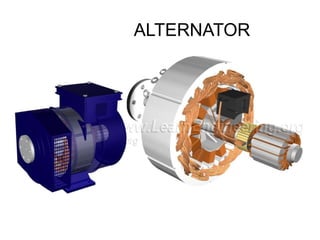
ALTERNATOR
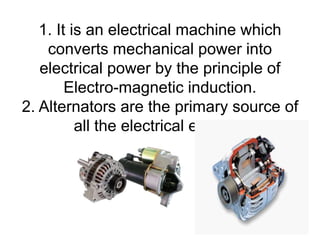
1. It is an electrical machine which
converts mechanical power into
electrical power by the principle of
Electro-magnetic induction.
2. Alternators are the primary source of
all the electrical energy .
EXCITATION SYSTEM
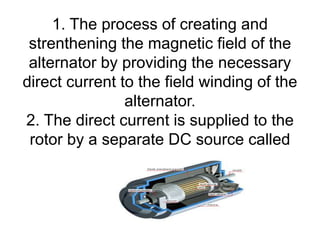
1. The process of creating and
strenthening the magnetic field of the
alternator by providing the necessary
direct current to the field winding of the
alternator.
2. The direct current is supplied to the
rotor by a separate DC source called
as Exciter.
Function Of Excitation System
1.Supply direct current to the field
winding for creating magnetic field.
2. Control Voltage.
3. Control Reactive Power.
4. Perform Protective Function.
TYPES OF EXCITATION
SYSTEM
1.DC Excitation System
2. AC Excitation System
1.Brushless Excitation System
2. Rotating Thyristor Excitation
System
3. Static Excitation System
DC EXCITATION SYSTEM
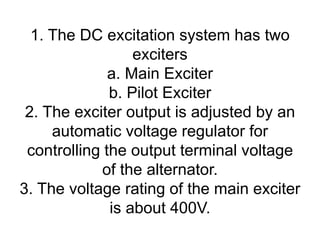
1. The DC excitation system has two
exciters
a. Main Exciter
b. Pilot Exciter
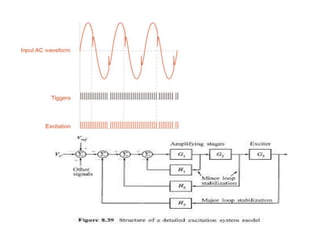
2. The exciter output is adjusted by an
automatic voltage regulator for
controlling the output terminal voltage
of the alternator.
3. The voltage rating of the main exciter
is about 400V.
ADVANTAGES:
1. It is more reliable
2. It is compact in size
3. It can be brought anywhere due to its
low weight.
DISADVANTAGES:
1.High cost
2. Not much preferrable
3.low efficient as compared to other
excitation system
AC EXCITATION SYSTEM
1. It consist of AC generator and
Thyristor rectifier bridge directly
connected to the alternator shaft or
driven by separate motor.
A. Brushless Excitation System
1. Main exciter is separately excited.
B. Rotating Thyristor Excitation System
1. Main excxiter is self excited.
Block Diagram:
BRUSHLESS EXCITATION
SYSTEM
1. Elimination of brush and slip rings.
2. Less maintenance.
3. Fast response time.
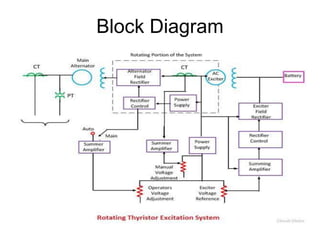
Block Diagram
ROTATING THYRISTOR TYPE
EXCITATION SYSTEM
1. This system consists an AC exciter,
stationary field and a rotating armature.
2. The output of the exciter is rectified
by a full wave thyristor bridge rectifier
circuit and is supplied to the main
alternator field winding.
Block Diagram
STATIC EXCITATION SYSTEM
1. There is no rotating part in static
excitation system.
2. So no windage loss.
3. Small size.
CONCLUSION:
Selection of excitation system depends
on various factors:
1. Alternator Power
2. Alternator Size
3. Alternator Speed
4. Maintenance Cost
THANK YOU

Power System Modeling Presentation

  • 1.
    POWER SYSTEM MODELING UNIT4 & 5 EXCITATION SYSTEM & EXCITATION SYSTEM MODELING Represented By: CHAITRA NITIN PANAT EPS M-Tech 1 sem
  • 2.
    Content: 1. Alternator 2.Excitation System 3.FunctionOf Excitation System 4.Types Of Excitation System 5.Description Of Each Type 6.Conclusion
  • 3.
  • 4.
    1. It isan electrical machine which converts mechanical power into electrical power by the principle of Electro-magnetic induction. 2. Alternators are the primary source of all the electrical energy .
  • 5.
  • 6.
    1. The processof creating and strenthening the magnetic field of the alternator by providing the necessary direct current to the field winding of the alternator. 2. The direct current is supplied to the rotor by a separate DC source called as Exciter.
  • 8.
    Function Of ExcitationSystem 1.Supply direct current to the field winding for creating magnetic field. 2. Control Voltage. 3. Control Reactive Power. 4. Perform Protective Function.
  • 9.
    TYPES OF EXCITATION SYSTEM 1.DCExcitation System 2. AC Excitation System 1.Brushless Excitation System 2. Rotating Thyristor Excitation System 3. Static Excitation System
  • 10.
  • 11.
    1. The DCexcitation system has two exciters a. Main Exciter b. Pilot Exciter 2. The exciter output is adjusted by an automatic voltage regulator for controlling the output terminal voltage of the alternator. 3. The voltage rating of the main exciter is about 400V.
  • 12.
    ADVANTAGES: 1. It ismore reliable 2. It is compact in size 3. It can be brought anywhere due to its low weight.
  • 13.
    DISADVANTAGES: 1.High cost 2. Notmuch preferrable 3.low efficient as compared to other excitation system
  • 14.
  • 15.
    1. It consistof AC generator and Thyristor rectifier bridge directly connected to the alternator shaft or driven by separate motor. A. Brushless Excitation System 1. Main exciter is separately excited. B. Rotating Thyristor Excitation System 1. Main excxiter is self excited.
  • 16.
  • 17.
  • 18.
    1. Elimination ofbrush and slip rings. 2. Less maintenance. 3. Fast response time.
  • 19.
  • 20.
    ROTATING THYRISTOR TYPE EXCITATIONSYSTEM 1. This system consists an AC exciter, stationary field and a rotating armature. 2. The output of the exciter is rectified by a full wave thyristor bridge rectifier circuit and is supplied to the main alternator field winding.
  • 21.
  • 22.
    STATIC EXCITATION SYSTEM 1.There is no rotating part in static excitation system. 2. So no windage loss. 3. Small size.
  • 23.
    CONCLUSION: Selection of excitationsystem depends on various factors: 1. Alternator Power 2. Alternator Size 3. Alternator Speed 4. Maintenance Cost
  • 24.