Today in Science
You will Need:
1)Pencil/Pen, Colored Pencils, Highlighters
or Markers; Periodic Table – Pgs. 196-197
2)Power Notes – Bohr Model Drawings +
Density Review– 1 pages 2 sides –
Bookshelf = This is only Part 1
3)Log #2 – Update – Managers in charge
today
Reminders
1. End of the Quarter is Friday, May 28th
2. Minimum Days on Tuesday and
Thursday of this week– 12:10 Dismissal
3. Binder Check #2 – Due Wednesday
4. Power Notes- Bohr Model Drawings
Colored Pencils, Highlighters or Markers-
must highlight notes; Periodic Table
5. Review and Reflect on Page One Only
Bohr Model Drawings
The concept of elements has been around
since ancient times. We now know that each
element has its own unique number of
protons. Although each element can have a
varying amount of neutrons(isotope) or
electrons(ion), its basic
characteristics, properties and how it reacts
with other elements is basically the same.
Bohr Model Drawings
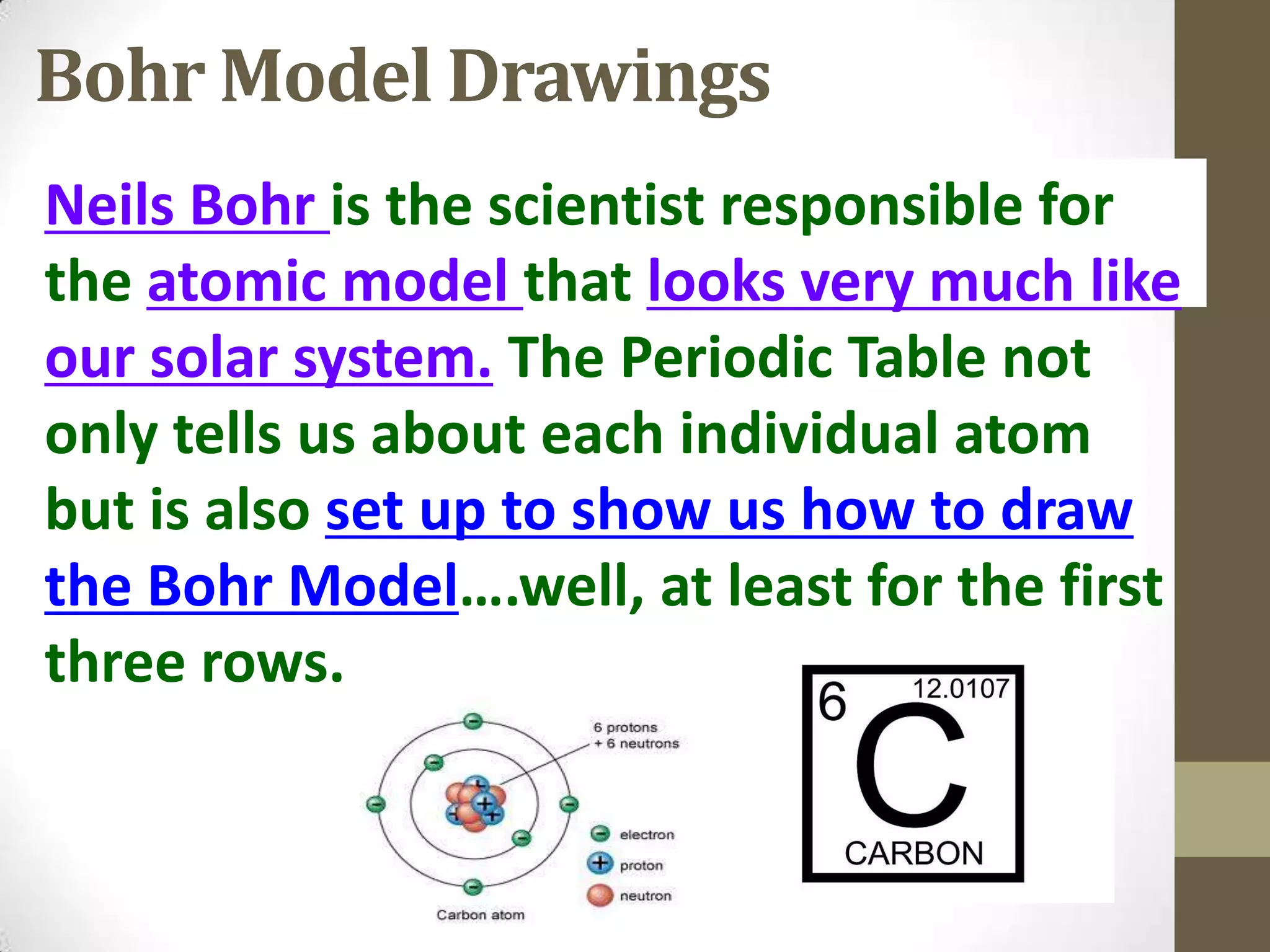
Neils Bohr is the scientist responsible for
the atomic model that looks very much like
our solar system. The Periodic Table not
only tells us about each individual atom
but is also set up to show us how to draw
the Bohr Model….well, at least for the first
three rows.
Bohr Model Drawings
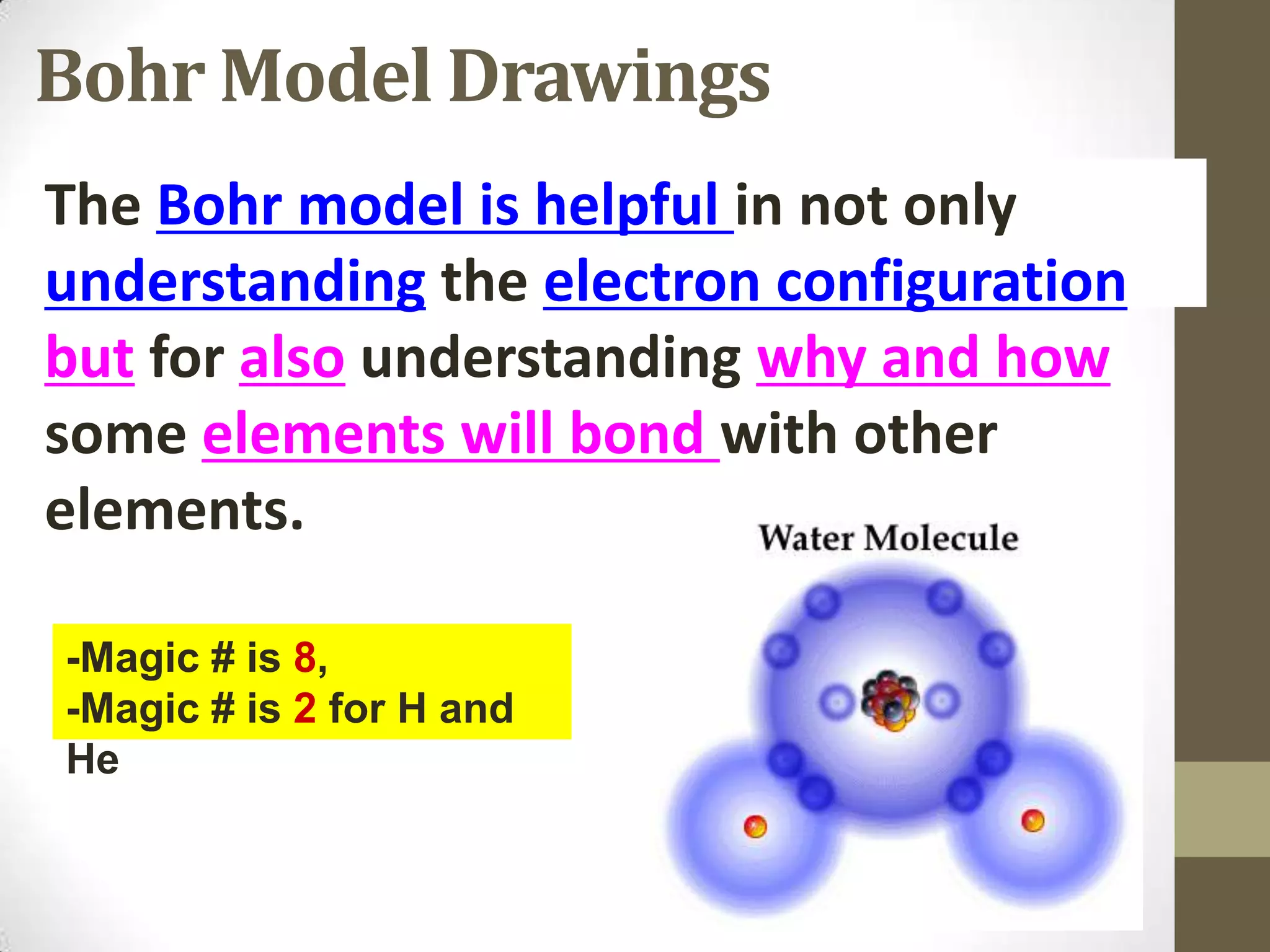
The Bohr model is helpful in not only
understanding the electron configuration
but for also understanding why and how
some elements will bond with other
elements.
-Magic # is 8,
-Magic # is 2 for H and
He
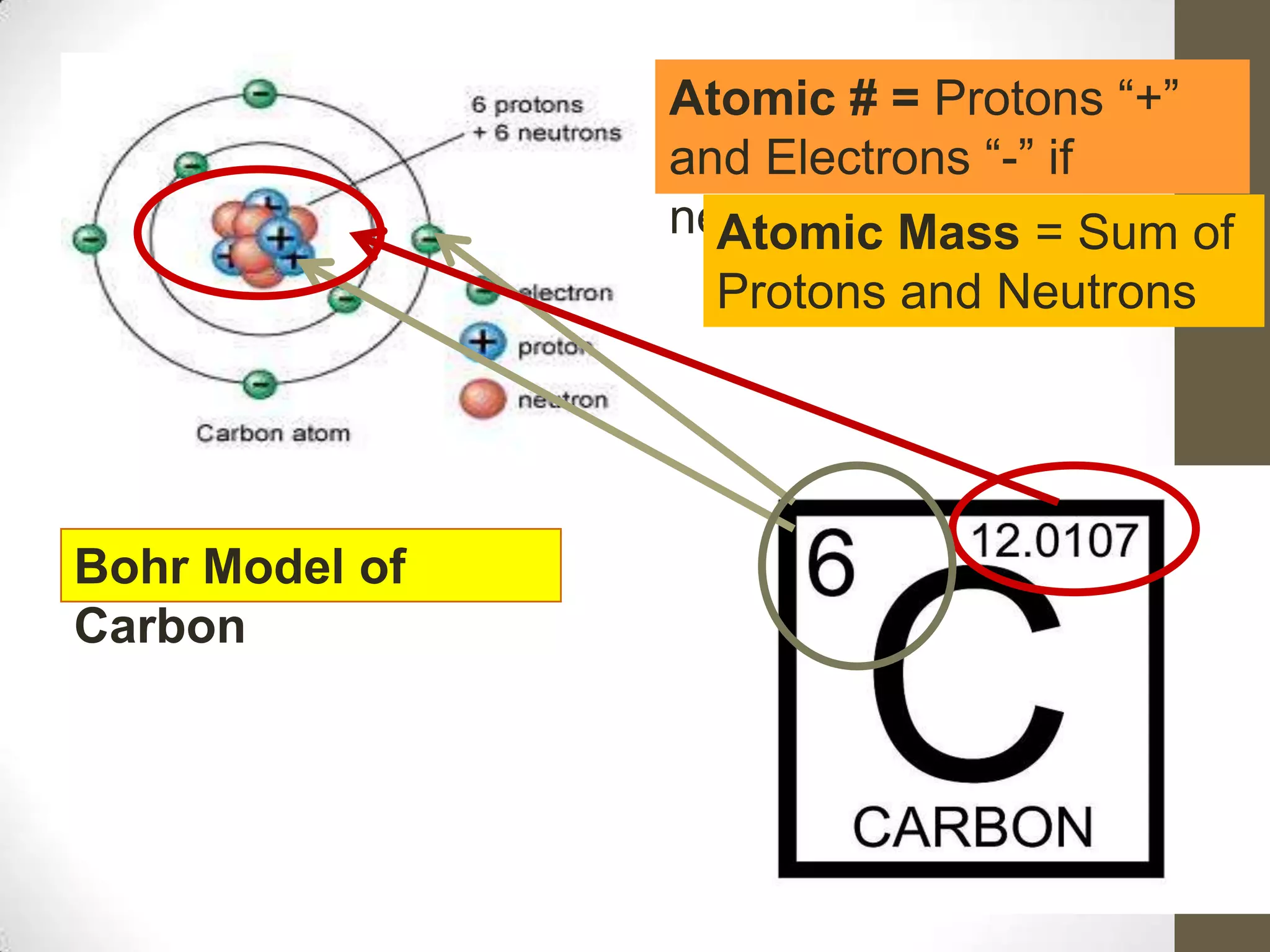
Bohr Model of
Carbon
Atomic # = Protons “+”
and Electrons “-” if
neutralAtomic Mass = Sum of
Protons and Neutrons
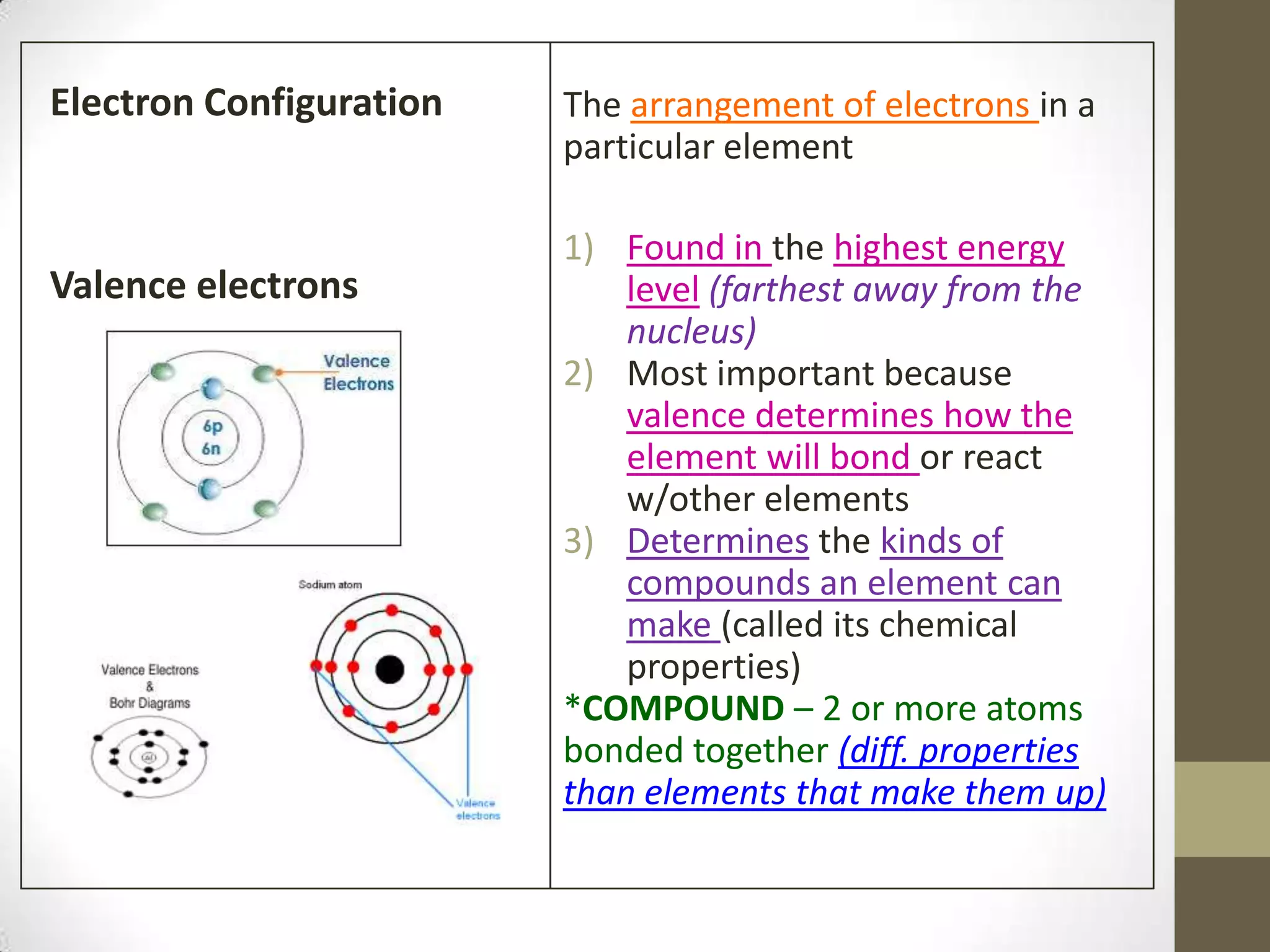
Electron Configuration
Valence electrons
The arrangement of electrons in a
particular element
1) Found in the highest energy
level (farthest away from the
nucleus)
2) Most important because
valence determines how the
element will bond or react
w/other elements
3) Determines the kinds of
compounds an element can
make (called its chemical
properties)
*COMPOUND – 2 or more atoms
bonded together (diff. properties
than elements that make them up)
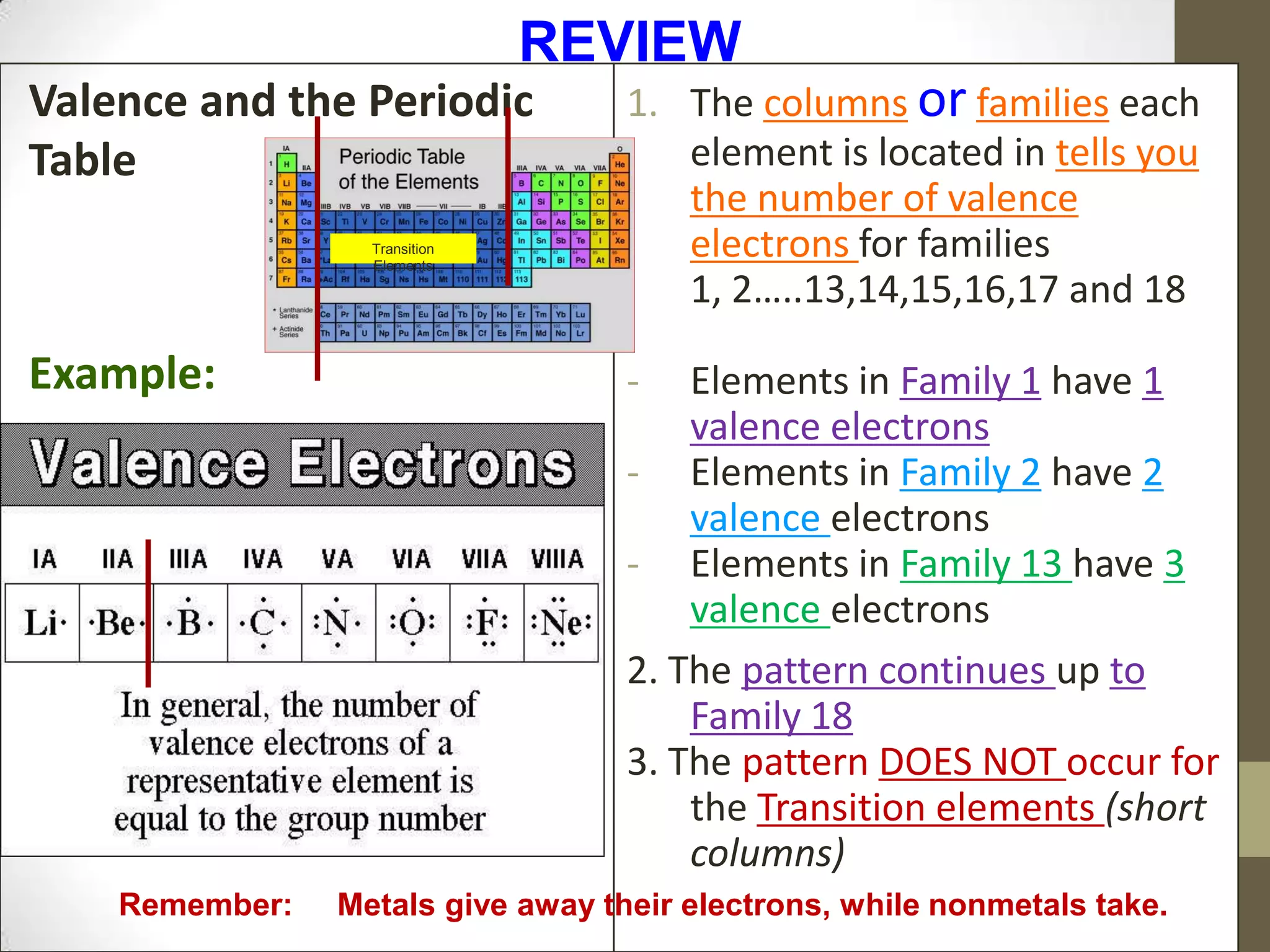
Valence and the Periodic
Table
Example:
1. The columns or families each
element is located in tells you
the number of valence
electrons for families
1, 2…..13,14,15,16,17 and 18
- Elements in Family 1 have 1
valence electrons
- Elements in Family 2 have 2
valence electrons
- Elements in Family 13 have 3
valence electrons
2. The pattern continues up to
Family 18
3. The pattern DOES NOT occur for
the Transition elements (short
columns)
Transition
Elements
REVIEW
Remember: Metals give away their electrons, while nonmetals take.
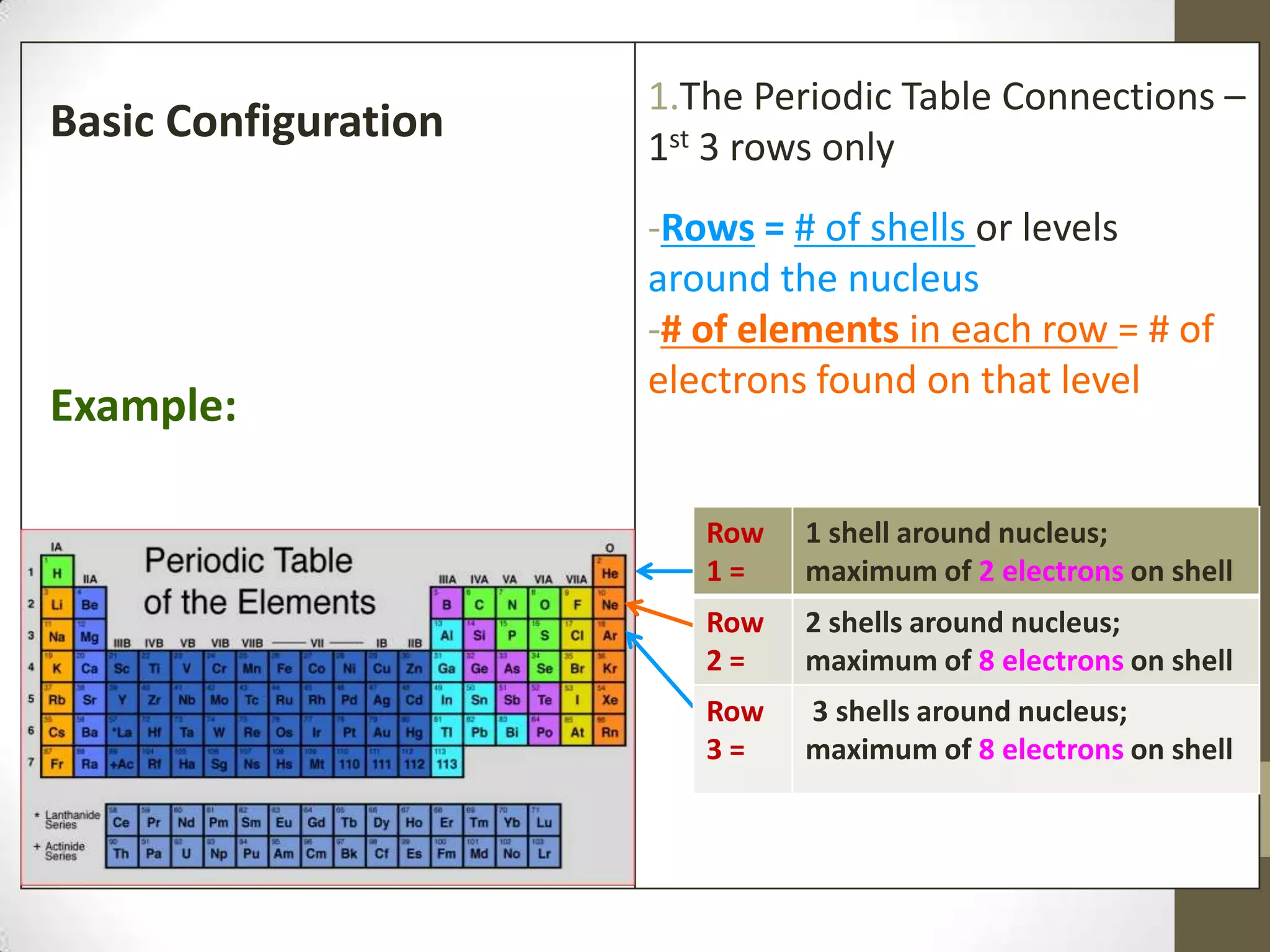
Basic Configuration
Example:
1.The Periodic Table Connections –
1st 3 rows only
-Rows = # of shells or levels
around the nucleus
-# of elements in each row = # of
electrons found on that level
Row
1 =
1 shell around nucleus;
maximum of 2 electrons on shell
Row
2 =
2 shells around nucleus;
maximum of 8 electrons on shell
Row
3 =
3 shells around nucleus;
maximum of 8 electrons on shell
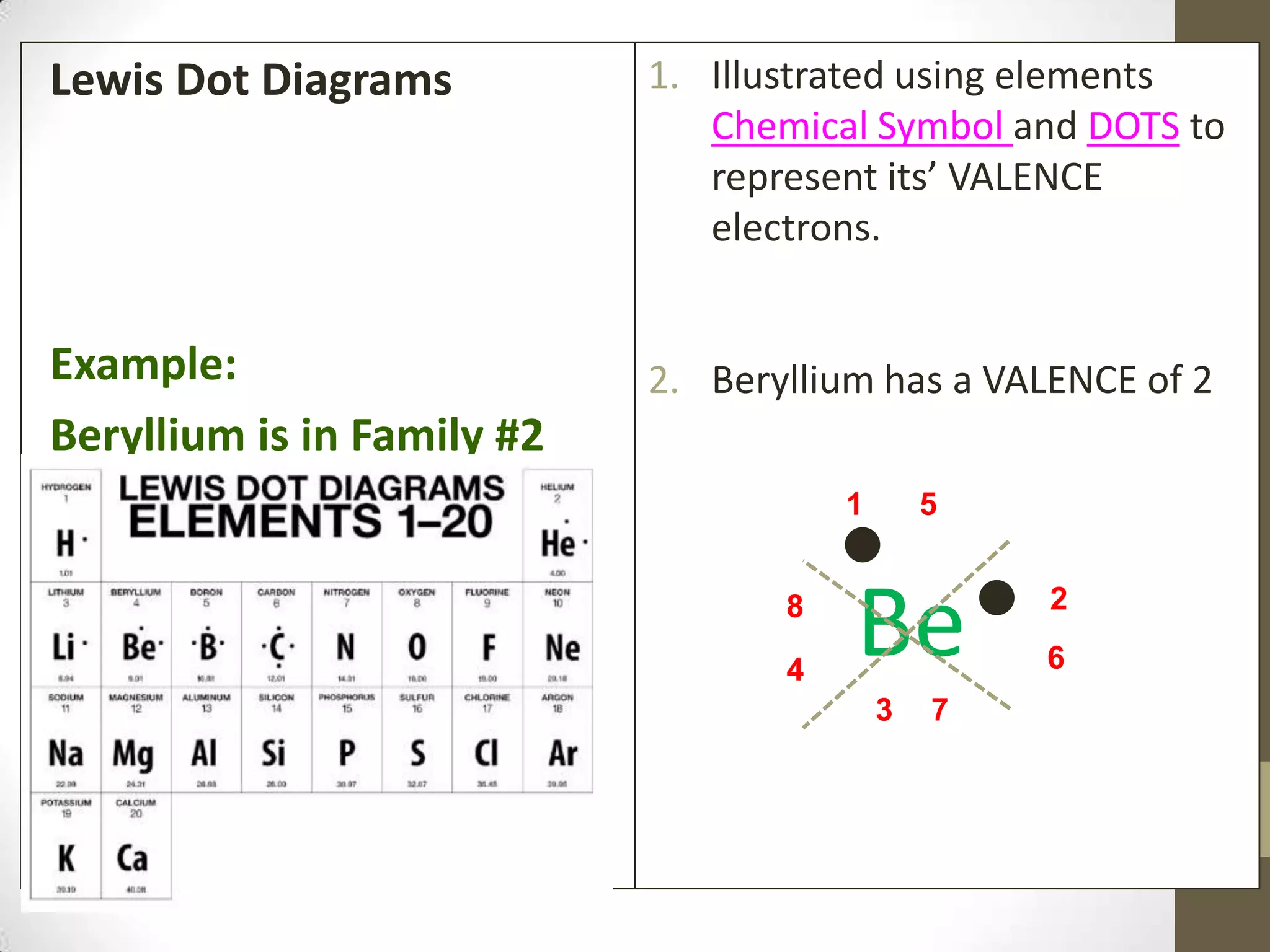
Lewis Dot Diagrams
Example:
Beryllium is in Family #2
1. Illustrated using elements
Chemical Symbol and DOTS to
represent its’ VALENCE
electrons.
2. Beryllium has a VALENCE of 2
Be
1
2
3
4
5
6
7
8
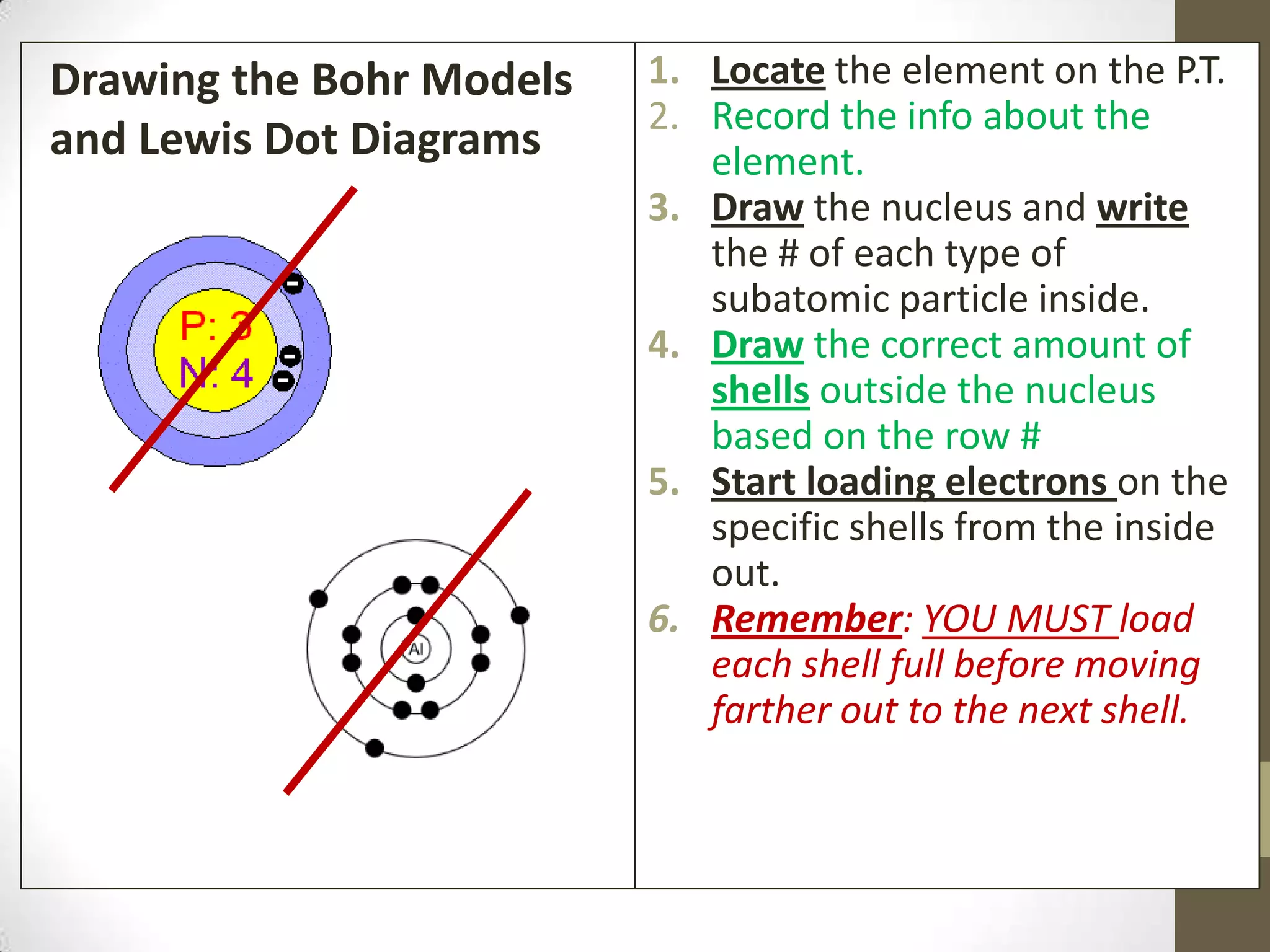
Drawing the Bohr Models
and Lewis Dot Diagrams
1. Locate the element on the P.T.
2. Record the info about the
element.
3. Draw the nucleus and write
the # of each type of
subatomic particle inside.
4. Draw the correct amount of
shells outside the nucleus
based on the row #
5. Start loading electrons on the
specific shells from the inside
out.
6. Remember: YOU MUST load
each shell full before moving
farther out to the next shell.
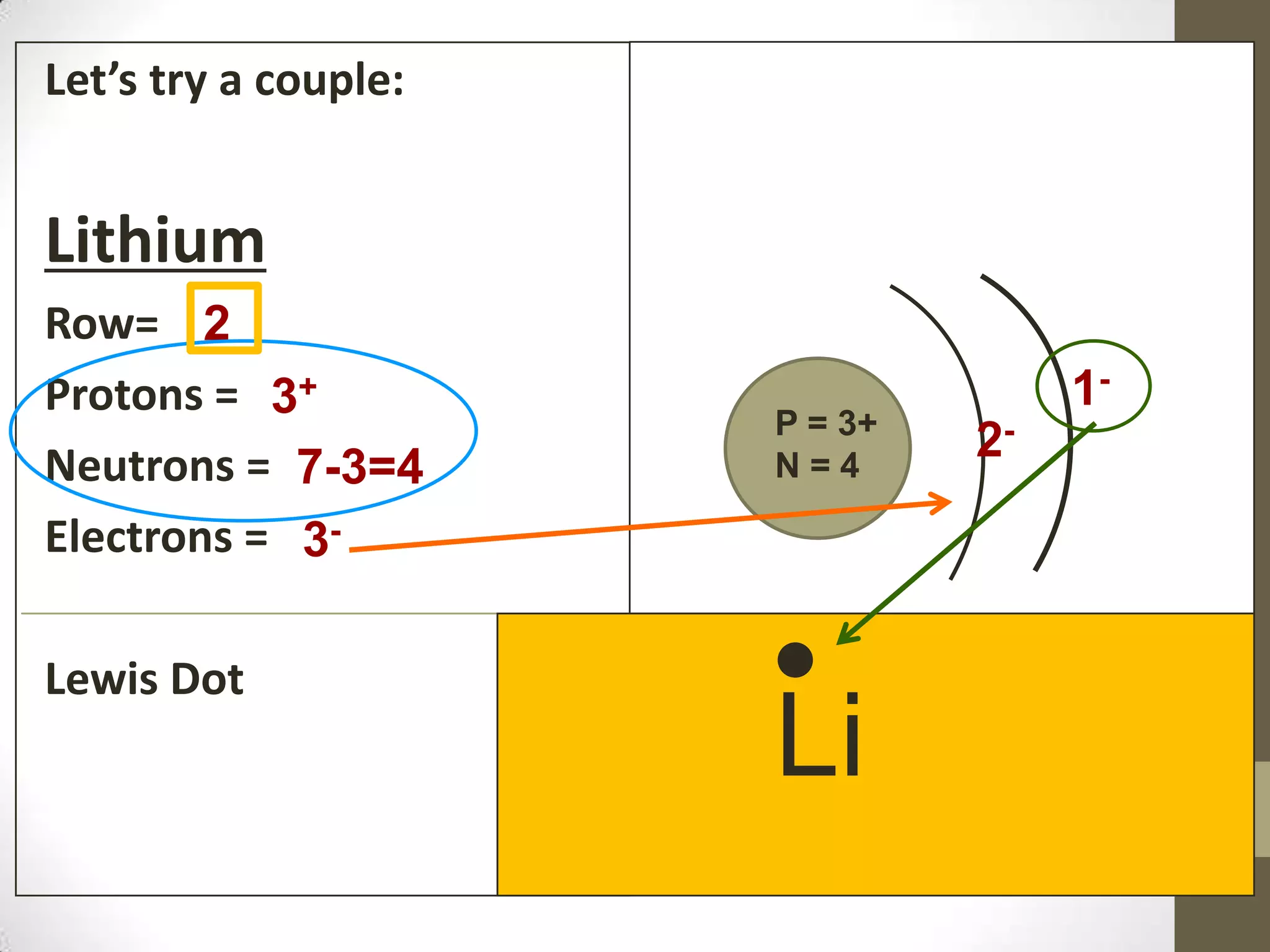
Let’s try a couple:
Lithium
Row=
Protons =
Neutrons =
Electrons =
Lewis Dot
2
3+
7-3=4
3-
P = 3+
N = 4
2-
1-
Li
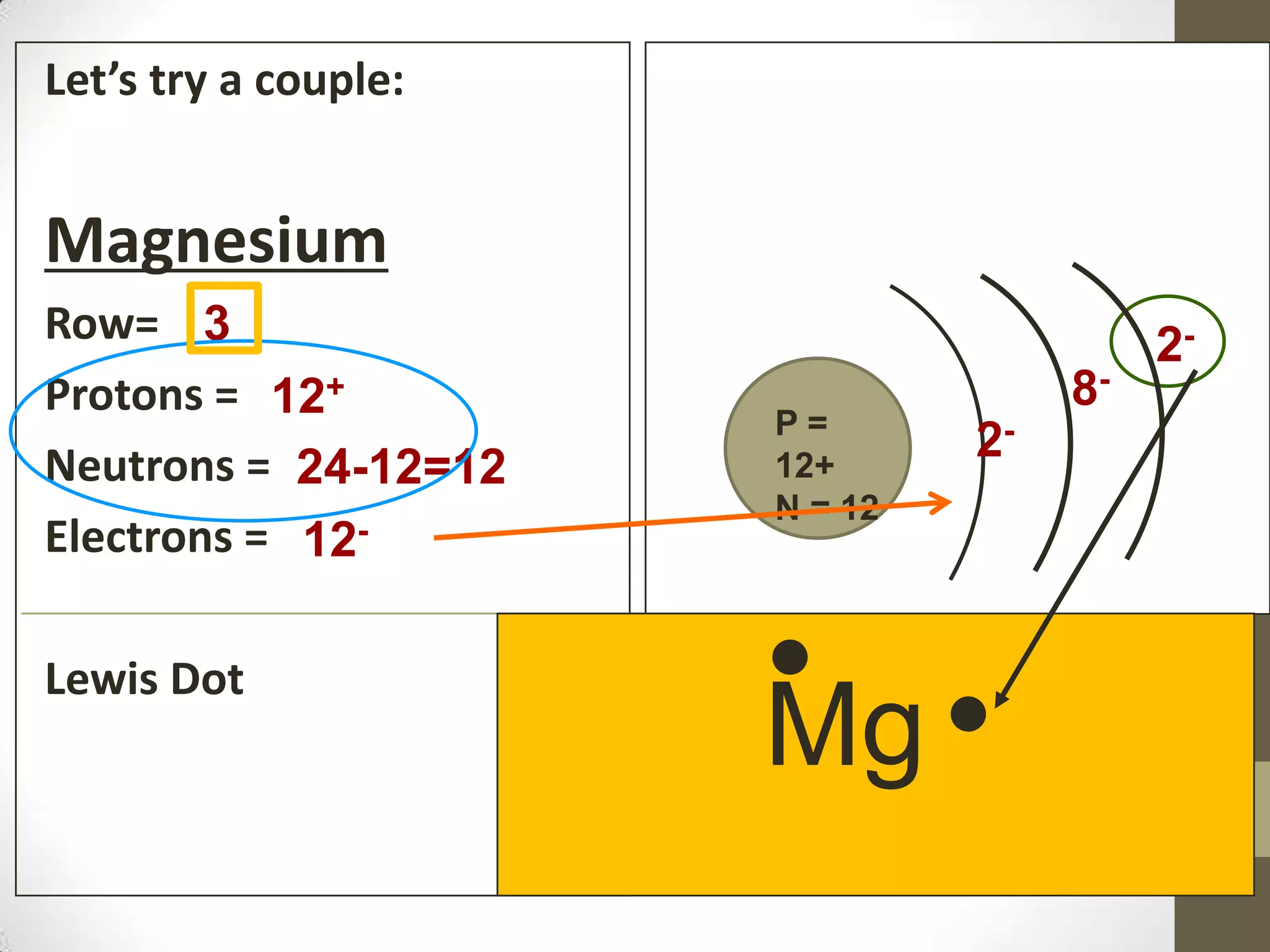
Let’s try a couple:
Magnesium
Row=
Protons =
Neutrons =
Electrons =
Lewis Dot
3
12+
24-12=12
12-
P =
12+
N = 12
2-
8-
Mg
2-
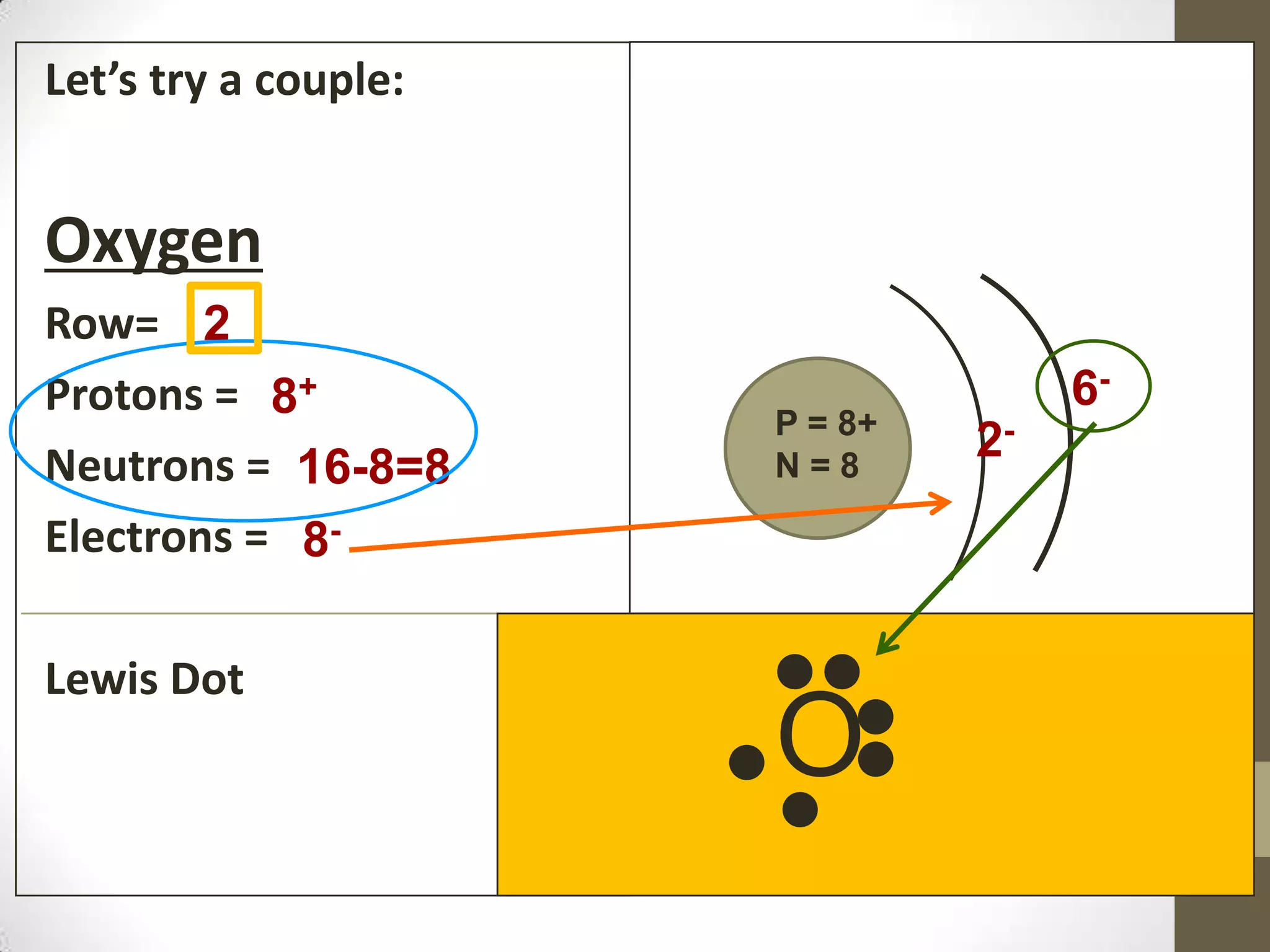
Let’s try a couple:
Oxygen
Row=
Protons =
Neutrons =
Electrons =
Lewis Dot
2
8+
16-8=8
8-
P = 8+
N = 8
2-
6-
O
Homework
1) Review and Reflect on
Page one of Power Notes –
Bohr Model Drawings
2)Minimum Day tomorrow –
Per. 1,3,4,5,7
3)Binder Check #2- Due
Wed.

Power Notes Bohr Models & Lewis Dot- day 1

  • 1.
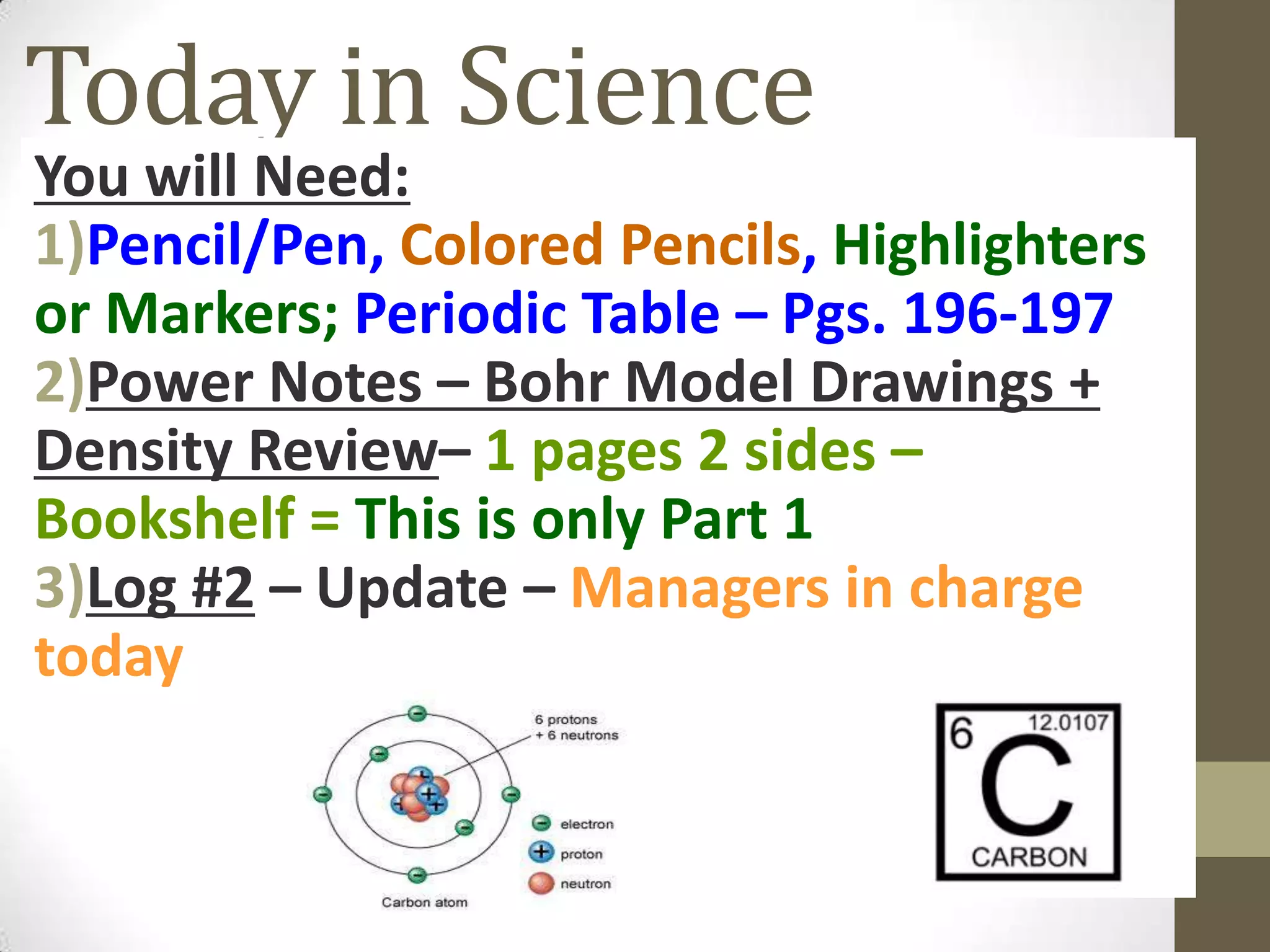
    Today in Science Youwill Need: 1)Pencil/Pen, Colored Pencils, Highlighters or Markers; Periodic Table – Pgs. 196-197 2)Power Notes – Bohr Model Drawings + Density Review– 1 pages 2 sides – Bookshelf = This is only Part 1 3)Log #2 – Update – Managers in charge today
  • 2.
    Reminders 1. End ofthe Quarter is Friday, May 28th 2. Minimum Days on Tuesday and Thursday of this week– 12:10 Dismissal 3. Binder Check #2 – Due Wednesday 4. Power Notes- Bohr Model Drawings Colored Pencils, Highlighters or Markers- must highlight notes; Periodic Table 5. Review and Reflect on Page One Only
  • 3.
    Bohr Model Drawings Theconcept of elements has been around since ancient times. We now know that each element has its own unique number of protons. Although each element can have a varying amount of neutrons(isotope) or electrons(ion), its basic characteristics, properties and how it reacts with other elements is basically the same.
  • 4.
    Bohr Model Drawings NeilsBohr is the scientist responsible for the atomic model that looks very much like our solar system. The Periodic Table not only tells us about each individual atom but is also set up to show us how to draw the Bohr Model….well, at least for the first three rows.
  • 5.
    Bohr Model Drawings TheBohr model is helpful in not only understanding the electron configuration but for also understanding why and how some elements will bond with other elements. -Magic # is 8, -Magic # is 2 for H and He
  • 6.
    Bohr Model of Carbon Atomic# = Protons “+” and Electrons “-” if neutralAtomic Mass = Sum of Protons and Neutrons
  • 7.
    Electron Configuration Valence electrons Thearrangement of electrons in a particular element 1) Found in the highest energy level (farthest away from the nucleus) 2) Most important because valence determines how the element will bond or react w/other elements 3) Determines the kinds of compounds an element can make (called its chemical properties) *COMPOUND – 2 or more atoms bonded together (diff. properties than elements that make them up)
  • 8.
    Valence and thePeriodic Table Example: 1. The columns or families each element is located in tells you the number of valence electrons for families 1, 2…..13,14,15,16,17 and 18 - Elements in Family 1 have 1 valence electrons - Elements in Family 2 have 2 valence electrons - Elements in Family 13 have 3 valence electrons 2. The pattern continues up to Family 18 3. The pattern DOES NOT occur for the Transition elements (short columns) Transition Elements REVIEW Remember: Metals give away their electrons, while nonmetals take.
  • 9.
    Basic Configuration Example: 1.The PeriodicTable Connections – 1st 3 rows only -Rows = # of shells or levels around the nucleus -# of elements in each row = # of electrons found on that level Row 1 = 1 shell around nucleus; maximum of 2 electrons on shell Row 2 = 2 shells around nucleus; maximum of 8 electrons on shell Row 3 = 3 shells around nucleus; maximum of 8 electrons on shell
  • 10.
    Lewis Dot Diagrams Example: Berylliumis in Family #2 1. Illustrated using elements Chemical Symbol and DOTS to represent its’ VALENCE electrons. 2. Beryllium has a VALENCE of 2 Be 1 2 3 4 5 6 7 8
  • 11.
    Drawing the BohrModels and Lewis Dot Diagrams 1. Locate the element on the P.T. 2. Record the info about the element. 3. Draw the nucleus and write the # of each type of subatomic particle inside. 4. Draw the correct amount of shells outside the nucleus based on the row # 5. Start loading electrons on the specific shells from the inside out. 6. Remember: YOU MUST load each shell full before moving farther out to the next shell.
  • 12.
    Let’s try acouple: Lithium Row= Protons = Neutrons = Electrons = Lewis Dot 2 3+ 7-3=4 3- P = 3+ N = 4 2- 1- Li
  • 13.
    Let’s try acouple: Magnesium Row= Protons = Neutrons = Electrons = Lewis Dot 3 12+ 24-12=12 12- P = 12+ N = 12 2- 8- Mg 2-
  • 14.
    Let’s try acouple: Oxygen Row= Protons = Neutrons = Electrons = Lewis Dot 2 8+ 16-8=8 8- P = 8+ N = 8 2- 6- O
  • 15.
    Homework 1) Review andReflect on Page one of Power Notes – Bohr Model Drawings 2)Minimum Day tomorrow – Per. 1,3,4,5,7 3)Binder Check #2- Due Wed.