POLYMER BASED
NANOADJUVANTS FOR
HEPATITIS C VACCINE
Niti Chowdhury & Shreejit Saha
B. Sc. 2nd year
St. Xavier’s College(Autonomous), Kolkata
Department of Microbiology
What are vaccines?
They are a substance which contains a
live attenuated version of the micro
organism which causes the particular
disease in question.
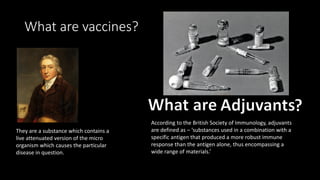
According to the British Society of Immunology, adjuvants
are defined as – ‘substances used in a combination with a
specific antigen that produced a more robust immune
response than the antigen alone, thus encompassing a
wide range of materials.’
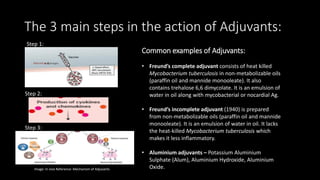
The 3 main steps in the action of Adjuvants:
Image: In vivo Reference: Mechanism of Adjuvants
Common examples of Adjuvants:
• Freund’s complete adjuvant consists of heat killed
Mycobacterium tuberculosis in non-metabolizable oils
(paraffin oil and mannide monooleate). It also
contains trehalose 6,6 dimycolate. It is an emulsion of
water in oil along with mycobacterial or nocardial Ag.
• Freund’s incomplete adjuvant (1940) is prepared
from non-metabolizable oils (paraffin oil and mannide
monooleate). It is an emulsion of water in oil. It lacks
the heat-killed Mycobacterium tuberculosis which
makes it less inflammatory.
• Aluminium adjuvants – Potassium Aluminium
Sulphate (Alum), Aluminium Hydroxide, Aluminium
Oxide.
Step 3:
Step 2:
Step 1:
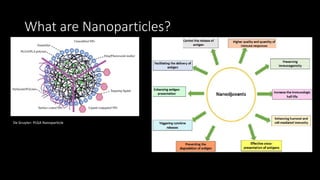
What are Nanoparticles?
De Gruyter: PLGA Nanoparticle
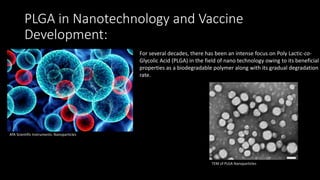
PLGA in Nanotechnology and Vaccine
Development:
TEM of PLGA Nanoparticles
For several decades, there has been an intense focus on Poly Lactic-co-
Glycolic Acid (PLGA) in the field of nano technology owing to its beneficial
properties as a biodegradable polymer along with its gradual degradation
rate.
ATA Scientific Instruments: Nanoparticles
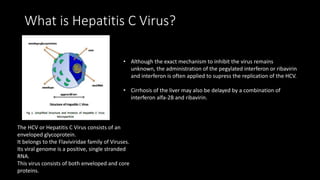
What is Hepatitis C Virus?
The HCV or Hepatitis C Virus consists of an
enveloped glycoprotein.
It belongs to the Flaviviridae family of Viruses.
Its viral genome is a positive, single stranded
RNA.
This virus consists of both enveloped and core
proteins.
• Although the exact mechanism to inhibit the virus remains
unknown, the administration of the pegylated interferon or ribavirin
and interferon is often applied to supress the replication of the HCV.
• Cirrhosis of the liver may also be delayed by a combination of
interferon alfa-2B and ribavirin.
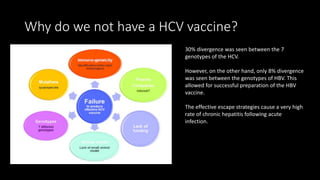
Why do we not have a HCV vaccine?
30% divergence was seen between the 7
genotypes of the HCV.
However, on the other hand, only 8% divergence
was seen between the genotypes of HBV. This
allowed for successful preparation of the HBV
vaccine.
The effective escape strategies cause a very high
rate of chronic hepatitis following acute
infection.
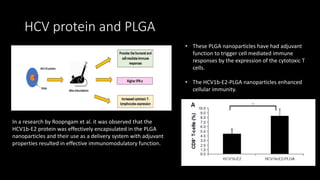
HCV protein and PLGA
In a research by Roopngam et al. it was observed that the
HCV1b-E2 protein was effectively encapsulated in the PLGA
nanoparticles and their use as a delivery system with adjuvant
properties resulted in effective immunomodulatory function.
• These PLGA nanoparticles have had adjuvant
function to trigger cell mediated immune
responses by the expression of the cytotoxic T
cells.
• The HCV1b-E2-PLGA nanoparticles enhanced
cellular immunity.
What lies ahead?
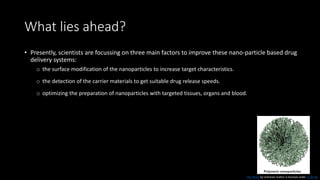
• Presently, scientists are focussing on three main factors to improve these nano-particle based drug
delivery systems:
o the surface modification of the nanoparticles to increase target characteristics.
o the detection of the carrier materials to get suitable drug release speeds.
o optimizing the preparation of nanoparticles with targeted tissues, organs and blood.
This Photo by Unknown Author is licensed under CC BY-NC
References:
• Nucleic acids presenting polymer nanomaterials as vaccine adjuvants (Alice Comberlato, Kaltrina Paloja and Maartje M. C. Bastings)
• Hepatitis C virus E2 protein encapsulation into poly d, l-lactic-co-glycolide microspheres could induce mice cytotoxic T-cell response
(Roopngam et. al.)
• Polymer-based nanoadjuvants for hepatitis C vaccine: The perspectives of immunologists (Piyachat Evelyn Roopngam and Tirawat
Wannatung)
• Polymer-Based Nanomaterials and Applications for Vaccines and Drugs (Jinyu Han, Dandan Zhao, Dan Li, Xiaohua Wang, Zheng Jin and
Kai Zhao)
• Engineered Nanodelivery Systems to Improve DNA Vaccine Technologies (Michael Lim, Abu Zayed Md Badruddoza, Jannatul Firdous,
Mohammad Azad, Adnan Mannan, Taslim Ahmed Al-Hilal, Chong-Su Cho and Mohammad Ariful Islam)
• Why is it so difficult to develop a hepatitis C virus preventive vaccine (Zingaretti, De Francesco, Abrignani)
• https://www.immunology.org/public-information/bitesized-immunology/vaccines-and-therapeutics/adjuvants-introduction
• https://www.invivogen.com/cfa
• https://www.invivogen.com/ifa#:~:text=Details-
,IFA%20(Incomplete%20Freund's%20adjuvant)%20is%20one%20of%20the%20most%20commonly,paraffin%20oil%20and%20mannide%2
0monooleate).
• https://www.researchgate.net/publication/301316328_Cellular_immune_response_to_hepatitis-C-
virus_in_subjects_without_viremia_or_seroconversion_Is_it_important
• Medical Microbiology for Undergraduates – BS Nagoba & Asha Pichare
• A special thank you to Father Principal, Dr. Arup Kumar Mitra, Head of
the Department of Microbiology, Professors, all the research scholars
and everyone who have helped us prepare this presentation.

Poster based hcv

  • 1.
    POLYMER BASED NANOADJUVANTS FOR HEPATITISC VACCINE Niti Chowdhury & Shreejit Saha B. Sc. 2nd year St. Xavier’s College(Autonomous), Kolkata Department of Microbiology
  • 2.
    What are vaccines? Theyare a substance which contains a live attenuated version of the micro organism which causes the particular disease in question. According to the British Society of Immunology, adjuvants are defined as – ‘substances used in a combination with a specific antigen that produced a more robust immune response than the antigen alone, thus encompassing a wide range of materials.’
  • 3.
    The 3 mainsteps in the action of Adjuvants: Image: In vivo Reference: Mechanism of Adjuvants Common examples of Adjuvants: • Freund’s complete adjuvant consists of heat killed Mycobacterium tuberculosis in non-metabolizable oils (paraffin oil and mannide monooleate). It also contains trehalose 6,6 dimycolate. It is an emulsion of water in oil along with mycobacterial or nocardial Ag. • Freund’s incomplete adjuvant (1940) is prepared from non-metabolizable oils (paraffin oil and mannide monooleate). It is an emulsion of water in oil. It lacks the heat-killed Mycobacterium tuberculosis which makes it less inflammatory. • Aluminium adjuvants – Potassium Aluminium Sulphate (Alum), Aluminium Hydroxide, Aluminium Oxide. Step 3: Step 2: Step 1:
  • 4.
    What are Nanoparticles? DeGruyter: PLGA Nanoparticle
  • 5.
    PLGA in Nanotechnologyand Vaccine Development: TEM of PLGA Nanoparticles For several decades, there has been an intense focus on Poly Lactic-co- Glycolic Acid (PLGA) in the field of nano technology owing to its beneficial properties as a biodegradable polymer along with its gradual degradation rate. ATA Scientific Instruments: Nanoparticles
  • 6.
    What is HepatitisC Virus? The HCV or Hepatitis C Virus consists of an enveloped glycoprotein. It belongs to the Flaviviridae family of Viruses. Its viral genome is a positive, single stranded RNA. This virus consists of both enveloped and core proteins. • Although the exact mechanism to inhibit the virus remains unknown, the administration of the pegylated interferon or ribavirin and interferon is often applied to supress the replication of the HCV. • Cirrhosis of the liver may also be delayed by a combination of interferon alfa-2B and ribavirin.
  • 7.
    Why do wenot have a HCV vaccine? 30% divergence was seen between the 7 genotypes of the HCV. However, on the other hand, only 8% divergence was seen between the genotypes of HBV. This allowed for successful preparation of the HBV vaccine. The effective escape strategies cause a very high rate of chronic hepatitis following acute infection.
  • 8.
    HCV protein andPLGA In a research by Roopngam et al. it was observed that the HCV1b-E2 protein was effectively encapsulated in the PLGA nanoparticles and their use as a delivery system with adjuvant properties resulted in effective immunomodulatory function. • These PLGA nanoparticles have had adjuvant function to trigger cell mediated immune responses by the expression of the cytotoxic T cells. • The HCV1b-E2-PLGA nanoparticles enhanced cellular immunity.
  • 9.
    What lies ahead? •Presently, scientists are focussing on three main factors to improve these nano-particle based drug delivery systems: o the surface modification of the nanoparticles to increase target characteristics. o the detection of the carrier materials to get suitable drug release speeds. o optimizing the preparation of nanoparticles with targeted tissues, organs and blood. This Photo by Unknown Author is licensed under CC BY-NC
  • 10.
    References: • Nucleic acidspresenting polymer nanomaterials as vaccine adjuvants (Alice Comberlato, Kaltrina Paloja and Maartje M. C. Bastings) • Hepatitis C virus E2 protein encapsulation into poly d, l-lactic-co-glycolide microspheres could induce mice cytotoxic T-cell response (Roopngam et. al.) • Polymer-based nanoadjuvants for hepatitis C vaccine: The perspectives of immunologists (Piyachat Evelyn Roopngam and Tirawat Wannatung) • Polymer-Based Nanomaterials and Applications for Vaccines and Drugs (Jinyu Han, Dandan Zhao, Dan Li, Xiaohua Wang, Zheng Jin and Kai Zhao) • Engineered Nanodelivery Systems to Improve DNA Vaccine Technologies (Michael Lim, Abu Zayed Md Badruddoza, Jannatul Firdous, Mohammad Azad, Adnan Mannan, Taslim Ahmed Al-Hilal, Chong-Su Cho and Mohammad Ariful Islam) • Why is it so difficult to develop a hepatitis C virus preventive vaccine (Zingaretti, De Francesco, Abrignani) • https://www.immunology.org/public-information/bitesized-immunology/vaccines-and-therapeutics/adjuvants-introduction • https://www.invivogen.com/cfa • https://www.invivogen.com/ifa#:~:text=Details- ,IFA%20(Incomplete%20Freund's%20adjuvant)%20is%20one%20of%20the%20most%20commonly,paraffin%20oil%20and%20mannide%2 0monooleate). • https://www.researchgate.net/publication/301316328_Cellular_immune_response_to_hepatitis-C- virus_in_subjects_without_viremia_or_seroconversion_Is_it_important • Medical Microbiology for Undergraduates – BS Nagoba & Asha Pichare
  • 11.
    • A specialthank you to Father Principal, Dr. Arup Kumar Mitra, Head of the Department of Microbiology, Professors, all the research scholars and everyone who have helped us prepare this presentation.