POST WAR CANADA
Canada’s Golden Age
1945-1969
©Ruth Writer
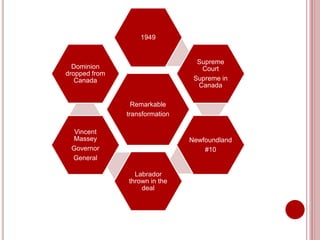
Remarkable
transformation
1949
Supreme
Court
Supreme in
Canada
Newfoundland
#10
Labrador
thrown in the
deal
Vincent
Massey
Governor
General
Dominion
dropped from
Canada
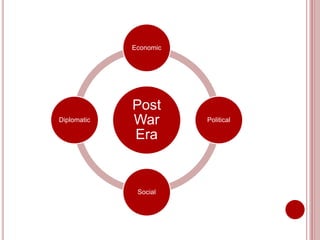
Post
War
Era
Economic
Political
Social
Diplomatic
ECONOMIC CHANGE
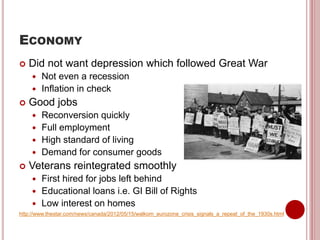
ECONOMY
 Did not want depression which followed Great War
 Not even a recession
 Inflation in check
 Good jobs
 Reconversion quickly
 Full employment
 High standard of living
 Demand for consumer goods
 Veterans reintegrated smoothly
 First hired for jobs left behind
 Educational loans i.e. GI Bill of Rights
 Low interest on homes
http://www.thestar.com/news/canada/2012/05/15/walkom_eurozone_crisis_signals_a_repeat_of_the_1930s.html
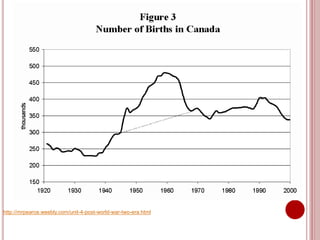
POPULATION GROWTH
 1941—Canada at 11.5 million
 1957—16.5 million
 1968—20.5 million
 55% increase in less than generation
 School age population doubled
 Teachers needed, schools needed
 Most lived within 100 miles of U.S. border
http://www.cbc.ca/news/canada/will-a-retirement-boom-start-in-2011-1.928398
 Due to baby boom
 Marry young and large families
 Highest birthrate of any industrial nation in world
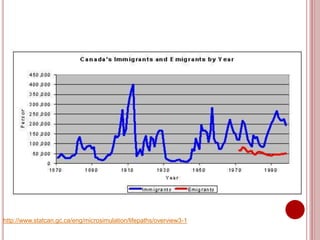
 Also immigration
 30% of all immigrants since 1867 came in 1945-1955
http://mrpearce.weebly.com/unit-4-post-world-war-two-era.html
IMMIGRATION
 Favored European Immigration
http://www.cic.gc.ca/english/resources/publications/legacy/chap-4b.asp
 British war brides—35,000
 British, Italian, German, Holland, Poland
 Holocaust survivors
 Hungary—1956 uprising
 Most to Ontario and Quebec
 Jobs there
 Altered Quebec population—especially Montreal
 Canadians minority in own nation
 1/3 Anglo-Canadian
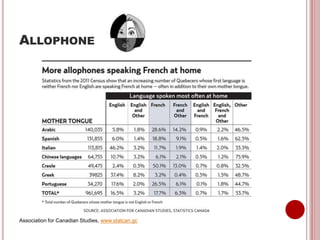
 More Allophones
http://www.statcan.gc.ca/eng/microsimulation/lifepaths/overview3-1
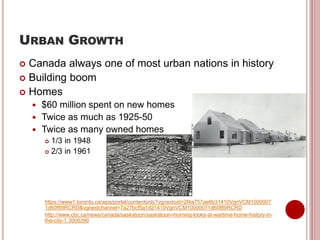
URBAN GROWTH
 Canada always one of most urban nations in history
 Building boom
 Homes
 $60 million spent on new homes
 Twice as much as 1925-50
 Twice as many owned homes
 1/3 in 1948
 2/3 in 1961
https://www1.toronto.ca/wps/portal/contentonly?vgnextoid=2f4a757ae6b31410VgnVCM1000007
1d60f89RCRD&vgnextchannel=7a27bcf5a1d21410VgnVCM10000071d60f89RCRD
http://www.cbc.ca/news/canada/saskatoon/saskatoon-morning-looks-at-wartime-home-history-in-
the-city-1.3000390
PERSONAL INCOME GROWTH
 GNP doubled from 1950-1960
 $18 billion to 36 billion
 Construction
 Shift from Resource Economy to Service
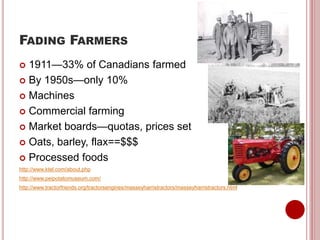
FADING FARMERS
 1911—33% of Canadians farmed
 By 1950s—only 10%
 Machines
 Commercial farming
 Market boards—quotas, prices set
 Oats, barley, flax==$$$
 Processed foods
http://www.ktel.com/about.php
http://www.peipotatomuseum.com/
http://www.tractorfriends.org/tractorsengines/masseyharristractors/masseyharristractors.html
FADING FISHERMEN
 Workers needed down
 Production up
 Fish industry giants
 Hi-tech trawlers—400,000 #/ship in two week trip
 No longer self-employed
 National Sea Products
 British Columbia Packers
 Rapid depletion
DRAMATIC CHANGES
http://ngb.chebucto.org/Dist_Photo/fog-0505-cod-fishing-1-1921-ci.shtml; photos by R. Writer 2010 in
Newfoundland and Labrador
NEW MINERAL AND FOSSIL FUELS
 Uranium
 Over 1/3 from Canada
 Saskatchewan
 Atomic weapons
 Peace time uses
 Oil and natural gas
 Edmonton discovery in 1947
 By 1956—1200 companies exploring
 Alberta became Texas North
 Transcontinental gas pipelines—1956-8
 1960 first natural gas exports to U.S.
http://www.historymuseum.ca/cmc/exhibitions/hist/phase2/images/mod8_b.gif
 Iron ore discovered in Newfoundland
 Exploration of mineral wealth in Arctic in late 1950s
EXPORTER OF PRIMARY GOODS
 Newsprint
 Lumber
 Wood pulp/paper
http://www.fao.org/docrep/t9500e/t9500e09.htm
 Wheat
http://www.alaska-in-pictures.com/golden-wheat-fields-harvesting-alberta-canada-5661-pictures.htm;
http://www.thestar.com/business/2014/02/07/canadian_farmers_sitting_on_grain_due_to_railway_logjams.html
 Minerals
 Oil and natural gas
INDUSTRIAL GROWTH
 Reconversion
 Crown corporations continued—prevent depression
 Consumer spending
 Cars—none built from 1939, no imports either
 By 1961 one car per four Canadians
 Building supplies for new homes
 Technology
 Synthetics--rubber
 Plastic—Sarnia
 Pesticides—Sarnia
 Jets—Canuck later the Avro Arrow—CF-105—scrapped
 TV and communication
 Electronics and computers
 Pharmaceuticals—Insulin, cobalt treatment
 Space race—collaboration with U.S.
AVRO ARROW—PLANE OF THE FUTURE?
http://news.nationalpost.com/news/canada/avro-arrow-redesign-pitched-as-alternative-to-f-35-stealth-fighter-jets
http://www.canadiandesignresource.ca/officialgallery/transportation/avro-arrow-interceptor-aircraft/ [video]
U.S. INVESTS IN CANADA
 Americanization a concern
 70% of oil and gas companies foreign—i.e. U.S.
 52% of mining
 56% of manufacturing
 75% of foreign $$$ were U.S. $ in 1960
 Branch plants a key
 66% of exports went to U.S.
 Only 15% to Britain
 Was Canada being betrayed? Sold out?
http://www.huffingtonpost.ca/2013/09/30/north-american-union-diane-francis-us-canada-merger_n_4016913.html
PLANES, SHIPS, CARS, PIPELINES
 NORAD—defense of continent
 Alcan Highway—1942—BC and YK
 Benefits to all of Canadian West, i.e. Edmonton
 TransCanada Highway—1948—centralism goal
 St. Lawrence Seaway—1955—trans-oceanic goal
 Pipelines
 NWT to Yukon by U.S.—no prior Canadian approval
 Transcontinental pipeline—1950s debate—1760 miles
 Enbridge Energy to Sarnia refineries
 Northern Route—UP and Lower Peninsula
 Southern Route—circles Lake Michigan then across Michigan
 2010 accident—840,000 gallons leaked into Kazoo River
 Half owned by U.S. company
 Alaskan pipeline
ALCAN HIGHWAY
http://westernamericana2.blogspot.com/2010/11/alaska-canadian-highway.html
TRANSCANADA HIGHWAY
http://www.pc.gc.ca/eng/pn-np/ab/banff/plan/envedette-highlights.aspx
http://transcanadahighway.com/General/transcanadahighway.htm
http://www.thecanadianencyclopedia.ca/en/article/trans-canada-highway/
PIPELINES
 NWT to Yukon by U.S.—no prior Canadian approval
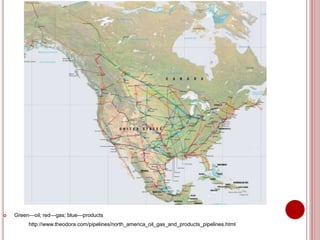
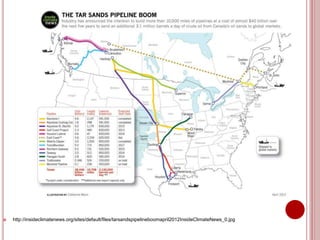
 Transcontinental pipeline—1950s debate—1760 miles
 Enbridge Energy to Sarnia refineries
 Northern Route—UP and Lower Peninsula
 Southern Route—circles Lake Michigan then across
Michigan
 2010 accident—840,000 gallons leaked into Kazoo River
 Half owned by U.S. company
 Alaskan pipeline
 Green—oil; red—gas; blue—products
http://www.theodora.com/pipelines/north_america_oil_gas_and_products_pipelines.html
 http://insideclimatenews.org/sites/default/files/tarsandspipelineboomapril2012InsideClimateNews_0.jpg
 www.enbridge.com
www.enbridge.com
ST. LAWRENCE SEAWAY
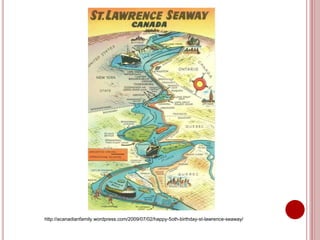
 Joint Canadian-U.S. project
 Made Trans-oceanic travel possible
 Ontario, New York, Pennsylvania, Ohio, Michigan, Indiana,
Illinois, Wisconsin—all ocean ports now
 Grain, iron, coal
 Continuation of Welland Canal with 8 locks—1840s
 Soo Locks with 4 locks—1850s
 Started in 1953—opened 1955
 7 locks between Montreal and Lake Ontario
 Relocated 7 villages—IMPACT???
 6500 people had to move
 500 homes
 Huge celebration
https://en.wikipedia.org/wiki/The_Lost_Villages
http://www.ghosttownpix.com/lostvillages/maps.html [maps] ; http://lostvillages.ca/
http://www.mprnews.org/story/2009/04/27/seaway
https://www.transportation.gov/fastlane/new-years-eve-ends-seaway-navigation-season
http://www.citt.ca/conference/2015/stlawrenceseaway.html
http://acanadianfamily.wordpress.com/2009/07/02/happy-5oth-birthday-st-lawrence-seaway/
AUTOPACT--1965
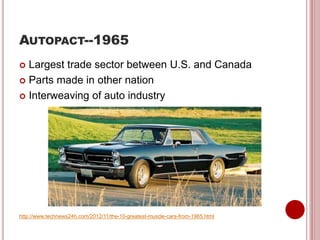
 Largest trade sector between U.S. and Canada
 Parts made in other nation
 Interweaving of auto industry
http://www.technews24h.com/2012/11/the-10-greatest-muscle-cars-from-1965.html
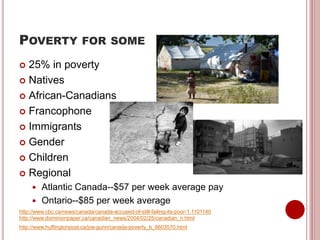
POVERTY FOR SOME
 25% in poverty
 Natives
 African-Canadians
 Francophone
 Immigrants
 Gender
 Children
 Regional
 Atlantic Canada--$57 per week average pay
 Ontario--$85 per week average
http://www.cbc.ca/news/canada/canada-accused-of-still-failing-its-poor-1.1101140
http://www.dominionpaper.ca/canadian_news/2004/02/25/canadian_n.html
http://www.huffingtonpost.ca/joe-gunn/canada-poverty_b_6603570.html
POLITICAL CHANGE IN CANADA
ANOTHER PROVINCE
 Location, location, location
 World War II
 Refueling and supply bases for Canada and U.S.
 Newfoundland was closest British neighbor
 Trade agreements with U.S.
 Canada supported PEI and NS
 Rejected 1867 Confederation even with promises
 1945 Britain discuss alternatives
 Newfoundland and Labrador—1949 Referendum
 Inconclusive in June 1948
 Joey Smallwood—economic benefits
 Second vote in favor of Confederation
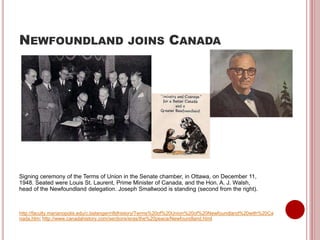
NEWFOUNDLAND JOINS CANADA
Signing ceremony of the Terms of Union in the Senate chamber, in Ottawa, on December 11,
1948. Seated were Louis St. Laurent, Prime Minister of Canada, and the Hon. A. J. Walsh,
head of the Newfoundland delegation. Joseph Smallwood is standing (second from the right).
http://faculty.marianopolis.edu/c.belanger/nfldhistory/Terms%20of%20Union%20of%20Newfoundland%20with%20Ca
nada.htm; http://www.canadahistory.com/sections/eras/the%20peace/Newfoundland.html
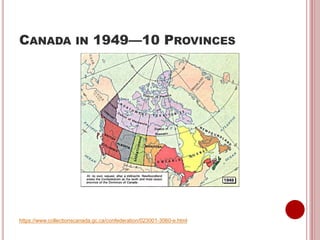
CANADA IN 1949—10 PROVINCES
https://www.collectionscanada.gc.ca/confederation/023001-3060-e.html
PRIME MINISTERS AND PARTY CHANGE
King [Liberal]—dominate for 3 decades-
-died in ‘50
1948-57—Louis St. Laurent [Liberal]
 Established equalization payments regionally
 Improved social welfare system of Canada
 Pensions
 Unemployment
 Family Allowance
 Hospital insurance plan for part of cost—MAJOR step
 Large role in peacekeeping
 St. Lawrence Seaway—’59
 Trans-Canada Highway—’62
MORE CHANGE
 1957-63—John Diefenbaker—Progressive Conservative
 First from Western provinces [SK lawyer]
 Canadian rejection of Liberals who had control for 3 decades
 ONE Canada—Nationalism
 Less cooperation with U.S. and Kennedy
 Development of Canadian north
 CN$ exchange rate
 New Keynesian economics—tax cuts; increased spending
 Rural aid—advance on farm stored grain
 Regional issues—move people from Atlantic Canada
 Canadian Bill of Rights—1960 Minority rights
http://www.macleans.ca/society/10-reasons-why-dief-the-chief-and-jfk-hated-each-other/
LIBERALS IN POWER
 1963-68—Lester Pearson [Liberal]
 Nobel Peace Prize as Minister of External Affairs
 Universal health Care—1965
 Canadian Pension Plan—1965—CPP
https://simple.wikipedia.org/wiki/Lester_B._Pearson
MINOR PARTIES
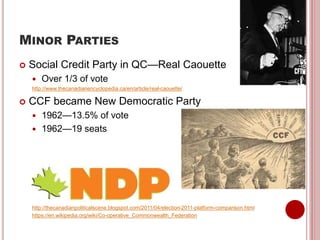
 Social Credit Party in QC—Real Caouette
 Over 1/3 of vote
http://www.thecanadianencyclopedia.ca/en/article/real-caouette/
 CCF became New Democratic Party
 1962—13.5% of vote
 1962—19 seats
http://thecanadianpoliticalscene.blogspot.com/2011/04/election-2011-platform-comparison.html
https://en.wikipedia.org/wiki/Co-operative_Commonwealth_Federation
CCF SETS NEW COURSE FOR CANADA
 Progressive party—farmers and laborers
1932—Calgary—to meet social and political change
Frank Underhill—League for Social Reconstruction
 Co-operative Commonwealth Federation—1933
 Replace capitalist system
 Manifesto with socialistic slant
 Centralized government control over banking, planning
 Publicly owned transportation, communication,
resources
 Unemployment insurance
 National health care
 Slum clearance
DEPRESSION==VOTES???
 Too radical for Quebec and Maritimes
 Never control of Parliament
 Did shape politics
 Promoted social programs and state stewardship
 Tommy Douglas became premier of SK in 1944
 Designed prototype of national health care
CANADIAN HEALTH CARE SYSTEM
 Adopted by federal government 1960s
 Federal government would share costs with
provinces
 Cover medical care for ALL citizens
 By 1972 all provinces and territories agreed
 Expensive
 Varied in quality of coverage and treatment
 Became a source of pride—part of the identity
CANADIAN PENSION PLAN
 Universal pension plan
 Retirement age of 65
 Contributions from government, workers, employers
SOCIAL NETWORK EXPANDED
 Health care
 Pension
 Unemployment
 Student loans
 Low income housing assistance
 Came a high cost—high tax burden
CIVIL SERVICE EXPANSION
 Bureaucracy growth
 1939—46,000 employed by government
 1945—116,000 worked for government
 New strongholds of Confederation
 Finance
 Munitions and Supply
 External Affairs
DIPLOMACY IN CANADA
CANADA AS THE MIDDLE POWER
 Keeping balance with diplomacy
 Support U.S. policies
 Yet maintain sovereignty
 Resource basis
 Cold War—geographic location, location, location
 United Nations—’45—founding member
 NATO—’48—St. Laurent concept
CANADA AS PEACEKEEPER
 NEW CANADIAN NATIONALISM CREATED
 Commonwealth of Nations
 Forum of ideas
 Britain at the top
 Canada as a New Model
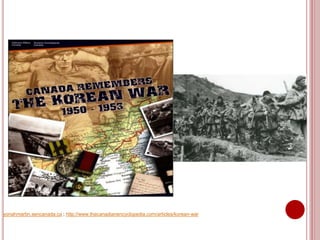
 Korean Conflict—1950-53—one of 16 nations—22,000 troops
 Other areas with Canadian Forces
 Lebanon--1953
 Suez—1956 [Pearson won Nobel Peace Prize in 1957]
 Congo—1960-64
 New Guinea--1962
 Yemen--1963
 Cyprus—1964
 Pakistan—1965
 Bosnia—1980s
 Somalia—1990s
 Haiti--2000
 NOT Vietnam—draft and reverse
yonahmartin.sencanada.ca ; http://www.thecanadianencyclopedia.com/articles/korean-war
CANADA AND THE U.S.A.
 Close cooperation—with some questions
 1940—Permanent Joint Board on Defense
 Air defense
 Standard training, equipment
 Access to facilities
 Radar installations in 1957—NORAD
 Nuclear Reality
 Pine Tree Line at border
 McGill Fence at 55*N
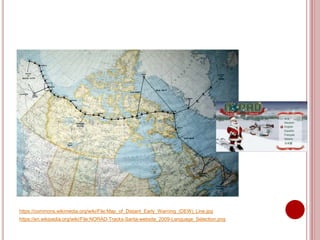
 DEW Line in Canadian Arctic
 Cuban Missile Crisis
 NORAD on alert
 Canadian troops on alert
 Disagreement between Diefenbaker and Kennedy
 Diefenbaker armed nuclear missiles in ’63—until ’84
http://www.norad.mil/
https://en.wikipedia.org/wiki/Pinetree_Line
http://www.pages.drexel.edu/~ina22/+301/$301-text-Personal_and_Family_Survival.html
https://commons.wikimedia.org/wiki/File:Map_of_Distant_Early_Warning_(DEW)_Line.jpg
https://en.wikipedia.org/wiki/File:NORAD-Tracks-Santa-website_2009-Language_Selection.png
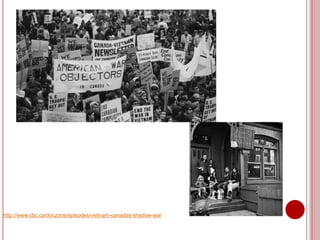
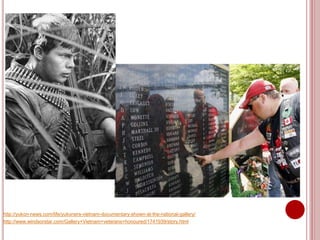
CANADA, U.S. AND VIETNAM
 Canada source of supplies
 Disagreement over bombing of North Vietnam
 Conflict between Pearson and LBJ
 Pearson support
 Draft resisters—125,000 [?]
 Evaders
 Deserters
 Brain drain
 Educated
 Professionals
 Teachers
 Students
 Canadians who served—perhaps an equal number
http://www.cbc.ca/doczone/episodes/vietnam-canadas-shadow-war
http://yukon-news.com/life/yukoners-vietnam-documentary-shown-at-the-national-gallery/
http://www.windsorstar.com/Gallery+Vietnam+veterans+honoured/1741939/story.html
SOCIAL CHANGES IN POST WAR
Establishing a Canadian Cultural Identity
CANADIAN IDENTITY--QUESTIONS
 Immigration increased
 Allophones—other languages
 Redefined Canada
 Vincent Massey’s Report—1949-1951
 Fear of American mass culture—i.e. TV
 Canadian culture and identity in danger of extinction
 Cultural might blossom if government grants for
 National library and system to preserve records
 National support of universities and higher education
 Support of museums, art, theater, symphony, ballet
 Interest in high culture not mass culture
 Canada should encourage, protect own culture
 Development popular entertainment left alone
ALLOPHONE
Association for Canadian Studies, www.statcan.gc
NEW SYMBOLS OF NATIONAL IDENTITY
 Canadian flag—maple leaf—1965
http://torontopubliclibrary.typepad.com/trl/2015/02/a-red-maple-leaf-against-a-blue-sky-a-quintessential-
canadian-symbol-and-one-recognized-throughout-the-world-even-the-leas.html
 Canadian Anthem—O’Canada--1965
 Montreal Exposition—1967
http://www.worldsfaircommunity.org/topic/12681-more-expo-67-panoramas/
www.ameriquefrancaise.org
www.jubileequeencruises.ca
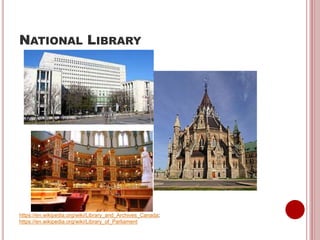
NATIONAL LIBRARY
https://en.wikipedia.org/wiki/Library_and_Archives_Canada;
https://en.wikipedia.org/wiki/Library_of_Parliament
NATIONAL GALLERY [ART]
http://www.gallery.ca/holidays/; https://www.gallery.ca/en/see/collections/artwork.php?mkey=11761
CULTURAL CHANGES
 Cultural imperialism
 More NFB funding
 Created National Library and Archives
 Canada Council—1957
 Theater, arts, ballet, writers
 CRTC—1968—Canadian content laws
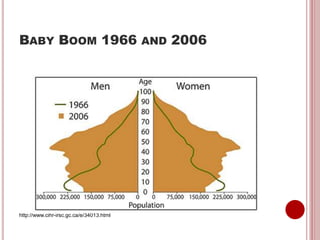
 Baby boom came of age in the the 60s
 Sex, drugs, rock and roll
 Vancouver scene
 Toronto
 Montreal
BABY BOOM 1966 AND 2006
http://www.cihr-irsc.gc.ca/e/34013.html
HOCKEY
 Rocket Richard
 Richard Riots
 Roch Carrier—THE SWEATER
 http://www.youtube.com/watch?v=EgydkfnUEi8
http://mauricerichard.homestead.com/Comments-english.html
THREAT OF A NORTH AMERICAN
IDENTITY RATHER THAN CANADIAN ID
Economic
Diplomatic
Cultural
Political
RESOURCES
 Anonymous. “Chapter XVII”--Canada. Royal Commission on National
Development in the Arts, Letters, and Sciences. Report. Ottawa : King's
Printer, 1951. By permission of the Privy Council Office. Pages 253-267.
http://www.collectionscanada.gc.ca/2/5/h5-400-e.html
 http://www.cbc.ca/archives/categories/society/youth/hippie-society-the-
youth-rebellion/festivals-and-happenings-vancouvers-human-be-in.html
[on-line video]
 http://www.cbc.ca/archives/categories/society/youth/hippie-society-the-
youth-rebellion/hippie-life-it-aint-easy.html [on-line video]
 http://www.canadiandesignresource.ca/officialgallery/transportation/avro-
arrow-interceptor-aircraft
 Kallmann, Helmut. “Massey Commission.” 2012. The Canadian
Encyclopedia, Historica Foundation of Canada.
<www.thecanadianencyclopedia.com>
 Sprague, D.N. Post Confederation Canada: The Structure of Canadian
History Since Confederation. Scarborough: Prentice-Hall Canada Inc.,
1990. [ p. 240-251, 255-272, 275-280].
 http://www.thecanadianencyclopedia.ca/en/article/agriculture-and-food/
 The Sweater http://www.youtube.com/watch?v=EgydkfnUEi8

Post War Canada 1945-1960

  • 1.
    POST WAR CANADA Canada’sGolden Age 1945-1969 ©Ruth Writer
  • 2.
    Remarkable transformation 1949 Supreme Court Supreme in Canada Newfoundland #10 Labrador thrown inthe deal Vincent Massey Governor General Dominion dropped from Canada
  • 3.
  • 4.
  • 5.
    ECONOMY  Did notwant depression which followed Great War  Not even a recession  Inflation in check  Good jobs  Reconversion quickly  Full employment  High standard of living  Demand for consumer goods  Veterans reintegrated smoothly  First hired for jobs left behind  Educational loans i.e. GI Bill of Rights  Low interest on homes http://www.thestar.com/news/canada/2012/05/15/walkom_eurozone_crisis_signals_a_repeat_of_the_1930s.html
  • 6.
    POPULATION GROWTH  1941—Canadaat 11.5 million  1957—16.5 million  1968—20.5 million  55% increase in less than generation  School age population doubled  Teachers needed, schools needed  Most lived within 100 miles of U.S. border http://www.cbc.ca/news/canada/will-a-retirement-boom-start-in-2011-1.928398  Due to baby boom  Marry young and large families  Highest birthrate of any industrial nation in world  Also immigration  30% of all immigrants since 1867 came in 1945-1955
  • 7.
  • 8.
    IMMIGRATION  Favored EuropeanImmigration http://www.cic.gc.ca/english/resources/publications/legacy/chap-4b.asp  British war brides—35,000  British, Italian, German, Holland, Poland  Holocaust survivors  Hungary—1956 uprising  Most to Ontario and Quebec  Jobs there  Altered Quebec population—especially Montreal  Canadians minority in own nation  1/3 Anglo-Canadian  More Allophones
  • 9.
  • 10.
    URBAN GROWTH  Canadaalways one of most urban nations in history  Building boom  Homes  $60 million spent on new homes  Twice as much as 1925-50  Twice as many owned homes  1/3 in 1948  2/3 in 1961 https://www1.toronto.ca/wps/portal/contentonly?vgnextoid=2f4a757ae6b31410VgnVCM1000007 1d60f89RCRD&vgnextchannel=7a27bcf5a1d21410VgnVCM10000071d60f89RCRD http://www.cbc.ca/news/canada/saskatoon/saskatoon-morning-looks-at-wartime-home-history-in- the-city-1.3000390
  • 11.
    PERSONAL INCOME GROWTH GNP doubled from 1950-1960  $18 billion to 36 billion  Construction  Shift from Resource Economy to Service
  • 12.
    FADING FARMERS  1911—33%of Canadians farmed  By 1950s—only 10%  Machines  Commercial farming  Market boards—quotas, prices set  Oats, barley, flax==$$$  Processed foods http://www.ktel.com/about.php http://www.peipotatomuseum.com/ http://www.tractorfriends.org/tractorsengines/masseyharristractors/masseyharristractors.html
  • 13.
    FADING FISHERMEN  Workersneeded down  Production up  Fish industry giants  Hi-tech trawlers—400,000 #/ship in two week trip  No longer self-employed  National Sea Products  British Columbia Packers  Rapid depletion
  • 14.
  • 15.
    NEW MINERAL ANDFOSSIL FUELS  Uranium  Over 1/3 from Canada  Saskatchewan  Atomic weapons  Peace time uses  Oil and natural gas  Edmonton discovery in 1947  By 1956—1200 companies exploring  Alberta became Texas North  Transcontinental gas pipelines—1956-8  1960 first natural gas exports to U.S. http://www.historymuseum.ca/cmc/exhibitions/hist/phase2/images/mod8_b.gif  Iron ore discovered in Newfoundland  Exploration of mineral wealth in Arctic in late 1950s
  • 16.
    EXPORTER OF PRIMARYGOODS  Newsprint  Lumber  Wood pulp/paper http://www.fao.org/docrep/t9500e/t9500e09.htm  Wheat http://www.alaska-in-pictures.com/golden-wheat-fields-harvesting-alberta-canada-5661-pictures.htm; http://www.thestar.com/business/2014/02/07/canadian_farmers_sitting_on_grain_due_to_railway_logjams.html  Minerals  Oil and natural gas
  • 17.
    INDUSTRIAL GROWTH  Reconversion Crown corporations continued—prevent depression  Consumer spending  Cars—none built from 1939, no imports either  By 1961 one car per four Canadians  Building supplies for new homes  Technology  Synthetics--rubber  Plastic—Sarnia  Pesticides—Sarnia  Jets—Canuck later the Avro Arrow—CF-105—scrapped  TV and communication  Electronics and computers  Pharmaceuticals—Insulin, cobalt treatment  Space race—collaboration with U.S.
  • 18.
    AVRO ARROW—PLANE OFTHE FUTURE? http://news.nationalpost.com/news/canada/avro-arrow-redesign-pitched-as-alternative-to-f-35-stealth-fighter-jets http://www.canadiandesignresource.ca/officialgallery/transportation/avro-arrow-interceptor-aircraft/ [video]
  • 19.
    U.S. INVESTS INCANADA  Americanization a concern  70% of oil and gas companies foreign—i.e. U.S.  52% of mining  56% of manufacturing  75% of foreign $$$ were U.S. $ in 1960  Branch plants a key  66% of exports went to U.S.  Only 15% to Britain  Was Canada being betrayed? Sold out? http://www.huffingtonpost.ca/2013/09/30/north-american-union-diane-francis-us-canada-merger_n_4016913.html
  • 20.
    PLANES, SHIPS, CARS,PIPELINES  NORAD—defense of continent  Alcan Highway—1942—BC and YK  Benefits to all of Canadian West, i.e. Edmonton  TransCanada Highway—1948—centralism goal  St. Lawrence Seaway—1955—trans-oceanic goal  Pipelines  NWT to Yukon by U.S.—no prior Canadian approval  Transcontinental pipeline—1950s debate—1760 miles  Enbridge Energy to Sarnia refineries  Northern Route—UP and Lower Peninsula  Southern Route—circles Lake Michigan then across Michigan  2010 accident—840,000 gallons leaked into Kazoo River  Half owned by U.S. company  Alaskan pipeline
  • 21.
  • 22.
  • 23.
    PIPELINES  NWT toYukon by U.S.—no prior Canadian approval  Transcontinental pipeline—1950s debate—1760 miles  Enbridge Energy to Sarnia refineries  Northern Route—UP and Lower Peninsula  Southern Route—circles Lake Michigan then across Michigan  2010 accident—840,000 gallons leaked into Kazoo River  Half owned by U.S. company  Alaskan pipeline
  • 24.
     Green—oil; red—gas;blue—products http://www.theodora.com/pipelines/north_america_oil_gas_and_products_pipelines.html
  • 25.
  • 26.
  • 27.
  • 28.
    ST. LAWRENCE SEAWAY Joint Canadian-U.S. project  Made Trans-oceanic travel possible  Ontario, New York, Pennsylvania, Ohio, Michigan, Indiana, Illinois, Wisconsin—all ocean ports now  Grain, iron, coal  Continuation of Welland Canal with 8 locks—1840s  Soo Locks with 4 locks—1850s  Started in 1953—opened 1955  7 locks between Montreal and Lake Ontario  Relocated 7 villages—IMPACT???  6500 people had to move  500 homes  Huge celebration https://en.wikipedia.org/wiki/The_Lost_Villages
  • 29.
  • 30.
  • 31.
  • 32.
  • 33.
    AUTOPACT--1965  Largest tradesector between U.S. and Canada  Parts made in other nation  Interweaving of auto industry http://www.technews24h.com/2012/11/the-10-greatest-muscle-cars-from-1965.html
  • 34.
    POVERTY FOR SOME 25% in poverty  Natives  African-Canadians  Francophone  Immigrants  Gender  Children  Regional  Atlantic Canada--$57 per week average pay  Ontario--$85 per week average http://www.cbc.ca/news/canada/canada-accused-of-still-failing-its-poor-1.1101140 http://www.dominionpaper.ca/canadian_news/2004/02/25/canadian_n.html http://www.huffingtonpost.ca/joe-gunn/canada-poverty_b_6603570.html
  • 35.
  • 36.
    ANOTHER PROVINCE  Location,location, location  World War II  Refueling and supply bases for Canada and U.S.  Newfoundland was closest British neighbor  Trade agreements with U.S.  Canada supported PEI and NS  Rejected 1867 Confederation even with promises  1945 Britain discuss alternatives  Newfoundland and Labrador—1949 Referendum  Inconclusive in June 1948  Joey Smallwood—economic benefits  Second vote in favor of Confederation
  • 37.
    NEWFOUNDLAND JOINS CANADA Signingceremony of the Terms of Union in the Senate chamber, in Ottawa, on December 11, 1948. Seated were Louis St. Laurent, Prime Minister of Canada, and the Hon. A. J. Walsh, head of the Newfoundland delegation. Joseph Smallwood is standing (second from the right). http://faculty.marianopolis.edu/c.belanger/nfldhistory/Terms%20of%20Union%20of%20Newfoundland%20with%20Ca nada.htm; http://www.canadahistory.com/sections/eras/the%20peace/Newfoundland.html
  • 38.
    CANADA IN 1949—10PROVINCES https://www.collectionscanada.gc.ca/confederation/023001-3060-e.html
  • 39.
    PRIME MINISTERS ANDPARTY CHANGE King [Liberal]—dominate for 3 decades- -died in ‘50 1948-57—Louis St. Laurent [Liberal]  Established equalization payments regionally  Improved social welfare system of Canada  Pensions  Unemployment  Family Allowance  Hospital insurance plan for part of cost—MAJOR step  Large role in peacekeeping  St. Lawrence Seaway—’59  Trans-Canada Highway—’62
  • 40.
    MORE CHANGE  1957-63—JohnDiefenbaker—Progressive Conservative  First from Western provinces [SK lawyer]  Canadian rejection of Liberals who had control for 3 decades  ONE Canada—Nationalism  Less cooperation with U.S. and Kennedy  Development of Canadian north  CN$ exchange rate  New Keynesian economics—tax cuts; increased spending  Rural aid—advance on farm stored grain  Regional issues—move people from Atlantic Canada  Canadian Bill of Rights—1960 Minority rights http://www.macleans.ca/society/10-reasons-why-dief-the-chief-and-jfk-hated-each-other/
  • 41.
    LIBERALS IN POWER 1963-68—Lester Pearson [Liberal]  Nobel Peace Prize as Minister of External Affairs  Universal health Care—1965  Canadian Pension Plan—1965—CPP https://simple.wikipedia.org/wiki/Lester_B._Pearson
  • 42.
    MINOR PARTIES  SocialCredit Party in QC—Real Caouette  Over 1/3 of vote http://www.thecanadianencyclopedia.ca/en/article/real-caouette/  CCF became New Democratic Party  1962—13.5% of vote  1962—19 seats http://thecanadianpoliticalscene.blogspot.com/2011/04/election-2011-platform-comparison.html https://en.wikipedia.org/wiki/Co-operative_Commonwealth_Federation
  • 43.
    CCF SETS NEWCOURSE FOR CANADA  Progressive party—farmers and laborers 1932—Calgary—to meet social and political change Frank Underhill—League for Social Reconstruction  Co-operative Commonwealth Federation—1933  Replace capitalist system  Manifesto with socialistic slant  Centralized government control over banking, planning  Publicly owned transportation, communication, resources  Unemployment insurance  National health care  Slum clearance
  • 44.
    DEPRESSION==VOTES???  Too radicalfor Quebec and Maritimes  Never control of Parliament  Did shape politics  Promoted social programs and state stewardship  Tommy Douglas became premier of SK in 1944  Designed prototype of national health care
  • 45.
    CANADIAN HEALTH CARESYSTEM  Adopted by federal government 1960s  Federal government would share costs with provinces  Cover medical care for ALL citizens  By 1972 all provinces and territories agreed  Expensive  Varied in quality of coverage and treatment  Became a source of pride—part of the identity
  • 46.
    CANADIAN PENSION PLAN Universal pension plan  Retirement age of 65  Contributions from government, workers, employers
  • 47.
    SOCIAL NETWORK EXPANDED Health care  Pension  Unemployment  Student loans  Low income housing assistance  Came a high cost—high tax burden
  • 48.
    CIVIL SERVICE EXPANSION Bureaucracy growth  1939—46,000 employed by government  1945—116,000 worked for government  New strongholds of Confederation  Finance  Munitions and Supply  External Affairs
  • 49.
  • 50.
    CANADA AS THEMIDDLE POWER  Keeping balance with diplomacy  Support U.S. policies  Yet maintain sovereignty  Resource basis  Cold War—geographic location, location, location  United Nations—’45—founding member  NATO—’48—St. Laurent concept
  • 51.
    CANADA AS PEACEKEEPER NEW CANADIAN NATIONALISM CREATED  Commonwealth of Nations  Forum of ideas  Britain at the top  Canada as a New Model  Korean Conflict—1950-53—one of 16 nations—22,000 troops  Other areas with Canadian Forces  Lebanon--1953  Suez—1956 [Pearson won Nobel Peace Prize in 1957]  Congo—1960-64  New Guinea--1962  Yemen--1963  Cyprus—1964  Pakistan—1965  Bosnia—1980s  Somalia—1990s  Haiti--2000  NOT Vietnam—draft and reverse
  • 52.
  • 53.
    CANADA AND THEU.S.A.  Close cooperation—with some questions  1940—Permanent Joint Board on Defense  Air defense  Standard training, equipment  Access to facilities  Radar installations in 1957—NORAD  Nuclear Reality  Pine Tree Line at border  McGill Fence at 55*N  DEW Line in Canadian Arctic  Cuban Missile Crisis  NORAD on alert  Canadian troops on alert  Disagreement between Diefenbaker and Kennedy  Diefenbaker armed nuclear missiles in ’63—until ’84 http://www.norad.mil/
  • 54.
  • 55.
  • 56.
  • 57.
    CANADA, U.S. ANDVIETNAM  Canada source of supplies  Disagreement over bombing of North Vietnam  Conflict between Pearson and LBJ  Pearson support  Draft resisters—125,000 [?]  Evaders  Deserters  Brain drain  Educated  Professionals  Teachers  Students  Canadians who served—perhaps an equal number
  • 58.
  • 59.
  • 60.
    SOCIAL CHANGES INPOST WAR Establishing a Canadian Cultural Identity
  • 61.
    CANADIAN IDENTITY--QUESTIONS  Immigrationincreased  Allophones—other languages  Redefined Canada  Vincent Massey’s Report—1949-1951  Fear of American mass culture—i.e. TV  Canadian culture and identity in danger of extinction  Cultural might blossom if government grants for  National library and system to preserve records  National support of universities and higher education  Support of museums, art, theater, symphony, ballet  Interest in high culture not mass culture  Canada should encourage, protect own culture  Development popular entertainment left alone
  • 62.
    ALLOPHONE Association for CanadianStudies, www.statcan.gc
  • 63.
    NEW SYMBOLS OFNATIONAL IDENTITY  Canadian flag—maple leaf—1965 http://torontopubliclibrary.typepad.com/trl/2015/02/a-red-maple-leaf-against-a-blue-sky-a-quintessential- canadian-symbol-and-one-recognized-throughout-the-world-even-the-leas.html  Canadian Anthem—O’Canada--1965  Montreal Exposition—1967 http://www.worldsfaircommunity.org/topic/12681-more-expo-67-panoramas/ www.ameriquefrancaise.org
  • 64.
  • 65.
  • 67.
    NATIONAL GALLERY [ART] http://www.gallery.ca/holidays/;https://www.gallery.ca/en/see/collections/artwork.php?mkey=11761
  • 68.
    CULTURAL CHANGES  Culturalimperialism  More NFB funding  Created National Library and Archives  Canada Council—1957  Theater, arts, ballet, writers  CRTC—1968—Canadian content laws  Baby boom came of age in the the 60s  Sex, drugs, rock and roll  Vancouver scene  Toronto  Montreal
  • 69.
    BABY BOOM 1966AND 2006 http://www.cihr-irsc.gc.ca/e/34013.html
  • 70.
    HOCKEY  Rocket Richard Richard Riots  Roch Carrier—THE SWEATER  http://www.youtube.com/watch?v=EgydkfnUEi8 http://mauricerichard.homestead.com/Comments-english.html
  • 71.
    THREAT OF ANORTH AMERICAN IDENTITY RATHER THAN CANADIAN ID Economic Diplomatic Cultural Political
  • 72.
    RESOURCES  Anonymous. “ChapterXVII”--Canada. Royal Commission on National Development in the Arts, Letters, and Sciences. Report. Ottawa : King's Printer, 1951. By permission of the Privy Council Office. Pages 253-267. http://www.collectionscanada.gc.ca/2/5/h5-400-e.html  http://www.cbc.ca/archives/categories/society/youth/hippie-society-the- youth-rebellion/festivals-and-happenings-vancouvers-human-be-in.html [on-line video]  http://www.cbc.ca/archives/categories/society/youth/hippie-society-the- youth-rebellion/hippie-life-it-aint-easy.html [on-line video]  http://www.canadiandesignresource.ca/officialgallery/transportation/avro- arrow-interceptor-aircraft  Kallmann, Helmut. “Massey Commission.” 2012. The Canadian Encyclopedia, Historica Foundation of Canada. <www.thecanadianencyclopedia.com>  Sprague, D.N. Post Confederation Canada: The Structure of Canadian History Since Confederation. Scarborough: Prentice-Hall Canada Inc., 1990. [ p. 240-251, 255-272, 275-280].  http://www.thecanadianencyclopedia.ca/en/article/agriculture-and-food/  The Sweater http://www.youtube.com/watch?v=EgydkfnUEi8

Editor's Notes

  • #25 Green—oil; red—gas; blue—products http://www.theodora.com/pipelines/north_america_oil_gas_and_products_pipelines.html
  • #26 http://insideclimatenews.org/sites/default/files/tarsandspipelineboomapril2012InsideClimateNews_0.jpg
  • #27 www.enbridge.com
  • #30 http://www.ghosttownpix.com/lostvillages/maps.html [maps]; http://lostvillages.ca/ ;wikipedia
  • #33 http://acanadianfamily.wordpress.com/2009/07/02/happy-5oth-birthday-st-lawrence-seaway/
  • #56 en.wikipedia.org 
  • #57 www.pages.drexel.edu