Positive School Culture
By Sherrie Melvin
Build strong relationships
▪ I will Talk to my students
▪ I will develop Positive Interactions with my students
▪ I will Show Genuine Interest every day
▪ Goal- Every adult maintain a high rate of positive interactions
with students to show genuine interest in their lives, activities,
goals, and struggles.
Teach Social Skills
▪ Share
▪ Listen to others
▪ Disagree respectfully
▪ Honesty
▪ Sensitivity
▪ Concern and respect for others
▪ Humor
▪ Reliability
Integrate Social-Emotional Learning
▪ Start the day with a check –in --------Today I feel……..
▪ Work in partnerships – teach them how to work in a group
▪ Nurture a culture of kindness
▪ Give them new words to say
▪ Set up a peace place
▪ Teach students how to manage conflict with peers
▪ Use anchor charts to teach social-emotional skills
▪ Allow for talk time
▪ Reflect on the end of the day
Game Time – The Inner Circle
▪ Purpose –Teachers need to understand how students feel when they do not
belong.
▪ Objective – end up in the inner circle
▪ Important – It is not where you start, but where you’re going that matters
▪ Instruction
▪ Two Circles – Inner circle will represent belonging / Outer Circle
▪ Use words “restorative circle” to divide the teachers in pairs
▪ Restorative – inner circle – facing out --- Circle – outer – facing in
▪ Distribute cards – SPOT IT!
Game Time!
▪ Start music – each pair turns their Spot IT! Card face up
▪ Participants work to be the first to find the one picture image that
connects the two cards.
▪ The person that finds it first points out what it is and earns a spot in
the inner circle.
▪ Rotate the circle cards in order to play several rounds
▪ Focus on what they’re feeling as they try to get that coveted spot on
the inside.
▪ Teachers can relate to students that are on the outside
Game Reflection
▪ What was the experience to fight for a spot in the inner circle like?
▪ Did you like being on the inside?
▪ How did it feel to be on the outside?
▪ Is it easy to find something in common?
▪ Like in the game, does it have to go fast in real life?
▪ Or might you still be finding new commonalities with staff members who you’ve
known for years?
▪ How might this activity help the students in your learning space this year?
Everyone on the same page
▪ Adults need to self reflect
▪ Share vision of your school
▪ Consistent school rules
▪ Ways of defining and meeting student behavior
▪ Inappropriate behavior
Be Role Models
▪ Students learn by watching
▪ How they respond to situations
▪ How they cope with unfamiliar situations
▪ What is the message you and your staff’s behavior communicate?
▪ Example: If student is rejected by peers, the rejection stops if the teacher
models warm and friendly behavior to that student
▪ Opposite is true
▪ Teachers-You Set theTone!
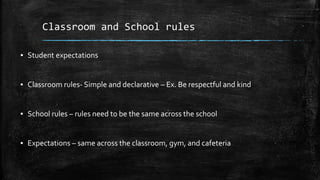
Classroom and School rules
▪ Student expectations
▪ Classroom rules- Simple and declarative – Ex. Be respectful and kind
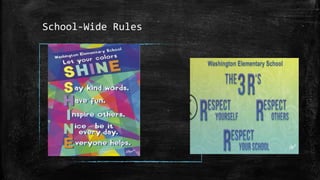
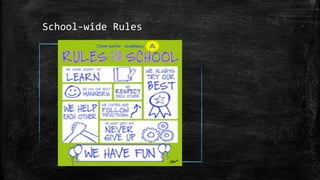
▪ School rules – rules need to be the same across the school
▪ Expectations – same across the classroom, gym, and cafeteria
School-Wide Rules
School-wide Rules
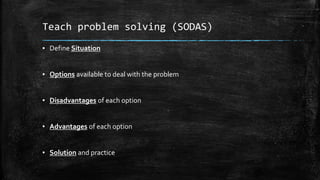
Teach problem solving (SODAS)
▪ Define Situation
▪ Options available to deal with the problem
▪ Disadvantages of each option
▪ Advantages of each option
▪ Solution and practice
Consequences for Actions
▪ Appropriate Consequences
▪ Immediate Consequences
▪ Consistent Consequences
▪ Deliver with empathy NOT anger
Praise students – Proactive Approach
▪ Students need to know you care
▪ Positive feedback in the classroom
▪ Compliment specific behaviors
▪ Give 10 or more COMPLIMENTS a day
References
BoysTown (2018). 8Ways Principals Can Build Positive School Culture
Now. School Climate should be the foundation for education. School
Leaders Now
Mulvahill, E. (2016). 21 SimpleWays to Integrate Social-Emotional
LearningThroughout the day. Apperson.
Torino, S. (2017). 15 Positive Behavior Posters you’re Going toWant for
your classroom and school. Lifetouch National School Studios

Positive School Culture

  • 1.
  • 2.
    Build strong relationships ▪I will Talk to my students ▪ I will develop Positive Interactions with my students ▪ I will Show Genuine Interest every day ▪ Goal- Every adult maintain a high rate of positive interactions with students to show genuine interest in their lives, activities, goals, and struggles.
  • 3.
    Teach Social Skills ▪Share ▪ Listen to others ▪ Disagree respectfully ▪ Honesty ▪ Sensitivity ▪ Concern and respect for others ▪ Humor ▪ Reliability
  • 4.
    Integrate Social-Emotional Learning ▪Start the day with a check –in --------Today I feel…….. ▪ Work in partnerships – teach them how to work in a group ▪ Nurture a culture of kindness ▪ Give them new words to say ▪ Set up a peace place ▪ Teach students how to manage conflict with peers ▪ Use anchor charts to teach social-emotional skills ▪ Allow for talk time ▪ Reflect on the end of the day
  • 5.
    Game Time –The Inner Circle ▪ Purpose –Teachers need to understand how students feel when they do not belong. ▪ Objective – end up in the inner circle ▪ Important – It is not where you start, but where you’re going that matters ▪ Instruction ▪ Two Circles – Inner circle will represent belonging / Outer Circle ▪ Use words “restorative circle” to divide the teachers in pairs ▪ Restorative – inner circle – facing out --- Circle – outer – facing in ▪ Distribute cards – SPOT IT!
  • 6.
    Game Time! ▪ Startmusic – each pair turns their Spot IT! Card face up ▪ Participants work to be the first to find the one picture image that connects the two cards. ▪ The person that finds it first points out what it is and earns a spot in the inner circle. ▪ Rotate the circle cards in order to play several rounds ▪ Focus on what they’re feeling as they try to get that coveted spot on the inside. ▪ Teachers can relate to students that are on the outside
  • 7.
    Game Reflection ▪ Whatwas the experience to fight for a spot in the inner circle like? ▪ Did you like being on the inside? ▪ How did it feel to be on the outside? ▪ Is it easy to find something in common? ▪ Like in the game, does it have to go fast in real life? ▪ Or might you still be finding new commonalities with staff members who you’ve known for years? ▪ How might this activity help the students in your learning space this year?
  • 8.
    Everyone on thesame page ▪ Adults need to self reflect ▪ Share vision of your school ▪ Consistent school rules ▪ Ways of defining and meeting student behavior ▪ Inappropriate behavior
  • 9.
    Be Role Models ▪Students learn by watching ▪ How they respond to situations ▪ How they cope with unfamiliar situations ▪ What is the message you and your staff’s behavior communicate? ▪ Example: If student is rejected by peers, the rejection stops if the teacher models warm and friendly behavior to that student ▪ Opposite is true ▪ Teachers-You Set theTone!
  • 10.
    Classroom and Schoolrules ▪ Student expectations ▪ Classroom rules- Simple and declarative – Ex. Be respectful and kind ▪ School rules – rules need to be the same across the school ▪ Expectations – same across the classroom, gym, and cafeteria
  • 11.
  • 12.
  • 13.
    Teach problem solving(SODAS) ▪ Define Situation ▪ Options available to deal with the problem ▪ Disadvantages of each option ▪ Advantages of each option ▪ Solution and practice
  • 14.
    Consequences for Actions ▪Appropriate Consequences ▪ Immediate Consequences ▪ Consistent Consequences ▪ Deliver with empathy NOT anger
  • 15.
    Praise students –Proactive Approach ▪ Students need to know you care ▪ Positive feedback in the classroom ▪ Compliment specific behaviors ▪ Give 10 or more COMPLIMENTS a day
  • 16.
    References BoysTown (2018). 8WaysPrincipals Can Build Positive School Culture Now. School Climate should be the foundation for education. School Leaders Now Mulvahill, E. (2016). 21 SimpleWays to Integrate Social-Emotional LearningThroughout the day. Apperson. Torino, S. (2017). 15 Positive Behavior Posters you’re Going toWant for your classroom and school. Lifetouch National School Studios