Pollution
By Daniel and B
What is Pollution?
The presence in or introduction into the environment of a
substance which has harmful or poisonous effects.
Air Pollution!
Measuring Air Pollution
Air pollution can be directly measured as it is emitted by a source in
mass. Air pollution can also be measured in the atmosphere as a
concentration. Ambient air is air that is measured from near ground to
prevent any sources of pollution. Alternatively, air pollution
concentrations can be simulated using computer models, and then
validated using data collected from direct measurements at selected
monitors or sources. Air pollution data and models are used together to
examine the impacts of control strategies on the ambient air.
Air Pollution
smoke: Deposits soot on buildings and trees, causing
them damage. Permeates the air, making it difficult
for living creatures to breathe.
carbon monoxide: poisonous gas
carbon dioxide: greenhouse gas that contributes to
global warming
sulfur dioxide: contributes to acid rain
Acidic gases like sulphur dioxide are produced when
fossil fuels like coal, oil and gas burn. Sulfur dioxide
dissolves in the clouds and causes acid rain.this is
going to have an affect to the water and the buildings.
this is going to damage and kill animals in water
Cause of Pollution
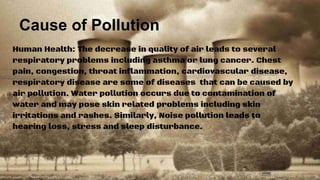
Human Health: The decrease in quality of air leads to several
respiratory problems including asthma or lung cancer. Chest
pain, congestion, throat inflammation, cardiovascular disease,
respiratory disease are some of diseases that can be caused by
air pollution. Water pollution occurs due to contamination of
water and may pose skin related problems including skin
irritations and rashes. Similarly, Noise pollution leads to
hearing loss, stress and sleep disturbance.
pollution of CO2
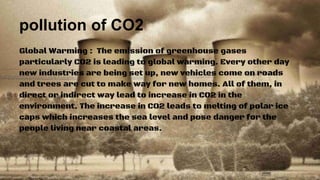
Global Warming : The emission of greenhouse gases
particularly CO2 is leading to global warming. Every other day
new industries are being set up, new vehicles come on roads
and trees are cut to make way for new homes. All of them, in
direct or indirect way lead to increase in CO2 in the
environment. The increase in CO2 leads to melting of polar ice
caps which increases the sea level and pose danger for the
people living near coastal areas.

Pollution

  • 1.
  • 2.
    What is Pollution? Thepresence in or introduction into the environment of a substance which has harmful or poisonous effects.
  • 3.
    Air Pollution! Measuring AirPollution Air pollution can be directly measured as it is emitted by a source in mass. Air pollution can also be measured in the atmosphere as a concentration. Ambient air is air that is measured from near ground to prevent any sources of pollution. Alternatively, air pollution concentrations can be simulated using computer models, and then validated using data collected from direct measurements at selected monitors or sources. Air pollution data and models are used together to examine the impacts of control strategies on the ambient air.
  • 4.
    Air Pollution smoke: Depositssoot on buildings and trees, causing them damage. Permeates the air, making it difficult for living creatures to breathe. carbon monoxide: poisonous gas carbon dioxide: greenhouse gas that contributes to global warming sulfur dioxide: contributes to acid rain Acidic gases like sulphur dioxide are produced when fossil fuels like coal, oil and gas burn. Sulfur dioxide dissolves in the clouds and causes acid rain.this is going to have an affect to the water and the buildings. this is going to damage and kill animals in water
  • 5.
    Cause of Pollution HumanHealth: The decrease in quality of air leads to several respiratory problems including asthma or lung cancer. Chest pain, congestion, throat inflammation, cardiovascular disease, respiratory disease are some of diseases that can be caused by air pollution. Water pollution occurs due to contamination of water and may pose skin related problems including skin irritations and rashes. Similarly, Noise pollution leads to hearing loss, stress and sleep disturbance.
  • 6.
    pollution of CO2 GlobalWarming : The emission of greenhouse gases particularly CO2 is leading to global warming. Every other day new industries are being set up, new vehicles come on roads and trees are cut to make way for new homes. All of them, in direct or indirect way lead to increase in CO2 in the environment. The increase in CO2 leads to melting of polar ice caps which increases the sea level and pose danger for the people living near coastal areas.