 Antoinne Destutt de Tracy coined the Ideology
during the French Revolution.
 Ideologie(according to Tracy) is a “science of ideas”
from a literal term idea-logy.
 Beliefs – are people’s assessment of reality and
what they hold to be true.
 Values – are people’s idea about right and wrong.
 Political Ideologies – could be seen as commitments
in order to change political system.
Distinguished Ideologies from Ideas
 Comprehensiveness – covers ideas pertaining to
many great matters such as, human beings place in
universal domain, the highest goals of society and
government and the best means of achieving the highest
social and political objectives.
 Pervasiveness – the set of ideas has not only been
known for a long time but has shaped the political beliefs
and actions of many people.
 Extensiveness – the set of ideas is held by a large
number of people and plays a vital role in nations and
states political affairs.
 Intensiveness – the set of ideas commands a strong
commitment from many of its adherents and significantly
influences political beliefs and actions.
Characteristics of Ideology
 Ideologies have their levels end in –ism
 Ideologies provide an explanation for problems
but confronts modern societies by providing
futuristic visions.
 Ideology is action- oriented.
 Ideologies mobilize a large number of people.
 It offers an account of the existing order, usually in
the of a ‘ world view’.
 It advances a model of the desired future, a vision of
the good society.
 It explains how political change can and should be
brought about – how to get from the two other
features.
Features of ideology
 Values
 The vision of the Ideal Polity
 The conception of the Human Nature
 The strategy of Action
 Political Tactics
Intellectual Components of an Ideology
Ideologies
1. Liberalism(The Left)
– “liber” which means “free men”
- a view that sees more need for change
and improvement in social relations
requiring governmental involvement and
that society must be free, free from
government interventions.
1. Individualism - it is the belief in the supreme
importance of the individual over any social group or
collective body.
2. Freedom – the ability to think or act as one wishes, a
capacity that can be associated with the individual, a
social group or a nation.
3. Reason – gives human beings the capacity to take
charge of their own lives and fashion their own
destinies.
4. Justice – is a moral standard of fairness and
impartiality. It is as well denotes giving what is due to
each person.
5. Toleration – willingness to accept views or action with
which one is in disagreement.
Set of values and beliefs of Liberalism
 Classical Liberalism – subscribed to egotistical
individualism; have a belief in negative freedom and
have a broadly positive view of civil society.
 Neoliberalism – the state are constantly interacting
with each other and that they value cooperation as
part of their own interest.
Liberalism
2. Conservatism (The Right)
- the term “conservatism” derived from the
term conservation. It is a political philosophy
that tend to support the status quo and
advocates change only in moderation
upholding the value of tradition and seeks to
preserve all that is good about the past.
Ideologies
3. Socialism
- derived from “socialist” meaning to combine or to
share.
- is an economic and political doctrine advocating
governmental ownership and direction of
production and services but would retain existing
institutions as the means of regulating.
“ The supreme principle of socialism is that man takes
precedence over things, life over property and hence
work over capital; that power follows creation and not
possession; that man must not be governed by
circumstances, but circumstances must be governed by
man”.
- Erich Fromm
Ideologies
4. Social Democracy
- it is a moderate or reformist brand of socialism
that favor the balance between the market and the
state rather than the abolition of capitalism.
- become welfare states that focus on
improvement of living conditions such as
unemployment and medical insurance, generous
pension and subsidized food and housing.
Ideologies
5. Communism
- it is an economic, social and political system
seeking government ownership of the means
production and services directed by a process of
scientific administration and universal assent.
- it is an extreme left wing ideology, based on the
revolutionary teachings of Karl Marx, characterized
by collective ownership and planned economy.
Ideologies
6. Fascism
- derived from fasces, which means a bundle of rods with an
axe-blade protruding that signified the authority that
magistrates in Imperial Rome.
- is a movement that stands outmoded, repressive social
and political condition rejecting democracy, repudiates
constitutionalism and stresses that all values arise from the
state against which the individual has no rights.
Salient Features of Fascism
 Totalitarianism
 Nationalism
 Anti- liberalism
 Militarism and Violence
 Leadership
Ideologies
7. Religious Fundamentalism
- fundamentalism from Latin word fundamental,
meaning base.
- it is associated with inflexibility, dogmatism,
authoritarianism or worst violence. It is characterize by
a rejection of the distinction between politics and
religion.
Themes of Religious Fundamentalism
 Religion as politics
 The fundamentalist impulse
 Anti- modernism
 Militancy
Ideologies
8. Feminism
- derive from Latin word femina meaning
female or woman, concerned with the
attainment of gender equality in the political,
economic and social spheres of life.
- the basic idea of feminism: that woman
experience a poor state in society as
consequence of the patriarchy, male
domination of women should be overthrown.
Ideologies
9. Environmentalism
- an ideology focusing on the idea that environment is
endangered and must be preserved through regulation
and lifestyle changes.
- its concern is about the natural environment and
particularly about reducing environmental degradation
that is more policy
IdeologiesIdeologies
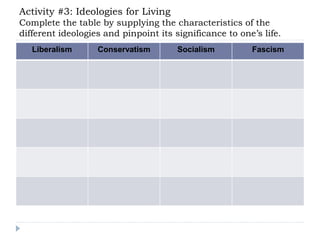
Activity #3: Ideologies for Living
Complete the table by supplying the characteristics of the
different ideologies and pinpoint its significance to one’s life.
Liberalism Conservatism Socialism Fascism
Activity #4: Short Biography
Direction: Choose a historical figure. Then right a short
biography to share with the class that addresses this
guiding question: Why is this individual a great
leader? How is his/her political belief linked to
Philippine politics?
Home Mission #2
Research Work: Interview a politician in your
community regarding their advocacy and belief.
Based on his/her advocacy and belief, identify the
kind of ideology that he/she believes in.

Political ideologies lesson 2

  • 2.
     Antoinne Destuttde Tracy coined the Ideology during the French Revolution.  Ideologie(according to Tracy) is a “science of ideas” from a literal term idea-logy.  Beliefs – are people’s assessment of reality and what they hold to be true.  Values – are people’s idea about right and wrong.  Political Ideologies – could be seen as commitments in order to change political system.
  • 3.
    Distinguished Ideologies fromIdeas  Comprehensiveness – covers ideas pertaining to many great matters such as, human beings place in universal domain, the highest goals of society and government and the best means of achieving the highest social and political objectives.  Pervasiveness – the set of ideas has not only been known for a long time but has shaped the political beliefs and actions of many people.  Extensiveness – the set of ideas is held by a large number of people and plays a vital role in nations and states political affairs.  Intensiveness – the set of ideas commands a strong commitment from many of its adherents and significantly influences political beliefs and actions.
  • 4.
    Characteristics of Ideology Ideologies have their levels end in –ism  Ideologies provide an explanation for problems but confronts modern societies by providing futuristic visions.  Ideology is action- oriented.  Ideologies mobilize a large number of people.
  • 5.
     It offersan account of the existing order, usually in the of a ‘ world view’.  It advances a model of the desired future, a vision of the good society.  It explains how political change can and should be brought about – how to get from the two other features. Features of ideology
  • 6.
     Values  Thevision of the Ideal Polity  The conception of the Human Nature  The strategy of Action  Political Tactics Intellectual Components of an Ideology
  • 7.
    Ideologies 1. Liberalism(The Left) –“liber” which means “free men” - a view that sees more need for change and improvement in social relations requiring governmental involvement and that society must be free, free from government interventions.
  • 8.
    1. Individualism -it is the belief in the supreme importance of the individual over any social group or collective body. 2. Freedom – the ability to think or act as one wishes, a capacity that can be associated with the individual, a social group or a nation. 3. Reason – gives human beings the capacity to take charge of their own lives and fashion their own destinies. 4. Justice – is a moral standard of fairness and impartiality. It is as well denotes giving what is due to each person. 5. Toleration – willingness to accept views or action with which one is in disagreement. Set of values and beliefs of Liberalism
  • 9.
     Classical Liberalism– subscribed to egotistical individualism; have a belief in negative freedom and have a broadly positive view of civil society.  Neoliberalism – the state are constantly interacting with each other and that they value cooperation as part of their own interest. Liberalism
  • 10.
    2. Conservatism (TheRight) - the term “conservatism” derived from the term conservation. It is a political philosophy that tend to support the status quo and advocates change only in moderation upholding the value of tradition and seeks to preserve all that is good about the past. Ideologies
  • 11.
    3. Socialism - derivedfrom “socialist” meaning to combine or to share. - is an economic and political doctrine advocating governmental ownership and direction of production and services but would retain existing institutions as the means of regulating. “ The supreme principle of socialism is that man takes precedence over things, life over property and hence work over capital; that power follows creation and not possession; that man must not be governed by circumstances, but circumstances must be governed by man”. - Erich Fromm Ideologies
  • 12.
    4. Social Democracy -it is a moderate or reformist brand of socialism that favor the balance between the market and the state rather than the abolition of capitalism. - become welfare states that focus on improvement of living conditions such as unemployment and medical insurance, generous pension and subsidized food and housing. Ideologies
  • 13.
    5. Communism - itis an economic, social and political system seeking government ownership of the means production and services directed by a process of scientific administration and universal assent. - it is an extreme left wing ideology, based on the revolutionary teachings of Karl Marx, characterized by collective ownership and planned economy. Ideologies
  • 14.
    6. Fascism - derivedfrom fasces, which means a bundle of rods with an axe-blade protruding that signified the authority that magistrates in Imperial Rome. - is a movement that stands outmoded, repressive social and political condition rejecting democracy, repudiates constitutionalism and stresses that all values arise from the state against which the individual has no rights. Salient Features of Fascism  Totalitarianism  Nationalism  Anti- liberalism  Militarism and Violence  Leadership Ideologies
  • 15.
    7. Religious Fundamentalism -fundamentalism from Latin word fundamental, meaning base. - it is associated with inflexibility, dogmatism, authoritarianism or worst violence. It is characterize by a rejection of the distinction between politics and religion. Themes of Religious Fundamentalism  Religion as politics  The fundamentalist impulse  Anti- modernism  Militancy Ideologies
  • 16.
    8. Feminism - derivefrom Latin word femina meaning female or woman, concerned with the attainment of gender equality in the political, economic and social spheres of life. - the basic idea of feminism: that woman experience a poor state in society as consequence of the patriarchy, male domination of women should be overthrown. Ideologies
  • 17.
    9. Environmentalism - anideology focusing on the idea that environment is endangered and must be preserved through regulation and lifestyle changes. - its concern is about the natural environment and particularly about reducing environmental degradation that is more policy IdeologiesIdeologies
  • 18.
    Activity #3: Ideologiesfor Living Complete the table by supplying the characteristics of the different ideologies and pinpoint its significance to one’s life. Liberalism Conservatism Socialism Fascism
  • 19.
    Activity #4: ShortBiography Direction: Choose a historical figure. Then right a short biography to share with the class that addresses this guiding question: Why is this individual a great leader? How is his/her political belief linked to Philippine politics?
  • 20.
    Home Mission #2 ResearchWork: Interview a politician in your community regarding their advocacy and belief. Based on his/her advocacy and belief, identify the kind of ideology that he/she believes in.