POL 140-10
Spring 2015
 Presidential Selection
 Chosen by Electoral College to serve 4 years
 Basic Qualifications
 Natural-born citizen of the United States
 At least 35 years old
 U.S. resident for 14 years
 Presidential Succession
 Presidential Oath of Office
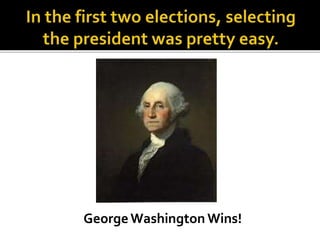
GeorgeWashington Wins!
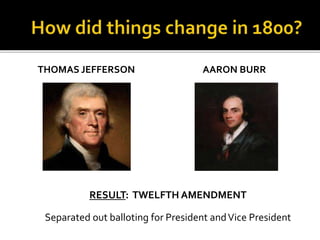
THOMAS JEFFERSON AARON BURR
RESULT: TWELFTH AMENDMENT
Separated out balloting for President andVice President
 Presidential nominations began to be
controlled by Congress
 Ended after 1824 Election
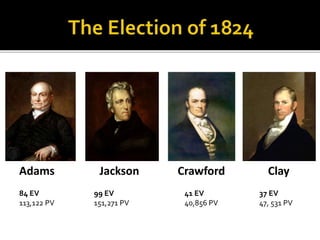
Adams Jackson Crawford Clay
84 EV
113,122 PV
99 EV
151,271 PV
41 EV
40,856 PV
37 EV
47, 531 PV
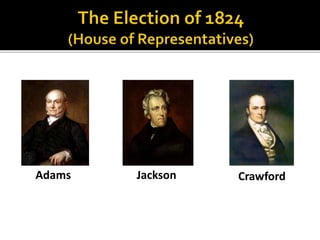
Adams Jackson Crawford
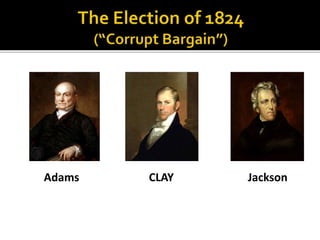
Adams CLAY Jackson
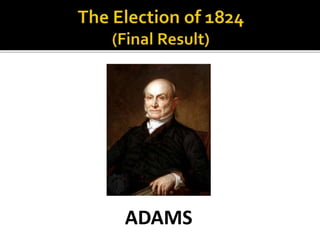
ADAMS
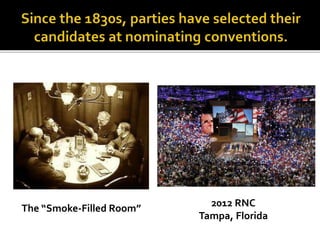
2012 RNC
Tampa, Florida
The “Smoke-Filled Room”
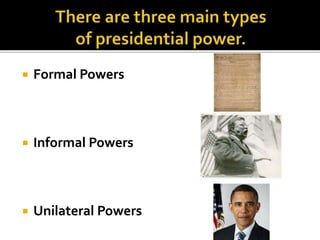
 Formal Powers
 Informal Powers
 Unilateral Powers
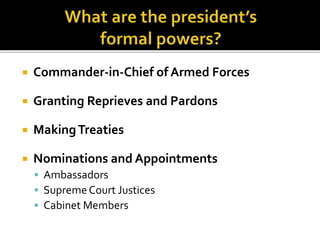
 Commander-in-Chief of Armed Forces
 Granting Reprieves and Pardons
 MakingTreaties
 Nominations and Appointments
 Ambassadors
 Supreme Court Justices
 Cabinet Members
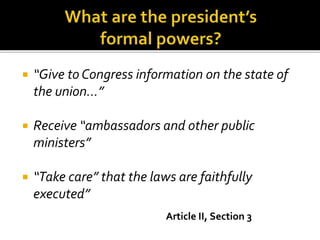
 “Give to Congress information on the state of
the union…”
 Receive “ambassadors and other public
ministers”
 “Take care” that the laws are faithfully
executed”
Article II, Section 3
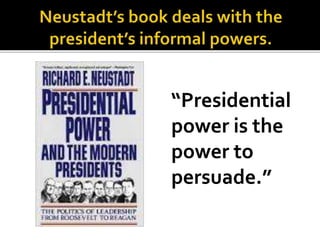
“Presidential
power is the
power to
persuade.”
 Executive Orders
 National Security Directives
 Signing Statements
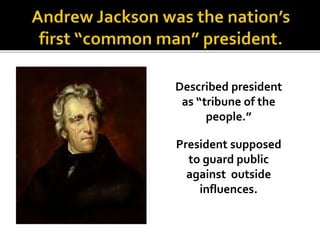
Described president
as “tribune of the
people.”
President supposed
to guard public
against outside
influences.
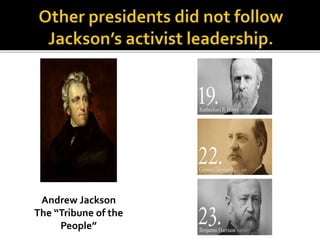
Andrew Jackson
The “Tribune of the
People”
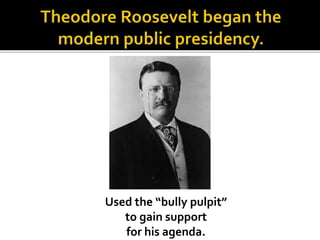
Used the “bully pulpit”
to gain support
for his agenda.
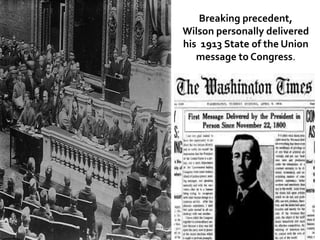
Breaking precedent,
Wilson personally delivered
his 1913 State of the Union
message to Congress.
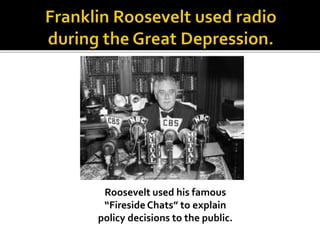
Roosevelt used his famous
“Fireside Chats” to explain
policy decisions to the public.
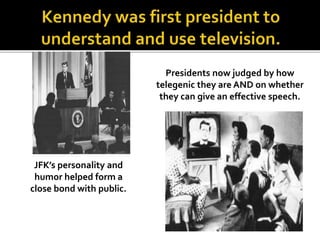
JFK’s personality and
humor helped form a
close bond with public.
Presidents now judged by how
telegenic they are AND on whether
they can give an effective speech.
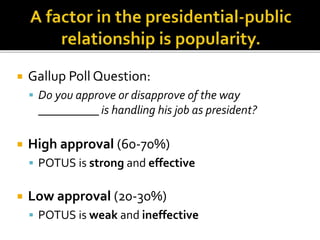
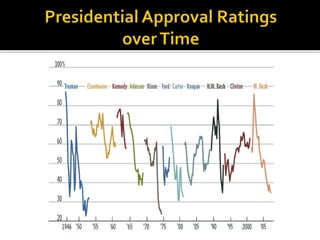
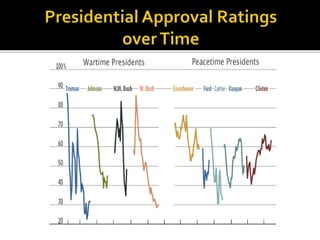
 Gallup Poll Question:
 Do you approve or disapprove of the way
__________ is handling his job as president?
 High approval (60-70%)
 POTUS is strong and effective
 Low approval (20-30%)
 POTUS is weak and ineffective
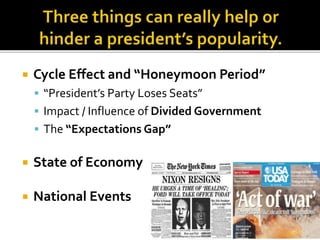
 Cycle Effect and “Honeymoon Period”
 “President’s Party Loses Seats”
 Impact / Influence of Divided Government
 The “Expectations Gap”
 State of Economy
 National Events
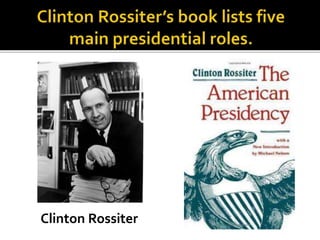
Clinton Rossiter
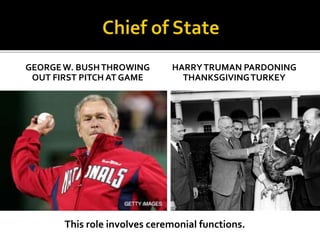
GEORGEW. BUSHTHROWING
OUT FIRST PITCH AT GAME
HARRYTRUMAN PARDONING
THANKSGIVINGTURKEY
This role involves ceremonial functions.
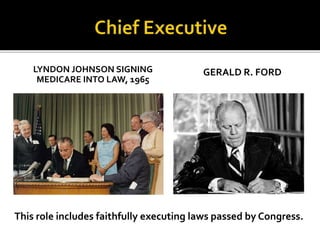
LYNDON JOHNSON SIGNING
MEDICARE INTO LAW, 1965
GERALD R. FORD
This role includes faithfully executing laws passed by Congress.
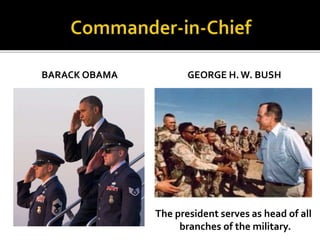
BARACK OBAMA GEORGE H. W. BUSH
The president serves as head of all
branches of the military.
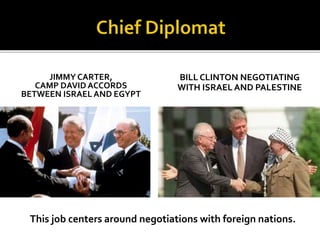
JIMMY CARTER,
CAMP DAVID ACCORDS
BETWEEN ISRAELAND EGYPT
BILL CLINTON NEGOTIATING
WITH ISRAEL AND PALESTINE
This job centers around negotiations with foreign nations.
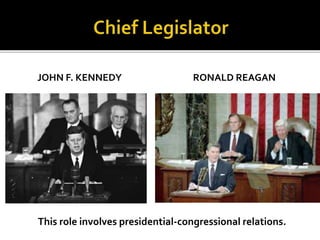
JOHN F. KENNEDY RONALD REAGAN
This role involves presidential-congressional relations.
 Crisis Manager
 Morale Builder
 Recruiter
 Priority Setter
 Molder of Public Opinion
 Party Leader
 Administrator
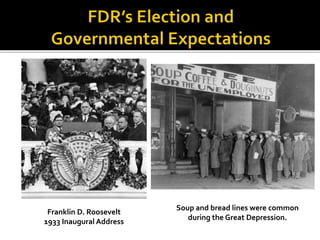
Franklin D. Roosevelt
1933 Inaugural Address
Soup and bread lines were common
during the Great Depression.
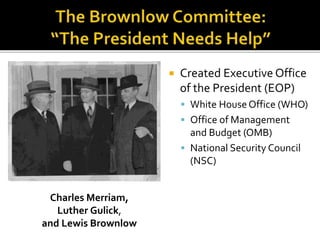
 Created Executive Office
of the President (EOP)
 White HouseOffice (WHO)
 Office of Management
and Budget (OMB)
 National Security Council
(NSC)
Charles Merriam,
Luther Gulick,
and Lewis Brownlow
 White House Office (WHO)
 Policy, personnel, public and congressional relations
 How do presidents organize their staff?
 Office of Management and Budget (OMB)
 Monitors implementation of programs
 Prepares annual budget
 National Security Council (NSC)
 Responsible for national security issues
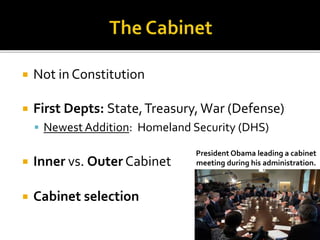
 Not in Constitution
 First Depts: State,Treasury,War (Defense)
 Newest Addition: Homeland Security (DHS)
 Inner vs. Outer Cabinet
 Cabinet selection
President Obama leading a cabinet
meeting during his administration.
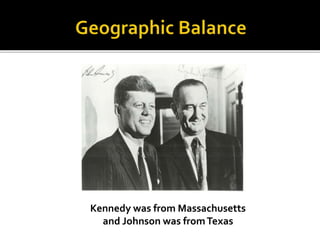
 Geographic Balance
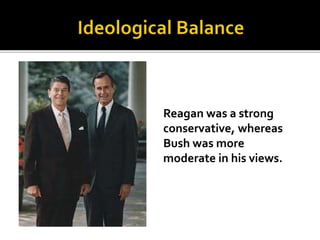
 Ideological Balance
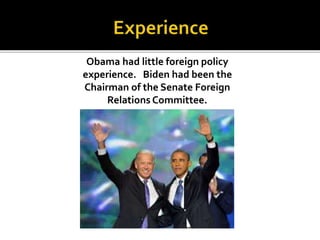
 Experience
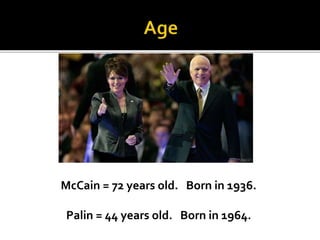
 Age
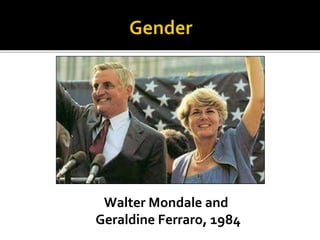
 Gender
Kennedy was from Massachusetts
and Johnson was fromTexas
Reagan was a strong
conservative, whereas
Bush was more
moderate in his views.
Obama had little foreign policy
experience. Biden had been the
Chairman of the Senate Foreign
Relations Committee.
McCain = 72 years old. Born in 1936.
Palin = 44 years old. Born in 1964.
Walter Mondale and
Geraldine Ferraro, 1984
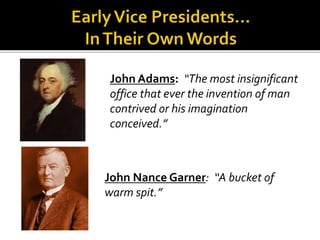
John Adams: “The most insignificant
office that ever the invention of man
contrived or his imagination
conceived.”
John Nance Garner: “A bucket of
warm spit.”
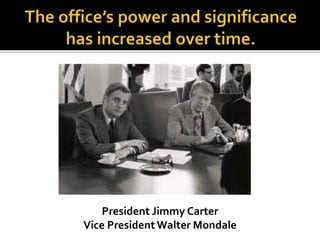
President Jimmy Carter
Vice President Walter Mondale
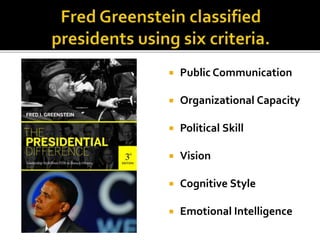
 Public Communication
 Organizational Capacity
 Political Skill
 Vision
 Cognitive Style
 Emotional Intelligence
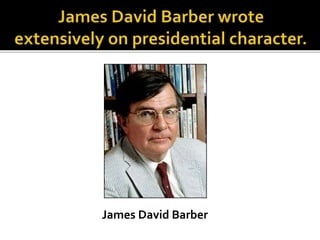
James David Barber
ACTIVE-PASSIVE
 How much energy does
the president invest in
their job?
POSITIVE-NEGATIVE
 How much does the
president enjoy their job?
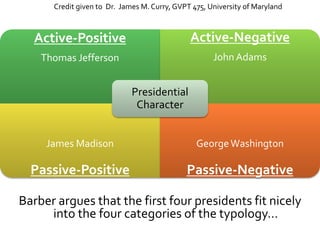
Barber argues that the first four presidents fit nicely
into the four categories of the typology…
Active-Positive
Thomas Jefferson
Active-Negative
John Adams
James Madison
Passive-Positive
GeorgeWashington
Passive-Negative
Presidential
Character
Credit given to Dr. James M. Curry, GVPT 475, University of Maryland
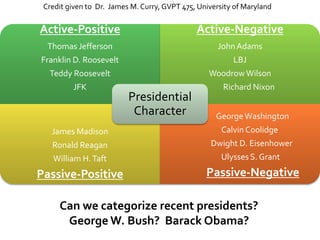
Can we categorize recent presidents?
George W. Bush? Barack Obama?
Active-Positive
Thomas Jefferson
Franklin D. Roosevelt
Teddy Roosevelt
JFK
Active-Negative
JohnAdams
LBJ
WoodrowWilson
Richard Nixon
James Madison
Ronald Reagan
William H.Taft
Passive-Positive
G GeorgeWashington
Calvin Coolidge
Dwight D. Eisenhower
Ulysses S. Grant
Passive-Negative
Presidential
Character
Credit given to Dr. James M. Curry, GVPT 475, University of Maryland

Pol 140 presidency SP 15 Half

  • 1.
  • 7.
     Presidential Selection Chosen by Electoral College to serve 4 years  Basic Qualifications  Natural-born citizen of the United States  At least 35 years old  U.S. resident for 14 years  Presidential Succession  Presidential Oath of Office
  • 10.
  • 11.
    THOMAS JEFFERSON AARONBURR RESULT: TWELFTH AMENDMENT Separated out balloting for President andVice President
  • 12.
     Presidential nominationsbegan to be controlled by Congress  Ended after 1824 Election
  • 13.
    Adams Jackson CrawfordClay 84 EV 113,122 PV 99 EV 151,271 PV 41 EV 40,856 PV 37 EV 47, 531 PV
  • 14.
  • 15.
  • 16.
  • 17.
    2012 RNC Tampa, Florida The“Smoke-Filled Room”
  • 19.
     Formal Powers Informal Powers  Unilateral Powers
  • 21.
     Commander-in-Chief ofArmed Forces  Granting Reprieves and Pardons  MakingTreaties  Nominations and Appointments  Ambassadors  Supreme Court Justices  Cabinet Members
  • 22.
     “Give toCongress information on the state of the union…”  Receive “ambassadors and other public ministers”  “Take care” that the laws are faithfully executed” Article II, Section 3
  • 24.
  • 26.
     Executive Orders National Security Directives  Signing Statements
  • 28.
    Described president as “tribuneof the people.” President supposed to guard public against outside influences.
  • 29.
  • 30.
    Used the “bullypulpit” to gain support for his agenda.
  • 31.
    Breaking precedent, Wilson personallydelivered his 1913 State of the Union message to Congress.
  • 32.
    Roosevelt used hisfamous “Fireside Chats” to explain policy decisions to the public.
  • 33.
    JFK’s personality and humorhelped form a close bond with public. Presidents now judged by how telegenic they are AND on whether they can give an effective speech.
  • 35.
     Gallup PollQuestion:  Do you approve or disapprove of the way __________ is handling his job as president?  High approval (60-70%)  POTUS is strong and effective  Low approval (20-30%)  POTUS is weak and ineffective
  • 38.
     Cycle Effectand “Honeymoon Period”  “President’s Party Loses Seats”  Impact / Influence of Divided Government  The “Expectations Gap”  State of Economy  National Events
  • 40.
  • 41.
    GEORGEW. BUSHTHROWING OUT FIRSTPITCH AT GAME HARRYTRUMAN PARDONING THANKSGIVINGTURKEY This role involves ceremonial functions.
  • 42.
    LYNDON JOHNSON SIGNING MEDICAREINTO LAW, 1965 GERALD R. FORD This role includes faithfully executing laws passed by Congress.
  • 43.
    BARACK OBAMA GEORGEH. W. BUSH The president serves as head of all branches of the military.
  • 44.
    JIMMY CARTER, CAMP DAVIDACCORDS BETWEEN ISRAELAND EGYPT BILL CLINTON NEGOTIATING WITH ISRAEL AND PALESTINE This job centers around negotiations with foreign nations.
  • 45.
    JOHN F. KENNEDYRONALD REAGAN This role involves presidential-congressional relations.
  • 46.
     Crisis Manager Morale Builder  Recruiter  Priority Setter  Molder of Public Opinion  Party Leader  Administrator
  • 48.
    Franklin D. Roosevelt 1933Inaugural Address Soup and bread lines were common during the Great Depression.
  • 49.
     Created ExecutiveOffice of the President (EOP)  White HouseOffice (WHO)  Office of Management and Budget (OMB)  National Security Council (NSC) Charles Merriam, Luther Gulick, and Lewis Brownlow
  • 50.
     White HouseOffice (WHO)  Policy, personnel, public and congressional relations  How do presidents organize their staff?  Office of Management and Budget (OMB)  Monitors implementation of programs  Prepares annual budget  National Security Council (NSC)  Responsible for national security issues
  • 51.
     Not inConstitution  First Depts: State,Treasury,War (Defense)  Newest Addition: Homeland Security (DHS)  Inner vs. Outer Cabinet  Cabinet selection President Obama leading a cabinet meeting during his administration.
  • 53.
     Geographic Balance Ideological Balance  Experience  Age  Gender
  • 54.
    Kennedy was fromMassachusetts and Johnson was fromTexas
  • 55.
    Reagan was astrong conservative, whereas Bush was more moderate in his views.
  • 56.
    Obama had littleforeign policy experience. Biden had been the Chairman of the Senate Foreign Relations Committee.
  • 57.
    McCain = 72years old. Born in 1936. Palin = 44 years old. Born in 1964.
  • 58.
  • 59.
    John Adams: “Themost insignificant office that ever the invention of man contrived or his imagination conceived.” John Nance Garner: “A bucket of warm spit.”
  • 60.
    President Jimmy Carter VicePresident Walter Mondale
  • 63.
     Public Communication Organizational Capacity  Political Skill  Vision  Cognitive Style  Emotional Intelligence
  • 64.
  • 65.
    ACTIVE-PASSIVE  How muchenergy does the president invest in their job? POSITIVE-NEGATIVE  How much does the president enjoy their job?
  • 66.
    Barber argues thatthe first four presidents fit nicely into the four categories of the typology… Active-Positive Thomas Jefferson Active-Negative John Adams James Madison Passive-Positive GeorgeWashington Passive-Negative Presidential Character Credit given to Dr. James M. Curry, GVPT 475, University of Maryland
  • 67.
    Can we categorizerecent presidents? George W. Bush? Barack Obama? Active-Positive Thomas Jefferson Franklin D. Roosevelt Teddy Roosevelt JFK Active-Negative JohnAdams LBJ WoodrowWilson Richard Nixon James Madison Ronald Reagan William H.Taft Passive-Positive G GeorgeWashington Calvin Coolidge Dwight D. Eisenhower Ulysses S. Grant Passive-Negative Presidential Character Credit given to Dr. James M. Curry, GVPT 475, University of Maryland