Project Management
Framework
PMP Preparation Course
March – April 2015
Session 1
by Andrey Mikityuk
Head of Project Management Team
Credit Suisse Moscow
Project Definition
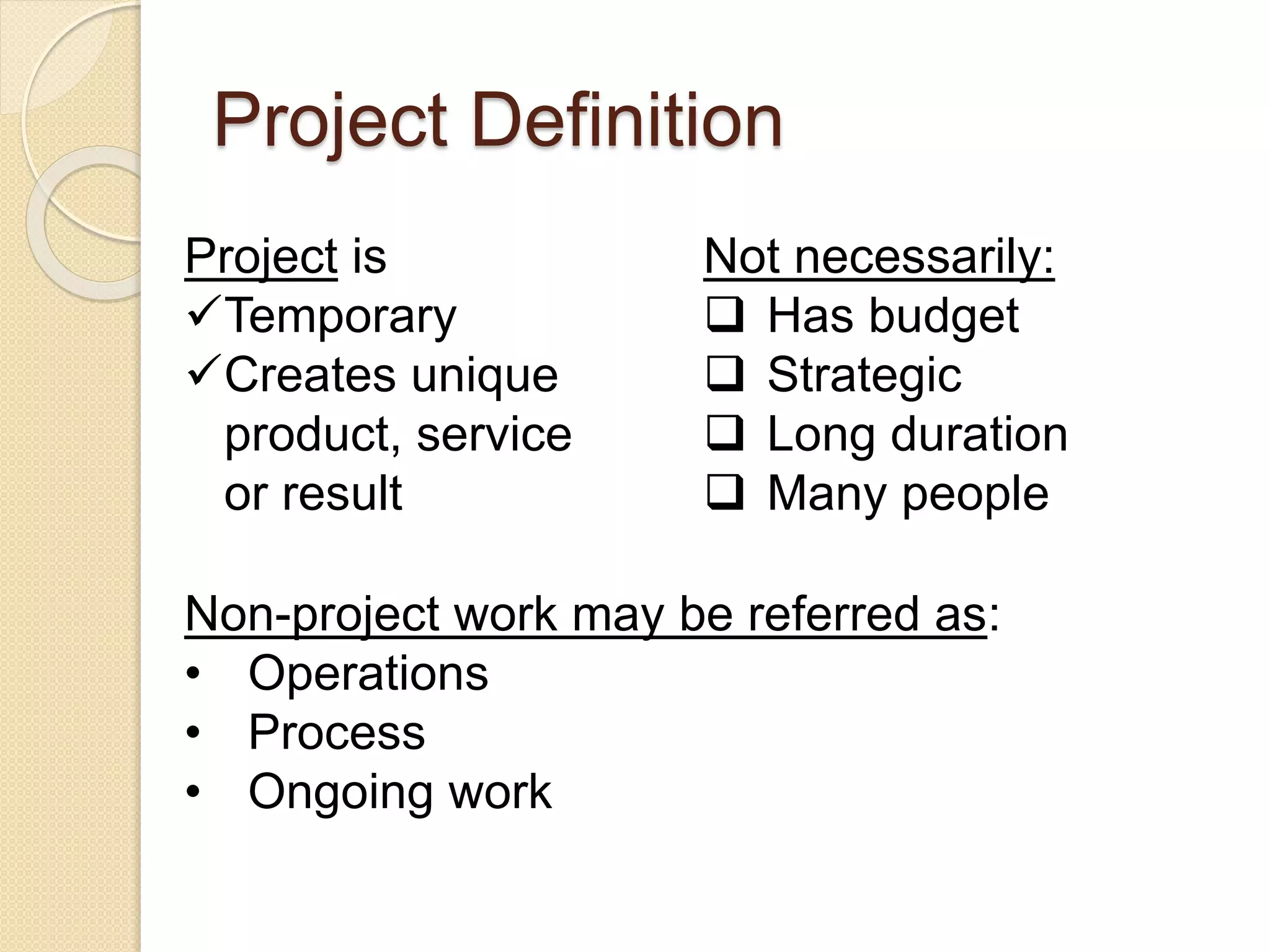
Project is
Temporary
Creates unique
product, service
or result
Not necessarily:
 Has budget
 Strategic
 Long duration
 Many people
Non-project work may be referred as:
• Operations
• Process
• Ongoing work
Programs and Portfolios
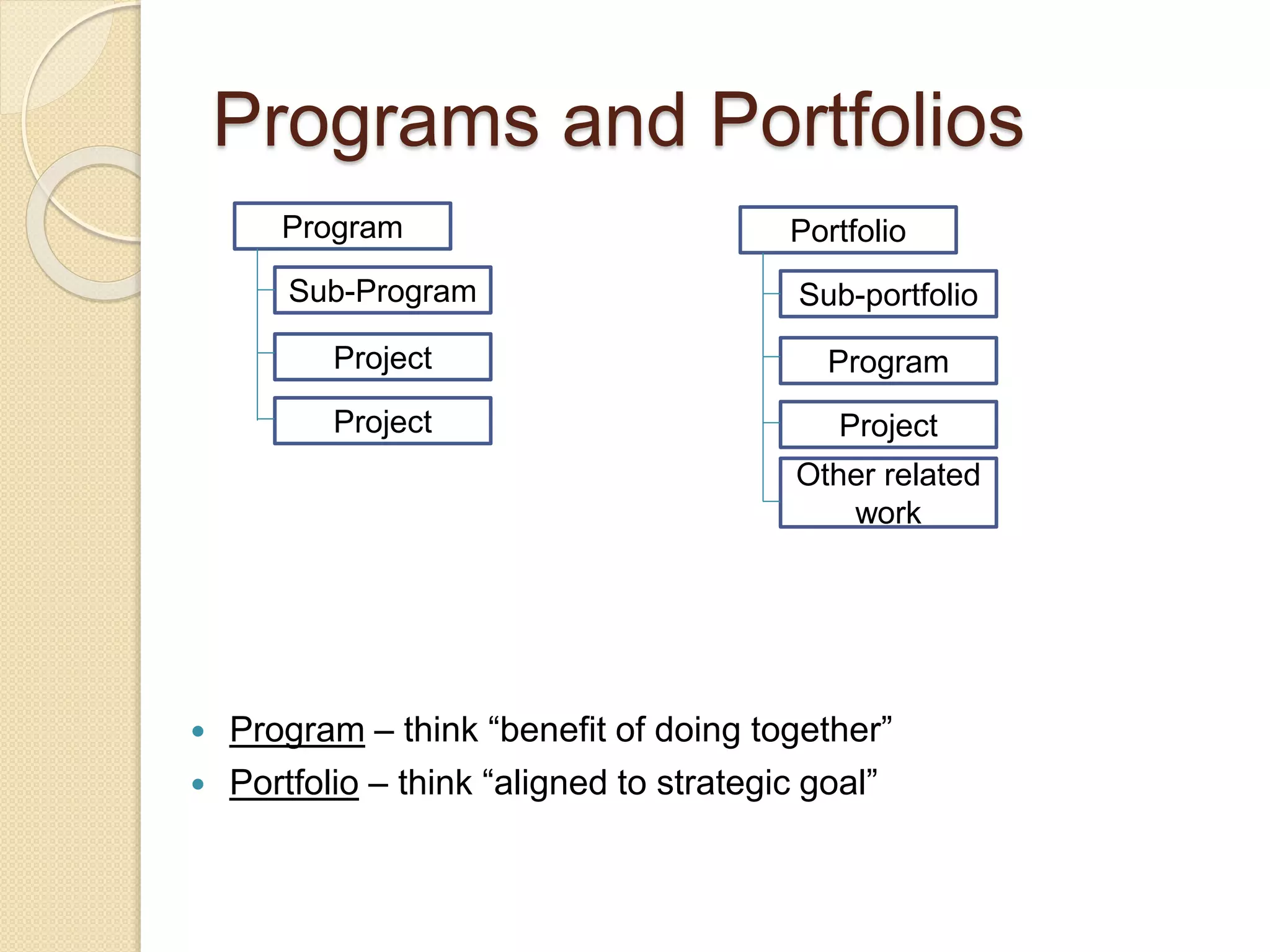
 Program – think “benefit of doing together”
 Portfolio – think “aligned to strategic goal”
Program
Sub-Program
Project
Project
Portfolio
Sub-portfolio
Program
Project
Other related
work
Project Management and
Project Manager
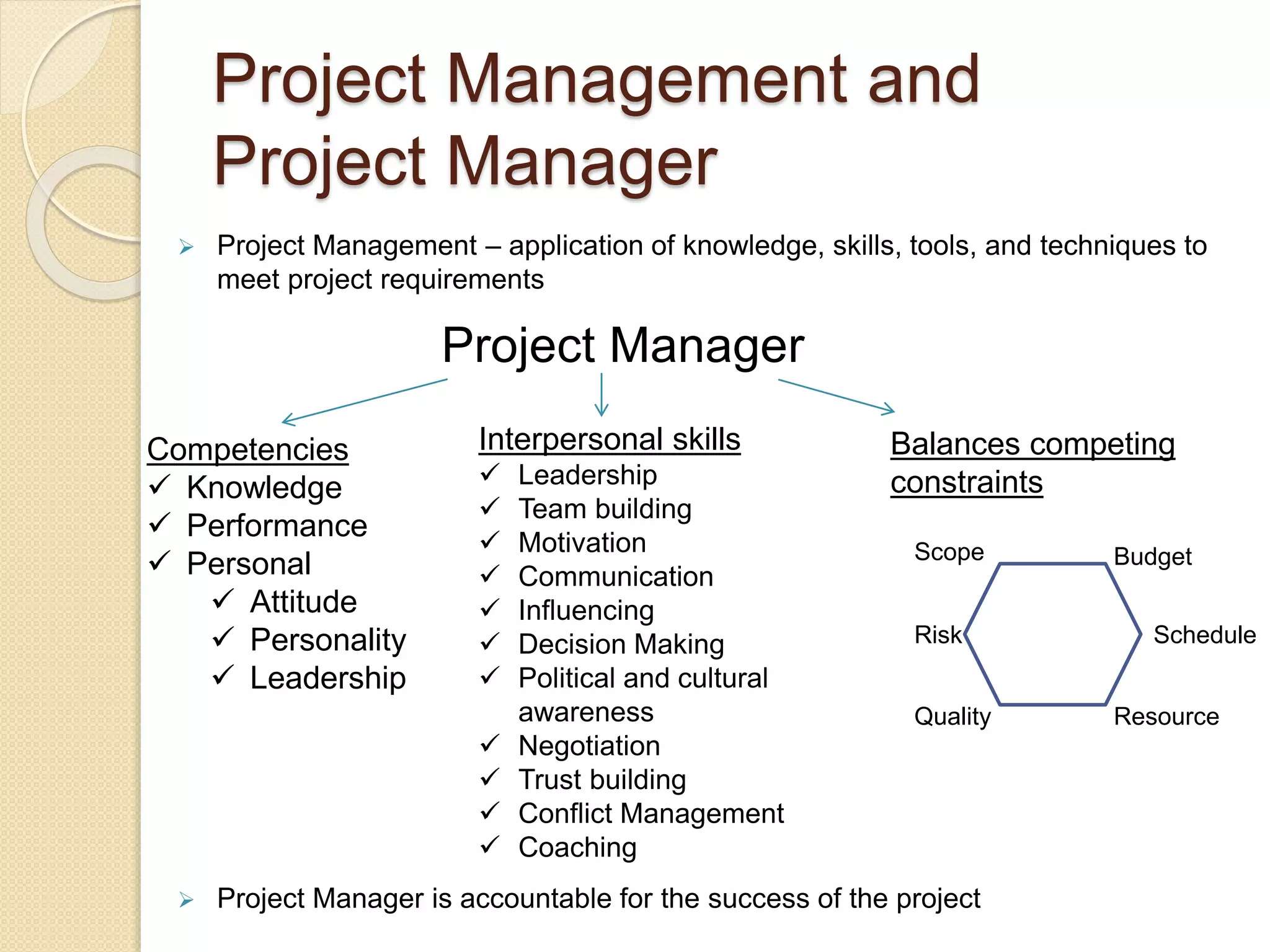
 Project Management – application of knowledge, skills, tools, and techniques to
meet project requirements
Project Manager
Competencies
 Knowledge
 Performance
 Personal
 Attitude
 Personality
 Leadership
Interpersonal skills
 Leadership
 Team building
 Motivation
 Communication
 Influencing
 Decision Making
 Political and cultural
awareness
 Negotiation
 Trust building
 Conflict Management
 Coaching
Balances competing
constraints
Scope
ScheduleRisk
Quality
Budget
Resource
 Project Manager is accountable for the success of the project
Few More Concepts
 Progressive elaboration
 Organizational Project Management
(OPM)
 Organizational Project Management
Maturity Model (OPM3)
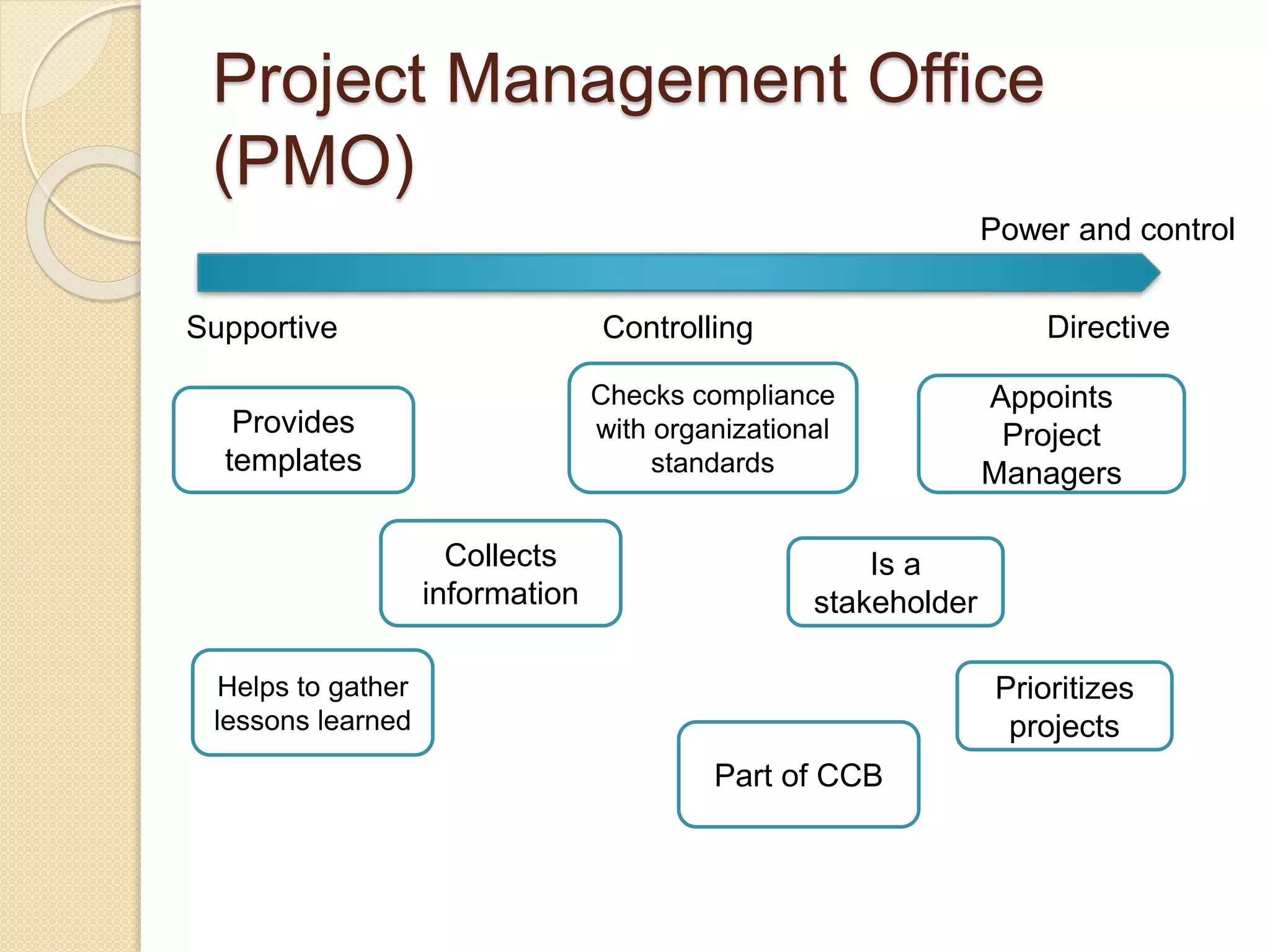
Project Management Office
(PMO)
Power and control
Supportive Controlling Directive
Provides
templates
Helps to gather
lessons learned
Collects
information
Checks compliance
with organizational
standards
Part of CCB
Appoints
Project
Managers
Is a
stakeholder
Prioritizes
projects
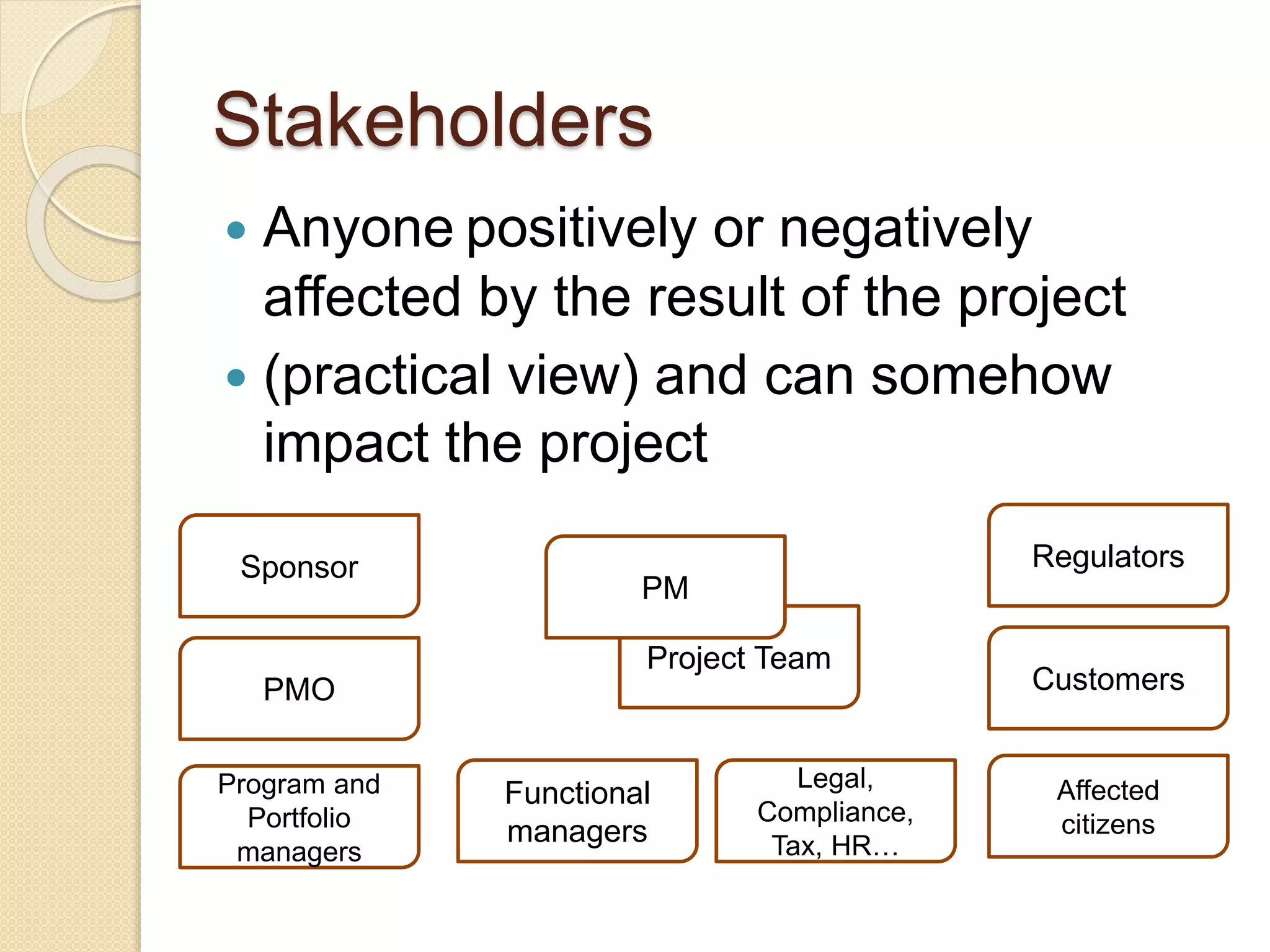
Project Team
Stakeholders
 Anyone positively or negatively
affected by the result of the project
 (practical view) and can somehow
impact the project
PM
Sponsor
PMO
Program and
Portfolio
managers
Functional
managers
Legal,
Compliance,
Tax, HR…
Regulators
Customers
Affected
citizens
Organizational structures
Project-orientation
Functional Matrix Projectized
Weak Balanced Strong
Project Expeditor
(no authority)
Project Coordinator
(little authority)
Project Manager
(shared authority)
Project Manager
(maximum
authority)
Project-Based Organization (PBO) – temporary structure inside
functional organization to deliver projects
Composite organizations – combine several approaches (ex: weak
matrix for small projects and strong matrix for strategic ones)
For PMP Exam: assume matrix organization if not stated otherwise
Enterprise Environmental Factors
Organizational Process Assets
Enterprise Environmental Factors – influence project, but not under
control (company culture, existing systems, legal regulation, etc).
Includes
Project Management Information System (PMIS)
 Scheduling software
 Configuration management system
 Time-tracking software
 Procurement-management software
 …
Organizational Process Assets
 Existing processes, procedures and policies
 Corporate Knowledge Base
 Historical information (activities, lessons learned, WBS, reports,
risk logs, project management plans from previous projects)
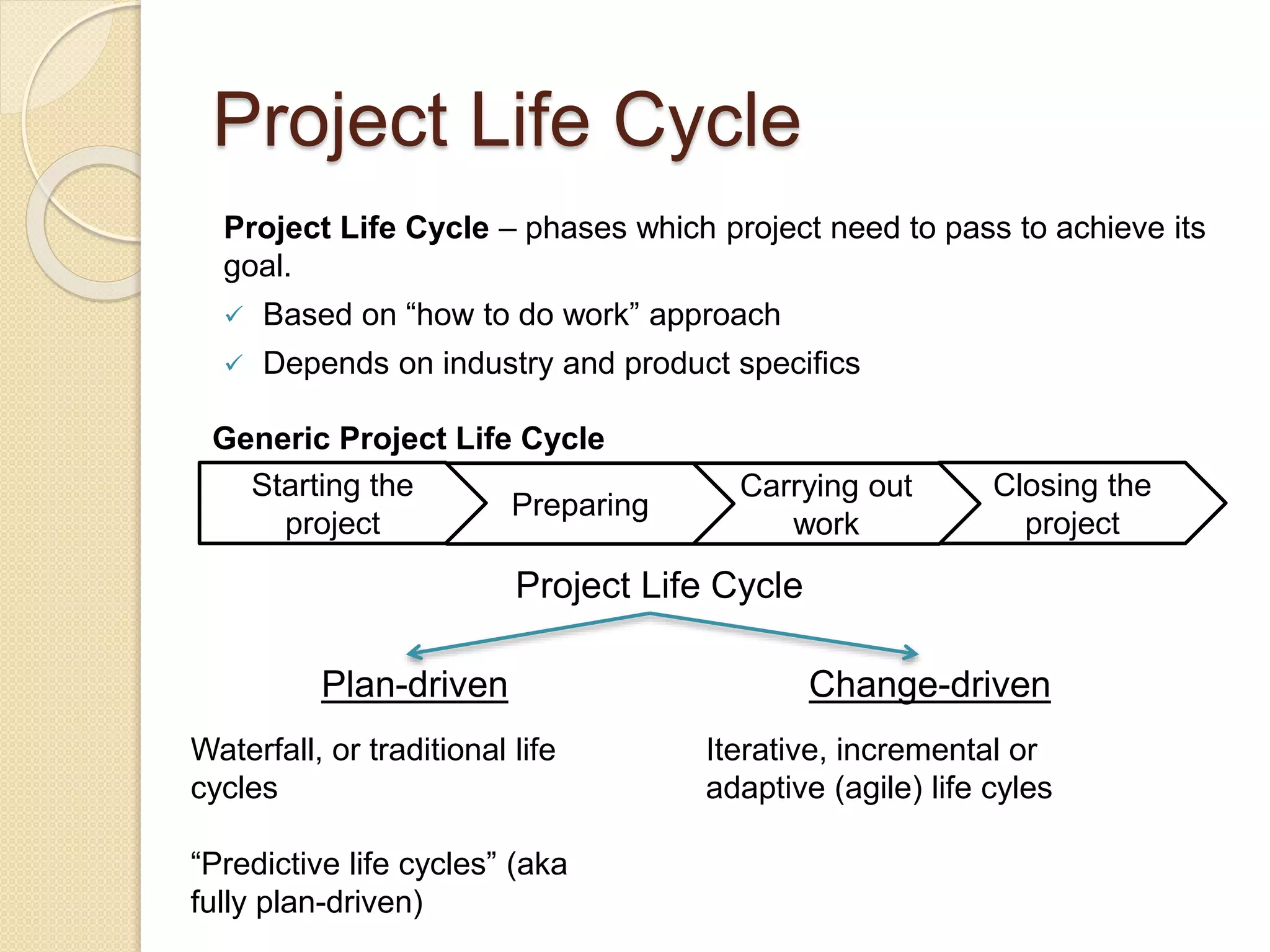
Project Life Cycle
Project Life Cycle – phases which project need to pass to achieve its
goal.
 Based on “how to do work” approach
 Depends on industry and product specifics
Closing the
project
Carrying out
work
Preparing
Starting the
project
Generic Project Life Cycle
Project Life Cycle
Plan-driven Change-driven
Waterfall, or traditional life
cycles
“Predictive life cycles” (aka
fully plan-driven)
Iterative, incremental or
adaptive (agile) life cyles
Characteristics of the project
High
Low
Risk and uncertainty
Cost of changes
Project time
Phase 3
Phase 2
Project Phases
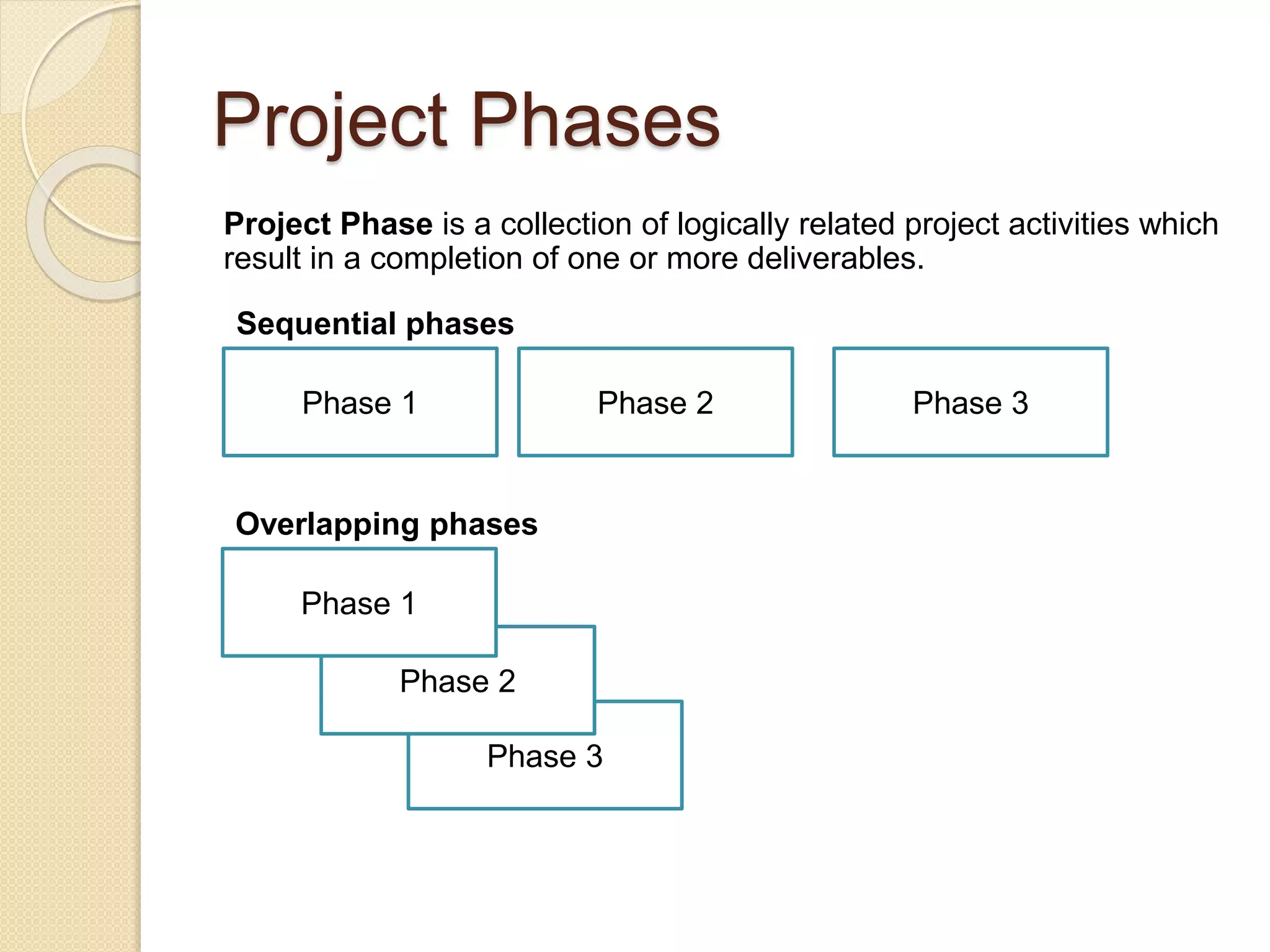
Project Phase is a collection of logically related project activities which
result in a completion of one or more deliverables.
Phase 1 Phase 2 Phase 3
Sequential phases
Phase 1
Overlapping phases
Monitoring and Controlling
ClosingExecutingPlanning
Project Management Process
Project Management Process is what you need to do to manage the
work
 Universal (does not depend on project specifics)
 Repeat themselves in different phases
Initiating

PMP Preparation 1 - Framework

  • 1.
    Project Management Framework PMP PreparationCourse March – April 2015 Session 1 by Andrey Mikityuk Head of Project Management Team Credit Suisse Moscow
  • 2.
    Project Definition Project is Temporary Createsunique product, service or result Not necessarily:  Has budget  Strategic  Long duration  Many people Non-project work may be referred as: • Operations • Process • Ongoing work
  • 3.
    Programs and Portfolios Program – think “benefit of doing together”  Portfolio – think “aligned to strategic goal” Program Sub-Program Project Project Portfolio Sub-portfolio Program Project Other related work
  • 4.
    Project Management and ProjectManager  Project Management – application of knowledge, skills, tools, and techniques to meet project requirements Project Manager Competencies  Knowledge  Performance  Personal  Attitude  Personality  Leadership Interpersonal skills  Leadership  Team building  Motivation  Communication  Influencing  Decision Making  Political and cultural awareness  Negotiation  Trust building  Conflict Management  Coaching Balances competing constraints Scope ScheduleRisk Quality Budget Resource  Project Manager is accountable for the success of the project
  • 5.
    Few More Concepts Progressive elaboration  Organizational Project Management (OPM)  Organizational Project Management Maturity Model (OPM3)
  • 6.
    Project Management Office (PMO) Powerand control Supportive Controlling Directive Provides templates Helps to gather lessons learned Collects information Checks compliance with organizational standards Part of CCB Appoints Project Managers Is a stakeholder Prioritizes projects
  • 7.
    Project Team Stakeholders  Anyonepositively or negatively affected by the result of the project  (practical view) and can somehow impact the project PM Sponsor PMO Program and Portfolio managers Functional managers Legal, Compliance, Tax, HR… Regulators Customers Affected citizens
  • 8.
    Organizational structures Project-orientation Functional MatrixProjectized Weak Balanced Strong Project Expeditor (no authority) Project Coordinator (little authority) Project Manager (shared authority) Project Manager (maximum authority) Project-Based Organization (PBO) – temporary structure inside functional organization to deliver projects Composite organizations – combine several approaches (ex: weak matrix for small projects and strong matrix for strategic ones) For PMP Exam: assume matrix organization if not stated otherwise
  • 9.
    Enterprise Environmental Factors OrganizationalProcess Assets Enterprise Environmental Factors – influence project, but not under control (company culture, existing systems, legal regulation, etc). Includes Project Management Information System (PMIS)  Scheduling software  Configuration management system  Time-tracking software  Procurement-management software  … Organizational Process Assets  Existing processes, procedures and policies  Corporate Knowledge Base  Historical information (activities, lessons learned, WBS, reports, risk logs, project management plans from previous projects)
  • 10.
    Project Life Cycle ProjectLife Cycle – phases which project need to pass to achieve its goal.  Based on “how to do work” approach  Depends on industry and product specifics Closing the project Carrying out work Preparing Starting the project Generic Project Life Cycle Project Life Cycle Plan-driven Change-driven Waterfall, or traditional life cycles “Predictive life cycles” (aka fully plan-driven) Iterative, incremental or adaptive (agile) life cyles
  • 11.
    Characteristics of theproject High Low Risk and uncertainty Cost of changes Project time
  • 12.
    Phase 3 Phase 2 ProjectPhases Project Phase is a collection of logically related project activities which result in a completion of one or more deliverables. Phase 1 Phase 2 Phase 3 Sequential phases Phase 1 Overlapping phases
  • 13.
    Monitoring and Controlling ClosingExecutingPlanning ProjectManagement Process Project Management Process is what you need to do to manage the work  Universal (does not depend on project specifics)  Repeat themselves in different phases Initiating