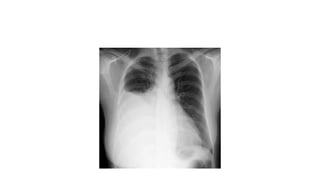
Pleural effusion
(hydrothorax)
Introduction
• Definition – it is accumulation of serous fluid in the plural
cavity
• It can be unilateral or bilateral
• It is detected clinically when approximately 0.5 L is present
• It first appears on the costophrenic angles
• Normal pleural fluid has a protein concentration of 0.4 g/dL
Classification
• Transudate – caused by either increased hydrostatic pressure or decreased osmotic
pressure. The protein content is <30g/l
• Cardiac failure,
• liver failure
• renal failure
• Nephrotic syndrome
• Malnutrition
• Exudate fluid – are caused by inflammatory or neoplastic process. The protein content >30
g/L.
• Pneumonia
• TB
• Malignancy
• Connective tissue diseases – SLE, Rheumatoid arthritis
• Meigs’ syndrome (ovarian tumour plus pleural effusion)
Differences between exudate and transudate
• Light’s criteria
• Suspect Exudate when
 Pleural fluid protein : serum protein ratio > 0.5
 Pleural fluid LDH : serum LDH ratio > 0.6
 Pleural fluid LDH > two-thirds of the upper limit of normal serum
LDH
• LDH = lactate dehydrogenase)
Clinical features
• Chest pain – on inspiration and coughing
• Pleural rub
• Difficult in breathing
• Cough
• Extrapulmonary signs suggestive of cause –
• Night sweats, fever, hemoptysis, and weight loss should suggest TB
Physical examination
• Reduced chest movement
• Asymmetrical chest expansion
• Stony dullness
• Tracheal deviation
• Reduced or absent breath sound
• Thank you

Pleural effusion (hydrothorax).pptx .

  • 1.
  • 2.
    Introduction • Definition –it is accumulation of serous fluid in the plural cavity • It can be unilateral or bilateral • It is detected clinically when approximately 0.5 L is present • It first appears on the costophrenic angles • Normal pleural fluid has a protein concentration of 0.4 g/dL
  • 3.
    Classification • Transudate –caused by either increased hydrostatic pressure or decreased osmotic pressure. The protein content is <30g/l • Cardiac failure, • liver failure • renal failure • Nephrotic syndrome • Malnutrition • Exudate fluid – are caused by inflammatory or neoplastic process. The protein content >30 g/L. • Pneumonia • TB • Malignancy • Connective tissue diseases – SLE, Rheumatoid arthritis • Meigs’ syndrome (ovarian tumour plus pleural effusion)
  • 4.
    Differences between exudateand transudate • Light’s criteria • Suspect Exudate when  Pleural fluid protein : serum protein ratio > 0.5  Pleural fluid LDH : serum LDH ratio > 0.6  Pleural fluid LDH > two-thirds of the upper limit of normal serum LDH • LDH = lactate dehydrogenase)
  • 5.
    Clinical features • Chestpain – on inspiration and coughing • Pleural rub • Difficult in breathing • Cough • Extrapulmonary signs suggestive of cause – • Night sweats, fever, hemoptysis, and weight loss should suggest TB
  • 6.
    Physical examination • Reducedchest movement • Asymmetrical chest expansion • Stony dullness • Tracheal deviation • Reduced or absent breath sound
  • 8.