1. What is plague?Plague isaninfectiousdisease of rodentsandhumanscausedbya bacteria
Yersinia pestis.This germisfoundinrodentsand theirfleasinmanyareasof the world.
2. Whyis plague considereda dreadful disease?
the worldhas seenwidespreadepidemicsof plague forages.Itcontinuestobe a life
threateningdisease unlessdetectedandtreatedearly.Plagueorganismssecrete several
toxinsandsome of themare highlytoxicandlife threatening.
In 1994, there was a pneumonicplague epidemicinSurat,India,causing54 deathsand
migrationof about300,000 residentswhofledfromaffectedareas.
3. Geographical distribution
Significantplaguefoci existinAsia,AfricaandinNorthand SouthAmerica.Previouslyitwas
consideredasrural disease butrecentlythere are reportsof itsoutbreaksinurban
settlements.
4. Magnitude
Between1998 – 2008, more than 31,278 casesof humanplague were reportedincluding
2116 fatalities.Thisdiseasehave causedmore than200 milliondeathsinhumanhistory.
5. Recentreports
PasuruanDistrictof East JavaProvine – February2007
Himachal Pradesh – February2002
Dangudvillage,districtUttarkashi,UttarPradesh – October,2004
6. Reservoirof Plague
Plague ismaintainedinnature asaninfectionof certainspeciesof wildrodentsandtheir
fleas.Wildrodents,the natural reservoirof plague are foundinmountains,cultivatedareas,
deserts,forests,houses.Atleast220 speciesof rodentsare knowntobe infectedwith
plague bacillus.InIndiathe wildrodent Tatera indica has beenreportedtobe the main
reservoirof plague.Insome casescatsand dogs act as reservoirs.
7. Vector
Fleasare the natural vectorsof plague.There are about3000 knownspeciesof fleas,outof
whichat least31 are proventobe vectorof plague.Ona global basis,the mostsignificant
vectorspeciesisthe oriental ratflea(Xenopsylla cheopis),whichlivesascommensalson
rats. Infectedfleacanmaintain Y.pestis forweekstomonths.
8. Mode of transmission
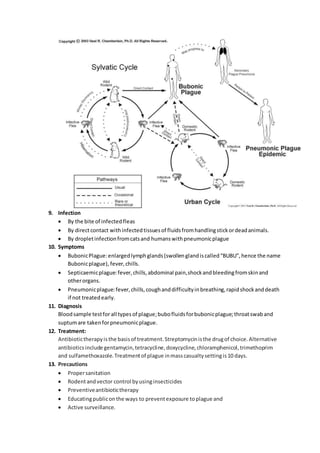
Basic transmission cycle:fleasbecome infectedbyfeedingonrodentsandothermammals
that are infectedwithbacteria Y.pestis.Fleastransmitthesebacteriatohumansandother
mammalsduringfeedingprocess.
9. Infection
 By the bite of infectedfleas
 By directcontact withinfectedtissuesof fluidsfromhandlingstickordeadanimals.
 By dropletinfectionfromcatsand humanswithpneumonicplague
10. Symptoms
 BubonicPlague:enlargedlymphglands(swollenglandiscalled“BUBU”,hence the name
Bubonicplague), fever,chills.
 Septicaemicplague:fever,chills,abdominal pain,shockandbleedingfromskinand
otherorgans.
 Pneumonicplague:fever,chills,coughanddifficultyinbreathing,rapidshockanddeath
if not treatedearly.
11. Diagnosis
Bloodsample testforall typesof plague;bubofluidsforbubonicplague;throatswaband
suptumare takenforpneumonicplague.
12. Treatment:
Antibiotictherapyisthe basisof treatment.Streptomycinisthe drugof choice.Alternative
antibioticsinclude gentamycin,tetracycline,doxycycline,chloramphenicol,trimethoprim
and sulfamethoxazole.Treatmentof plague inmasscasualtysettingis10 days.
13. Precautions
 Propersanitation
 Rodentandvector control byusinginsecticides
 Preventiveantibiotictherapy
 Educatingpubliconthe ways to preventexposure toplague and
 Active surveillance.

Plague

  • 1.
    1. What isplague?Plague isaninfectiousdisease of rodentsandhumanscausedbya bacteria Yersinia pestis.This germisfoundinrodentsand theirfleasinmanyareasof the world. 2. Whyis plague considereda dreadful disease? the worldhas seenwidespreadepidemicsof plague forages.Itcontinuestobe a life threateningdisease unlessdetectedandtreatedearly.Plagueorganismssecrete several toxinsandsome of themare highlytoxicandlife threatening. In 1994, there was a pneumonicplague epidemicinSurat,India,causing54 deathsand migrationof about300,000 residentswhofledfromaffectedareas. 3. Geographical distribution Significantplaguefoci existinAsia,AfricaandinNorthand SouthAmerica.Previouslyitwas consideredasrural disease butrecentlythere are reportsof itsoutbreaksinurban settlements. 4. Magnitude Between1998 – 2008, more than 31,278 casesof humanplague were reportedincluding 2116 fatalities.Thisdiseasehave causedmore than200 milliondeathsinhumanhistory. 5. Recentreports PasuruanDistrictof East JavaProvine – February2007 Himachal Pradesh – February2002 Dangudvillage,districtUttarkashi,UttarPradesh – October,2004 6. Reservoirof Plague Plague ismaintainedinnature asaninfectionof certainspeciesof wildrodentsandtheir fleas.Wildrodents,the natural reservoirof plague are foundinmountains,cultivatedareas, deserts,forests,houses.Atleast220 speciesof rodentsare knowntobe infectedwith plague bacillus.InIndiathe wildrodent Tatera indica has beenreportedtobe the main reservoirof plague.Insome casescatsand dogs act as reservoirs. 7. Vector Fleasare the natural vectorsof plague.There are about3000 knownspeciesof fleas,outof whichat least31 are proventobe vectorof plague.Ona global basis,the mostsignificant vectorspeciesisthe oriental ratflea(Xenopsylla cheopis),whichlivesascommensalson rats. Infectedfleacanmaintain Y.pestis forweekstomonths. 8. Mode of transmission Basic transmission cycle:fleasbecome infectedbyfeedingonrodentsandothermammals that are infectedwithbacteria Y.pestis.Fleastransmitthesebacteriatohumansandother mammalsduringfeedingprocess.
  • 2.
    9. Infection  Bythe bite of infectedfleas  By directcontact withinfectedtissuesof fluidsfromhandlingstickordeadanimals.  By dropletinfectionfromcatsand humanswithpneumonicplague 10. Symptoms  BubonicPlague:enlargedlymphglands(swollenglandiscalled“BUBU”,hence the name Bubonicplague), fever,chills.  Septicaemicplague:fever,chills,abdominal pain,shockandbleedingfromskinand otherorgans.  Pneumonicplague:fever,chills,coughanddifficultyinbreathing,rapidshockanddeath if not treatedearly. 11. Diagnosis Bloodsample testforall typesof plague;bubofluidsforbubonicplague;throatswaband suptumare takenforpneumonicplague. 12. Treatment: Antibiotictherapyisthe basisof treatment.Streptomycinisthe drugof choice.Alternative antibioticsinclude gentamycin,tetracycline,doxycycline,chloramphenicol,trimethoprim and sulfamethoxazole.Treatmentof plague inmasscasualtysettingis10 days. 13. Precautions  Propersanitation  Rodentandvector control byusinginsecticides  Preventiveantibiotictherapy  Educatingpubliconthe ways to preventexposure toplague and  Active surveillance.