VIRUSES
1]Infecting CNS-Japanese encephalitis
2]Infecting RESPIRATORY SYSTEM
-SARS
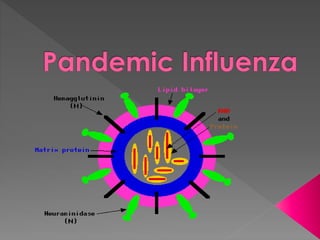
-Pandemic influenza
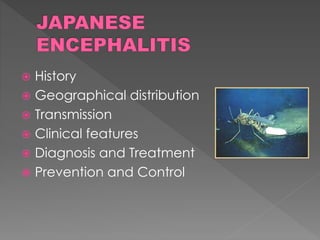
 History
 Geographical distribution
 Transmission
 Clinical features
 Diagnosis and Treatment
 Prevention and Control
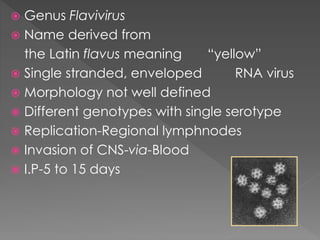
 Genus Flavivirus
 Name derived from
the Latin flavus meaning “yellow”
 Single stranded, enveloped RNA virus
 Morphology not well defined
 Different genotypes with single serotype
 Replication-Regional lymphnodes
 Invasion of CNS-via-Blood
 I.P-5 to 15 days
 1940 to 1978
› Disease spread with epidemics in China,
Korea, and India [Tamilnadu-1955]
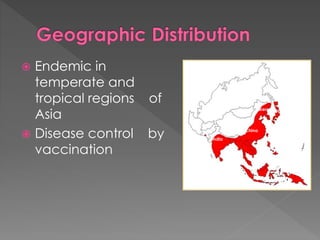
 Endemic in
temperate and
tropical regions of
Asia
 Disease control by
vaccination
Japan
China
Korea
Indonesia
India Philippines
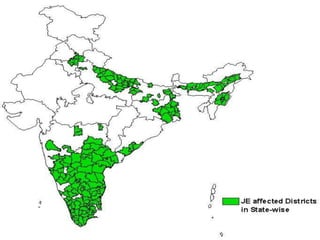
 The three southern states of Tamil Nadu
(TN), Andra Pradesh, Karnataka were
reporting higher incidence.
 JE is emerging as a public health
problem in Kerala
 In a few villages of Cuddalore district of
Tamil Nadu, a known JE-endemic area
(Chidambaram, Virudhachalam,
Thittakudi)
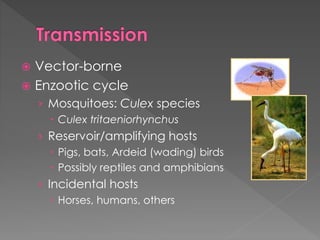
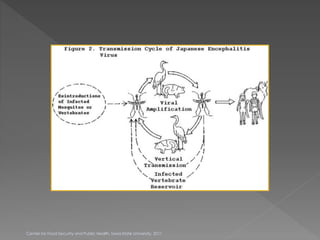
 Vector-borne
 Enzootic cycle
› Mosquitoes: Culex species
 Culex tritaeniorhynchus
› Reservoir/amplifying hosts
 Pigs, bats, Ardeid (wading) birds
 Possibly reptiles and amphibians
› Incidental hosts
 Horses, humans, others
Center for Food Security and Public Health, Iowa State University, 2011
 35,000-50,000 cases annually
 Most asymptomatic or mild signs
 Children and elderly
› Highest risk for severe disease
Center for Food Security and Public Health, Iowa State University, 2011
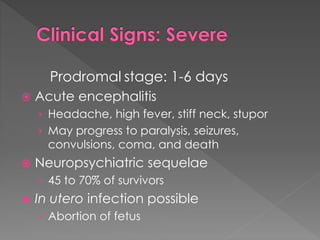
Prodromal stage: 1-6 days
 Acute encephalitis
› Headache, high fever, stiff neck, stupor
› May progress to paralysis, seizures,
convulsions, coma, and death
 Neuropsychiatric sequelae
› 45 to 70% of survivors
 In utero infection possible
› Abortion of fetus
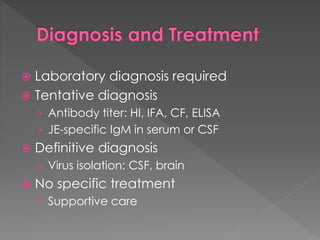
 Laboratory diagnosis required
 Tentative diagnosis
› Antibody titer: HI, IFA, CF, ELISA
› JE-specific IgM in serum or CSF
 Definitive diagnosis
› Virus isolation: CSF, brain
 No specific treatment
› Supportive care
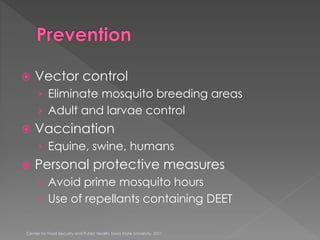
 Vector control
› Eliminate mosquito breeding areas
› Adult and larvae control
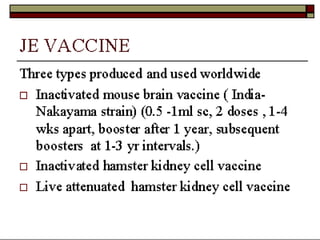
 Vaccination
› Equine, swine, humans
 Personal protective measures
› Avoid prime mosquito hours
› Use of repellants containing DEET
Center for Food Security and Public Health, Iowa State University, 2011
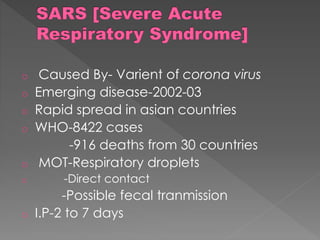
o Caused By- Varient of corona virus
o Emerging disease-2002-03
o Rapid spread in asian countries
o WHO-8422 cases
-916 deaths from 30 countries
o MOT-Respiratory droplets
o -Direct contact
-Possible fecal tranmission
o I.P-2 to 7 days
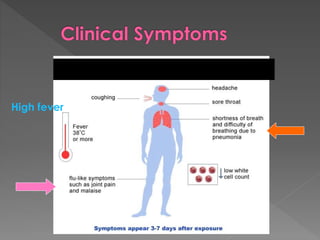
High fever
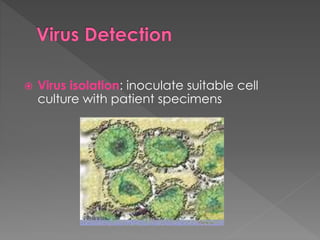
 Virus isolation: inoculate suitable cell
culture with patient specimens
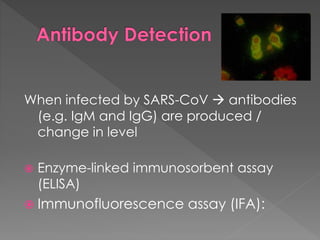
When infected by SARS-CoV  antibodies
(e.g. IgM and IgG) are produced /
change in level
 Enzyme-linked immunosorbent assay
(ELISA)
 Immunofluorescence assay (IFA):
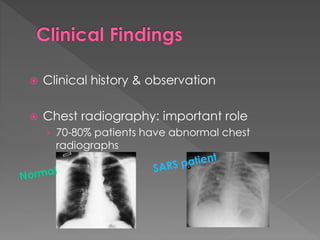
 Clinical history & observation
 Chest radiography: important role
› 70-80% patients have abnormal chest
radiographs
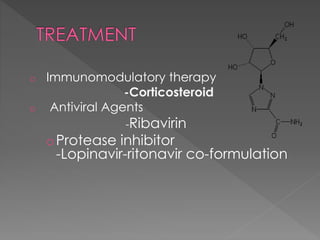
o Immunomodulatory therapy
-Corticosteroid
o Antiviral Agents
-Ribavirin
oProtease inhibitor
-Lopinavir-ritonavir co-formulation
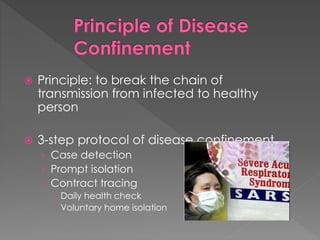
 Principle: to break the chain of
transmission from infected to healthy
person
 3-step protocol of disease confinement
› Case detection
› Prompt isolation
› Contract tracing
 Daily health check
 Voluntary home isolation
 Creation of emergency operating center
 Institutional support
› Efficient quarantine measures
› Legislation
 International collaboration—WHO
› Travel alerts and restrictions
› Coordination for research
› Agreement of countries on containment
protocol
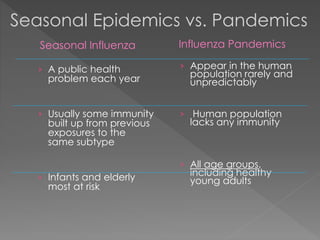
Seasonal Influenza
› A public health
problem each year
› Usually some immunity
built up from previous
exposures to the
same subtype
› Infants and elderly
most at risk
Influenza Pandemics
› Appear in the human
population rarely and
unpredictably
› Human population
lacks any immunity
› All age groups,
including healthy
young adults
Seasonal Epidemics vs. Pandemics
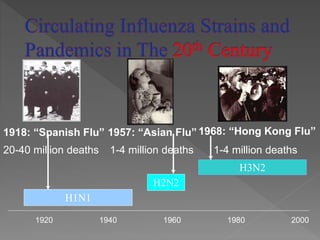
1920 1940 1960 1980 2000
H1N1
H2N2
H3N2
1918: “Spanish Flu” 1957: “Asian Flu” 1968: “Hong Kong Flu”
20-40 million deaths 1-4 million deaths 1-4 million deaths
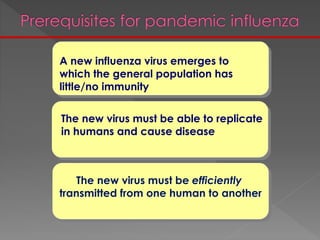
The new virus must be efficiently
transmitted from one human to another
A new influenza virus emerges to
which the general population has
little/no immunity
The new virus must be able to replicate
in humans and cause disease
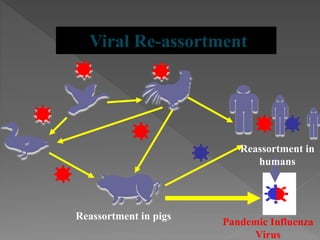
Viral Re-assortment
Reassortment in pigs
Reassortment in
humans
Pandemic Influenza
Virus
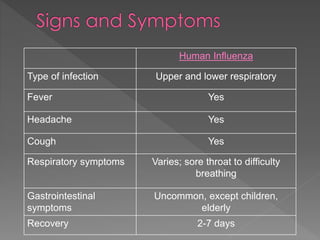
Human Influenza
Type of infection Upper and lower respiratory
Fever Yes
Headache Yes
Cough Yes
Respiratory symptoms Varies; sore throat to difficulty
breathing
Gastrointestinal
symptoms
Uncommon, except children,
elderly
Recovery 2-7 days
Isolation Precautions
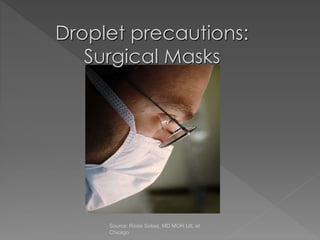
Source: Rosie Sokas, MD MOH UIL at
Chicago
Droplet precautions:
Surgical Masks
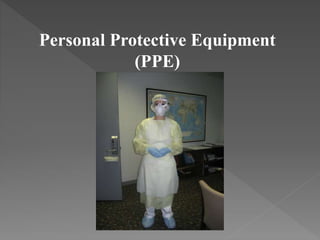
Personal Protective Equipment
(PPE)
Thank you

Viral emerging and re emerging diseases

  • 2.
    VIRUSES 1]Infecting CNS-Japanese encephalitis 2]InfectingRESPIRATORY SYSTEM -SARS -Pandemic influenza
  • 3.
     History  Geographicaldistribution  Transmission  Clinical features  Diagnosis and Treatment  Prevention and Control
  • 4.
     Genus Flavivirus Name derived from the Latin flavus meaning “yellow”  Single stranded, enveloped RNA virus  Morphology not well defined  Different genotypes with single serotype  Replication-Regional lymphnodes  Invasion of CNS-via-Blood  I.P-5 to 15 days
  • 5.
     1940 to1978 › Disease spread with epidemics in China, Korea, and India [Tamilnadu-1955]
  • 6.
     Endemic in temperateand tropical regions of Asia  Disease control by vaccination Japan China Korea Indonesia India Philippines
  • 7.
     The threesouthern states of Tamil Nadu (TN), Andra Pradesh, Karnataka were reporting higher incidence.  JE is emerging as a public health problem in Kerala  In a few villages of Cuddalore district of Tamil Nadu, a known JE-endemic area (Chidambaram, Virudhachalam, Thittakudi)
  • 9.
     Vector-borne  Enzooticcycle › Mosquitoes: Culex species  Culex tritaeniorhynchus › Reservoir/amplifying hosts  Pigs, bats, Ardeid (wading) birds  Possibly reptiles and amphibians › Incidental hosts  Horses, humans, others
  • 10.
    Center for FoodSecurity and Public Health, Iowa State University, 2011
  • 11.
     35,000-50,000 casesannually  Most asymptomatic or mild signs  Children and elderly › Highest risk for severe disease Center for Food Security and Public Health, Iowa State University, 2011
  • 12.
    Prodromal stage: 1-6days  Acute encephalitis › Headache, high fever, stiff neck, stupor › May progress to paralysis, seizures, convulsions, coma, and death  Neuropsychiatric sequelae › 45 to 70% of survivors  In utero infection possible › Abortion of fetus
  • 13.
     Laboratory diagnosisrequired  Tentative diagnosis › Antibody titer: HI, IFA, CF, ELISA › JE-specific IgM in serum or CSF  Definitive diagnosis › Virus isolation: CSF, brain  No specific treatment › Supportive care
  • 14.
     Vector control ›Eliminate mosquito breeding areas › Adult and larvae control  Vaccination › Equine, swine, humans  Personal protective measures › Avoid prime mosquito hours › Use of repellants containing DEET Center for Food Security and Public Health, Iowa State University, 2011
  • 16.
    o Caused By-Varient of corona virus o Emerging disease-2002-03 o Rapid spread in asian countries o WHO-8422 cases -916 deaths from 30 countries o MOT-Respiratory droplets o -Direct contact -Possible fecal tranmission o I.P-2 to 7 days
  • 17.
  • 18.
     Virus isolation:inoculate suitable cell culture with patient specimens
  • 19.
    When infected bySARS-CoV  antibodies (e.g. IgM and IgG) are produced / change in level  Enzyme-linked immunosorbent assay (ELISA)  Immunofluorescence assay (IFA):
  • 20.
     Clinical history& observation  Chest radiography: important role › 70-80% patients have abnormal chest radiographs
  • 21.
    o Immunomodulatory therapy -Corticosteroid oAntiviral Agents -Ribavirin oProtease inhibitor -Lopinavir-ritonavir co-formulation
  • 22.
     Principle: tobreak the chain of transmission from infected to healthy person  3-step protocol of disease confinement › Case detection › Prompt isolation › Contract tracing  Daily health check  Voluntary home isolation
  • 23.
     Creation ofemergency operating center  Institutional support › Efficient quarantine measures › Legislation  International collaboration—WHO › Travel alerts and restrictions › Coordination for research › Agreement of countries on containment protocol
  • 25.
    Seasonal Influenza › Apublic health problem each year › Usually some immunity built up from previous exposures to the same subtype › Infants and elderly most at risk Influenza Pandemics › Appear in the human population rarely and unpredictably › Human population lacks any immunity › All age groups, including healthy young adults Seasonal Epidemics vs. Pandemics
  • 26.
    1920 1940 19601980 2000 H1N1 H2N2 H3N2 1918: “Spanish Flu” 1957: “Asian Flu” 1968: “Hong Kong Flu” 20-40 million deaths 1-4 million deaths 1-4 million deaths
  • 27.
    The new virusmust be efficiently transmitted from one human to another A new influenza virus emerges to which the general population has little/no immunity The new virus must be able to replicate in humans and cause disease
  • 28.
    Viral Re-assortment Reassortment inpigs Reassortment in humans Pandemic Influenza Virus
  • 29.
    Human Influenza Type ofinfection Upper and lower respiratory Fever Yes Headache Yes Cough Yes Respiratory symptoms Varies; sore throat to difficulty breathing Gastrointestinal symptoms Uncommon, except children, elderly Recovery 2-7 days
  • 30.
  • 31.
    Source: Rosie Sokas,MD MOH UIL at Chicago Droplet precautions: Surgical Masks
  • 33.
  • 36.