Pippali, Prishniparni, Pushkaramoola,Punarnava
Detailed Dravyas
For BAMS students
Dr. Remya Krishnan
Pippali
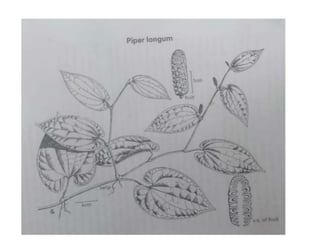
• Piper longum
• Piperaceae
• Kana, Krishna,Kola, Chapala, Tikshna Tandula, Magadhi,
Vaidehi, ushna
• Charaka: Deepaniya, Kanthya , Asthapanopaga,
Shirovirechana,Seeta prashamana, Soola prashamana
• Susrutha: Pippalyadi, Oordhwabhagahara, Thryushna,
Amalakyadi, Shirovirechana
• Vagbhata : Pippalyadi
• Agrya : Pleehamaye pippali
Varieties &Morphology
• Pippali and Gaja Pippali ( Susruta and Vagbhata)
Raja nighantu-Pippali, Gaja pippali, Simhali Pippali,
Vana Pippali
An aromatic slender climberwith creeping jointed
stems attached to other plants
Leaves are subacute, entire , glabrous,cordate at the
base
Flowers in pendulate spikes , straight, male larger and
slender,
Yellowish orange fruit sunk in fleshy spikes
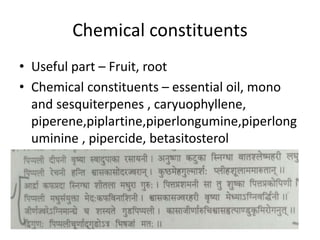
Chemical constituents
• Useful part – Fruit, root
• Chemical constituents – essential oil, mono
and sesquiterpenes , caryuophyllene,
piperene,piplartine,piperlongumine,piperlong
uminine , pipercide, betasitosterol
Self work
• Notes on RP, DK, BK and RK
• Write the different Kalpanas based on reference
• Write why Pippali should not be used for long ( Charaka
Vimana – 1 )
• The difference in dynamics of Ardra and shushka pippali
• Dosage powder – 0.5- 1 gm
• Yogas – Pippalyadi ghrita, Pippalyasava,Vyoshadi vati etc
Pippalimoola
• Root of Pippali
• Granthikam, Ooshanam, Kana moola
Under Dipaniya and Sula prashamana groups
, Pippali and Pippalimoola together are
mentioned
• Constituents : essential oil,
Piperene,cepharadiones etc
“ Pippaleemoolam deepaneeya pachaneeya
anaha prashamananam”
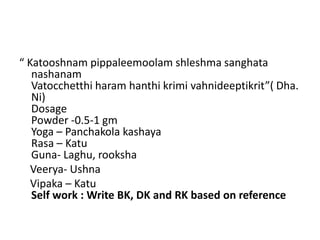
“ Katooshnam pippaleemoolam shleshma sanghata
nashanam
Vatocchetthi haram hanthi krimi vahnideeptikrit”( Dha.
Ni)
Dosage
Powder -0.5-1 gm
Yoga – Panchakola kashaya
Rasa – Katu
Guna- Laghu, rooksha
Veerya- Ushna
Vipaka – Katu
Self work : Write BK, DK and RK based on reference
Prishniparni
• Desmodium gangeticum
• Pappilonaceae
• Prithakparni
• Charaka – Angamardda prashamana , Sotha
hara, balya,snehopaga, madhura skandha
• Susruta- Vidareegandhadi, Laghu
panchamoola
• Vagbhata- Vidaryadi, Durvadi gana
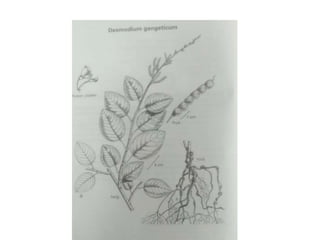
Morphology
• An erect diffusely branched undershrub, 90-120
cms in height with a short woody stem and
numerous prostrate branches provided with soft
grey hairs
• Unifoliate leaves, ovate to ovate lanceolate
membraneous and mottled with grey patches
• White flowers purple or lilac in elongate lax ,
terminal or axillary racemes
• Fruits moniliform , 6-8 jointed glabrescent pods
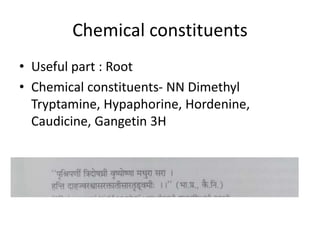
Chemical constituents
• Useful part : Root
• Chemical constituents- NN Dimethyl
Tryptamine, Hypaphorine, Hordenine,
Caudicine, Gangetin 3H
Self work
• Notes on RP, DK, BK and RK
• Kwatha dosage – 50-100 ml
• Yogas – Vaanari Gutika
Punarnava
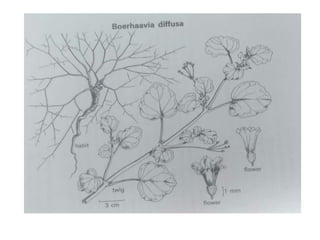
• Boerhavia diffusa
• Nyctaginaceae
• Kathillaka , Varshabhu , Sothaghni
• Charaka – Vayasthapana ,
Kasahara,Anuvasanopaga, swedopaga
Varieties
• Kayyadeva – Shwetha Kantakari, Neela
Kantakari
• Raja nighantu – Eight varieties :Sarpatanu,
Kasaghni,Lakshmana, Bhantaki,Sveta Brihati,
Vrinthaki, Brihati, Kantakari
Varities & Morphology
• Rakta and Shweta Punarnava
• Shvetha Punarnava is Trianthema
portulacastrum.
• In Raja nighantu, there is another variety Nila
Punarnava
Morphology
• A perennial creeping herb with woody stout
root and diffuse branches.
• Opposite leaves, broadly obovate , unequally
paired .
• Solitary flowers ,white or pinkish, tubular calyx
• Fruits are capsules containing one seed
• Reniform dull black seeds
Chemical constituents
• Useful part – Whole plant
• Chemical constituents- Hentriacontane , Beta
sitosterol, Oxalic acid , Punarnavoside,
Punarnavine-1 , Punarnavine 2
• Dosage – Fresh juice – 5-10 ml
• Yogas – Kantakari ghrita , Vasakantakari
Avaleha, Vyaghri Hareethaki , Vyaghritaila .
Pushkaramoola
• Inula racemosa
• Asteraceae
• Paushkaram , Pushkaram
Adulterant : Coffea travancorensis root
Charaka – Shwasa hara, hikka nigrahana
Susrutha – Phala varga
Vagbhata – Hidhma nigrahana , Shwasa shamaka
Agrya- Pushkaramoolam Hikka shwasa parshwa
soola haraanaam
Morphology
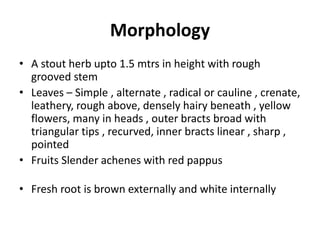
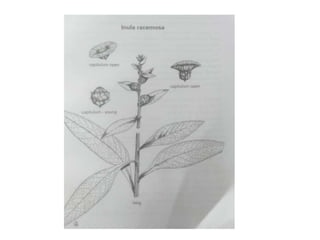
• A stout herb upto 1.5 mtrs in height with rough
grooved stem
• Leaves – Simple , alternate , radical or cauline , crenate,
leathery, rough above, densely hairy beneath , yellow
flowers, many in heads , outer bracts broad with
triangular tips , recurved, inner bracts linear , sharp ,
pointed
• Fruits Slender achenes with red pappus
• Fresh root is brown externally and white internally
Chemical constituents
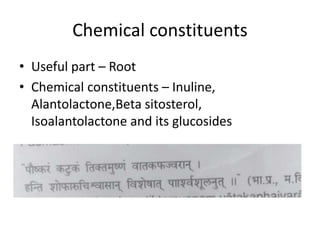
• Useful part – Root
• Chemical constituents – Inuline,
Alantolactone,Beta sitosterol,
Isoalantolactone and its glucosides
Self study
• Write RP, DK, RK, BK
• Dosage powder –1-3 gms
• Pushkara moolasava, Pushkaradi choorna,
Brihat yogaraja

Pippali, prishniparni, punarnava, pushkaramoola

  • 1.
    Pippali, Prishniparni, Pushkaramoola,Punarnava DetailedDravyas For BAMS students Dr. Remya Krishnan
  • 2.
    Pippali • Piper longum •Piperaceae • Kana, Krishna,Kola, Chapala, Tikshna Tandula, Magadhi, Vaidehi, ushna • Charaka: Deepaniya, Kanthya , Asthapanopaga, Shirovirechana,Seeta prashamana, Soola prashamana • Susrutha: Pippalyadi, Oordhwabhagahara, Thryushna, Amalakyadi, Shirovirechana • Vagbhata : Pippalyadi • Agrya : Pleehamaye pippali
  • 3.
    Varieties &Morphology • Pippaliand Gaja Pippali ( Susruta and Vagbhata) Raja nighantu-Pippali, Gaja pippali, Simhali Pippali, Vana Pippali An aromatic slender climberwith creeping jointed stems attached to other plants Leaves are subacute, entire , glabrous,cordate at the base Flowers in pendulate spikes , straight, male larger and slender, Yellowish orange fruit sunk in fleshy spikes
  • 5.
    Chemical constituents • Usefulpart – Fruit, root • Chemical constituents – essential oil, mono and sesquiterpenes , caryuophyllene, piperene,piplartine,piperlongumine,piperlong uminine , pipercide, betasitosterol
  • 6.
    Self work • Noteson RP, DK, BK and RK • Write the different Kalpanas based on reference • Write why Pippali should not be used for long ( Charaka Vimana – 1 ) • The difference in dynamics of Ardra and shushka pippali • Dosage powder – 0.5- 1 gm • Yogas – Pippalyadi ghrita, Pippalyasava,Vyoshadi vati etc
  • 7.
    Pippalimoola • Root ofPippali • Granthikam, Ooshanam, Kana moola Under Dipaniya and Sula prashamana groups , Pippali and Pippalimoola together are mentioned • Constituents : essential oil, Piperene,cepharadiones etc “ Pippaleemoolam deepaneeya pachaneeya anaha prashamananam”
  • 8.
    “ Katooshnam pippaleemoolamshleshma sanghata nashanam Vatocchetthi haram hanthi krimi vahnideeptikrit”( Dha. Ni) Dosage Powder -0.5-1 gm Yoga – Panchakola kashaya Rasa – Katu Guna- Laghu, rooksha Veerya- Ushna Vipaka – Katu Self work : Write BK, DK and RK based on reference
  • 9.
    Prishniparni • Desmodium gangeticum •Pappilonaceae • Prithakparni • Charaka – Angamardda prashamana , Sotha hara, balya,snehopaga, madhura skandha • Susruta- Vidareegandhadi, Laghu panchamoola • Vagbhata- Vidaryadi, Durvadi gana
  • 10.
    Morphology • An erectdiffusely branched undershrub, 90-120 cms in height with a short woody stem and numerous prostrate branches provided with soft grey hairs • Unifoliate leaves, ovate to ovate lanceolate membraneous and mottled with grey patches • White flowers purple or lilac in elongate lax , terminal or axillary racemes • Fruits moniliform , 6-8 jointed glabrescent pods
  • 12.
    Chemical constituents • Usefulpart : Root • Chemical constituents- NN Dimethyl Tryptamine, Hypaphorine, Hordenine, Caudicine, Gangetin 3H
  • 13.
    Self work • Noteson RP, DK, BK and RK • Kwatha dosage – 50-100 ml • Yogas – Vaanari Gutika
  • 14.
    Punarnava • Boerhavia diffusa •Nyctaginaceae • Kathillaka , Varshabhu , Sothaghni • Charaka – Vayasthapana , Kasahara,Anuvasanopaga, swedopaga
  • 15.
    Varieties • Kayyadeva –Shwetha Kantakari, Neela Kantakari • Raja nighantu – Eight varieties :Sarpatanu, Kasaghni,Lakshmana, Bhantaki,Sveta Brihati, Vrinthaki, Brihati, Kantakari
  • 16.
    Varities & Morphology •Rakta and Shweta Punarnava • Shvetha Punarnava is Trianthema portulacastrum. • In Raja nighantu, there is another variety Nila Punarnava
  • 17.
    Morphology • A perennialcreeping herb with woody stout root and diffuse branches. • Opposite leaves, broadly obovate , unequally paired . • Solitary flowers ,white or pinkish, tubular calyx • Fruits are capsules containing one seed • Reniform dull black seeds
  • 19.
    Chemical constituents • Usefulpart – Whole plant • Chemical constituents- Hentriacontane , Beta sitosterol, Oxalic acid , Punarnavoside, Punarnavine-1 , Punarnavine 2
  • 20.
    • Dosage –Fresh juice – 5-10 ml • Yogas – Kantakari ghrita , Vasakantakari Avaleha, Vyaghri Hareethaki , Vyaghritaila .
  • 21.
    Pushkaramoola • Inula racemosa •Asteraceae • Paushkaram , Pushkaram Adulterant : Coffea travancorensis root Charaka – Shwasa hara, hikka nigrahana Susrutha – Phala varga Vagbhata – Hidhma nigrahana , Shwasa shamaka Agrya- Pushkaramoolam Hikka shwasa parshwa soola haraanaam
  • 22.
    Morphology • A stoutherb upto 1.5 mtrs in height with rough grooved stem • Leaves – Simple , alternate , radical or cauline , crenate, leathery, rough above, densely hairy beneath , yellow flowers, many in heads , outer bracts broad with triangular tips , recurved, inner bracts linear , sharp , pointed • Fruits Slender achenes with red pappus • Fresh root is brown externally and white internally
  • 24.
    Chemical constituents • Usefulpart – Root • Chemical constituents – Inuline, Alantolactone,Beta sitosterol, Isoalantolactone and its glucosides
  • 25.
    Self study • WriteRP, DK, RK, BK • Dosage powder –1-3 gms • Pushkara moolasava, Pushkaradi choorna, Brihat yogaraja