Bus 303 
Group N
 Summary 
 Cost Benefit Analysis 
 Ethical Issues 
 Change 
 Alternatives 
 Recommendation
 The Ford Pinto – a small car to compete with foreign car 
company competitors 
 Pinto – weighed 2000 lbs and cost $2000 
 Rushed project led by Lee Iacocca 
 Planning took 25 months compared to the industry norm 
43 months
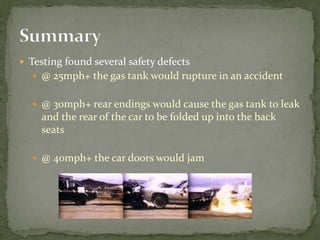
 Testing found several safety defects 
 @ 25mph+ the gas tank would rupture in an accident 
 @ 30mph+ rear endings would cause the gas tank to leak 
and the rear of the car to be folded up into the back 
seats 
 @ 40mph+ the car doors would jam
With Current Gas Tank With Safety Alteration 
180 burn deaths Cost = $11 per vehicle 
180 serious burns Total = $137 million 
2100 Pintos burned 
Costs = $200 000 per death 
$67 000 per serious injury Second alternative = Rubber Bladder 
$700 per car Cost = $5.08 per vehicle 
Total = $49.5 million Total ~= $64 million
 Ford employees 
 Lee Iacocca 
 Henry Ford II
 Were they morally responsible to refuse 
to produce a car they knew would hurt 
the customer? 
 Should they have put more effort into 
convincing Iacocca that this car was 
unsafe? 
 Should they follow Iacocca’s commands 
regardless of their opinions since he is 
their superior in the company
 Is Iacocca responsible for the safety of 
his customers? 
 Should he maximize profits for the 
company at any costs? 
 If safety defects are found after 
production, does he have a moral 
obligation to inform all his customers? 
Safety? 
What safety. 
 Should Iacocca have established a working environment 
where his employees did not feel that they would lose 
their jobs for disagreeing with him?
 Should Ford have trained his managers and presidents in 
safety? 
 Does Ford have a responsibility to design a culture that 
encourages employees to bring up safety defects? 
 Does Ford need to have a new policy that puts the has 
safety of their products more important than maximizing 
profits? 
 Does Ford have a moral responsibility to do what is best for 
his shareholders
 Young and ambitious new president 
 Foreign competitors entering N.A. market 
 No small car to compete with VW Beetle and others 
 The demand for results and 
profits are the most important 
aspect of business
1. Pay the $11 per vehicle 
2. Explore different safety features 
3. Restart the project from the planning process 
4. Continue with production of the Pinto
Pros 
 Repairs the safety defect 
 Saves Ford from potential 
lawsuits 
 Protects Ford’s reputation 
Cons 
 High cost 
 Slight delay before launch
Pros 
 A cheaper alternative could 
be found 
 Profit margin could be 
higher than first 
alternative 
 Repairs the safety defect 
before launch 
Cons 
 Pinto release would be 
delayed indefinitely 
 Still decreases total profit
Pros 
 Design can be more 
focused on safety 
 Improve Ford’s reputation 
Cons 
 Significant delay of launch 
 Most costly alternative
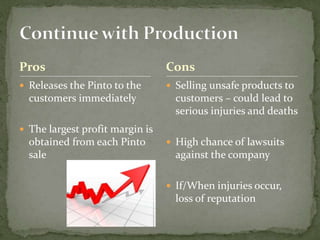
Pros 
 Releases the Pinto to the 
customers immediately 
 The largest profit margin is 
obtained from each Pinto 
sale 
Cons 
 Selling unsafe products to 
customers – could lead to 
serious injuries and deaths 
 High chance of lawsuits 
against the company 
 If/When injuries occur, 
loss of reputation
Explore Other Safety Measures 
 Repair the Pinto so that it is a cheap, safe car that will 
please the customers 
 Act as a responsible company and not expose 
customers to unknown risks 
 Implement a more cost effective option than adding 
the $11 safety addition 
 Save lives by not releasing unsafe Pintos
 Ford workers were afraid to talk to Iacocca about the safety 
defects 
 In Feb. 1978, Ford was sued for $128 million – more then 3 
times the amount they had predicted 
 May 1978 – Department of Transportation announces 
defects with the Ford Pinto – Ford recalls 1.5 million Pintos 
 Mar. 1980 – Ford was charged with reckless homicide – 
acquitted of charges, however they stopped all Pinto 
production
Pinto

Pinto

  • 1.
  • 2.
     Summary Cost Benefit Analysis  Ethical Issues  Change  Alternatives  Recommendation
  • 3.
     The FordPinto – a small car to compete with foreign car company competitors  Pinto – weighed 2000 lbs and cost $2000  Rushed project led by Lee Iacocca  Planning took 25 months compared to the industry norm 43 months
  • 4.
     Testing foundseveral safety defects  @ 25mph+ the gas tank would rupture in an accident  @ 30mph+ rear endings would cause the gas tank to leak and the rear of the car to be folded up into the back seats  @ 40mph+ the car doors would jam
  • 5.
    With Current GasTank With Safety Alteration 180 burn deaths Cost = $11 per vehicle 180 serious burns Total = $137 million 2100 Pintos burned Costs = $200 000 per death $67 000 per serious injury Second alternative = Rubber Bladder $700 per car Cost = $5.08 per vehicle Total = $49.5 million Total ~= $64 million
  • 6.
     Ford employees  Lee Iacocca  Henry Ford II
  • 7.
     Were theymorally responsible to refuse to produce a car they knew would hurt the customer?  Should they have put more effort into convincing Iacocca that this car was unsafe?  Should they follow Iacocca’s commands regardless of their opinions since he is their superior in the company
  • 8.
     Is Iacoccaresponsible for the safety of his customers?  Should he maximize profits for the company at any costs?  If safety defects are found after production, does he have a moral obligation to inform all his customers? Safety? What safety.  Should Iacocca have established a working environment where his employees did not feel that they would lose their jobs for disagreeing with him?
  • 9.
     Should Fordhave trained his managers and presidents in safety?  Does Ford have a responsibility to design a culture that encourages employees to bring up safety defects?  Does Ford need to have a new policy that puts the has safety of their products more important than maximizing profits?  Does Ford have a moral responsibility to do what is best for his shareholders
  • 10.
     Young andambitious new president  Foreign competitors entering N.A. market  No small car to compete with VW Beetle and others  The demand for results and profits are the most important aspect of business
  • 11.
    1. Pay the$11 per vehicle 2. Explore different safety features 3. Restart the project from the planning process 4. Continue with production of the Pinto
  • 12.
    Pros  Repairsthe safety defect  Saves Ford from potential lawsuits  Protects Ford’s reputation Cons  High cost  Slight delay before launch
  • 13.
    Pros  Acheaper alternative could be found  Profit margin could be higher than first alternative  Repairs the safety defect before launch Cons  Pinto release would be delayed indefinitely  Still decreases total profit
  • 14.
    Pros  Designcan be more focused on safety  Improve Ford’s reputation Cons  Significant delay of launch  Most costly alternative
  • 15.
    Pros  Releasesthe Pinto to the customers immediately  The largest profit margin is obtained from each Pinto sale Cons  Selling unsafe products to customers – could lead to serious injuries and deaths  High chance of lawsuits against the company  If/When injuries occur, loss of reputation
  • 16.
    Explore Other SafetyMeasures  Repair the Pinto so that it is a cheap, safe car that will please the customers  Act as a responsible company and not expose customers to unknown risks  Implement a more cost effective option than adding the $11 safety addition  Save lives by not releasing unsafe Pintos
  • 17.
     Ford workerswere afraid to talk to Iacocca about the safety defects  In Feb. 1978, Ford was sued for $128 million – more then 3 times the amount they had predicted  May 1978 – Department of Transportation announces defects with the Ford Pinto – Ford recalls 1.5 million Pintos  Mar. 1980 – Ford was charged with reckless homicide – acquitted of charges, however they stopped all Pinto production