
Physiological changes in
Pregnancy
Dr. Nabeel Beeran MBBS, MD
Department of Physiology
20/08/2019
2
UTERUS
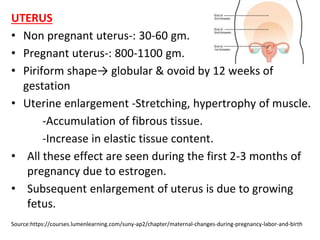
• Non pregnant uterus-: 30-60 gm.
• Pregnant uterus-: 800-1100 gm.
• Piriform shape→ globular & ovoid by 12 weeks of
gestation
• Uterine enlargement -Stretching, hypertrophy of muscle.
-Accumulation of fibrous tissue.
-Increase in elastic tissue content.
• All these effect are seen during the first 2-3 months of
pregnancy due to estrogen.
• Subsequent enlargement of uterus is due to growing
fetus.
Source:https://courses.lumenlearning.com/suny-ap2/chapter/maternal-changes-during-pregnancy-labor-and-birth
CERVIX
• Endocervical gland hyperplasia and secretory activity
increases.
VAGINA
• Increased vascularity- violet colour- CHADWICK sign
• Vaginal changes
Increase in mucosal thickness
Smooth muscle hypertrophy.
• Vaginal secretion- thick, white discharge
FALLOPIAN TUBES
• Hyperplasia of epithelial cells
MAMMARY GLANDS
• Hyperplasia of ductal and alveolar tissue
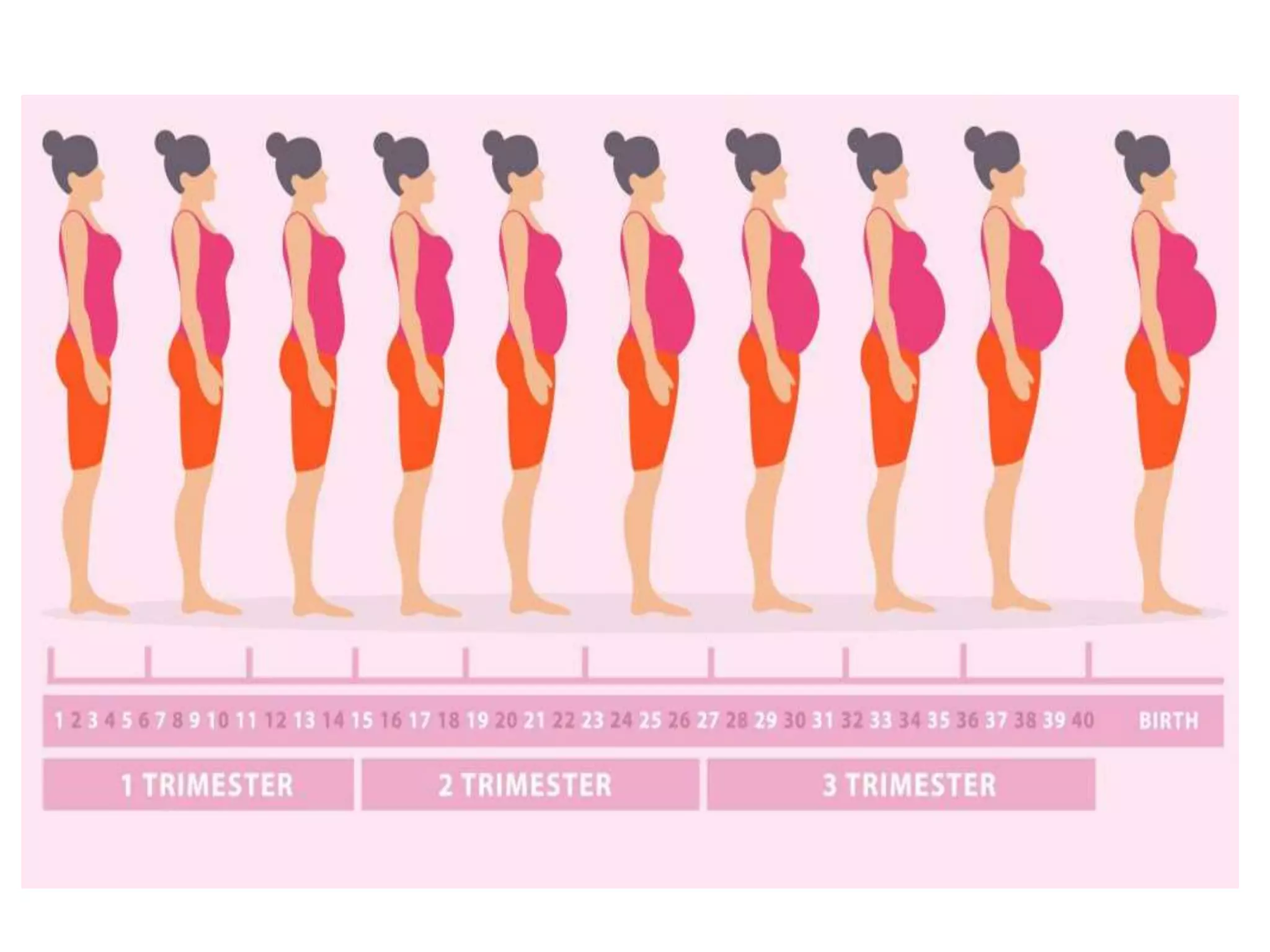
Weight gain
 10 - 12.5 kg.
• Fetus: 3 kg.
• Placenta and amniotic fluid: 1.5 kg.
• Uterus and breast enlargement: 1 kg.
• Blood volume and interstitial fluid: 1.5 kg.
• Fat deposition: 3.5-4 kg.
Haematological changes
• Blood volume: increases by 30-40%.
• Hematological indices:
– RBC, PCV, Hb concentration decreases producing
anemia called physiological anemia of pregnancy.
• Plasma proteins:-Total plasma concentration decreases.
-Serum fibrinogen increases.
-Serum albumin is decreased but α and
β globulins concentration increases (compensatory
increase).
Cardiovascular system
• Heart enlarges due to pressure of the enlarging uterus
on the diaphragm.
• Cardiac output increases due to increase in stroke
volume and heart rate.
• Arterial blood pressure: Both SBP and DBP decreases.
• Venous pressure: Femoral venous pressure increase
due to pressure of enlarged uterus on the pelvic veins.
• Blood flow through the hand and forearm increases.
This increased flow helps in loss of excess heat
produced by increased body metabolism.
Respiratory system
• Body oxygen consumption: increases by 15%.
• Pulmonary ventilation increases due to increase in
tidal volume and frequency of breathing. This may
be due to increase in progesterone level which
increase the sensitivity of respiratory center to CO2
and causes fall in arterial pCO2.
Renal system
• Renal blood flow: increases.
• GFR: increases.
• Increase GFR increases the load of solutes presented
for reabsorption.
• Glycosuria, proteinuria.
Gastrointestinal changes
• Morning sickness: feeling of nausea and vomiting in
early months of pregnancy.
• Hypochlorhydria.
• Heartburn.
• Decrease in motility of stomach and colon.
• Constipation.
Endocrine system
• Thyroid gland: Mild enlargement with hyperplasia
and increased thyroxine output.
• Adrenal glands: enlargement of zona fasciculate layer
in particular, therefore cortisol secretion increases but
no signs of Cushing’s syndrome.
• Placental hormones are secreted.
Psychological changes
• Nervous system:- Mild mental changes which vary
from craving from unusual articles of diet to
alteration in mood and behavior.
- In some, a true psychosis may also develop.
• Sleep: Decreases.
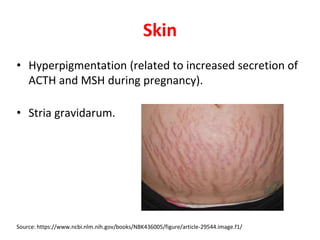
Skin
• Hyperpigmentation (related to increased secretion of
ACTH and MSH during pregnancy).
• Stria gravidarum.
Source: https://www.ncbi.nlm.nih.gov/books/NBK436005/figure/article-29544.image.f1/
Metabolic changes
• Marked increase in body weight (average 12.5 kgs).
• Water metabolism:-During early months of pregnancy
there is marked diuresis, sweating and a weight loss of
approximately 2.5 kgs.
-During later months (5-6 month onwards) of pregnancy
excess of water is retained in the fetus, placenta, amniotic
fluid, breast, uterus and other tissues. The retention of
water is due to fall in plasma protein concentration.
-Retention of sodium due to steroidal sex hormones.
• Protein metabolism: Positive nitrogen balance during
pregnancy and lactation period.
• Carbohydrate metabolism: Glycosuria.
• Fat metabolism:-Increase in blood concentration of
cholesterol, phospholipids and neutral fats.
-Adipose tissue fat increases to supply energy in
the later stages of pregnancy and lactation.
• Mineral metabolism:- Mother stores
approximately 50 gm of calcium and 35-40 gm of
phosphorous.
- Only half of the calcium goes to the fetus
especially during the last month, the rest being stored
in the maternal tissues to be utilized during lactation.
• Iron metabolism:- Fetus contain 375 mg of iron
which accumulate at a rate of approximately 0.4
mg/day in the first 6 months of pregnancy and
about 4mg/day during the last 3 months of
pregnancy.
- A further 500-700 mg of iron is required by the
mother for increased Hb synthesis and myoglobin
formation in the growing fetus.
Pregnancy tests
Biological tests:
• Ascheim-Zondek test
• Friedman’s test
• Hogben’s test
• Kupperman’s test
• Galli-mainini test
Immunological test:
• Gravindex test:
• Gravindex antigen and antibodies
Control
Drop of urine of non-
pregnant women (no
HCG)
+
Drop of HCG antiserum
+
HCG coated latex particles
=
Agglutination
(negative pregnancy test)
Test
Drop of urine of pregnant
women (HCG)
+
Drop of HCG antiserum
+
HCG coated latex particles
=
No agglutination
(positive pregnancy test)
Thank

Physiological changes in Pregnancy

  • 2.
    Physiological changes in Pregnancy Dr.Nabeel Beeran MBBS, MD Department of Physiology 20/08/2019 2
  • 3.
    UTERUS • Non pregnantuterus-: 30-60 gm. • Pregnant uterus-: 800-1100 gm. • Piriform shape→ globular & ovoid by 12 weeks of gestation • Uterine enlargement -Stretching, hypertrophy of muscle. -Accumulation of fibrous tissue. -Increase in elastic tissue content. • All these effect are seen during the first 2-3 months of pregnancy due to estrogen. • Subsequent enlargement of uterus is due to growing fetus. Source:https://courses.lumenlearning.com/suny-ap2/chapter/maternal-changes-during-pregnancy-labor-and-birth
  • 4.
    CERVIX • Endocervical glandhyperplasia and secretory activity increases. VAGINA • Increased vascularity- violet colour- CHADWICK sign • Vaginal changes Increase in mucosal thickness Smooth muscle hypertrophy. • Vaginal secretion- thick, white discharge
  • 5.
    FALLOPIAN TUBES • Hyperplasiaof epithelial cells MAMMARY GLANDS • Hyperplasia of ductal and alveolar tissue
  • 6.
    Weight gain  10- 12.5 kg. • Fetus: 3 kg. • Placenta and amniotic fluid: 1.5 kg. • Uterus and breast enlargement: 1 kg. • Blood volume and interstitial fluid: 1.5 kg. • Fat deposition: 3.5-4 kg.
  • 7.
    Haematological changes • Bloodvolume: increases by 30-40%. • Hematological indices: – RBC, PCV, Hb concentration decreases producing anemia called physiological anemia of pregnancy. • Plasma proteins:-Total plasma concentration decreases. -Serum fibrinogen increases. -Serum albumin is decreased but α and β globulins concentration increases (compensatory increase).
  • 8.
    Cardiovascular system • Heartenlarges due to pressure of the enlarging uterus on the diaphragm. • Cardiac output increases due to increase in stroke volume and heart rate. • Arterial blood pressure: Both SBP and DBP decreases. • Venous pressure: Femoral venous pressure increase due to pressure of enlarged uterus on the pelvic veins. • Blood flow through the hand and forearm increases. This increased flow helps in loss of excess heat produced by increased body metabolism.
  • 9.
    Respiratory system • Bodyoxygen consumption: increases by 15%. • Pulmonary ventilation increases due to increase in tidal volume and frequency of breathing. This may be due to increase in progesterone level which increase the sensitivity of respiratory center to CO2 and causes fall in arterial pCO2.
  • 10.
    Renal system • Renalblood flow: increases. • GFR: increases. • Increase GFR increases the load of solutes presented for reabsorption. • Glycosuria, proteinuria.
  • 11.
    Gastrointestinal changes • Morningsickness: feeling of nausea and vomiting in early months of pregnancy. • Hypochlorhydria. • Heartburn. • Decrease in motility of stomach and colon. • Constipation.
  • 12.
    Endocrine system • Thyroidgland: Mild enlargement with hyperplasia and increased thyroxine output. • Adrenal glands: enlargement of zona fasciculate layer in particular, therefore cortisol secretion increases but no signs of Cushing’s syndrome. • Placental hormones are secreted.
  • 13.
    Psychological changes • Nervoussystem:- Mild mental changes which vary from craving from unusual articles of diet to alteration in mood and behavior. - In some, a true psychosis may also develop. • Sleep: Decreases.
  • 14.
    Skin • Hyperpigmentation (relatedto increased secretion of ACTH and MSH during pregnancy). • Stria gravidarum. Source: https://www.ncbi.nlm.nih.gov/books/NBK436005/figure/article-29544.image.f1/
  • 15.
    Metabolic changes • Markedincrease in body weight (average 12.5 kgs). • Water metabolism:-During early months of pregnancy there is marked diuresis, sweating and a weight loss of approximately 2.5 kgs. -During later months (5-6 month onwards) of pregnancy excess of water is retained in the fetus, placenta, amniotic fluid, breast, uterus and other tissues. The retention of water is due to fall in plasma protein concentration. -Retention of sodium due to steroidal sex hormones. • Protein metabolism: Positive nitrogen balance during pregnancy and lactation period.
  • 16.
    • Carbohydrate metabolism:Glycosuria. • Fat metabolism:-Increase in blood concentration of cholesterol, phospholipids and neutral fats. -Adipose tissue fat increases to supply energy in the later stages of pregnancy and lactation. • Mineral metabolism:- Mother stores approximately 50 gm of calcium and 35-40 gm of phosphorous. - Only half of the calcium goes to the fetus especially during the last month, the rest being stored in the maternal tissues to be utilized during lactation.
  • 17.
    • Iron metabolism:-Fetus contain 375 mg of iron which accumulate at a rate of approximately 0.4 mg/day in the first 6 months of pregnancy and about 4mg/day during the last 3 months of pregnancy. - A further 500-700 mg of iron is required by the mother for increased Hb synthesis and myoglobin formation in the growing fetus.
  • 18.
    Pregnancy tests Biological tests: •Ascheim-Zondek test • Friedman’s test • Hogben’s test • Kupperman’s test • Galli-mainini test
  • 19.
    Immunological test: • Gravindextest: • Gravindex antigen and antibodies Control Drop of urine of non- pregnant women (no HCG) + Drop of HCG antiserum + HCG coated latex particles = Agglutination (negative pregnancy test) Test Drop of urine of pregnant women (HCG) + Drop of HCG antiserum + HCG coated latex particles = No agglutination (positive pregnancy test)
  • 20.