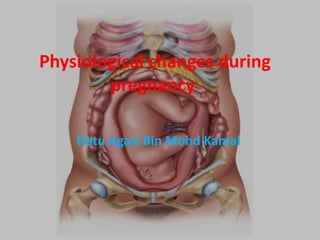
Physiological changes during
pregnancy
Datu Agasi Bin Mohd Kamal
Learning Objectives
• To decribes the process of implantation.
• To enumerate hormones related to pregnancy
and its function.
• To explain physiological changes during
pregnancy.
Scenario
• Laura, a 34-year-old woman now in pregnancy. Laura come for
prenatal care visit to a physician.
• Laura's prepregnancy weight was 79kg and today her weight is 91kg
• At the beginning of her pregnancies Laura experienced
considerable nausea and occasional vomiting as well as
overwhelming fatigue. Today Laura complains of the onset of
several pregnancy discomforts. These include heartburn,
intermittent diarrhea and constipation, fatigue, and edema in her
ankles.
• Laura's hematocrit today is 31%.
Early Stages of Development from
Fertilization to Implantation
Implantation
Placenta
• Deliver nutrient and o2 to
fetus and remove co2 and
waste from fetus.
• Secrete placental hormone.
Hormones of Pregnancy
• hCG can be detected in urine as early as the first month of pregnancy- about
2 weeks after first missed menstrual period.
Secreted by
blastocyst and
placenta
Fall due to placenta
start to secrete
estrogen &
progesterone that
inhibit hCG
Placental hormones
Hormone Function
Human chorionic gonadotropin (hCG) Maintain the corpus luteum of pregnancy
Estrogen  Stimulate growth of myometrium
 Promotes development of mammary gland ducts
 Promote synthesis of connexons within uterine
smooth muscle
 Increase the concentration of myometrial receptors
for oxytocin
Progesterone  Suppress myometrium contraction
 Formation of thick mucus plug in the cervical canal
 Stimulate development of milk glands
Human chorionic somatomammotropin  Reduces maternal use of glucose and promotes
breakdown of stored fat
 Help prepare mammary gland for lactation.
Relaxin  Soften cervix in preparation for cervical dilation at
parturition
 Loosen the connective tissue between pelvic bones
for parturition
Placental PTHrp (parathyroid hormone related peptide)  Increased maternal plasma calcium level
 If necessary, promotes localized dissolution of
maternal bones
Secretion of estrogen & progesterone by
placenta
Reproductive System
• Uterus increases from
50 grams to 1100 grams
– estrogen.
• Breast approximately
double in size- estrogen.
• Vagina enlarges and the
introitus open more
widely.
Metabolism during pregnancy
• Basal metabolic rate increases about 15%
during latter half of pregnancy.
• Causes include – increase secretion of
thyroxine, adrenocorticol and sex hormones
Nutrition
 Normal maternal storage depot and placenta stores
nutrients in early gestation and releases them in the last
trimester due to fetal high demand.
 Demand especially high for protein, iron, calcium, and
phosphates
 Appetite may be strongly stimulated
Weight gain during pregnant
• Average gain 11.3-15.8 Kilogram, most occur
during last two trimester.
Fetus 3.6 kg
Amniotic fluid, placenta, fetal
membranes
1.8 kg
Uterus 1.4 kg
Breast 0.9 kg
Extra fluid in blood and ECF 2.3 kg
Fat accumulation 1.4-5.9 kg
Digestive system changes
 Morning sickness – nausea especially arising from bed in
the first few months of gestation
• Morning sickness usually appears shortly after implantation coincides with the
peak of hCG.
• hCG may trigger this symptom by acting on the chemoreceptor trigger zone next
to the vomiting center.
 Constipation and heartburn
• Reduced intestinal motility
• Pressure on stomach causing reflux of gastric contents into
the esophagus
Hematological changes
• Increase maternal blood volume. 30% above normal before term.
• Physiological anemia - increase in plasma volume is greater than
increase in RBC mass.
• Causes -increased in aldosterone
Non pregnant
female
1st trimester 2nd trimester 3rd trimester
Hematocrit 35 – 44% 31 – 41% 30 – 39% 28 – 40%
Hemoglobin 12 -15.8 g/dL 11.6 - 13.9 g/dL 9.7 - 14.8 g/dL 9.5 -15 g/dL
Cardiovascular changes
• Mother’s cardiac output is 30%-40% above normal by the 27th
week of pregnancy.
• Cause – increase in blood flow through placenta.
• Cardiac output then falls to only a little above normal during 8
weeks of pregnancy.
• Pregnant uterus puts pressure on large pelvic blood vessels
that interferes with venous return from the legs-hemorrhoids,
varicose veins, and edema of the feet
Respiratory changes
1. Maternal respiration increases during pregnancy.
- Causes – increased basal metabolic rate.
-Commensurate amount of carbon dioxide formed
which cause minute ventilation to increase by 40-
50%.
2. Diaphragmatic elevation in late pregnancy
-respiratory rate is increased to maintain the extra
ventilation.
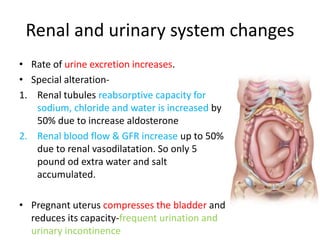
Renal and urinary system changes
• Rate of urine excretion increases.
• Special alteration-
1. Renal tubules reabsorptive capacity for
sodium, chloride and water is increased by
50% due to increase aldosterone
2. Renal blood flow & GFR increase up to 50%
due to renal vasodilatation. So only 5
pound od extra water and salt
accumulated.
• Pregnant uterus compresses the bladder and
reduces its capacity-frequent urination and
urinary incontinence
Integumentary system
 Skin grows to accommodate
expansion of the abdomen and
breasts
 Added fat deposition in hips and
thighs
 Striae or stretch marks can result
from tearing the stretched
connective tissue
 Melanocyte activity increases in
some areas
• darkening of the areolae and
linea alba (linea nigra)
 Temporary blotchy darkening of the
skin over the nose and cheeks
• ‘mask of pregnancy’ or chloasma
Thank You 
Hematocrit value
• Adult males: 42%-54%
• Adult women: 38%-46%
• Adult pregnant women: about 30% - 34%
lower limits and 46% upper limits

Physiological changes during pregnancy by Agasi

  • 1.
  • 2.
    Learning Objectives • Todecribes the process of implantation. • To enumerate hormones related to pregnancy and its function. • To explain physiological changes during pregnancy.
  • 3.
    Scenario • Laura, a34-year-old woman now in pregnancy. Laura come for prenatal care visit to a physician. • Laura's prepregnancy weight was 79kg and today her weight is 91kg • At the beginning of her pregnancies Laura experienced considerable nausea and occasional vomiting as well as overwhelming fatigue. Today Laura complains of the onset of several pregnancy discomforts. These include heartburn, intermittent diarrhea and constipation, fatigue, and edema in her ankles. • Laura's hematocrit today is 31%.
  • 4.
    Early Stages ofDevelopment from Fertilization to Implantation
  • 5.
  • 6.
    Placenta • Deliver nutrientand o2 to fetus and remove co2 and waste from fetus. • Secrete placental hormone.
  • 7.
    Hormones of Pregnancy •hCG can be detected in urine as early as the first month of pregnancy- about 2 weeks after first missed menstrual period. Secreted by blastocyst and placenta Fall due to placenta start to secrete estrogen & progesterone that inhibit hCG
  • 8.
    Placental hormones Hormone Function Humanchorionic gonadotropin (hCG) Maintain the corpus luteum of pregnancy Estrogen  Stimulate growth of myometrium  Promotes development of mammary gland ducts  Promote synthesis of connexons within uterine smooth muscle  Increase the concentration of myometrial receptors for oxytocin Progesterone  Suppress myometrium contraction  Formation of thick mucus plug in the cervical canal  Stimulate development of milk glands Human chorionic somatomammotropin  Reduces maternal use of glucose and promotes breakdown of stored fat  Help prepare mammary gland for lactation. Relaxin  Soften cervix in preparation for cervical dilation at parturition  Loosen the connective tissue between pelvic bones for parturition Placental PTHrp (parathyroid hormone related peptide)  Increased maternal plasma calcium level  If necessary, promotes localized dissolution of maternal bones
  • 9.
    Secretion of estrogen& progesterone by placenta
  • 10.
    Reproductive System • Uterusincreases from 50 grams to 1100 grams – estrogen. • Breast approximately double in size- estrogen. • Vagina enlarges and the introitus open more widely.
  • 11.
    Metabolism during pregnancy •Basal metabolic rate increases about 15% during latter half of pregnancy. • Causes include – increase secretion of thyroxine, adrenocorticol and sex hormones
  • 12.
    Nutrition  Normal maternalstorage depot and placenta stores nutrients in early gestation and releases them in the last trimester due to fetal high demand.  Demand especially high for protein, iron, calcium, and phosphates  Appetite may be strongly stimulated
  • 13.
    Weight gain duringpregnant • Average gain 11.3-15.8 Kilogram, most occur during last two trimester. Fetus 3.6 kg Amniotic fluid, placenta, fetal membranes 1.8 kg Uterus 1.4 kg Breast 0.9 kg Extra fluid in blood and ECF 2.3 kg Fat accumulation 1.4-5.9 kg
  • 14.
    Digestive system changes Morning sickness – nausea especially arising from bed in the first few months of gestation • Morning sickness usually appears shortly after implantation coincides with the peak of hCG. • hCG may trigger this symptom by acting on the chemoreceptor trigger zone next to the vomiting center.  Constipation and heartburn • Reduced intestinal motility • Pressure on stomach causing reflux of gastric contents into the esophagus
  • 15.
    Hematological changes • Increasematernal blood volume. 30% above normal before term. • Physiological anemia - increase in plasma volume is greater than increase in RBC mass. • Causes -increased in aldosterone Non pregnant female 1st trimester 2nd trimester 3rd trimester Hematocrit 35 – 44% 31 – 41% 30 – 39% 28 – 40% Hemoglobin 12 -15.8 g/dL 11.6 - 13.9 g/dL 9.7 - 14.8 g/dL 9.5 -15 g/dL
  • 16.
    Cardiovascular changes • Mother’scardiac output is 30%-40% above normal by the 27th week of pregnancy. • Cause – increase in blood flow through placenta. • Cardiac output then falls to only a little above normal during 8 weeks of pregnancy. • Pregnant uterus puts pressure on large pelvic blood vessels that interferes with venous return from the legs-hemorrhoids, varicose veins, and edema of the feet
  • 17.
    Respiratory changes 1. Maternalrespiration increases during pregnancy. - Causes – increased basal metabolic rate. -Commensurate amount of carbon dioxide formed which cause minute ventilation to increase by 40- 50%. 2. Diaphragmatic elevation in late pregnancy -respiratory rate is increased to maintain the extra ventilation.
  • 18.
    Renal and urinarysystem changes • Rate of urine excretion increases. • Special alteration- 1. Renal tubules reabsorptive capacity for sodium, chloride and water is increased by 50% due to increase aldosterone 2. Renal blood flow & GFR increase up to 50% due to renal vasodilatation. So only 5 pound od extra water and salt accumulated. • Pregnant uterus compresses the bladder and reduces its capacity-frequent urination and urinary incontinence
  • 19.
    Integumentary system  Skingrows to accommodate expansion of the abdomen and breasts  Added fat deposition in hips and thighs  Striae or stretch marks can result from tearing the stretched connective tissue  Melanocyte activity increases in some areas • darkening of the areolae and linea alba (linea nigra)  Temporary blotchy darkening of the skin over the nose and cheeks • ‘mask of pregnancy’ or chloasma
  • 20.
  • 21.
    Hematocrit value • Adultmales: 42%-54% • Adult women: 38%-46% • Adult pregnant women: about 30% - 34% lower limits and 46% upper limits