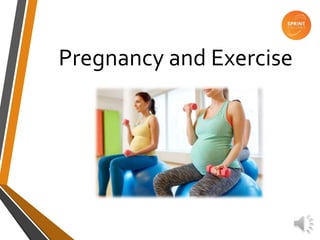
Pregnancy and Exercise
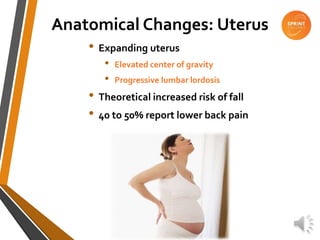
Anatomical Changes: Uterus
• Expanding uterus
• Elevated center of gravity
• Progressive lumbar lordosis
• Theoretical increased risk of fall
• 40 to 50% report lower back pain
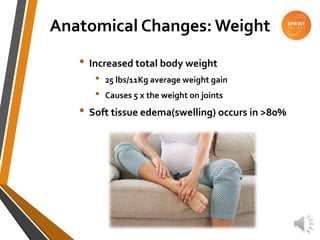
Anatomical Changes: Weight
• Increased total body weight
• 25 lbs/11Kg average weight gain
• Causes 5 x the weight on joints
• Soft tissue edema(swelling) occurs in >80%
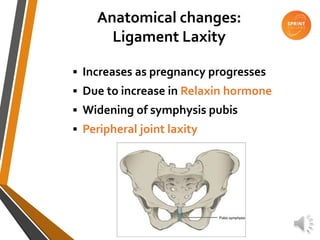
Anatomical changes:
Ligament Laxity
 Increases as pregnancy progresses
 Due to increase in Relaxin hormone
 Widening of symphysis pubis
 Peripheral joint laxity
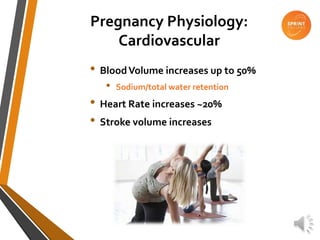
Pregnancy Physiology:
Cardiovascular
• BloodVolume increases up to 50%
• Sodium/total water retention
• Heart Rate increases ~20%
• Stroke volume increases
Pregnancy physiology with
exercise
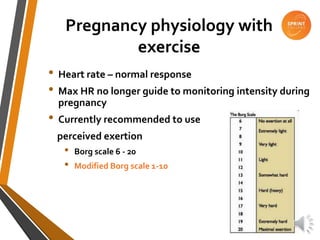
• Heart rate – normal response
• Max HR no longer guide to monitoring intensity during
pregnancy
• Currently recommended to use
perceived exertion
• Borg scale 6 - 20
• Modified Borg scale 1-10
Pregnancy physiology with
exercise
•No adverse effects on uterine blood flow
due to redistribution to exercising
muscles
•FHR (fetal heart rate )usually up 10 to 30
beats in response to maternal exercise.
Pregnancy Physiology:
Respiratory Physiology
• Increased oxygen consumption (apporx 20%)
• Increased minute ventilation (Breathing rate)
• No Change FEV1
(Forced ExpiratoryVolume in One Second)
Pregnancy physiology:
Thermoregulatory
• Increased basal metabolic rate (Calories needed at rest)
• Increased heat production
• Better heat dissipation in pregnancy
• Increased risk of dehydration
Pregnancy Physiology:
Thermoregulation with exercise
• Trainers goal is to keep the client cool while
trying to maintain appropriate exercise
intensity.
Pregnancy outcomes that can be
improved by exercise
• Gestation Diabetes
• Preeclampsia
• Weight gain
• Improved mental health
• Overall decreased
subjective discomforts
Delivery outcomes improved
• Decreased time of active labor
• Decreased interventions
• forceps, c-section etc
• Increased fetal tolerance of delivery
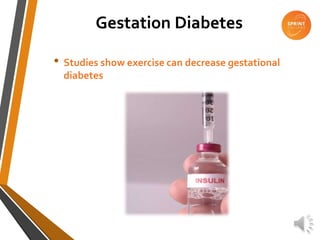
Gestation Diabetes
• Studies show exercise can decrease gestational
diabetes
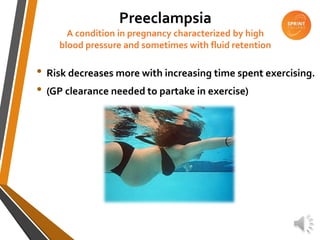
Preeclampsia
A condition in pregnancy characterized by high
blood pressure and sometimes with fluid retention
• Risk decreases more with increasing time spent exercising.
• (GP clearance needed to partake in exercise)
Debunking the risks of
aerobic exercise
No increased risk of:
• Miscarriage
• Congenital malformations
• Ectopic
• Pre-term labor
• Unexplained fetal deaths
Contraindications for Exercise
& Pregnancy
Absolute (Do not exercise)
• Significant cardiac disease
• Restrictive lung disease
• Placental abruption
placenta separates early from the
uterus
• Premature labor
• Rupture of membranes
• preeclampsia
Relative (GP sign off required)
• anemia
• Bronchitis
• Diabetes
• Extreme obesity or low BMI
• Multiple gestation
• Sedentary lifestyle
• Fetal growth restriction
• smoking
ACOG Guidelines
The American College of Obstetricians and Gynaecologists
• “In the absence of contraindications, pregnant women
should be encouraged to engage in regular, moderate
intensity physical activity to continue to derive health
benefits during their pregnancies as they did prior to
pregnancy”
• 30 minutes or more of moderate exercise per day
recommended
• Avoid the supine position during exercise as much as
possible
• Recommend against scuba diving during pregnancy, sports
at risk for abdominal trauma
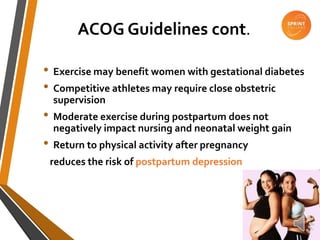
ACOG Guidelines cont.
• Exercise may benefit women with gestational diabetes
• Competitive athletes may require close obstetric
supervision
• Moderate exercise during postpartum does not
negatively impact nursing and neonatal weight gain
• Return to physical activity after pregnancy
reduces the risk of postpartum depression
Exercise prescription
• Very similar to non-pregnant individuals
• Sedentary women can safely begin exercising during
pregnancy but monitor closely.
• Need to be flexible – adapt as pregnancy progresses
• Active women may be advised to restrain from very
strenuous activities and competition
• Pre-exercise medical screening essential
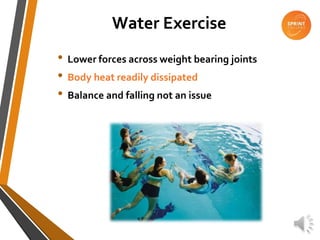
Water Exercise
• Lower forces across weight bearing joints
• Body heat readily dissipated
• Balance and falling not an issue
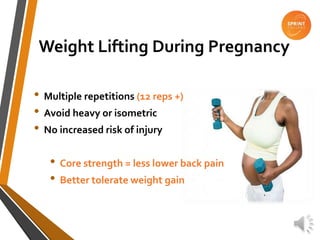
Weight Lifting During Pregnancy
• Multiple repetitions (12 reps +)
• Avoid heavy or isometric
• No increased risk of injury
• Core strength = less lower back pain
• Better tolerate weight gain
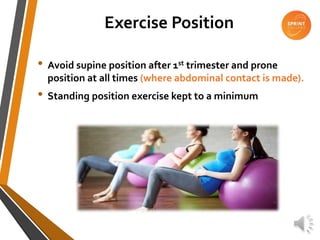
Exercise Position
• Avoid supine position after 1st trimester and prone
position at all times (where abdominal contact is made).
• Standing position exercise kept to a minimum
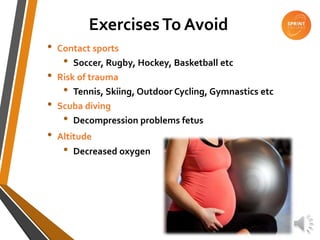
ExercisesTo Avoid
• Contact sports
• Soccer, Rugby, Hockey, Basketball etc
• Risk of trauma
• Tennis, Skiing, Outdoor Cycling, Gymnastics etc
• Scuba diving
• Decompression problems fetus
• Altitude
• Decreased oxygen
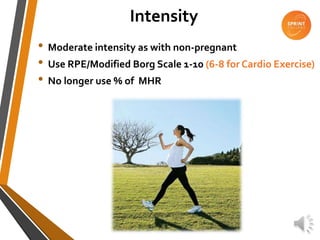
Intensity
• Moderate intensity as with non-pregnant
• Use RPE/Modified Borg Scale 1-10 (6-8 for Cardio Exercise)
• No longer use % of MHR
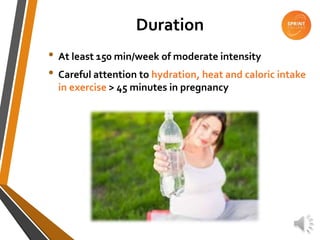
Duration
• At least 150 min/week of moderate intensity
• Careful attention to hydration, heat and caloric intake
in exercise > 45 minutes in pregnancy
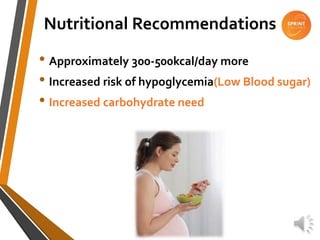
Nutritional Recommendations
• Approximately 300-500kcal/day more
• Increased risk of hypoglycemia(Low Blood sugar)
• Increased carbohydrate need
Warning SignsToTerminate
Exercise
• Vaginal bleeding
• Difficult or laboured
breathing prior to
exertion
• Dizziness
• Headache
• Chest pain
• Muscle weakness
• Signs of
thrombophlebitis
(inflammation of the wall of a vein
with associated thrombosis, often
occurring in the legs during
pregnancy)
• Uterine contractions
• Decreased fetal
movement
• Leakage of fluid
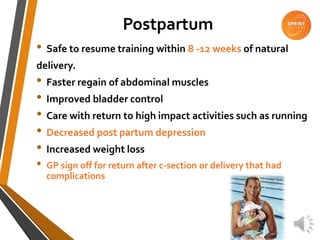
Postpartum
• Safe to resume training within 8 -12 weeks of natural
delivery.
• Faster regain of abdominal muscles
• Improved bladder control
• Care with return to high impact activities such as running
• Decreased post partum depression
• Increased weight loss
• GP sign off for return after c-section or delivery that had
complications
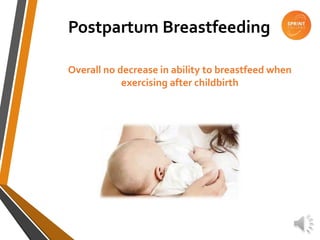
Postpartum Breastfeeding
Overall no decrease in ability to breastfeed when
exercising after childbirth
Summary
• Many anatomical and physiological changes during
pregnancy
• Pregnant women should be encouraged to exercise
regularly
• Flexible and individual exercise prescription
• Avoid contraindicated exercises and conditions
• Heat, altitude, impact sports etc
• Continue exercising postpartum

Pregnancy and Exercise

  • 1.
  • 2.
    Anatomical Changes: Uterus •Expanding uterus • Elevated center of gravity • Progressive lumbar lordosis • Theoretical increased risk of fall • 40 to 50% report lower back pain
  • 3.
    Anatomical Changes: Weight •Increased total body weight • 25 lbs/11Kg average weight gain • Causes 5 x the weight on joints • Soft tissue edema(swelling) occurs in >80%
  • 4.
    Anatomical changes: Ligament Laxity Increases as pregnancy progresses  Due to increase in Relaxin hormone  Widening of symphysis pubis  Peripheral joint laxity
  • 5.
    Pregnancy Physiology: Cardiovascular • BloodVolumeincreases up to 50% • Sodium/total water retention • Heart Rate increases ~20% • Stroke volume increases
  • 6.
    Pregnancy physiology with exercise •Heart rate – normal response • Max HR no longer guide to monitoring intensity during pregnancy • Currently recommended to use perceived exertion • Borg scale 6 - 20 • Modified Borg scale 1-10
  • 7.
    Pregnancy physiology with exercise •Noadverse effects on uterine blood flow due to redistribution to exercising muscles •FHR (fetal heart rate )usually up 10 to 30 beats in response to maternal exercise.
  • 8.
    Pregnancy Physiology: Respiratory Physiology •Increased oxygen consumption (apporx 20%) • Increased minute ventilation (Breathing rate) • No Change FEV1 (Forced ExpiratoryVolume in One Second)
  • 9.
    Pregnancy physiology: Thermoregulatory • Increasedbasal metabolic rate (Calories needed at rest) • Increased heat production • Better heat dissipation in pregnancy • Increased risk of dehydration
  • 10.
    Pregnancy Physiology: Thermoregulation withexercise • Trainers goal is to keep the client cool while trying to maintain appropriate exercise intensity.
  • 11.
    Pregnancy outcomes thatcan be improved by exercise • Gestation Diabetes • Preeclampsia • Weight gain • Improved mental health • Overall decreased subjective discomforts
  • 12.
    Delivery outcomes improved •Decreased time of active labor • Decreased interventions • forceps, c-section etc • Increased fetal tolerance of delivery
  • 13.
    Gestation Diabetes • Studiesshow exercise can decrease gestational diabetes
  • 14.
    Preeclampsia A condition inpregnancy characterized by high blood pressure and sometimes with fluid retention • Risk decreases more with increasing time spent exercising. • (GP clearance needed to partake in exercise)
  • 15.
    Debunking the risksof aerobic exercise No increased risk of: • Miscarriage • Congenital malformations • Ectopic • Pre-term labor • Unexplained fetal deaths
  • 16.
    Contraindications for Exercise &Pregnancy Absolute (Do not exercise) • Significant cardiac disease • Restrictive lung disease • Placental abruption placenta separates early from the uterus • Premature labor • Rupture of membranes • preeclampsia Relative (GP sign off required) • anemia • Bronchitis • Diabetes • Extreme obesity or low BMI • Multiple gestation • Sedentary lifestyle • Fetal growth restriction • smoking
  • 17.
    ACOG Guidelines The AmericanCollege of Obstetricians and Gynaecologists • “In the absence of contraindications, pregnant women should be encouraged to engage in regular, moderate intensity physical activity to continue to derive health benefits during their pregnancies as they did prior to pregnancy” • 30 minutes or more of moderate exercise per day recommended • Avoid the supine position during exercise as much as possible • Recommend against scuba diving during pregnancy, sports at risk for abdominal trauma
  • 18.
    ACOG Guidelines cont. •Exercise may benefit women with gestational diabetes • Competitive athletes may require close obstetric supervision • Moderate exercise during postpartum does not negatively impact nursing and neonatal weight gain • Return to physical activity after pregnancy reduces the risk of postpartum depression
  • 19.
    Exercise prescription • Verysimilar to non-pregnant individuals • Sedentary women can safely begin exercising during pregnancy but monitor closely. • Need to be flexible – adapt as pregnancy progresses • Active women may be advised to restrain from very strenuous activities and competition • Pre-exercise medical screening essential
  • 20.
    Water Exercise • Lowerforces across weight bearing joints • Body heat readily dissipated • Balance and falling not an issue
  • 21.
    Weight Lifting DuringPregnancy • Multiple repetitions (12 reps +) • Avoid heavy or isometric • No increased risk of injury • Core strength = less lower back pain • Better tolerate weight gain
  • 22.
    Exercise Position • Avoidsupine position after 1st trimester and prone position at all times (where abdominal contact is made). • Standing position exercise kept to a minimum
  • 23.
    ExercisesTo Avoid • Contactsports • Soccer, Rugby, Hockey, Basketball etc • Risk of trauma • Tennis, Skiing, Outdoor Cycling, Gymnastics etc • Scuba diving • Decompression problems fetus • Altitude • Decreased oxygen
  • 24.
    Intensity • Moderate intensityas with non-pregnant • Use RPE/Modified Borg Scale 1-10 (6-8 for Cardio Exercise) • No longer use % of MHR
  • 25.
    Duration • At least150 min/week of moderate intensity • Careful attention to hydration, heat and caloric intake in exercise > 45 minutes in pregnancy
  • 26.
    Nutritional Recommendations • Approximately300-500kcal/day more • Increased risk of hypoglycemia(Low Blood sugar) • Increased carbohydrate need
  • 27.
    Warning SignsToTerminate Exercise • Vaginalbleeding • Difficult or laboured breathing prior to exertion • Dizziness • Headache • Chest pain • Muscle weakness • Signs of thrombophlebitis (inflammation of the wall of a vein with associated thrombosis, often occurring in the legs during pregnancy) • Uterine contractions • Decreased fetal movement • Leakage of fluid
  • 28.
    Postpartum • Safe toresume training within 8 -12 weeks of natural delivery. • Faster regain of abdominal muscles • Improved bladder control • Care with return to high impact activities such as running • Decreased post partum depression • Increased weight loss • GP sign off for return after c-section or delivery that had complications
  • 29.
    Postpartum Breastfeeding Overall nodecrease in ability to breastfeed when exercising after childbirth
  • 30.
    Summary • Many anatomicaland physiological changes during pregnancy • Pregnant women should be encouraged to exercise regularly • Flexible and individual exercise prescription • Avoid contraindicated exercises and conditions • Heat, altitude, impact sports etc • Continue exercising postpartum