Scalable and Secure Sharing of Personal Health
Records in Cloud Computing using
Attribute-based Encryption
Kajol (10261A0524)
Hemanshu Agarwal (10261A0516)
Under the guidance of
Mr. SK Irfan Babu (Assistant Professor)
CSE Department.
INTRODUCTION
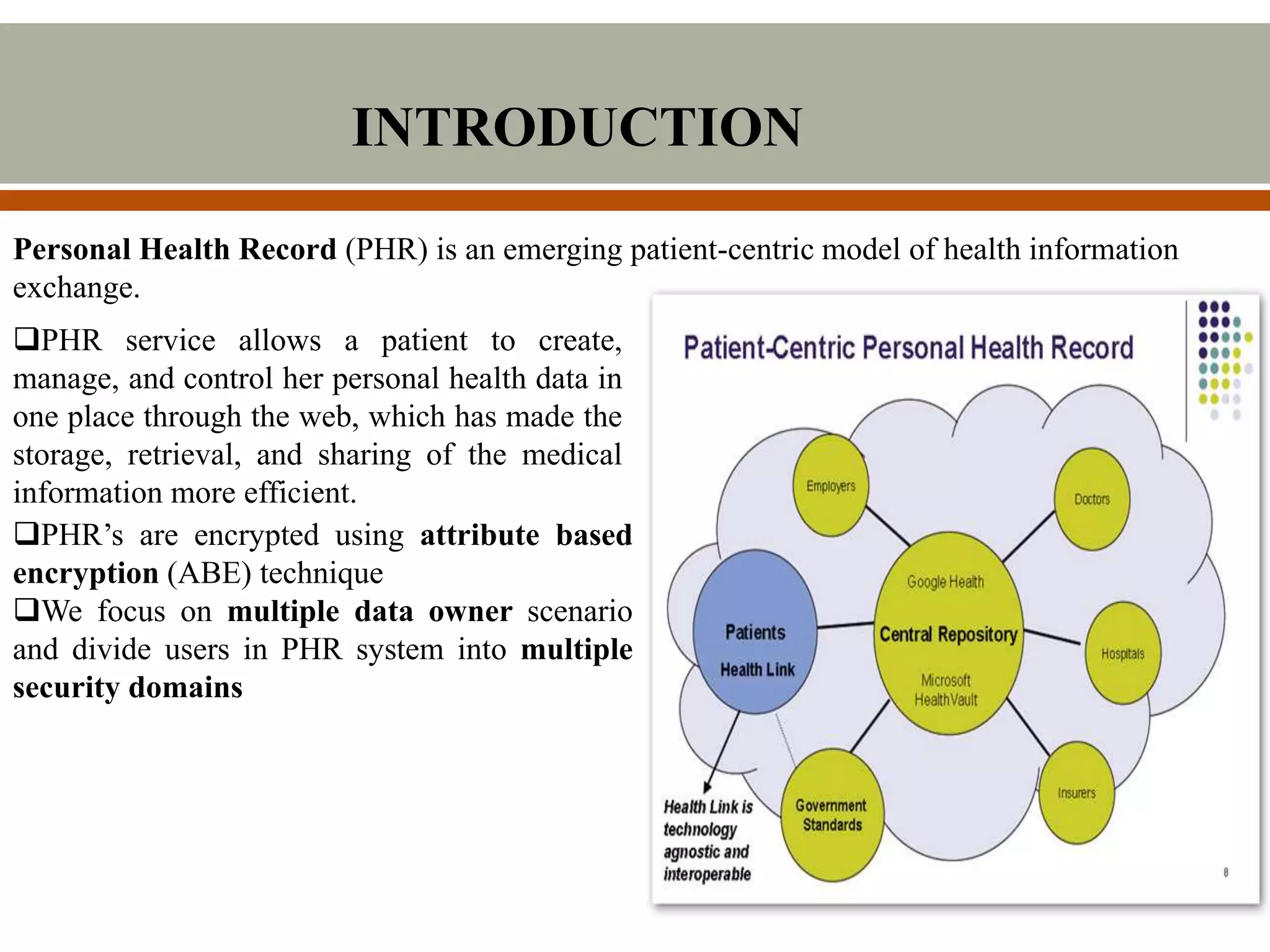
PHR service allows a patient to create,
manage, and control her personal health data in
one place through the web, which has made the
storage, retrieval, and sharing of the medical
information more efficient.
PHR’s are encrypted using attribute based
encryption (ABE) technique
We focus on multiple data owner scenario
and divide users in PHR system into multiple
security domains
Personal Health Record (PHR) is an emerging patient-centric model of health information
exchange.
EXISTING SYSTEM
 Existing systems focuses on health information exchange but suffers from many security
issues.
Drawbacks
In present systems, issues such as risks of privacy exposure,
scalability in key management, flexible access and efficient user
revocation have remained the most important challenges.
Not suitable for multiple data owner’s.
The main concern is about whether the patients could actually
control the sharing of their sensitive personal health information.
PROPOSED SYSTEM
We propose a novel patient-centric framework and a suite of mechanisms for data access control
to PHR’s stored in semi-trusted servers.
Advantages:
Multiple data owner scenario and effective key management.
Privacy is guaranteed by exploiting multi-authority ABE.
Data confidentiality.
Write access control.
Dynamic modification of access policies
On demand revocation.
Allows break-glass access
Scalable ,secured and efficient.
Applications:
Hospital management
Health care website
SYSTEM SPECIFICATIONS
HARDWARE REQUIREMENTS:-
System : Pentinum IV 2.4 GHz
Hard Disk : 40 GB
Ram : 512MB
SOFTWARE REQUIREMENTS:-
Operating system : Windows 7 Professional
Coding Language : J2EE,JSP,Servlet
Front End Tool : Netbeans 7.0
Back End Tool : MY SQL
Server : Apache Tomcat 7.2.1
Script Language : JavaScript
MODULES
 PHR Owner Module
Upload Module
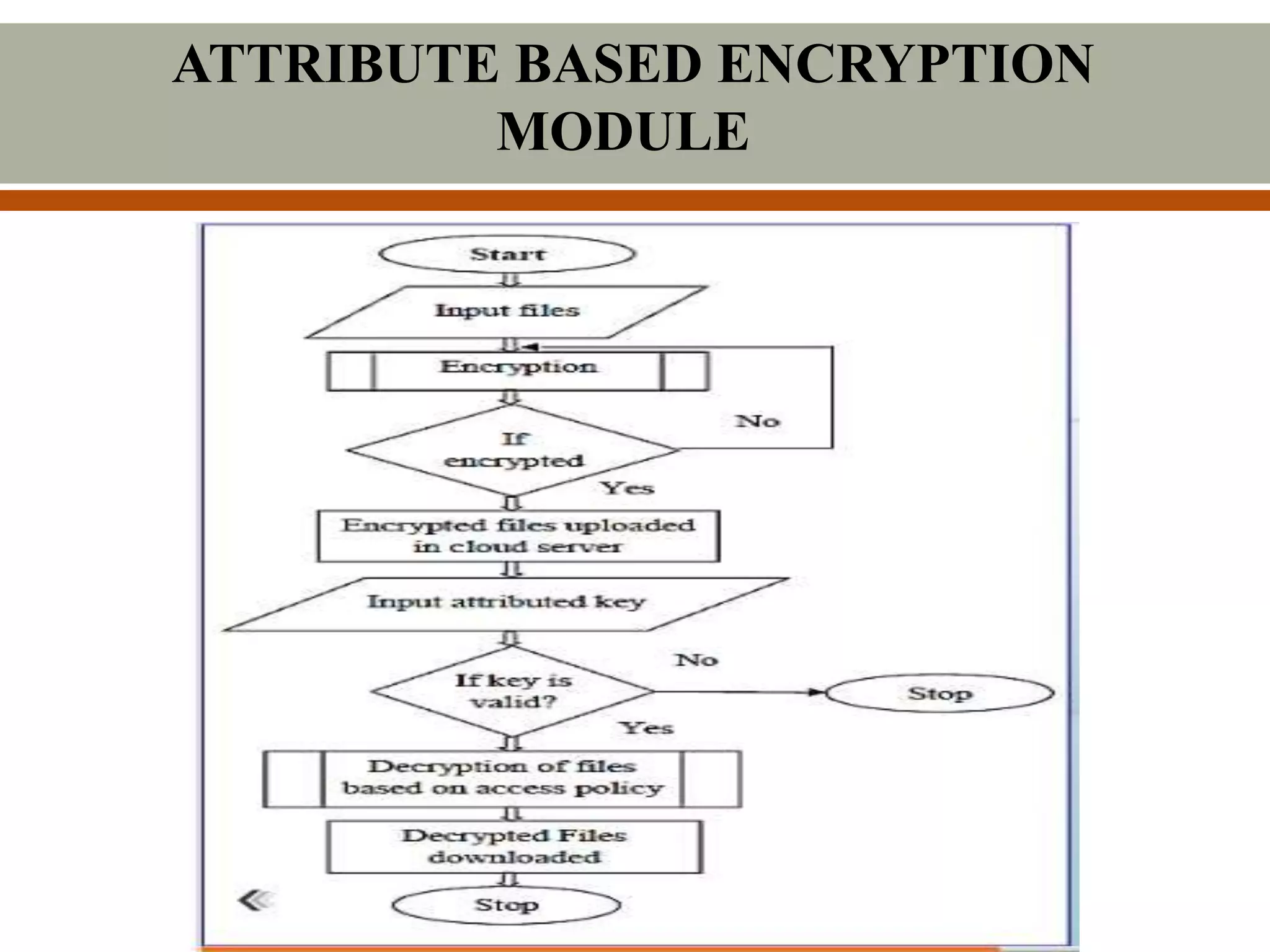
Attribute-based Encryption Module for Data Access
Control
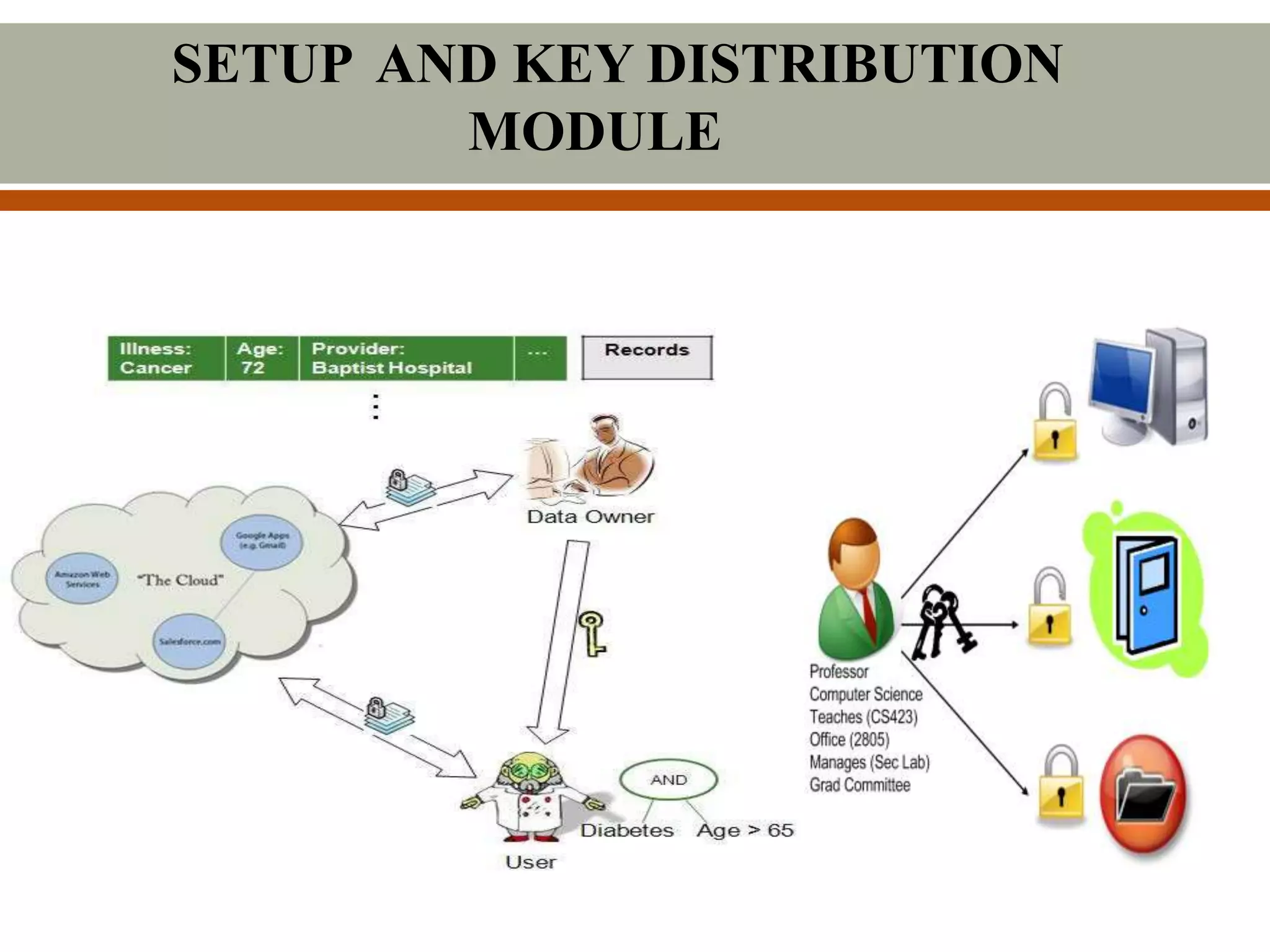
Setup and Key Distribution Module.
Break-glass Module
PHR OWNER MODULE
ATTRIBUTE BASED ENCRYPTION
MODULE
SETUP AND KEY DISTRIBUTION
MODULE
PROPOSED SYSTEM FRAMEWORK
LITERATURE SURVEY
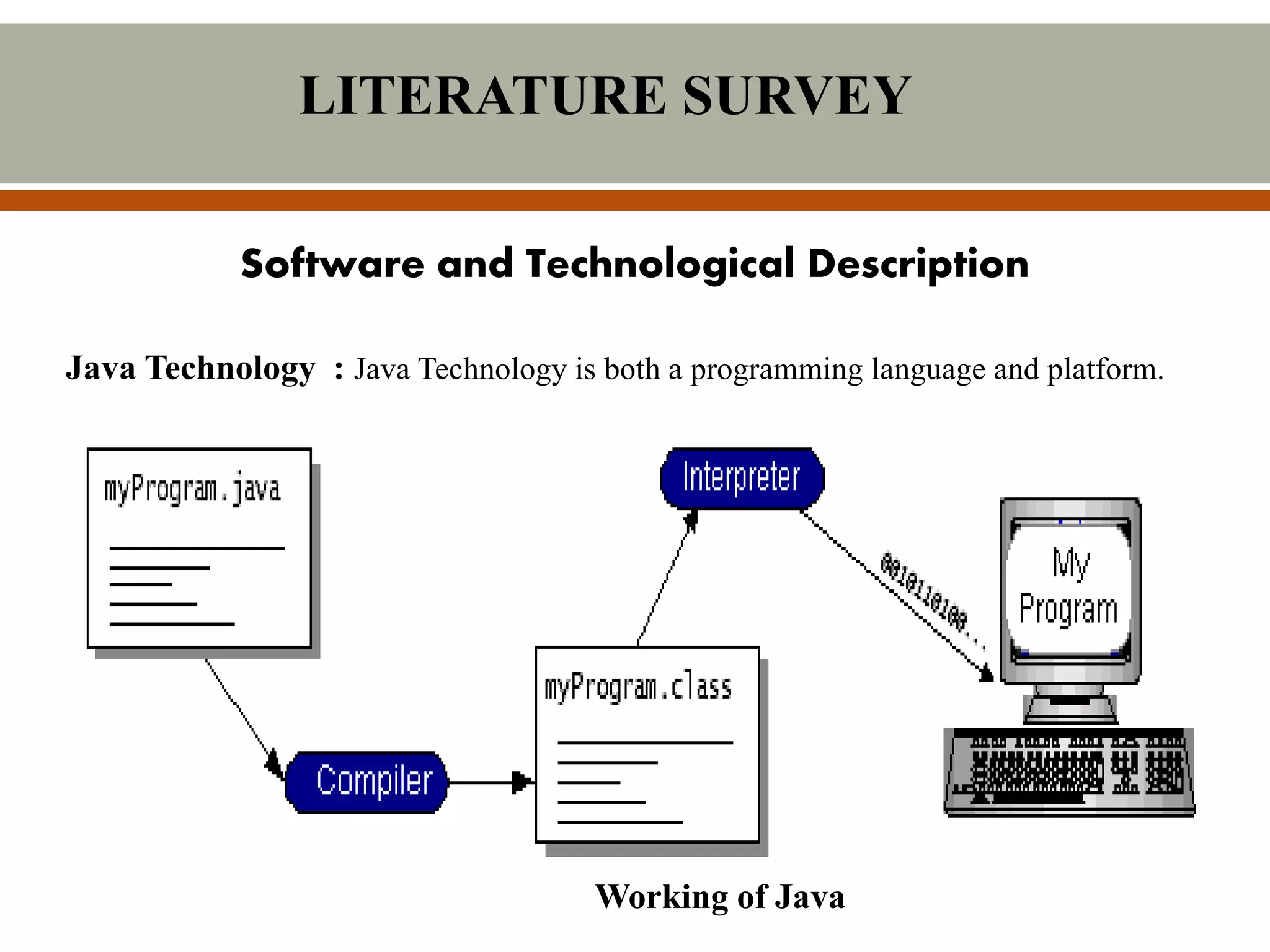
Java Technology : Java Technology is both a programming language and platform.
Working of Java
Software and Technological Description
DATABASE DESIGN
Fig: Static View of PHR Tables.
 ODBC
 JDBC
SYSTEM DESIGN
DATA FLOW DIAGRAMS
Data Owner
Encrypt PHR
Cloud Storage
Patient Centric Model
Attribute based Encryption
Modify Access Policies
Users
Level 1:
Level 0:
SYSTEM DESIGN
UML DIAGRAMS
Patient Centric Framework
Secure PHR Sharing
Attribute based Encryption
Key policy Generation
Break Glass Access
Use Case Diagram: A use case diagram defines the relationship between set of
use cases and actors.
Data Owner Patient Centric Framework Attribute based encryption Data User
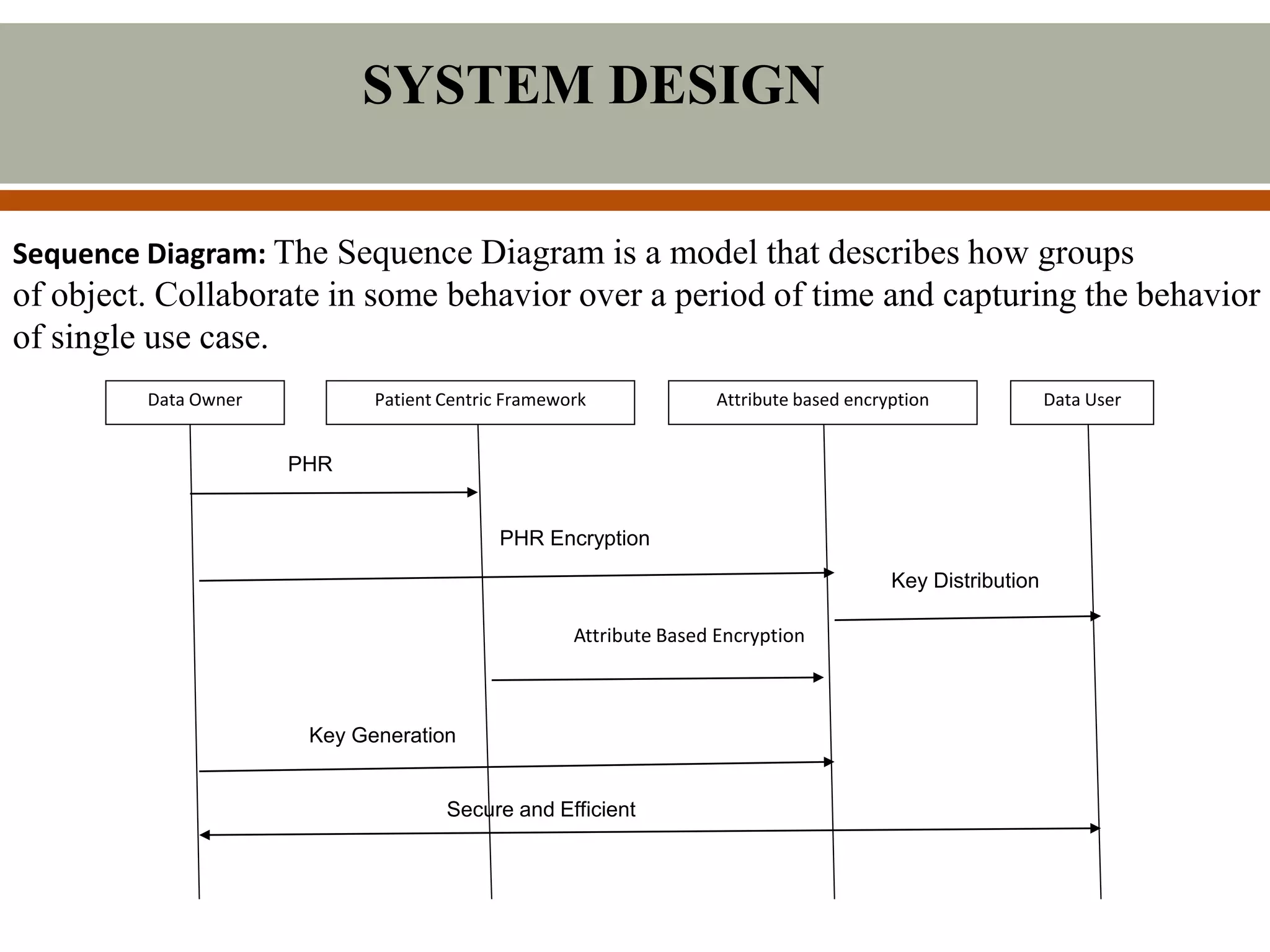
Sequence Diagram: The Sequence Diagram is a model that describes how groups
of object. Collaborate in some behavior over a period of time and capturing the behavior
of single use case.
PHR
PHR Encryption
Key Distribution
Attribute Based Encryption
Key Generation
Secure and Efficient
SYSTEM DESIGN
USER INTERFACES
Login Page
Public Domain Registration Page
Personal Domain
Registration
Page
Emergency
Registration
Page
Patient Sharing
Page
Public Domain
(Doctor/
Insurance)
Requesting
Page
Public Domain
Key Generation
Page
PHR Owner
Page
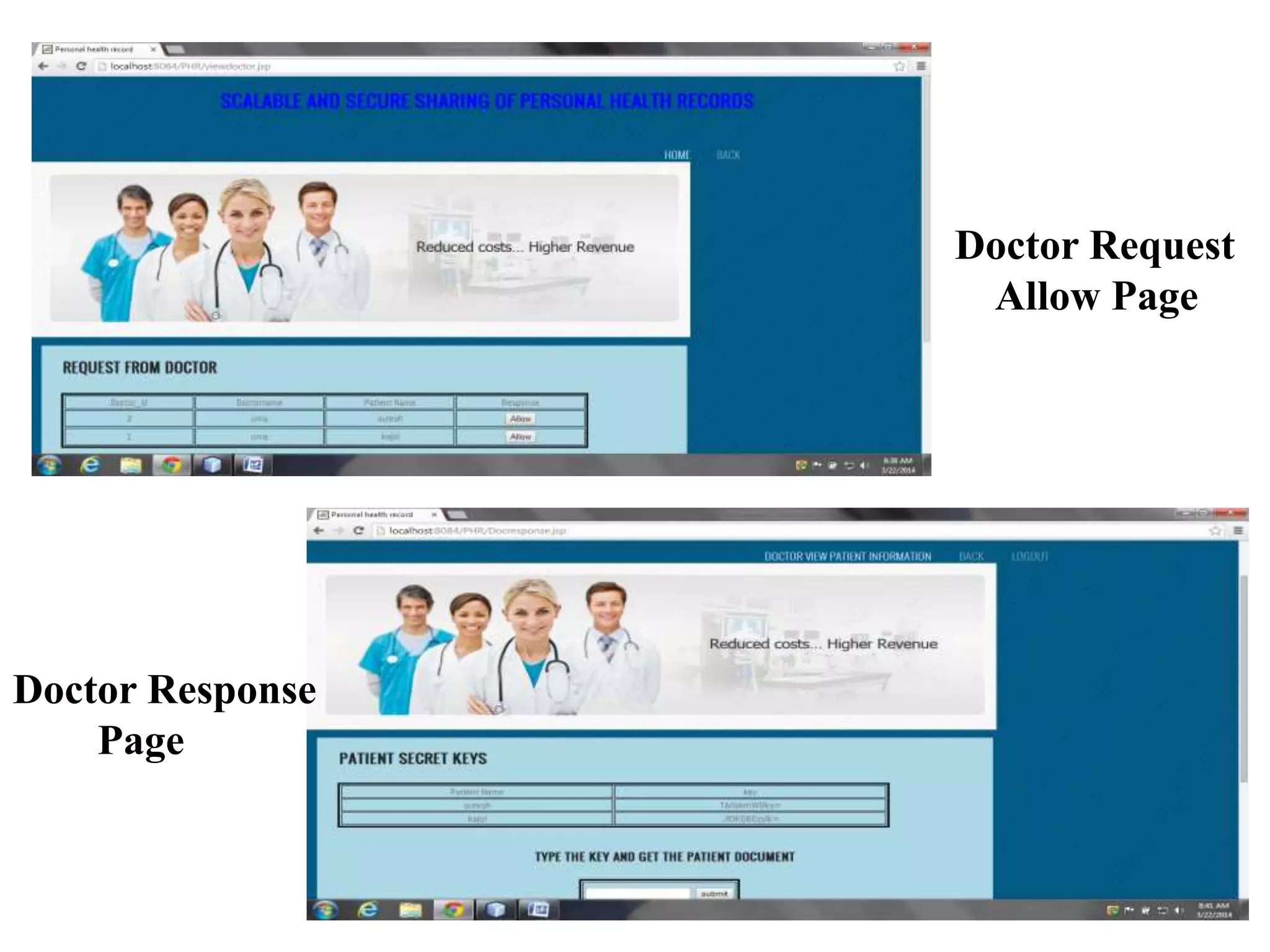
Doctor Response
Page
Doctor Request
Allow Page
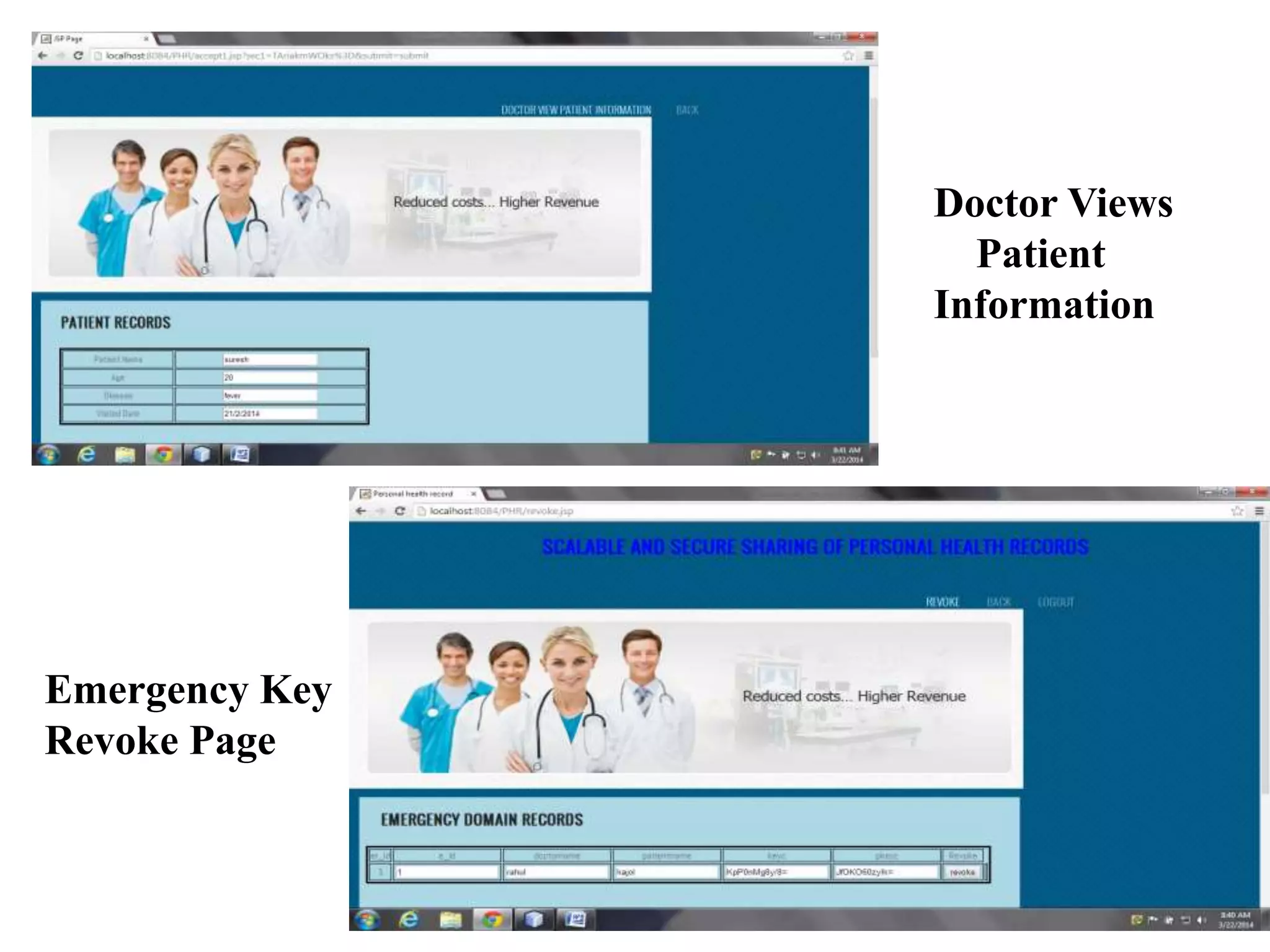
Emergency Key
Revoke Page
Doctor Views
Patient
Information
Testing is a process of validating and verifying that a product:
oMeets the requirements
oWorks as expected
oCan be implemented
oPacifies the needs of customer
 Source code testing
 Specification testing
 Module level testing
 Unit testing
 Integration testing
 Validation testing
 Recovery testing
 Performance testing
 Black box testing
 Output testing
Testing Methods
TESTING
The protection of computer based resources that include
hardware, software, data, procedures and people against
unauthorized use or natural disaster is known as system security.
System security can be divided into four related issues:
oSystem security
oData security
oPrivacy
oSystem Integrity
oConfidentiality
SYSTEM SECURITY
 We proposed a patient centric model for secure sharing of
personal health records in cloud computing.
 In this framework we greatly reduce the complexity of key
management while enhance the privacy guarantees compared
with previous works.
 This model also supports on-demand user revocation, and proves
its security. Through implementation and simulation, we show that
our solution is both scalable and efficient.
 It has been an immense pleasure on working on this project which
comes under Cloud Computing , which is the need of the hour in
this technology driven world.
CONCLUSION
REFERENCES
[1] “The health insurance portability and accountability act.” [Online]. Available:
http://www.cms.hhs.gov/HIPAAGenInfo/01 Overview.asp
[2] “Google, Microsoft say hip a a stimulus rule doesn’t apply to them,”
http://www.ihealthbeat.org/Articles/2009/4/8/.
[3] V. Goyal, O. Pandey, A. Sahai, and B. Waters, “Attribute-based encryption for fine-grained access control
of encrypted data,” in CCS ’06, 2006, pp. 89–98.
[4] J. Benaloh, M. Chase, E. Horvitz, and K. Lauter, “Patient controlled encryption: ensuring privacy of
electronic medical records,” in CCSW ’09, 2009, pp. 103–114.
[5] S. Muller, S. Katzenbeisser, and C. Eckert, “Distributed attribute based encryption,” Information Security
and Cryptology–ICISC 2008, pp. 20–36, 2009.
[6] Y. Zheng, “Key-policy attribute-based encryption scheme implementation,”
http://www.cnsr.ictas.vt.edu/resources.html.
[7] WWW.W3SCHOOLS.COM.
phr

phr

  • 1.
    Scalable and SecureSharing of Personal Health Records in Cloud Computing using Attribute-based Encryption Kajol (10261A0524) Hemanshu Agarwal (10261A0516) Under the guidance of Mr. SK Irfan Babu (Assistant Professor) CSE Department.
  • 2.
    INTRODUCTION PHR service allowsa patient to create, manage, and control her personal health data in one place through the web, which has made the storage, retrieval, and sharing of the medical information more efficient. PHR’s are encrypted using attribute based encryption (ABE) technique We focus on multiple data owner scenario and divide users in PHR system into multiple security domains Personal Health Record (PHR) is an emerging patient-centric model of health information exchange.
  • 3.
    EXISTING SYSTEM  Existingsystems focuses on health information exchange but suffers from many security issues. Drawbacks In present systems, issues such as risks of privacy exposure, scalability in key management, flexible access and efficient user revocation have remained the most important challenges. Not suitable for multiple data owner’s. The main concern is about whether the patients could actually control the sharing of their sensitive personal health information.
  • 4.
    PROPOSED SYSTEM We proposea novel patient-centric framework and a suite of mechanisms for data access control to PHR’s stored in semi-trusted servers. Advantages: Multiple data owner scenario and effective key management. Privacy is guaranteed by exploiting multi-authority ABE. Data confidentiality. Write access control. Dynamic modification of access policies On demand revocation. Allows break-glass access Scalable ,secured and efficient. Applications: Hospital management Health care website
  • 5.
    SYSTEM SPECIFICATIONS HARDWARE REQUIREMENTS:- System: Pentinum IV 2.4 GHz Hard Disk : 40 GB Ram : 512MB SOFTWARE REQUIREMENTS:- Operating system : Windows 7 Professional Coding Language : J2EE,JSP,Servlet Front End Tool : Netbeans 7.0 Back End Tool : MY SQL Server : Apache Tomcat 7.2.1 Script Language : JavaScript
  • 6.
    MODULES  PHR OwnerModule Upload Module Attribute-based Encryption Module for Data Access Control Setup and Key Distribution Module. Break-glass Module
  • 7.
  • 8.
  • 9.
    SETUP AND KEYDISTRIBUTION MODULE
  • 10.
  • 11.
    LITERATURE SURVEY Java Technology: Java Technology is both a programming language and platform. Working of Java Software and Technological Description
  • 12.
    DATABASE DESIGN Fig: StaticView of PHR Tables.  ODBC  JDBC
  • 13.
    SYSTEM DESIGN DATA FLOWDIAGRAMS Data Owner Encrypt PHR Cloud Storage Patient Centric Model Attribute based Encryption Modify Access Policies Users Level 1: Level 0:
  • 14.
    SYSTEM DESIGN UML DIAGRAMS PatientCentric Framework Secure PHR Sharing Attribute based Encryption Key policy Generation Break Glass Access Use Case Diagram: A use case diagram defines the relationship between set of use cases and actors.
  • 15.
    Data Owner PatientCentric Framework Attribute based encryption Data User Sequence Diagram: The Sequence Diagram is a model that describes how groups of object. Collaborate in some behavior over a period of time and capturing the behavior of single use case. PHR PHR Encryption Key Distribution Attribute Based Encryption Key Generation Secure and Efficient SYSTEM DESIGN
  • 16.
  • 17.
  • 18.
  • 19.
  • 20.
  • 21.
  • 22.
    Emergency Key Revoke Page DoctorViews Patient Information
  • 23.
    Testing is aprocess of validating and verifying that a product: oMeets the requirements oWorks as expected oCan be implemented oPacifies the needs of customer  Source code testing  Specification testing  Module level testing  Unit testing  Integration testing  Validation testing  Recovery testing  Performance testing  Black box testing  Output testing Testing Methods TESTING
  • 24.
    The protection ofcomputer based resources that include hardware, software, data, procedures and people against unauthorized use or natural disaster is known as system security. System security can be divided into four related issues: oSystem security oData security oPrivacy oSystem Integrity oConfidentiality SYSTEM SECURITY
  • 25.
     We proposeda patient centric model for secure sharing of personal health records in cloud computing.  In this framework we greatly reduce the complexity of key management while enhance the privacy guarantees compared with previous works.  This model also supports on-demand user revocation, and proves its security. Through implementation and simulation, we show that our solution is both scalable and efficient.  It has been an immense pleasure on working on this project which comes under Cloud Computing , which is the need of the hour in this technology driven world. CONCLUSION
  • 26.
    REFERENCES [1] “The healthinsurance portability and accountability act.” [Online]. Available: http://www.cms.hhs.gov/HIPAAGenInfo/01 Overview.asp [2] “Google, Microsoft say hip a a stimulus rule doesn’t apply to them,” http://www.ihealthbeat.org/Articles/2009/4/8/. [3] V. Goyal, O. Pandey, A. Sahai, and B. Waters, “Attribute-based encryption for fine-grained access control of encrypted data,” in CCS ’06, 2006, pp. 89–98. [4] J. Benaloh, M. Chase, E. Horvitz, and K. Lauter, “Patient controlled encryption: ensuring privacy of electronic medical records,” in CCSW ’09, 2009, pp. 103–114. [5] S. Muller, S. Katzenbeisser, and C. Eckert, “Distributed attribute based encryption,” Information Security and Cryptology–ICISC 2008, pp. 20–36, 2009. [6] Y. Zheng, “Key-policy attribute-based encryption scheme implementation,” http://www.cnsr.ictas.vt.edu/resources.html. [7] WWW.W3SCHOOLS.COM.