Photogrammetry
A Brief Primer
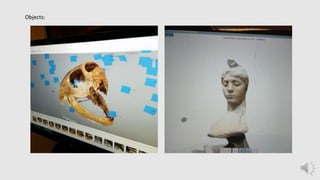
Objects:
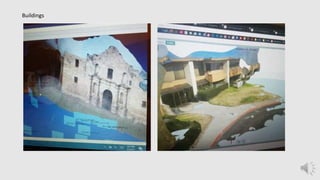
Buildings
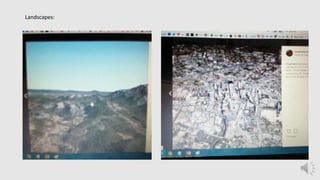
Landscapes:
Photogrammetry: Using photographs to survey
& measure distances between objects
Photogrammetry = Umbrella Term Over Things like:
• Stereography/Stereoscopy
• Stereoplotting (elevation contours on terrain maps)
• Structure From Motion (SfM)
• = Using photographs to build a 3D Model
• SfM = Umbrella Term Over Things like:
• “Stereographic Reconstruction” (How Vricon describes their stuff)
• Simultaneous Localization & Mapping (SLAM)
• Visual Odometry (when Robots SLAM)
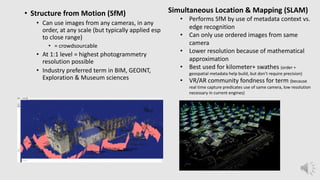
• Structure from Motion (SfM)
• Can use images from any cameras, in any
order, at any scale (but typically applied esp
to close range)
• = crowdsourcable
• At 1:1 level = highest photogrammetry
resolution possible
• Industry preferred term in BIM, GEOINT,
Exploration & Museum sciences
Simultaneous Location & Mapping (SLAM)
• Performs SfM by use of metadata context vs.
edge recognition
• Can only use ordered images from same
camera
• Lower resolution because of mathematical
approximation
• Best used for kilometer+ swathes (order +
geospatial metadata help build, but don’t require precision)
• VR/AR community fondness for term (because
real time capture predicates use of same camera, low resolution
necessary in current engines)
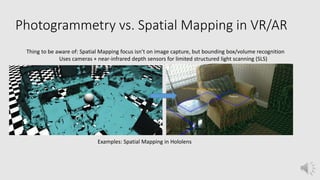
Photogrammetry vs. Spatial Mapping in VR/AR
Thing to be aware of: Spatial Mapping focus isn’t on image capture, but bounding box/volume recognition
Uses cameras + near-infrared depth sensors for limited structured light scanning (SLS)
Examples: Spatial Mapping in Hololens
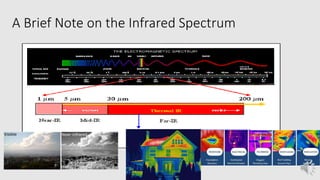
A Brief Note on the Infrared Spectrum
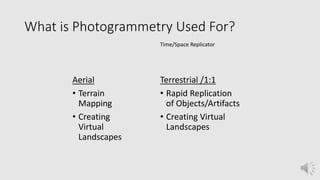
What is Photogrammetry Used For?
Aerial
• Terrain
Mapping
• Creating
Virtual
Landscapes
Terrestrial /1:1
• Rapid Replication
of Objects/Artifacts
• Creating Virtual
Landscapes
Time/Space Replicator
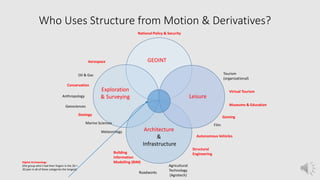
Who Uses Structure from Motion & Derivatives?
GEOINT
Exploration
& Surveying
Architecture
&
Infrastructure
Leisure
Building
Information
Modelling (BIM)
Roadworks
Structural
Engineering
Agricultural
Technology
(Agrotech)
Geology
Geosciences
Oil & Gas
Aerospace
Conservation
Anthropology
Marine Sciences
Meteorology
Gaming
Museums & Education
Virtual Tourism
Tourism
(organizational)
National Policy & Security
Digital Archaeology
(the group who’s had their fingers in the 2D +
3D pies in all of these categories the longest)
Film
Autonomous Vehicles
Quick How To Guide:
• What You’ll Need
• Camera (even phone camera is fine these days)
• Software
• Best:
• BIM Industry standard is Agisoft
• 2nd place: Autodesk Remake (formerly Autodesk 123D Catch & Autodesk Memento)
• RealityCapture
• Lots of open source versions
• Samantha (->Zephyr)
• Assorted MatLab pull-a-part-ables
• Patience
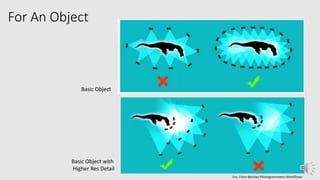
For An Object
Basic Object
Basic Object with
Higher Res Detail
Exs. From Bentley Photogrammetry Workflows
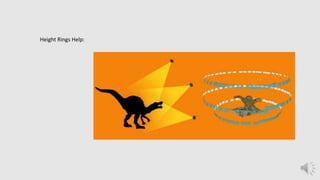
Height Rings Help:
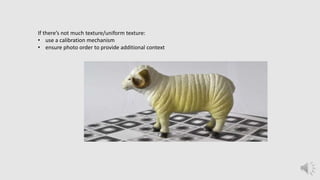
If there’s not much texture/uniform texture:
• use a calibration mechanism
• ensure photo order to provide additional context
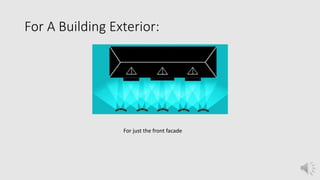
For A Building Exterior:
For just the front facade
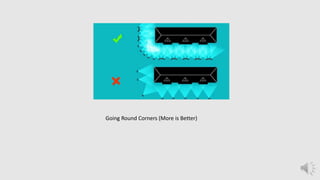
Going Round Corners (More is Better)
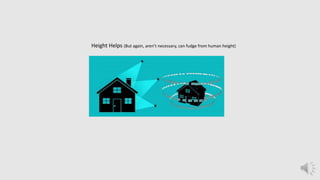
Height Helps (But again, aren’t necessary, can fudge from human height)
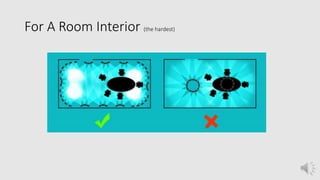
For A Room Interior (the hardest)
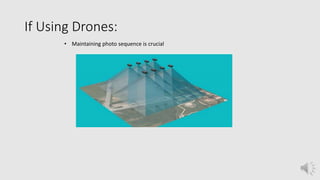
If Using Drones:
• Maintaining photo sequence is crucial
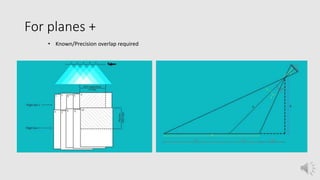
For planes +
• Known/Precision overlap required
Once you’ve captured your images
• Get rid of any blurry or zoomed ones (these are non-helpful)
• Pop them into suitable software
• Push them through the automated workflow (or torture yourself in Matlab, your choice)
• Export in your desired format
• Yay!
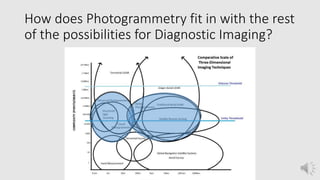
How does Photogrammetry fit in with the rest
of the possibilities for Diagnostic Imaging?
Towards Ubiquitous Sensing
• But photogrammetry is only the beginning…..
• 3D Social Multimedia
• Diagnostic devices constantly getting cheaper
• (Visible Image camera as example)
• Rising demand for 3D Content
• -- Everyone constantly mapping the world in 3D
• Throw in machine learning analytics
• =Ubiquitous, Omniscient 3D Sensing & Mixed Reality Space
• =The Science Fiction Future will be upon us….
Shout out to my recent invited paper
on this re: National Security
preparation for this…

Photogrammetry: A Quick Primer

  • 1.
  • 2.
  • 3.
  • 4.
  • 5.
    Photogrammetry: Using photographsto survey & measure distances between objects Photogrammetry = Umbrella Term Over Things like: • Stereography/Stereoscopy • Stereoplotting (elevation contours on terrain maps) • Structure From Motion (SfM) • = Using photographs to build a 3D Model • SfM = Umbrella Term Over Things like: • “Stereographic Reconstruction” (How Vricon describes their stuff) • Simultaneous Localization & Mapping (SLAM) • Visual Odometry (when Robots SLAM)
  • 6.
    • Structure fromMotion (SfM) • Can use images from any cameras, in any order, at any scale (but typically applied esp to close range) • = crowdsourcable • At 1:1 level = highest photogrammetry resolution possible • Industry preferred term in BIM, GEOINT, Exploration & Museum sciences Simultaneous Location & Mapping (SLAM) • Performs SfM by use of metadata context vs. edge recognition • Can only use ordered images from same camera • Lower resolution because of mathematical approximation • Best used for kilometer+ swathes (order + geospatial metadata help build, but don’t require precision) • VR/AR community fondness for term (because real time capture predicates use of same camera, low resolution necessary in current engines)
  • 7.
    Photogrammetry vs. SpatialMapping in VR/AR Thing to be aware of: Spatial Mapping focus isn’t on image capture, but bounding box/volume recognition Uses cameras + near-infrared depth sensors for limited structured light scanning (SLS) Examples: Spatial Mapping in Hololens
  • 8.
    A Brief Noteon the Infrared Spectrum
  • 9.
    What is PhotogrammetryUsed For? Aerial • Terrain Mapping • Creating Virtual Landscapes Terrestrial /1:1 • Rapid Replication of Objects/Artifacts • Creating Virtual Landscapes Time/Space Replicator
  • 10.
    Who Uses Structurefrom Motion & Derivatives? GEOINT Exploration & Surveying Architecture & Infrastructure Leisure Building Information Modelling (BIM) Roadworks Structural Engineering Agricultural Technology (Agrotech) Geology Geosciences Oil & Gas Aerospace Conservation Anthropology Marine Sciences Meteorology Gaming Museums & Education Virtual Tourism Tourism (organizational) National Policy & Security Digital Archaeology (the group who’s had their fingers in the 2D + 3D pies in all of these categories the longest) Film Autonomous Vehicles
  • 11.
    Quick How ToGuide: • What You’ll Need • Camera (even phone camera is fine these days) • Software • Best: • BIM Industry standard is Agisoft • 2nd place: Autodesk Remake (formerly Autodesk 123D Catch & Autodesk Memento) • RealityCapture • Lots of open source versions • Samantha (->Zephyr) • Assorted MatLab pull-a-part-ables • Patience
  • 12.
    For An Object BasicObject Basic Object with Higher Res Detail Exs. From Bentley Photogrammetry Workflows
  • 13.
  • 14.
    If there’s notmuch texture/uniform texture: • use a calibration mechanism • ensure photo order to provide additional context
  • 15.
    For A BuildingExterior: For just the front facade
  • 16.
    Going Round Corners(More is Better)
  • 17.
    Height Helps (Butagain, aren’t necessary, can fudge from human height)
  • 18.
    For A RoomInterior (the hardest)
  • 19.
    If Using Drones: •Maintaining photo sequence is crucial
  • 20.
    For planes + •Known/Precision overlap required
  • 21.
    Once you’ve capturedyour images • Get rid of any blurry or zoomed ones (these are non-helpful) • Pop them into suitable software • Push them through the automated workflow (or torture yourself in Matlab, your choice) • Export in your desired format • Yay!
  • 22.
    How does Photogrammetryfit in with the rest of the possibilities for Diagnostic Imaging?
  • 23.
    Towards Ubiquitous Sensing •But photogrammetry is only the beginning….. • 3D Social Multimedia • Diagnostic devices constantly getting cheaper • (Visible Image camera as example) • Rising demand for 3D Content • -- Everyone constantly mapping the world in 3D • Throw in machine learning analytics • =Ubiquitous, Omniscient 3D Sensing & Mixed Reality Space • =The Science Fiction Future will be upon us…. Shout out to my recent invited paper on this re: National Security preparation for this…