PHOSPHORIC
ACID
Electric Furnace Processes
KARTHIK SREEVATSAN
CHEMICAL ENGINEERING
ELECTRIC FURNACE
PROCESSES
• Direct conversion at the plant site
• Oxidation and hydration of phosphorous
• Blast furnace
DIRECT CONVERSION AT PLANT SITE
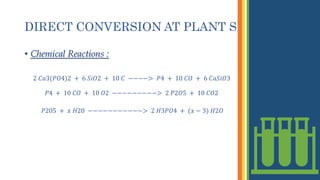
• Chemical Reactions :
2 𝐶𝑎3(𝑃𝑂4)2 + 6 𝑆𝑖𝑂2 + 10 𝐶 −−−−> 𝑃4 + 10 𝐶𝑂 + 6 𝐶𝑎𝑆𝑖𝑂3
𝑃4 + 10 𝐶𝑂 + 10 𝑂2 −−−−−−−−−> 2 𝑃2𝑂5 + 10 𝐶𝑂2
𝑃205 + 𝑥 𝐻20 −−−−−−−−−−−> 2 𝐻3𝑃𝑂4 + (𝑥 − 3) 𝐻2𝑂
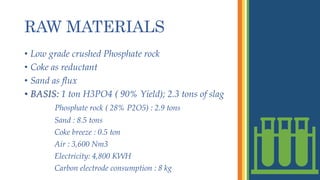
RAW MATERIALS
• Low grade crushed Phosphate rock
• Coke as reductant
• Sand as flux
• BASIS: 1 ton H3PO4 ( 90% Yield); 2.3 tons of slag
Phosphate rock ( 28% P2O5) : 2.9 tons
Sand : 8.5 tons
Coke breeze : 0.5 ton
Air : 3,600 Nm3
Electricity: 4,800 KWH
Carbon electrode consumption : 8 kg
PROCESS DESCRIPTION
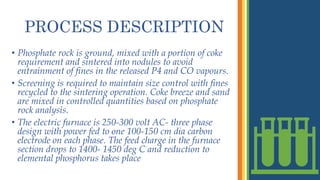
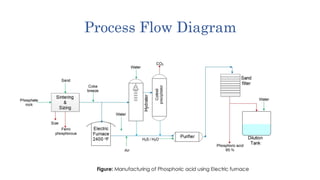
• Phosphate rock is ground, mixed with a portion of coke
requirement and sintered into nodules to avoid
entrainment of fines in the released P4 and CO vapours.
• Screening is required to maintain size control with fines
recycled to the sintering operation. Coke breeze and sand
are mixed in controlled quantities based on phosphate
rock analysis.
• The electric furnace is 250-300 volt AC- three phase
design with power fed to one 100-150 cm dia carbon
electrode on each phase. The feed charge in the furnace
section drops to 1400- 1450 deg C and reduction to
elemental phosphorus takes place
PROCESS DESCRIPTION CONTD…
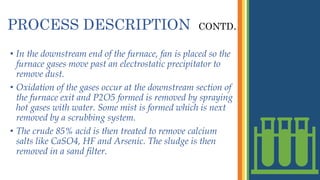
• In the downstream end of the furnace, fan is placed so the
furnace gases move past an electrostatic precipitator to
remove dust.
• Oxidation of the gases occur at the downstream section of
the furnace exit and P2O5 formed is removed by spraying
hot gases with water. Some mist is formed which is next
removed by a scrubbing system.
• The crude 85% acid is then treated to remove calcium
salts like CaSO4, HF and Arsenic. The sludge is then
removed in a sand filter.
Process Flow Diagram
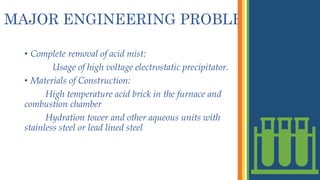
MAJOR ENGINEERING PROBLEMS
• Complete removal of acid mist:
Usage of high voltage electrostatic precipitator.
• Materials of Construction:
High temperature acid brick in the furnace and
combustion chamber
Hydration tower and other aqueous units with
stainless steel or lead lined steel
Oxidation & Hydration of
Elemental Phosphorous
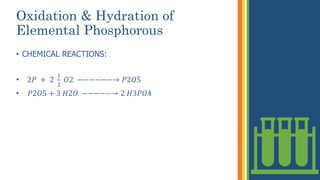
• CHEMICAL REACTIONS:
• 2𝑃 + 2
1
2
𝑂2 −−−−−−→ 𝑃2𝑂5
• 𝑃2𝑂5 + 3 𝐻2𝑂 −−−−−→ 2 𝐻3𝑃𝑂4
RAW MATERIALS
• Elemental phosphorus
• Air
• Steam
• Basis : 1 ton of 100% H3PO4 in 96% yield
• Phosphorus : 0.33 ton
• Air : 1,260 Nm3
• Water and Steam : Not definite
Process Description
• Phosphorous is melted at 50 deg C and metered
by water displacement to a steam ejector and
atomization section of combustion nozzle.
• The injected compressed air around the steam
atomized phosphorous droplets and the
exothermic reaction rises the gas temperature to
2,000 deg C. The entire chamber is about 1.2 m in
diameter and 3.0 m long and is built of stainless
steel with water-cooled walls.
Process Description contd…
• The gaseous oxides, partially hydrated, are treated by
spraying hot water . On conversion it produces 85%
H3PO4.
• Purification is still required to remove arsenic via
H2S for making food grade acid derivatives
Major Engineering Problems
• Solvent recovery:
The use of expensive solvent in producing low cost acid
requires careful attention to design and operation of solvent
handling equipment
• Materials of Construction:
All sections of the plant must be HCl resistant which
requires rubber lined or rigid PVC equipment
• Waste disposal
• Preventing formation of Meta-Phosphoric acid:
Placing combustion chamber near the bottom can vaporize
m-H3PO4 which is vaporized and passed overhead
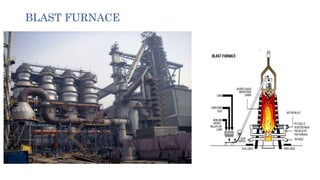
BLAST FURNACE
Phosphoric acid [CHEMICAL PROCESSS INDUSTRIES]

Phosphoric acid [CHEMICAL PROCESSS INDUSTRIES]

  • 1.
  • 2.
    ELECTRIC FURNACE PROCESSES • Directconversion at the plant site • Oxidation and hydration of phosphorous • Blast furnace
  • 3.
    DIRECT CONVERSION ATPLANT SITE • Chemical Reactions : 2 𝐶𝑎3(𝑃𝑂4)2 + 6 𝑆𝑖𝑂2 + 10 𝐶 −−−−> 𝑃4 + 10 𝐶𝑂 + 6 𝐶𝑎𝑆𝑖𝑂3 𝑃4 + 10 𝐶𝑂 + 10 𝑂2 −−−−−−−−−> 2 𝑃2𝑂5 + 10 𝐶𝑂2 𝑃205 + 𝑥 𝐻20 −−−−−−−−−−−> 2 𝐻3𝑃𝑂4 + (𝑥 − 3) 𝐻2𝑂
  • 4.
    RAW MATERIALS • Lowgrade crushed Phosphate rock • Coke as reductant • Sand as flux • BASIS: 1 ton H3PO4 ( 90% Yield); 2.3 tons of slag Phosphate rock ( 28% P2O5) : 2.9 tons Sand : 8.5 tons Coke breeze : 0.5 ton Air : 3,600 Nm3 Electricity: 4,800 KWH Carbon electrode consumption : 8 kg
  • 5.
    PROCESS DESCRIPTION • Phosphaterock is ground, mixed with a portion of coke requirement and sintered into nodules to avoid entrainment of fines in the released P4 and CO vapours. • Screening is required to maintain size control with fines recycled to the sintering operation. Coke breeze and sand are mixed in controlled quantities based on phosphate rock analysis. • The electric furnace is 250-300 volt AC- three phase design with power fed to one 100-150 cm dia carbon electrode on each phase. The feed charge in the furnace section drops to 1400- 1450 deg C and reduction to elemental phosphorus takes place
  • 6.
    PROCESS DESCRIPTION CONTD… •In the downstream end of the furnace, fan is placed so the furnace gases move past an electrostatic precipitator to remove dust. • Oxidation of the gases occur at the downstream section of the furnace exit and P2O5 formed is removed by spraying hot gases with water. Some mist is formed which is next removed by a scrubbing system. • The crude 85% acid is then treated to remove calcium salts like CaSO4, HF and Arsenic. The sludge is then removed in a sand filter.
  • 7.
  • 8.
    MAJOR ENGINEERING PROBLEMS •Complete removal of acid mist: Usage of high voltage electrostatic precipitator. • Materials of Construction: High temperature acid brick in the furnace and combustion chamber Hydration tower and other aqueous units with stainless steel or lead lined steel
  • 9.
    Oxidation & Hydrationof Elemental Phosphorous • CHEMICAL REACTIONS: • 2𝑃 + 2 1 2 𝑂2 −−−−−−→ 𝑃2𝑂5 • 𝑃2𝑂5 + 3 𝐻2𝑂 −−−−−→ 2 𝐻3𝑃𝑂4
  • 10.
    RAW MATERIALS • Elementalphosphorus • Air • Steam • Basis : 1 ton of 100% H3PO4 in 96% yield • Phosphorus : 0.33 ton • Air : 1,260 Nm3 • Water and Steam : Not definite
  • 11.
    Process Description • Phosphorousis melted at 50 deg C and metered by water displacement to a steam ejector and atomization section of combustion nozzle. • The injected compressed air around the steam atomized phosphorous droplets and the exothermic reaction rises the gas temperature to 2,000 deg C. The entire chamber is about 1.2 m in diameter and 3.0 m long and is built of stainless steel with water-cooled walls.
  • 12.
    Process Description contd… •The gaseous oxides, partially hydrated, are treated by spraying hot water . On conversion it produces 85% H3PO4. • Purification is still required to remove arsenic via H2S for making food grade acid derivatives
  • 13.
    Major Engineering Problems •Solvent recovery: The use of expensive solvent in producing low cost acid requires careful attention to design and operation of solvent handling equipment • Materials of Construction: All sections of the plant must be HCl resistant which requires rubber lined or rigid PVC equipment • Waste disposal • Preventing formation of Meta-Phosphoric acid: Placing combustion chamber near the bottom can vaporize m-H3PO4 which is vaporized and passed overhead
  • 14.