 Phosphatases catalyze the hydrolysis of a
phosphomonoester, removing a phosphatemoiety from
the substrate. Water is split in the reaction, with the -OH
group attaching to the phosphate ion, and the H+
protonating the hydroxyl group of the other product
 This reaction is not reversible
 This shows totally opposite activity from enzyme like
kinases & phaspharylase that add a phosphate grope to
their substrate.
PHOSPHATASE
REACTION
TYPES OF PHASPHATASE
On the basis of their activity there are two types of
phosphatase
 ACID PHOSPHATASE
 ALKALINE PHOSPHATASE
 In both forms the alkaline phosphate are most
common special class of phophatase that remove a
phosphate group from protein called phasphoprotein
phosphatase
ACID PHOSPHATASE
It shows is optimal activity at Ph between 3 to 6 range
Acid phosphatase is a ubiquitous lysosomal enzyme
that hydrolyses organic phosphates at an acid pH.
Although the postpuberteral prostatic epithelial cell
contains a uniquely high concentration of acid
phosphatase, cellular components of bone, spleen,
kidney, liver, intestine, and blood also contain this
enzyme.
ALKALINE PHOSPHATASE
Alkaline phosphatase or basic phosphatase is a
homodimeric protein enzyme of 86 kilodaltons. Each
monomer contains five cysteine residues, two zinc
atoms, and one magnesium atom crucial to its catalytic
function, and it is optimally active at alkaline pH
environments.
They shows their optimal activity at pH of about 10
In humans, alkaline phosphatase is present in all
tissues throughout the entire body, but is particularly
concentrated in the liver, bile duct, kidney, bone,
intestinal mucosa and placenta.
Calf-intestinal alkaline
phosphatase (CIAP/CIP)
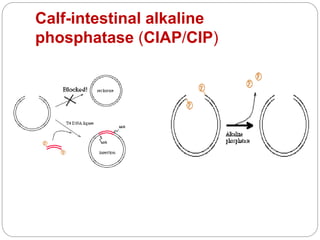
Calf-intestinal alkaline phosphatase (CIAP/CIP) is a type
of alkaline phosphatase that catalyzes the removal of
phosphate groups from the 5' end of DNA strands. This
enzyme is frequently used in DNA sub-cloning, as DNA
fragments that lack the 5' phosphate groups
cannot ligate. This prevents recircularization of
linearized vector DNA and improves the yield of vector
containing the appropriate insert.
Calf-intestinal alkaline
phosphatase (CIAP/CIP)
Transformation results in the genetic alteration of the
recipient cell. Exogenous DNA is taken up into the
recipient cell from its surroundings through the cell
membrane (s). Transformation occurs naturally in
some species of bacteria, but it can also be affected by
artificial means in other cells
GENETIC TRANSFORMATION
Transformation is the process by which an organism acquires
exogenous DNA. Transformation can occur in two ways:
natural transformation and artificial transformation. Natural
transformation describes the uptake and incorporation of
naked DNA from the cell’s natural environment. Artificial
transformation encompasses a wide array of methods for
inducing uptake of exogenous DNA. In cloning protocols,
artificial transformation is used to introduce recombinant DNA
into host bacteria (E. coli). The most common method of
artificial transformation of bacteria involves use of divalent
cations (e.g., calcium chloride) to increase the permeability of
the bacterium’s membrane, making them chemically
competent, thereby increasing the likelihood of DNA
acquisition. Another artificial method of transformation is
electroporation, in which cells are shocked with an electric
current, to create holes in the bacterial membrane. With a
newly-compromised cell membrane, the transforming DNA is
free to pass into the cytosol of the bacterium. Regardless of
ELECTROPORATION
Electroporation, or electropermeabilization, is
a microbiology technique in which an electrical field is
applied to cells in order to increase the permeability of
the cell membrane allowing chemicals, drugs, or DNA to
be introduced into the cell (also called electrotransfer)
HEAT SHOCK METHOD
Transformation of plasmid DNA into E. coli using the
heat shock method is a basic technique of molecular
biology. It consists of inserting a foreign plasmid or
ligation product into bacteria.
A short incubation in ice, a mixture of chemically
competent bacteria and DNA is placed at 42°C for 45
seconds (heat shock) and then placed back in ice.
Phosphatase
Phosphatase

Phosphatase

  • 1.
     Phosphatases catalyzethe hydrolysis of a phosphomonoester, removing a phosphatemoiety from the substrate. Water is split in the reaction, with the -OH group attaching to the phosphate ion, and the H+ protonating the hydroxyl group of the other product  This reaction is not reversible  This shows totally opposite activity from enzyme like kinases & phaspharylase that add a phosphate grope to their substrate. PHOSPHATASE
  • 2.
  • 3.
    TYPES OF PHASPHATASE Onthe basis of their activity there are two types of phosphatase  ACID PHOSPHATASE  ALKALINE PHOSPHATASE  In both forms the alkaline phosphate are most common special class of phophatase that remove a phosphate group from protein called phasphoprotein phosphatase
  • 4.
    ACID PHOSPHATASE It showsis optimal activity at Ph between 3 to 6 range Acid phosphatase is a ubiquitous lysosomal enzyme that hydrolyses organic phosphates at an acid pH. Although the postpuberteral prostatic epithelial cell contains a uniquely high concentration of acid phosphatase, cellular components of bone, spleen, kidney, liver, intestine, and blood also contain this enzyme.
  • 5.
    ALKALINE PHOSPHATASE Alkaline phosphataseor basic phosphatase is a homodimeric protein enzyme of 86 kilodaltons. Each monomer contains five cysteine residues, two zinc atoms, and one magnesium atom crucial to its catalytic function, and it is optimally active at alkaline pH environments. They shows their optimal activity at pH of about 10 In humans, alkaline phosphatase is present in all tissues throughout the entire body, but is particularly concentrated in the liver, bile duct, kidney, bone, intestinal mucosa and placenta.
  • 6.
    Calf-intestinal alkaline phosphatase (CIAP/CIP) Calf-intestinalalkaline phosphatase (CIAP/CIP) is a type of alkaline phosphatase that catalyzes the removal of phosphate groups from the 5' end of DNA strands. This enzyme is frequently used in DNA sub-cloning, as DNA fragments that lack the 5' phosphate groups cannot ligate. This prevents recircularization of linearized vector DNA and improves the yield of vector containing the appropriate insert.
  • 7.
  • 8.
    Transformation results inthe genetic alteration of the recipient cell. Exogenous DNA is taken up into the recipient cell from its surroundings through the cell membrane (s). Transformation occurs naturally in some species of bacteria, but it can also be affected by artificial means in other cells GENETIC TRANSFORMATION
  • 9.
    Transformation is theprocess by which an organism acquires exogenous DNA. Transformation can occur in two ways: natural transformation and artificial transformation. Natural transformation describes the uptake and incorporation of naked DNA from the cell’s natural environment. Artificial transformation encompasses a wide array of methods for inducing uptake of exogenous DNA. In cloning protocols, artificial transformation is used to introduce recombinant DNA into host bacteria (E. coli). The most common method of artificial transformation of bacteria involves use of divalent cations (e.g., calcium chloride) to increase the permeability of the bacterium’s membrane, making them chemically competent, thereby increasing the likelihood of DNA acquisition. Another artificial method of transformation is electroporation, in which cells are shocked with an electric current, to create holes in the bacterial membrane. With a newly-compromised cell membrane, the transforming DNA is free to pass into the cytosol of the bacterium. Regardless of
  • 10.
    ELECTROPORATION Electroporation, or electropermeabilization,is a microbiology technique in which an electrical field is applied to cells in order to increase the permeability of the cell membrane allowing chemicals, drugs, or DNA to be introduced into the cell (also called electrotransfer)
  • 11.
    HEAT SHOCK METHOD Transformationof plasmid DNA into E. coli using the heat shock method is a basic technique of molecular biology. It consists of inserting a foreign plasmid or ligation product into bacteria. A short incubation in ice, a mixture of chemically competent bacteria and DNA is placed at 42°C for 45 seconds (heat shock) and then placed back in ice.