DEPARTMENT OF ENGLISH
PPT FOR PHONETICS AND SPOKEN
ENGLISH(AENEA41)
BY S.VIJAYAPRIYA
CLASS-II BA ENGLISH SEMESTER-IV
II BA ENGLISH
III SEMESTER
 SYLLABUS
 UNIT I
 THE ORGANS OF SPEECH
 THE DESCRIPTION OF SPEECH SOUNDS
 UNIT II
 THE SOUNDS OF ENGLISH: VOWELS
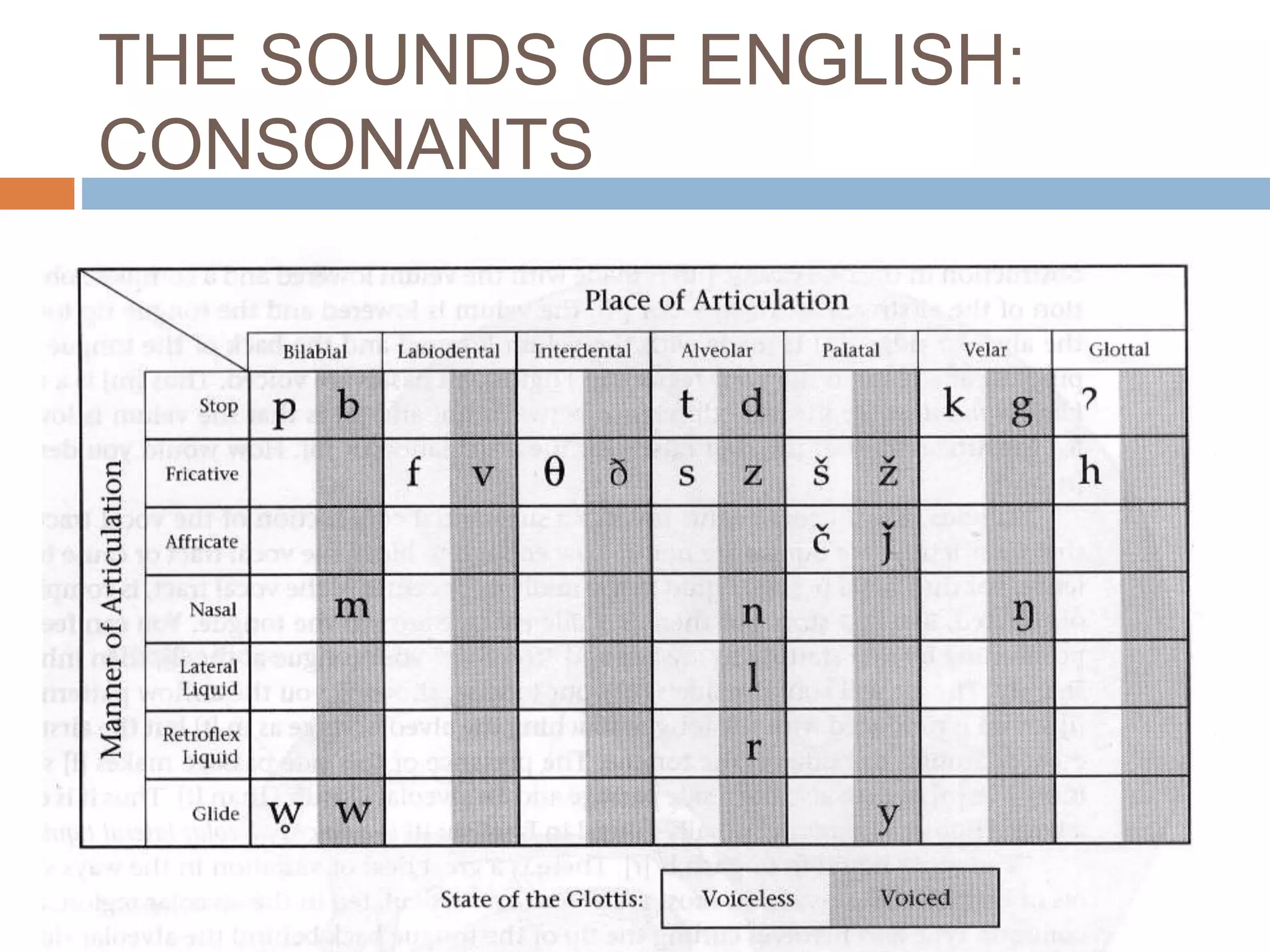
 THE SOUNDS OF ENGLISH: CONSONANTS
 UNIT III
 STRESS, ACCENT, RHYTHM, ASSIMILATION AND INTONATION
 UNIT IV
 PHONETIC TRANSCRIPTION: CONVERSATION PASSAGES FOR
PRACTICE
 UNIT V
 SPOKEN ENGLISH IN VARIOUS SITUATIONS IN WHICH DIALOGUES
TAKE PLACE.
UNIT I
Phonetics, phonology, phoneme
 Phonetics: Deals with the production,
transmission and reception of speech
sounds.
 Phonology: Deals with the way in which the
speech sounds of a language function.
 Phoneme: Deals with phonological segment
that can be phonetically predicted by a
rule
Organs of speech
THE DESCRIPTION OF SPEECH
SOUNDS (Voicing)
Voicing
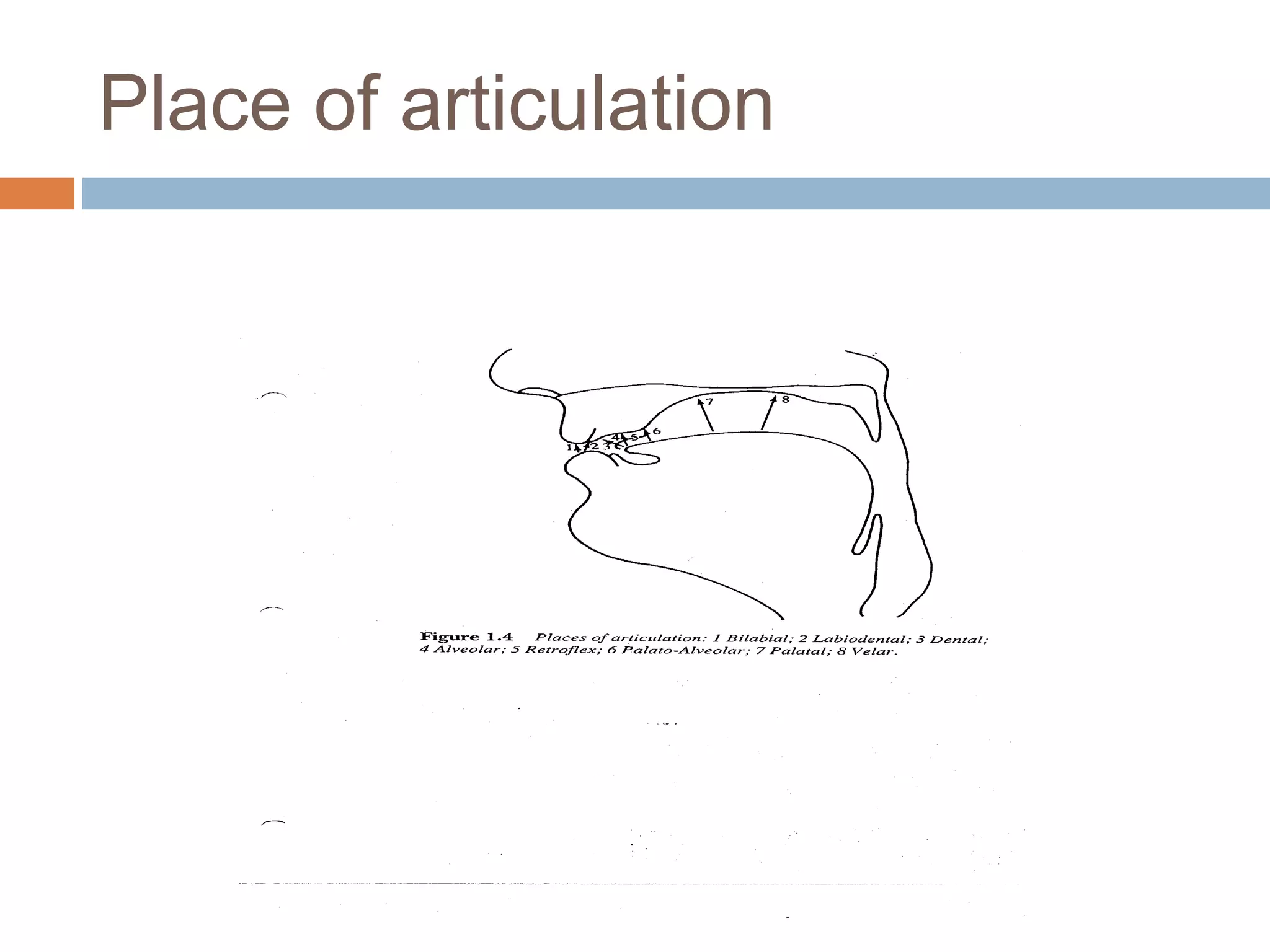
Place of articulation
Major lower articulators
UNIT II
THE SOUNDS OF ENGLISH :
VOWELS
 Vowels
 Monophthongs
 Diphthongs
 12 monophthongs: 7 short: ɪ, e, æ, ʌ , ɒ, ʊ, ә
and 5 long: i: , ɑ: , ɔ: , з: , u:
 7 diphthongs: 5 closing: eɪ, aɪ, ɔɪ, aʊ, әʊ
 and 2 (3) centring: eә, ɪә, (ʊә)
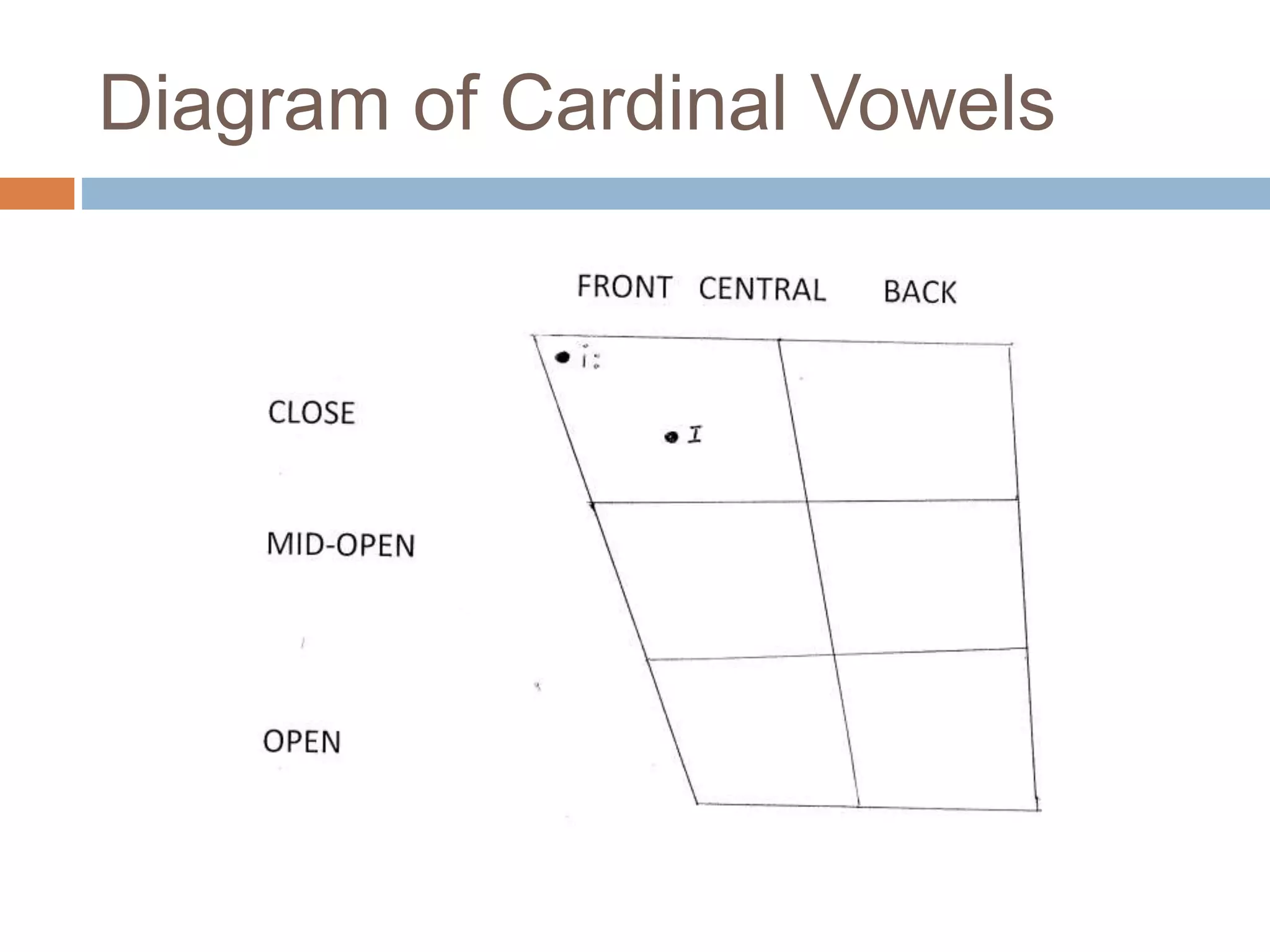
Diagram of Cardinal Vowels
/e/ and /æ /
/ʌ / and /ɑ: /
CLOSE
MID-OPEN
OPEN
THE SOUNDS OF ENGLISH:
CONSONANTS
Features of Consonants
 Voicing (state of the glottis)
 Place of articulation
 Manner of articulation
Consonants vs. Vowels
 consonantal sounds: obstruction of airflow in
vocal tract
 vowel sounds: little to no obstruction of airflow
Phonetic features of
consonants
 To describe phonetic features of consonants,
list (a) voicing (b) place of articulation and (c)
manner of articulation for consonants (3
features)
e.g. [p] = Voiceless bilabial stop
[z] = Voiced alveolar fricative
UNIT III
STRESS, ACCENT, RHYTHM,
ASSIMILATION AND INTONATION
STRESS and ACCENT:
 When a word has more than one syllable, one of them is spoken with more
force than the rest , this force is called stress.
 While accent is a prominence given to a word or syllable by means of stress
and intonation
 In a polysyllabic word, one of the syllables is pronounced with greater
prominence than other syllables.
 The syllable that is pronounced with greater prominence in the same word is
said to be “accented” or “stressed”.
 Accent is easily detected in speech but in writing accent is marked by placing a
small vertical bar in front of the syllable which is stressed.
RHYTHM
 English is a stress-timed language, unlike
French and Tamil which are syllable-timed
languages.
 TWO TYPES OF RHYTHM:
1)SYLLABLE-TIMED RHYTHM
2)STRESS-TIMED RHYTHM
ASSIMILATION
 It is a general term in phonetics for the process
by which one phoneme or speech-sound is
replaced by another under the influence of the
neighbouring sound.
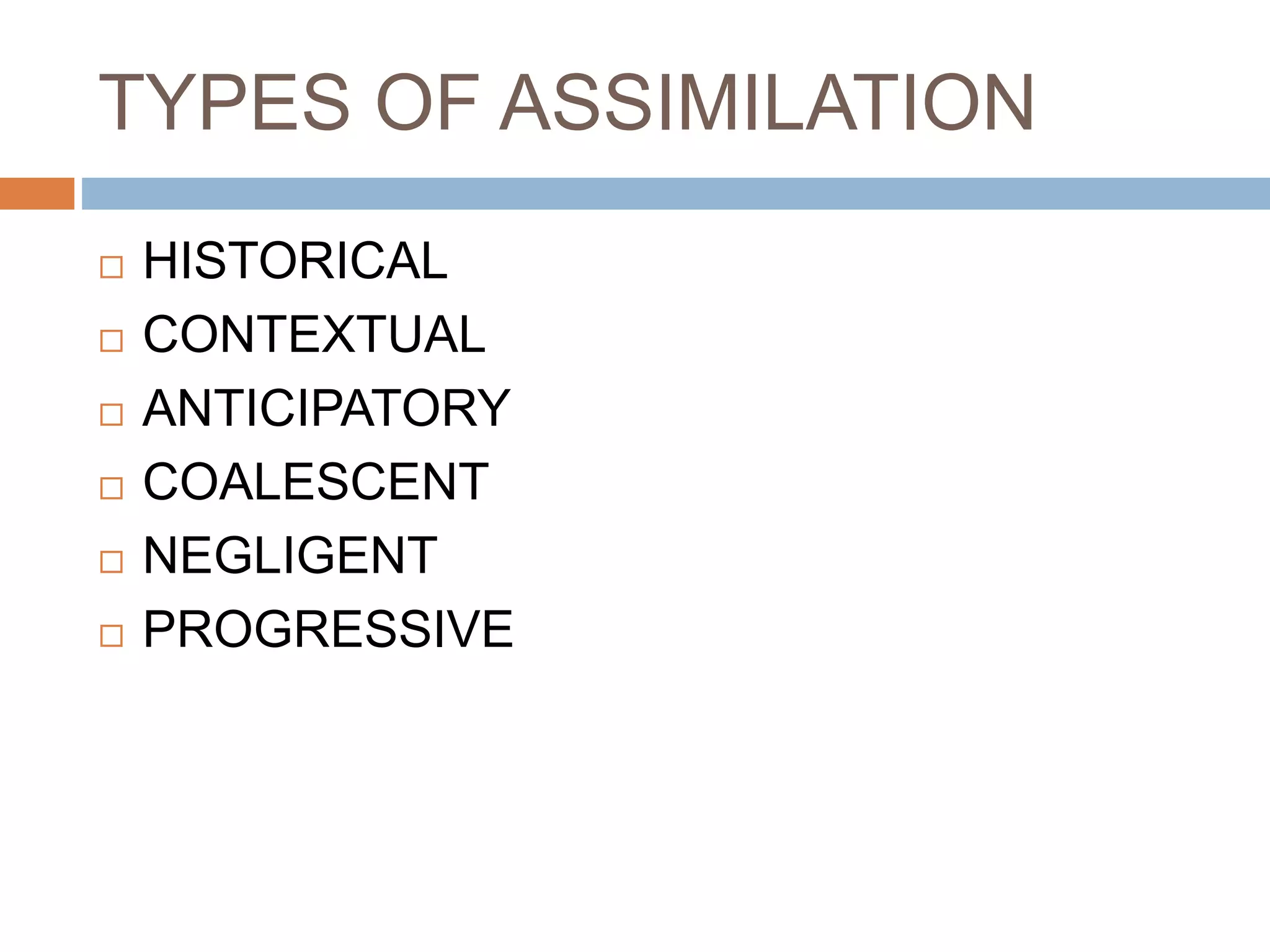
TYPES OF ASSIMILATION
 HISTORICAL
 CONTEXTUAL
 ANTICIPATORY
 COALESCENT
 NEGLIGENT
 PROGRESSIVE
INTONATION
 Stress
 Rise
 Fall
 Rise-fall
 Fall-rise
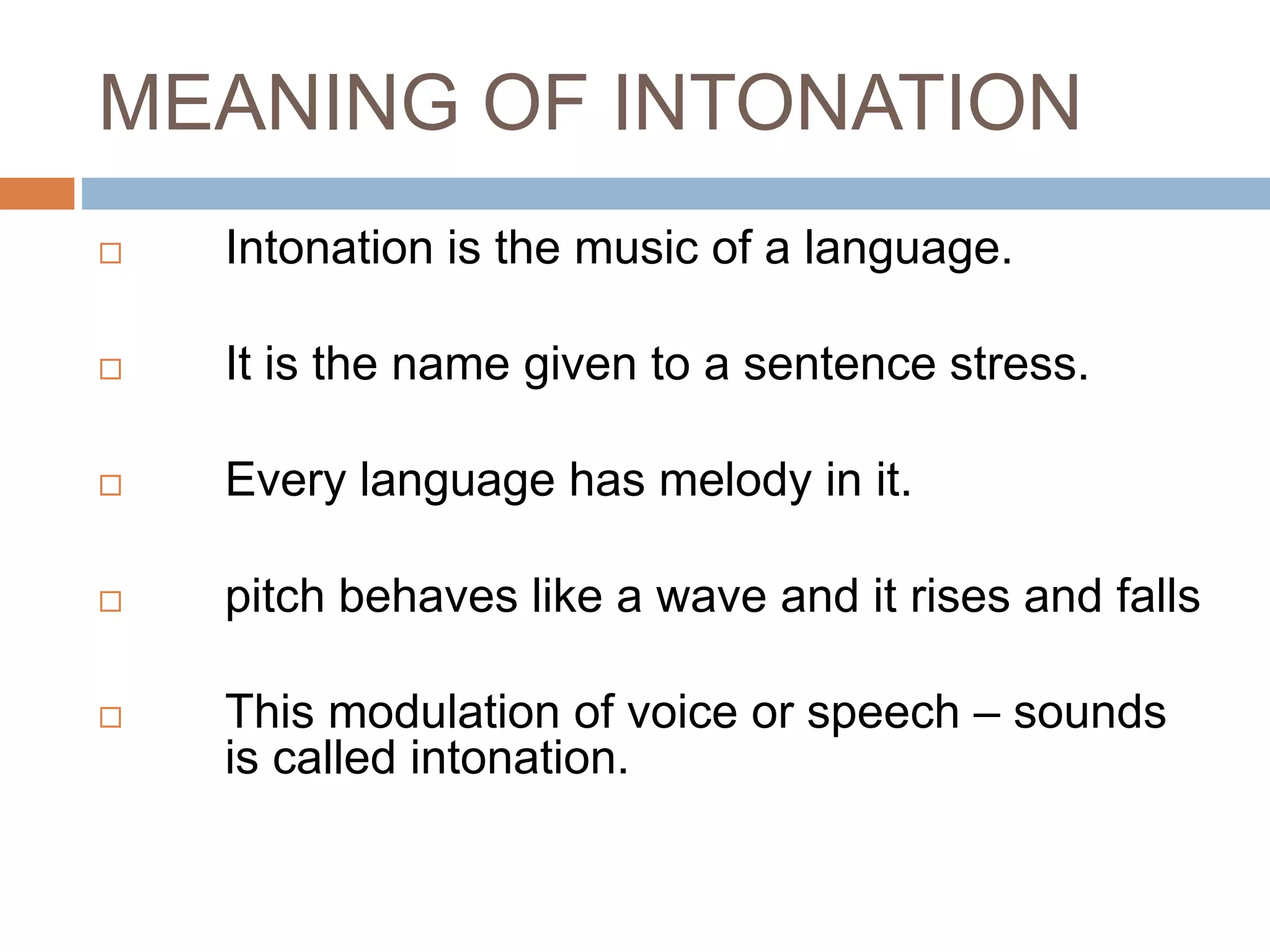
MEANING OF INTONATION
 Intonation is the music of a language.
 It is the name given to a sentence stress.
 Every language has melody in it.
 pitch behaves like a wave and it rises and falls
 This modulation of voice or speech – sounds
is called intonation.
UNIT IV
PHONETIC TRANSCRIPTION
Transcription means rewriting a passage using
IPA symbols. It is rendering the speech sounds
using the symbols.
We use 44 symbols (20 vowels and 24
consonants) to rewrite a passage/word.
SYSTEMS OF
TRANSCRIPTION
 PHONEMIC TRANSCRIPTION
Substitution of the 44 symbols for writing a
passage.
 PHONETIC TRANSCRIPTION
It shows allophonic variations also.
Marking all the variations in pronunciation.
IPA symbols for Transcription
[k]= car
[g]=guard
[f]= foot
[v]= van
[p]= pat
[b]= bat
[t]= tap
[d]=dam
[h]= hat
[m]=mull
[n]= null
[ŋ]= ring
IPA symbols for transcription
[s] = sap
[z] = zip
[θ] = think
[ð] = this
[s] = sap
[z] = zip
[θ] = think
[ð] = this
[s] = sap
[z] = zip
[θ] = think
[ð] = this
IPA symbols for transcription
[i]=sheep
[ɪ]=ship
[ɛ]= end
[u]= boot
[ʊ]=put
[ɔ]= open
[æ]=ash
[ɑ]= father
[ə]=about
[ʌ]= but
IPA symbols for transcription
PRACTICE
next [nɛkst] chin [ʧɪn] lamb [læm]
kite [kɑɪt] cat [kæt] meet [mit]
UNIT V
SPOKEN ENGLISH IN VARIOUS
SITUATIONS IN WHICH
DIALOGUES TAKE PLACE
Ramu and Balu in college on the
re-opening day
Ramu: Good morning, Balu.
Balu: Good morning.
Ramu: What course have you joined?
Balu: I have joined B.Sc.Chemistry. What about you?
Ramu: I have joined B.A.Economics.
Balu: That is a very interesting subject.
Ramu: Where did you spend your summer vacation?
Balu: I spent a few weeks at Ooty.
Ramu: You must tell me about Ooty.
Balu: Of course, I shall. But not now. There is no time now. The bell
has gone. Let us go to our class-rooms
DIALOGUE WRITING
 “Dialogue”, in real life, is natural and
spontaneous.
 The dialogue that we write also should be
easy and natural.
 The style that a person adopts should reflect
his character.
METHODS OF DIALOGUE
WRITING
 QUESTION-ANSWER
 REQUEST-ACCEPTANCE
 COMMAND-COMPLIANCE
 COMPLAINT-APOLOGY
 OFFER-ACCEPTANCE
 IF CLAUSE
 SHORT ANSWERS WITHOUT
 ACTIVE VOICE-PASSIVE VOICE
 WAY OF EXPRESSION

Phonetics and spoken english

  • 1.
    DEPARTMENT OF ENGLISH PPTFOR PHONETICS AND SPOKEN ENGLISH(AENEA41) BY S.VIJAYAPRIYA CLASS-II BA ENGLISH SEMESTER-IV
  • 2.
    II BA ENGLISH IIISEMESTER  SYLLABUS  UNIT I  THE ORGANS OF SPEECH  THE DESCRIPTION OF SPEECH SOUNDS  UNIT II  THE SOUNDS OF ENGLISH: VOWELS  THE SOUNDS OF ENGLISH: CONSONANTS  UNIT III  STRESS, ACCENT, RHYTHM, ASSIMILATION AND INTONATION  UNIT IV  PHONETIC TRANSCRIPTION: CONVERSATION PASSAGES FOR PRACTICE  UNIT V  SPOKEN ENGLISH IN VARIOUS SITUATIONS IN WHICH DIALOGUES TAKE PLACE.
  • 3.
    UNIT I Phonetics, phonology,phoneme  Phonetics: Deals with the production, transmission and reception of speech sounds.  Phonology: Deals with the way in which the speech sounds of a language function.  Phoneme: Deals with phonological segment that can be phonetically predicted by a rule
  • 4.
  • 5.
    THE DESCRIPTION OFSPEECH SOUNDS (Voicing)
  • 6.
  • 7.
  • 8.
  • 9.
    UNIT II THE SOUNDSOF ENGLISH : VOWELS  Vowels  Monophthongs  Diphthongs  12 monophthongs: 7 short: ɪ, e, æ, ʌ , ɒ, ʊ, ә and 5 long: i: , ɑ: , ɔ: , з: , u:  7 diphthongs: 5 closing: eɪ, aɪ, ɔɪ, aʊ, әʊ  and 2 (3) centring: eә, ɪә, (ʊә)
  • 10.
  • 11.
  • 12.
    /ʌ / and/ɑ: / CLOSE MID-OPEN OPEN
  • 13.
    THE SOUNDS OFENGLISH: CONSONANTS
  • 14.
    Features of Consonants Voicing (state of the glottis)  Place of articulation  Manner of articulation
  • 15.
    Consonants vs. Vowels consonantal sounds: obstruction of airflow in vocal tract  vowel sounds: little to no obstruction of airflow
  • 16.
    Phonetic features of consonants To describe phonetic features of consonants, list (a) voicing (b) place of articulation and (c) manner of articulation for consonants (3 features) e.g. [p] = Voiceless bilabial stop [z] = Voiced alveolar fricative
  • 17.
    UNIT III STRESS, ACCENT,RHYTHM, ASSIMILATION AND INTONATION STRESS and ACCENT:  When a word has more than one syllable, one of them is spoken with more force than the rest , this force is called stress.  While accent is a prominence given to a word or syllable by means of stress and intonation  In a polysyllabic word, one of the syllables is pronounced with greater prominence than other syllables.  The syllable that is pronounced with greater prominence in the same word is said to be “accented” or “stressed”.  Accent is easily detected in speech but in writing accent is marked by placing a small vertical bar in front of the syllable which is stressed.
  • 18.
    RHYTHM  English isa stress-timed language, unlike French and Tamil which are syllable-timed languages.  TWO TYPES OF RHYTHM: 1)SYLLABLE-TIMED RHYTHM 2)STRESS-TIMED RHYTHM
  • 19.
    ASSIMILATION  It isa general term in phonetics for the process by which one phoneme or speech-sound is replaced by another under the influence of the neighbouring sound.
  • 20.
    TYPES OF ASSIMILATION HISTORICAL  CONTEXTUAL  ANTICIPATORY  COALESCENT  NEGLIGENT  PROGRESSIVE
  • 21.
    INTONATION  Stress  Rise Fall  Rise-fall  Fall-rise
  • 22.
    MEANING OF INTONATION Intonation is the music of a language.  It is the name given to a sentence stress.  Every language has melody in it.  pitch behaves like a wave and it rises and falls  This modulation of voice or speech – sounds is called intonation.
  • 23.
    UNIT IV PHONETIC TRANSCRIPTION Transcriptionmeans rewriting a passage using IPA symbols. It is rendering the speech sounds using the symbols. We use 44 symbols (20 vowels and 24 consonants) to rewrite a passage/word.
  • 24.
    SYSTEMS OF TRANSCRIPTION  PHONEMICTRANSCRIPTION Substitution of the 44 symbols for writing a passage.  PHONETIC TRANSCRIPTION It shows allophonic variations also. Marking all the variations in pronunciation.
  • 25.
    IPA symbols forTranscription [k]= car [g]=guard [f]= foot [v]= van [p]= pat [b]= bat [t]= tap [d]=dam [h]= hat [m]=mull [n]= null [ŋ]= ring
  • 26.
    IPA symbols fortranscription [s] = sap [z] = zip [θ] = think [ð] = this [s] = sap [z] = zip [θ] = think [ð] = this [s] = sap [z] = zip [θ] = think [ð] = this
  • 27.
    IPA symbols fortranscription [i]=sheep [ɪ]=ship [ɛ]= end [u]= boot [ʊ]=put [ɔ]= open [æ]=ash [ɑ]= father [ə]=about [ʌ]= but
  • 28.
    IPA symbols fortranscription PRACTICE next [nɛkst] chin [ʧɪn] lamb [læm] kite [kɑɪt] cat [kæt] meet [mit]
  • 29.
    UNIT V SPOKEN ENGLISHIN VARIOUS SITUATIONS IN WHICH DIALOGUES TAKE PLACE
  • 30.
    Ramu and Baluin college on the re-opening day Ramu: Good morning, Balu. Balu: Good morning. Ramu: What course have you joined? Balu: I have joined B.Sc.Chemistry. What about you? Ramu: I have joined B.A.Economics. Balu: That is a very interesting subject. Ramu: Where did you spend your summer vacation? Balu: I spent a few weeks at Ooty. Ramu: You must tell me about Ooty. Balu: Of course, I shall. But not now. There is no time now. The bell has gone. Let us go to our class-rooms
  • 31.
    DIALOGUE WRITING  “Dialogue”,in real life, is natural and spontaneous.  The dialogue that we write also should be easy and natural.  The style that a person adopts should reflect his character.
  • 32.
    METHODS OF DIALOGUE WRITING QUESTION-ANSWER  REQUEST-ACCEPTANCE  COMMAND-COMPLIANCE  COMPLAINT-APOLOGY  OFFER-ACCEPTANCE  IF CLAUSE  SHORT ANSWERS WITHOUT  ACTIVE VOICE-PASSIVE VOICE  WAY OF EXPRESSION