


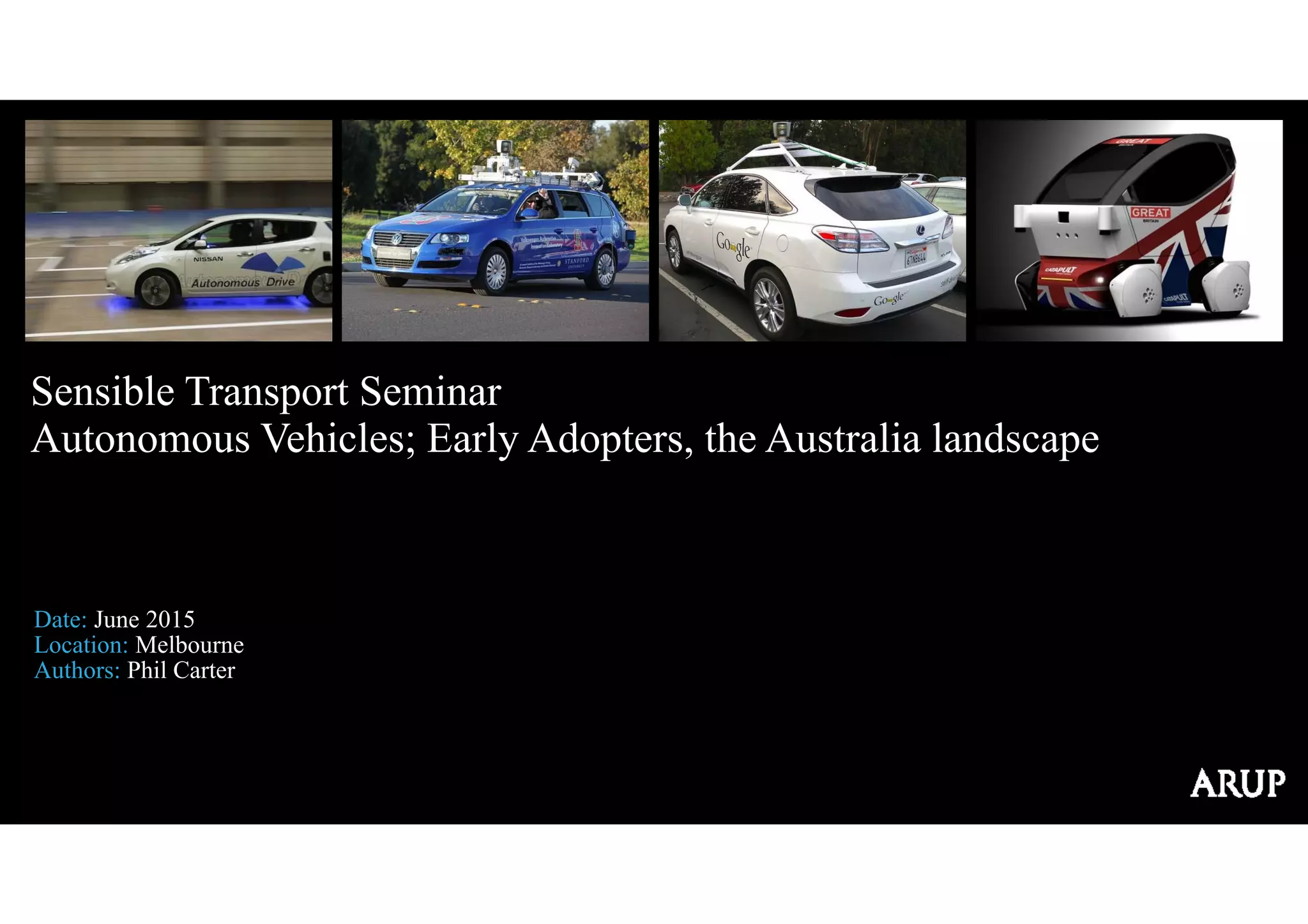
Sensible Transport Seminar
Autonomous Vehicles, early Adopters, the Australia landscape
Date: June 2015
Location: Melbourne
Presenter: Phil Carter
Structure
• About me
• What do we mean by Autonomous Vehicles?
• Why have Autonomous Vehicles?
• Implications
• Early Adopters
• How will Australia react?
Transport and Urban
Planner
Worked with Google
Facilities team in
California
What do we mean by Autonomous
vehicles?
Technology
Timeline
level 1
1975
level 2
2000
level 4
2018+
level 3
2008
technology
time
Brake Assist
Steering Assist
Cruise Control
Combined
Technologies
(e.g. brake +
Steering + cruise)
On-road auto
pilot
Full Journey
Self-Drive
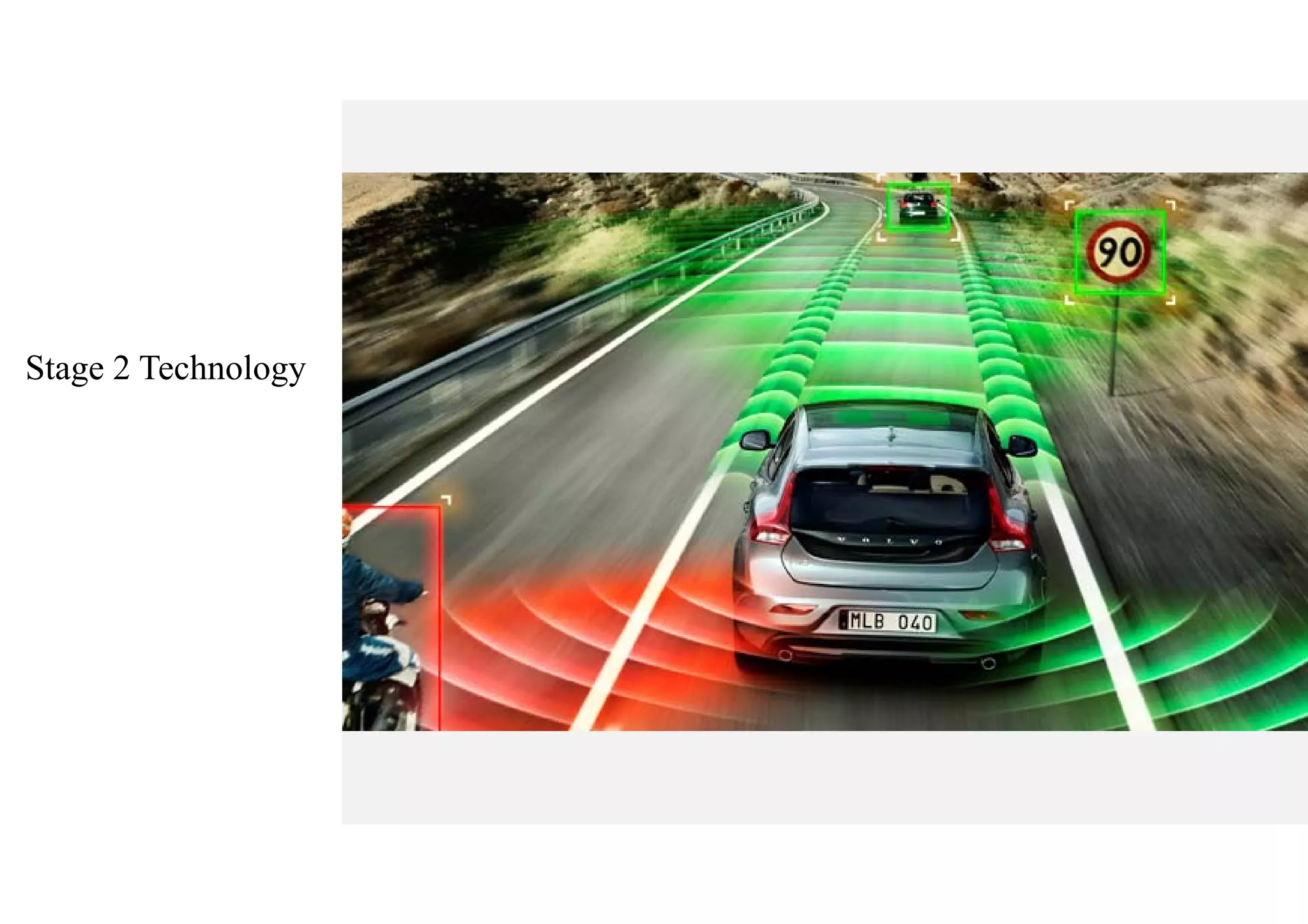
Stage 2 Technology
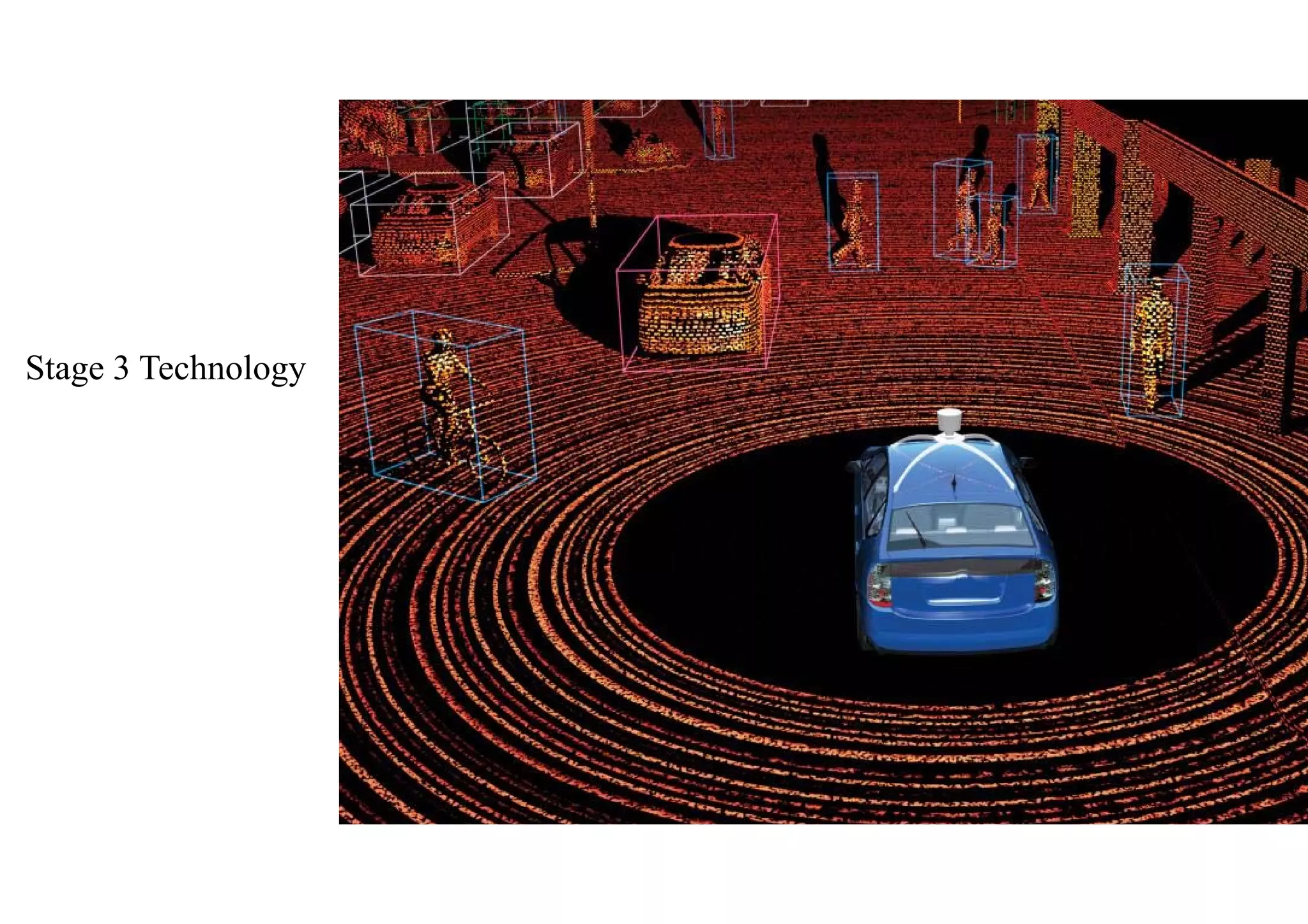
Stage 3 Technology
Stage 4 Technology
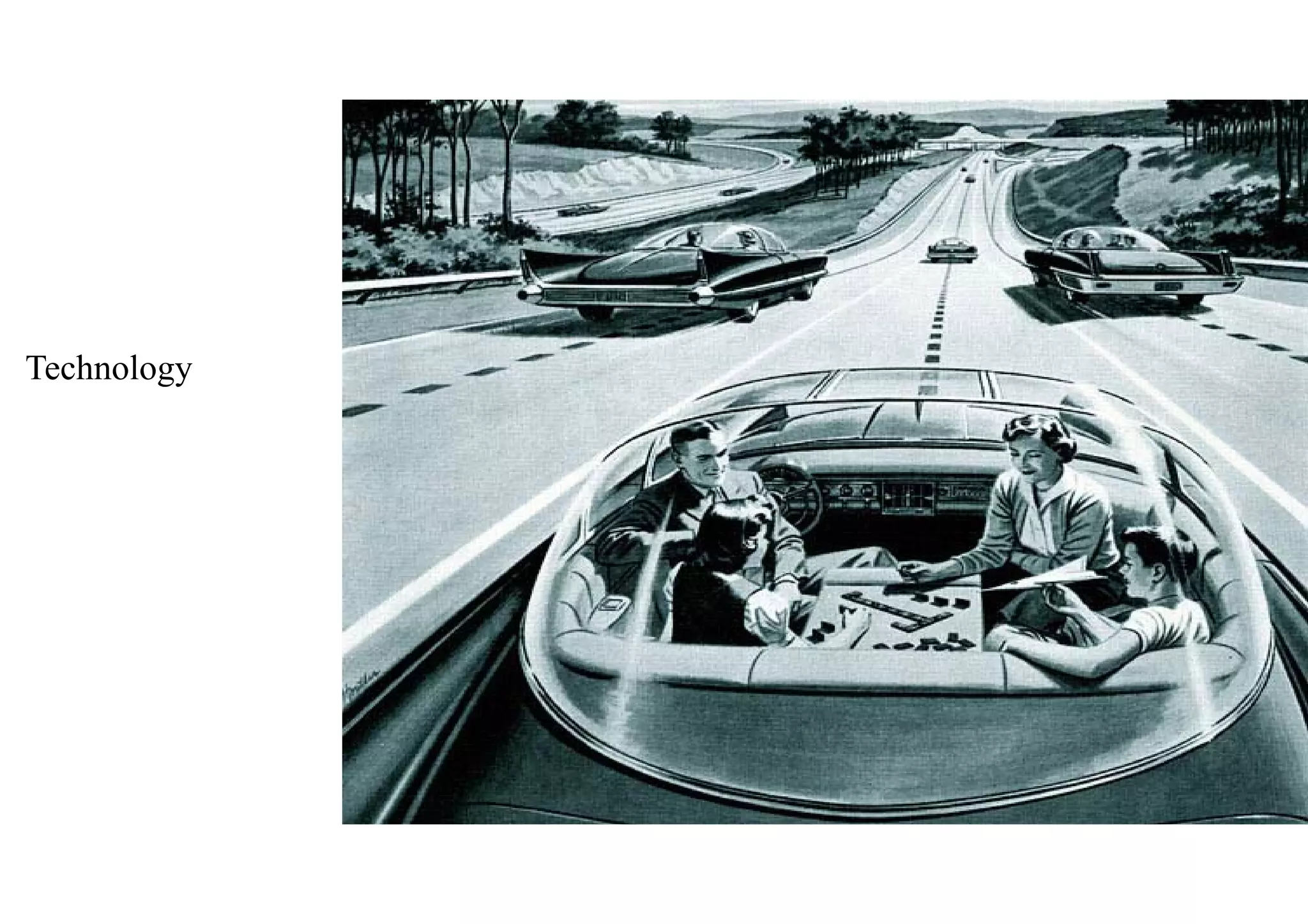
Technology
Why have Autonomous Vehicles?
What’s influencing
the autonomous
vehicle agenda?
The Key Issues….
“The economics of travel and ownership”
– Ron Medford
“No new infrastructure, independent
technology and market driven” – Paul
Newman
“How we move in highly urban areas and
mix pedestrian with driverless vehicles”
– John Miles
“Convenience drives technology
adoption. – Chris Luebkeman
Car Ownership
Autonomous vehicle technology is
expected to lead to reduced vehicle
ownership
• Vehicle ownership to decline 50%
• Shared vehicles to replace 9-times the number of
“traditional” vehicles”
• 40% Reduction in vehicle sales
Barclays Disruptive Mobility Report 2015
Cars Per Household
The average vehicle is only driven 56 minutes per day
– that is, 4% of the time.
Barclays Disruptive Mobility Report 2015
AV Vehicle Types
1. Traditional automobiles with limited self-driving capabilities intended for
personal or work use. This would primarily consist of “work” vehicles (i.e.,
pickups and vans), though may also include performance vehicles (i.e., muscle
cars) which consumers desire to control (vs. turning control to the vehicle
owners).
2. Family Autonomous Vehicles (FAVs) would be self-driving vehicles owned
by a family in more or less the traditional way (i.e., taking members of family
to/from work, school, and social activities). We would expect the luxury buyers to
gravitate here, as it would promote a sense of status.
3. Shared Autonomous Vehicles (SAVs): We see these as the fleet of “robot
taxis” similar to Uber, but with no need for the “dude” driving the car.
4. Pooled Shared Autonomous Vehicles (PSAVs): Similar to SAVs, but
accommodating multiple riders simultaneously – like UberPool without the driver
Source: Barclays’ Disruptive
Mobility report 2015
Efficiency
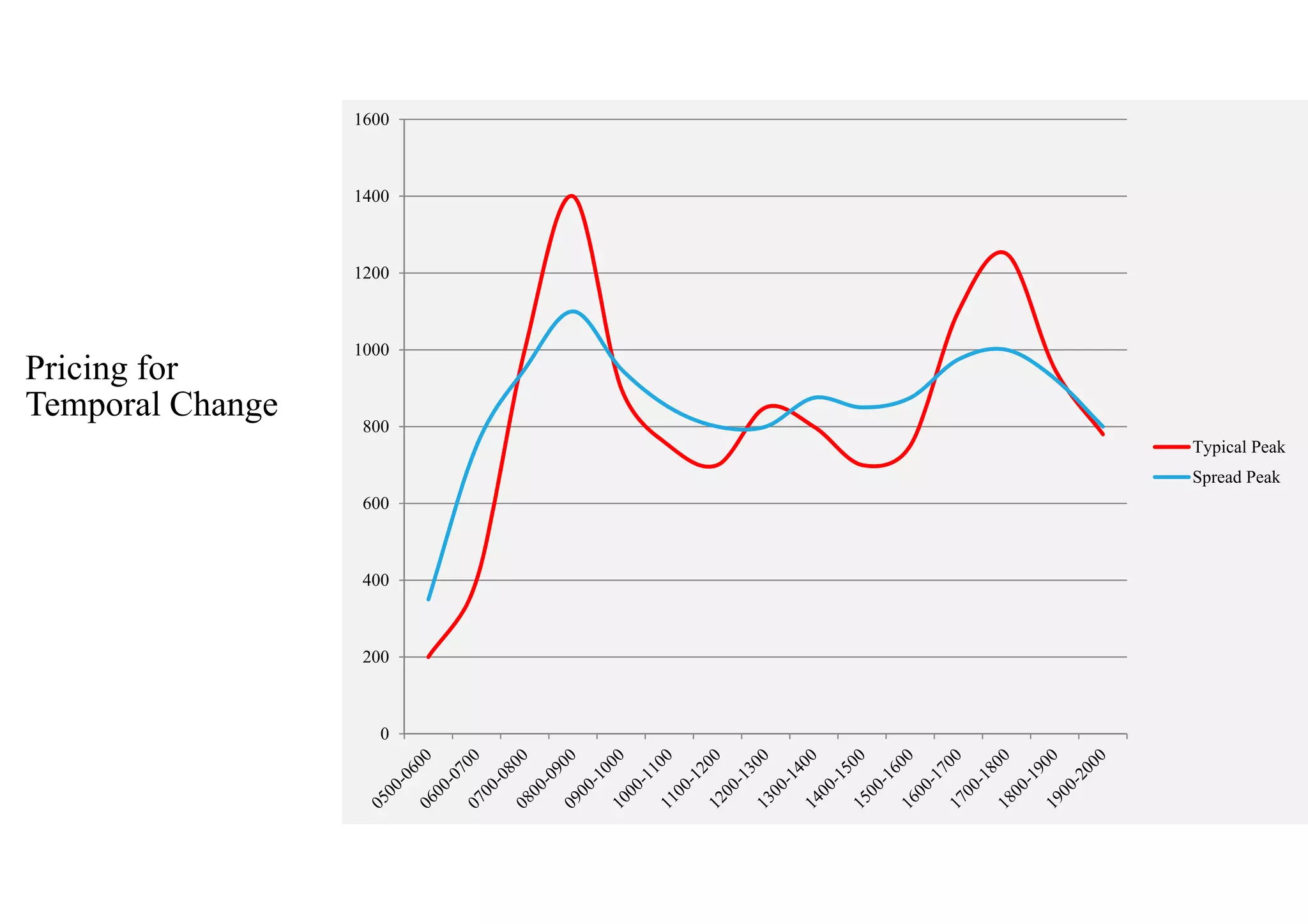
Network efficiency
Pricing for
Temporal Change
0
200
400
600
800
1000
1200
1400
1600
Typical Peak
Spread Peak
Safety
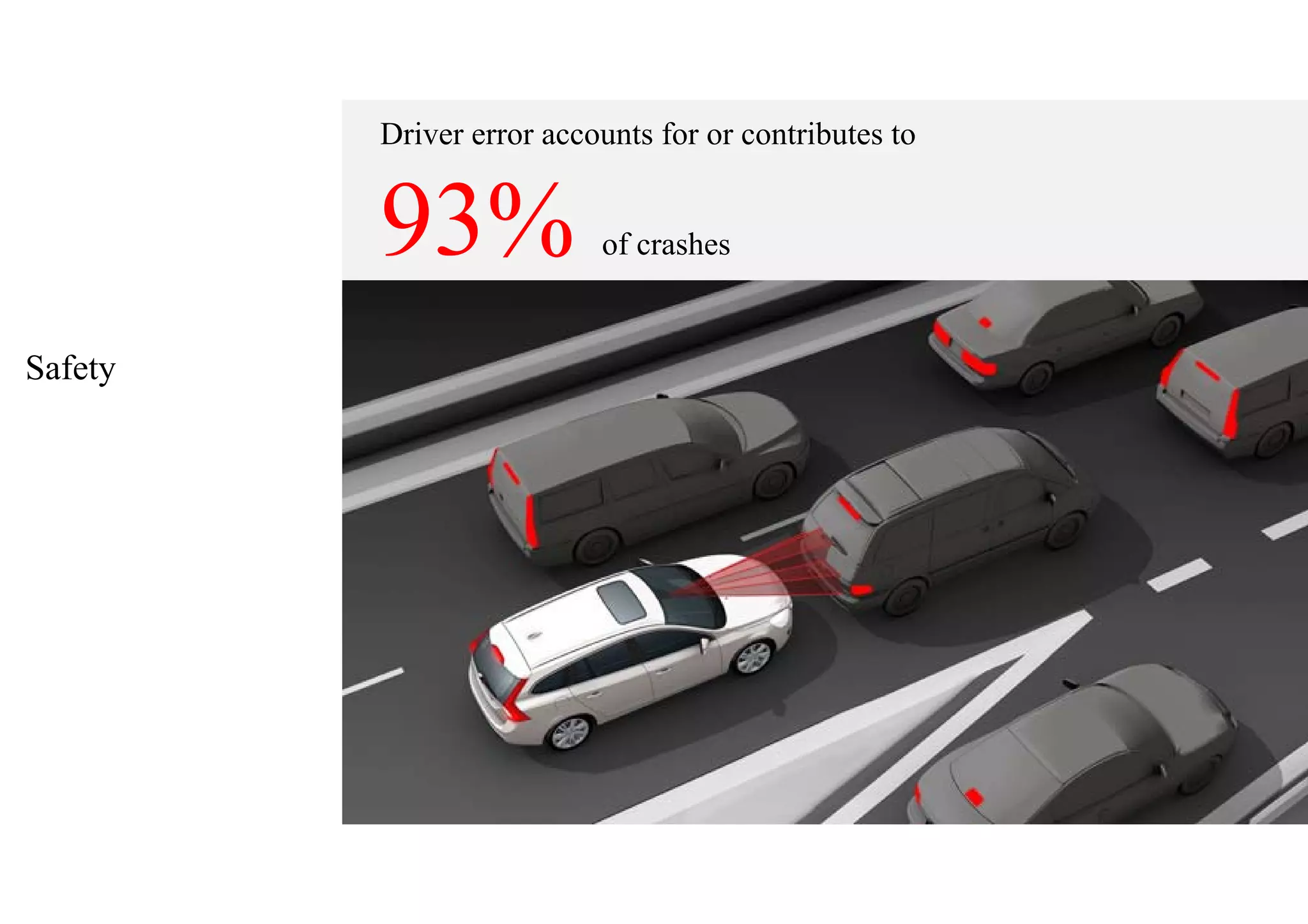
Driver error accounts for or contributes to
93% of crashes
Car Manufacturers?
Car / Software
Developers
Car Manufacturers:
Chrysler Video VIDEO
User Technology
Implications
Implications
Built form:
Parking
& Development
Economics
Insurance
Jobs
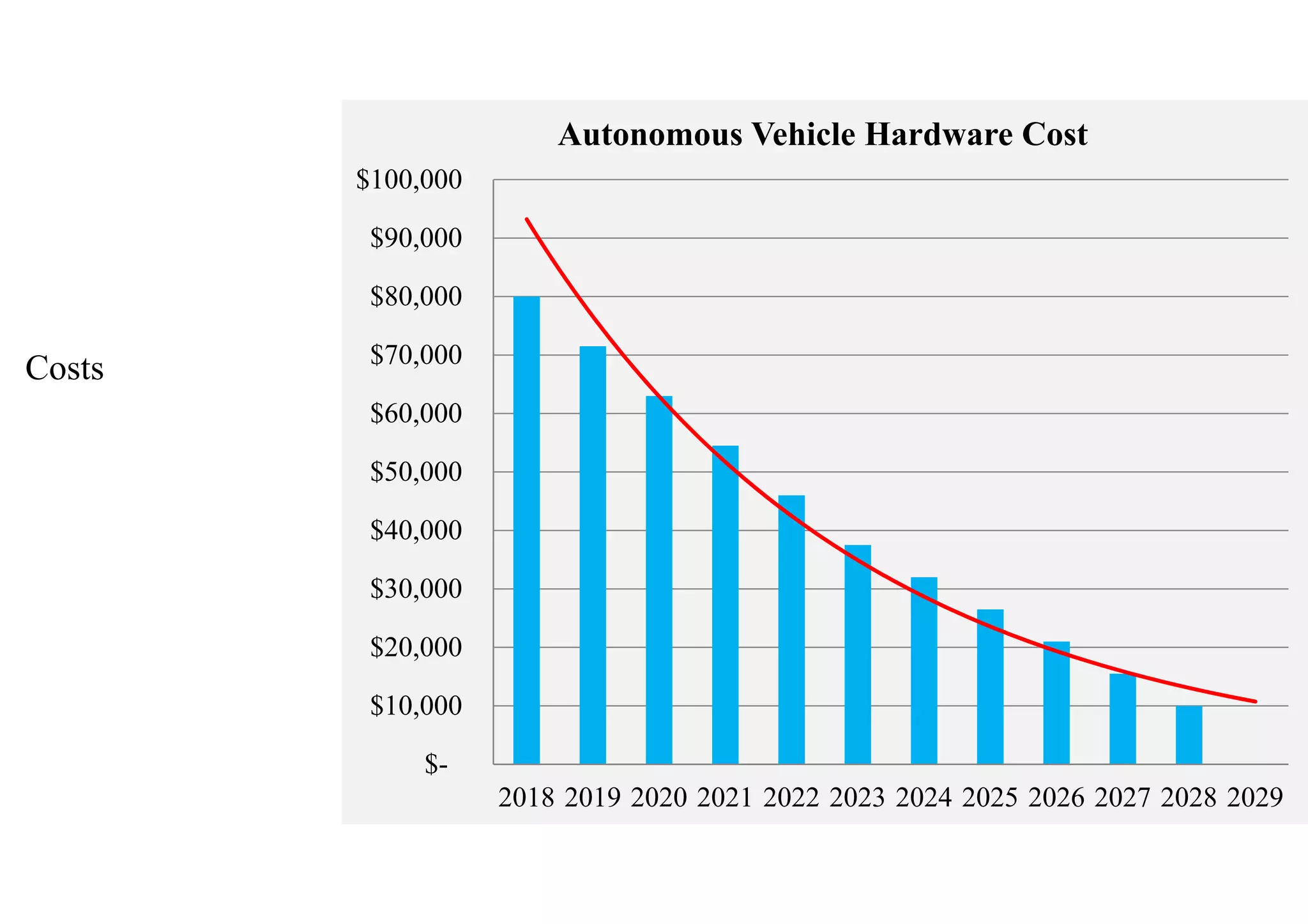
Costs
$-
$10,000
$20,000
$30,000
$40,000
$50,000
$60,000
$70,000
$80,000
$90,000
$100,000
2018 2019 2020 2021 2022 2023 2024 2025 2026 2027 2028 2029
Autonomous Vehicle Hardware Cost
Transition to
Driverless Vehicles
“Will driverless vehicles work side-by-
side with traditional driven vehicles?”
• Yes! Likely to be a long transition – anticipate 20 years of co-
existence.
• Driverless vehicles will start by driving some people some of
the time in some of the places.
• Think 1900s. Carts, carriages, donkeys, horses and motorcars
co-existed along with pedestrians – it is actually a question of
when driverless vehicles become the norm not the exception.
Road Capacity
“Road capacity could increase
anywhere between 250-500%”
Estimates for capacity increases:
273% - 400% Increase
source: Patcharinee Tientrakool, Columbia University
Law & Licensing
“Automated Vehicles Are Probably
Legal in the United States”
Bryant Walker-Smith, Stanford Law School fellow -
Leading expert on how existing law would apply to self-
driving cars.
Law & Licensing
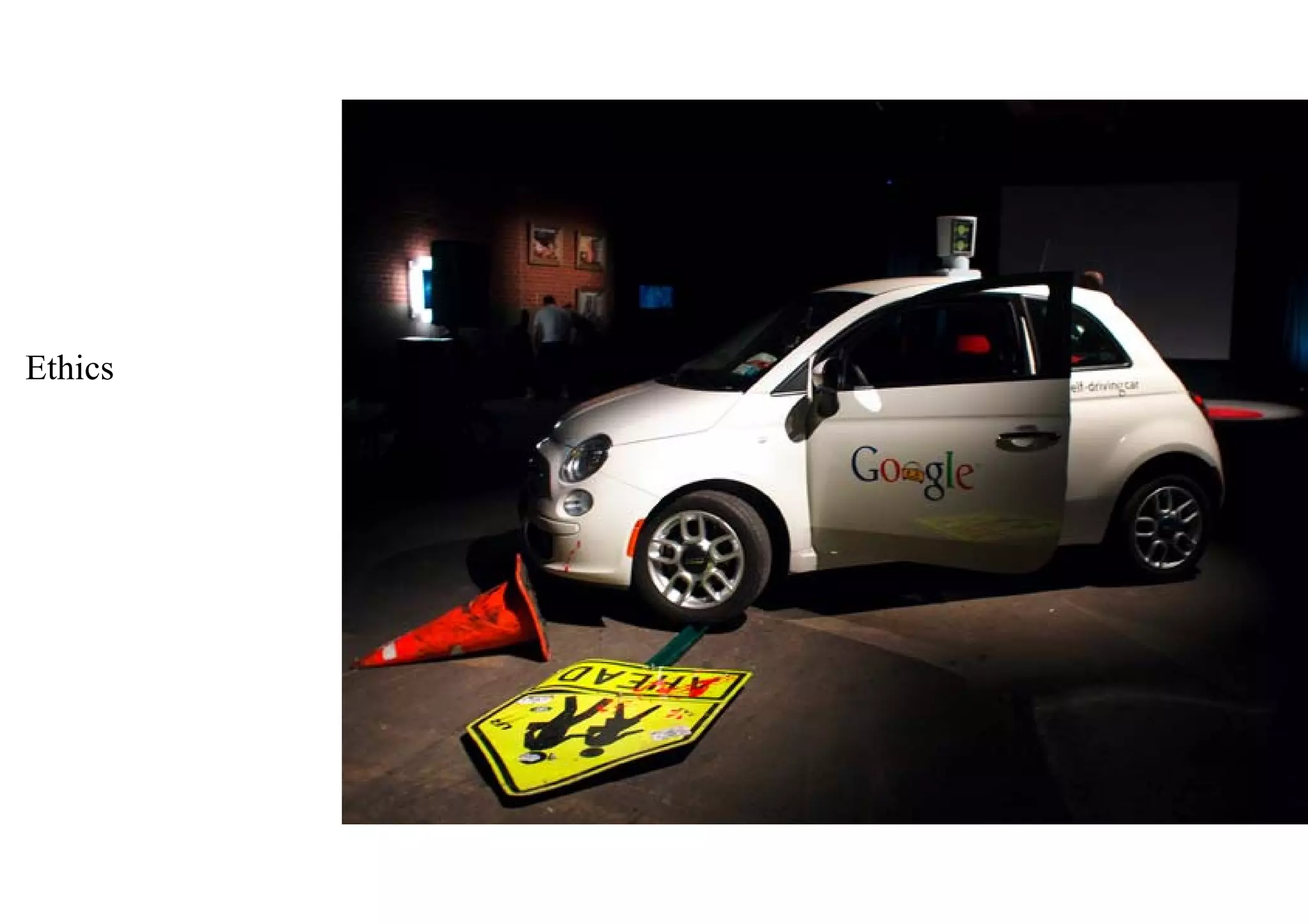
Ethics
Ethics
‘The Trolley Problem’
On a narrow road, your autonomous car detects an
imminent head-on crash with a non-robotic school bus
full of kids. Your car swerves to avoid the crash,
sending it into a tree, killing you in the process.
The automated car was stuck in a no-win situation and
chose the lesser evil. This is probably the ‘right’
outcome.
But – shouldn’t you consciously consent to ride in
something that may purposely cause your own death?
Ethics
‘The Trolley Problem’
On a narrow road, your autonomous car detects an
imminent head-on crash with a non-robotic school bus
full of kids. Your car swerves to avoid the crash,
sending it into a tree, killing you in the process.
The automated car was stuck in a no-win situation and
chose the lesser evil. This is probably ‘right’.
It’s one thing when you, the driver, makes a choice to
sacrifice yourself. But it’s quite another for a machine
to make that decision for you involuntarily.
Early Adopters and the Implications for Australia
Service Transport
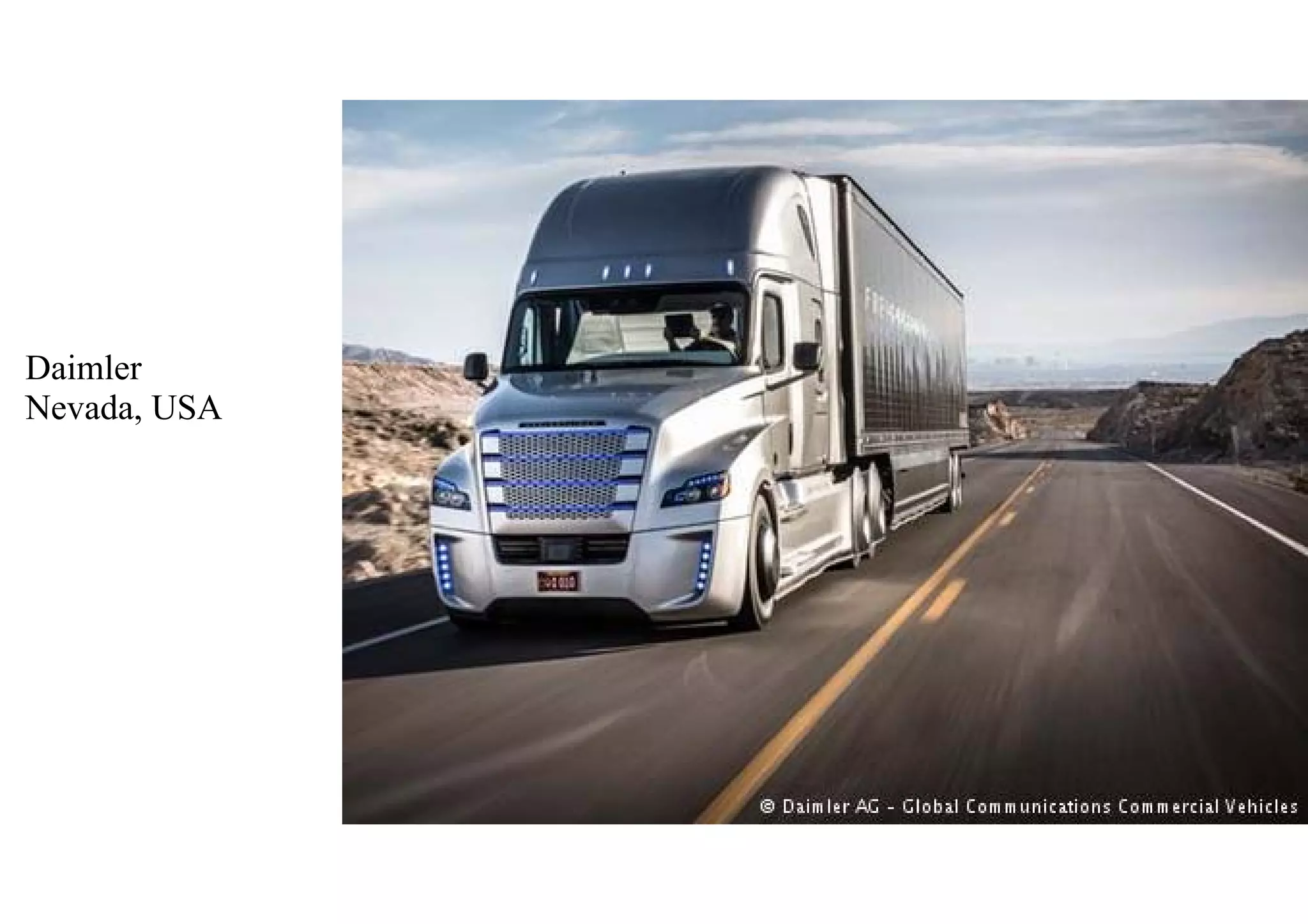
Interstate Freight
- Melbourne to Sydney, Hume Hwy
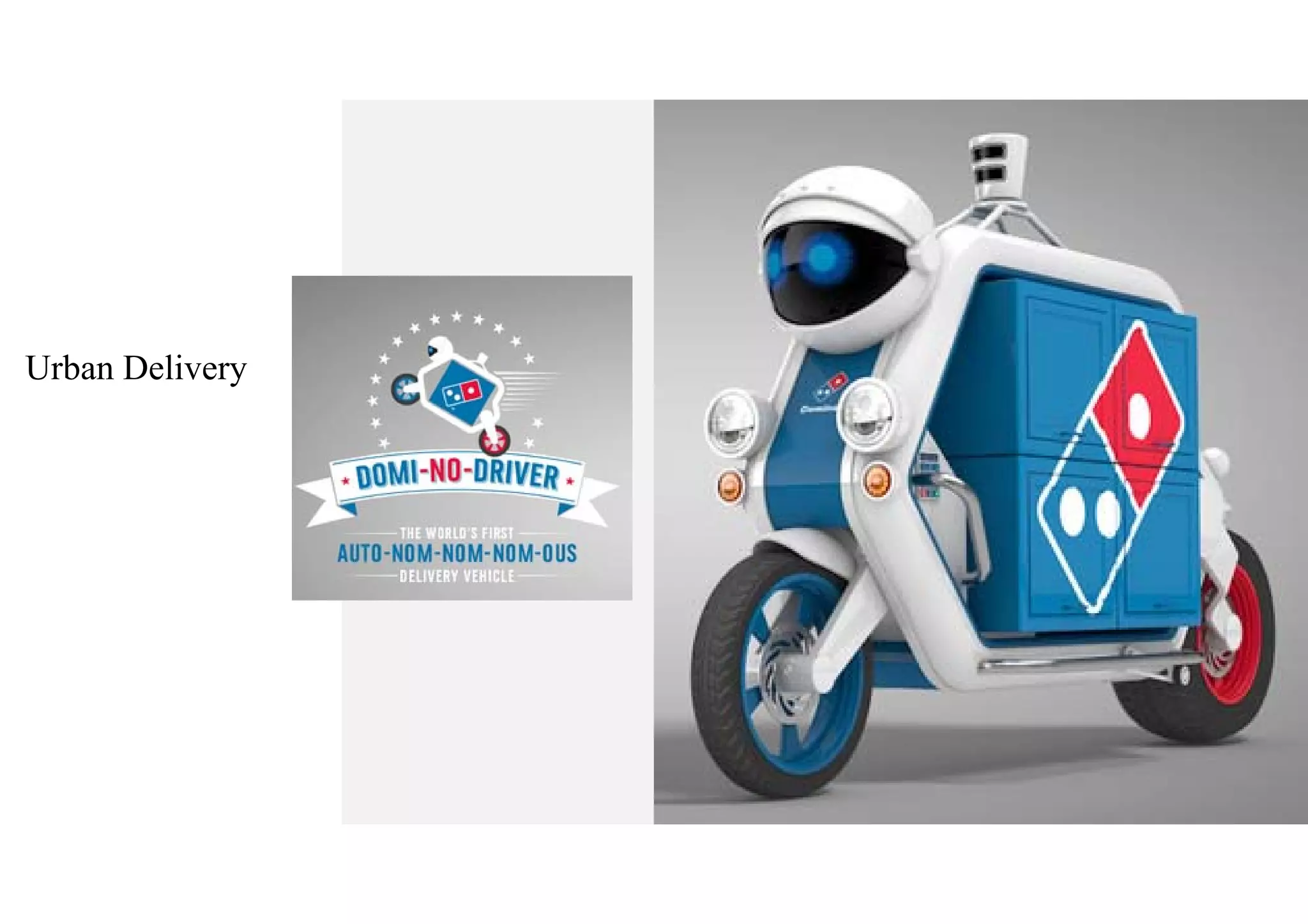
Urban Logistics – Real Time Delivery
- Fully automated delivery
Taxis / SAVs
- Door-door transport on demand, low cost
Public Transport
- Reduced operational cost (driverless buses)
PSAVs – Pooled Shared
- Low density public transport (suburban)
Inter-modal Connectivity
- Park and ride replacement (last mile)
Daimler
Nevada, USA
Urban Delivery
Land Use and Car
Reliance
Car Ownership
Autonomous vehicle technology is
expected to lead to reduced vehicle
ownership
Australia imports around 1M cars per year at a value of $17B
(2012)
Fuel consumption imports would lower?
Opportunities
• 360 degree Lidar system – an Australian invention
• South Australia leading the way to early adoption?
• Technology and Research Growth Area
• Australia: Predominantly car reliant cities
• Long distances between major cities
Date: June 2015
Location: Melbourne
Authors: Phil Carter
Sensible Transport Seminar
Autonomous Vehicles; Early Adopters, the Australia landscape

Phil Carter on autonomous vehicles

  • 1.
    Sensible Transport Seminar AutonomousVehicles, early Adopters, the Australia landscape Date: June 2015 Location: Melbourne Presenter: Phil Carter
  • 2.
    Structure • About me •What do we mean by Autonomous Vehicles? • Why have Autonomous Vehicles? • Implications • Early Adopters • How will Australia react?
  • 3.
    Transport and Urban Planner Workedwith Google Facilities team in California
  • 4.
    What do wemean by Autonomous vehicles?
  • 5.
    Technology Timeline level 1 1975 level 2 2000 level4 2018+ level 3 2008 technology time Brake Assist Steering Assist Cruise Control Combined Technologies (e.g. brake + Steering + cruise) On-road auto pilot Full Journey Self-Drive
  • 6.
  • 7.
  • 8.
  • 9.
  • 10.
  • 11.
    What’s influencing the autonomous vehicleagenda? The Key Issues…. “The economics of travel and ownership” – Ron Medford “No new infrastructure, independent technology and market driven” – Paul Newman “How we move in highly urban areas and mix pedestrian with driverless vehicles” – John Miles “Convenience drives technology adoption. – Chris Luebkeman
  • 12.
    Car Ownership Autonomous vehicletechnology is expected to lead to reduced vehicle ownership • Vehicle ownership to decline 50% • Shared vehicles to replace 9-times the number of “traditional” vehicles” • 40% Reduction in vehicle sales Barclays Disruptive Mobility Report 2015
  • 13.
    Cars Per Household Theaverage vehicle is only driven 56 minutes per day – that is, 4% of the time. Barclays Disruptive Mobility Report 2015
  • 14.
    AV Vehicle Types 1.Traditional automobiles with limited self-driving capabilities intended for personal or work use. This would primarily consist of “work” vehicles (i.e., pickups and vans), though may also include performance vehicles (i.e., muscle cars) which consumers desire to control (vs. turning control to the vehicle owners). 2. Family Autonomous Vehicles (FAVs) would be self-driving vehicles owned by a family in more or less the traditional way (i.e., taking members of family to/from work, school, and social activities). We would expect the luxury buyers to gravitate here, as it would promote a sense of status. 3. Shared Autonomous Vehicles (SAVs): We see these as the fleet of “robot taxis” similar to Uber, but with no need for the “dude” driving the car. 4. Pooled Shared Autonomous Vehicles (PSAVs): Similar to SAVs, but accommodating multiple riders simultaneously – like UberPool without the driver Source: Barclays’ Disruptive Mobility report 2015
  • 15.
  • 16.
  • 17.
  • 18.
    Safety Driver error accountsfor or contributes to 93% of crashes
  • 19.
  • 20.
  • 21.
  • 22.
  • 23.
  • 24.
  • 25.
  • 26.
  • 27.
    Costs $- $10,000 $20,000 $30,000 $40,000 $50,000 $60,000 $70,000 $80,000 $90,000 $100,000 2018 2019 20202021 2022 2023 2024 2025 2026 2027 2028 2029 Autonomous Vehicle Hardware Cost
  • 28.
    Transition to Driverless Vehicles “Willdriverless vehicles work side-by- side with traditional driven vehicles?” • Yes! Likely to be a long transition – anticipate 20 years of co- existence. • Driverless vehicles will start by driving some people some of the time in some of the places. • Think 1900s. Carts, carriages, donkeys, horses and motorcars co-existed along with pedestrians – it is actually a question of when driverless vehicles become the norm not the exception.
  • 29.
    Road Capacity “Road capacitycould increase anywhere between 250-500%” Estimates for capacity increases: 273% - 400% Increase source: Patcharinee Tientrakool, Columbia University
  • 30.
    Law & Licensing “AutomatedVehicles Are Probably Legal in the United States” Bryant Walker-Smith, Stanford Law School fellow - Leading expert on how existing law would apply to self- driving cars.
  • 31.
  • 32.
  • 33.
    Ethics ‘The Trolley Problem’ Ona narrow road, your autonomous car detects an imminent head-on crash with a non-robotic school bus full of kids. Your car swerves to avoid the crash, sending it into a tree, killing you in the process. The automated car was stuck in a no-win situation and chose the lesser evil. This is probably the ‘right’ outcome. But – shouldn’t you consciously consent to ride in something that may purposely cause your own death?
  • 34.
    Ethics ‘The Trolley Problem’ Ona narrow road, your autonomous car detects an imminent head-on crash with a non-robotic school bus full of kids. Your car swerves to avoid the crash, sending it into a tree, killing you in the process. The automated car was stuck in a no-win situation and chose the lesser evil. This is probably ‘right’. It’s one thing when you, the driver, makes a choice to sacrifice yourself. But it’s quite another for a machine to make that decision for you involuntarily.
  • 35.
    Early Adopters andthe Implications for Australia
  • 36.
    Service Transport Interstate Freight -Melbourne to Sydney, Hume Hwy Urban Logistics – Real Time Delivery - Fully automated delivery Taxis / SAVs - Door-door transport on demand, low cost Public Transport - Reduced operational cost (driverless buses) PSAVs – Pooled Shared - Low density public transport (suburban) Inter-modal Connectivity - Park and ride replacement (last mile)
  • 37.
  • 38.
  • 39.
    Land Use andCar Reliance
  • 40.
    Car Ownership Autonomous vehicletechnology is expected to lead to reduced vehicle ownership Australia imports around 1M cars per year at a value of $17B (2012) Fuel consumption imports would lower?
  • 41.
    Opportunities • 360 degreeLidar system – an Australian invention • South Australia leading the way to early adoption? • Technology and Research Growth Area • Australia: Predominantly car reliant cities • Long distances between major cities
  • 42.
    Date: June 2015 Location:Melbourne Authors: Phil Carter Sensible Transport Seminar Autonomous Vehicles; Early Adopters, the Australia landscape