Presentation
On
Phase-II Clinical Trial
Group members
Mahamuda Jahan Shelly (ID:11715004)
Tanvirul Islam (ID: 11715010)
Samiha Rahman (ID: 11715041)
Md Saiful Islam (ID:11715042)
2
Mahamuda Jahan Shelly
ID:11715004
Department of Pharmacy
Comilla University
Introduction
■ Clinical trials are studies performed with human subject to test new drugs or combinations of
drug , new approaches to surgery or rediotherapy or procedures to improve the diagnosis of
disease the quality of life of the patient.
■ Clinical trials generate data on safety and efficacy. They are conducted only after they have
received health authority/ethics committee approval in the country where approval of the
therapy is sought.
■ Clinical trial is the mainstay for bringing out new drugs to the market.
4
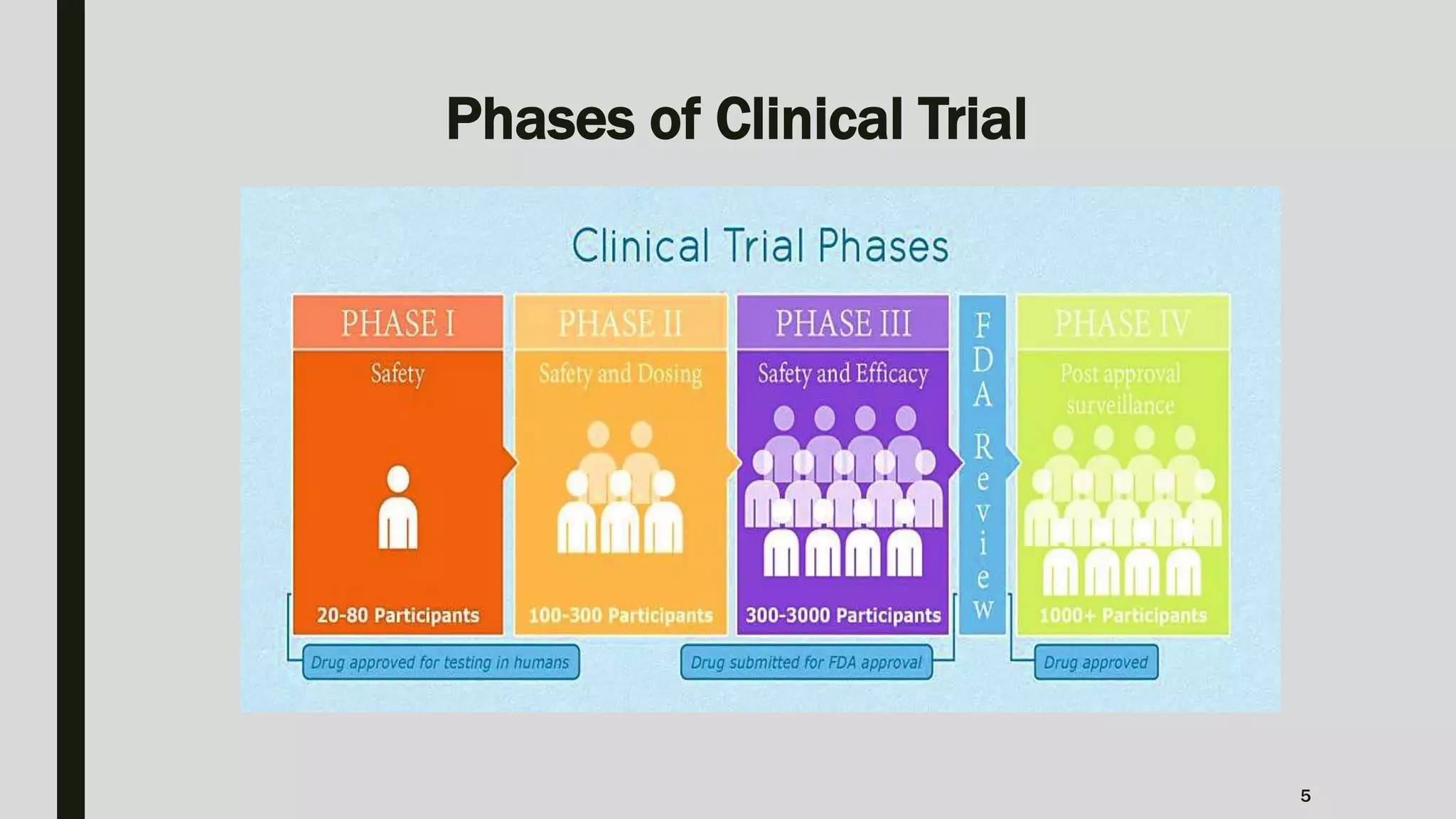
Phases of Clinical Trial
5
Phase-II Clinical Trial
■ It is also known as therapeutic exploration and dose ranging.
■ Conducted by physician , trained as clinical investigators.
■ Based on a specific inclusion and exclusion criteria about 100 to 400 patients
are selected.
■ The main aim is establishment of therapeutic efficacy doses range and ceiling
effect in a controlled setting.
■ Tolerability and pharmacokinetics are studied.
■ Phase can be blinded or open labelled.
■ Carried out at 2-4 centre.
6
Phase II studies: Pre-requisites
■ Review of Phase I data
. Innovator / Experts
. IRB
. DCGI
■ Prior approval by IRB and DCGI is mandatory
■ For new actions of marketed drug , start with phase II ( Phase I exemption
obtained )
7
Objectives of Phase-II
■ Efficacy in patients (primary objective)
■ Safety issues ( secondary objective)
■ Optimum dose finding
. Dose efficacy relationship
. Therapeutic dose regiment
. Duration of therapy
. Frequency of administration
. Therapeutic window
8
Tanvirul Islam
ID: 11715010
Departmment of Pharmacy
Comilla University
TYPES OF PHASE-II CLINICAL TRIALS
10
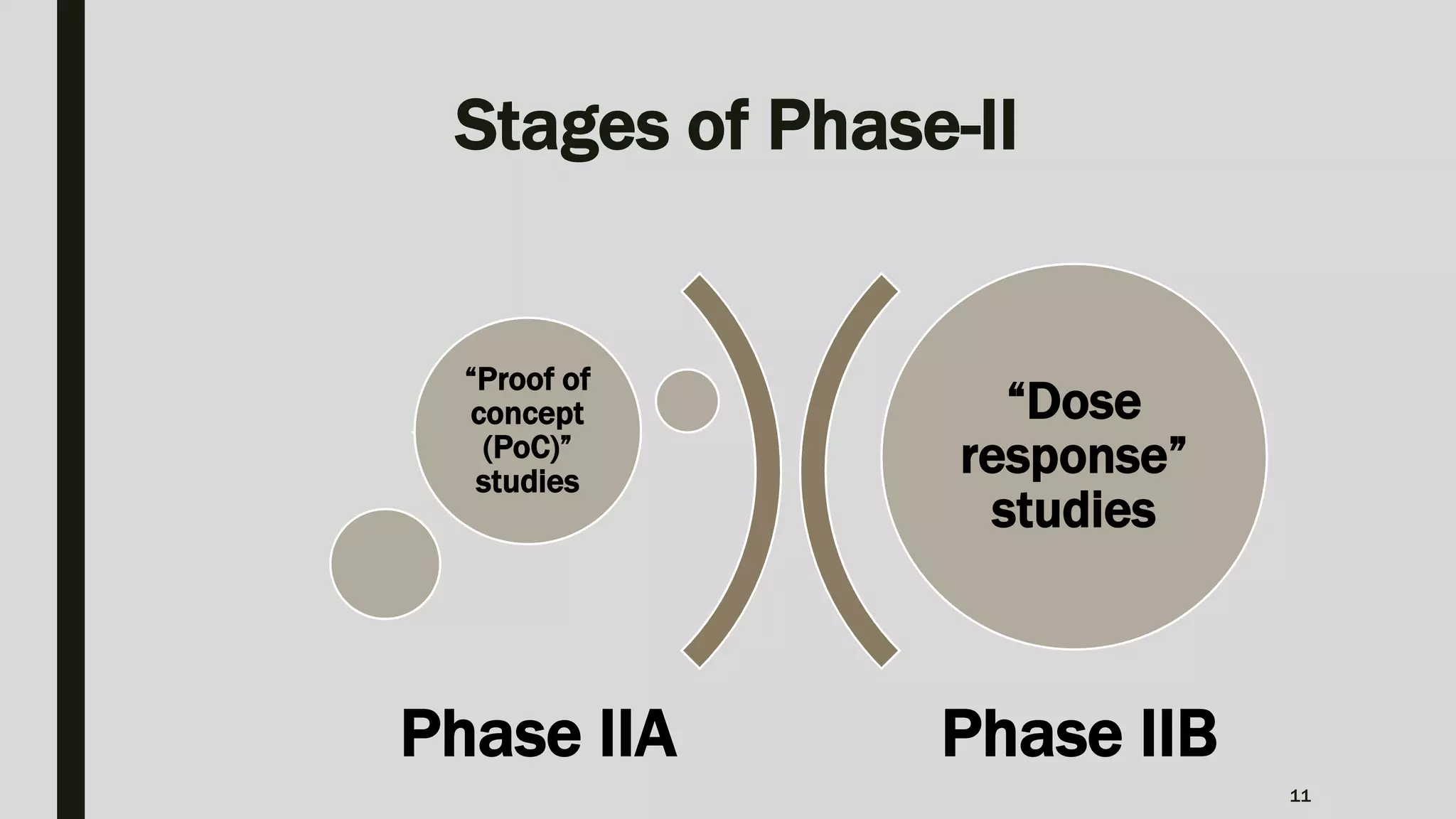
Stages of Phase-II
Phase IIB
“Dose
response”
studies
“Proof of
concept
(PoC)”
studies
Phase IIA
11
Types based on process design
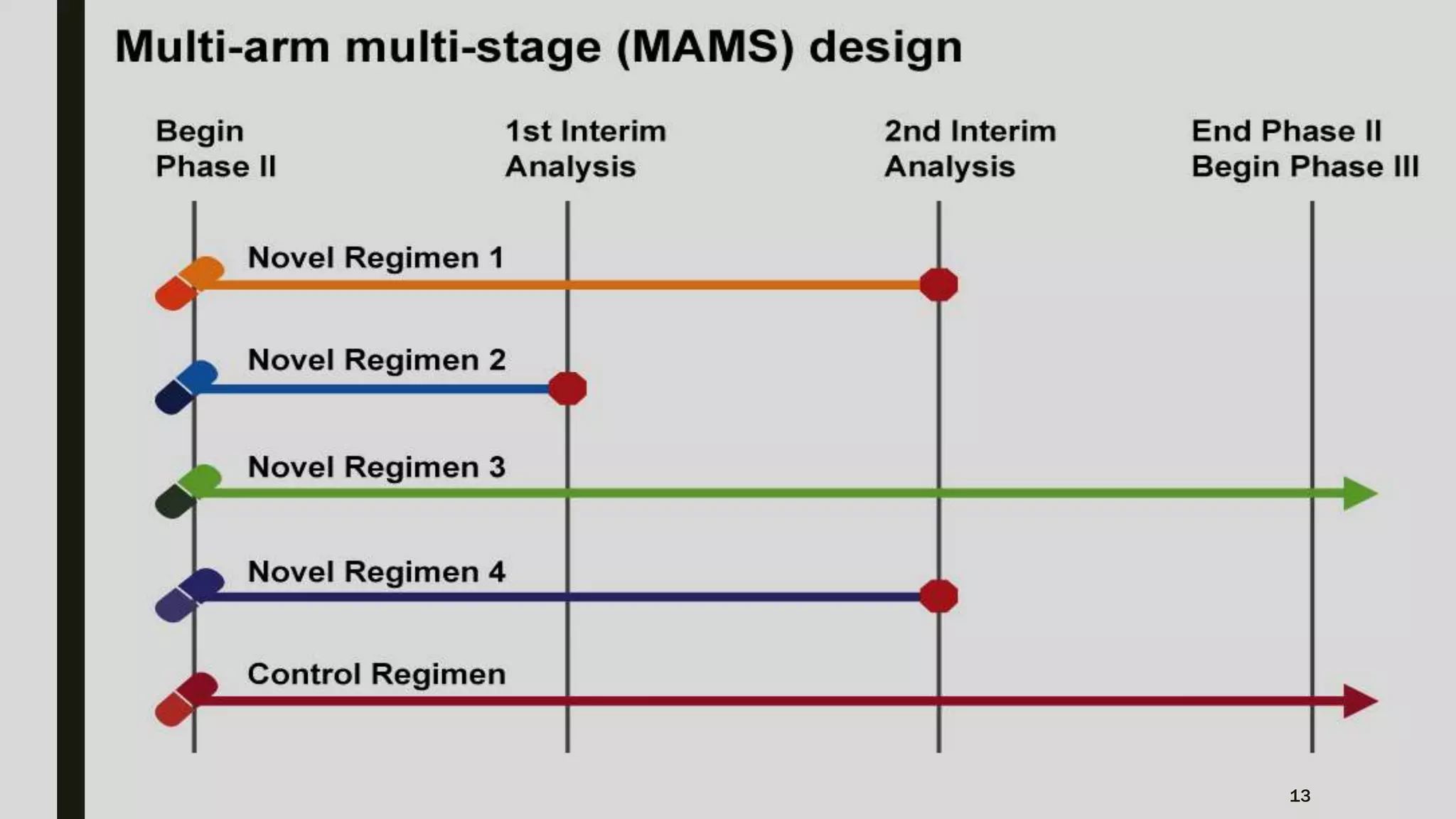
Multi-
stage
design of
phase –II
clinical
trials
Randomiz
ed design
of phase-II
clinical
trials
Platform
design of
phase-II
clinical
trials
Cross-over
design of
phase-II
clinical
trials
12
13
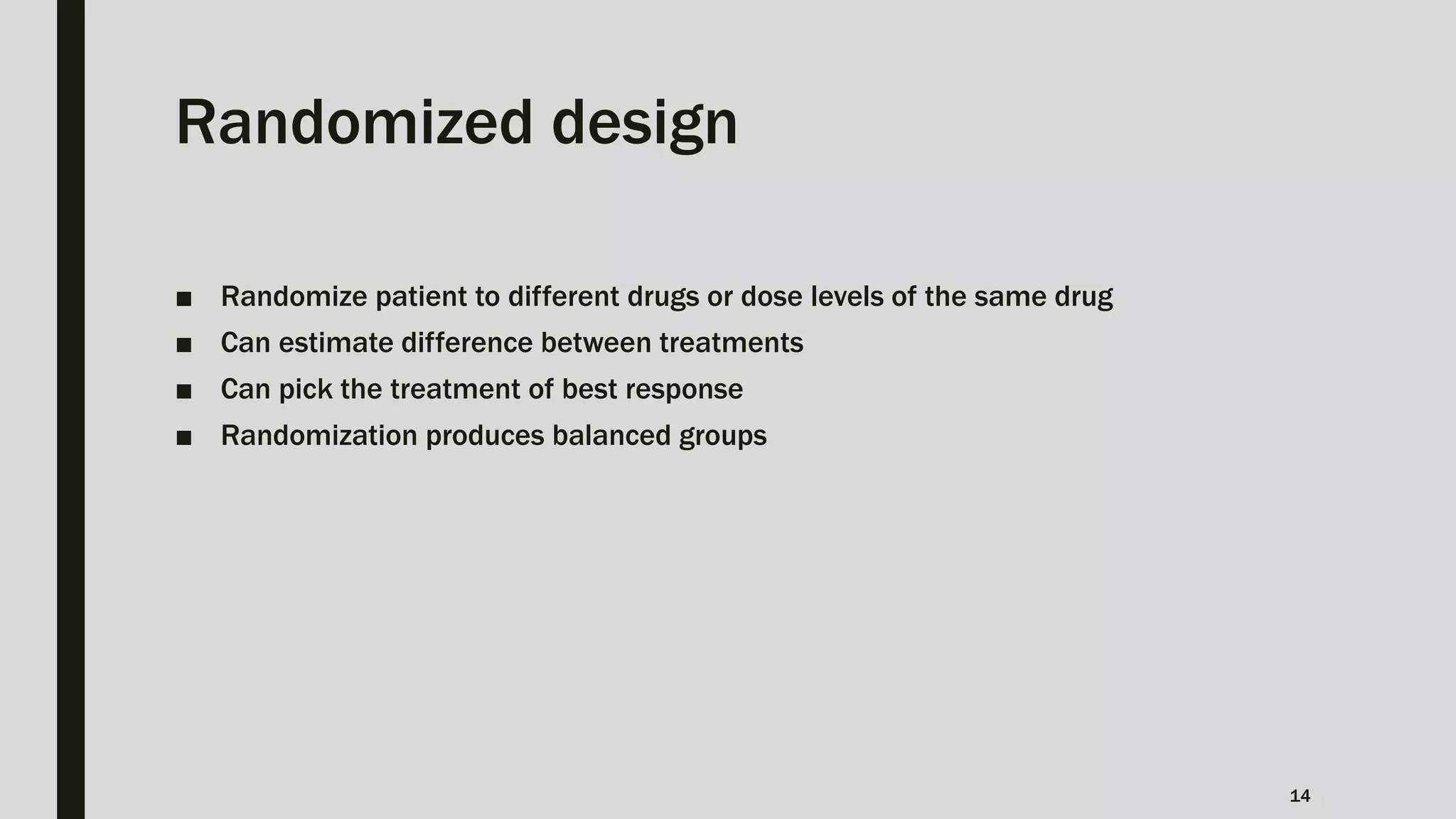
Randomized design
■ Randomize patient to different drugs or dose levels of the same drug
■ Can estimate difference between treatments
■ Can pick the treatment of best response
■ Randomization produces balanced groups
14
Platform trials
■ Multiple treatments
evaluated simultaneously
■ More efficient than
traditional RCT designs
15
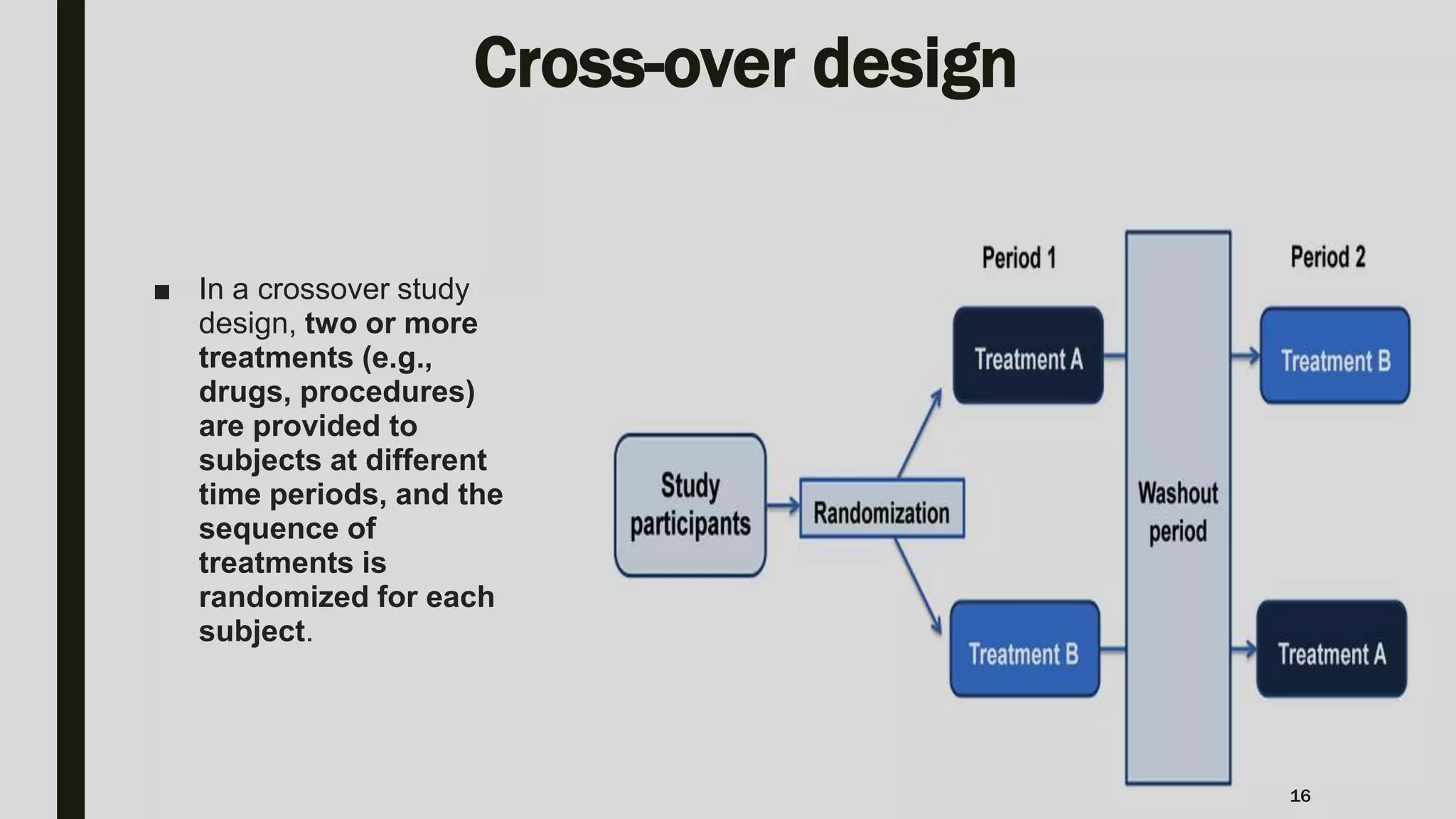
Cross-over design
■ In a crossover study
design, two or more
treatments (e.g.,
drugs, procedures)
are provided to
subjects at different
time periods, and the
sequence of
treatments is
randomized for each
subject.
16
SAMIHA RAHMAN
ID: 11715041
Department of Pharmacy
Comilla University
Phase II(a) vs Phase II(b)
Phase II (a) Phase II (b)
EARLY PHASE LATE PHASE
Pilot clinical trials Pivotal clinical trials
20-200 Patients 50-300 Patients
Not multicentric Multicentric
Single Blind comparison with a standard
drug
Double Blind comparison with a placebo
or standard drug
18
How do doctors put volunteers into groups
in phase-II trial:
■ Use computer program
■ Put volunteers into different groups
■ Each volunteer has an equal chance of going in any of the groups
■ This process is known as Randomization
■ Research staff checks the benefit of the treatment
■ If the staff change the volunteer into new treatment groups, the trial result will
be changed
■ But randomization helps to avoid this
19
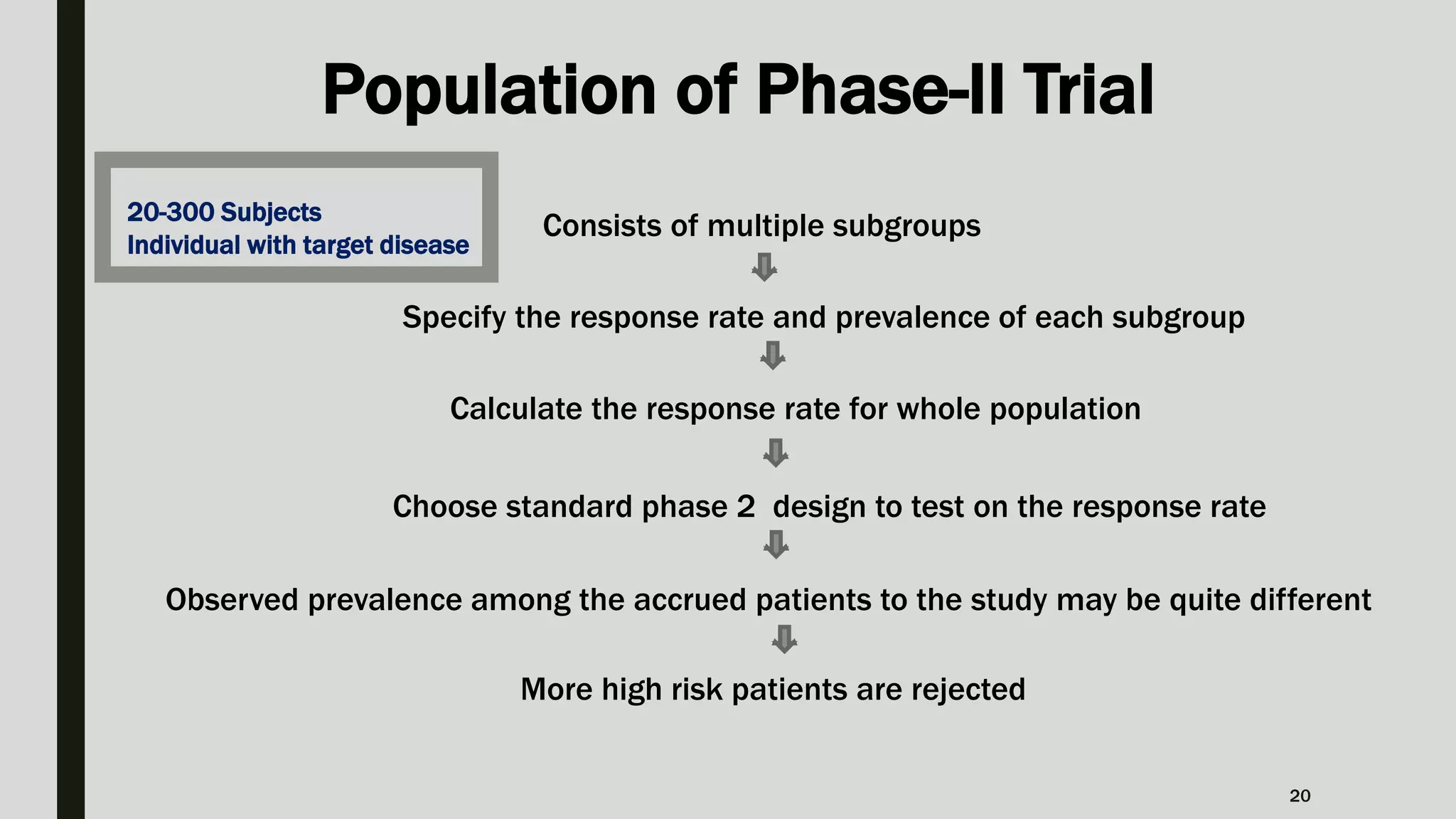
Population of Phase-II Trial
Consists of multiple subgroups
Specify the response rate and prevalence of each subgroup
Calculate the response rate for whole population
Choose standard phase 2 design to test on the response rate
Observed prevalence among the accrued patients to the study may be quite different
More high risk patients are rejected
20-300 Subjects
Individual with target disease
20
Sample Size Determination
 Having the right sample size can ensure that if a statistically significant difference
exists, it will be uncovered.
 Effect size is small a larger sample size is required
 Effect size is large a smaller sample size is required
Correct sample size assure
Correct participants
Having a sufficient sample size can help save money and make sure the efficient use of
resources
2 groups
People receive the usual treatment
People receive the usual + new treatment
21
■ About 70% of potential new drugs will progress to phase 2
■ Measuring safety and evaluating side effects
■ Most research projects fail in phase 2 due to less effectiveness of product
Several months to 2 years
or
<1-2 years
Duration of Phase-II Trial
22
MD Saiful Islam
ID:11715042
Departnent of Pharmacy
Comilla University
Goals of phase-ll trial
Primary goals
■ To evaluate the efficacy in the
patient with particular disease
■ To evaluate the safety occasionally
■ Finding the best dose
Secondary goals
■ To investigate pharmacokinetics of
drugs
■ To investigate pharmacodynamics
of drug
■ To evaluate immunogenicity
24
Dose determination
■ Also known as dose finding phase
■ Maximum tolerable dose is determined in phase-l
■ Dose is determined by dose ranging study
■ Different doses of an agent are tested to establish the best dose
■ Trial starts with minimum dose but not exceed maximum tolerable dose
■ A dose ranging study includes a placebo group and a few groups receiving
different dose of the drug
25
Eligibility of the subject
■ Patients with particular disease that the drug being studied is trying to cure
■ Patients will have short medical history
■ Patients with multiple diseases should be avoided
■ Patients should be able and willing to comply with the requirement of the trial
■ Patients should voluntarily agreed for trial
■ Pregnant and breastfeeding female should be excluded
■ Patient allergic to the drug should be excluded
26
THANK YOU
27

Phase 2 clinical trial.pptx

  • 1.
  • 2.
    Group members Mahamuda JahanShelly (ID:11715004) Tanvirul Islam (ID: 11715010) Samiha Rahman (ID: 11715041) Md Saiful Islam (ID:11715042) 2
  • 3.
    Mahamuda Jahan Shelly ID:11715004 Departmentof Pharmacy Comilla University
  • 4.
    Introduction ■ Clinical trialsare studies performed with human subject to test new drugs or combinations of drug , new approaches to surgery or rediotherapy or procedures to improve the diagnosis of disease the quality of life of the patient. ■ Clinical trials generate data on safety and efficacy. They are conducted only after they have received health authority/ethics committee approval in the country where approval of the therapy is sought. ■ Clinical trial is the mainstay for bringing out new drugs to the market. 4
  • 5.
  • 6.
    Phase-II Clinical Trial ■It is also known as therapeutic exploration and dose ranging. ■ Conducted by physician , trained as clinical investigators. ■ Based on a specific inclusion and exclusion criteria about 100 to 400 patients are selected. ■ The main aim is establishment of therapeutic efficacy doses range and ceiling effect in a controlled setting. ■ Tolerability and pharmacokinetics are studied. ■ Phase can be blinded or open labelled. ■ Carried out at 2-4 centre. 6
  • 7.
    Phase II studies:Pre-requisites ■ Review of Phase I data . Innovator / Experts . IRB . DCGI ■ Prior approval by IRB and DCGI is mandatory ■ For new actions of marketed drug , start with phase II ( Phase I exemption obtained ) 7
  • 8.
    Objectives of Phase-II ■Efficacy in patients (primary objective) ■ Safety issues ( secondary objective) ■ Optimum dose finding . Dose efficacy relationship . Therapeutic dose regiment . Duration of therapy . Frequency of administration . Therapeutic window 8
  • 9.
    Tanvirul Islam ID: 11715010 Departmmentof Pharmacy Comilla University
  • 10.
    TYPES OF PHASE-IICLINICAL TRIALS 10
  • 11.
    Stages of Phase-II PhaseIIB “Dose response” studies “Proof of concept (PoC)” studies Phase IIA 11
  • 12.
    Types based onprocess design Multi- stage design of phase –II clinical trials Randomiz ed design of phase-II clinical trials Platform design of phase-II clinical trials Cross-over design of phase-II clinical trials 12
  • 13.
  • 14.
    Randomized design ■ Randomizepatient to different drugs or dose levels of the same drug ■ Can estimate difference between treatments ■ Can pick the treatment of best response ■ Randomization produces balanced groups 14
  • 15.
    Platform trials ■ Multipletreatments evaluated simultaneously ■ More efficient than traditional RCT designs 15
  • 16.
    Cross-over design ■ Ina crossover study design, two or more treatments (e.g., drugs, procedures) are provided to subjects at different time periods, and the sequence of treatments is randomized for each subject. 16
  • 17.
    SAMIHA RAHMAN ID: 11715041 Departmentof Pharmacy Comilla University
  • 18.
    Phase II(a) vsPhase II(b) Phase II (a) Phase II (b) EARLY PHASE LATE PHASE Pilot clinical trials Pivotal clinical trials 20-200 Patients 50-300 Patients Not multicentric Multicentric Single Blind comparison with a standard drug Double Blind comparison with a placebo or standard drug 18
  • 19.
    How do doctorsput volunteers into groups in phase-II trial: ■ Use computer program ■ Put volunteers into different groups ■ Each volunteer has an equal chance of going in any of the groups ■ This process is known as Randomization ■ Research staff checks the benefit of the treatment ■ If the staff change the volunteer into new treatment groups, the trial result will be changed ■ But randomization helps to avoid this 19
  • 20.
    Population of Phase-IITrial Consists of multiple subgroups Specify the response rate and prevalence of each subgroup Calculate the response rate for whole population Choose standard phase 2 design to test on the response rate Observed prevalence among the accrued patients to the study may be quite different More high risk patients are rejected 20-300 Subjects Individual with target disease 20
  • 21.
    Sample Size Determination Having the right sample size can ensure that if a statistically significant difference exists, it will be uncovered.  Effect size is small a larger sample size is required  Effect size is large a smaller sample size is required Correct sample size assure Correct participants Having a sufficient sample size can help save money and make sure the efficient use of resources 2 groups People receive the usual treatment People receive the usual + new treatment 21
  • 22.
    ■ About 70%of potential new drugs will progress to phase 2 ■ Measuring safety and evaluating side effects ■ Most research projects fail in phase 2 due to less effectiveness of product Several months to 2 years or <1-2 years Duration of Phase-II Trial 22
  • 23.
    MD Saiful Islam ID:11715042 Departnentof Pharmacy Comilla University
  • 24.
    Goals of phase-lltrial Primary goals ■ To evaluate the efficacy in the patient with particular disease ■ To evaluate the safety occasionally ■ Finding the best dose Secondary goals ■ To investigate pharmacokinetics of drugs ■ To investigate pharmacodynamics of drug ■ To evaluate immunogenicity 24
  • 25.
    Dose determination ■ Alsoknown as dose finding phase ■ Maximum tolerable dose is determined in phase-l ■ Dose is determined by dose ranging study ■ Different doses of an agent are tested to establish the best dose ■ Trial starts with minimum dose but not exceed maximum tolerable dose ■ A dose ranging study includes a placebo group and a few groups receiving different dose of the drug 25
  • 26.
    Eligibility of thesubject ■ Patients with particular disease that the drug being studied is trying to cure ■ Patients will have short medical history ■ Patients with multiple diseases should be avoided ■ Patients should be able and willing to comply with the requirement of the trial ■ Patients should voluntarily agreed for trial ■ Pregnant and breastfeeding female should be excluded ■ Patient allergic to the drug should be excluded 26
  • 27.