





PfMP - A Practical Guide to
Project Portfolio Management
Dave Ungar, PMP, PfMP
PMI Central Ohio Chapter
Professional Development Day
November 13, 2015
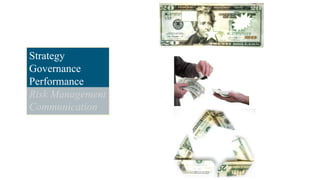
Strategy
Governance
Performance
Risk Management
Communication
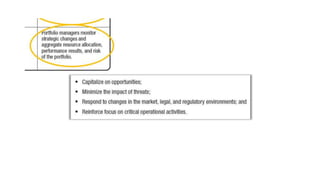
Project Management Institute. (2013). The
standard for portfolio management, third
edition. Newtown Square, Pa: Project
Management Institute.
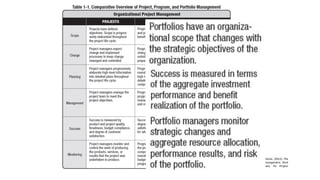
Project Management Institute. (2013). The standard for portfolio management, third edition.
Newtown Square, Pa: Project Management Institute.
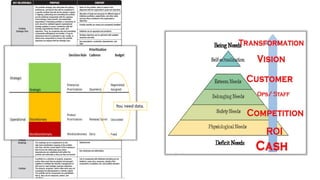
You need data.
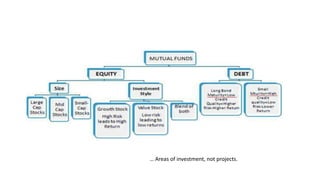
… Areas of investment, not projects.
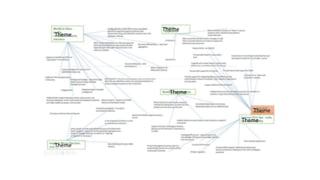
Theme
Theme
Theme
Theme
Theme
Theme
Theme: Develop new class Theme: Develop new routes
Governance
how decisions are made
how projects align
how data & feedback are used to optimize
Execute.
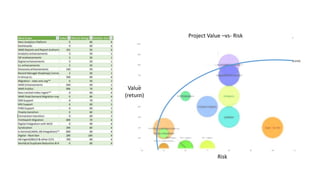
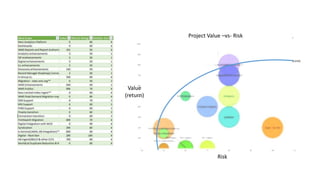
Risk
Value
(return)
Project Value –vs- Risk
(Limit)
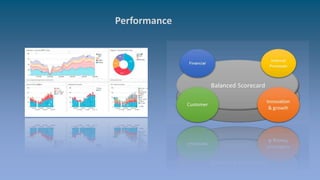
Performance
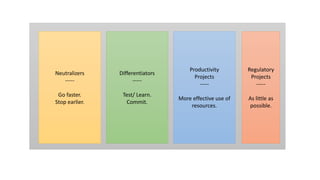
Neutralizers
-----
Go faster.
Stop earlier.
Differentiators
-----
Test/ Learn.
Commit.
Productivity
Projects
-----
More effective use of
resources.
Regulatory
Projects
-----
As little as
possible.
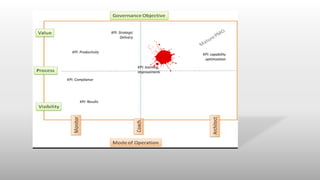
KPI: Compliance
KPI: Productivity
KPI: learning,
improvement
KPI: capability
optimization
KPI: Strategic
Delivery
KPI: Results
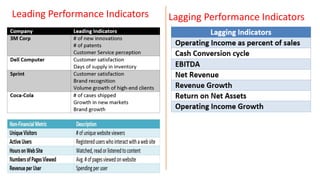
Leading Performance Indicators Lagging Performance Indicators
Risk
Value
(return)
Project Value –vs- Risk
(Limit)
Dave Ungar, PMP, PfMP
@daveungar225
dave@daveungar.com
PfMP - A Practical Guide to
Project Portfolio Management
Appendix
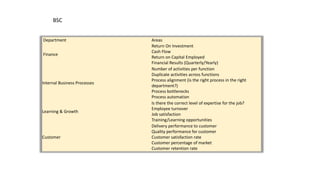
Department Areas
Finance
Return On Investment
Cash Flow
Return on Capital Employed
Financial Results (Quarterly/Yearly)
Internal Business Processes
Number of activities per function
Duplicate activities across functions
Process alignment (is the right process in the right
department?)
Process bottlenecks
Process automation
Learning & Growth
Is there the correct level of expertise for the job?
Employee turnover
Job satisfaction
Training/Learning opportunities
Customer
Delivery performance to customer
Quality performance for customer
Customer satisfaction rate
Customer percentage of market
Customer retention rate
BSC
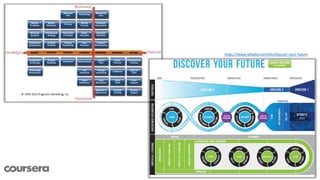
© 1993-2015 Pragmatic Marketing, Inc.
https://www.rallydev.com/els/discover-your-future
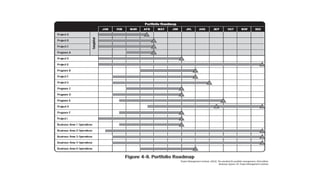
Project Management Institute. (2013). The standard for portfolio management, third edition.
Newtown Square, Pa: Project Management Institute.
C

PfMP - A Practical Guide to Project Portfolio Management

Editor's Notes

  • #3 (Positive) - You’re all professionals – you know about business cases, risks, the value of communications, team dynamics, … so we’re going to talk about more exciting things! Like bubble charts.. We’re not going to talk much about bubble charts either, although you will see one today. My intention is to talk about the first three knowledge areas and provide some “this is what that looks like” overview, both to: Make it tangible Make it seem like it’s not out of reach and something you can pursue.
  • #4 Strategy – How are we positioning ourselves to win? (Win a market, a category, an account, return, …) What void are we filling & exploiting? Where are we going to spend money & for what ends? Governance – How do we execute that strategy? Performance – How do we learn from execution to feed back into optimization?
  • #5 Project & Program Managers – are bothered by change in scope Portfolios are the reflection of the corporate strategies and the environments that enable or challenge those strategies. (Portfolios are not just big programs.) Portfolio Manager – may be the cause of change in scope. communicate well, show your work Project & Program Managers – are concerned with triple constraint Portfolio Manager – is concerned with the size of the triangle and the relative lengths of the sides.
  • #6 Which ones fit the business best? How much resource are we going to apply? When do we need it? Can we break it up into smaller deliverables? (click) What are the strategic outcomes of the organization and what are the best ways to organize around them? They could be about speed of growth, new technologies, old technologies, product, segment, etc..
  • #7 SDN – determine how much is allocated to each category overall. These can be individual portfolios or can be divisions within one. Make sure you hold to your investments. Don’t steal from S to pay for ND. Asymmetrical Bets – Overinvest in strategic Productivity & optimization - Better, faster, cheaper.   Realize the return - cheaper/available resources should be utilized.  Solve the most expensive problems, whatever it takes.   (not generally UI related.) S = Strategic – New or transitioned revenue streams, New investments in technology, R&D. New customers, new revenue, new markets, new technology, and revenue migrations/replacement. D = Discretionary – Maintain markets - Parity, keep current customers happy, renewals and retention N = Nondiscretionary – Lights on - Maintenance, critical bug fixes, platform currency, keep the lights on and the product running R – Regulatory. Don’t blend resources. Make sure teams know what their priority is.
  • #8 More of a top-down approach Don’t pick the stocks, pick the investment themes.
  • #9 Take all of the initiatives in your backlog, strategic retreats, wishlist, etc. Weed out the junk. Start to organize around themes. This is sort of a bottom-up approach. It’s not ideal, really – but it’s often the reality – because the knowledge that exists about business opportunity comes from granular intelligence. It rarely comes from a predilection or omniscient vision. Determine allocation of budget to those themes. (Back a few slides to pragmatic, etc. How do you determine those budget allocations? YOU figure it out. . Data is how. Until then, it’s educated guesses.) Stick to it (the allocations.) If it needs to change, change it formally.
  • #10 How do we take that strategy, create portfolios and make investment decisions? Define investment themes: Why? - Have fewer drivers of priorities. Pick ONE innovation project, over-commit resources to it, don't go halfway. (Learn if you can do two next year.) RGT – prevent dropping critical work that isn’t strategic. Make good decisions about how much to invest in ND,D,S (RGT) These are not Red Dots –they are not goals - they are themes. These are not (necessarily) LOBs. That’s similar in purpose, but LOB is market-driven, and themes are purpose-driven. This might be what you want to structure your portfolios around. Or maybe not.
  • #11 What is Governance? To greatly simplify it – it’s the methodology used for portfolio management. GET THE RIGHT PEOPLE IN THE ROOM. > We need agreements from the top-down on what we value and what we want to accomplish. > We need clarity about where we’re spending our money and who’s doing what.
  • #12 Long story short – there are many ways. Pick one & be consistent. How else have you ranked & scored? NPV, IRR, ROI are all great tools - but keep in mind their accuracy & your ability to predict, as well as delivery method (agile/lean.) That's why investment categories are helpful! A word on capacity tools – stop counting heads. Count capabilities and their velocities.
  • #13 This is within a portfolio now. Don’t get more complicated than you need to be How good is your data? How much more accurate are you? How much does it matter to be accurate? PROTIP: Smaller is generally less risky. That doesn’t mean only do things of small value – it hints at the idea that you should break up large initiatives into smaller units of value. Be realistic. Don’t tell yourselves lies about what you’re going to get done.
  • #14 So how are you doing against YOUR enterprise strategy?  If you’re like most corporations, you’re probably “behind plan”. If not, good for you! (Do a presentation next year.) Don’t be afraid to report bad news. In other words, report the truth. (drunk/lamppost) We don’t want reports, we want insights. How are we going to govern differently as a result of knowing new information?
  • #15 Performance – not just about reports. Using data to optimize the portfolio & increase its value Reallocate when needed Increase investment Fix processes (Click) Metrics that help you to: Neutralization projects - go faster. Stop earlier. Differentiation projects - put all of your resources here Productivity projects - reduce waste
  • #16 How mature is your organization? Pick a guiding “North Star” of where you want your governance to focus.  How granular do you want to get? We’re working with big units here – you can get granular, but first get the major blocks under control. Think bigger.
  • #17 We don’t want reports, we want insights. How are we going to govern differently as a result of knowing new information? Beware of vanity metrics – how are you using metrics?
  • #18 Back to this …. measure performance using the same unit of value as we use to select the projects in the portfolio. (Can we do that?) Use performance for strategic realignment The Project Manager hates this, yes?! …
  • #19 This is where project managers and project teams get irritated! Scope creep = adding scope. Scope Jerk = changing direction. Communicate Illustrate – show your work. BVCs are really helpful
  • #20 Make it visible and make it interactive. We should be standing in front of our decisions and progress daily, managing.
  • #21 Growing & maturing field – more discipline, more strategy & business perspective Integrates well with agile/ lean principles (see last year’s talk)
  • #24 As the market changes, the economy, the strategic direction of the company needs to adapt. This can cause projects to change scope, get cancelled, expand, accelerate. Context switching has its costs. We don’t want kneejerk planning. Nondiscretionary: Managing processes that are mission critical but not core to differentiation  (because you don't want to put more resource there than you have to) Centralize Standardize Modularize - isolate untouchable elements, remove them from the equation Optimize Instrument - monitor Outsource - make it someone else's core.  (e.g. Support of internal/ back office systems.)
  • #25 How do you get a strategy? That’s a topic for an entire workshop. People in charge of strategy should know this (or go to that workshop!) Some common frameworks are: Pragmatic Marketing Lean Startup Rally has done good work bringing SAFE and Geoffrey Moore’s principles together… Coursera is a great place to find courses on setting strategy. .. Or ask PMICOC for a session on it.
  • #26 Just for the record: I hate this. A roadmap is not a timeline is not a roadmap. A roadmap should tell you WHERE you need to go (and what the payoff is), not when or how.
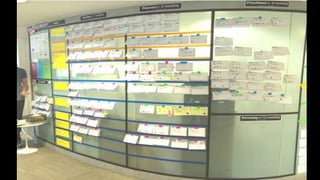
  • #27 Roadmap – Destinations, not Dates. Look for best routes that maximize value of the trip