


Welcome
To
Our
Presentation
On
Detection and
analysis of
Pesticides pollution
Definition of pesticides
pollution.
Causes of pesticides
Types of analysis and detection
Importance of pesticide
pollution detection and analysis
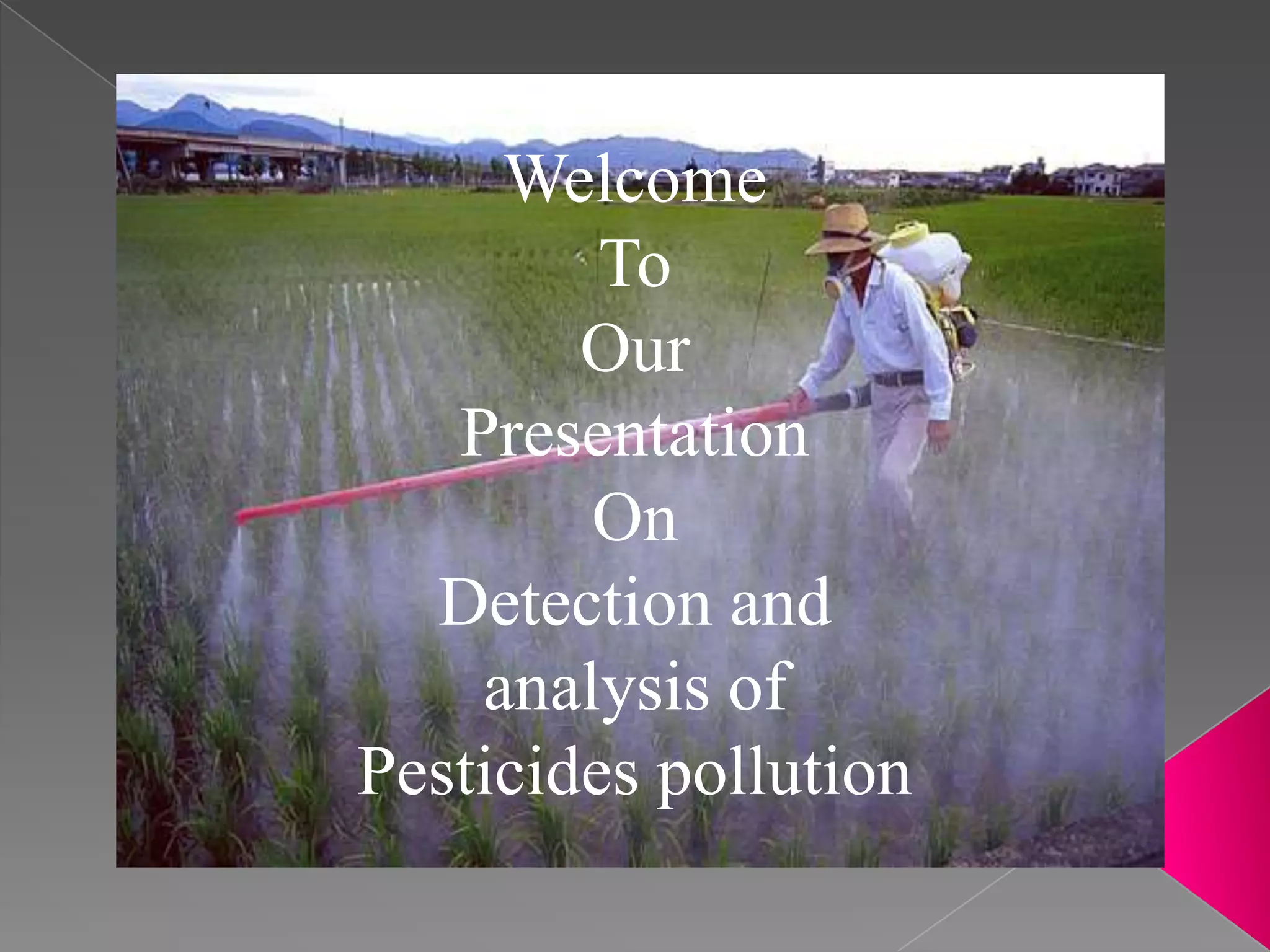
The term ‘pesticide’ is described as
agrochemicals that are used to control
and remove any pest that competes
with human for food, destroys
properties and carries diseases.
The most harmful pesticides are
organochlorine pesticides, namely
aldrin
, endrin, clordane, mirex, toxaphene
and hexachlorobenzene.
Pesticide pollution is a major environmental
Problem. The chemicals found in pesticides
cause pollution when they get into contact with
soil, water and air. The chemicals normally bring
mostly negative impacts to the environment.
Many of them are considered to be
particularly hazardous compounds and toxic
because they inhibit fundamental metabolic
pathways .
 By running off agricultural fields to
nearby water sources during rainfall.
 Not all of the applied chemicals reach
the target sites.
 Some chemicals go deep into the soil
and take many time to be broken down
 Improper storing, mixing, and loading of
pesticides .
 Improper storing, mixing, and loading of
pesticides .
Detection and analysis can
be carried out by using:
A gas chromatography with a
atomic emission detector
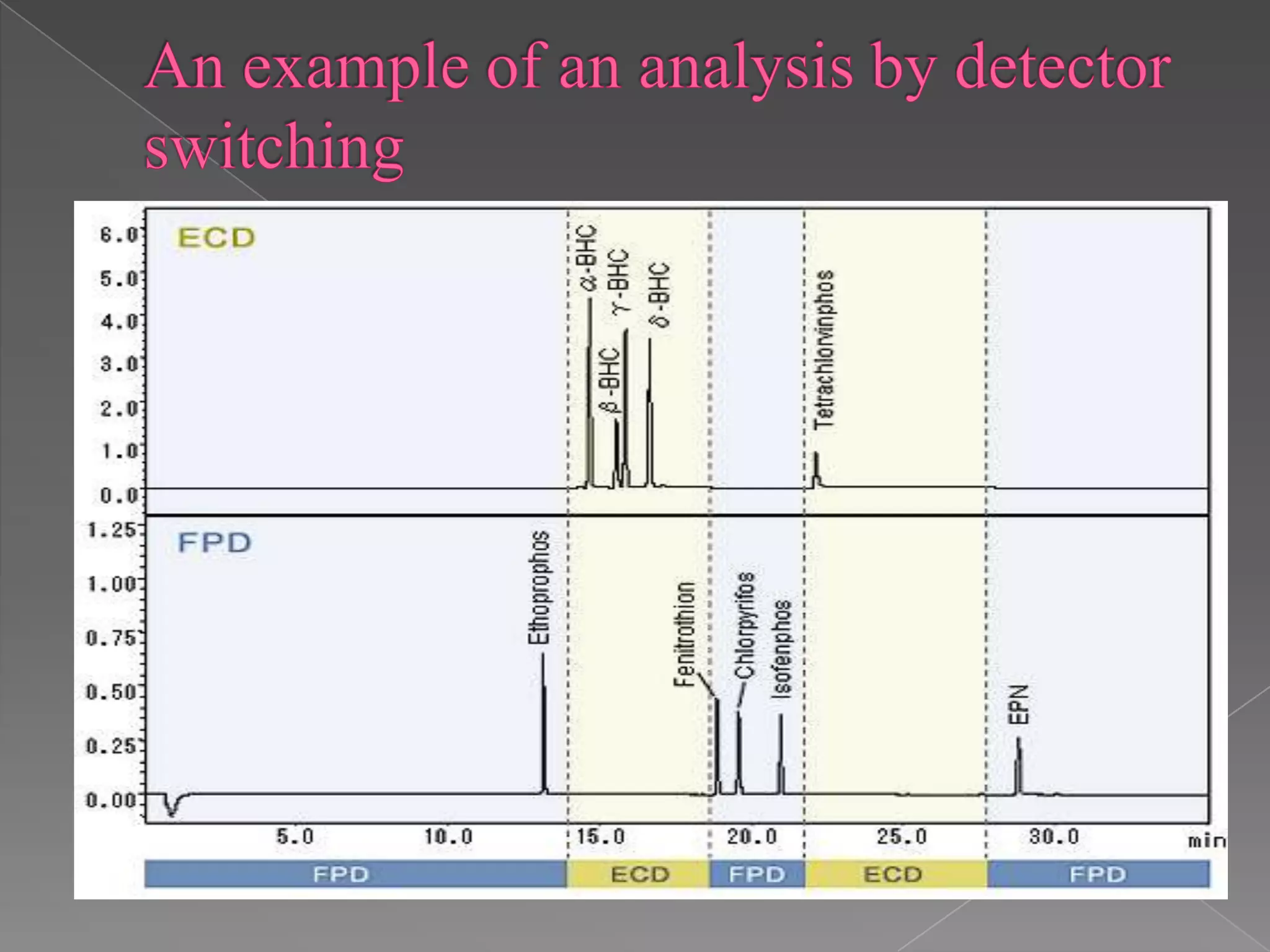
A detector switching system
 A Biosensor
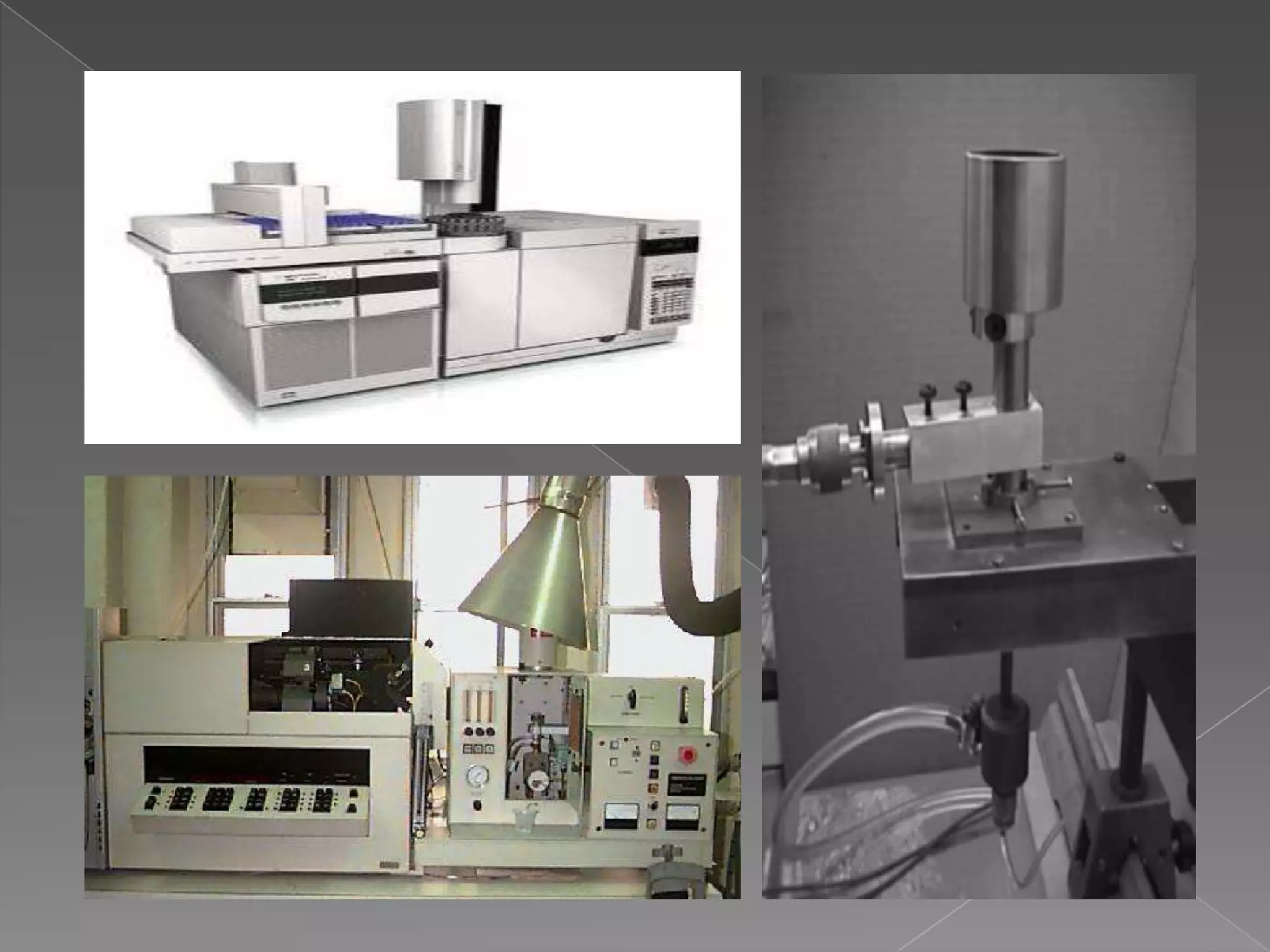
 An atomic emission detector, consists of
a microwave-induced helium plasma
and atomic emission spectrometer.
 Detect any element in the periodic table
(except helium) from a gas
chromatography.
 It is used for the detection and elemental
characterization of 27 different
pesticides.
 There are two types of detector namely selective
detector and multiple detector.
 A selective detector is effective for impurity
components derived from agricultural crops.
 A multiple detector is required for the selective
detector of all pesticides components.
 The system obtain accurate analytical
information with no deterioration in sensitivity.
ECD and FCD
Electron Capture detector (ECD)
ECD offers high sensitivity analysis
of chlorinated pesticides.
Flame Photometric Detector (FPD)
FPD detects organophosphate
pesticides.
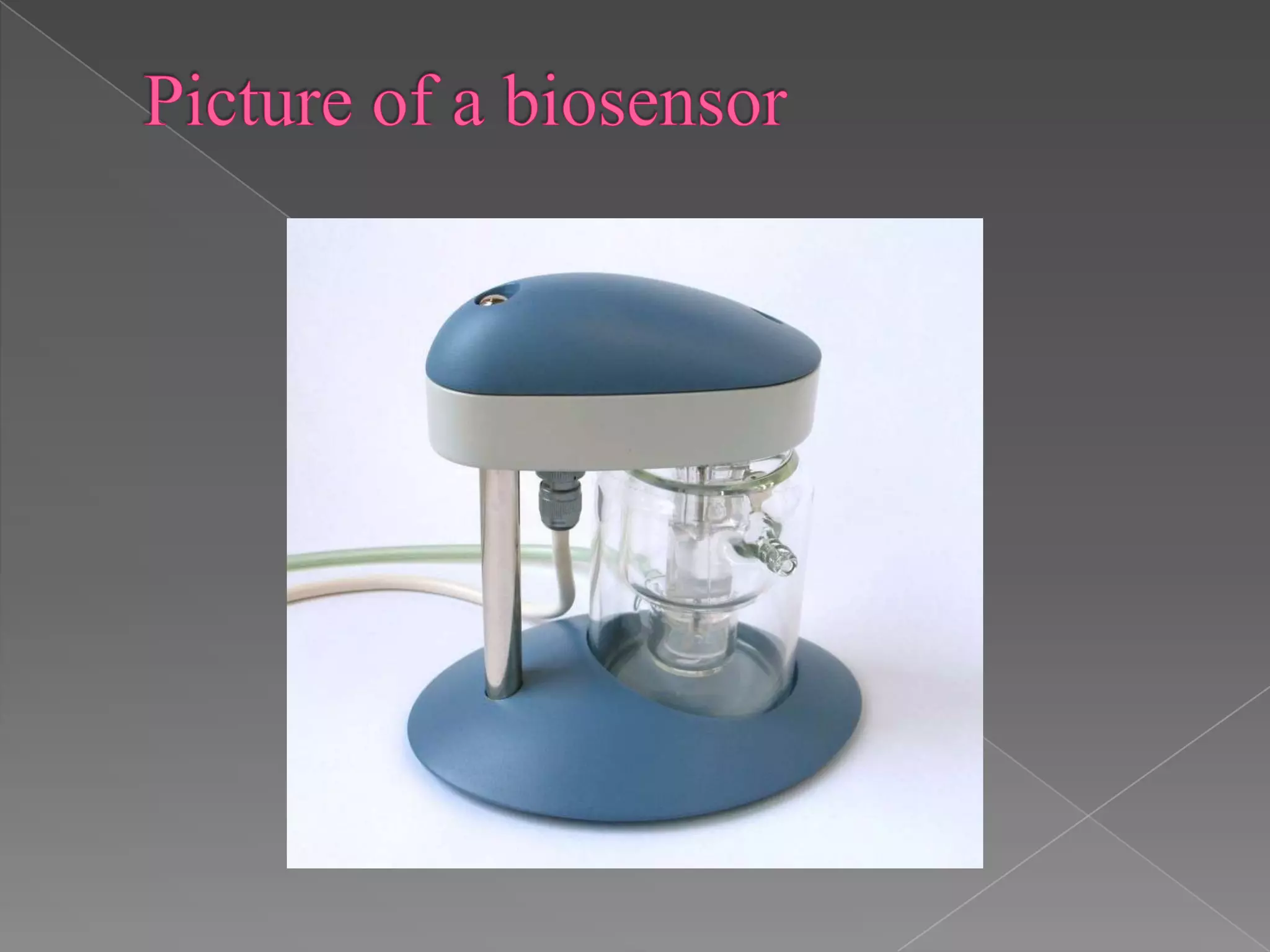
 Biosensors are potentially useful as they detect
pesticides quickly and have been active in the research
area for some years.
 Examples of enzymes used by the biosensors are
cholinesterase, aldehyde dehydrogenase,
acetolactate synthase and ascorbate oxidase.
 Biosensors have been defined as analytical devices
which tightly combine bio-recognition elements
(enzyme, antibody, microorganism or DNA) with
physical transducers for detection of the target
compounds.
 The enzyme-based sensors measure the
rate of the enzyme-catalyzed reaction
as the basis for their response, any
physical measurement which yields a
quantity related to this rate can be used
for detection.
 Overdose of pesticides may cause resistant pest and
decrease biodiversity in soil.
 It gets wash away accidentally in waterways due to
heavy rainfall thus causing water
pollution.(eutrophication)
 Pesticides contributes to air pollution. It occurs when
pesticides that are applied to crops blow by winds in
certain areas, potentially posing a threat to wildlife.
Detection and analysis of pesticides pollution

Detection and analysis of pesticides pollution

  • 1.
  • 2.
    Definition of pesticides Definitionof pesticides pollution. Causes of pesticides Types of analysis and detection Importance of pesticide pollution detection and analysis
  • 3.
    The term ‘pesticide’is described as agrochemicals that are used to control and remove any pest that competes with human for food, destroys properties and carries diseases. The most harmful pesticides are organochlorine pesticides, namely aldrin , endrin, clordane, mirex, toxaphene and hexachlorobenzene.
  • 4.
    Pesticide pollution isa major environmental Problem. The chemicals found in pesticides cause pollution when they get into contact with soil, water and air. The chemicals normally bring mostly negative impacts to the environment. Many of them are considered to be particularly hazardous compounds and toxic because they inhibit fundamental metabolic pathways .
  • 5.
     By runningoff agricultural fields to nearby water sources during rainfall.  Not all of the applied chemicals reach the target sites.  Some chemicals go deep into the soil and take many time to be broken down  Improper storing, mixing, and loading of pesticides .  Improper storing, mixing, and loading of pesticides .
  • 6.
    Detection and analysiscan be carried out by using: A gas chromatography with a atomic emission detector A detector switching system  A Biosensor
  • 7.
     An atomicemission detector, consists of a microwave-induced helium plasma and atomic emission spectrometer.  Detect any element in the periodic table (except helium) from a gas chromatography.  It is used for the detection and elemental characterization of 27 different pesticides.
  • 9.
     There aretwo types of detector namely selective detector and multiple detector.  A selective detector is effective for impurity components derived from agricultural crops.  A multiple detector is required for the selective detector of all pesticides components.  The system obtain accurate analytical information with no deterioration in sensitivity.
  • 11.
    ECD and FCD ElectronCapture detector (ECD) ECD offers high sensitivity analysis of chlorinated pesticides. Flame Photometric Detector (FPD) FPD detects organophosphate pesticides.
  • 12.
     Biosensors arepotentially useful as they detect pesticides quickly and have been active in the research area for some years.  Examples of enzymes used by the biosensors are cholinesterase, aldehyde dehydrogenase, acetolactate synthase and ascorbate oxidase.  Biosensors have been defined as analytical devices which tightly combine bio-recognition elements (enzyme, antibody, microorganism or DNA) with physical transducers for detection of the target compounds.
  • 13.
     The enzyme-basedsensors measure the rate of the enzyme-catalyzed reaction as the basis for their response, any physical measurement which yields a quantity related to this rate can be used for detection.
  • 15.
     Overdose ofpesticides may cause resistant pest and decrease biodiversity in soil.  It gets wash away accidentally in waterways due to heavy rainfall thus causing water pollution.(eutrophication)  Pesticides contributes to air pollution. It occurs when pesticides that are applied to crops blow by winds in certain areas, potentially posing a threat to wildlife.