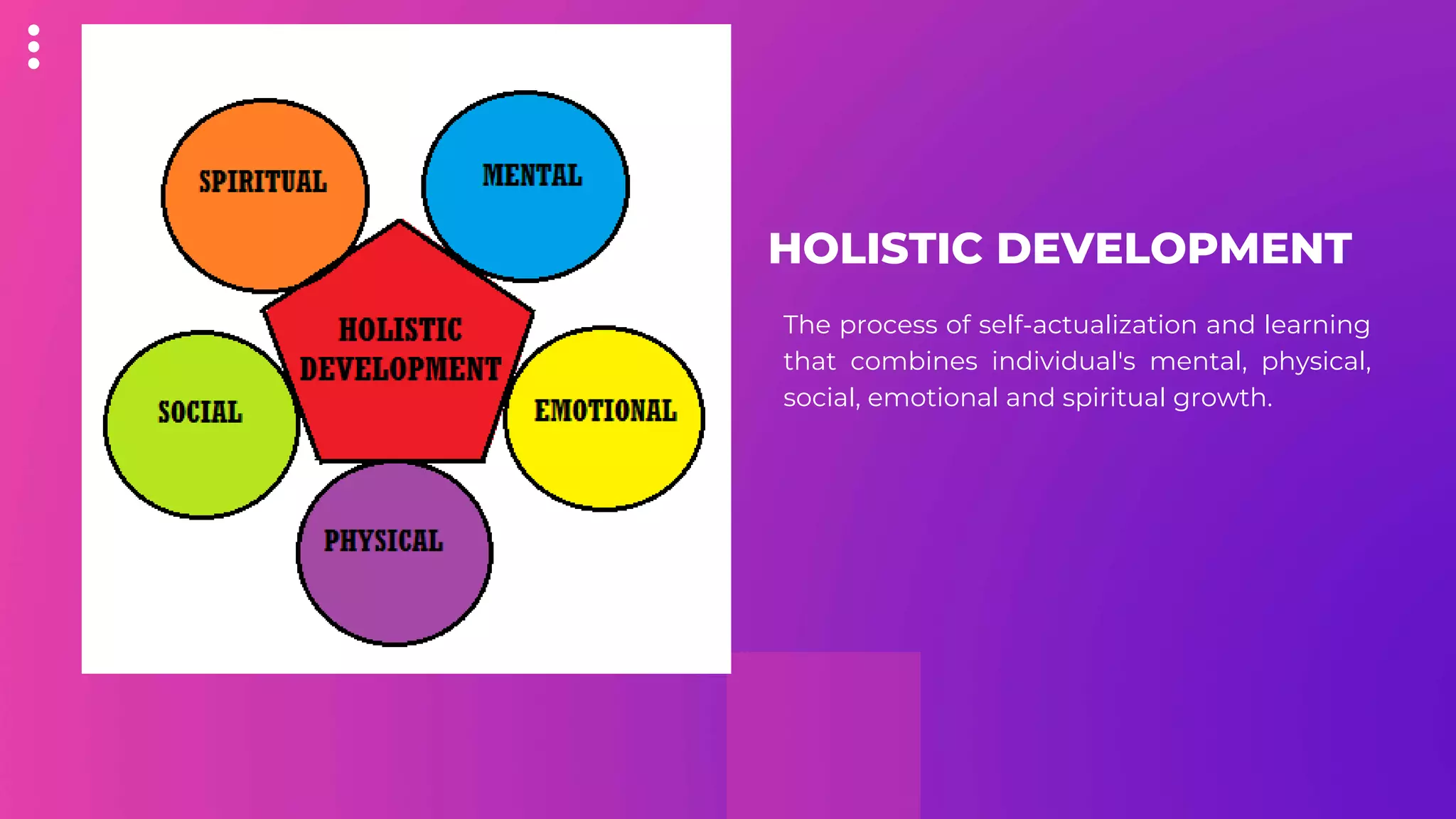
This document discusses developing the whole person by learning to evaluate one's own thoughts, feelings, and behaviors. It covers four key areas:
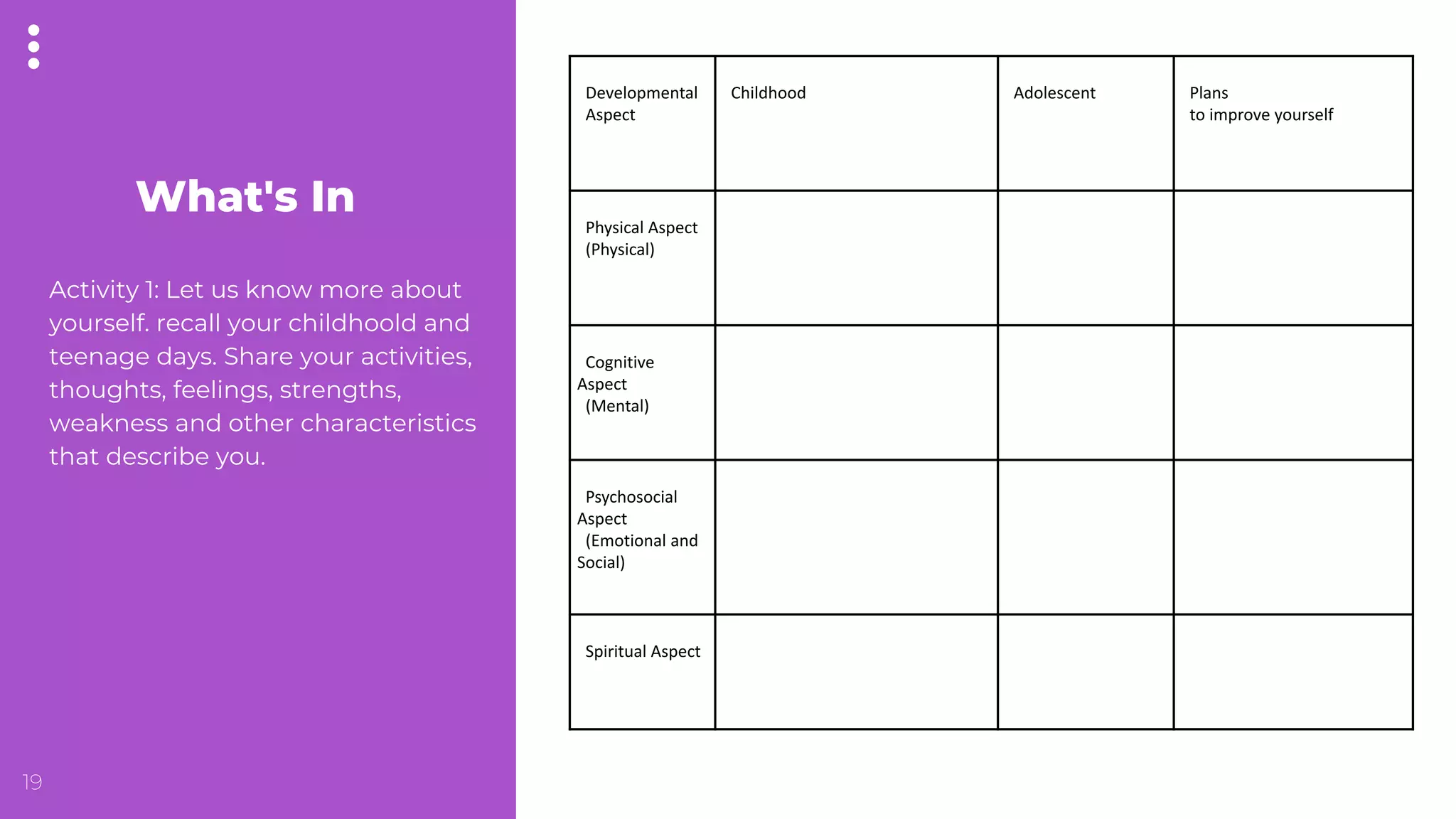
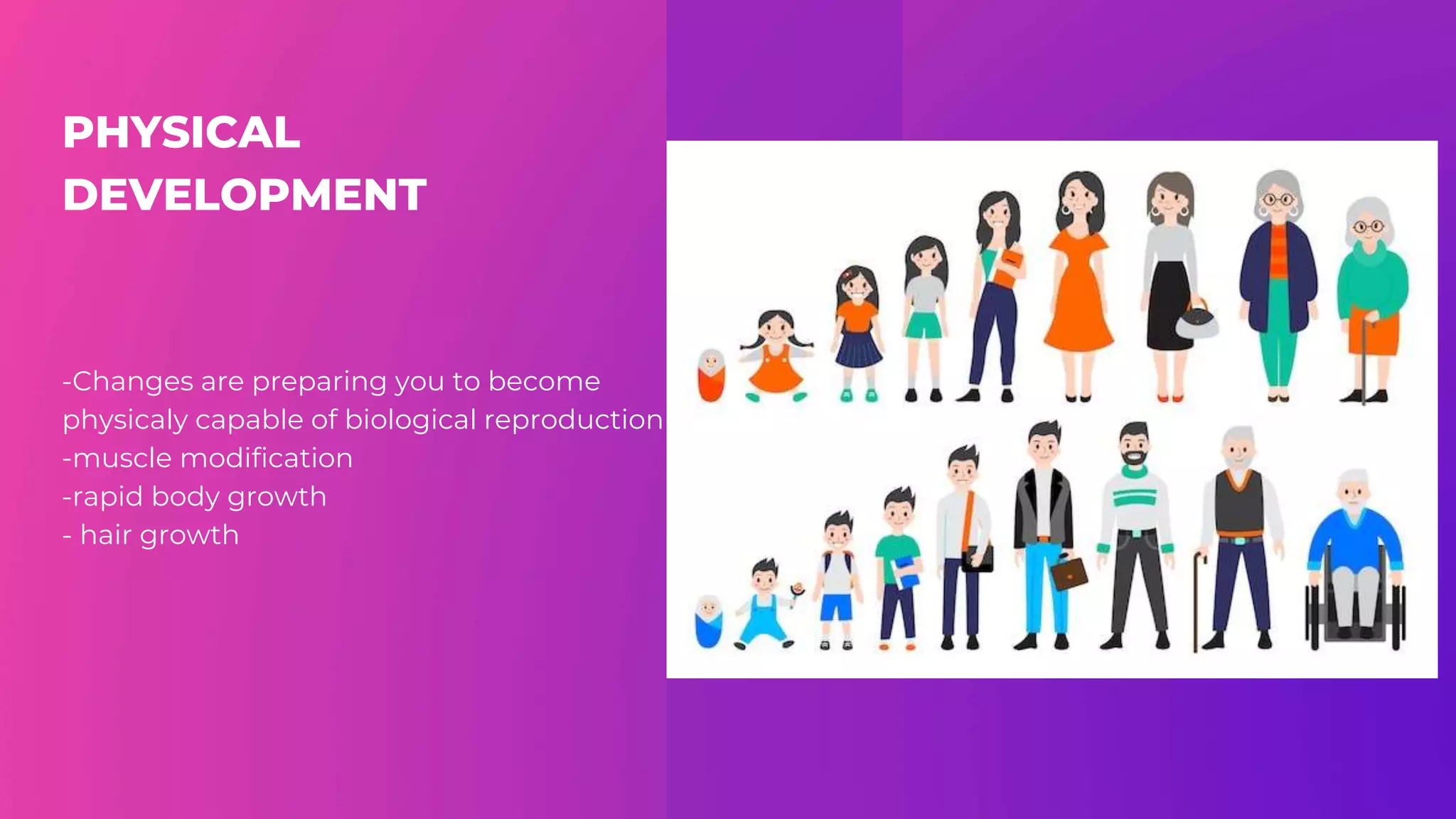
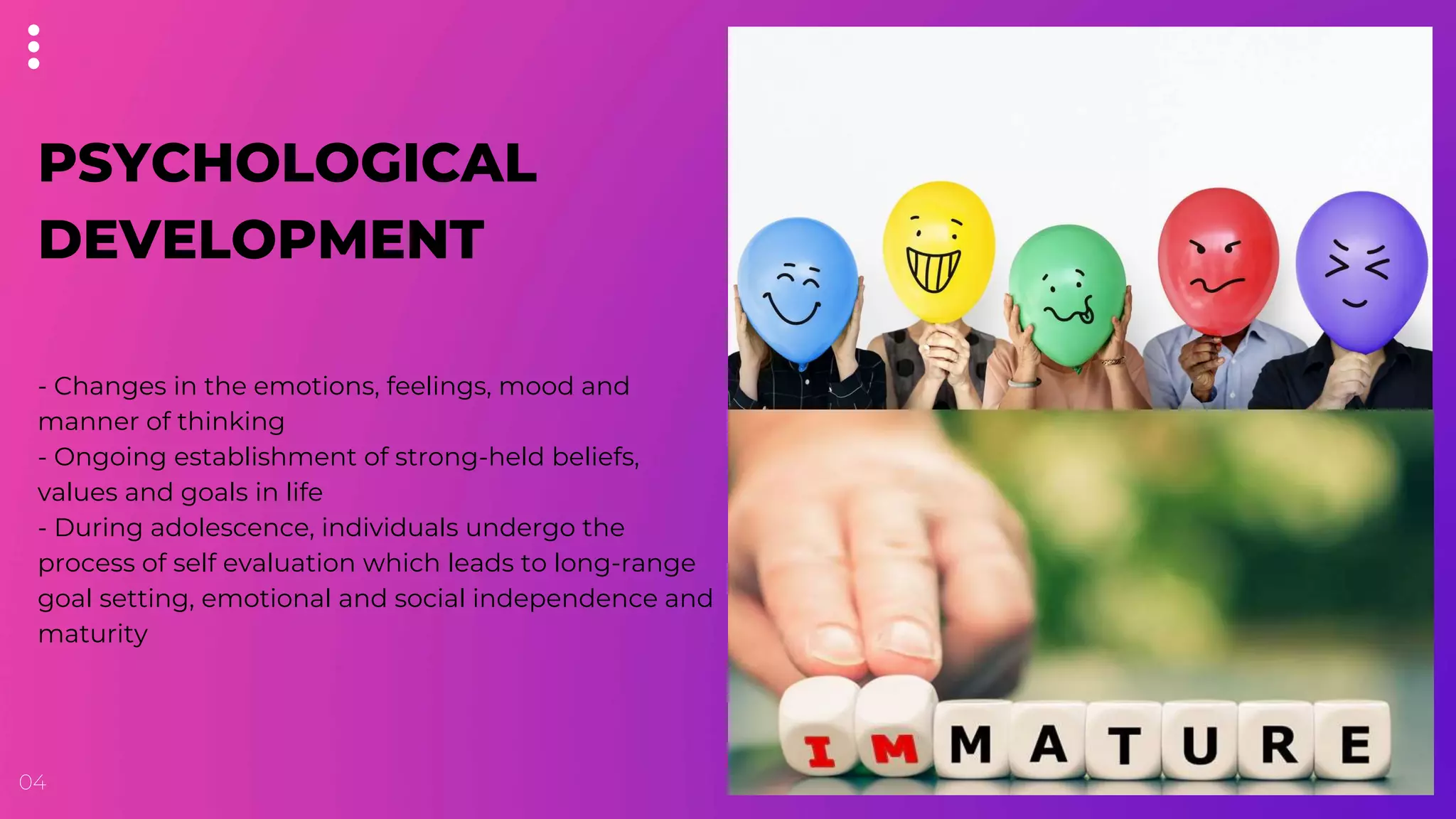
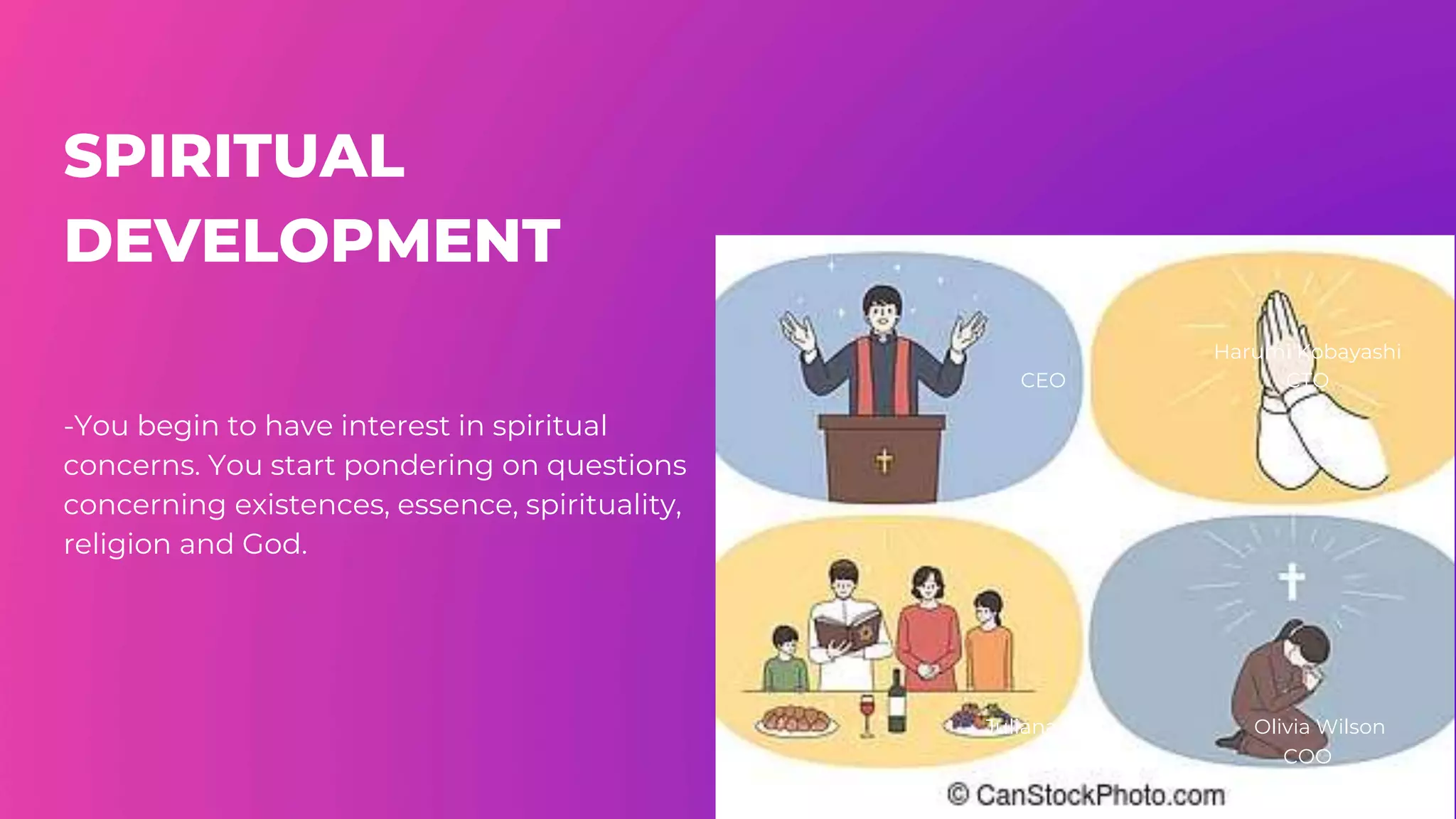
1. Physical, cognitive, psychosocial, and spiritual development during childhood and adolescence. This includes changes in the body, brain, emotions, beliefs, and interests.
2. Common thoughts include ideas and arrangements of ideas, while feelings denote emotions, sentiments, and desires. Behaviors refer to actions and mannerisms.
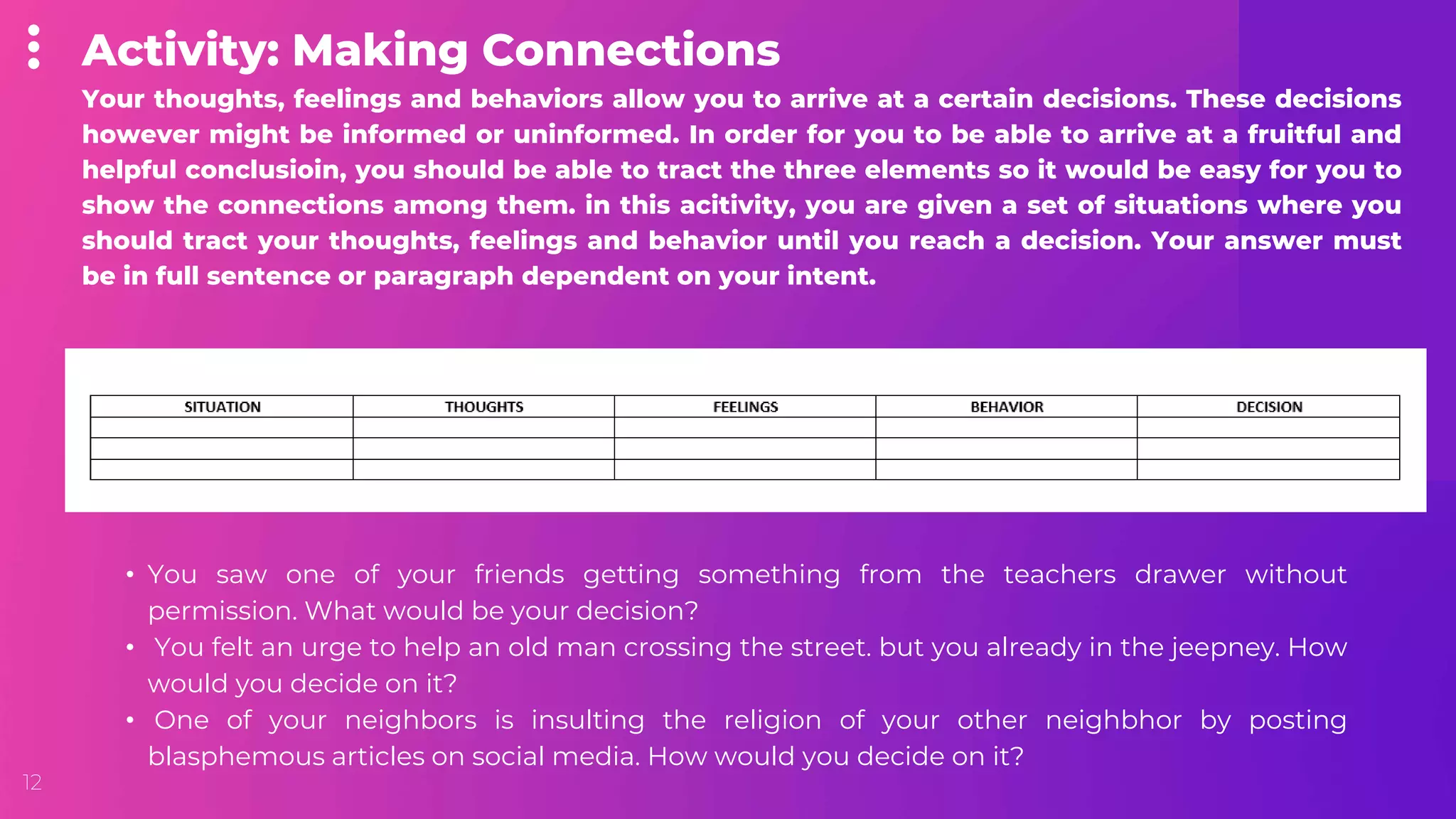
3. Several scenarios are provided to have the reader discuss how they would think, feel, and act in each situation, and consider the results of their actions.
4. Making connections between thoughts, feelings, and behaviors in life situations







![M2-PERDEV - DEVELOPING THE WHOLE PERSON [Autosaved].pptx](https://cdn.slidesharecdn.com/ss_thumbnails/m2-perdev-developingthewholepersonautosaved-221116150644-ad0fbec8-thumbnail.jpg?width=640&height=640&fit=bounds)


