Menopause is not a Health ConditionMenopause is normal process that every woman goes through.
A healthy woman, when approaching Menopause does not experience menopausal symptoms. The transition should be smooth and easy.Yet more and more woman experience Menopause as … A serious health problemWith debilitating symptoms
With a radical decrease of life quality
And a  number of symptoms that persist even years after menopause Conditions that Increase in Risk with Perimenopause and MenopauseCardiovascularDisease and Stroke
Osteoporosis
Dementia and Alzheimer’s Disease
Arthritis
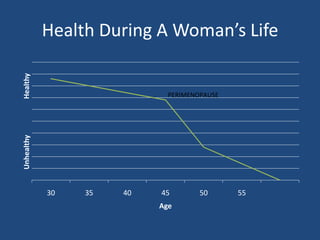
Autoimmune DiseaseHealth During A Woman’s Life
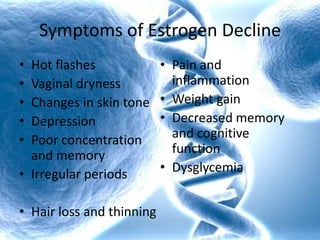
Symptoms of Estrogen DeclineHot flashesVaginal drynessChanges in skin toneDepressionPoor concentration and memoryIrregular periodsHair loss and thinningPain and inflammationWeight gainDecreased memory and cognitive functionDysglycemia
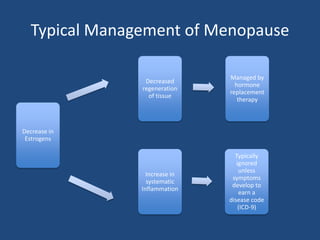
Typical Management of Menopause
Changes in pro-inflammatory activity after menopauseThere is now a large body of evidence suggesting that thedecline in ovarian function with menopause is associated withspontaneous increases in pro-inflammatory cytokines.
So that’s the reason for all of those:Cardiovascular Disease and Stroke
Osteoporosis
Dementia and Alzheimer’s Disease
Arthritis
Autoimmune DiseaseWhy do some women have a smoother process than others?When the female hormone production starts to fluctuate the adrenal system is supposed to take over.The adrenal gland produces a hormone (androstenedione) that gets converted to estrogen in the fatty tissuesIf the adrenal system is strong, it compensates the loss of estrogen and the transition is smooth
What if the Adrenals are weak?There is no compensation for estrogen loss this will lead to hormone fluctuations in the bodyall the typical symptoms will occur.
Are those familiar?Hot flashesVaginal drynessChanges in skin toneDepressionPoor concentration and memoryIrregular periodsHair loss and thinningPain and inflammationWeight gainDecreased memory and cognitive functionDysglycemia
In addition potentially devastating mechanisms are getting activated:There is a number offactors that cause systemic inflammation in PerimenopauseThose factors potentiate each other and have devastating effects on cell aging and tissue breakdownHormone replacement is not addressing those mechanisms since they stay active once triggered
First Mechanism:If there is a decline in Estrogen levels (specifically estradiol) infemale patients in premenopause, the inflammatory cytokine system is up-regulated and may stay up-regulated EVEN AFTER ESTROGEN LEVELS ARE RESTORED.Depending on pre-existing inflamed areas in the body this up-regulation will determine which systems are most impacted by this process.
Pre-exisitng Activity? What’s effected?Immune activation (which can lead to autoimmune diseases)Neuro-inflammation (which can lead to dementia, and many other neurological conditions)Free Radicals (increased cancer risk)Higher stress response (individual loses ability to cope with stress)Body fat (produces inflammatory agents)
Another Disturbing Mechanism    Ever wondered why you are so cranky? You might feel like you are a bitch but seriously you are not. Here is what happens:There is a part of the brain that is responsible for having all those overly emotional reactions. It’s called the Mesolimbic system.Guess what: that system get’s heavily activated in menopause!

Perimenopause

  • 1.
    Menopause is nota Health ConditionMenopause is normal process that every woman goes through.
  • 2.
    A healthy woman,when approaching Menopause does not experience menopausal symptoms. The transition should be smooth and easy.Yet more and more woman experience Menopause as … A serious health problemWith debilitating symptoms
  • 3.
    With a radicaldecrease of life quality
  • 4.
    And a number of symptoms that persist even years after menopause Conditions that Increase in Risk with Perimenopause and MenopauseCardiovascularDisease and Stroke
  • 5.
  • 6.
  • 7.
  • 8.
  • 9.
    Symptoms of EstrogenDeclineHot flashesVaginal drynessChanges in skin toneDepressionPoor concentration and memoryIrregular periodsHair loss and thinningPain and inflammationWeight gainDecreased memory and cognitive functionDysglycemia
  • 10.
  • 11.
    Changes in pro-inflammatoryactivity after menopauseThere is now a large body of evidence suggesting that thedecline in ovarian function with menopause is associated withspontaneous increases in pro-inflammatory cytokines.
  • 12.
    So that’s thereason for all of those:Cardiovascular Disease and Stroke
  • 13.
  • 14.
  • 15.
  • 16.
    Autoimmune DiseaseWhy dosome women have a smoother process than others?When the female hormone production starts to fluctuate the adrenal system is supposed to take over.The adrenal gland produces a hormone (androstenedione) that gets converted to estrogen in the fatty tissuesIf the adrenal system is strong, it compensates the loss of estrogen and the transition is smooth
  • 17.
    What if theAdrenals are weak?There is no compensation for estrogen loss this will lead to hormone fluctuations in the bodyall the typical symptoms will occur.
  • 18.
    Are those familiar?HotflashesVaginal drynessChanges in skin toneDepressionPoor concentration and memoryIrregular periodsHair loss and thinningPain and inflammationWeight gainDecreased memory and cognitive functionDysglycemia
  • 19.
    In addition potentiallydevastating mechanisms are getting activated:There is a number offactors that cause systemic inflammation in PerimenopauseThose factors potentiate each other and have devastating effects on cell aging and tissue breakdownHormone replacement is not addressing those mechanisms since they stay active once triggered
  • 20.
    First Mechanism:If thereis a decline in Estrogen levels (specifically estradiol) infemale patients in premenopause, the inflammatory cytokine system is up-regulated and may stay up-regulated EVEN AFTER ESTROGEN LEVELS ARE RESTORED.Depending on pre-existing inflamed areas in the body this up-regulation will determine which systems are most impacted by this process.
  • 21.
    Pre-exisitng Activity? What’seffected?Immune activation (which can lead to autoimmune diseases)Neuro-inflammation (which can lead to dementia, and many other neurological conditions)Free Radicals (increased cancer risk)Higher stress response (individual loses ability to cope with stress)Body fat (produces inflammatory agents)
  • 22.
    Another Disturbing Mechanism Ever wondered why you are so cranky? You might feel like you are a bitch but seriously you are not. Here is what happens:There is a part of the brain that is responsible for having all those overly emotional reactions. It’s called the Mesolimbic system.Guess what: that system get’s heavily activated in menopause!