SONAM GUPTA
NITI YADAV
SUMANT
SOHAAN KAPOOR
VAIBHAV SAX ENA
PARITOSH
What is a grievance?
 A grievance is a formal dispute between an
employee & management on the conditions of
employment.
What is a grievance?
 Grievances are complaints that have been
formally registered in accordance with the
grievance procedure.
3
What is a grievance?
 A grievance is any dissatisfaction or feeling of
injustice in connection with one’s employment
situation that is brought to the attention of the
management.
4
W’s of Grievance Handling…
 WHO is involved
 WHEN did it happen
 WHERE did it happen
 WHAT happened (EXACTLY)
 WHY is it grieve-able
Causes of grievances...
 Concerning wages.
 Concerning supervision.
6
Causes of grievances...
 Concerning individual advancement and
adjustment.
 General working condition.
 Collective bargaining.
 Management policy.
7
Grievance - Effects
 ON PRODUCTION
 Loss of interest in work
 Poor quality of production
 Increase in wastage or costs
 ON THE EMPLOYEE
 Indiscipline
 Absenteeism
 ON THE MANAGER
 Disobeying of orders
 Disharmonious relation
Grievance Procedure Steps in
Unionized Organizations
Step1:
The aggrieved employee verbally explains his
grievance to his immediate supervisor.
Step 2:
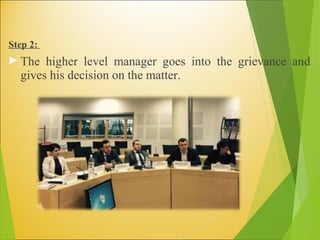
 The higher level manager goes into the grievance and
gives his decision on the matter.
Step 3:
Grievance is to be submitted to the Grievance Committee.
This committee, which is composed of some fellow-employees,
the shop steward or a combination of union and management
representatives, considers the record and may suggest a possible
solution.
It may call upon the grievant to accept the employer's proposed
settlement.
11
Step 4:
 If the decision or suggestion of the
Grievance Committee is not accepted by the
grievant, he may approach the management
or the corporate executive.
Step 5:
 The final step is taken when the
grievance is referred to an arbitrator who
is acceptable to the employee as well as
the management.
13
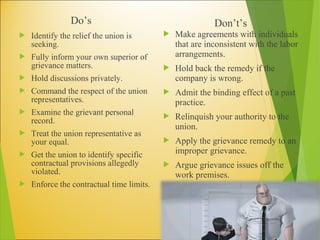
Do’s
 Identify the relief the union is
seeking.
 Fully inform your own superior of
grievance matters.
 Hold discussions privately.
 Command the respect of the union
representatives.
 Examine the grievant personal
record.
 Treat the union representative as
your equal.
 Get the union to identify specific
contractual provisions allegedly
violated.
 Enforce the contractual time limits.
Don’t’s
 Make agreements with individuals
that are inconsistent with the labor
arrangements.
 Hold back the remedy if the
company is wrong.
 Admit the binding effect of a past
practice.
 Relinquish your authority to the
union.
 Apply the grievance remedy to an
improper grievance.
 Argue grievance issues off the
work premises.
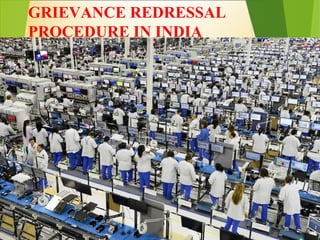
GRIEVANCE REDRESSAL
PROCEDURE IN INDIA
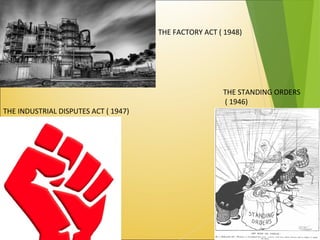
THE FACTORY ACT ( 1948)
THE STANDING ORDERS
( 1946)
THE INDUSTRIAL DISPUTES ACT ( 1947)
LACK OF FAIRNESS WELFARE
OFFICERS ARE
NOT KEEN ON
PROTECTING
PLAYING DOUBLE
ROLE
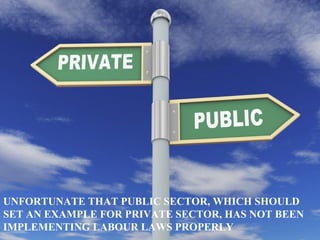
UNFORTUNATE THAT PUBLIC SECTOR, WHICH SHOULD
SET AN EXAMPLE FOR PRIVATE SECTOR, HAS NOT BEEN
IMPLEMENTING LABOUR LAWS PROPERLY
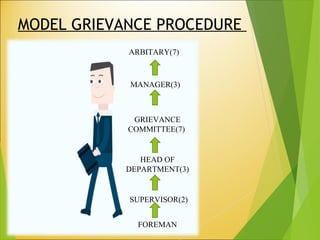
MODEL GRIEVANCE PROCEDURE
FOREMAN
SUPERVISOR(2)
HEAD OF
DEPARTMENT(3)
GRIEVANCE
COMMITTEE(7)
MANAGER(3)
ARBITARY(7)
After resolving grievance
Employees will be like…
20
21
Sonam Gupta Bewafa Hai!!!!
22

Grievance Management _ human Resource management

  • 1.
    SONAM GUPTA NITI YADAV SUMANT SOHAANKAPOOR VAIBHAV SAX ENA PARITOSH
  • 2.
    What is agrievance?  A grievance is a formal dispute between an employee & management on the conditions of employment.
  • 3.
    What is agrievance?  Grievances are complaints that have been formally registered in accordance with the grievance procedure. 3
  • 4.
    What is agrievance?  A grievance is any dissatisfaction or feeling of injustice in connection with one’s employment situation that is brought to the attention of the management. 4
  • 5.
    W’s of GrievanceHandling…  WHO is involved  WHEN did it happen  WHERE did it happen  WHAT happened (EXACTLY)  WHY is it grieve-able
  • 6.
    Causes of grievances... Concerning wages.  Concerning supervision. 6
  • 7.
    Causes of grievances... Concerning individual advancement and adjustment.  General working condition.  Collective bargaining.  Management policy. 7
  • 8.
    Grievance - Effects ON PRODUCTION  Loss of interest in work  Poor quality of production  Increase in wastage or costs  ON THE EMPLOYEE  Indiscipline  Absenteeism  ON THE MANAGER  Disobeying of orders  Disharmonious relation
  • 9.
    Grievance Procedure Stepsin Unionized Organizations Step1: The aggrieved employee verbally explains his grievance to his immediate supervisor.
  • 10.
    Step 2:  Thehigher level manager goes into the grievance and gives his decision on the matter.
  • 11.
    Step 3: Grievance isto be submitted to the Grievance Committee. This committee, which is composed of some fellow-employees, the shop steward or a combination of union and management representatives, considers the record and may suggest a possible solution. It may call upon the grievant to accept the employer's proposed settlement. 11
  • 12.
    Step 4:  Ifthe decision or suggestion of the Grievance Committee is not accepted by the grievant, he may approach the management or the corporate executive.
  • 13.
    Step 5:  Thefinal step is taken when the grievance is referred to an arbitrator who is acceptable to the employee as well as the management. 13
  • 14.
    Do’s  Identify therelief the union is seeking.  Fully inform your own superior of grievance matters.  Hold discussions privately.  Command the respect of the union representatives.  Examine the grievant personal record.  Treat the union representative as your equal.  Get the union to identify specific contractual provisions allegedly violated.  Enforce the contractual time limits. Don’t’s  Make agreements with individuals that are inconsistent with the labor arrangements.  Hold back the remedy if the company is wrong.  Admit the binding effect of a past practice.  Relinquish your authority to the union.  Apply the grievance remedy to an improper grievance.  Argue grievance issues off the work premises.
  • 15.
  • 16.
    THE FACTORY ACT( 1948) THE STANDING ORDERS ( 1946) THE INDUSTRIAL DISPUTES ACT ( 1947)
  • 17.
    LACK OF FAIRNESSWELFARE OFFICERS ARE NOT KEEN ON PROTECTING PLAYING DOUBLE ROLE
  • 18.
    UNFORTUNATE THAT PUBLICSECTOR, WHICH SHOULD SET AN EXAMPLE FOR PRIVATE SECTOR, HAS NOT BEEN IMPLEMENTING LABOUR LAWS PROPERLY
  • 19.
    MODEL GRIEVANCE PROCEDURE FOREMAN SUPERVISOR(2) HEADOF DEPARTMENT(3) GRIEVANCE COMMITTEE(7) MANAGER(3) ARBITARY(7)
  • 20.
  • 21.
  • 22.