Performance Anxiety
What is Performance Anxiety?
• Performance anxiety is the fear of failing.
It often occurs within situations where one
needs to perform, such as:
• Exams
• Presentations
• Tests
• Speeches
• Anxiety will inhibit your abilities to perform
at your best. The negative stress caused
by performance anxiety will make it so that
we can no longer function like we should.
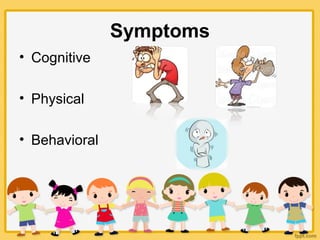
Symptoms
• Cognitive
• Physical
• Behavioral
Cognitive
• Negative self-image
• Negative self-evaluation
• Internal locus of control (finding failing to be
their own fault)
• Difficulties accepting a compliment
• Too low/too high requirements of themselves
Physical
• Turning red
• Heart palpitations
• Transpiration
• Stomach
complaints
• Bowel complaints
• Headache
• Hyperventilating
• Blackout
Behavioral
• Procrastination
• Perfectionism
• Avoiding certain tasks
• Daydreaming
In School
• Reassurance seeking
• Poor participation in class or playground
• Poor body language or vocal expression in
groups/with authority figures
• Avoidance of specific classes
• Absence on special days or excursions
• Kavakci et al (2014), assessed test
anxiety in students giving entrance exam
for university. 48% had test anxiety
• Men 40% Women 55%
• TURKEY
Prevalence
Pakistan
• 450 14-17 year old high school students
• 23.8% screened positive for social anxiety
• public 33%
• private schools 18%
• No association with age and gender
• (Farooq et al, 2017)
Associated Problems
• adolescents with reading problems have
anxiety
• Inattention
• Lack of concentration
• Argumentative or disobedient (sometimes
aggressive) behaviour can be caused by
fear
General Consequences
– Less likely to have satisfying social
relationships
– Have higher ongoing usage of health
facilities
– Live a life (in their own words) of “missed
opportunity”
– Have higher stress
Academic Consequences
• Anxiety leads to poor academic
performance & underachievement
– High anxious children in year 1 are 10x more
likely to be in bottom 1/3 of class by year 5
– High anxious students score lower than
peers on measures of IQ and achievement
tests (eg basic skills)
• Anxiety leads to poor engagement in
class
– High anxious students are motivated to
avoid engaging in tasks that require
communication or that involve potential
peer or teacher evaluation
– They consequently miss the benefit of
interactive learning experiences
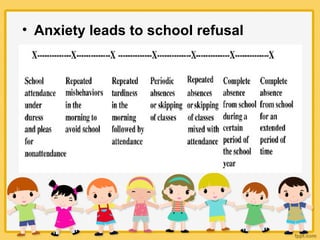
• Anxiety leads to school refusal
• Anxiety leads to drop out
– 49% of anxious adults report having left
education early, 24% indicated anxiety as
the primary reason
– The only variable that separated drop outs‐
from persistent students was school‐
related anxiety
Etiology
• Evidence of a biological factor involving
abnormal levels or functioning of
norepinephrine, serotonin, and GABA
receptors (APA, 2000).
•Studies have also substantiated a genetic
tendency to manifest an anxiety disorder.
About 10% of children have a fearful or
anxious temperament and may have a genetic
predisposition toward anxiety; however, no
“anxiety gene” has been identifi ed (Wagner,
2005).
Psychodynamic
• An expectation of shame and humiliation
elicited by critical or harsh parents
• A conflict between your need to achieve and
succeed, and your fear of success
• A conflict between your need for
independence and your fear of rejection or
abandonment by your parents
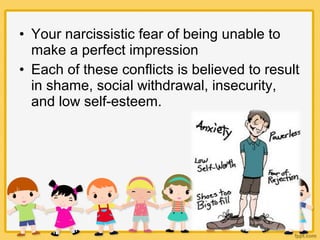
• Your narcissistic fear of being unable to
make a perfect impression
• Each of these conflicts is believed to result
in shame, social withdrawal, insecurity,
and low self-esteem.
• Learning theorists believe that anxiety is
triggered when fear occurs with a
previously neutral event or object
(Discovery Education, 2005).
• Stimulus – Response theory
• Phobias are conditioned anxiety
(Rachman, 2013)
• Little Albert
Cultural Factors
• Levine (2006) says that beyond the age of 11
or 12, material advantages do not translate
into emotional health. In fact, preteens and
teens from well-educated, affluent families
experience the highest rates of anxiety
and various other psychological disorders of
any group of children in the United States.
What about Pakistan?
Difference with Clinical Anxiety
• Intensity, frequency, duration
• anecdotal reports from teachers or
parents
• Observations
• Clinical: Daily functioning will be impaired
Role of a School Counselor
• Early Identification
• School Climate
Early Identification
Using a small group format to teach positive coping
skills within the school setting results successful
prevention of the onset of anxiety disorders with students
who showed early signs and reduced disorder rates in
students with mild to moderate anxiety disorders.
These results strengthen the conviction that school
personnel need to aide in early identification and
intervention for these students.
PSCs can help educate other school personnel
about students with anxiety.
These professionals, along with parents and
pediatricians, must be responsible for early
intervention since few children under the age
of 15 are likely to be self-referred for an
anxiety disorder (Erk, 2004).
School Climate
• Many schools seem to have all of the
environmental elements to exacerbate
anxiety in students.
• Evaluation through grades may cause
students to focus on performing rather
than learning
• A student with a propensity for performance
anxiety might exhibit apprehension about
grades, particularly if a tendency toward
perfectionism is present
• PSCs must increase the ability of teachers
and other school personnel to recognize
anxiety.
• PSC,s Can provide professional
development workshops and appropriate
literature as two means of increasing
awareness.
• Conferences and informal conversations
with colleagues about classroom
interventions for students displaying signs
of anxiety allow Counselors to share their
expertise.
CASE STUDY
Anila is a final year A level student who is suffering
from performance anxiety related to school exam.
From the initial sessions it has been observed that
she has a general low self worth, shows
demoralization and deems herself to be incapable of
getting good grades. During the initial sessions which
were centered on self, Anila stated that close to the
deadline of school exam she starts avoiding class
term participation as her pulse rate increases and
feels anxious
• This avoidance brings low grades.
According to her, she wants to perform
good but being anxious causes her to
perform poorly and that make her feel as a
failure
• “I should do well, if I don’t I am a failure”
• “It would be terrible, if I failed”
Intervention
• History taking
• Rapport Building
• Psychoeducation
• Behavioral Techniques
1.Deep Breathing
2.Progressive Muscle Relaxation
• Daily Thought Record
• Identify Distortions
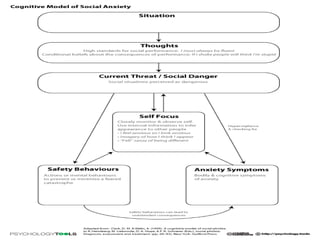
• Thought, feeling and behavior triad
• Case conceptualization
• Cognitive Restructuring
Examining and challenging Distortions
1. Verticle Descent
2. Cost and Benefit Analysis
3. Evidence for and against
4. Positive self statements
•Systematic desensitization
– Make fear hierarchy
– Low to high
– Gradual exposure
– Relaxation exercise
Evidence for Success with CBT
• Cognitive Behavioural Therapy
consistently shown to be effective in
treating anxiety
• Meta analyses of all available trials‐
indicate a remission rate of 60 70% after‐
an average of 12 CBT sessions
Classroom Management Strategies
Do’s
•Support and encourage
•How to attend anxious behavior
•Encourage to face fears
•Develop self confidence
• Utilize individual frames of reference
– No comparison with others
Wilson (1999) 16 Strategies
1. open book/open note test;
2. working with a partner in the computer
lab;
3. instructor’s positive attitude;
4. instructor’s encouragement;
5. instructor’s reassurance that We Can Do
It!;
• instructor’s recognition of anxiety of
students;
• instructor’s use of humor in the classroom;
• guidelines (rubrics) provided for grades;
•  working with a partner on in-class
assignments;
• support of peers during class;
• working with a group on a research
project;
• working with a group on in-class
assignments;
• doing a research project that is about a
real world situation;
• doing a research project designed to give
information about one’s own;
• teaching situation;
• support of peers outside of class; and
• easy to get an A.
Dont’s
• Do not push
• Anxious behavior is not oppositional
• Normalize and destigmatize
Communication with Families
• Must also talk with parents about the
importance of family activities and “down
time” for their child and encourage
teachers to support parents who make
decisions to limit their child’s activities.
• Parents of children with anxiety may want
to limit the child’s exposure to various
media, technology, and information.
• Can help parents examine the
expectations they have for their child and
assess the effects that the expectations
may have on the student’s anxiety.
• Young people often imitate their parents’
methods of handling stress. Therefore, it is
important to consider family dynamics
and, if possible, include the parents when
working with students with anxiety.
School wide strategies
• COOL KIDS
• FRIENDS program
• Skills for Academic and Social Success
(SASS)
• Baltimore Child Anxiety Treatment study in
the Schools (BCATSS)
The Cool Kids Program
The Anxiety Disorder Clinic for Children and Adolescents
offers cognitive behavioral treatment (CBT) based on the
Cool Kids Program that was developed in the Macquarie
University Anxiety Research Unit (Rapee, Wignall, Hudson
& Schniering, 2000).
The Cool Kids Program’s results showed 80% of children
who complete the program are diagnosis-free or markedly
improved.
These results have been shown to persist for up to 6 years
(Rapee et al., 2006).
The Cool Kids Program is a CBT program for children,
aged 6-12 years old, who meet the criteria for a principal
diagnosis of any anxiety disorder.
AIM:
The program aims to teach children cognitive behavioral
skills that are designed to combat anxiety. First, the
program helps children recognize emotions such as fear,
stress, and anxiety, as well as related thoughts.
Furthermore, it helps children to challenge beliefs
associated with feeling anxious and generate
alternative, more realistic thoughts via cognitive
restructuring (detective thinking).
Lastly, it encourages children to gradually engage
with feared activities in more positive ways.
Exposure to anxiety provoking situations is
gradually achieved through the joint creation of
stepladders with the child and parents.
Furthermore, children are offered social skills training,
problem solving, and worry surfing, which aims at
building tolerance to the anxious feelings and helping
children to refocus attention on everyday activities so
as to prevent worries from interfering in the day-to-
day functioning.
Finally, there is an additional component for parents
that informs them of the treatment principles and
teaches them alternate ways of interacting with their
child.
The role of the therapist
•is to coach and teach children and their parents about
issues related to anxiety and coping skills through
•Role Playing,
•Therapist Modeling,
•Working through hypothetical examples and games,
•In vivo exposure, and
•Interactive discussions.
CASE STUDY
This case study involves a 12-year-old boy, Erik, with
cognitive difficulties, who also suffered from multiple
anxiety disorders (specifically, he met the diagnostic
criteria of Generalized Anxiety, Specific Phobias,
Social Phobia, and Separation Anxiety). Erik and his
family were treated for 10 sessions over three months
with the "Cool Kids " cognitive-behavioral therapy
(CBT) program developed by Ronald Rapee and his
colleagues (Rapee et al., 2006).
• The treatment took place in a university training
clinic in Aarhus, Denmark. CBT was conducted
in a group format, with both children and their
families taking an active part, and included
cognitive restructuring, gradual exposure, child
management training, and skills training in areas
such as assertiveness. Results show that
therapy effectively reduced the child’s anxiety
symptoms, as measured by the Anxiety Disorder
Interview Schedule for Children and
• Parents (ADIS-IV P/C) and by the Spence
Children's Anxiety Scale (SCAS). Additional
quantitative and qualitative data indicate an
overall positive therapeutic outcome, which was
maintained at 3 months and 15 months after the
conclusion of treatment.
A Primary aim of the case study was to investigate
the mechanisms of change leading to success in
Erik's case, focusing on the role of parental
inclusion in the therapy and the necessary
accommodations made to the child’s cognitive
developmental level. For example, through parents’
engagement in therapy, it was possible to alter their
expectations and behaviors, with Erik’s mother
learning how to be less overprotective and control
her own anxiety, functioning as a positive role
model for her child.
• Furthermore, the present study stresses
the significance of accommodating the
treatment to the child’s cognitive
developmental level, such that Erik’s
cognitions were initially challenged
successfully through gradual exposures
and only later addressed with cognitive
restructuring, aided by the treatment given
to his parents and Erik’s advancing
cognitive maturation.
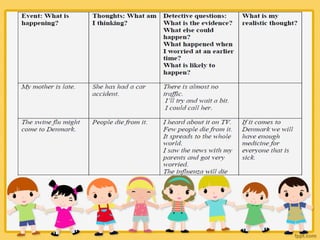
Session 1-3
In the first sessions of the Cool Kids
Program, children and their families are
taught about anxiety and how thoughts are
linked to feelings. After the children are
able to identify the thoughts that make
them anxious, they are coached in
detective thinking (cognitive restructuring).
Additionally, parents are informed about
child management techniques.
Session 4 and House Visit
The aim of Session 4 was to introduce the
principles of exposure by starting to
develop relevant hierarchies, while still
practicing detective thinking. Erik was sick,
but Ib came to the session, and we also
arranged a house visit before session 5.
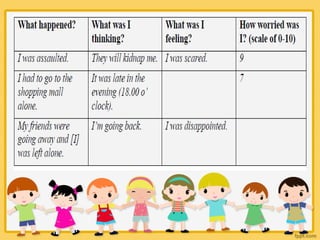
Sessions 5-7
These sessions aimed to consolidate and
problem-solve the implementation of
stepladders. Session 7 took place at a
shopping mall, where exposure exercises
were also completed. The student-
therapists observed how parents coached
their children and assisted them
Sessions 8-10
The aim of the last sessions was to
discuss social skills and teach the children
assertiveness while continuing to work
through the stepladders. Relapse
management and future plans were
discussed in the last session and the
children’s graduation as “cool kids” was
celebrated.
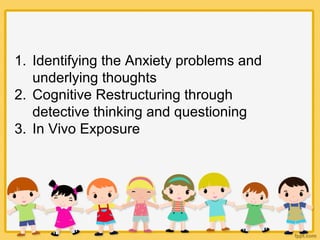
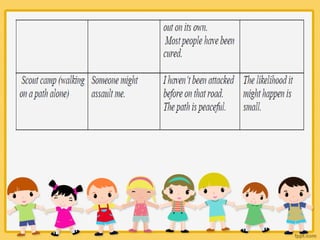
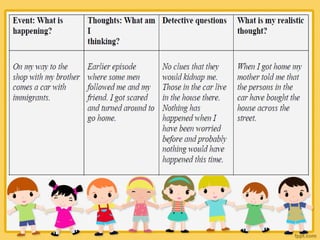
1. Identifying the Anxiety problems and
underlying thoughts
2. Cognitive Restructuring through
detective thinking and questioning
3. In Vivo Exposure
Other Workbooks
• Coping Cat
• Mighty Moe
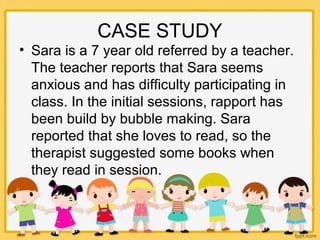
CASE STUDY
• Sara is a 7 year old referred by a teacher.
The teacher reports that Sara seems
anxious and has difficulty participating in
class. In the initial sessions, rapport has
been build by bubble making. Sara
reported that she loves to read, so the
therapist suggested some books when
they read in session.
References
• American Psychiatric Association. (2000). Diagnostic
and statistical manual of mental disorders (4th ed., text
revision). Washington, DC: Author.
• Discovery Education. (2005). Anxiety. Retrieved
February 4, 2009, from
http://streaming.discoveryeducation.com/
• Farooq, S. A. et al (2017). Quality of Life Perceptions in
School-Going Adolescents with Social Anxiety. Journal
of Childhood & Developmental Disorders, 3(2), 1-5.
• Kavakci, O., Semiz, M., Kartal, A., Dikici, A., Kugu, N.
(2014). Test anxiety prevalance and related variables in
the students who are going to take the university entrance
examination. Dusunen Adam : The Journal of Psychiatry
and Neurological Sciences, 27, 301-307.
• Levine, M. (2006). The price of privilege. New York: Harper
Collins.
• Wagner, A. P. (2005). Worried no more: Help and hope for
anxious children (2nd ed). Rochester, New York:
Lighthouse.
Thank You

Performance anxiety

  • 1.
  • 2.
    What is PerformanceAnxiety? • Performance anxiety is the fear of failing. It often occurs within situations where one needs to perform, such as: • Exams • Presentations • Tests • Speeches
  • 3.
    • Anxiety willinhibit your abilities to perform at your best. The negative stress caused by performance anxiety will make it so that we can no longer function like we should.
  • 4.
  • 5.
    Cognitive • Negative self-image •Negative self-evaluation • Internal locus of control (finding failing to be their own fault) • Difficulties accepting a compliment • Too low/too high requirements of themselves
  • 6.
    Physical • Turning red •Heart palpitations • Transpiration • Stomach complaints • Bowel complaints • Headache • Hyperventilating • Blackout
  • 7.
    Behavioral • Procrastination • Perfectionism •Avoiding certain tasks • Daydreaming
  • 8.
    In School • Reassuranceseeking • Poor participation in class or playground • Poor body language or vocal expression in groups/with authority figures • Avoidance of specific classes • Absence on special days or excursions
  • 9.
    • Kavakci etal (2014), assessed test anxiety in students giving entrance exam for university. 48% had test anxiety • Men 40% Women 55% • TURKEY Prevalence
  • 10.
    Pakistan • 450 14-17year old high school students • 23.8% screened positive for social anxiety • public 33% • private schools 18% • No association with age and gender • (Farooq et al, 2017)
  • 11.
    Associated Problems • adolescentswith reading problems have anxiety • Inattention • Lack of concentration • Argumentative or disobedient (sometimes aggressive) behaviour can be caused by fear
  • 12.
    General Consequences – Lesslikely to have satisfying social relationships – Have higher ongoing usage of health facilities – Live a life (in their own words) of “missed opportunity” – Have higher stress
  • 13.
    Academic Consequences • Anxietyleads to poor academic performance & underachievement – High anxious children in year 1 are 10x more likely to be in bottom 1/3 of class by year 5 – High anxious students score lower than peers on measures of IQ and achievement tests (eg basic skills)
  • 14.
    • Anxiety leadsto poor engagement in class – High anxious students are motivated to avoid engaging in tasks that require communication or that involve potential peer or teacher evaluation – They consequently miss the benefit of interactive learning experiences
  • 15.
    • Anxiety leadsto school refusal
  • 16.
    • Anxiety leadsto drop out – 49% of anxious adults report having left education early, 24% indicated anxiety as the primary reason – The only variable that separated drop outs‐ from persistent students was school‐ related anxiety
  • 17.
    Etiology • Evidence ofa biological factor involving abnormal levels or functioning of norepinephrine, serotonin, and GABA receptors (APA, 2000).
  • 18.
    •Studies have alsosubstantiated a genetic tendency to manifest an anxiety disorder. About 10% of children have a fearful or anxious temperament and may have a genetic predisposition toward anxiety; however, no “anxiety gene” has been identifi ed (Wagner, 2005).
  • 19.
    Psychodynamic • An expectationof shame and humiliation elicited by critical or harsh parents • A conflict between your need to achieve and succeed, and your fear of success • A conflict between your need for independence and your fear of rejection or abandonment by your parents
  • 20.
    • Your narcissisticfear of being unable to make a perfect impression • Each of these conflicts is believed to result in shame, social withdrawal, insecurity, and low self-esteem.
  • 21.
    • Learning theoristsbelieve that anxiety is triggered when fear occurs with a previously neutral event or object (Discovery Education, 2005). • Stimulus – Response theory • Phobias are conditioned anxiety (Rachman, 2013) • Little Albert
  • 23.
    Cultural Factors • Levine(2006) says that beyond the age of 11 or 12, material advantages do not translate into emotional health. In fact, preteens and teens from well-educated, affluent families experience the highest rates of anxiety and various other psychological disorders of any group of children in the United States.
  • 24.
  • 25.
    Difference with ClinicalAnxiety • Intensity, frequency, duration • anecdotal reports from teachers or parents • Observations • Clinical: Daily functioning will be impaired
  • 27.
    Role of aSchool Counselor • Early Identification • School Climate
  • 28.
    Early Identification Using asmall group format to teach positive coping skills within the school setting results successful prevention of the onset of anxiety disorders with students who showed early signs and reduced disorder rates in students with mild to moderate anxiety disorders. These results strengthen the conviction that school personnel need to aide in early identification and intervention for these students.
  • 29.
    PSCs can helpeducate other school personnel about students with anxiety. These professionals, along with parents and pediatricians, must be responsible for early intervention since few children under the age of 15 are likely to be self-referred for an anxiety disorder (Erk, 2004).
  • 30.
    School Climate • Manyschools seem to have all of the environmental elements to exacerbate anxiety in students. • Evaluation through grades may cause students to focus on performing rather than learning
  • 31.
    • A studentwith a propensity for performance anxiety might exhibit apprehension about grades, particularly if a tendency toward perfectionism is present • PSCs must increase the ability of teachers and other school personnel to recognize anxiety.
  • 32.
    • PSC,s Canprovide professional development workshops and appropriate literature as two means of increasing awareness. • Conferences and informal conversations with colleagues about classroom interventions for students displaying signs of anxiety allow Counselors to share their expertise.
  • 33.
    CASE STUDY Anila isa final year A level student who is suffering from performance anxiety related to school exam. From the initial sessions it has been observed that she has a general low self worth, shows demoralization and deems herself to be incapable of getting good grades. During the initial sessions which were centered on self, Anila stated that close to the deadline of school exam she starts avoiding class term participation as her pulse rate increases and feels anxious
  • 34.
    • This avoidancebrings low grades. According to her, she wants to perform good but being anxious causes her to perform poorly and that make her feel as a failure • “I should do well, if I don’t I am a failure” • “It would be terrible, if I failed”
  • 35.
    Intervention • History taking •Rapport Building • Psychoeducation • Behavioral Techniques 1.Deep Breathing 2.Progressive Muscle Relaxation
  • 36.
    • Daily ThoughtRecord • Identify Distortions • Thought, feeling and behavior triad • Case conceptualization • Cognitive Restructuring Examining and challenging Distortions
  • 37.
    1. Verticle Descent 2.Cost and Benefit Analysis 3. Evidence for and against 4. Positive self statements
  • 38.
    •Systematic desensitization – Makefear hierarchy – Low to high – Gradual exposure – Relaxation exercise
  • 39.
    Evidence for Successwith CBT • Cognitive Behavioural Therapy consistently shown to be effective in treating anxiety • Meta analyses of all available trials‐ indicate a remission rate of 60 70% after‐ an average of 12 CBT sessions
  • 40.
    Classroom Management Strategies Do’s •Supportand encourage •How to attend anxious behavior •Encourage to face fears •Develop self confidence
  • 41.
    • Utilize individualframes of reference – No comparison with others
  • 42.
    Wilson (1999) 16Strategies 1. open book/open note test; 2. working with a partner in the computer lab; 3. instructor’s positive attitude; 4. instructor’s encouragement; 5. instructor’s reassurance that We Can Do It!;
  • 43.
    • instructor’s recognitionof anxiety of students; • instructor’s use of humor in the classroom; • guidelines (rubrics) provided for grades; •  working with a partner on in-class assignments;
  • 44.
    • support ofpeers during class; • working with a group on a research project; • working with a group on in-class assignments;
  • 45.
    • doing aresearch project that is about a real world situation; • doing a research project designed to give information about one’s own; • teaching situation; • support of peers outside of class; and • easy to get an A.
  • 46.
    Dont’s • Do notpush • Anxious behavior is not oppositional • Normalize and destigmatize
  • 47.
    Communication with Families •Must also talk with parents about the importance of family activities and “down time” for their child and encourage teachers to support parents who make decisions to limit their child’s activities.
  • 48.
    • Parents ofchildren with anxiety may want to limit the child’s exposure to various media, technology, and information. • Can help parents examine the expectations they have for their child and assess the effects that the expectations may have on the student’s anxiety.
  • 49.
    • Young peopleoften imitate their parents’ methods of handling stress. Therefore, it is important to consider family dynamics and, if possible, include the parents when working with students with anxiety.
  • 50.
    School wide strategies •COOL KIDS • FRIENDS program • Skills for Academic and Social Success (SASS) • Baltimore Child Anxiety Treatment study in the Schools (BCATSS)
  • 51.
    The Cool KidsProgram The Anxiety Disorder Clinic for Children and Adolescents offers cognitive behavioral treatment (CBT) based on the Cool Kids Program that was developed in the Macquarie University Anxiety Research Unit (Rapee, Wignall, Hudson & Schniering, 2000). The Cool Kids Program’s results showed 80% of children who complete the program are diagnosis-free or markedly improved. These results have been shown to persist for up to 6 years (Rapee et al., 2006).
  • 52.
    The Cool KidsProgram is a CBT program for children, aged 6-12 years old, who meet the criteria for a principal diagnosis of any anxiety disorder. AIM: The program aims to teach children cognitive behavioral skills that are designed to combat anxiety. First, the program helps children recognize emotions such as fear, stress, and anxiety, as well as related thoughts.
  • 53.
    Furthermore, it helpschildren to challenge beliefs associated with feeling anxious and generate alternative, more realistic thoughts via cognitive restructuring (detective thinking). Lastly, it encourages children to gradually engage with feared activities in more positive ways. Exposure to anxiety provoking situations is gradually achieved through the joint creation of stepladders with the child and parents.
  • 54.
    Furthermore, children areoffered social skills training, problem solving, and worry surfing, which aims at building tolerance to the anxious feelings and helping children to refocus attention on everyday activities so as to prevent worries from interfering in the day-to- day functioning. Finally, there is an additional component for parents that informs them of the treatment principles and teaches them alternate ways of interacting with their child.
  • 55.
    The role ofthe therapist •is to coach and teach children and their parents about issues related to anxiety and coping skills through •Role Playing, •Therapist Modeling, •Working through hypothetical examples and games, •In vivo exposure, and •Interactive discussions.
  • 56.
    CASE STUDY This casestudy involves a 12-year-old boy, Erik, with cognitive difficulties, who also suffered from multiple anxiety disorders (specifically, he met the diagnostic criteria of Generalized Anxiety, Specific Phobias, Social Phobia, and Separation Anxiety). Erik and his family were treated for 10 sessions over three months with the "Cool Kids " cognitive-behavioral therapy (CBT) program developed by Ronald Rapee and his colleagues (Rapee et al., 2006).
  • 57.
    • The treatmenttook place in a university training clinic in Aarhus, Denmark. CBT was conducted in a group format, with both children and their families taking an active part, and included cognitive restructuring, gradual exposure, child management training, and skills training in areas such as assertiveness. Results show that therapy effectively reduced the child’s anxiety symptoms, as measured by the Anxiety Disorder Interview Schedule for Children and
  • 58.
    • Parents (ADIS-IVP/C) and by the Spence Children's Anxiety Scale (SCAS). Additional quantitative and qualitative data indicate an overall positive therapeutic outcome, which was maintained at 3 months and 15 months after the conclusion of treatment.
  • 59.
    A Primary aimof the case study was to investigate the mechanisms of change leading to success in Erik's case, focusing on the role of parental inclusion in the therapy and the necessary accommodations made to the child’s cognitive developmental level. For example, through parents’ engagement in therapy, it was possible to alter their expectations and behaviors, with Erik’s mother learning how to be less overprotective and control her own anxiety, functioning as a positive role model for her child.
  • 60.
    • Furthermore, thepresent study stresses the significance of accommodating the treatment to the child’s cognitive developmental level, such that Erik’s cognitions were initially challenged successfully through gradual exposures and only later addressed with cognitive restructuring, aided by the treatment given to his parents and Erik’s advancing cognitive maturation.
  • 61.
    Session 1-3 In thefirst sessions of the Cool Kids Program, children and their families are taught about anxiety and how thoughts are linked to feelings. After the children are able to identify the thoughts that make them anxious, they are coached in detective thinking (cognitive restructuring). Additionally, parents are informed about child management techniques.
  • 62.
    Session 4 andHouse Visit The aim of Session 4 was to introduce the principles of exposure by starting to develop relevant hierarchies, while still practicing detective thinking. Erik was sick, but Ib came to the session, and we also arranged a house visit before session 5.
  • 63.
    Sessions 5-7 These sessionsaimed to consolidate and problem-solve the implementation of stepladders. Session 7 took place at a shopping mall, where exposure exercises were also completed. The student- therapists observed how parents coached their children and assisted them
  • 64.
    Sessions 8-10 The aimof the last sessions was to discuss social skills and teach the children assertiveness while continuing to work through the stepladders. Relapse management and future plans were discussed in the last session and the children’s graduation as “cool kids” was celebrated.
  • 65.
    1. Identifying theAnxiety problems and underlying thoughts 2. Cognitive Restructuring through detective thinking and questioning 3. In Vivo Exposure
  • 70.
    Other Workbooks • CopingCat • Mighty Moe
  • 71.
    CASE STUDY • Sarais a 7 year old referred by a teacher. The teacher reports that Sara seems anxious and has difficulty participating in class. In the initial sessions, rapport has been build by bubble making. Sara reported that she loves to read, so the therapist suggested some books when they read in session.
  • 72.
    References • American PsychiatricAssociation. (2000). Diagnostic and statistical manual of mental disorders (4th ed., text revision). Washington, DC: Author. • Discovery Education. (2005). Anxiety. Retrieved February 4, 2009, from http://streaming.discoveryeducation.com/ • Farooq, S. A. et al (2017). Quality of Life Perceptions in School-Going Adolescents with Social Anxiety. Journal of Childhood & Developmental Disorders, 3(2), 1-5.
  • 73.
    • Kavakci, O.,Semiz, M., Kartal, A., Dikici, A., Kugu, N. (2014). Test anxiety prevalance and related variables in the students who are going to take the university entrance examination. Dusunen Adam : The Journal of Psychiatry and Neurological Sciences, 27, 301-307. • Levine, M. (2006). The price of privilege. New York: Harper Collins. • Wagner, A. P. (2005). Worried no more: Help and hope for anxious children (2nd ed). Rochester, New York: Lighthouse.
  • 74.